Reviewed · BONN TOURS
Bonn: Former Government District Private Tour
Bonn’s quiet streets once guided a nation. This private walk brings the Bonn Republic to life through the Koenig Museum, Adenauerallee, the former government quarter, and the United Nations Campus. I like the clear route, which connects major political sites without wasting time, and I like the guide-led storytelling, especially the human details behind postwar Germany. You also get views of Villa Hammerschmidt, Palais Schaumburg, the former Federal Chancellery, and Bonn’s tall Langer Eugen tower.
The main thing to consider is the tour’s outdoor focus. You only step inside the Koenig Museum foyer for a brief look, so this is not a museum visit or an indoor architecture tour. It is also conducted in German and is not suitable for children under 16. Still, for a small group that wants a focused introduction to Bonn’s time as West Germany’s capital, the 90-minute format is tidy and useful.
In This Review
- Key points before you book
- Why Bonn’s government quarter deserves a closer look
- Starting at Museum Koenig
- Walking Adenauerallee toward the former government center
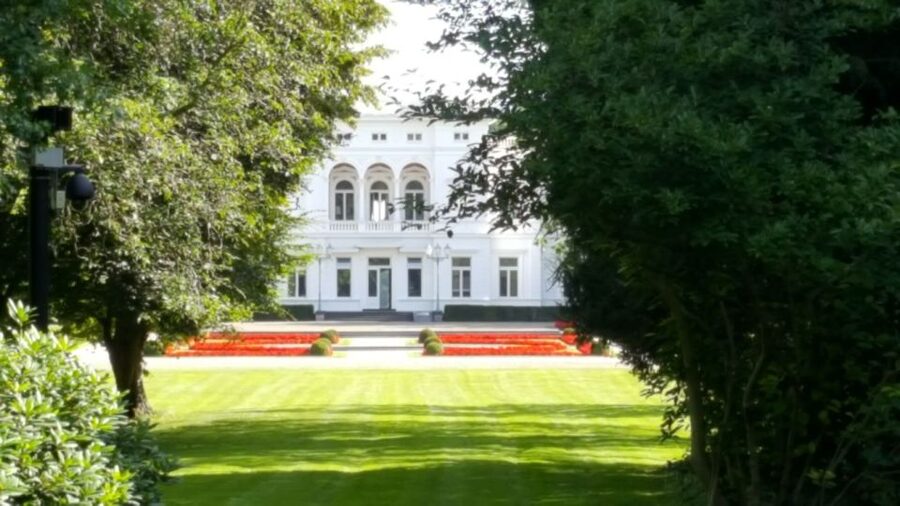
- Villa Hammerschmidt and Palais Schaumburg
- Meeting Konrad Adenauer at Bundeskanzlerplatz
- Views toward the House of History and Bonn’s towers
- The riverside route and former Bundeshaus
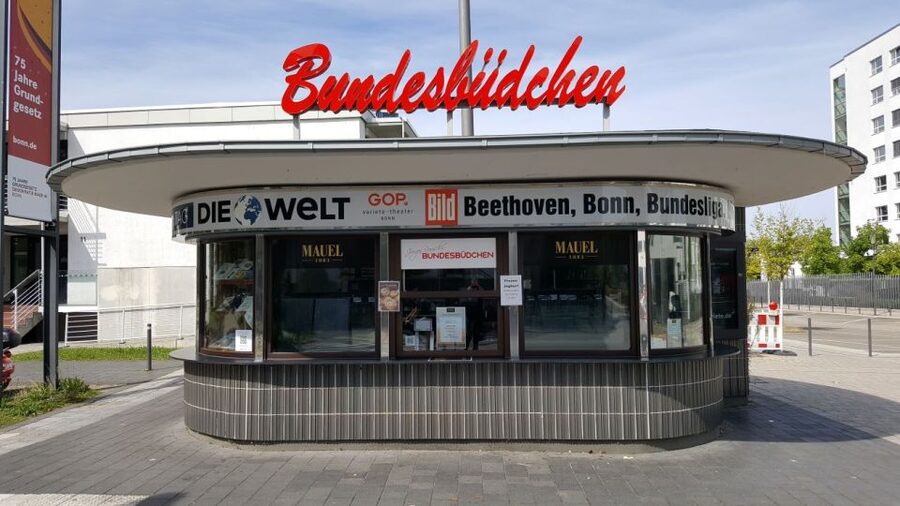
- Finishing at the Bundesbüdchen
- What $117 means for a private group
- Language, age, access, and the outdoor format
- Who will get the most from this Bonn walk
- Should you book the Former Government District tour?
- FAQ
- Where does the tour meet?
- How long does the experience last?
- What language is the tour conducted in?
- Is this a private tour?
- Is the tour wheelchair accessible?
- Can children join the tour?
- Is Museum Koenig visited indoors?
Key points before you book
- The route follows the former seat of West German power, from Museum Koenig along Adenauerallee toward the UN Campus.
- Adenauer’s monument at Bundeskanzlerplatz gets serious attention, with about 15 minutes devoted to this important stop.
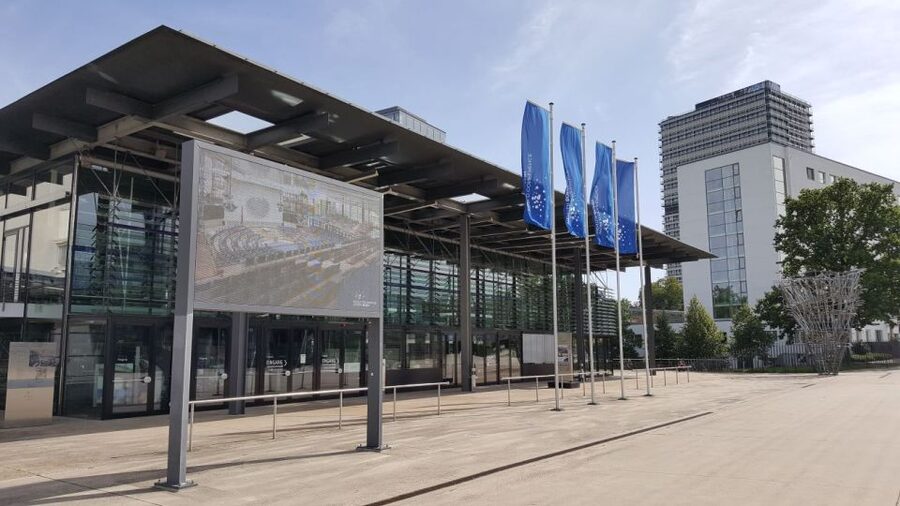
- You see major buildings from the outside, including Villa Hammerschmidt, Palais Schaumburg, the former Federal Chancellery, Plenarsaal, and the House of History area.
- The tour ends at the Bundesbüdchen, a small former checkpoint and an amusing final stop in the old government quarter.
- This is a private experience for up to two people, priced at $117 per group, with a German-speaking guide.
- The walk is wheelchair accessible, and you should wear comfortable clothes because nearly all of the tour takes place outdoors.
Why Bonn’s government quarter deserves a closer look
Bonn is often treated as a pleasant stop between Cologne and the Rhine Valley. That is fair, but it misses the city’s political importance. From 1949 until reunification, Bonn served as the capital of West Germany. The buildings along this route belonged to a working government, not a ceremonial imperial court.
That difference gives the walk its appeal. The former capital was deliberately modest compared with Berlin. Its institutions operated behind simple facades, guarded entrances, office blocks, riverside paths, and diplomatic residences. The result is a district where a plain-looking building can carry more political weight than its appearance suggests.
I find this kind of tour most rewarding when I already know a little about German history but want to connect names and events to real places. The guide helps you understand why Bonn was chosen, how the government functioned, and how the district changed after the capital moved back to Berlin.
The tour does not try to cover all of Bonn. Instead, it gives you a compact route through one specific chapter. That focus makes the 90-minute duration work well.
A few more Bonn trips worth comparing
- Bonn: 24-Hour Hop-On Hop-Off Sightseeing Bus Ticket
★ 4.5 · 454 reviews - From Bonn: Rhine River to Linz Sightseeing Boat Tour
★ 4.5 · 358 reviews - Bonn: 1.5-Hour River Cruise on the Rhine
★ 4.5 · 109 reviews
Starting at Museum Koenig
Meet your guide in front of Museum Koenig, a useful starting point because the museum is one of the district’s best-known buildings. The route includes a brief look into its bright foyer, but the museum itself is not part of the indoor visit.
The first section takes roughly 20 minutes around the museum area. You can expect the guide to set out the political background before the walk moves along Adenauerallee. This opening matters because the museum was not chosen at random. It anchors the route in Bonn’s institutional quarter and gives you a clear point from which to understand the nearby government buildings.
You should not book this experience expecting galleries, exhibits, or a full museum tour. The indoor glimpse is short. The value comes from the explanation of the surrounding district and the way the museum fits into Bonn’s public life.
From here, the group walks only a few minutes at a time between stops. That is helpful for anyone who prefers a steady pace rather than a long march between scattered sights.
Walking Adenauerallee toward the former government center
Adenauerallee provides the main early stretch of the route. The avenue links the museum with a series of political and diplomatic buildings, so the walk becomes a lesson in how Bonn’s government district was arranged.
The guide turns toward the Federal Press Office, then continues in the direction of today’s United Nations Plaza. Along the way, you pass locations connected with the federal government and its public image. This is where the tour’s outdoor approach works best. You are not simply looking at one landmark, then another. You are following the path between institutions that once worked together.
Expect several short pauses rather than long periods of walking. The listed timing gives about eight minutes near Villa Hammerschmidt, five minutes at Palais Schaumburg, and shorter stops at nearby points. Those pauses allow the guide to explain what you are seeing without making the tour feel like a lecture in one fixed place.
A practical note: the route’s value depends on listening. Several buildings are viewed from a distance or from outside, so the guide’s explanation supplies the context that a plaque may not provide.
Villa Hammerschmidt and Palais Schaumburg
Villa Hammerschmidt was the official residence of the Federal President during Bonn’s capital years. On this walk, you pass by rather than enter. That means you will not see the rooms or interior decoration, but you will learn where the officeholder lived and how the residence fit into the government quarter.
Palais Schaumburg offers another useful comparison. Its name suggests grandeur, yet its role is firmly tied to the Federal Chancellery and the early years of the Federal Republic. Again, the experience is about location, function, and political memory rather than interior access.
I like these stops because they make the old capital feel human sized. Government did not happen only in parliament halls. It also happened in residences, offices, press rooms, and the streets between them.
The limitation is clear: if you want detailed architectural access, this will feel too brief. The guide passes these buildings and explains them, but you should not expect entry.
Still Bonn, at a slower pace:
- Bonn: Evening Sightseeing Cruise on the Rhine River
★ 4.5 · 78 reviews - Panorama tour between Bonn and Königswinter
★ 4.7 · 63 reviews - Bonn: Private City Highlights Walking Tour
★ 4.9 · 35 reviews - From Bonn: Christmassy Advent Cruise on the Rhine
★ 4.7 · 19 reviews
Meeting Konrad Adenauer at Bundeskanzlerplatz
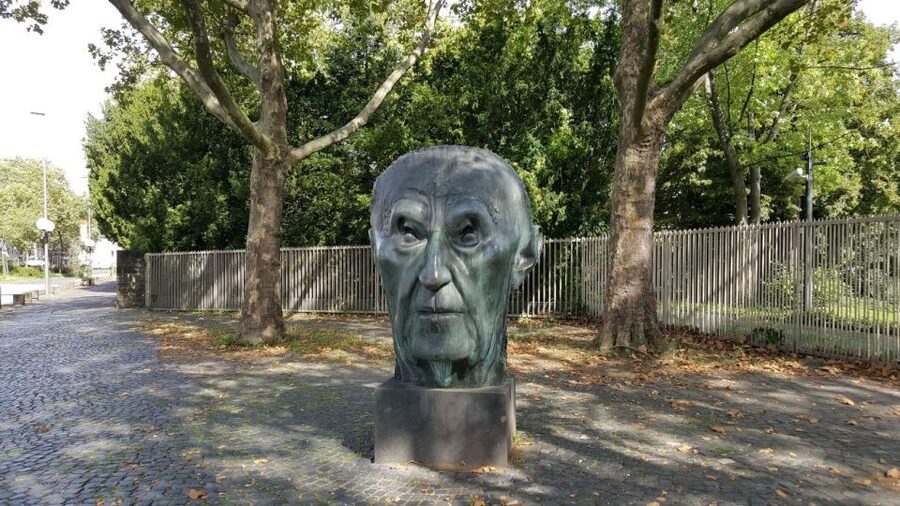
The Adenauer monument at Bundeskanzlerplatz is one of the central moments of the tour. About 15 minutes are set aside here, more than at most other individual stops.
Konrad Adenauer was the first Chancellor of the Federal Republic of Germany. His place in Bonn’s story is especially important because he helped shape the new West German state after the Second World War. The monument gives the guide a natural point for discussing the early republic, its political direction, and the role Bonn played during those first decades.
This is also a good pause for orientation. By this point, you have seen the museum and several government residences. At the monument, the route’s separate pieces begin to fit together.
I would pay close attention here, even if statues are not usually your favorite sight. The stop is less about admiring the sculpture and more about understanding why Adenauer remains such a central figure in Bonn.
Views toward the House of History and Bonn’s towers
The route includes a viewpoint with distant views of several recognizable buildings. Among them are the House of History and Bonn’s characteristic skyscrapers, Langer Eugen and the Post Tower.
Langer Eugen is closely associated with the former parliamentary district. Its height contrasts with Bonn’s generally low-rise character and helps you identify the old center of federal administration. The Post Tower adds a newer vertical marker to the view, showing how the area continued to change after Bonn lost its capital role.
The House of History is another important reference point. Although you do not visit it inside during this tour, seeing it from the route helps place Bonn’s postwar political story within the city’s wider museum and civic district.
This viewpoint is a reminder that Bonn’s government quarter is not frozen in one period. You see early federal residences, postwar institutions, parliamentary buildings, and newer corporate architecture in the same general frame.
The riverside route and former Bundeshaus
The walk continues toward Quay Bonn-Bundeshaus and the former Plenarsaal. These stops bring you closer to the parliamentary heart of the Bonn Republic.
The riverside setting changes the feel of the tour. Earlier, the route follows avenues and formal government addresses. Near the Bundeshaus, the focus shifts toward parliamentary work and the physical spaces where federal representatives met.
The Plenarsaal is viewed from outside. That distinction matters. You will not sit inside the former chamber or receive a full architectural tour, but you can connect the building with the political debates that shaped West Germany.
The outdoor setting can be pleasant and open, but weather will affect your comfort. One recent group remained enthusiastic despite unpleasant conditions, which says something about the strength of the subject and the guide’s delivery. Still, bring suitable clothing. The activity specifically recommends comfortable clothes, and you should take that advice seriously in rain, wind, or cold.
Finishing at the Bundesbüdchen
The final stop is the Bundesbüdchen, a small checkpoint kiosk associated with the former government district. It is a fitting end because it brings the tour down from presidential residences and parliamentary halls to an ordinary, almost playful piece of daily life.
The Bundesbüdchen has a lighter feel than the Adenauer monument or the former Plenarsaal. The tour description presents it as a charming checkpoint, and the guide uses it to finish the walk on an easy note. After hearing about chancellors, presidents, press offices, and federal institutions, you end with a small local feature that helped give the district its character.
The stop lasts about six minutes. That is enough time to understand why it matters without overplaying it.
Afterward, the schedule includes about 10 minutes by subway or metro before returning to the Museum Koenig area. This is worth noting when planning your day. The main sightseeing takes place on foot, but the return is not simply another walk along the same route.
What $117 means for a private group
The price is $117 for a group of up to two people. For a solo visitor, that is a fairly high cost per person. For two people, it becomes $58.50 each, which is more reasonable for a private 90-minute tour with a professional guide.
The real value comes from the private format. You are not joining a large crowd, and the guide can keep the pace suited to your group. That matters on a route where several sights are viewed from outside and depend on spoken explanation.
The tour is also efficient. In an hour and a half, you cover the Koenig Museum area, Adenauerallee, federal residences, the Adenauer monument, a viewpoint, the former parliamentary district, and the Bundesbüdchen. You do not spend much time on transport or long walks between disconnected sights.
I would compare the cost with your own interests. If you simply want to photograph Bonn’s government buildings, you can see many of them without paying for a guide. If you want to understand what they did, why the area mattered, and how the Bonn Republic developed, the private format makes more sense.
Flexible booking adds practical value. You can cancel up to 24 hours before the start for a full refund, and you can reserve now and pay later. Those terms help if your schedule in Bonn is still changing.
Language, age, access, and the outdoor format
The live tour is conducted in German. That is essential to know before booking. The experience is not presented as multilingual, so you should be comfortable following a German-speaking guide.
The tour is wheelchair accessible, which is a useful feature for a route through a civic district. The supplied information does not provide detailed notes about every surface, slope, or restroom, so you may want to confirm any specific mobility needs before booking.
Children under 16 are not permitted. The content is aimed at adults and older teenagers interested in politics, architecture, and twentieth-century German history.
Nearly everything happens outdoors. Only a brief look into the Koenig Museum foyer is included. Wear comfortable clothing and plan for the weather. The open-air format gives you a better sense of the district’s scale, but it also means there is little shelter if conditions turn poor.
Who will get the most from this Bonn walk
I would choose this experience if you enjoy political history, modern architecture, or the stories behind ordinary-looking civic buildings. It is especially useful early in a Bonn visit because it gives you a framework for understanding the former capital before you explore museums on your own.
It also suits couples or two friends who want a quiet private tour rather than a large group. The route is short enough to fit before lunch, after a museum visit, or between other Bonn plans.
The tour is less suitable if you want extensive indoor sightseeing, English commentary, or a family activity for younger children. It is also not the right pick if your priority is a full visit to Museum Koenig, the House of History, or the former parliamentary buildings. Those sites are viewed or discussed, not toured inside.
The guide’s style appears to be a major strength. The experience has been praised for humor, strong command of the subject, and an entertaining pace. That combination matters because the route includes buildings that may look plain until someone explains the decisions, conflicts, and people connected with them.
Should you book the Former Government District tour?
Book it if you want a compact, private introduction to Bonn’s political past and you are happy to spend most of the 90 minutes outside. The Adenauer monument, former federal residences, parliamentary district, and Bundesbüdchen create a well-shaped route, while the guide supplies the meaning behind each stop.
Skip it if you need English, want extensive interior access, or are visiting with children under 16. For everyone else, especially two adults sharing the $117 group price, this is a practical way to understand why Bonn mattered long after it stopped being West Germany’s capital.
FAQ
Where does the tour meet?
The meeting point is in front of Museum Koenig in Bonn.
How long does the experience last?
The tour lasts 90 minutes, or one and a half hours.
What language is the tour conducted in?
The live tour guide speaks German.
Is this a private tour?
Yes. The experience is exclusive to your private group and allows up to two people for the listed group price.
Is the tour wheelchair accessible?
Yes, the activity is described as wheelchair accessible.
Can children join the tour?
No. The experience is not suitable for children under 16.
Is Museum Koenig visited indoors?
Only a brief look into the bright foyer of Museum Koenig is included. The rest of the tour takes place outdoors.
Just added around Bonn
- Panorama tour between Bonn and Königswinter★ 4.7 · 63 reviews
- RhineRiverBoatTour from Bonn to Königswinter with Live Guide★ 4.3 · 13 reviews
- Bonn: Sunday Brunch Buffet with Cologne live music★ 5.0 · 5 reviews
- Bonn Regio WelcomeCard with Guidebook★ 4.3 · 15 reviews
- Bonn : Private Walking Tour With A Guide ( Private Tour )★ 4.5 · 9 reviews
- Bonn: Private Guided Walking Tour★ 4.3 · 15 reviews
- Bonn: Sunset Boat Tour on the Rhine★ 4.7 · 11 reviews
- Bonn: 3,5 hours Guided Bike Tour★ 4.4 · 8 reviews