
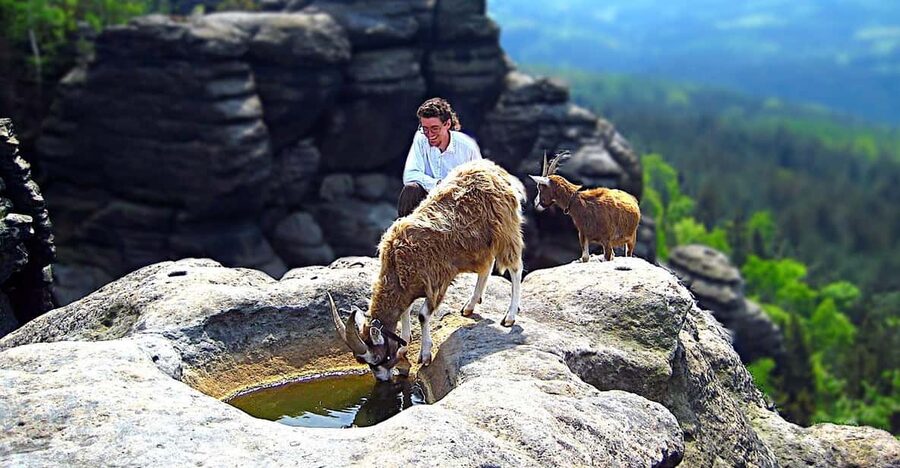
Reviewed · DRESDEN TOURS
Climb the mountains together with goats
Goats make mountain walks better. This three-hour outing near Pfaffendorf combines a guided hike, farm life, and Saxon Switzerland scenery in a way that feels more personal than a standard viewpoint visit. I like the chance to watch the animals’ social behavior, and I like that the walk includes a real local food tasting, the Elbe Goat Cracker.
The main consideration is language: the tour is conducted in German, including the guide’s explanations. You should also be comfortable with a hike toward Quirl and a rocky table mountain setting. For English speakers, the goats and views still communicate plenty, but the animal information will be harder to follow.
In This Review
- Key points at a glance
- Why this goat hike feels different
- Starting at Ziegen-Alm in Pfaffendorf
- Walking toward Quirl with a small goat herd
- The table mountain view toward Pfaffenstein
- Patu radFeld, goat behavior, and the jew’s harp
- Picnic time and the Elbe Goat Cracker
- Returning the goats to pasture
- Is $34 a fair price?
- Who should book this experience?
- Should you book the goat hike?
- FAQ
- Where does the goat hike start?
- Where does the activity end?
- How long does the experience last?
- What language is the tour conducted in?
- What animals take part in the hike?
- Which sights are included in the route?
- Is food included?
- How much does the experience cost?
Key points at a glance
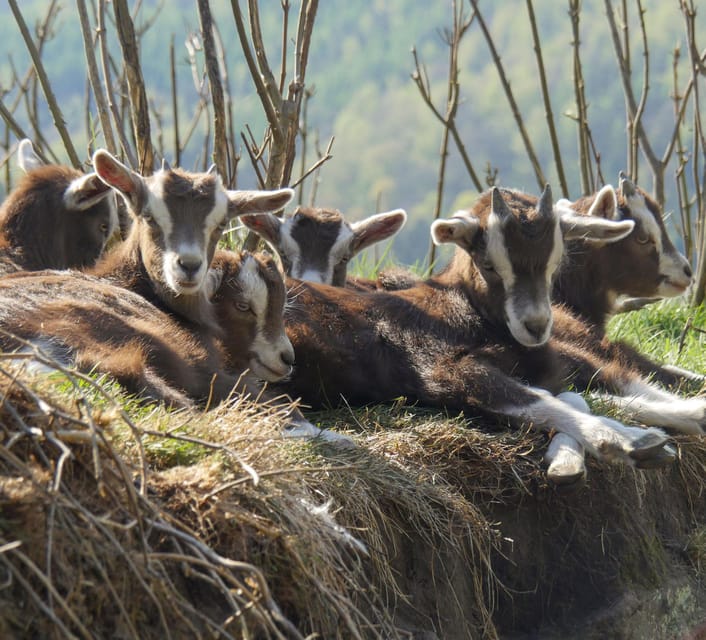
- Walk with Thuringian Forest goats: You move as a small human-goat herd rather than simply visiting an enclosure.
- Quirl and Pfaffenstein views: The route leads to a table mountain viewpoint with a memorable look toward Pfaffenstein.
- Animal behavior in real time: Guide patu radFeld explains the goats while you watch them interact and climb.
- A local bite after the climb: The picnic includes a tasting of the Elbe Goat Cracker.
- A German-language experience: The tour is best for German speakers or visitors happy to enjoy much of it visually.
- A small, focused outing: Three hours gives you a clear half-day plan without taking over your whole day in Saxon Switzerland.
Why this goat hike feels different
Saxon Switzerland is famous for sandstone formations, forest paths, and dramatic viewpoints. Most visitors experience it through a normal walking route, perhaps with a map or a conventional guide. This outing changes the pace and the company by putting goats at the center of the walk.
That matters because the animals are not just a photo prop. You walk alongside them, observe how they respond to one another, and watch their natural climbing skills when they reach the rocks. The experience connects the scenery to agriculture and animal care, two parts of rural Saxony that can be easy to miss when you are focused only on the big views.
I especially like the contrast between the gentle start and the more surprising mountain section. At first, you receive an introduction to the people and goats. Later, the animals are jumping around on rock while you look across to Pfaffenstein. It is a simple idea, but it gives the outing a strong sense of place.
The experience is provided by Ziegenhof Königstein, and the guide named for the walk is patu radFeld. The guide’s role is more than pointing out the route. You receive information about the goats as you walk, so the animals become the subject of the tour rather than background decoration.
A few more Dresden trips worth comparing
- Dresden: Semperoper Tickets and Guided Tour
★ 4.7 · 12,102 reviews - Dresden: The Original Night Watchman Tour in Lantern Light
★ 4.6 · 6,653 reviews - Dresden: Semperoper and Old Town Tour
★ 4.8 · 5,735 reviews
Starting at Ziegen-Alm in Pfaffendorf
The meeting point is Ziegen-Alm, by the Pfaffendorf sports field. This is both the start and finish, which makes the outing easy to fit into a day based in the area. You do not need to arrange a separate return transfer after the walk.
The first minutes are used for a short introduction to the people and the goats. This is useful preparation. You learn who is leading the group, meet the animals, and get a sense of how the walk will work. Since goats have their own habits and social order, this opening gives you a better chance to notice what happens later.
I would arrive ready for an outdoor activity rather than a formal farm visit. The supplied information does not give a detailed packing list, so practical walking clothes and shoes are sensible choices. The route goes toward Quirl and a table mountain, and the goats climb among rocks. The exact difficulty is not stated, so you should ask the provider if you have concerns about the terrain.
This is also the point to remember the language issue. The live guide speaks German, and the activity is offered in German. If you understand German, you can follow the explanations about the goats and the area. If you do not, you can still watch the animals, enjoy the views, and take part in the shared walk, but you should not book this expecting English interpretation.
Walking toward Quirl with a small goat herd
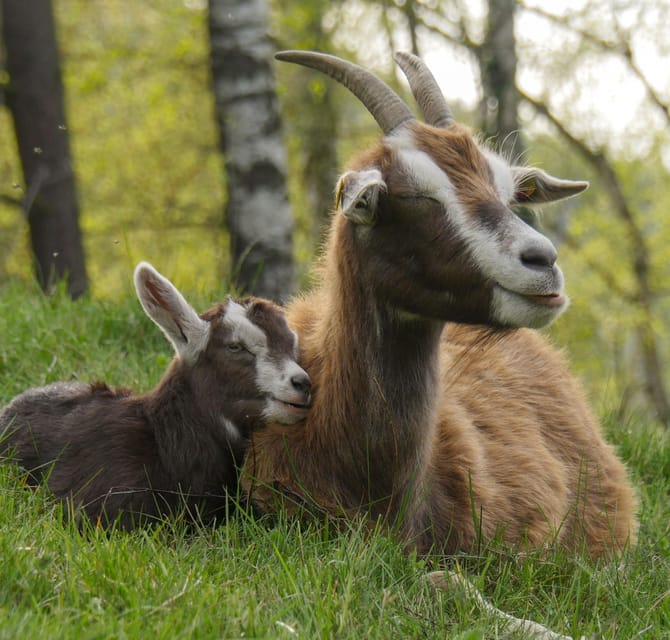
After the introduction, the group heads toward Quirl with the goats. The wording of the experience suggests a small human-goat herd, which is a good description of the mood: you are not racing from one attraction to the next. You are moving with animals that set some of the rhythm.
This is where the walk earns its price. A standard hike gives you scenery. Here, you also have a changing subject to observe. Goats may pause, move around one another, and react to the group. With patu radFeld’s explanations, you can pay attention to their social behavior rather than simply watching them as cute farm animals.
That focus makes the outing a good choice for families and curious adults who enjoy animal behavior, though the supplied information does not specify a minimum age or family policy. It also suits anyone who has already seen the main Saxon Switzerland viewpoints and wants a slower, less usual way to experience the area.
The agricultural angle is important. This is not a wildlife walk. These are working farm animals connected to a local goat operation. The experience gives you a glimpse of how goats fit into a rural setting, while still leading you into the hills. That combination is more memorable than a quick photograph beside a fenced pasture.
The table mountain view toward Pfaffenstein
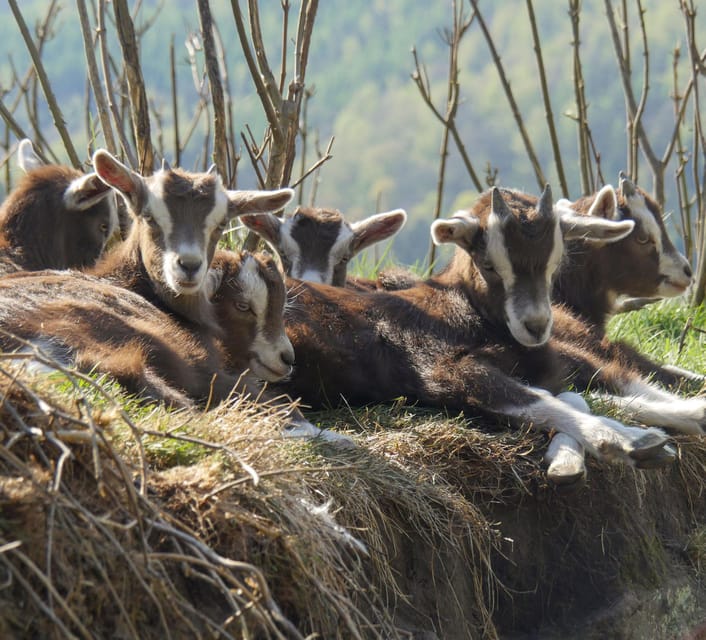
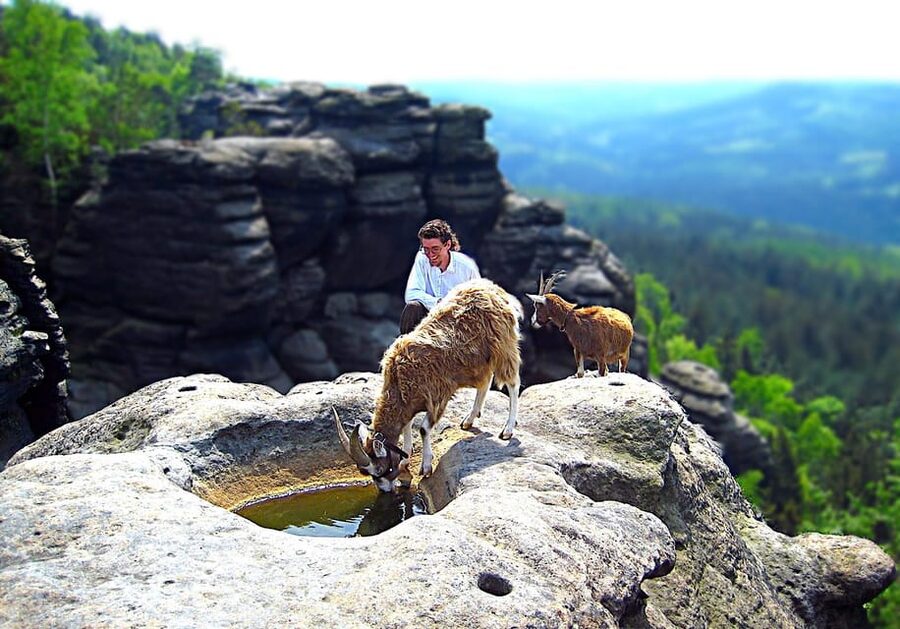
The walk reaches a table mountain, where the view opens toward Pfaffenstein. This is the visual reward of the route. Pfaffenstein is one of the recognizable rock formations in Saxon Switzerland, and seeing it from this position gives the experience a clear regional identity.
The view is not treated as a rushed photo stop. The goats are part of the scene, and their movement changes what you notice. Once they jump around on the rock, their climbing ability is obvious. You will likely want your camera ready, since the animals provide the most distinctive photo opportunities of the outing.
Still, it is worth keeping expectations sensible. This is not described as a long mountain expedition or a tour covering several major formations. The stated duration is three hours, and the route centers on Quirl, the table mountain, and the return to the farm. I see that as a strength if you want a compact half-day plan, but a limitation if you are seeking a full-day hiking challenge.
The rocky setting also means the outing may not suit every walking style. No accessibility details are provided, and the route includes a climb and rock areas. If you need a step-free route or have mobility concerns, contact Ziegenhof Königstein before booking rather than guessing.
Still Dresden, at a slower pace:
- Dresden: River Sightseeing Boat Cruise
★ 4.3 · 5,323 reviews - Dresden: Tour of VW’s Transparent Factory
★ 4.5 · 4,058 reviews - Dresden: 1-Day Hop-On-Hop-Off Bus Tour
★ 4.5 · 2,813 reviews - Dresden: Church of Our Lady Guided Tour of Gallery
★ 4.7 · 2,421 reviews
Patu radFeld, goat behavior, and the jew’s harp
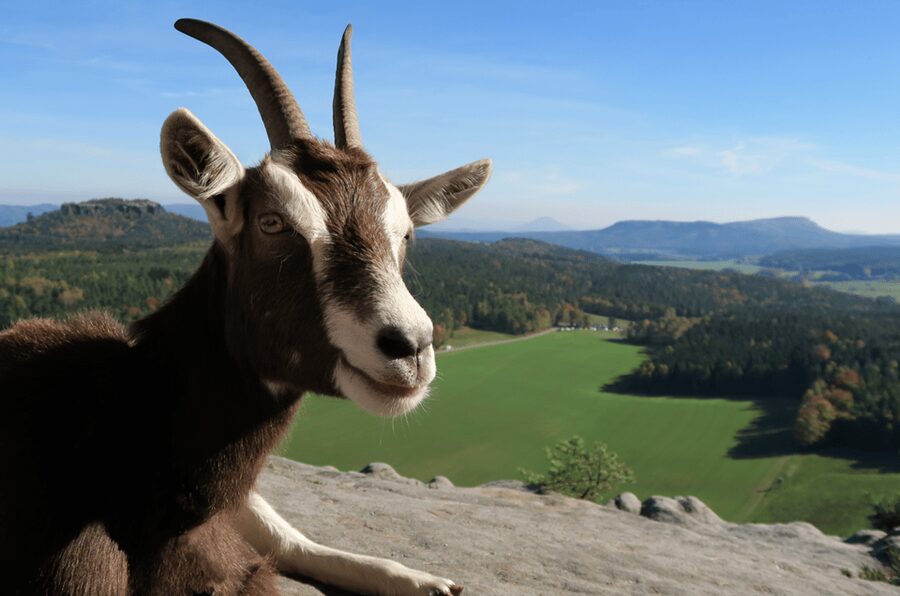
The guide’s explanations are a central part of the activity. Patu radFeld shares information about the animals during the walk, allowing you to connect what you hear with what you see. That is better than receiving a long talk at the beginning and then being left to wander.
The social behavior of the goats is one of the most interesting promised details. Attentive participants can watch how the animals relate to one another. I like this kind of guiding because it rewards patience. The best moments may come between the main stops, when you notice a small interaction that would be easy to miss on a normal hike.
There may also be a short song from the shepherd on the jew’s harp. The wording makes clear that this is occasional, not guaranteed, so treat it as a pleasant possibility rather than a scheduled performance. If it happens, it adds a small musical link to the shepherding theme without turning the tour into a stage show.
This mix of explanation, animal watching, and local sound gives the outing its personality. It remains a walk, but it is also a meeting with a goatherd and a working herd. Those details help the experience feel tied to the place.
Picnic time and the Elbe Goat Cracker
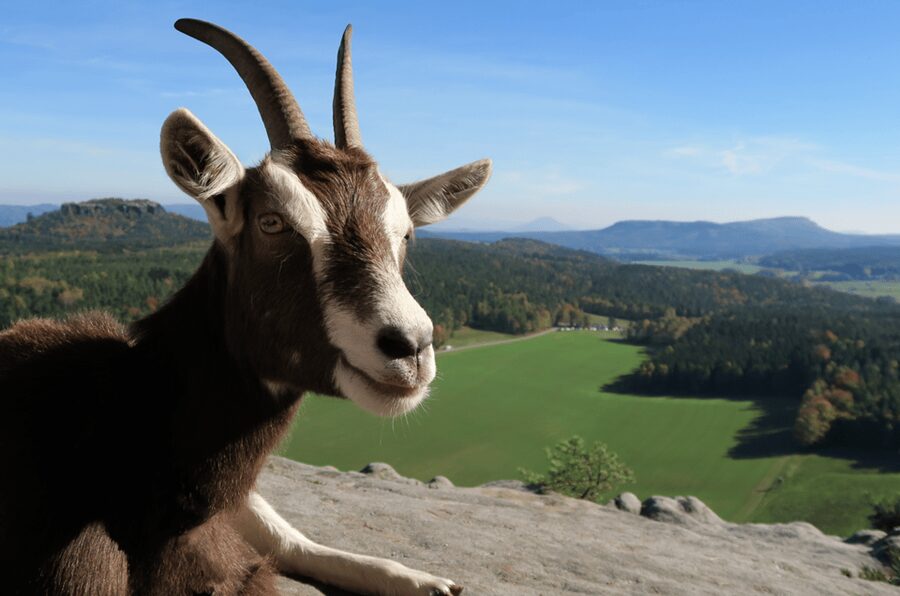
After the climb and viewpoint, the group stops for a picnic and a tasting of the Elbe Goat Cracker. The food element is modest but meaningful. You are trying a product connected to the goats and the Elbe region, not simply receiving a generic snack halfway through a hike.
I value tastings like this because they make agriculture tangible. You have seen the animals, learned about them, and then sampled something associated with goat farming. It creates a clear thread through the outing: animals, land, work, and food.
The supplied details do not specify the full picnic menu, portion size, or drink arrangements. Plan on the included tasting being a small part of the meal rather than assuming it replaces lunch. If you need a substantial meal, ask the provider what the picnic contains before you go.
The picnic also gives you a natural pause after the rocky section. Three hours is long enough for the walk, explanations, viewpoint, and food without making the day feel overpacked. The pace should appeal to you if you prefer time to look around instead of checking off sights quickly.
Returning the goats to pasture
The descent begins after the picnic. The goats return with the group, and the activity ends back at the original meeting point after the animals are taken back to pasture.
That ending is practical and satisfying. You see the full cycle of the outing, from meeting the herd to returning it to its normal setting. It also means you can continue your own plans from Pfaffendorf without needing to arrange transport from a different endpoint.
Once the goats are back in the pasture, there is time for individual discussions. This is a useful chance to ask follow-up questions about the animals, the farm, or the walk. It also keeps the experience from ending abruptly at the final viewpoint.
For me, this informal closing is part of the value. You have a chance to speak directly with the person caring for the goats, rather than simply receiving a goodbye and leaving. Since the tour is in German, this will be most useful to you if you can communicate in German. Even with limited language skills, a few prepared questions may help.
Is $34 a fair price?
At $34 per person, this is priced above a basic self-guided walk but below many full-day guided excursions. You are paying for three hours of a guided outdoor activity, access to a farm-based experience, animal care and handling, local interpretation, a picnic element, and the Elbe Goat Cracker tasting.
The value depends on what you want from Saxon Switzerland. If your goal is to cover as many viewpoints as possible, a regular hiking day gives you more walking distance for less money. If you want a distinctive experience built around animals and local agriculture, the price is reasonable.
The rating is 4.8 from eight reviews, with the available written response describing the experience as very good. That is a strong satisfaction signal, though the number of responses is small. I would treat it as encouragement rather than proof that every part will suit every visitor.
The language is the biggest factor in the value calculation. German speakers receive the full benefit of patu radFeld’s commentary and the later discussion. Non-German speakers may still enjoy the goats, rock climbing, view, picnic, and photographs, but they will miss much of the spoken content. If the guide’s explanations are the main reason you want to book, German ability matters.
Who should book this experience?
I would recommend the goat hike to you if you like small-scale activities, farm visits, unusual photo opportunities, and nature outings that do not feel mass-produced. It is especially appealing if you have already planned major sights in Saxon Switzerland and want one activity with a local, human touch.
It also fits a short itinerary well. At three hours, you still have much of the day for another walk or sightseeing plan. The start and finish at Ziegen-Alm by the Pfaffendorf sports field make the schedule simple.
You should think twice if you want an English-language tour, a precise technical hiking challenge, or a long route across many formations. The activity is German only, the exact trail difficulty is not provided, and the focus is the goat herd rather than maximum mileage.
For photographers, the goats on the rock may be the highlight. For families, the animals offer an engaging subject, but you should confirm any age or mobility questions with the provider because those policies are not given. For food-focused visitors, the cracker tasting is a nice touch, but it is not described as a full culinary tour.
Booking is flexible: you can cancel up to 24 hours before the start for a full refund, and you can reserve now and pay later. Check the available dates and starting times before making plans, since the three-hour activity does not have one universal departure time listed.
Should you book the goat hike?
Book it if you want Saxon Switzerland with a farm connection, a German-speaking goatherd, and animals that can handle rock better than many people. The view toward Pfaffenstein, the goat behavior, and the Elbe Goat Cracker give the outing enough variety to justify the $34 price.
Skip it if you need English guiding, a fully specified hiking difficulty, or a major summit-to-summit route. For the right visitor, this is a warm, unusual half-day experience. You come for the goats, but you leave with a better sense of how nature, agriculture, and local life meet in the hills around Pfaffendorf.
FAQ
Where does the goat hike start?
The experience starts at Ziegen-Alm by the sports field in Pfaffendorf.
Where does the activity end?
The hike ends back at the same meeting point after the goats are returned to pasture.
How long does the experience last?
The activity lasts three hours. Starting times depend on availability.
What language is the tour conducted in?
The live tour guide speaks German, and the event is offered in German.
What animals take part in the hike?
The walk is accompanied by Thuringian Forest goats.
Which sights are included in the route?
The group walks toward Quirl and reaches a table mountain with a view toward Pfaffenstein.
Is food included?
A picnic and a tasting of the Elbe Goat Cracker are included.
How much does the experience cost?
The price is $34 per person.
Just added around Dresden
- Dresden Sightseeing Treasure Hunt★ 5.0 · 57 reviews
- Test Drive Electric Vehicles from the VW brand (ID. model)★ 4.8 · 190 reviews
- SRF CoBi | City Tour by ConferenceBike★ 4.7 · 38 reviews
- Dresden: Scavenger Hunt to Elbe River & Castles★ 4.7 · 15 reviews
- Dresden: Bike Rental – City Bike with Option Children Seat★ 4.5 · 13 reviews
- Moritzburg: Scavenger Hunt Self-Guided Walking Tour★ 4.8 · 12 reviews
- Historical tour of the old town including a Saxon dinner★ 4.7 · 23 reviews
- From Prague: Day trip to Dresden★ 4.3 · 4 reviews
Dresden Tours, compared.
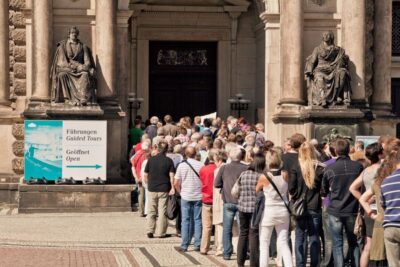

The Original Night Watchman Tour in Lantern Light
Read our review →


Browse the lists this tour appears in