
Reviewed · HAMBURG TOURS
Dialog im Dunkeln (Dialogue in the Dark)
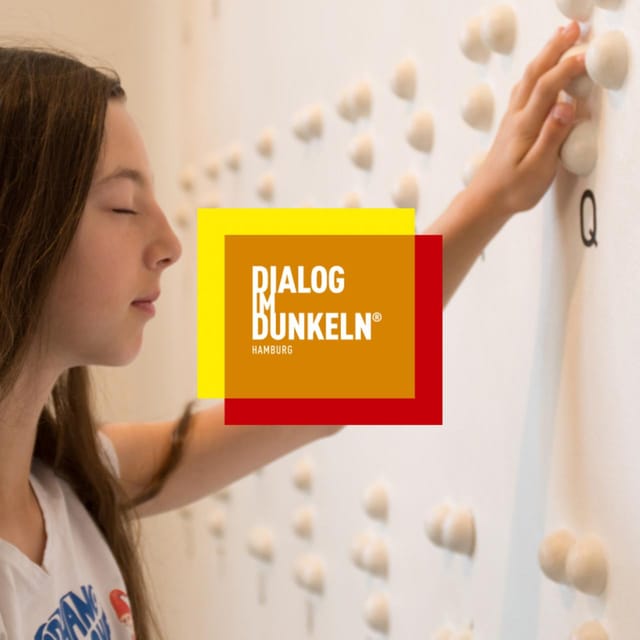
Your eyes will not help you here. Dialogue in the Dark turns an ordinary hour in Hamburg into a guided trip through complete darkness, led by a blind or visually impaired host who knows how to help you listen, touch, and move with care. In a small group of no more than eight, you face simple daily tasks without visual clues.
I like the way the experience creates real empathy rather than merely talking about disability. I also like the friendly, playful tone, which keeps the hour from feeling like a classroom lesson. The main drawback is clear: complete darkness can feel uncomfortable, especially if you dislike confined or unfamiliar settings.
In This Review
- Key points to know before you go
- What Dialogue in the Dark is really about
- Entering the darkness with a small group
- The park walk: hearing the ground beneath you
- Crossing the city without visual signals
- Buying something when you cannot see
- The guide makes or breaks the hour
- The Dark Bar and the conversation afterward
- Is the $28 price fair?
- Who should book this Hamburg experience?
- The practical verdict for your Hamburg plans
- FAQ
- Where is Dialogue in the Dark located?
- How long does the experience last?
- Is the tour conducted in English?
- How many people are in each group?
- Can I explore the dark exhibition on my own?
- What should I wear or bring?
- Are drinks at the Dark Bar included?
- Can I cancel my booking?
Key points to know before you go
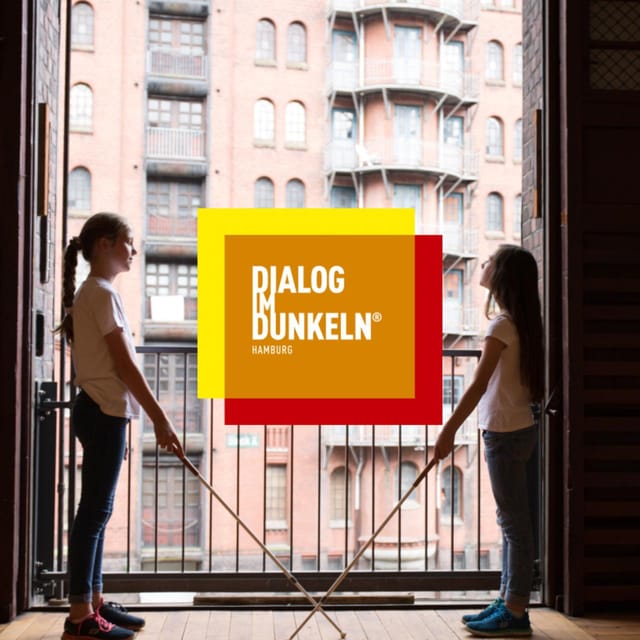
- A blind host leads the entire 60-minute route, giving practical help while sharing a different view of everyday life.
- The group is limited to eight people, so you have a better chance to hear instructions and take part in each activity.
- Everyday tasks become surprising challenges, from walking over gravel to crossing a simulated city street and buying something without sight.
- The Dark Bar provides time to talk, but the price of your drink is not included.
- Comfortable shoes matter, since you will walk and use a blind cane during the route.
- You cannot explore independently, and flash photography is not allowed inside the dark exhibition.
What Dialogue in the Dark is really about
Dialog im Dunkeln is not a museum where you stand back and look at objects. There is nothing to see. Instead, you enter a series of dark spaces and use hearing, touch, smell, and body awareness to make sense of what surrounds you.
That simple change makes familiar actions feel new. A walk through a park is no longer a visual scene. You notice the crunch of gravel underfoot. A city crossing becomes an exercise in listening. Even a basic purchase turns into a group task full of uncertainty and laughter.
The point is not to pretend that one hour in darkness tells you exactly what life without sight is like. It does not. A blind cane and a guided route cannot reproduce the experience of living with visual impairment every day. What the tour can do is challenge your assumptions and show how much information your eyes usually handle for you.
I appreciate that the exhibition places a blind or visually impaired person in the role of guide. The host is not treated as a symbol or an object lesson. You receive directions from someone who understands how to move through the non-visual world, and the conversation after the tour can make the experience more personal and honest.
The tone also matters. This is not designed as a gloomy exercise. The activities invite mistakes, questions, and plenty of laughter. You may feel awkward at first, but the group usually has to work together quickly. That shared uncertainty helps people relax.
A few more Hamburg trips worth comparing
- Hamburg: Sex and Crime in St. Pauli Tour for Ages 18+
★ 4.7 · 15,447 reviews - Hamburg: 1.5-Hour Harbor and Speicherstadt Day Cruise
★ 4.6 · 14,200 reviews - Hamburg: 90-Minute Evening Lights Harbor Cruise
★ 4.5 · 7,728 reviews
Entering the darkness with a small group
Before the tour begins, exchange your voucher at the ticket counter. Then your guide gathers the group and explains the basic rules. You are given a blind cane and led into the exhibition area.
The transition from the well-lit foyer to total darkness is the first important moment. You may expect your eyes to adjust after a few minutes, as they do in a dim room. Here, that does not happen. You must stop relying on sight and begin paying attention to sound, touch, and spoken directions.
The small group size makes a real difference. With no more than eight participants, instructions are easier to follow, and you are not lost in a crowd. You can also hear other people working things out, which becomes part of the experience.
The guide controls the pace. You are not left to wander or guess where to go. This is important for safety, but it also gives the tour its shape. The host knows when to let you solve a problem and when to offer a clue.
Because the entire route is dark, you cannot take photographs. Flash photography is specifically not allowed, and there is little point in trying to record the visit anyway. The value is in what you notice while you are there, not in collecting pictures afterward.
The park walk: hearing the ground beneath you
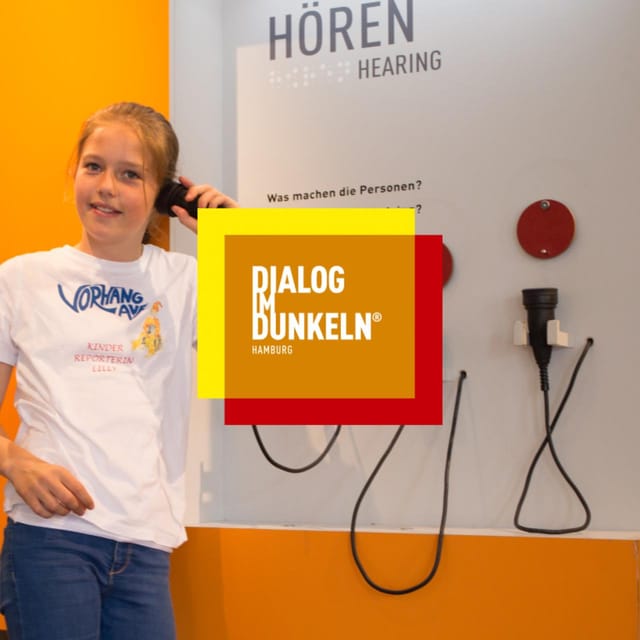
One of the first imagined settings is a park. You feel your way along a path and hear the crunch of gravel under your shoes. In daylight, you might barely notice that sound. Without sight, it becomes useful information.
This part shows how quickly your attention changes. You begin listening for footsteps, judging distance by sound, and using the cane to check the ground ahead. The task is straightforward, but it can feel surprisingly rich because your mind has to build a picture from small details.
I like this section because it does not depend on specialized knowledge. You do not need to understand anything in advance. You simply walk, listen, and respond to what the guide tells you.
The limitation is that some people may find the lack of control frustrating. If you are used to moving quickly or leading the way, you must slow down and trust the guide. That is part of the lesson, but it may take a few minutes to settle into.
Crossing the city without visual signals
The route then shifts from a quiet outdoor setting to the sounds of a city street. You hear traffic and try to work out when it is safe to cross. Without visual confirmation, familiar sounds take on more weight.
This is where the experience can challenge your assumptions about independence. Crossing a road seems simple when you can see the traffic lights, lanes, cars, and other people. Remove those signals and you must make decisions in another way.
Your host remains responsible for guiding the group, so this is not an actual road crossing or a test of personal risk. Still, the activity creates a strong sense of uncertainty. You may find yourself listening harder than you have in years.
The exercise also helps explain why clear sound cues and careful public design matter. The tour does not turn that idea into a technical lecture. Instead, it lets you feel how much you normally depend on visual information.
Still Hamburg, at a slower pace:
- Hamburg: 2-Hour XXL Port of Hamburg Cruise Tour
★ 4.7 · 6,979 reviews - Hamburg: Line A Sightseeing Hop-On Hop-Off Bus Tour
★ 4.6 · 6,958 reviews - Hamburg: Elbphilharmonie Plaza Guided Tour
★ 4.7 · 5,882 reviews - Hamburg: Hamburg Dungeon Admission Ticket
★ 4.7 · 5,745 reviews
Buying something when you cannot see
A simple purchase becomes one of the most playful parts of the hour. You must identify objects, handle them, and communicate with others without seeing what is in front of you.
This activity often produces laughter because ordinary habits stop working. You may reach for the wrong item, struggle to identify money, or depend on a companion’s description. The humor is useful when it remains respectful, since it helps the group loosen up and admit that nobody has all the answers.
I find this section especially valuable for families and groups of friends. You learn how people communicate when gestures and facial expressions disappear. You also see how much patience helps.
One point is worth keeping in mind: your experience is shaped by the guide and by the people in your group. A thoughtful host can make the activity warm and engaging, while a nervous group may take longer to relax. The small size helps, but it does not make everyone behave in the same way.
The guide makes or breaks the hour
The guide is the heart of Dialogue in the Dark. Names praised by participants include Jeremy and Klaus, with Klaus described as especially open and endearing. Those comments fit the role well: the host is not only giving directions, but also setting the mood and answering questions.
A good guide knows when to be precise and when to let you discover something on your own. You need enough instruction to feel safe, but too much explanation would remove the challenge. The best moments come when you solve a small problem through sound or touch and realize that you did not need sight after all.
The host also gives the experience its human dimension. A blind guide can speak from personal understanding, though the hour should not be treated as a complete portrait of all visual impairments. People experience sight loss in different ways, and this exhibition offers one carefully designed introduction.
The English tour is led by a live guide. If you are not comfortable following spoken English in a dark setting, think carefully before booking. You cannot rely on printed instructions or visual demonstrations once the tour starts.
The Dark Bar and the conversation afterward
At the end of the route, you return to the Dark Bar with the guide and your group. You can have a drink, ask questions, and compare what each person noticed. Drinks are not included in the admission price, so bring that extra cost into your planning.
This final conversation is more than a pleasant finish. The hour can leave you with scattered impressions: a sound you noticed, a moment when you lost your bearings, or a task that seemed easy before the lights went out. Talking about those moments helps connect them to wider questions about accessibility, independence, and social habits.
You may also find that people in the same group remember very different details. One person may focus on sound, another on texture, and another on the difficulty of communication. That contrast is part of the value.
The Dark Bar is also a good place to ask the guide questions that would not fit naturally during the route. Keep the tone respectful and curious. The experience works best when you treat the host as a person sharing expertise, not as a novelty.
Is the $28 price fair?
At about $28 per person, this costs more than a standard museum ticket, but the comparison is not quite fair. You are paying for a guided, staff-led activity in a specially designed setting, not simply access to rooms filled with displays.
I consider the price reasonable if you want an experience that gives you something to think about after you leave. The hour is short, but it is focused. The small group, live English guide, cane, controlled environments, and Dark Bar discussion all contribute to the value.
The price may feel high if you are looking for a long afternoon attraction. The core tour lasts 60 minutes, and the drink afterward costs extra. You should book it for the quality and originality of the experience, not for the amount of time it occupies.
The flexible booking terms also help. You can reserve now and pay later, and cancellation is free up to 24 hours before the start time for a full refund. Check the available starting times when you book, since the schedule is not fixed in the information provided here.
Who should book this Hamburg experience?
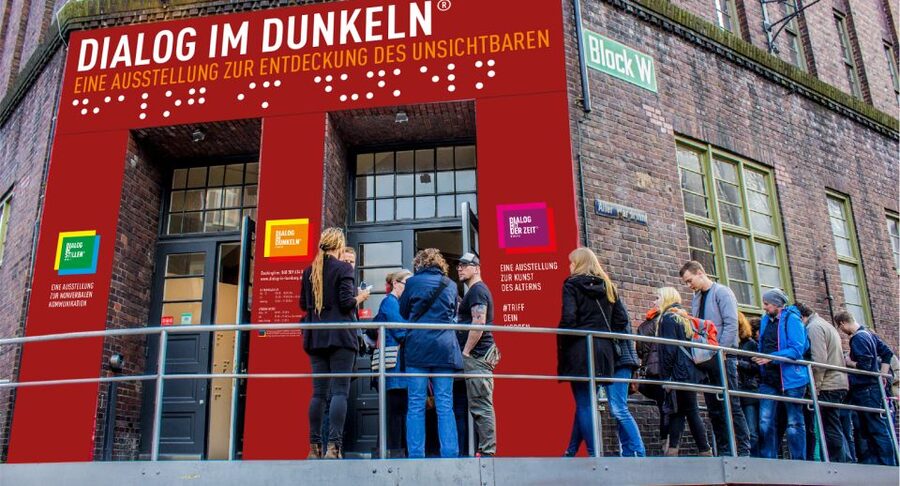
I would recommend Dialogue in the Dark to adults, families with older children, couples, and friends who want a meaningful break from conventional sightseeing. It can be particularly useful if you have a family member with visual impairment and want a better sense of the practical challenges involved in moving through ordinary spaces.
It also suits people who enjoy unusual cultural activities. You do not need to be an expert on disability or accessibility. You only need to be willing to move slowly, listen carefully, and accept that you will not be in charge of every moment.
The experience may not suit you if complete darkness causes strong anxiety or if you want to explore at your own pace. You cannot enter the dark exhibition independently, and the guide controls the route for safety. That structure is necessary, but it means this is not a free-form attraction.
Wear comfortable shoes. You will walk, use a cane, and deal with different surfaces. Keep your schedule slightly open after the tour if you want time to sit with your thoughts and talk over a drink at the Dark Bar.
The practical verdict for your Hamburg plans
I like Dialogue in the Dark because it turns a serious subject into something personal and approachable. The strongest parts are the blind-led guidance, the small group, and the everyday tasks that reveal how much you normally depend on vision.
The tour is not a simulation of blindness, and you should not expect one hour to provide a complete understanding of visual impairment. It is better seen as a carefully guided prompt to notice your senses, question your assumptions, and think about how public spaces work for people with different needs.
Book it if you want a memorable, thoughtful activity and you are comfortable giving up control for an hour. Skip it if you need open space, independent exploration, or a purely visual attraction. For most people who approach it with patience and respect, the $28 fee buys more than entertainment. It gives you a fresh way to pay attention.
FAQ
Where is Dialogue in the Dark located?
It takes place at Dialoghaus Hamburg in Hamburg, Germany.
How long does the experience last?
The guided experience lasts one hour. Starting times depend on availability when you book.
Is the tour conducted in English?
Yes. The activity includes a live English-speaking tour guide.
How many people are in each group?
The group is limited to no more than eight participants.
Can I explore the dark exhibition on my own?
No. Dialogue in the Dark is a guided exhibition in complete darkness and cannot be explored independently.
What should I wear or bring?
Wear comfortable shoes. You will walk through the exhibition and use a blind cane.
Are drinks at the Dark Bar included?
No. Drinks at the Dark Bar are not included in the admission price.
Can I cancel my booking?
Yes. You can cancel up to 24 hours before the experience for a full refund. You can also reserve now and pay later.
Just added around Hamburg
- Hamburg: St. Pauli Food and Bier Tour★ 4.7 · 5 reviews
- St. Pauli Tour: Drag-Attack with Barbie Stupid & Lee Jackson★ 4.8 · 280 reviews
- Hamburg: Private Tour Red Light District Walking Tour★ 4.7 · 227 reviews
- St. Michael’s, Elbe Tunnel & Harbor 2-Hour Hamburg Tour★ 4.9 · 21 reviews
- Satt Pauli – der kulinarische Rundgang durch St. Pauli★ 4.8 · 12 reviews
- Hamburg: Safari tour in St. Pauli★ 4.9 · 11 reviews
- Hamburg: Reeperbahn Comedy Club★ 4.3 · 53 reviews
- Radtour um die Alster & durch traumhafte Alsterviertel★ 4.9 · 34 reviews
Hamburg Tours, compared.
Sex and Crime in St. Pauli Tour for Ages 18+
Read our review →
1.5-Hour Harbor and Speicherstadt Day Cruise
Read our review →



Reeperbahn Lust & Laster Tour for Adults Only
Read our review →Browse the lists this tour appears in