
Reviewed · HAMBURG TOURS
Free tour: Centro Histórico. Tú decides el precio al final
Hamburg’s past has plenty of sharp edges. This two-hour Spanish walking tour links the city’s grand town hall with medieval traces, wartime ruins, canals, warehouses, and the striking Elbphilharmonie. I like the route’s strong mix of major sights and lesser-known stories, and I like that you finish in Deichstraße, a historic street rather than simply returning to the starting square.
The other big plus is the guide’s focus on Hamburg’s character, from old breweries and Viking raids to local customs and everyday life. Spanish-speaking visitors get a clear introduction to the city from a local guide, with Ramiro receiving especially warm praise for his work. The main consideration is the pay-what-you-wish format: the booking may show a small starting price, but you are expected to decide the final amount based on your satisfaction and budget.
In This Review
- Key points at a glance
- Why this two-hour walk works well in Hamburg
- Meeting at Rathausmarkt beneath the blue umbrella
- Domplatz and Hamburg’s early foundations
- Trostbrücke and the old city crossing
- St. Nikolai Memorial and the cost of war
- Speicherstadt, warehouses, and Hamburg’s trading past
- Elbphilharmonie and the modern city
- Finishing in Deichstraße
- Spanish guiding and the personal touch
- Price, tips, and the real value
- Who should book this walk?
- Should you book the Hamburg historic center tour?
- FAQ
- Where does the Hamburg free walking tour start?
- Where does the tour finish?
- How long does the tour last?
- What language is the tour conducted in?
- What sights are included along the route?
- Is the tour really free?
- Are museum tickets or attraction entry fees included?
- What should you bring?
- Can I cancel the booking?
Key points at a glance
- Start beneath a blue umbrella: Meet outside Hamburg’s town hall, at the main door facing Rathausmarkt.
- A walk through several eras: The route connects medieval, Roman, Viking, eighteenth-century, and modern Hamburg.
- Major sights without museum tickets: See the St. Nikolai Memorial, Trostbrücke, Domplatz, Speicherstadt, and Elbphilharmonie from the outside.
- Spanish-language guiding: The live tour is conducted in Spanish, making it a useful choice for Spanish-speaking visitors.
- A useful finish in Deichstraße: The tour ends near one of Hamburg’s best-known historic streets, giving you a good place to continue exploring.
- Bring rain protection: Hamburg weather can change quickly, and an umbrella is specifically recommended.
Why this two-hour walk works well in Hamburg
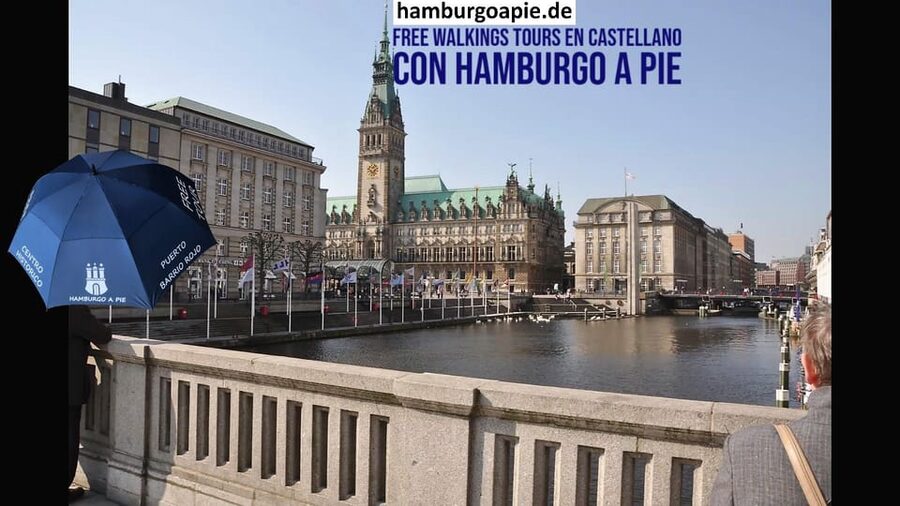
Hamburg can feel scattered at first. The Rathaus, old churches, warehouse district, harbor, and modern concert hall do not form one tidy postcard scene. A guided walk helps you connect those pieces, especially if you have only just arrived and want a clear sense of the center.
This tour covers that ground on foot in about two hours. That is long enough to introduce the city without turning into an all-day march. You will make photo stops, hear explanations at the main locations, and walk between them with a Spanish-speaking guide.
I see the greatest value in the storytelling. The tour is not limited to dates and building names. It promises tales about historic breweries, Viking raids, cathedrals taken or destroyed over the centuries, warehouses that nearly disappeared during wartime bombing, and the people of Hamburg. Those details help explain why the city looks the way it does today.
The route also suits first-time visitors who want orientation before choosing what to see in more depth. Your guide can offer suggestions for later activities, explain public transportation, provide maps or brochures, and point you toward other free walking tours. That practical advice can save you time after the walk.
A few more Hamburg trips worth comparing
- Hamburg: Sex and Crime in St. Pauli Tour for Ages 18+
★ 4.7 · 15,447 reviews - Hamburg: 1.5-Hour Harbor and Speicherstadt Day Cruise
★ 4.6 · 14,200 reviews - Hamburg: 90-Minute Evening Lights Harbor Cruise
★ 4.5 · 7,728 reviews
Meeting at Rathausmarkt beneath the blue umbrella
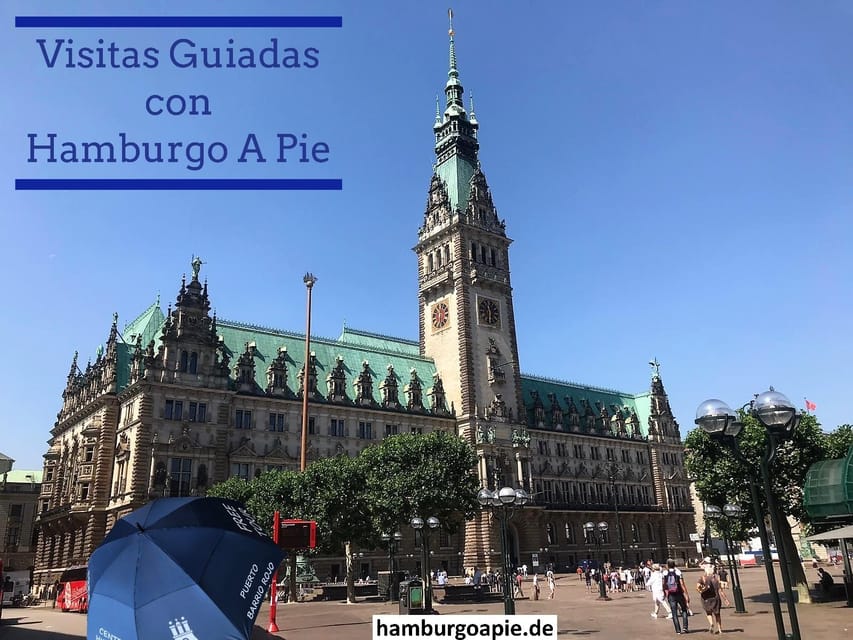
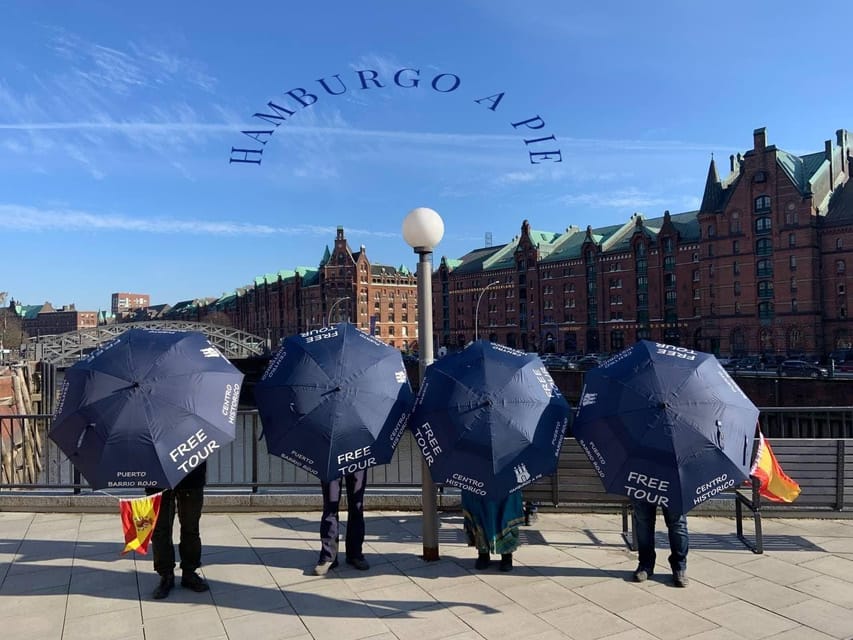
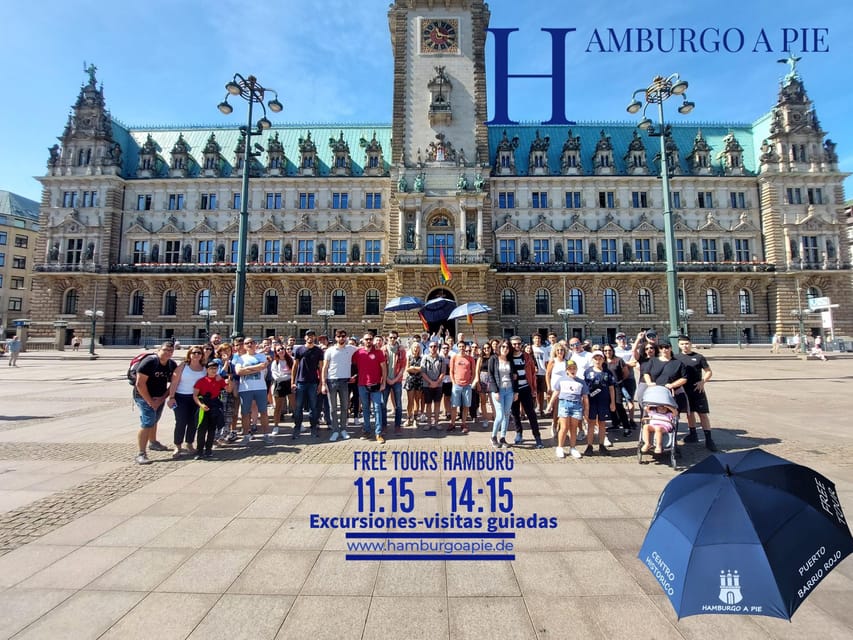
The tour begins outside the main door of Hamburg’s town hall, known as the Ayuntamiento de Hamburgo in the Spanish description. Look for the guide waiting with a blue umbrella in the square.
That meeting point is easy to understand, but Rathausmarkt can be busy. Arrive with enough time to identify the town hall entrance and the blue umbrella before the group sets off. Since transportation to the meeting point is not included, you need to arrange your own way there.
Starting at the Rathaus makes sense. The building gives you an immediate introduction to Hamburg’s civic power and public life, while the square provides a clear place to gather. From there, the route moves into the older center rather than beginning at a distant harbor attraction.
The blue umbrella is more than a weather item. It acts as a useful marker in a broad public square. Still, bring your own umbrella too. The tour specifically advises it, and Hamburg is not known for promising sunshine on schedule.
Domplatz and Hamburg’s early foundations
One important stop is Domplatz, an area tied to Hamburg’s earliest church history. Here, the guide places the city’s story in a much older setting, including references to Roman and medieval periods.
The material promises discussion of cathedrals connected with ancient events and Viking activity. That gives Domplatz a useful role in the walk: it shows that Hamburg was not created all at once as a trading city. Its religious and political foundations came first, and later commerce grew around them.
You should expect this to be a guided historical stop rather than a formal museum visit. Entry fees are not included, and the tour does not promise admission to interiors. The value comes from standing in the place while someone explains what happened there and how the area changed.
I like this part of the route because it helps you read the city beneath its modern streets. Hamburg’s center has been rebuilt, altered, and damaged over time. A short explanation at Domplatz can make an otherwise ordinary urban space more meaningful.
Trostbrücke and the old city crossing
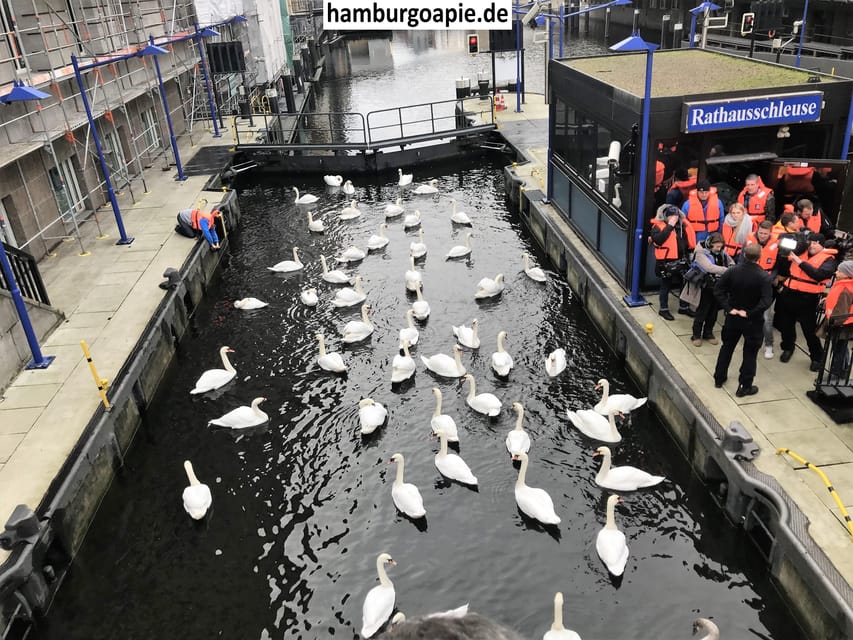
The walk continues to Trostbrücke, a historic bridge in the center. Bridges matter in Hamburg because water shaped the city’s growth, trade, and daily movement. At Trostbrücke, the guide can connect the old street plan with the waterways that helped Hamburg become an important port.
This is also the kind of stop where a local guide can add color that a map will not provide. The tour promises stories about local traditions, Hamburg life, and events that guidebooks often pass over. The exact details may depend on the guide and the pace of the group, but the purpose is clear: Trostbrücke is treated as part of the city’s social story, not just a place to snap a photograph.
The bridge is a practical stop for anyone interested in architecture and urban history. You get to see how older buildings, crossings, and commercial routes fit together. If you have limited mobility, the tour is listed as wheelchair accessible, though a walking tour through historic streets may still require attention to surfaces and crowd movement.
Still Hamburg, at a slower pace:
- Hamburg: 2-Hour XXL Port of Hamburg Cruise Tour
★ 4.7 · 6,979 reviews - Hamburg: Line A Sightseeing Hop-On Hop-Off Bus Tour
★ 4.6 · 6,958 reviews - Hamburg: Elbphilharmonie Plaza Guided Tour
★ 4.7 · 5,882 reviews - Hamburg: Hamburg Dungeon Admission Ticket
★ 4.7 · 5,745 reviews
St. Nikolai Memorial and the cost of war
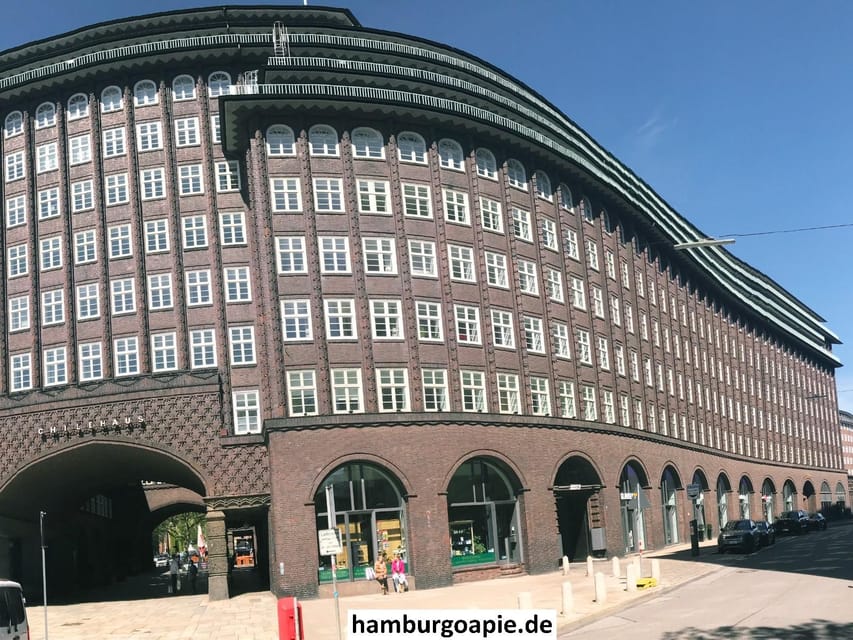
The St. Nikolai Memorial is one of the route’s most important stops. It preserves the remains of a church damaged during the Second World War and now serves as a place of remembrance.
Here, Hamburg’s wartime story becomes visible in stone and open space. The tour connects the memorial with the city’s damaged warehouses and the near-destruction of parts of the old center. That context matters because Hamburg’s historic appearance is not simply the result of age. Some buildings survived centuries, while others were lost or rebuilt after the war.
The stop should appeal to you if you want more than a cheerful sightseeing circuit. The route includes strange, funny, and grim stories, and St. Nikolai provides the serious center of that mix. A good guide will help you understand the human cost without turning the entire walk into a lecture.
You may also want to note that a visit to the memorial does not necessarily mean entry to every paid feature. Attraction and museum admission are not included. If you want to explore an interior exhibit or another ticketed part of the site, plan to pay separately.
Speicherstadt, warehouses, and Hamburg’s trading past
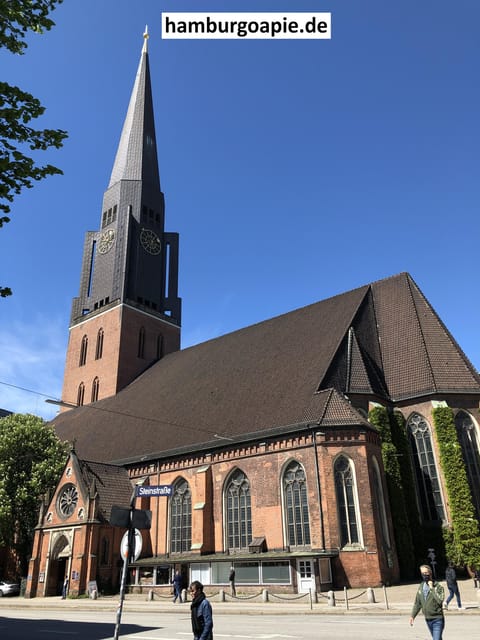
The route includes Speicherstadt, the UNESCO-protected warehouse district. Its red-brick buildings, waterways, and bridges create one of Hamburg’s most recognizable scenes.
The tour’s description gives this district a particularly interesting angle. You hear about warehouses that were nearly bombed out of existence, along with the commercial activity that made this part of the city important. That turns Speicherstadt from a photogenic row of brick buildings into evidence of Hamburg’s role as a trading center.
This is a good place to pay attention to the relationship between water and storage. The canals were not decorative features added for tourists. They were part of the working city, helping goods move through the warehouse area. Your guide’s explanation can help you notice why the buildings were placed where they were and how the district fits into Hamburg’s wider story.
The main drawback is time. Speicherstadt is large, and a two-hour route cannot explain every street or allow a long stop at each building. Think of this as an introduction. You will get enough context to return later for photographs, museums, or a slower walk.
Elbphilharmonie and the modern city
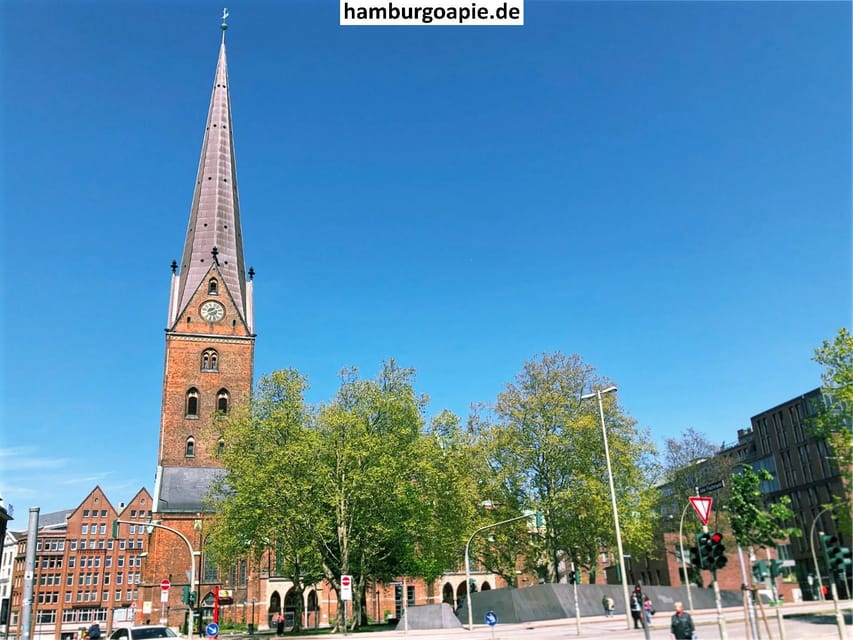
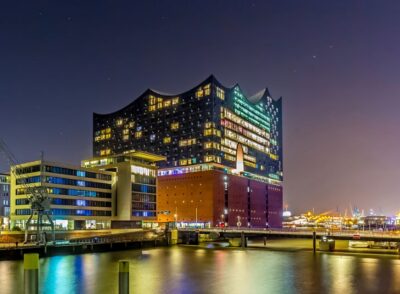
The Elbphilharmonie provides a sharp change of mood. Its dramatic glass form represents modern Hamburg, while the rest of the tour has focused heavily on older streets, religious sites, bridges, and warehouses.
Seeing it as part of this route is useful because it shows how Hamburg continues to reshape its waterfront. The building is not presented as an isolated attraction. Instead, it becomes part of a longer story that runs from old trade routes to present-day culture.
The tour does not include a concert or a promise of interior access. You should expect an exterior visit and a chance to admire the building, take photographs, and hear how it fits into the city. If you want to go inside or attend a performance, that would require separate planning and payment.
I appreciate the contrast. Hamburg is not frozen in its past, and this stop keeps the walk from becoming only a medieval history lesson. You see a city that remembers its older identity while also making room for ambitious modern architecture.
Finishing in Deichstraße
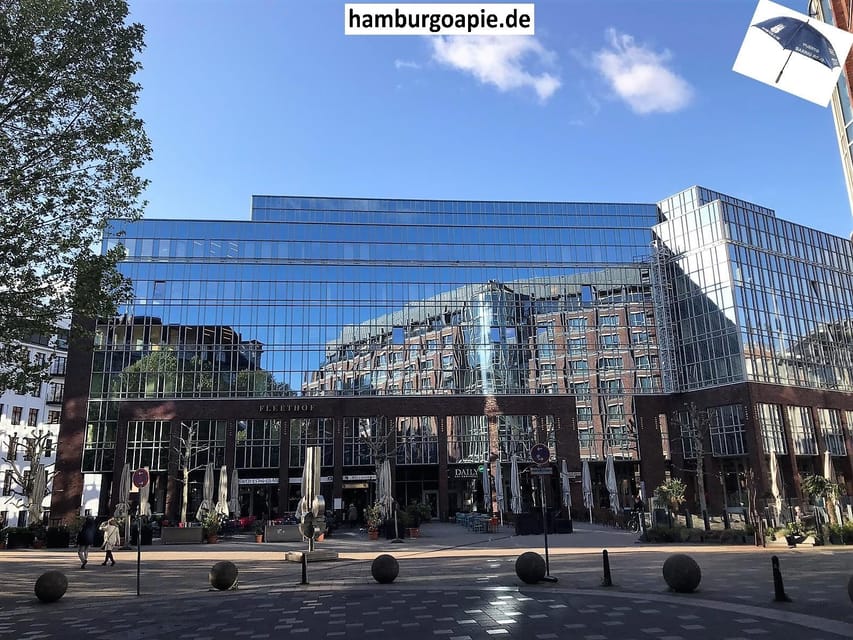
The tour ends at Deichstraße, a historic street with traditional buildings near the old center. Ending here gives the walk a satisfying sense of place. You move from the public scale of the Rathaus and major landmarks to a more intimate street setting.
Deichstraße is also a useful finish because you are not dropped at an anonymous transport stop. You can continue walking through central Hamburg, use the guide’s recommendations, or pause for your own photographs. The guide can also suggest nearby activities and explain how to get around by public transportation.
Pay attention to the change in scale. Hamburg’s history is easier to understand when you see both its grand civic buildings and its narrower historic streets. The final stop helps bring the story back to ordinary urban life.
Spanish guiding and the personal touch
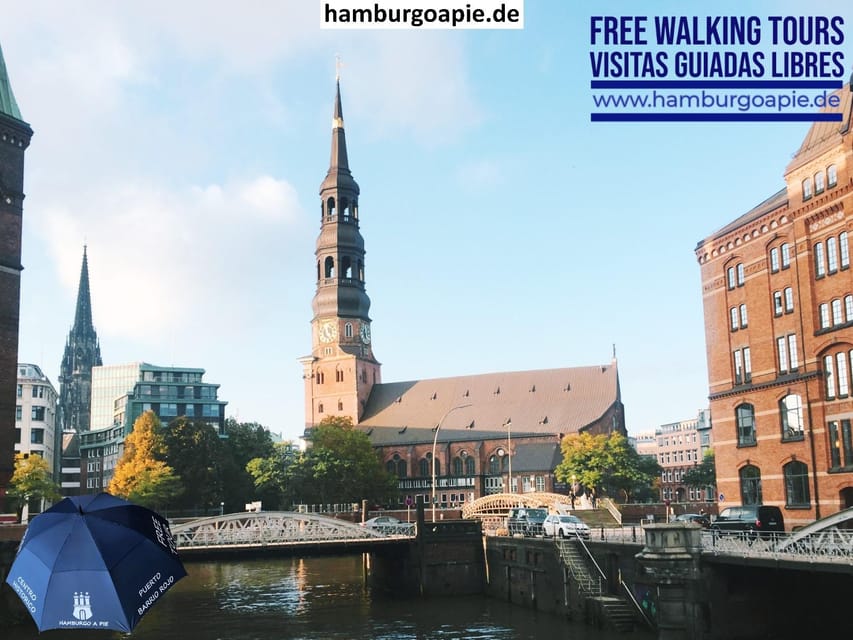
The tour is conducted in Spanish, and that is a major reason to choose it. Historical information is easier to absorb in the language you use comfortably, especially when the guide moves quickly between several centuries and includes humor or local expressions.
The feedback points to strong guiding as the tour’s most praised feature. One Spanish-speaking visitor described the guide as highly professional and very familiar with Hamburg’s history. Another called the experience interesting and instructive. Ramiro was singled out by name, with one visitor rating his guiding 10 out of 10.
Those comments suggest that the guide’s delivery matters as much as the route. A walking tour can visit excellent places and still feel flat if the explanations are rushed. Here, the strongest praise centers on the guide’s professionalism, historical command, and ability to make Hamburg’s character memorable.
The language limit is also a clear consideration. Spanish is the listed live-tour language. If you need English, German, or another language, this is not the right choice based on the information available.
Price, tips, and the real value
This is described as a free tour, but the final payment is decided by you at the end. The displayed price is about $2.36 per person, while the instructions make clear that you choose the amount according to your satisfaction and budget.
That arrangement can offer excellent value. You get two hours with a guide, a structured route through central Hamburg, historical explanations, local suggestions, transportation tips, and help deciding what to do next. For a first orientation walk, that is a useful package at a low financial risk.
It also places responsibility on you. The guide’s time is not truly free, so arrive prepared to make a fair payment if the experience gives you useful context and a good start in Hamburg. The flexible price works well for students, families, and visitors watching their spending, but it should not be treated as a reason to pay nothing.
No meals, drinks, transport, museum admission, or other entry fees are included. Bring your own rain protection, wear comfortable shoes, and allow extra time before the start so you are not searching for the blue umbrella at the last moment.
Who should book this walk?
I would recommend it most strongly to Spanish-speaking visitors seeing Hamburg for the first time. You get the city’s main historic center, several major photo stops, and stories that help connect the buildings.
It also suits you if you want:
- A short introduction before exploring independently
- A route that mixes serious history with unusual local stories
- Outdoor sightseeing without museum admission fees
- Advice on public transportation and later activities
- A walking experience suitable for all ages and fitness levels
You may want another option if you dislike walking tours, need a fully private experience, or want extended time inside museums and attractions. The two-hour schedule gives you breadth, not exhaustive visits. The tour is listed as wheelchair accessible, but you may still wish to confirm the specific route conditions when booking if you have particular mobility needs.
Cancellation is free up to 24 hours before the start, and you can reserve now while paying later. That flexibility is helpful when Hamburg weather or your daily plans are uncertain.
Should you book the Hamburg historic center tour?
Book it if you want a Spanish-language introduction to Hamburg that combines the Rathaus, Domplatz, Trostbrücke, St. Nikolai Memorial, Speicherstadt, Elbphilharmonie, and Deichstraße in one manageable walk.
The best reason to choose it is the guide-led interpretation, especially if Ramiro is leading your departure. The route gives you both famous sights and less obvious historical connections, while the pay-what-you-wish format keeps the upfront cost low.
Just arrive ready for outdoor weather, remember that attraction entry is separate, and treat the final payment as a fair fee for the guide’s time. For a first look at Hamburg’s center in Spanish, this is a practical and good-value choice.
FAQ
Where does the Hamburg free walking tour start?
It starts at the main door of Hamburg’s town hall, in the square outside at Rathausmarkt. The guide is identified by a blue umbrella.
Where does the tour finish?
The walk finishes at Deichstraße.
How long does the tour last?
The guided walking tour lasts about two hours.
What language is the tour conducted in?
The live tour guide speaks Spanish.
What sights are included along the route?
The route includes the historic center, St. Nikolai Memorial, Trostbrücke, Domplatz, Speicherstadt, Elbphilharmonie, and other central sights.
Is the tour really free?
You do not pay a fixed tour fee in advance. At the end, you decide how much to pay based on your satisfaction and budget.
Are museum tickets or attraction entry fees included?
No. Entry fees to attractions and museums are not included.
What should you bring?
Bring an umbrella, since rain is possible. Comfortable clothing for a two-hour walk is also sensible.
Can I cancel the booking?
Yes. You can cancel up to 24 hours in advance for a full refund. You can also reserve your place and pay later.
Just added around Hamburg
- Hamburg: St. Pauli Food and Bier Tour★ 4.7 · 5 reviews
- St. Pauli Tour: Drag-Attack with Barbie Stupid & Lee Jackson★ 4.8 · 280 reviews
- Hamburg: Private Tour Red Light District Walking Tour★ 4.7 · 227 reviews
- St. Michael’s, Elbe Tunnel & Harbor 2-Hour Hamburg Tour★ 4.9 · 21 reviews
- Satt Pauli – der kulinarische Rundgang durch St. Pauli★ 4.8 · 12 reviews
- Hamburg: Safari tour in St. Pauli★ 4.9 · 11 reviews
- Hamburg: Reeperbahn Comedy Club★ 4.3 · 53 reviews
- Radtour um die Alster & durch traumhafte Alsterviertel★ 4.9 · 34 reviews
Hamburg Tours, compared.
Sex and Crime in St. Pauli Tour for Ages 18+
Read our review →
1.5-Hour Harbor and Speicherstadt Day Cruise
Read our review →


Reeperbahn Lust & Laster Tour for Adults Only
Read our review →Browse the lists this tour appears in