
Reviewed · HARBOUR CRUISES
Hamburg Harbor: 3.5-Hour Guided Tour by Bike
Hamburg’s harbor is best understood on two wheels. This 3.5-hour ride links the city’s grand waterfront sights with places many visitors miss, including the working-class Veddel quarter, the new HafenCity district, and the canals of Speicherstadt. I like the mix of famous landmarks and less polished city corners, especially the crossing of the Elbe and the chance to hear how the port shaped Hamburg.
I also like that the tour begins in St. Pauli and finishes back near the Reeperbahn, so you see several sides of the city in one outing. The main drawback is that the bike rental costs extra, and the guide may pack in more information than you can easily absorb while riding. You should also be comfortable cycling for nearly four hours and managing your own bike.
In This Review
- Key points to know before booking
- Why a bicycle makes sense in Hamburg’s harbor
- Starting in St. Pauli beside the bars sculpture
- HafenCity and the Elbphilharmonie
- Baackenhöft and the Elbe crossing
- Veddel, the Golden House, and Ballinstadt
- Speicherstadt and Hamburg’s canal city
- Landungsbrücken, the old Elbe Tunnel, and Davidwache
- How difficult is the 210-minute ride?
- Bike rental, price, and overall value
- Who will enjoy this Hamburg harbor ride?
- Is the Hamburg Harbor bike tour worth booking?
- FAQ
- How long does the Hamburg Harbor bike tour last?
- Where does the tour meet?
- What languages does the guide speak?
- Is bicycle rental included in the price?
- What age must participants be?
- Which Hamburg areas does the route visit?
- Can I cancel the booking?
Key points to know before booking
- A port tour with real variety: The route covers St. Pauli, HafenCity, the Elbe, Veddel, Speicherstadt, Landungsbrücken, and the Davidwache.
- Veddel is the unusual stop: You visit a district closely tied to Hamburg’s port growth and see the Golden House and Ballinstadt Emigration Museum.
- The harbor crossing is part of the experience: Baackenhöft gives you a broad view across the Elbe and a useful sense of the port’s scale.
- You pay separately for the bicycle: A rental can be arranged for €10 per day, while the guided tour itself costs $31 per person.
- The pace is manageable but not short: The route lasts 210 minutes, with small pauses along the way.
- Age and cycling rules matter: You must be at least 12 and able to ride your own bicycle.
Why a bicycle makes sense in Hamburg’s harbor
Hamburg’s harbor area covers too much ground for a comfortable walking tour, yet a bus can make the waterfront feel distant. A bicycle gives you a better middle ground. You can cover long stretches, stop often, and move from historic streets to open river views without spending much time waiting for transport.
The route is also more varied than a simple ride along the waterfront. You begin in the entertainment district of St. Pauli, pass a major church, move into the new architecture of HafenCity, cross the Elbe, and then see a part of Hamburg that many first-time visitors skip.
That variety is the main reason I would choose this tour over a standard harbor sightseeing trip. You are not just looking at cranes and ships from a distance. You get some context about the port, its neighborhoods, its canals, and the people who passed through Hamburg on their way to new lives overseas.
The cycling itself should not be treated as an afterthought. You need to ride your own bike for 3.5 hours, though the route includes small pauses. One person who took the tour during a very hot July day found the shaded parks and cooling breeze along the Elbe made the long ride quite manageable. That is useful advice: the route can be comfortable, but summer weather still matters.
More Bike Tours in Hamburg
- Hamburg 3-Hour Bike Tour
★ 4.8 · 1,353 reviews - Guided Hamburg City Bike Tour
★ 5.0 · 642 reviews - Hamburg: Downtown, Alster & Creative Neighborhoods by Bike
★ 4.5 · 217 reviews
Starting in St. Pauli beside the bars sculpture
The meeting point is Gebrüder Wolff Platz, beside the bars sculpture. This puts you right in St. Pauli, one of Hamburg’s most recognizable districts and a fitting place to begin a tour about the city’s port life.
St. Pauli has long been tied to sailors, entertainment, nightlife, and the harbor economy. Starting here gives the tour a local feel from the first minute. You are not beginning in a quiet museum district or at a generic transport stop. You start in a neighborhood shaped by the people who worked around the waterfront.
The opening stretch leads past St. Michaelis Church, usually called the Michel. The church is one of Hamburg’s best-known landmarks, and its location helps connect central Hamburg with the harbor below. You may already have seen photographs of the tower, but passing it by bike gives you a quick sense of how close the city center sits to the port.
Do not expect a long church visit. The focus here is the ride and the connection between St. Pauli, the city, and the harbor. If you want to climb the Michel tower or visit the interior, plan that separately.
HafenCity and the Elbphilharmonie
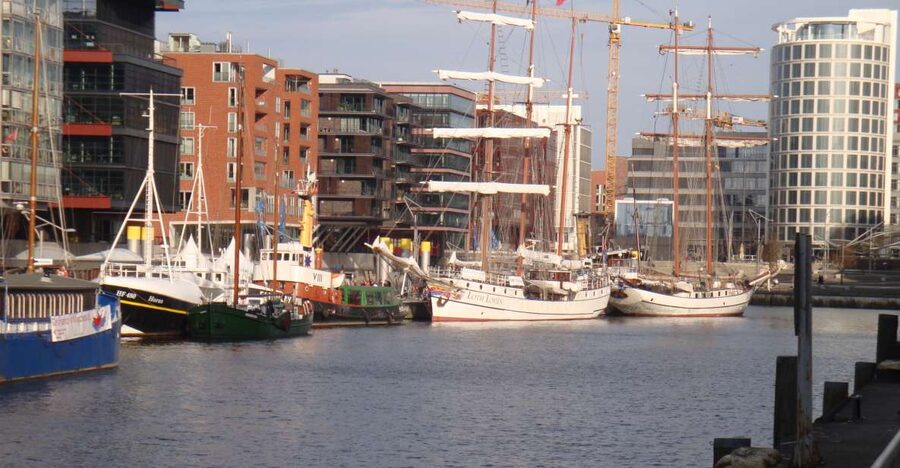
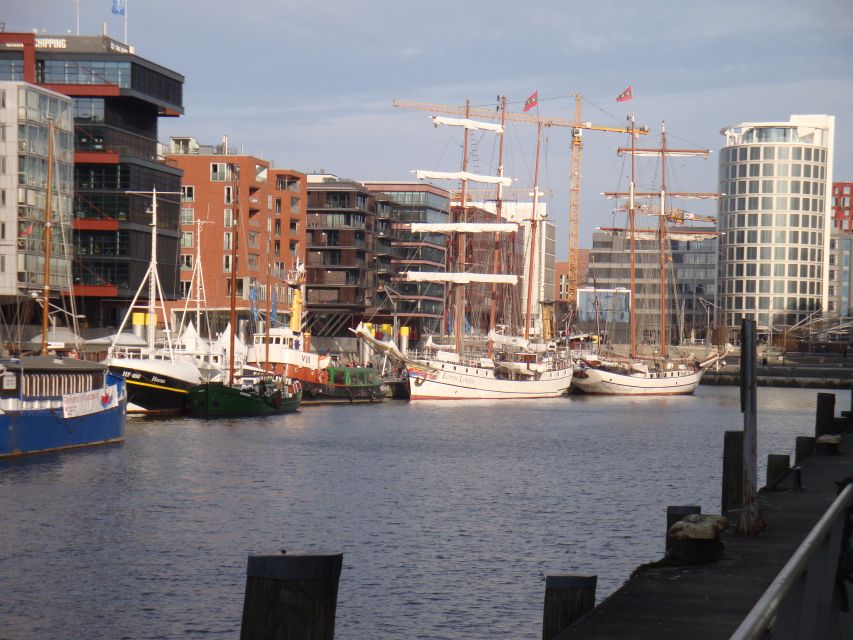
From St. Pauli, the route continues toward HafenCity, Hamburg’s large modern waterfront district. This is the part of the tour where the city’s future-facing side comes into view.
HafenCity is home to the Elbphilharmonie, Hamburg’s striking concert hall and one of the city’s most recognizable modern buildings. You will have time to take in the views and hear how this newer district fits into the wider story of the port.
I like this section because it prevents the tour from becoming only a history lesson. Hamburg is not preserved in one fixed era. Its waterfront keeps changing, and HafenCity shows how former port areas have been brought into a new urban plan.
At the same time, the modern architecture can feel very different from the older harbor districts later in the route. That contrast is useful. You can see the city’s new public face before crossing the river to neighborhoods whose story is more closely tied to industry, migration, and port labor.
The guide’s commentary is a major part of the value here. One useful caution comes from the amount of information packed into the ride. A participant found parts of the commentary too dense and felt the guide should introduce themselves more clearly. I would not book this expecting a relaxed ride with only occasional remarks. The tour is built around explanation, and you may need to stay mentally alert as well as physically engaged.
Baackenhöft and the Elbe crossing
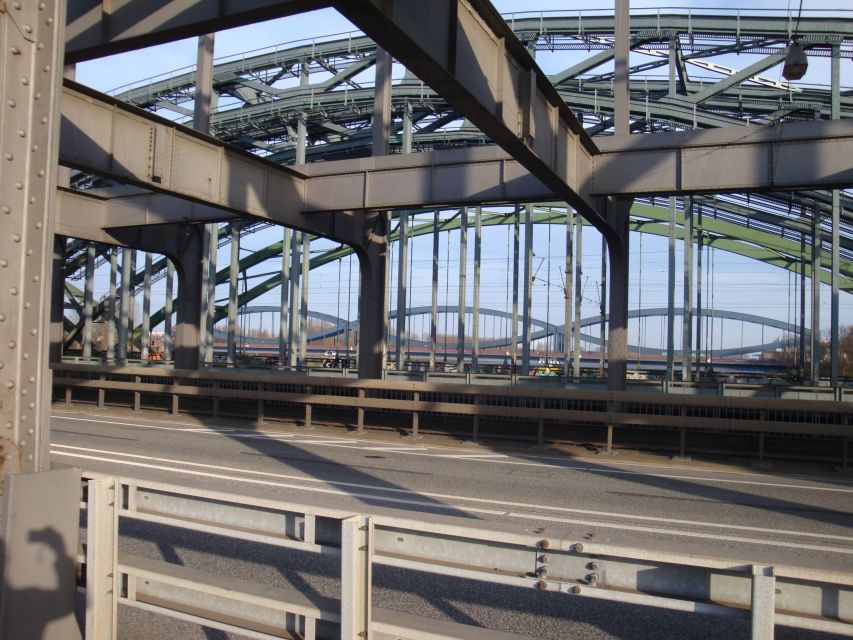
The route continues along Baackenhöft before crossing the Elbe. This is one of the strongest parts of the outing because the river changes your view of Hamburg.
From the waterfront, the city opens out. Instead of seeing the harbor as a collection of separate sights, you begin to understand its scale and position around the Elbe. The crossing also gives you a break from enclosed city streets and a chance to take in a broad panorama.
The exact crossing arrangements can depend on the operating route, so you should follow the guide’s instructions on the day. The important point is that crossing the Elbe is not just a transport detail. It takes you from the more familiar central harbor area into Veddel, a district with a different character and a direct connection to port development.
Bring water, particularly in warm weather. The ride includes open areas where shade may be limited, although sections through parks and along the river can offer relief. Small pauses help, but this is still a long cycling activity.
More Harbour Cruises in Hamburg
- Hamburg: 1.5-Hour Harbor and Speicherstadt Day Cruise
★ 4.6 · 14,200 reviews - Hamburg: 90-Minute Evening Lights Harbor Cruise
★ 4.5 · 7,728 reviews - Hamburg: 1-Hour Harbor Evening Lights Cruise
★ 4.4 · 4,861 reviews - Hamburg: 1-Hour Harbor Sightseeing Cruise with HafenCity
★ 4.4 · 3,067 reviews
Veddel, the Golden House, and Ballinstadt
Veddel is the tour’s most distinctive stop. Many visitors come to Hamburg for the Reeperbahn, Speicherstadt, or the Elbphilharmonie and never reach this quarter. A guided ride gives you a reason to cross the Elbe and explains why Veddel matters.
The district’s story is tied to the growth of Hamburg’s harbor. That connection gives the neighborhood a place in the city’s wider development, rather than treating it as an isolated stop. You learn how the port affected the people and districts around it, not only the commercial waterfront seen on postcards.
The Golden House is one of the notable sights along the way. It offers a specific visual point within the neighborhood, while the surrounding ride gives you a broader sense of Veddel itself.
You also see Ballinstadt Emigration Museum. The museum recalls the role Hamburg played in overseas emigration, making it especially relevant to a harbor tour. For many people, the port was not simply a place of trade. It was the departure point for a new life. Ballinstadt adds that human side to the story of ships, warehouses, and railway links.
The museum is included as a sight on the route, not as a separate museum visit with dedicated entry time. If you want to explore its exhibitions in detail, set aside another visit. On this tour, the guide’s explanation and the exterior context are the main focus.
Veddel may appeal most to people who want to see how Hamburg works beyond its polished center. It is less predictable than the postcard stops, and that is precisely its value. You get a more grounded look at the city’s harbor identity.
Speicherstadt and Hamburg’s canal city
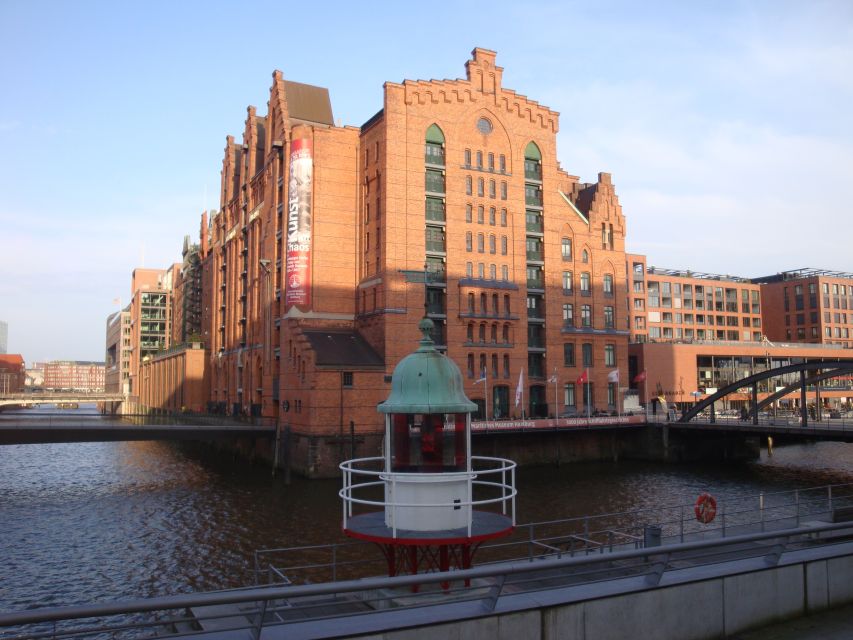
On the way back, the tour reaches Speicherstadt, the famous warehouse district. Its brick buildings, canals, and bridges form one of Hamburg’s most distinctive urban scenes.
This section brings you back to a better-known part of the city, but the earlier ride through Veddel changes how you see it. Speicherstadt was not built as decoration. Its warehouses and waterways were part of Hamburg’s commercial port system, designed to move and store goods.
The guide also discusses the first metropolitan railway and the canalization of Hamburg. These details help explain why the city looks and functions as it does. The harbor required more than ships. It needed rail connections, canals, storage buildings, and ways to manage water and cargo within a growing city.
You should expect some pauses for explanation here, since the district has a lot to point out in a compact area. If you prefer to keep moving, the stops may feel slow. If you enjoy knowing why buildings and waterways were designed in a certain way, this is one of the tour’s most rewarding stretches.
Speicherstadt is also a good place for photographs, but remember that you are part of a group ride. You will have viewing time, not unlimited time to compose pictures at every bridge.
Landungsbrücken, the old Elbe Tunnel, and Davidwache
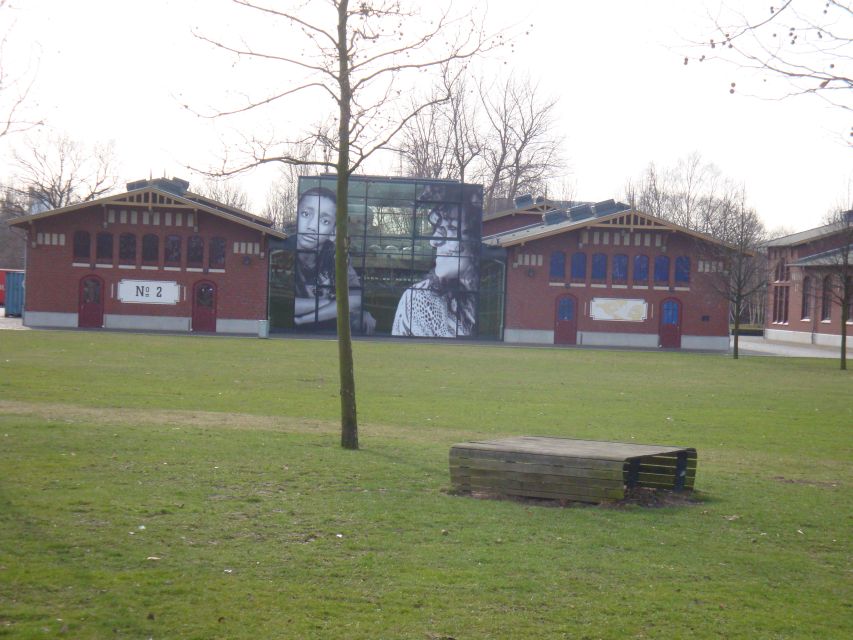
The final section returns to the waterfront at Landungsbrücken. This is one of Hamburg’s busiest harbor viewpoints and a good place to see the connection between the river, the city, and the St. Pauli district where you began.
The route can also include the old Elbe Tunnel on the way back. Cycling through this historic river crossing adds another layer to the harbor story, although the exact use of the tunnel can depend on the day’s route and conditions. If this part matters to you, confirm the current plan with the operator before booking.
The tour ends with a stop at the Davidwache, the well-known police station on Spielbudenplatz. Its location near the Reeperbahn makes it an appropriate final point for a ride that began in St. Pauli and followed the city’s harbor connections in a wide loop.
You finish with the city’s entertainment district nearby, so it is easy to continue into an evening meal or explore the surrounding streets. Food and drinks are not included, and there is no meal stop built into the tour, so plan accordingly.
How difficult is the 210-minute ride?
The tour is not described as a demanding athletic ride, but 210 minutes is a serious amount of time on a bicycle. You must be at least 12 years old and able to ride your own bike. Children under 12 cannot join.
The route includes city streets, waterfront sections, parks, and the Elbe crossing. The small pauses make the ride more approachable, and one older couple, aged 63 and 74, completed the nearly four-hour outing during an exceptionally hot day. Their experience suggests that a reasonably active older adult can manage it, especially with water, suitable clothing, and a steady pace.
Still, you should not book this as a casual substitute for a walking tour. If your knees, balance, or stamina make long periods of cycling difficult, the duration may be the deciding factor.
The guide’s bicycle also matters. One participant felt the guide needed a bike better suited to completing the route without difficulty. That sounds like an isolated operational concern, but it points to a practical question: the quality of the ride depends partly on how confidently the guide leads the group. Most of the feedback is highly positive, yet you should be prepared for some variation in pacing and presentation.
Bike rental, price, and overall value
The guided experience costs $31 per person, which is a fair price for a 3.5-hour city tour with live commentary in English or German. Bike rental is not included, but the operator can arrange one for €10 per day.
That means your real cost is higher than the headline price, but it remains reasonable if you want a single activity covering many different parts of Hamburg. A harbor cruise may show you more water and larger port facilities, while a walking tour may offer more time at individual landmarks. This bike route gives you wider coverage and more neighborhood detail than either option can easily provide in the same period.
I see the best value in the route design. You are not paying only to cycle past familiar sights. You reach Veddel, hear about the social and economic forces connected to the harbor, and link that area with HafenCity and Speicherstadt. The tour also saves you the trouble of planning a route through several districts on your own.
Food and drinks are not included, so bring water and plan a meal before or after. Bookings must be made at least 48 hours ahead. The option to reserve now and pay later is useful if your schedule is still shifting, and free cancellation is available up to 24 hours before the start.
Who will enjoy this Hamburg harbor ride?
I would recommend this tour to adults and families with children aged 12 or older who enjoy city history but do not want to spend the day indoors. It suits people who want famous sights paired with less obvious neighborhoods.
It is especially good for a first or second visit to Hamburg. On a first visit, you get an efficient orientation to St. Pauli, the port, HafenCity, Speicherstadt, and the Elbe. On a return visit, Veddel and the port’s infrastructure may show you a side of Hamburg you missed before.
The tour is also a good match for anyone curious about how a city develops around trade and migration. Ballinstadt, the warehouses, the canals, the railway references, and the modern waterfront all fit together into a larger story.
I would be cautious about booking if you want a short, easy ride with very little talking. The tour lasts nearly four hours, and one participant found the amount of information excessive at times. You should also be comfortable riding in an urban setting and managing your own bicycle.
Is the Hamburg Harbor bike tour worth booking?
Yes, if you want a broad and thoughtful introduction to Hamburg’s harbor rather than a quick list of landmarks. I particularly like that the route crosses the Elbe and reaches Veddel, then returns through Speicherstadt and ends near the Davidwache. That combination gives you famous views, modern architecture, port history, migration history, and everyday city life in one ride.
Book it if you can handle 210 minutes of cycling, are at least 12, and do not mind paying separately for the bicycle. Bring water, allow for plenty of commentary, and consider confirming the planned Elbe crossing and old tunnel section before you go.
Skip it if you mainly want a leisurely harbor cruise or a focused visit to the Elbphilharmonie. For an active visitor who wants to understand how Hamburg’s harbor connects its neighborhoods, this is a strong-value outing with more substance than its modest price suggests.
FAQ
How long does the Hamburg Harbor bike tour last?
The tour lasts 210 minutes, or 3.5 hours.
Where does the tour meet?
The meeting point is Gebrüder Wolff Platz, beside the bars sculpture.
What languages does the guide speak?
The live guide provides the tour in English or German.
Is bicycle rental included in the price?
No. Bicycle rental is separate, but a bike can be arranged for €10 per day.
What age must participants be?
Participants must be at least 12 years old and able to ride their own bicycle. Children under 12 cannot join.
Which Hamburg areas does the route visit?
The route begins in St. Pauli and includes St. Michaelis Church, HafenCity, Baackenhöft, the Elbe crossing, Veddel, the Golden House, Ballinstadt, Speicherstadt, Landungsbrücken, and the Davidwache.
Can I cancel the booking?
Yes. You can cancel up to 24 hours in advance for a full refund. Bookings must be made at least 48 hours before the tour.
Just added around Hamburg
- Hamburg: St. Pauli Food and Bier Tour★ 4.7 · 5 reviews
- St. Pauli Tour: Drag-Attack with Barbie Stupid & Lee Jackson★ 4.8 · 280 reviews
- Hamburg: Private Tour Red Light District Walking Tour★ 4.7 · 227 reviews
- St. Michael’s, Elbe Tunnel & Harbor 2-Hour Hamburg Tour★ 4.9 · 21 reviews
- Satt Pauli – der kulinarische Rundgang durch St. Pauli★ 4.8 · 12 reviews
- Hamburg: Safari tour in St. Pauli★ 4.9 · 11 reviews
- Hamburg: Reeperbahn Comedy Club★ 4.3 · 53 reviews
- Radtour um die Alster & durch traumhafte Alsterviertel★ 4.9 · 34 reviews
Harbour Cruises, compared.
1.5-Hour Harbor and Speicherstadt Day Cruise
Read our review →
1-Hour Harbor Sightseeing Cruise with HafenCity
Read our review →
Hop-On Hop-Off Bus with Alster or Harbor Cruise
Read our review →
Browse the lists this tour appears in