
Reviewed · CITY TOURS
Hamburg: Private Tour Down Town around City Hall
Hamburg’s old stones still have stories to tell. This private two-hour walk links the city’s grand City Hall, old churches, wartime bunkers, trading houses, and shopping streets into one clear introduction. I like the way it connects the Great Fire of 1842 with Hamburg’s later shift from narrow timber-framed lanes to a modern commercial center. I also like the chance to see places such as Chilehaus, Trostbrücke, and the Africa House in one compact route.
The tour works especially well for you if you want history explained on the spot rather than delivered through a guidebook. Guides such as Birgit, Jörn Löding, and Frau Stange have been praised for humor, strong preparation, and the ability to link Hamburg’s past with its present. The main consideration is pace: two hours covers a lot, so several stops are short introductions rather than long visits inside each building.
In This Review
- Key points at a glance
- What this Hamburg walking tour is really about
- Mönckebergstraße and the city’s changing center
- St. James’ Church and the church district
- Kontorhausviertel and the dramatic Chilehaus
- The Great Fire and Hamburg’s rebuilt old town
- Africa House, St. Nicholas’ Church, and the port connection
- The first pneumatic post and Hamburg’s working city
- Trostbrücke and the road to City Hall
- Why a private group matters
- Languages, timing, and practical planning
- Who should book this Hamburg tour?
- Should you book it?
- FAQ
- How long is the Hamburg City Hall private tour?
- How much does the private tour cost?
- What languages are available?
- Is this a private group experience?
- Where does the tour start?
- Where does the tour end?
- Can I cancel the tour for a refund?
Key points at a glance
- The Great Fire of 1842 changed Hamburg’s face: Learn why whole sections of the old town were rebuilt as a modern business district.
- More than a standard old-town walk: The route includes the underground bunker system, pneumatic post, Africa House, and the first harbor basin.
- Chilehaus is a major visual highlight: Its sharp, ship-like form makes it one of the most memorable buildings in the Kontorhausviertel.
- Private groups up to 15 people: You get a guide focused on your party rather than a large crowd.
- A strong guide can make the difference: Birgit, Jörn Löding, and Frau Stange have earned praise for humor, clear explanations, and lively storytelling.
- Good value for a full group: At $294 per group, the price works out to about $19.60 per person for 15 people, though it is less economical for only one or two guests.
What this Hamburg walking tour is really about
This is not simply a checklist of Hamburg sights. It is a short lesson in how a port city changed through fire, trade, war, technology, and rebuilding.
You begin near Hamburg Central Station or another designated starting point, depending on the option selected. The route then heads through the old town toward City Hall, taking in Mönckebergstraße, St. James’ Church, the Kontorhausviertel, Chilehaus, the Africa House, St. Nicholas’ Church, Trostbrücke, the Chamber of Commerce, and Hamburg Rathaus.
The supplied timing adds up to roughly two hours, with stops often lasting between five and 15 minutes. That tells you how to approach the experience. You are not signing up for extended interior visits or a slow architectural study of every building. You are getting a guided thread through central Hamburg, with time to ask questions and take photographs along the way.
I find that format useful on a first visit. Hamburg’s center can seem like a collection of impressive but unrelated buildings. A guide gives you the connections: the Great Fire destroyed large parts of the old town, commercial wealth shaped the new buildings, and the port helped Hamburg become a major Hanseatic city.
More City Tours in Hamburg
- Reeperbahn: Panik City Udo Lindenberg Multimedia Experience
★ 4.9 · 893 reviews - Guided Hamburg City Bike Tour
★ 5.0 · 642 reviews - Hamburg: Hop-On Hop-Off Bus City Tour – Line F
★ 4.2 · 590 reviews
Mönckebergstraße and the city’s changing center
Mönckebergstraße is one of Hamburg’s best-known shopping streets. Locals affectionately call it Mö, and it gives the tour an immediate sense of present-day city life before the route moves into older streets and trading districts.
The value here is not just shopping. Mönckebergstraße helps explain Hamburg’s change from a tight medieval town into a modern commercial city. You can see how broad urban planning and large business buildings replaced many of the narrow lanes and half-timbered houses that once defined the old town.
The guided portion here lasts about 10 minutes. That is enough for orientation and context, but not enough for shopping. If you want stores, cafés, or a closer look at individual facades, plan to return after the tour.
Because this is a walking experience, wear comfortable shoes. The route covers several central districts, and the guide’s attention is best used for questions rather than for finding your way around.
St. James’ Church and the church district
St. James’ Church, known in German as Hauptkirche St. Jacobi, is one of the historic churches on the route. The stop is scheduled for about 10 minutes, so expect a focused explanation of its place in Hamburg’s old town rather than a long service-style visit.
This stop adds an important religious and civic layer to the tour. Hamburg’s major churches were not isolated monuments. They were part of the city’s daily structure, tied to neighborhoods, trade, public life, and the changing fortunes of the port.
I like having a church stop in this walk because it slows the story down. Streets and office buildings can tell you how Hamburg made money, but churches help show how people lived and organized the city.
The exact amount of time inside any building is not specified. Treat the stop as a guided visit around the church area, with entry details depending on conditions and the guide’s route.
Kontorhausviertel and the dramatic Chilehaus
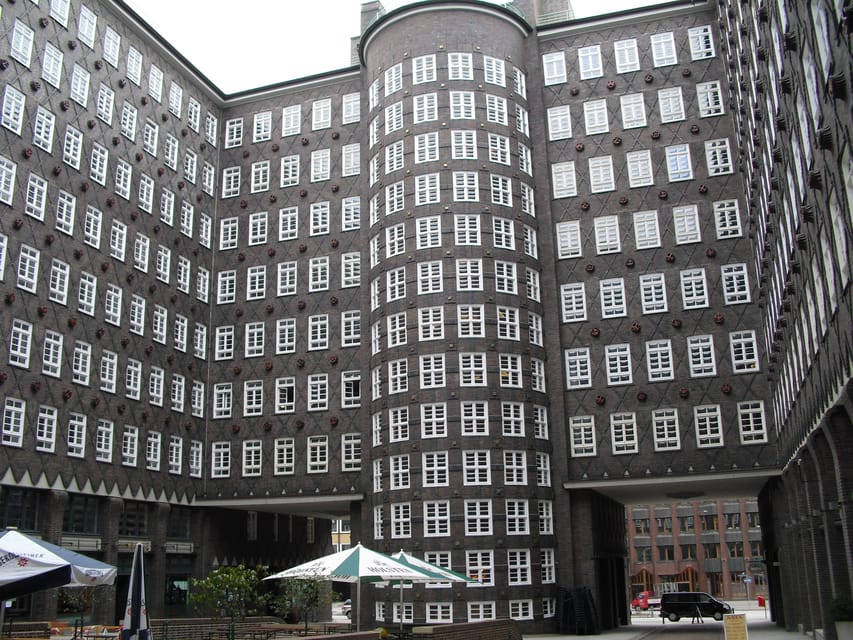
The Kontorhausviertel is one of the strongest sections of the tour. This business district grew from Hamburg’s commercial expansion, and its large office buildings show how the city rebuilt and modernized itself.
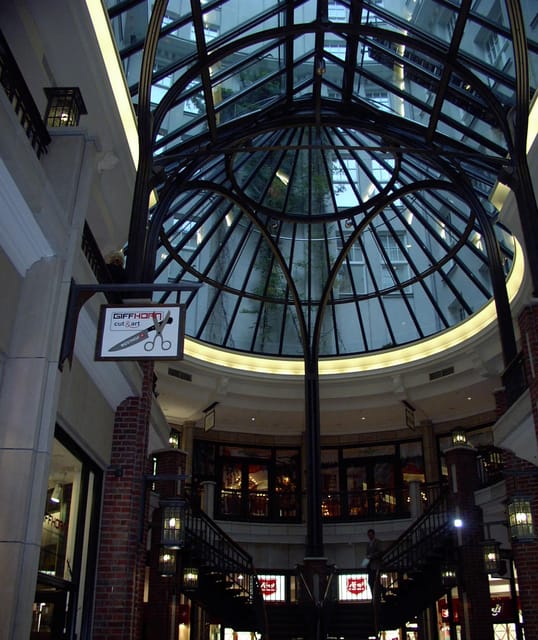
Chilehaus is the architectural star. Its pointed profile has often been compared to the bow of a ship, a fitting image in a port city shaped by international trade. Even if you are not an architecture enthusiast, the building is hard to ignore. Its imposing form rewards a camera and a few minutes of careful looking.
The guided stop at Chilehaus lasts about 10 minutes, while the wider Kontorhausviertel receives about 15 minutes. That gives your guide room to explain not just the building’s appearance, but also the commercial world that produced it.
The practical limit is clear: you will not study every courtyard, facade, or nearby building in detail during this tour. Still, the visit provides a useful first look. If Chilehaus catches your attention, note its location and return later at your own pace.
The route also includes Sprinkenhof and Reichenstraßen. Together, these streets and buildings help you see how Hamburg’s business center developed in a deliberate, substantial style. The old city was not simply repaired after disaster. It was reshaped to serve a growing commercial economy.
Still Hamburg, at a slower pace:
- Hamburg: Sex and Crime in St. Pauli Tour for Ages 18+
★ 4.7 · 15,447 reviews - Hamburg: 1.5-Hour Harbor and Speicherstadt Day Cruise
★ 4.6 · 14,200 reviews - Hamburg: 90-Minute Evening Lights Harbor Cruise
★ 4.5 · 7,728 reviews - Hamburg: 2-Hour XXL Port of Hamburg Cruise Tour
★ 4.7 · 6,979 reviews
The Great Fire and Hamburg’s rebuilt old town
One of the most useful historical topics on this tour is the Great Fire of 1842. The fire burned for four days and destroyed large parts of Hamburg’s old town.
The important point is what came next. Before the fire, much of the city had narrow streets, passageways, and half-timbered houses. Afterward, Hamburg had the chance, and the need, to create wider streets and more modern commercial structures.
This gives the walking route a clear before-and-after story. You can look at today’s streets and understand that much of the center reflects a period of rebuilding and planning rather than an untouched medieval town.
I appreciate this kind of explanation because it prevents a common mistake. Hamburg’s old town is historic, but not every old-looking street has survived unchanged for centuries. The city’s appearance is also the result of destruction, rebuilding, trade, and changing ideas about urban design.
Your guide may point out specific traces of these changes along the way. Since the tour moves through several districts, keep your eyes open for contrasts between older church buildings, later office blocks, and the grand civic architecture around the Rathaus.
Africa House, St. Nicholas’ Church, and the port connection
The Africa House adds an international note to the route. Its name recalls Hamburg’s overseas trading links and the city’s long relationship with global commerce.
This stop is valuable because it broadens the story beyond local streets. Hamburg was part of the Hanseatic trading world, and its identity was shaped by goods, shipping, finance, and connections far beyond northern Germany.
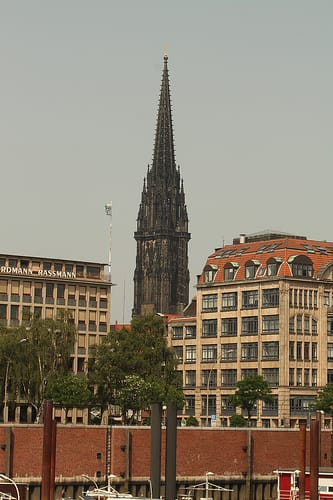
St. Nicholas’ Church brings the focus back to memory and destruction. The church is one of the city’s most important reminders of wartime damage, and its remains give history a physical presence. The tour description also highlights the city’s underground bunker system, said to include more than 700 bunkers. That is an unusual detail, and it gives you a sense of how much of Hamburg’s wartime story lies below street level.
The route does not promise entry into a bunker or a full underground visit. Instead, you should expect the guide to explain the bunker system and the city’s wartime past as part of the walking route. If underground sites are your main interest, ask about the alternative tour times or whether a longer specialist visit would suit you better.
St. Nicholas’ Church receives about 10 minutes in the schedule. That is enough to pause, look, and hear the central story, but perhaps not enough for a lengthy memorial visit.
The first pneumatic post and Hamburg’s working city
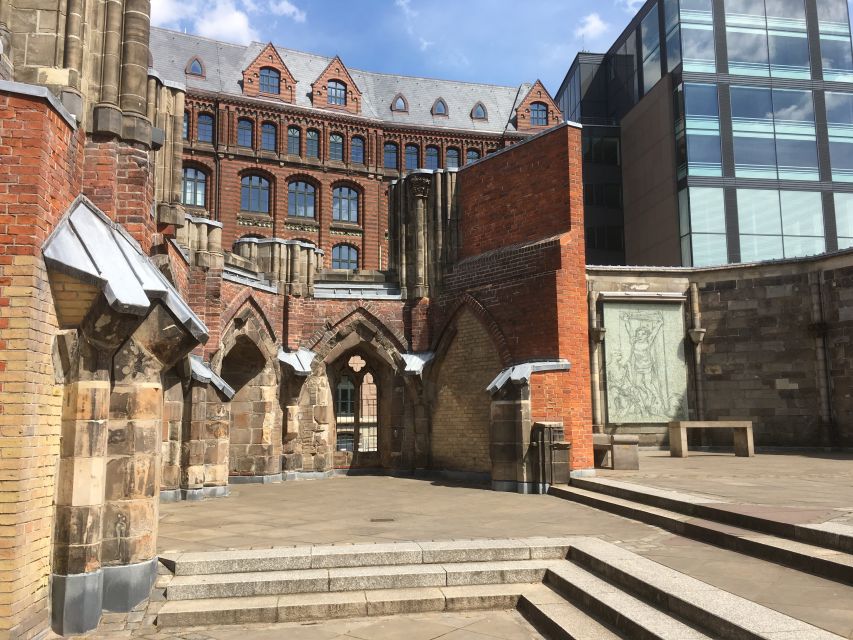
Another unusual detail is Hamburg’s first pneumatic post, put into operation on October 24, 1864. Pneumatic systems used air pressure to send messages through tubes, making communication faster in a city where trade depended on timely information.
This is exactly the sort of small fact that can make a city walk memorable. Grand churches and City Hall are easy to find in a guidebook. A former communications system shows you how the city actually worked.
The pneumatic post also fits the tour’s larger theme of modernization. Hamburg changed not only through new streets and office buildings, but also through new systems for moving information, goods, and people.
The stop is brief, listed at about five minutes. You will not receive a technical demonstration based on the information provided, but the guide can place the system in the wider story of Hamburg’s commercial growth.
Trostbrücke and the road to City Hall
Trostbrücke is one of the more atmospheric stops. The name means Bridge of Comfort, and the bridge links the old commercial center with the area around the Rathaus.
The stop lasts about 10 minutes, giving you time to consider the bridge’s location and the older city around it. This is a good place to let the tour’s themes come together: medieval trade, the old harbor, fire, rebuilding, and the civic power of Hamburg’s merchants and officials.
The first harbor basin of the Hanseatic city was inaugurated in 1189, another date that helps place Hamburg’s rise in context. The modern city is much larger, but its identity still begins with water, trade, and access.
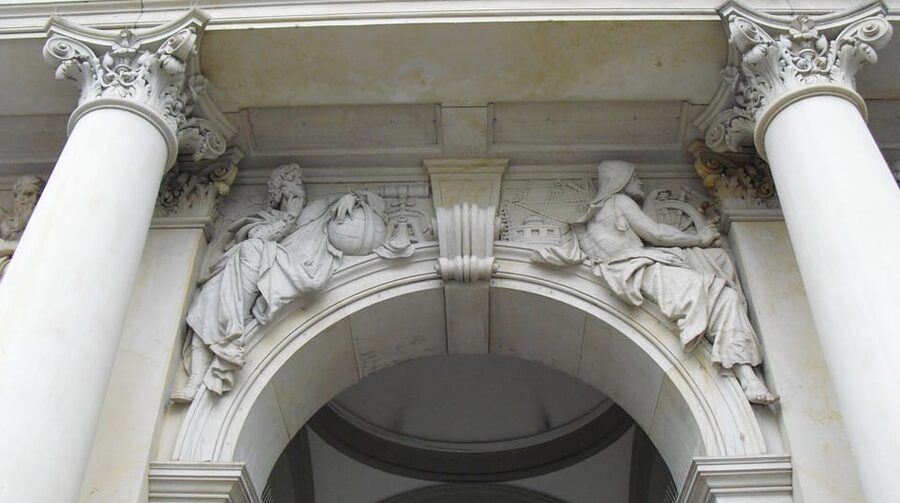
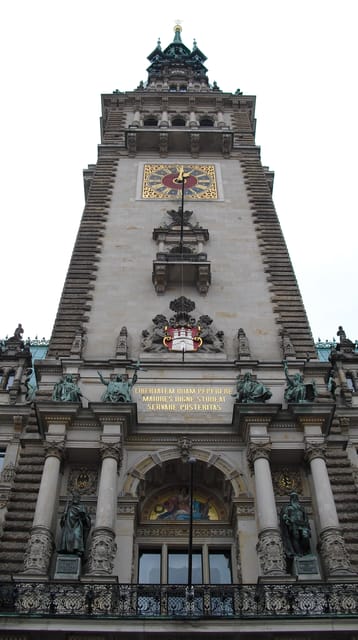
The walk ends near Hamburg Rathaus, with City Hall itself receiving about 15 minutes. This is the most formal architectural finish on the route. You can expect an explanation of the building and its role in Hamburg’s civic life, plus time for photographs.
The tour then finishes at the Rathaus area. Two drop-off locations are listed as Hamburger Rathaus, so confirm the exact meeting and finishing details when booking, especially if your selected option uses a different starting point.
Why a private group matters
The private format is one of the clearest advantages. The price is $294 for a group of up to 15 people, and the guide works with your party rather than mixing you into a large public group.
For a full group, the calculation is attractive: about $19.60 per person. For six people, it becomes $49 per person, and for two people it is $147 each. That means the experience makes the most financial sense for families, friends, or a small organized group.
A private guide also gives you more room to shape the conversation. If you care about architecture, ask for more detail around Chilehaus and the Kontorhausviertel. If your interest is wartime Hamburg, ask follow-up questions about St. Nicholas’ Church and the bunkers. If you are learning the city’s layout, use the walk to get oriented around Central Station, Mönckebergstraße, the old town, and the Rathaus.
The guide quality matters here. Birgit was praised for humor and for keeping the group connected. Jörn Löding was recognized for strong knowledge of Hamburg’s old town, while Frau Stange was praised for linking the city’s history with its present. Those details point to the kind of experience you should want from a private walk: clear storytelling, some personality, and information that does not feel like a dry lecture.
Languages, timing, and practical planning
Live guiding is available in English, Spanish, French, and German. That makes the tour useful for mixed-language groups, although you should select the language you need when booking.
The stated duration is two hours. Starting times depend on availability, and alternative times can be requested. Because the meeting point may vary by booking option, check the final location rather than assuming every departure begins at the same place.
Free cancellation is available up to 24 hours before the tour for a full refund. You can also reserve now and pay later, which helps if your Hamburg schedule depends on train connections, weather, or a cruise timetable.
The route is central and includes several stops where you will want photographs. Keep a little space in your schedule after the tour, especially if you want to shop on Mönckebergstraße, return to Chilehaus, or spend longer around St. Nicholas’ Church and the Rathaus.
A two-hour walk can work in light rain, but Hamburg weather can change quickly. Bring a rain layer and keep your camera ready. The route includes both broad commercial streets and older city passages, so the visual variety is part of the appeal.
Who should book this Hamburg tour?
I would choose this experience if you are visiting Hamburg for the first time and want a reliable introduction to the old town without giving up half a day.
It suits you particularly well if you enjoy:
- City history explained through buildings and streets
- Architecture, especially early modern commercial buildings
- Stories about trade, communication, fire, and wartime change
- Private guiding for a family or small group
- A central route that ends at City Hall
- A short introduction before exploring Hamburg independently
It may be less suitable if you want long interior visits, a museum tour, a harbor cruise, or a specialist study of Hamburg’s bunker network. The route covers many subjects, but it cannot explore each one at length in only two hours.
The public rating of 4.7 from 33 ratings supports the idea that the tour delivers a strong basic city introduction. More important to me are the repeated qualities attached to the guides: informative, funny, well prepared, open-minded, and good at making history feel connected to the streets around you.
Should you book it?
Book this tour if you want Hamburg’s center to make sense quickly. The combination of Mönckebergstraße, Chilehaus, St. Nicholas’ Church, Trostbrücke, and the Rathaus gives you architecture, civic history, trade, war, and everyday city life in one walk.
The best value comes when you share the $294 group price with several people. For one or two people, compare the cost with other private walks, but remember that the private format gives you a guide focused on your questions.
I would book it early in a short Hamburg visit, then use the rest of the day to return to the places that caught your eye. The tour gives you the framework. Your own second look supplies the slower moments.
FAQ
How long is the Hamburg City Hall private tour?
The tour lasts two hours.
How much does the private tour cost?
The listed price is $294 per group of up to 15 people.
What languages are available?
A live guide is available in English, Spanish, French, and German.
Is this a private group experience?
Yes. The activity is offered as a private group tour, with a maximum group size of 15 people.
Where does the tour start?
There are two starting location options, and the meeting point may vary depending on the option booked. Check the confirmed meeting details when making your reservation.
Where does the tour end?
The listed drop-off location is Hamburg Rathaus, or City Hall.
Can I cancel the tour for a refund?
Yes. You can cancel up to 24 hours in advance for a full refund.
Just added around Hamburg
- Hamburg: St. Pauli Food and Bier Tour★ 4.7 · 5 reviews
- St. Pauli Tour: Drag-Attack with Barbie Stupid & Lee Jackson★ 4.8 · 280 reviews
- Hamburg: Private Tour Red Light District Walking Tour★ 4.7 · 227 reviews
- St. Michael’s, Elbe Tunnel & Harbor 2-Hour Hamburg Tour★ 4.9 · 21 reviews
- Satt Pauli – der kulinarische Rundgang durch St. Pauli★ 4.8 · 12 reviews
- Hamburg: Safari tour in St. Pauli★ 4.9 · 11 reviews
- Hamburg: Reeperbahn Comedy Club★ 4.3 · 53 reviews
- Radtour um die Alster & durch traumhafte Alsterviertel★ 4.9 · 34 reviews
City Tours, compared.
1-Hour City Tour by Boat with Guaranteed Seating
Read our review →
City History Canal Sightseeing Tour on a Motorboat
Read our review →
Browse the lists this tour appears in