
Reviewed · HAMBURG TOURS
Hamburg: Speicherstadt and Hafencity Guided Tour
Old warehouses meet bold new architecture. This two-hour walking tour links Hamburg’s most striking sights, from the curving Elbphilharmonie to the brick canals of Speicherstadt and the modern streets of HafenCity. I like the clear contrast between old trade Hamburg and its newest urban district, and I like that a professional guide adds useful context to buildings you could otherwise simply photograph. The main drawback is that it is an outdoor tour, so cold, wet weather can make the walk less pleasant.
I also appreciate the low price of $16 per person, which makes this an easy way to get your bearings in the harbor district. The route includes several places that are easy to miss on your own, including the old coffee roasting plant, the spice museum, and the Magellan Terraces. Just keep in mind that the tour is conducted in German, and entrance fees are not included.
In This Review
- Key points to know before you book
- Starting at the Elbphilharmonie’s harbor setting
- Walking from the Elbphilharmonie toward Speicherstadt
- Speicherstadt and the world of the Pfeffersäcken
- Magellan Terraces and the view across the water
- HafenCity’s modern buildings and environmental ideas
- What the guiding is like in practice
- Is $16 good value for this Hamburg walk?
- Who should take this tour?
- Should you book the Speicherstadt and HafenCity tour?
- FAQ
- Where does the Hamburg Speicherstadt and HafenCity tour meet?
- How long does the tour last?
- What language is the tour conducted in?
- Is the Elbphilharmonie visit inside the building?
- What places does the route cover?
- Does the tour explain Speicherstadt’s history?
- Is the tour wheelchair accessible?
- Are entrance fees included?
- Can I cancel the booking?
Key points to know before you book
- A strong old-and-new route: The walk connects the Elbphilharmonie, historic Speicherstadt, and futuristic HafenCity in one compact outing.
- A history-rich warehouse district: You learn how Speicherstadt served Hamburg’s Hanseatic merchants and why its cathedral-like courtyards were built.
- The Elbphilharmonie is viewed from outside: You get a guided look at the landmark’s architecture, but no admission is included.
- A coffee-roasting stop can slow the pace: The pause lasts about 15 minutes, and some people may prefer more explanation instead of shopping time.
- German is the tour language: The guide answers questions and explains the route in German.
- Good value for a short city orientation: At $16, the tour offers a useful introduction without taking up half your day.
Starting at the Elbphilharmonie’s harbor setting
The tour begins at Sandtorkai 74, at the corner of Sandtorkai and Kaiserkai. Look for the square directly in front of the stairs and the white wall with a hole in the middle. That precise meeting point matters in HafenCity, where broad plazas, construction, and large modern buildings can make a simple rendezvous less obvious than it sounds.
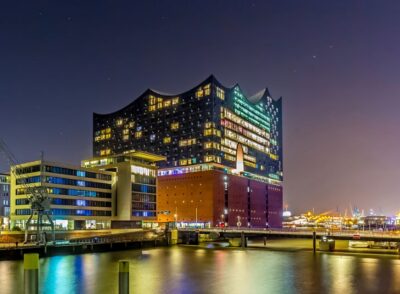
From there, the route begins near the Elbphilharmonie, Hamburg’s most recognizable modern landmark. The building rises above the harbor with a wave-like, abstract glass front set on top of an older brick warehouse base. The tour explains the building from the outside and places it within the wider story of Hamburg’s waterfront renewal.
I like beginning here because you see the city’s present-day ambition before walking into its trading past. The Elbphilharmonie is not just a concert hall in this setting. It also acts as a visual marker for HafenCity and the harbor, showing how Hamburg has turned former port areas into a new urban quarter.
The wording of the tour can sound as though you will enter the Elbphilharmonie, but the listed highlights specify an exterior visit. You should plan on seeing and discussing the building from outside rather than attending a concert or touring its interior. Entrance fees are not included.
A few more Hamburg trips worth comparing
- Hamburg: Sex and Crime in St. Pauli Tour for Ages 18+
★ 4.7 · 15,447 reviews - Hamburg: 1.5-Hour Harbor and Speicherstadt Day Cruise
★ 4.6 · 14,200 reviews - Hamburg: 90-Minute Evening Lights Harbor Cruise
★ 4.5 · 7,728 reviews
Walking from the Elbphilharmonie toward Speicherstadt
The route continues from the Elbphilharmonie toward the Kaiser, passing several attractions associated with Hamburg’s tourist center. You go by Miniatur Wunderland, known for its enormous model railway, as well as the old coffee roasting plant and the spice museum.
These stops help give the walk a local flavor. The route is not only a parade of famous facades. It points out the goods and businesses that shaped Hamburg’s port economy. Coffee and spices were valuable cargo, and their presence in this part of town connects everyday smells and shops with the larger story of maritime trade.
A 15-minute pause at the coffee roasting plant is part of the rhythm of the walk. You can use it for a look around or a purchase, but this is one place where expectations matter. If you want a detailed explanation of bean origins, roasting temperature, or roasting time, you may need to ask directly. The stop has been less satisfying for people who wanted a talk about coffee rather than shopping time.
That is a useful tip for the entire tour: ask questions as you go. The guide is described as friendly and willing to answer questions, but some details may only come out when someone asks. A short question about a building, cargo, or trade practice can turn a passing sight into a much better part of the walk.
Speicherstadt and the world of the Pfeffersäcken
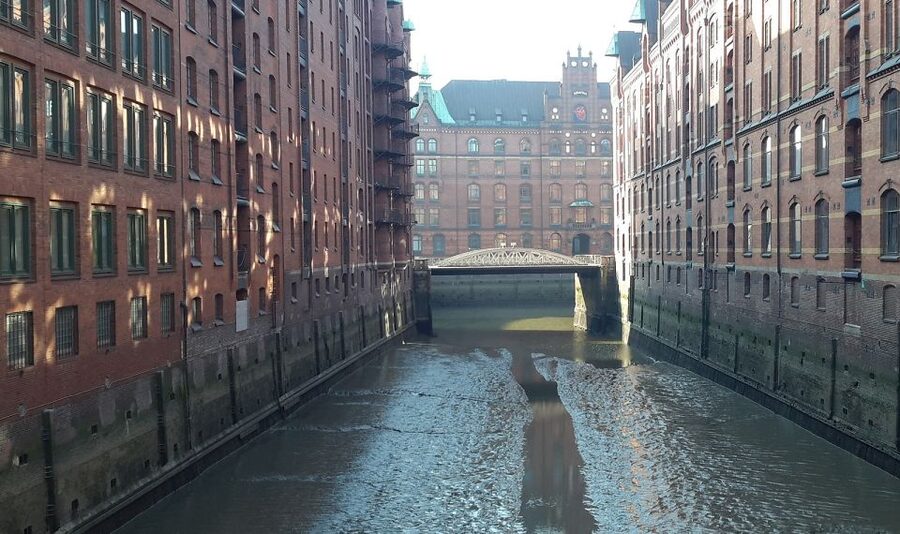
Speicherstadt is the historic core of the tour. Its long brick warehouses line waterways and narrow streets, creating one of Hamburg’s most memorable city scenes. The warehouses were built for storage, and the district reflects the importance of moving goods between ships, merchants, and markets.
The guide places Speicherstadt in the era of the Hanseatic League, the powerful trading network that linked port cities across northern Europe. This context is valuable because the district can otherwise look like a photogenic collection of red brick buildings. You learn to read the warehouses as working spaces designed around commerce, customs, and storage.
The old Hamburg merchants were nicknamed the Pfeffersäcken, or pepper sacks. It was a pointed nickname for wealthy traders whose fortunes came from imported goods. That small detail adds humor to the story and reminds you that trade was not an abstract force. It shaped who held power, how the city made money, and what daily life looked like.
The inner courtyards on the Dutch Brook are especially effective. Their tall brick walls and church-like proportions can feel almost sacred, but the tour makes the sharper point that money and trade, not religion, governed this part of Hamburg. That contrast gives the architecture more meaning than a simple explanation of dates and building materials.
I find Speicherstadt most rewarding when the guide connects its design to its purpose. Look at the scale of the buildings, the relationship between the warehouses and waterways, and the enclosed courtyards. You begin to see a district built for efficiency, security, and commercial power, not merely for good photographs.
Magellan Terraces and the view across the water
The route reaches the Magellan Terraces, which sit across from Speicherstadt in HafenCity. This is a useful pause because you can look back toward the older warehouse district while standing in one of the newer parts of Hamburg.
The terraces create a visual bridge between the two halves of the tour. On one side, you have historic brick storage buildings and canals. On the other, you see the cleaner lines and open public spaces of HafenCity. The guide can explain how the city has used the waterfront for a very different purpose in the modern era.
This point also helps you understand the scale of redevelopment. Speicherstadt feels enclosed and dense, with its buildings pressed close to the water. HafenCity feels more open and planned. The contrast is not subtle, which is exactly why it works well on a guided walk.
Give yourself a moment here to look rather than simply follow the group. The route is only two hours, but the Magellan Terraces offer one of the best places to compare Hamburg’s old commercial center with its new architectural program.
Still Hamburg, at a slower pace:
- Hamburg: 2-Hour XXL Port of Hamburg Cruise Tour
★ 4.7 · 6,979 reviews - Hamburg: Line A Sightseeing Hop-On Hop-Off Bus Tour
★ 4.6 · 6,958 reviews - Hamburg: Elbphilharmonie Plaza Guided Tour
★ 4.7 · 5,882 reviews - Hamburg: Hamburg Dungeon Admission Ticket
★ 4.7 · 5,745 reviews
HafenCity’s modern buildings and environmental ideas
After Speicherstadt, the tour moves into HafenCity, Hamburg’s newest and most modern urban district. This change in scenery is the central organizing idea of the walk. You move from historic warehouses to contemporary buildings that explore new approaches to design and environmental performance.
The tour presents HafenCity as a contrast to Speicherstadt and points out what modern architecture can do. The buildings are described as sophisticated and environmentally friendly, so you get more than a visual lesson in glass, steel, and unusual shapes. The guide also explains the ideas behind the district’s development.
For you, this part is most useful if you want to understand how Hamburg is changing. A self-guided walk can show you attractive new buildings, but a guide can explain why they were placed here and how the district differs from the old port quarter. The two areas are close together, yet they represent very different ideas about work, trade, public space, and urban planning.
The modern section may not appeal as much if you prefer historic streets and old interiors. Still, the tour earns its price by showing both sides of Hamburg rather than spending the entire two hours in one style of neighborhood.
What the guiding is like in practice
The tour includes a professional live guide, and the language is German. The strongest part of the guiding is the explanation of Speicherstadt, Hamburg’s wider history, and the Elbphilharmonie. The guide is also expected to respond to questions, so this is not a silent walk with a prerecorded audio track.
You should feel comfortable asking for more detail if a subject interests you. That is particularly useful during the coffee-roasting stop and around the modern buildings of HafenCity, where a short prompt may lead to a fuller explanation.
The tour has received a strong overall rating of 4.7 from 1,344 ratings, with recent feedback praising clear explanations, useful knowledge of Hamburg, and friendly answers. One practical warning comes from winter conditions: the walk takes place outside, and an especially icy day made the experience less comfortable. Wear warm clothing and shoes suitable for walking on cold, potentially wet streets.
Because the tour lasts two hours, the pace should suit most people who want an introduction rather than a full study of Hamburg’s port. You will not have time to explore every museum or enter every attraction. The benefit is that you cover three important districts without giving up an entire morning or afternoon.
Is $16 good value for this Hamburg walk?
At $16, I consider this a good-value orientation tour. The price covers a professional city guide and a route that includes the Elbphilharmonie, Speicherstadt, Magellan Terraces, and HafenCity. Those sights are all central to understanding modern Hamburg, and the tour links them in a logical order.
The value is strongest if you are new to the city or want a quick introduction before exploring on your own. You pay for interpretation and structure, not admission tickets. Since entrance fees are excluded, you should not book this expecting access to paid attractions or an interior tour of the Elbphilharmonie.
The coffee stop is the one part that may affect your sense of value. A 15-minute shopping pause can feel too long if you wanted every minute filled with guiding. If you enjoy browsing local products, it may be a welcome break. If you want a tightly packed architecture and history walk, use that time to ask questions or take notes.
The reserve-now-and-pay-later option also makes planning easier. You can hold a place without paying immediately, and free cancellation is available up to 24 hours before the start time. Check the available starting times when you choose your date.
Who should take this tour?
I would recommend it to first-time visitors who want a compact introduction to Hamburg’s waterfront. It also suits anyone who enjoys architecture, port history, urban redevelopment, and guided walks that connect separate sights into one story.
It is a good choice for people who want to see the Elbphilharmonie without paying for an attraction ticket, as long as an exterior visit meets your expectations. It also works well for visitors who might otherwise walk through Speicherstadt without understanding why the warehouses and courtyards look the way they do.
The tour is wheelchair accessible, which is helpful for anyone checking access before booking. The information provided does not give further details about the exact walking surface or rest points, so you should confirm any specific mobility needs in advance.
I would be more cautious about booking it in very cold or wet weather. The tour is outdoors, and the route is more enjoyable when you can pay attention to the guide instead of simply trying to stay warm. Since the tour is in German, you should also choose it only if you can follow spoken German comfortably.
Should you book the Speicherstadt and HafenCity tour?
Book it if you want a low-cost, two-hour introduction to Hamburg’s most important harbor districts. I especially like the way it moves from the Elbphilharmonie to the Hanseatic warehouses and then into modern HafenCity. That old-to-new structure gives the walk a clear purpose.
Skip it if you want interior admissions, an English-language guide, or a tour focused only on the Elbphilharmonie. Also think twice during severe winter weather. For everyone else, $16 buys a useful overview, strong local context, and a sensible starting point for exploring Hamburg on your own.
FAQ
Where does the Hamburg Speicherstadt and HafenCity tour meet?
The meeting point is at Sandtorkai 74, at the corner of Sandtorkai and Kaiserkai. Look for the square in front of the stairs and the white wall with a hole in the middle.
How long does the tour last?
The walking tour lasts two hours.
What language is the tour conducted in?
The live tour guide speaks German, and the listed tour language is German.
Is the Elbphilharmonie visit inside the building?
The tour includes a guided look at the Elbphilharmonie from outside. Entrance fees are not included.
What places does the route cover?
The route includes the Elbphilharmonie, Speicherstadt, the Kaiser area, Miniatur Wunderland, the old coffee roasting plant, the spice museum, the Magellan Terraces, and HafenCity.
Does the tour explain Speicherstadt’s history?
Yes. The guide discusses Speicherstadt during the Hanseatic League, its warehouses, the role of trade, and the merchants known as the Pfeffersäcken.
Is the tour wheelchair accessible?
Yes, the activity is listed as wheelchair accessible.
Are entrance fees included?
No. Entrance fees are not included in the tour price.
Can I cancel the booking?
You can cancel up to 24 hours in advance for a full refund. You can also reserve now and pay later, subject to the booking conditions.
Just added around Hamburg
- Hamburg: St. Pauli Food and Bier Tour★ 4.7 · 5 reviews
- St. Pauli Tour: Drag-Attack with Barbie Stupid & Lee Jackson★ 4.8 · 280 reviews
- Hamburg: Private Tour Red Light District Walking Tour★ 4.7 · 227 reviews
- St. Michael’s, Elbe Tunnel & Harbor 2-Hour Hamburg Tour★ 4.9 · 21 reviews
- Satt Pauli – der kulinarische Rundgang durch St. Pauli★ 4.8 · 12 reviews
- Hamburg: Safari tour in St. Pauli★ 4.9 · 11 reviews
- Hamburg: Reeperbahn Comedy Club★ 4.3 · 53 reviews
- Radtour um die Alster & durch traumhafte Alsterviertel★ 4.9 · 34 reviews
Hamburg Tours, compared.
Sex and Crime in St. Pauli Tour for Ages 18+
Read our review →
1.5-Hour Harbor and Speicherstadt Day Cruise
Read our review →



Reeperbahn Lust & Laster Tour for Adults Only
Read our review →Browse the lists this tour appears in