
Reviewed · BAMBERG TOURS
Witch Trials in Bamberg
Bamberg’s prettiest streets hide a grim story. This 1.5-hour walking tour connects the old town with the persecution of witches and sorcerers in 17th-century Bamberg. I like its focus on ordinary people from every social class, including men, women, and even mayors. I also like the way it links the witch hunts to places you can still see, including the medieval Lochgefängnisse prisons. The main drawback is clear: the tour is offered in German only, so you need a strong grasp of the language to follow the historical detail.
At $15 per person, this is a modestly priced way to add serious historical context to a visit to Bamberg. The route includes several short walks between stops, so you get a pleasant look at the old town rather than sitting in one place. Bring warm clothing in cold weather, since the tour continues outdoors and one February booking still found the experience informative and engaging despite the chill.
In This Review
- Key points to know before booking
- Meeting your guide on Bamberg’s Domplatz
- The Old Court sets the historical scene
- Short walks keep the tour connected to the old town
- Geyerswörth Palace adds a wider view of Bamberg
- The Lochgefängnisse reveal the prison system
- Bamberg’s story reaches beyond one city
- Finishing at the Malefiz-Haus site
- What the $15 price really buys you
- Cold weather, walking pace, and accessibility
- Who will get the most from this tour
- Booking details that matter
- Should you book Witch Trials in Bamberg?
- FAQ
- Where does the Witch Trials in Bamberg tour begin?
- How do I identify the tour guide?
- How long does the tour last?
- What language is the tour offered in?
- How much does the tour cost?
- Is the tour wheelchair accessible?
- Which places are included on the route?
- Where does the tour finish?
- Can I cancel the booking?
Key points to know before booking
- The meeting point is easy to spot: Find the guide on Domplatz, in front of the entrance to the Alte Hofhaltung. The guide carries a picture folder and wears a Geschichte Für Alle e.V. name tag.
- The subject goes beyond old witch stereotypes: The tour explains that persecution affected men and women from many parts of society, not only elderly women or people with red hair.
- Bamberg’s Trudenhaus is central to the story: Anyone sent to this witch prison faced a terrible fate, and the tour explains how such places fit into the legal process.
- The route includes the Old Court and Geyerswörth Palace: These historic landmarks provide a setting for understanding Bamberg’s rulers, institutions, and city life.
- The tour finishes at the former Malefiz-Haus site: This location operated from about 1627 to 1650 and gives the final section a specific place in the city.
- The tour is in German and lasts 90 minutes: It is wheelchair accessible, with free cancellation up to 24 hours before the start.
Meeting your guide on Bamberg’s Domplatz

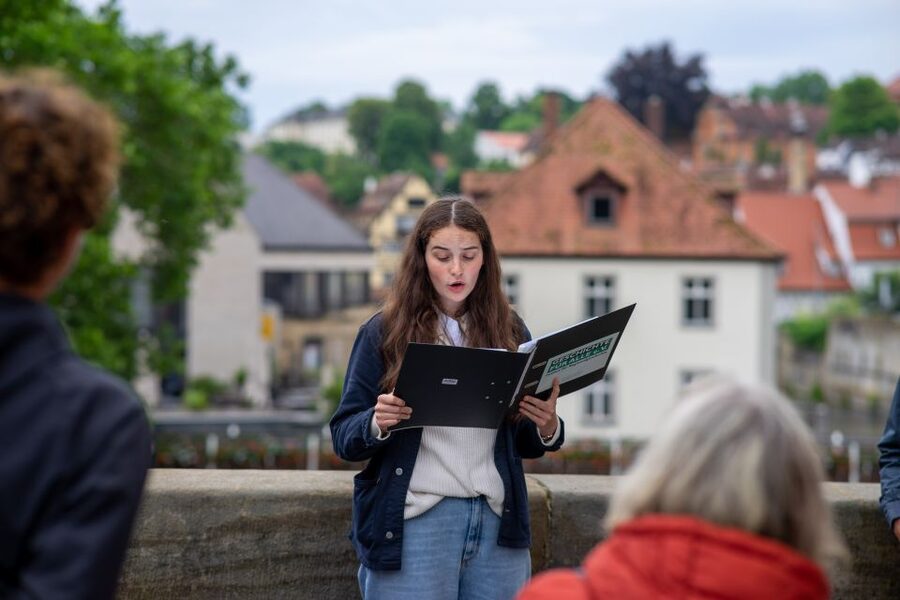
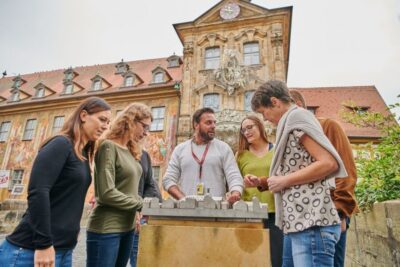
Your starting point is Domplatz, Bamberg’s cathedral square, in front of the entrance to the Alte Hofhaltung. Look for a guide carrying a picture folder and wearing a name tag marked Geschichte Für Alle e.V. This identification matters, since a historic square can have more than one group gathering there.
The meeting point puts you at the edge of Bamberg’s old center from the first minute. You do not need to begin with a bus ride or a long transfer. Instead, the story starts among the city’s old buildings and alleys, where the setting helps make the subject feel connected to real places rather than sealed away in a museum.
The organization behind the tour is Geschichte Für Alle e.V., which provides trained guides for historical walks. The guide’s role is important here. Witch trials can easily be reduced to spooky anecdotes, but this subject needs careful explanation of law, fear, social pressure, and the way accusations spread.
Recent feedback gives the guide a strong mark for clear explanations. The overall score is 4.4 from 187 ratings. Specific comments praise the informative content, the ability to answer questions in detail, and the way the story is told in an engaging manner. That is useful evidence for this particular tour, since the quality of the explanation matters more than a long list of sights.
A few more Bamberg trips worth comparing
- Bamberg: Guided Walking Tour
★ 4.6 · 3,202 reviews - Bamberg: Guided Beer History Tour with Optional Tasting
★ 4.6 · 772 reviews - Bamberg: City Highlights Walking Tour
★ 4.6 · 679 reviews
The Old Court sets the historical scene
The first major stop is the Old Court, or Alte Hofhaltung. Here, the tour begins to connect Bamberg’s grand civic and religious center with the period when witch hunts took place.
You will not simply be looking at old walls. The guide uses the location to explain Bamberg’s wider past and the systems of power that shaped life in the city. That context helps you understand why accusations could become so dangerous. A witch trial was not just a private quarrel or a rumor in a village. It could involve courts, officials, imprisonment, interrogation, and decisions that changed a person’s life forever.
This is also where the tour begins to correct familiar clichés. The victims were not limited to elderly women. Men and women from different social classes could be accused, and the persecution even reached Bamberg mayors. That detail gives the subject a sharper edge. It shows that status did not always provide safety once fear and legal machinery took hold.
The Old Court is a good opening stop because it gives the walk a broad frame. You learn about Bamberg itself before moving into the more specific story of imprisonment and punishment.
Short walks keep the tour connected to the old town
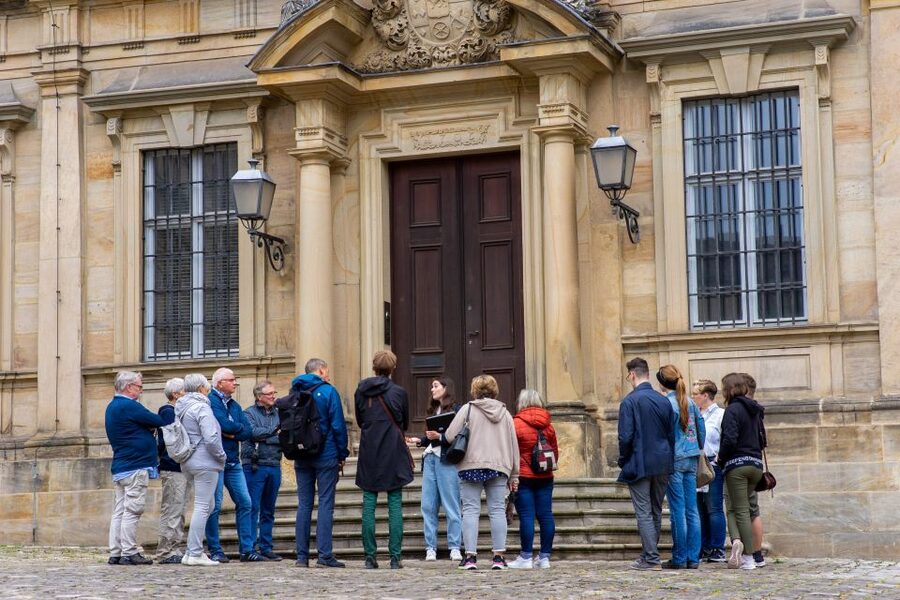
After the Old Court, the route continues on foot through Bamberg’s old alleys. The listed walks between stops take about five minutes, four minutes, two minutes, five minutes, and six minutes. None is presented as a long hike, but you should still expect to remain outside and walk on historic streets for most of the 90 minutes.
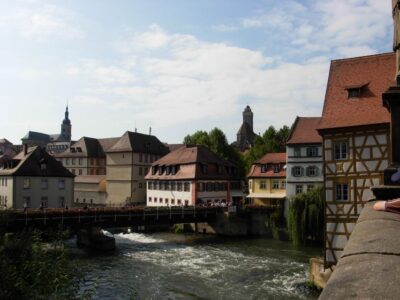
I like this format because the movement is part of the lesson. You see how close different parts of Bamberg’s old center are to one another, and the subject develops as you pass from one location to the next. The route feels like a connected city story rather than a set of unrelated facts.
You should wear shoes that are comfortable for walking on old-town streets. The tour is wheelchair accessible, but the experience still takes place in a historic urban setting, so anyone concerned about surfaces or the pace should contact the provider before booking. The supplied information does not give a maximum group size, so you should not assume a small private walk.
Groups of 10 or more need to contact Geschichte Für Alle e.V. by email at [email protected]. That is especially useful for school groups, family parties, or organized visits.
Geyerswörth Palace adds a wider view of Bamberg
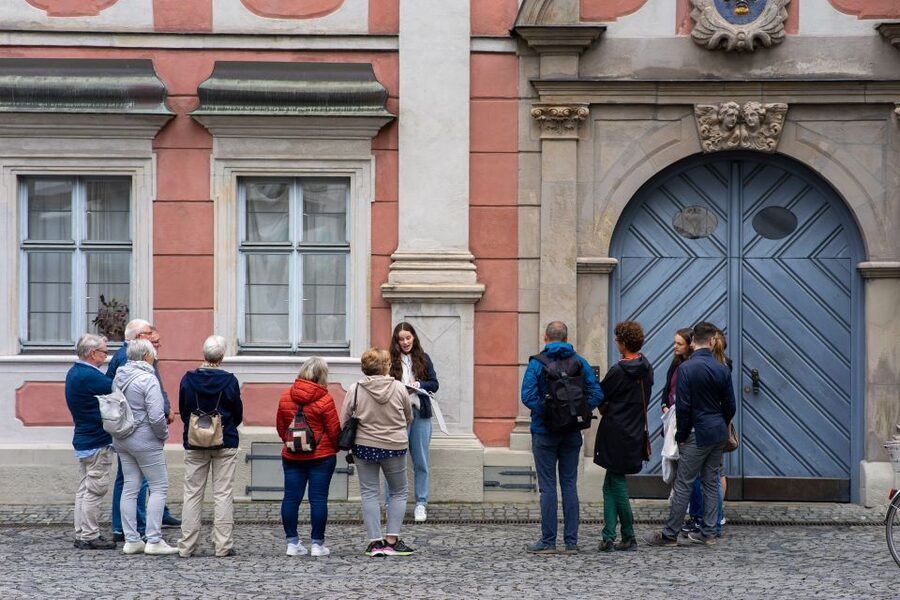
The route reaches Geyerswörth Palace after another short walk. This stop broadens the tour beyond the immediate story of accusations and prisons.
The palace helps place the witch hunts within Bamberg’s political and social setting. The guide can show how the city’s major buildings, authorities, and public spaces relate to the period. You get a better sense of the society in which accusations were made and judged.
This part will likely appeal to you if you want more than a frightening tale. The tour is about the history of Bamberg and the way the city has dealt with its past, not only about punishment. The palace stop gives the guide room to explain how the city functioned and how institutions affected ordinary people.
There is a practical tradeoff. The experience is not built around entering a series of interiors. The route is mainly a guided walk, and the information provided identifies the Old Court and Geyerswörth Palace as guided stops without promising interior access. If your main goal is a long look inside palace rooms, this is not the right format. If you want buildings to serve as evidence in a city story, the stop makes more sense.
Still Bamberg, at a slower pace:
- Bamberg: Guided Historical Culinary Tour
★ 4.6 · 461 reviews - Bamberg: Immersive Medieval Tour
★ 4.7 · 232 reviews - Bamberg: Private Guided Walking Tour
★ 4.8 · 90 reviews - Bamberg: Beer & Brewery Tour – 2 Hour – English & German
★ 5.0 · 87 reviews
The Lochgefängnisse reveal the prison system
One of the most useful parts of the walk is the discussion of the Lochgefängnisse, Bamberg’s medieval prison cells. The name refers to the old prison spaces, and the subject gives the tour a physical link to the process that turned suspicion into confinement.
The prison discussion is where the story becomes especially concrete. You are no longer dealing only with broad terms such as superstition or persecution. You are considering what happened to people who were taken into custody and placed in a system from which escape could be unlikely.
The tour also introduces the Trudenhaus, known as Bamberg’s witch prison. Anyone who ended up there was, in the words of the historical account presented by the experience, as good as lost. That phrase captures the grim imbalance between accusation and defense. Once a person entered such a place, the legal process could become a path toward a predetermined end.
I value this stop because it avoids treating the witch hunts as a collection of strange beliefs. It shows how beliefs gained force through institutions. A prison, a court, and official authority could make a fearful claim seem legally real.
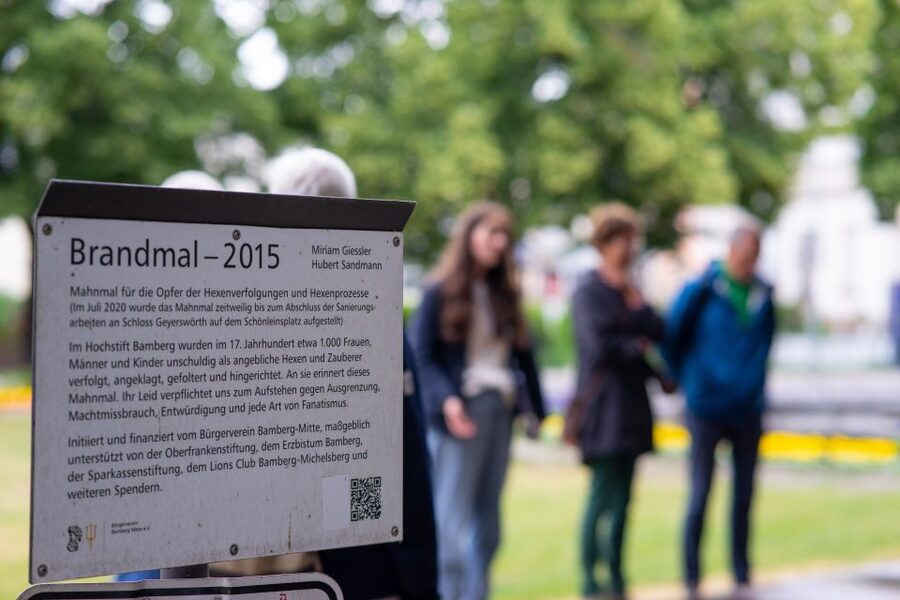
The experience does not present the subject as entertainment. Its tone is dark, but the purpose is educational. You learn about the victims, the social pressures of the period, and the way Bamberg remembers this chapter today.
Bamberg’s story reaches beyond one city
The tour also includes the history of witch hunts in Nuremberg. That comparison gives you a wider view of the issue in the region.
Bamberg is the main setting, but the story did not exist in isolation. Looking at Nuremberg helps you see that witch hunts were part of a wider pattern in German history. The comparison can also help you place Bamberg within the political and cultural world of Bavaria rather than viewing it as a strange event unique to one town.
The information provided does not give a full list of Nuremberg stops, so you should expect this to be part of the spoken historical account rather than a separate excursion. The route remains a Bamberg walking tour.
This broader context is valuable if you have already visited Nuremberg or plan to visit it later. You can listen for connections between the two cities and better understand how local events fit into wider regional history.
Finishing at the Malefiz-Haus site
The walk ends at the site of the Malefiz-Haus from 1627 to about 1650. The final stop gives the tour a fixed endpoint tied directly to the period under discussion.
Ending at a former site of punishment is effective because it brings the story back to individual lives and real locations. You have moved through major public landmarks, old alleys, and prison history, then arrive at a place associated with the legal treatment of accused people.
The site also reinforces one of the tour’s central points: the witch hunts were not vague medieval folklore. They belonged to a specific time, involved named institutions, and affected citizens who lived in the same city streets you are walking today.
The tour’s attention to how Bamberg has dealt with this past is another strength. The provided description does not list a specific memorial or museum display at the final stop, so you should not expect a large exhibit there. The value comes from the guide’s explanation and the connection between the place and the historical events.
What the $15 price really buys you
At $15, the tour offers good value if you want a focused introduction to Bamberg’s darker past. You receive 90 minutes with a trained guide, a route through the old town, and historical interpretation at several significant locations.
The price is especially fair for people who prefer context over a quick photo stop. You are not paying only to see the Old Court or Geyerswörth Palace. You are paying to understand how those places relate to Bamberg’s government, public life, prisons, and witch trials.
The value depends heavily on your German ability. Since the live guide speaks German, the tour is not a good purchase if you can only follow a few basic phrases. A strong German speaker can gain much more from the questions and answers, especially because the guide is praised for explaining the subject fully.
A 90-minute tour also makes it easy to fit into a day of sightseeing. You can use it as a historical introduction before exploring more of Bamberg on your own. It is long enough to provide substance but short enough that it will not take over your schedule.
Cold weather, walking pace, and accessibility
This is an outdoor walking experience, and the weather can shape how enjoyable it feels. A February booking found the tour worthwhile despite cold conditions, which suggests that the content can hold your attention even when the temperature is not friendly. Still, you should dress for the season rather than counting on the old buildings to provide shelter.
The route includes several short walks, not one long trek. That makes it manageable for most visitors who are comfortable walking through an old town for an hour and a half.
The tour is listed as wheelchair accessible. Because the route uses historic streets and public areas, you may still want to confirm current route conditions if you need very specific access arrangements. The supplied information confirms accessibility, but it does not describe the exact surfaces or facilities at every stop.
The guide carries a picture folder, which should help bring places and historical details into focus. That is useful when you are standing outdoors and cannot rely on a large display or reconstructed room.
Who will get the most from this tour
I would recommend this walk to you if you enjoy local history, guided city walks, and difficult subjects treated with care. It suits visitors who want to understand Bamberg beyond its attractive streets and famous buildings.
It is also a good choice for anyone interested in how fear becomes public policy. The tour makes clear that accusations affected different social groups and could reach people with public standing. That gives the subject a human and political dimension.
Families with older children may find the story useful, but the theme is grim. The experience deals with imprisonment, persecution, and the loss of life. Parents should decide if that subject fits their children.
The tour is less suitable if you want a light ghost walk, theatrical scares, or a tour in English. The focus is historical explanation, and the only listed language is German.
Booking details that matter
You can cancel up to 24 hours before the start for a full refund. You can also reserve now and pay later, which helps if you are arranging a longer trip around Bavaria and do not yet want to pay at the time of booking.
The booking confirmation serves as proof of payment. No invoices can be issued for bookings made through GetYourGuide, so business travelers or organizations that need a formal invoice should check this point before paying.
For a group of 10 or more, contact the provider directly at [email protected]. The standard meeting point remains Domplatz in front of the Alte Hofhaltung, where you should look for the picture folder and Geschichte Für Alle e.V. name tag.
Should you book Witch Trials in Bamberg?
Book this tour if you want a serious, place-based look at Bamberg’s witch persecutions and can follow German comfortably. The strongest features are the clear historical explanations, the guide’s willingness to answer questions, and the route through real city locations linked to courts, prisons, and punishment.
At $15, it is a sensible addition to a Bamberg visit, especially for people who want more than attractive architecture. Skip it if you need an English tour, dislike dark historical subjects, or want extensive interior visits rather than a walking presentation.
For the right audience, this is a thoughtful way to see the old town from a different angle. Bamberg’s streets may look calm and picturesque today, but the tour shows how much fear and injustice once moved through them.
FAQ
Where does the Witch Trials in Bamberg tour begin?
The tour begins on Domplatz, in front of the entrance to the Alte Hofhaltung in Bamberg.
How do I identify the tour guide?
The guide carries a picture folder and wears a name tag that says Geschichte Für Alle e.V.
How long does the tour last?
The walking tour lasts 1.5 hours.
What language is the tour offered in?
The live guided tour is offered in German.
How much does the tour cost?
The price is $15 per person.
Is the tour wheelchair accessible?
Yes, the activity is listed as wheelchair accessible.
Which places are included on the route?
The route includes the Old Court Bamberg, Geyerswörth Palace, several old-town walking sections, and historical stops connected with Bamberg’s witch trials and prisons.
Where does the tour finish?
The tour finishes at the site of the Malefiz-Haus from about 1627 to 1650.
Can I cancel the booking?
Yes. You can cancel up to 24 hours in advance for a full refund.
Just added around Bamberg
- Private Guided Walking Tour of Bayreuth With A Professional Guide★ 5.0 · 3 reviews
- Bamberg Countryside Breweries Beer Hike Food Experience★ 5.0 · 27 reviews
- Culinary-historical walk through Bamberg★ 4.0 · 7 reviews
- Bamberg Private Walking Tour With A Professional Guide★ 4.5 · 27 reviews
- Bayreuth Scavenger Hunt and Sights Self-Guided Tour★ 5.0 · 7 reviews
- Bamberg – Excursion to Seehof Palace★ 5.0 · 3 reviews
- Outdoor Escape Game with puzzle backpack Bamberg: The Secret of the Horseman★ 4.7 · 39 reviews
- Bamberg: Where Hollywood dreams and movies are born★ 4.5 · 26 reviews
Bamberg Tours, compared.
Browse the lists this tour appears in