
Reviewed · OLD TOWN TOURS
Dresden Old Town – Guided Walking Tour in English
Dresden’s Old Town is a city rebuilt from memory. This 2.5-hour walking tour connects the grand baroque center with Dresden’s Slavic beginnings, royal ambitions, wartime destruction, and careful reconstruction. I especially like the way the route links famous sights such as Frauenkirche and Zwinger Palace to the wider story of Saxony, and I like the guides’ talent for making serious history easy to follow. The main drawback is the length: there is no planned toilet stop, so you should take care of that before meeting the group.
The tour also benefits from strong individual guides. Nicolo, Nikolai, Nicolas, Nicola, Dominica, James, and others have been praised for clear explanations, humor, and a lively style. Arrive ten minutes early at the Martin Luther statue in Neumarkt and look for the yellow umbrella, since the square can be busy.
In This Review
- Key points to know before you book
- Why Dresden makes a fine walking-tour city
- Starting at Neumarkt and Frauenkirche
- Following the Fürstenzug to Dresden Castle
- Altmarkt, Kreuzkirche, and the city’s public life
- Brühlsche Terrasse beside the Elbe
- Hofkirche and Semperoper: church, court, and opera
- Zwinger Palace and the baroque finale
- How the guides shape the experience
- Price, payment, and overall value
- Who will get the most from this tour
- Should you book the Dresden Old Town walking tour?
- FAQ
- How long does the Dresden Old Town walking tour last?
- What language is the tour conducted in?
- Where does the tour meet?
- How early should I arrive?
- Is transportation included?
- Is the tour wheelchair accessible?
- What sights are included?
- Does the tour include entry to Frauenkirche or other buildings?
- Can I cancel the booking?
Key points to know before you book
- Dresden’s rebuilt center: See how the Old Town was reconstructed after World War II using historic designs and techniques.
- A full baroque circuit: The route includes Frauenkirche, Fürstenzug, Dresden Castle, Hofkirche, Semperoper, and Zwinger Palace.
- History beyond the postcard: Learn about Dresden’s Slavic roots, Saxon rulers, Polish and Lithuanian connections, Nazi rule, and the 1945 bombing.
- Guide-led storytelling: Nicolo and other guides have earned praise for clear English, humor, and strong historical context.
- Good orientation walk: The route gives you a useful first look at the central sights before you explore museums and interiors on your own.
- Practical format: It lasts about 2.5 hours, requires no transportation, and is wheelchair accessible.
Why Dresden makes a fine walking-tour city
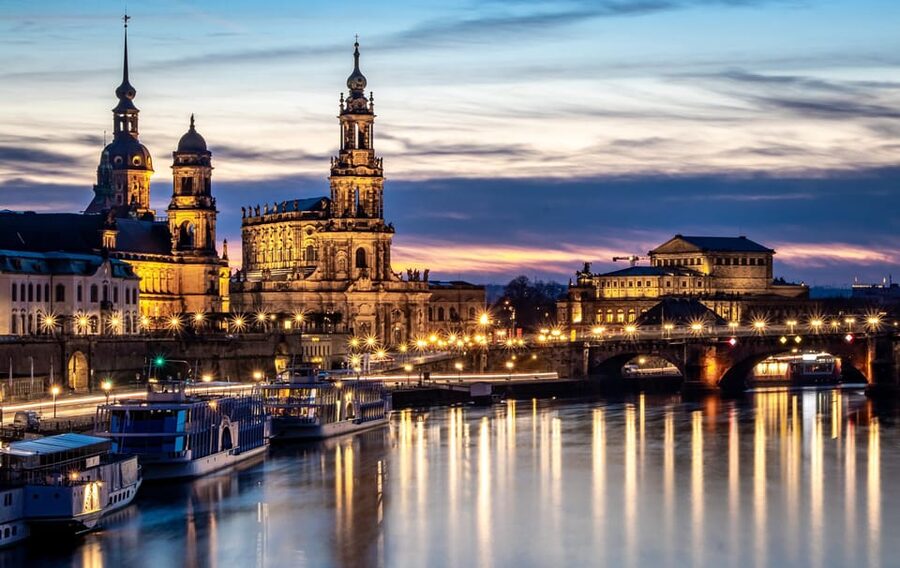
Dresden rewards you for slowing down. The main sights sit close together in the historic center, and the route moves through squares, terraces, courtyards, and broad ceremonial spaces rather than sending you across town. You get a clear sense of how the city was planned, damaged, and rebuilt.
The Elbe has often been described as a dividing line between Germanic and Slavic worlds. Dresden makes a better case for connection than division. The city began as a small Slavic settlement, and its name still sounds familiar to people from Czech, Slovak, Polish, and Sorbian language backgrounds.
That early beginning can disappear beneath the grand architecture. The tour helps restore it. You hear how a settlement near a castle grew into a trading center in the 13th century, helped by silver and lead from the nearby Ore Mountains. By the late 15th century, Dresden had become the seat of Saxony’s prince-electors.
The biggest change came in the early 18th century. Saxon rulers from the Wettin dynasty became kings of Poland and grand dukes of Lithuania, giving Dresden an almost imperial sense of ceremony. The city’s architecture reflects that ambition. You are not simply looking at pretty facades. You are seeing a political project built in stone, sculpture, paint, and ceremony.
More Old Town Tours in Dresden
- Dresden: Semperoper and Old Town Tour
★ 4.8 · 5,735 reviews - Dresden: Segway Tour Along the Elbe and Old Town
★ 4.9 · 392 reviews - Dresden: Old Town Self-Guided Scavenger Hunt Tour
★ 4.5 · 151 reviews
Starting at Neumarkt and Frauenkirche
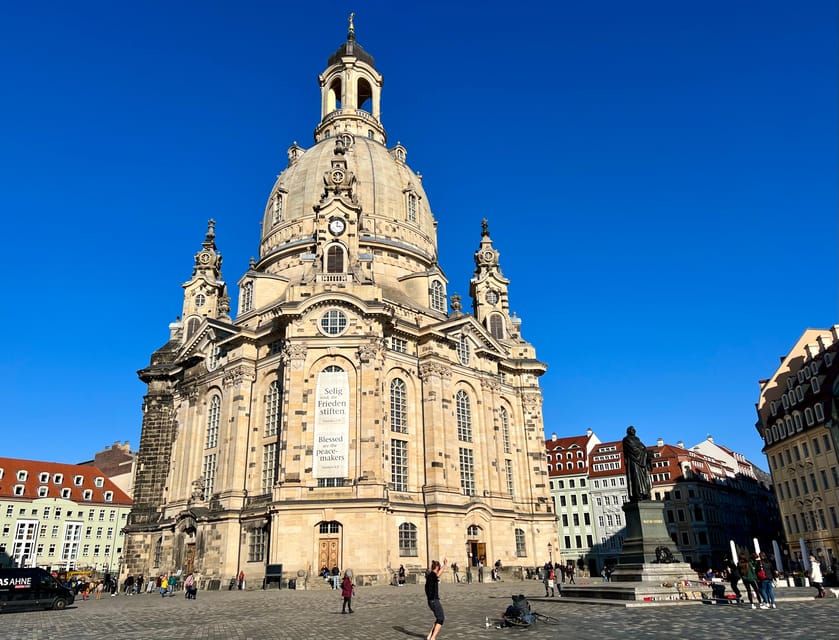
The meeting point is beside the Martin Luther statue at Neumarkt, next to Frauenkirche. Look for the guide carrying a yellow umbrella. Arriving ten minutes early is sensible, since the square is one of the central gathering places in Dresden’s Old Town.
Neumarkt is the right place to begin because it brings together Dresden’s religious, royal, and modern identity. Frauenkirche dominates the square with its broad stone dome and carefully restored baroque form. The church was destroyed during the 1945 bombing and remained a ruin in East Germany for decades before reconstruction began.
The result is one of Dresden’s most powerful examples of rebuilding. Darkened original stones were placed beside newer pale ones, so the church retains visible traces of age without pretending that nothing happened. The tour discusses the building and its place in Dresden’s story, but it does not include a separate interior visit.
That point matters if you want to see inside Frauenkirche. You should plan another visit for that, as one family wished they had done. The walking tour gives you context and an exterior view, but it is not a substitute for an interior church visit or a full museum tour.
The square itself also shows how Dresden has reconstructed its historic center. Much of what looks old is in fact new or heavily rebuilt. That can feel strange at first. Then the idea becomes part of the city’s character: Dresden’s beauty is tied to loss, memory, and reconstruction.
Following the Fürstenzug to Dresden Castle
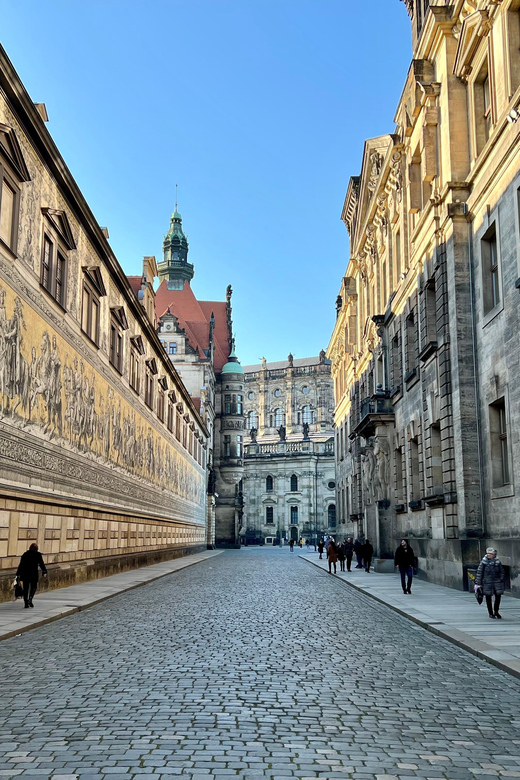
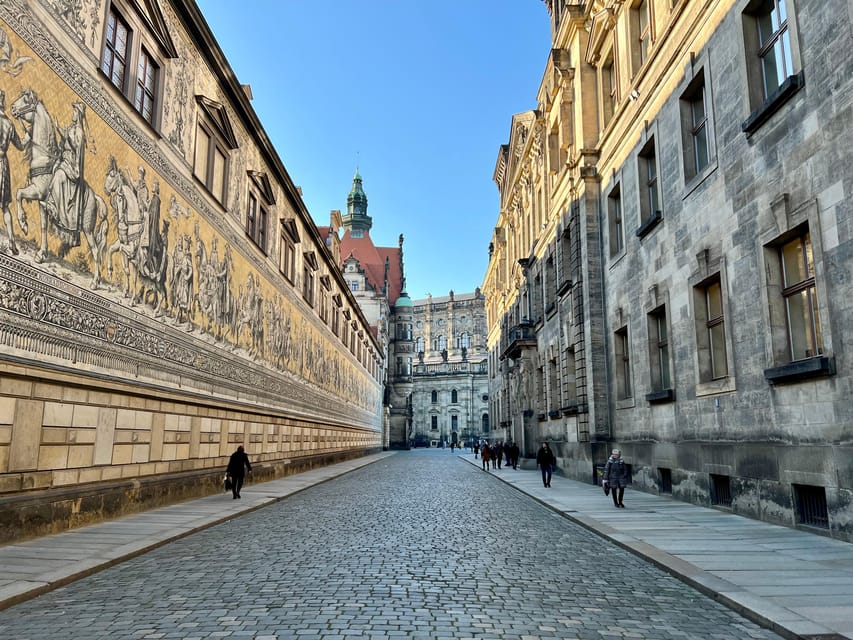
From Neumarkt, the route reaches the Fürstenzug, or Procession of Princes. This long outdoor mural presents the rulers of Saxony in a formal procession, made from thousands of porcelain tiles.
It is one of the easiest places in Dresden to understand the power of visual storytelling. The mural is not a quiet family portrait. It presents dynastic succession, military dress, court ceremony, and Saxon pride across a long wall. A guide can help you read the figures and explain why this procession matters.
The tile construction also connects Dresden to Meissen, the Saxon town famous for porcelain. That detail gives the mural more local meaning. You are looking at political history, but also at a material closely linked to the region.
Nearby, Dresden Castle brings the story back to the court. The building changed over many centuries, so its appearance is not a single snapshot of Dresden. It reflects medieval origins, Renaissance additions, baroque ambition, wartime damage, and modern restoration.
I like this part of the route because the guide can connect the objects and buildings rather than treating each sight as an isolated stop. Dresden Castle is not just another ornate palace. It helps explain how the city grew around the ruling family and why the center became so ceremonial.
Altmarkt, Kreuzkirche, and the city’s public life
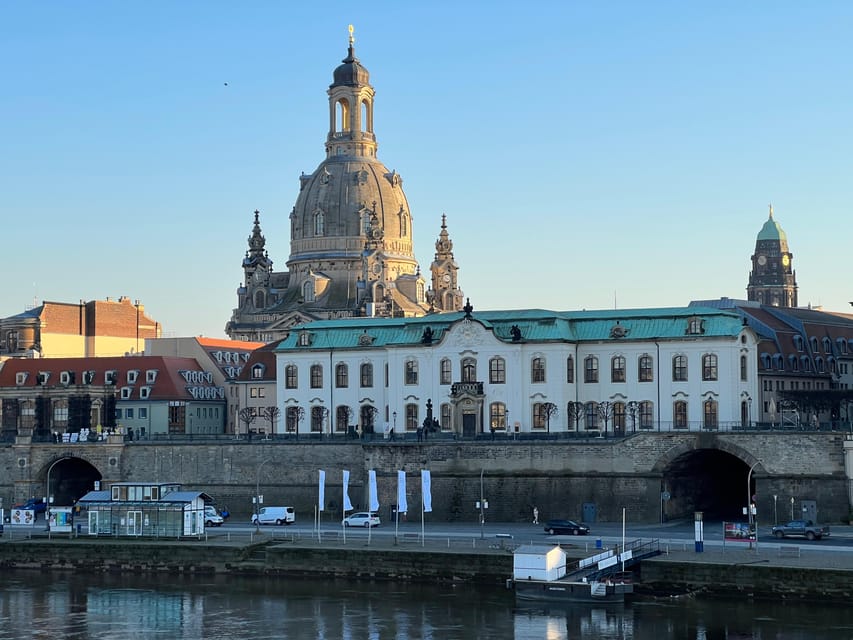
The route continues toward Altmarkt and Kreuzkirche. Altmarkt is one of Dresden’s key public squares, while Kreuzkirche brings a different tone from the courtly buildings nearby.
This section helps you see that Dresden was more than a royal stage. Squares and churches served ordinary civic life, trade, worship, and public gatherings. The contrast with the palace district is useful. The city’s story includes princes and kings, but also the people who lived, worked, worshipped, and rebuilt here.
The Palace of Culture adds another layer. Its presence reflects the period of East German rule and shows that Dresden’s center was shaped not only by baroque taste but also by 20th-century politics. A good guide can use these nearby buildings to explain how each government and era left its mark.
This is also where the tour’s historical range becomes clear. You are not getting a narrow lesson about 18th-century architecture. The discussion reaches back to Dresden’s medieval growth and forward through Nazi rule, World War II, reconstruction, and the city’s current life.
More Walking Tours in Dresden
- Dresden: City & Semperoper Guided Walking Tour
★ 4.8 · 2,293 reviews - Dresden: Guided City Walk with a Cup of Coffee
★ 4.7 · 1,568 reviews - Dresden: Complete Walking Tour with Frauenkirche Visit
★ 4.8 · 700 reviews - Dresden: Walking Tour with a Night Watchman and Meal
★ 4.4 · 487 reviews
Brühlsche Terrasse beside the Elbe
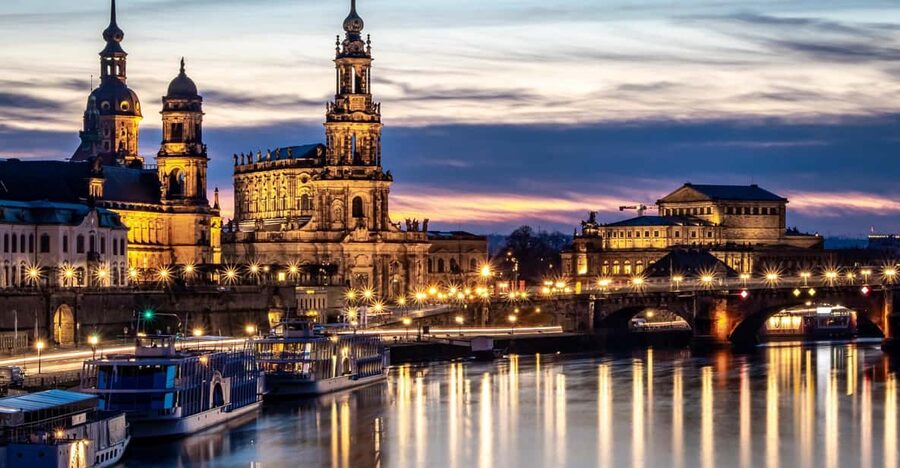
Brühlsche Terrasse gives the tour a welcome change of pace. Known as the Balcony of Europe, this elevated promenade follows the Elbe and offers a broad view across the river.
The setting helps explain Dresden’s location. The Elbe was not merely a boundary. It supported trade, connected settlements, and gave the city room to grow. From the terrace, you can better understand why Dresden developed into an important regional center.
Brühlsche Terrasse also shows the city’s polished side. The riverfront, grand buildings, and open views make it easy to see why Dresden gained such a strong reputation for beauty. Yet the guide’s historical explanation keeps the view from becoming a postcard without a past.
You should expect plenty of standing and walking here. The route is not difficult in the sense of long-distance hiking, but the two and a half hours can feel long if you need frequent breaks. Wear comfortable shoes and use a restroom before the start.
Hofkirche and Semperoper: church, court, and opera
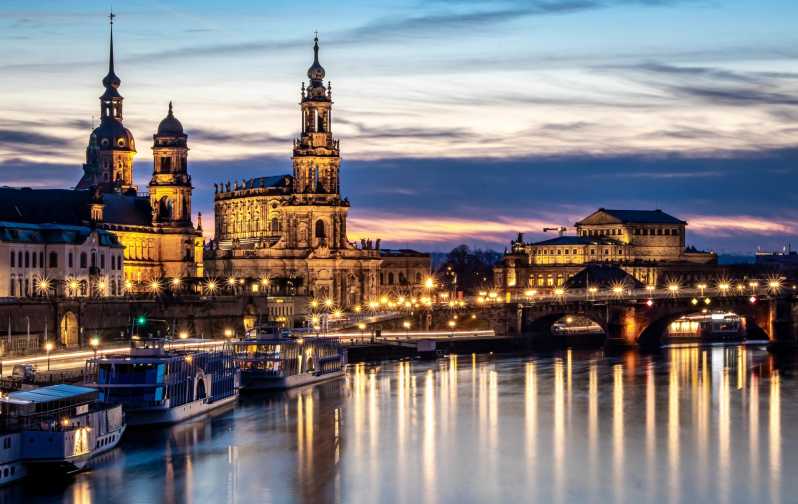
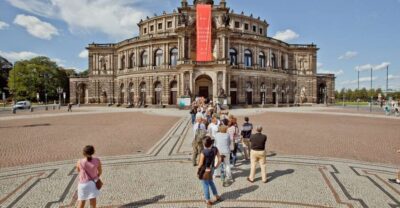
Hofkirche is one of the Old Town’s most striking buildings. Its scale and decoration reflect the authority of the Saxon court, but its story also shows Dresden’s links with Catholic Europe. The church forms part of the dense architectural group around the castle and riverfront.
A guide gives you a better sense of how these buildings relate to one another. From the street, it is easy to see only individual facades. The tour explains the court complex as a whole, including the way religion, royal power, and public ceremony worked together.
Semperoper brings music and performance into the picture. Its name recalls architect Gottfried Semper, and its location near the palace district reflects Dresden’s role as a center of court culture. Even if you are not attending an opera, the exterior helps complete the picture of Dresden as a city built for ceremony and the arts.
The route does not promise an opera performance or an interior tour. Think of this stop as an architectural and historical introduction. If you plan to attend a concert or opera later, you will already have a better sense of the building’s place in the city.
Zwinger Palace and the baroque finale
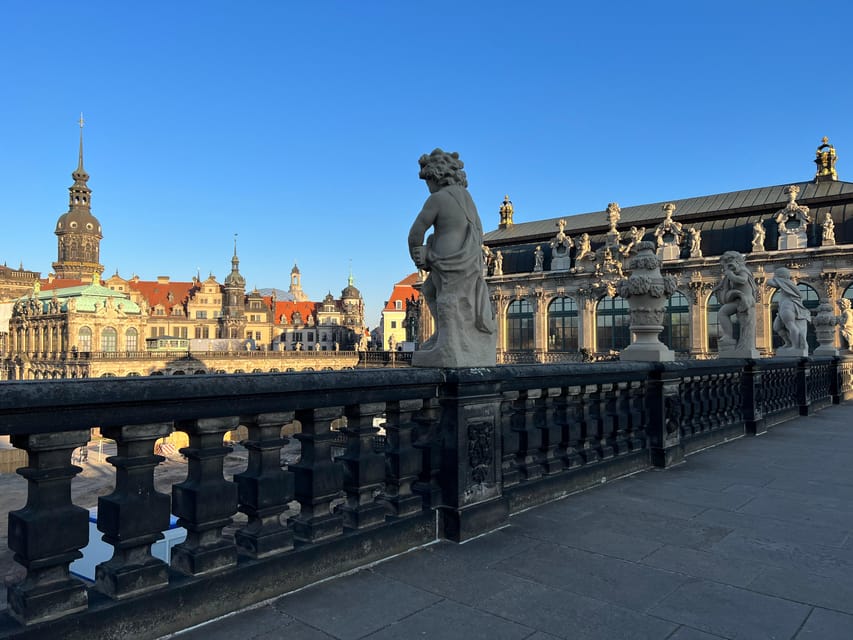
Zwinger Palace is a strong closing point for the Old Town route. Its courtyards, pavilions, sculpture, and ornament capture the theatrical side of Dresden’s early 18th-century transformation.
The palace was built during the period when Saxony’s rulers held wider European titles and wanted Dresden to look the part. The result is playful, grand, and carefully staged. It is one of the places where the city’s royal ambition becomes easy to read.
The tour visits the area near the Elbe bridge, giving you a final look at the relationship between the palace district and the river. Zwinger is also a useful place to continue exploring on your own. Museums and collections are nearby, but entrance fees and interior visits are not part of the walking tour.
I would save extra time after the tour if you want to see more than the outside. The walk gives you orientation and context. You then have the option of returning to the buildings that interest you most, rather than trying to absorb every interior during one long group visit.
How the guides shape the experience
The guide matters a great deal here. Dresden’s story includes medieval trade, dynastic politics, religious change, war, dictatorship, and reconstruction. A flat delivery could make that sequence feel like a list of dates. The strongest guides turn it into a connected story.
Nicolo has been praised for placing Dresden within wider European history, adding suitable jokes and small facts without losing the main thread. Nicolas has also been singled out for detailed explanations and an easy sense of humor. Dominica is known for animated storytelling and a clear passion for the city.
English is the tour language, and the guide quality appears to be a major strength. One guide from Spain spoke quickly enough that it took a little time to adjust, so you should feel free to ask for a slower pace or repetition if needed. That is especially useful when the group is standing near traffic or other tour groups.
The tour can sometimes run longer than two hours. That is good news if you want depth, but it makes the toilet-stop issue more important. The route is wheelchair accessible, though you should still allow for the practical demands of moving through historic streets and crowded squares.
Price, payment, and overall value
The listed price is $35 per person. For a 2.5-hour guided walk through Dresden’s central sights, that is a fair price, especially because transportation is unnecessary and an English-speaking guide is included.
There is an important payment detail. This is presented as a general pay-as-you-wish tour, but the amount paid at booking covers the reservation fee and the guide’s payment. In other words, you are not simply reserving a free walk and deciding later how much to pay. Read the booking terms carefully so you understand how the charge is handled.
The value comes from the explanation, not from admission tickets. You are paying for a human guide who can connect the rebuilt Frauenkirche, the royal mural, the castle, the river terrace, the opera house, and Zwinger Palace into one story. If you only want quick photographs, you can see many of these places without a tour. If you want to understand what you are seeing, the cost makes more sense.
Free cancellation up to 24 hours before the start and the option to reserve now and pay later add useful flexibility. No transportation is included, but that is not a serious weakness here because the Old Town route is compact and designed for walking.
Who will get the most from this tour
I would choose this tour for a first visit to Dresden, particularly if you want a fast orientation before deciding which churches, museums, and palaces deserve more of your time. It also suits returning visitors who saw Dresden before Frauenkirche was rebuilt and want help understanding the city’s changes.
History-minded visitors will appreciate the full timeline. Architecture fans will enjoy the baroque center and the restoration story. Families can benefit from the conversational delivery and humor, especially when children or adults begin to tire of formal lectures.
It may be less suitable if you need frequent seated breaks, a short route, or long interior visits. The walk focuses on the city streets and exteriors. It also works best for people who enjoy context, not just a checklist of monuments.
Should you book the Dresden Old Town walking tour?
Book it if you want Dresden’s famous buildings to make sense as part of one connected story. The strongest reasons are the excellent guide feedback, the broad route, the attention to Dresden’s 20th-century destruction and rebuilding, and the easy access to the main Old Town sights.
Skip it if you already know Dresden well and prefer exploring alone, or if a 2.5-hour walk without a planned restroom break sounds uncomfortable. Otherwise, $35 buys a useful introduction to a complicated and beautiful city. Arrive early, wear good shoes, use the restroom first, and look for the yellow umbrella beside Martin Luther.
FAQ
How long does the Dresden Old Town walking tour last?
The scheduled duration is 2.5 hours. Some tours may run a little longer, so allow extra time afterward.
What language is the tour conducted in?
The tour is conducted in English with a live English-speaking guide.
Where does the tour meet?
Meet next to the Martin Luther statue at Neumarkt, beside Frauenkirche. The guide carries a yellow umbrella.
How early should I arrive?
You should arrive at the meeting point 10 minutes before the tour begins.
Is transportation included?
No. Transportation is not included, but the experience is a walking tour of Dresden’s Old Town.
Is the tour wheelchair accessible?
Yes, the tour is listed as wheelchair accessible.
What sights are included?
The route includes Neumarkt and Frauenkirche, the Martin Luther statue, Fürstenzug, Dresden Castle, Altmarkt, Kreuzkirche, the Palace of Culture, Brühlsche Terrasse, Hofkirche, Semperoper, and the area near Zwinger Palace and the Elbe bridge.
Does the tour include entry to Frauenkirche or other buildings?
The information provided includes a walking tour and guide, but does not include admission to building interiors. Plan a separate visit if you want to tour Frauenkirche inside.
Can I cancel the booking?
Yes. You can cancel up to 24 hours before the activity for a full refund. You can also reserve now and pay later.
Just added around Dresden
- Dresden Sightseeing Treasure Hunt★ 5.0 · 57 reviews
- Test Drive Electric Vehicles from the VW brand (ID. model)★ 4.8 · 190 reviews
- SRF CoBi | City Tour by ConferenceBike★ 4.7 · 38 reviews
- Dresden: Scavenger Hunt to Elbe River & Castles★ 4.7 · 15 reviews
- Dresden: Bike Rental – City Bike with Option Children Seat★ 4.5 · 13 reviews
- Moritzburg: Scavenger Hunt Self-Guided Walking Tour★ 4.8 · 12 reviews
- Historical tour of the old town including a Saxon dinner★ 4.7 · 23 reviews
- Climb the mountains together with goats★ 4.8 · 8 reviews
Old Town Tours, compared.
Old Town & Viktualienmarkt City Walk in German
Read our review →
The Night Watchman Old Town Walking Tour in German
Read our review →
Browse the lists this tour appears in