
Reviewed · COLOGNE TOURS
Executioner’s Tour of Cologne in German
Medieval Cologne had a very dirty job. This 1.5-hour costumed walk follows an executioner through the historic centre, explaining who could hold the trade, what went wrong at public killings, and how a headsman earned money between official duties. I like the theatrical point of view, and I like the price: at $18 per person, it offers a focused way to see central Cologne without taking half a day.
I also like the odd jobs tucked into the story. The executioner was not only a state killer, but could act as a knacker, dog-catcher, gold-seeker, builder of gallows, and burner of spell books. The main consideration is clear: the tour is in German, and the material is deliberately grisly. You need German strong enough to follow spoken storytelling, plus an interest in the darker side of medieval life.
In This Review
- Key points before you book
- Meeting the headsman at Am Hof
- What an executioner actually did
- The city walk and its grisly stories
- Why the costumed format works
- Ninety minutes, with no meal stop
- German language and listening demands
- Accessibility and the walking conditions
- Is $18 a fair price?
- Who will enjoy this Cologne tour?
- Final verdict: book it for the dark side of Cologne
- FAQ
- Where does the Executioner’s Tour of Cologne begin?
- Where does the tour finish?
- How long does the tour last?
- What language is the tour in?
- What is the minimum age?
- Is the tour wheelchair accessible?
- What should I wear?
- Are food and drinks included?
- How much does the tour cost?
- Can I cancel the booking?
Key points before you book
- Meet at the Heinzelmännchenbrunnen: The tour starts and ends at the fountain on Am Hof in Cologne’s historic centre.
- Follow an executioner’s working life: The story covers executions, gallows, plague control, lepers, stray animals, and side work.
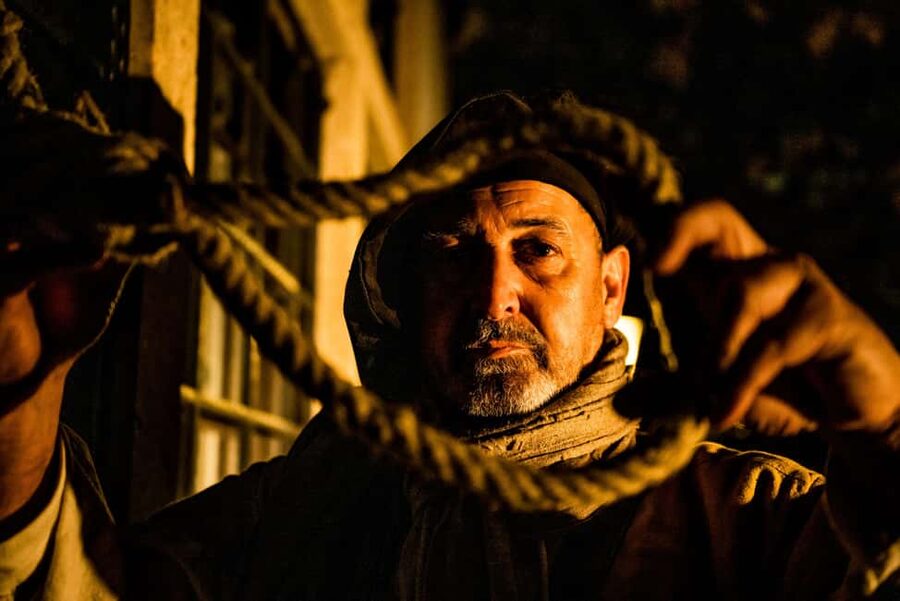
- Expect a costumed guide: The historical character gives the walk a theatrical frame without requiring a full-day commitment.
- Allow 90 minutes: The length fits well before dinner, after a cathedral visit, or between other central Cologne plans.
- German is the only tour language: This matters more than usual because the experience depends on spoken tales and dark humor.
- Adults only: The minimum age is 18, and the subject matter includes death, disease, punishment, and bodily violence.
Meeting the headsman at Am Hof
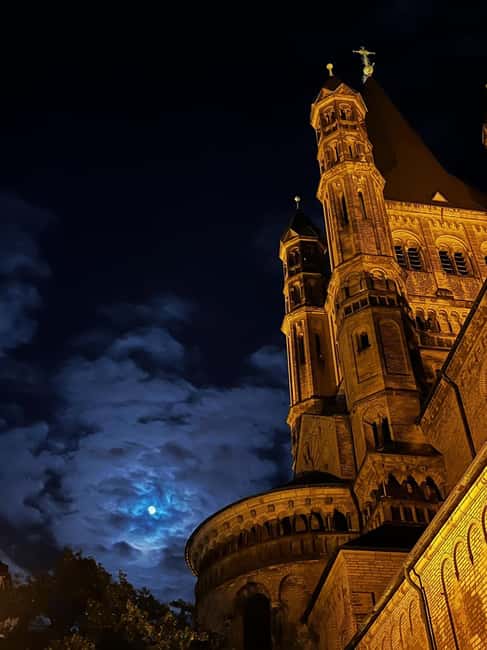
Your starting point is the Heinzelmännchenbrunnen, a recognizable fountain on Am Hof in the middle of Cologne. That location is practical because you do not need a remote meeting place or a separate ride into an outlying district. You begin in the same central area where much of a first visit to Cologne naturally takes place.
The tour also returns to this meeting point. That makes planning easy. You can leave your larger sightseeing schedule intact, and you will not have to calculate a return journey from an unfamiliar neighborhood.
From here, the guide takes you through Cologne’s historic centre. The supplied details do not promise a fixed list of named buildings or exact street stops, so you should think of this as a moving story through central Cologne rather than a checklist of monuments. The streets provide the setting, while the executioner explains how public authority, superstition, disease, and punishment shaped daily life.
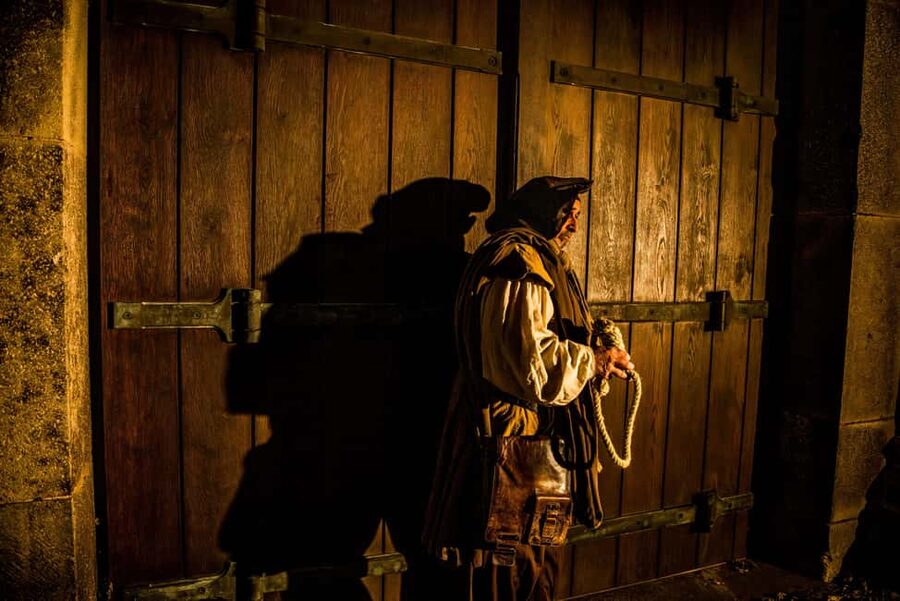
The costumed format matters. A standard walking tour gives you dates and architecture. This one gives you a character whose work touched many parts of medieval society. You hear the city from the perspective of the person called when a sentence had to be carried out, an animal had to be removed, or an unpleasant task had to be handled.
A few more Cologne trips worth comparing
- Cologne: Panoramic City Cruise
★ 4.3 · 5,698 reviews - Cologne: Brewery Tour with 3 Kölsch Beer Tastings
★ 4.7 · 3,108 reviews - Cologne: Top Sights Rhine River Cruise – Skyline Tour
★ 4.4 · 3,030 reviews
What an executioner actually did
The central question is not simply how executions worked. It is who could do this work at all.
In medieval society, executioners occupied an uncomfortable place. The job was necessary to the authorities, but it was also socially tainted. This tour uses that tension to explain the profession. You learn when a headsman received a master craftsman’s diploma, which allowed him to execute people on behalf of the state.
That detail gives the profession structure. An execution was not presented as random violence by a brutal individual. It was a formal task connected to law, training, and public power. At the same time, the executioner had to live with the reputation attached to the work.
The tour also asks practical questions about the job. What happened when an execution failed? How did a headsman supplement a low income? What skills were useful when official work was irregular?
The answers broaden the picture. The executioner could work as a knacker, dealing with dead animals. He might catch stray dogs or remove wandering hogs. He could search for gold, build gallows, burn spell books, and carry out other duties that ordinary citizens preferred to avoid.
I find this part more interesting than a simple sequence of gruesome stories. It shows how one occupation connected to sanitation, public order, religious fear, and punishment. The headsman was not only present at the scaffold. He could be involved wherever medieval authorities needed someone willing to perform a dirty or feared task.
The city walk and its grisly stories
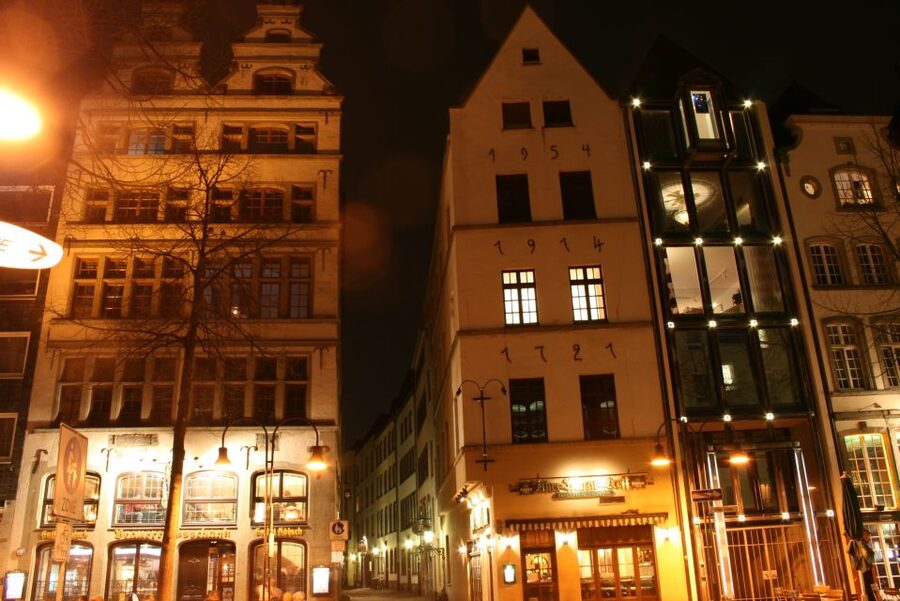
The route leads through Cologne’s historic centre while the guide recounts tales from a period when death was close at hand. The stories include executions, plague, leprosy, prostitution, animals, and suspected magic.
You hear about the people assigned to exile lepers and plague-infected prostitutes. You also hear about spell books being burned. These details show how authorities responded to threats that were medical, moral, religious, or imagined. Medieval punishment did not separate those categories in the neat way modern institutions often do.
The tone is intentionally eerie. This is not a gentle introduction to Cologne’s past, and the experience does not soften the unpleasant material. You should expect bloody details and stories about what could go wrong during an execution.
That focus will suit you if you enjoy historical storytelling with a strong character and a dark edge. It may not suit you if you want a calm architecture walk or a broad survey of Cologne’s art and culture. The tour has one clear subject, and it stays close to it.
The streets themselves are important, even when the guide does not stop at a famous monument. Walking through the centre while hearing how a headsman moved through dark alleys gives ordinary urban spaces a different meaning. The point is not only to see where people lived. It is to imagine the kinds of public duties that once took place among them.
Why the costumed format works
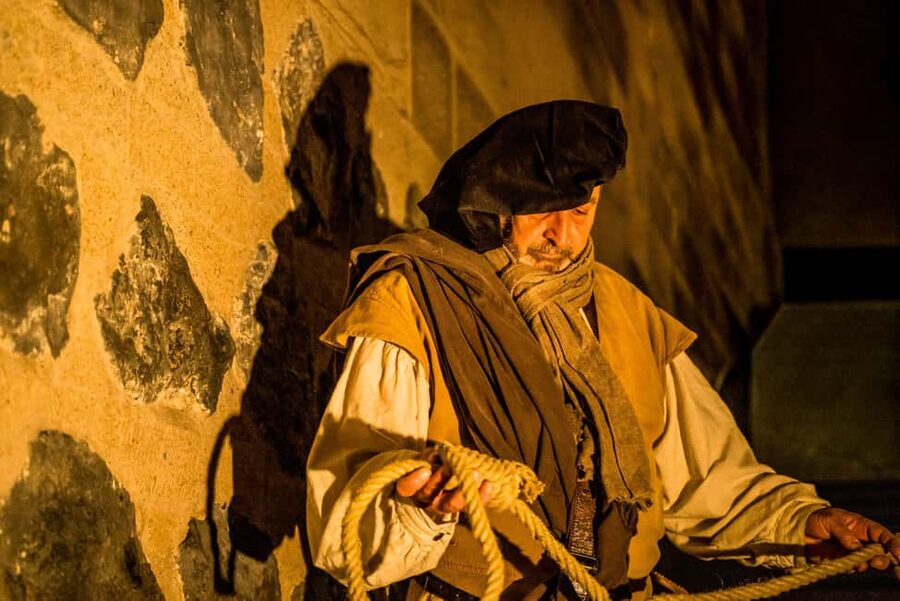
A costumed guide can sometimes feel like a gimmick. Here, the role has a useful purpose because the entire tour is built around one profession. The headsman becomes a guide to the rules and fears of the period.
You are not simply told that medieval Cologne had public executions. You are invited to follow the person responsible for carrying them out. That angle makes the questions more concrete: who trained him, who paid him, what other work did he do, and how did the public view him?
The format should also help the 90 minutes pass quickly. A character-led tour has a natural voice and point of view, which is especially useful when the subject includes technical terms such as a master craftsman’s diploma and several unfamiliar duties.
One short review described the guide as very authentic and enjoyable. That fits the design of the experience. Authenticity here does not mean that the guide recreates a complete medieval scene at every stop. It means the character appears to fit the subject, and the storytelling takes the role seriously.
The guide’s actual name is not provided, so you should book for the format and subject rather than for a particular performer. Guide style can vary on any scheduled departure.
Still Cologne, at a slower pace:
- Cologne: Chocolate Museum Entrance Ticket
★ 4.4 · 2,790 reviews - Cologne: 24h Hop-On Hop-Off Sightseeing Bus Ticket
★ 4.3 · 2,735 reviews - Cologne: Melaten Cemetery Life, Love and Death Tour
★ 4.9 · 2,728 reviews - Cologne: The Night Watchman Old Town Walking Tour in German
★ 4.6 · 1,395 reviews
Ninety minutes, with no meal stop
The tour lasts 1.5 hours and includes the guided walk only. Meals and drinks are not included, so plan to eat before or after the experience.
That short length is one of its practical strengths. You can place it into a busy day in Cologne without giving up an entire afternoon. A morning cathedral visit, this walk, and a later museum or meal can fit together more easily than a longer excursion.
You should still wear sturdy, comfortable shoes. The route goes through the historic centre, and the advice to use weather-proof clothing is sensible for any walking tour in Cologne. The experience takes place outdoors, so rain or cold can affect your comfort even when the guide remains engaging.
The 90-minute length also sets a reasonable expectation. You will receive a concentrated introduction to the executioner’s profession, not a complete course in medieval Cologne. The guide has enough time to build a narrative and cover the profession’s side duties, but not enough time to explain every period, ruler, building, or legal custom in detail.
That focus is good value if you want one strong theme. If you want a general city orientation, choose a broader Cologne walking tour instead.
German language and listening demands
This is a German-language tour. That point deserves serious attention because the experience depends on stories, timing, and spoken explanation rather than on scenery alone.
If you understand conversational German, the unusual subject may make it a memorable way to practice listening. If you know only a few German phrases, you may miss the details that give the tour its value. The key facts are not just visible objects. They are explanations of professional status, punishment, disease, and the executioner’s extra work.
The dark subject may also involve words and ideas that are less familiar than standard sightseeing vocabulary. You need to be comfortable following a live guide for 90 minutes.
There is no indication of an English-language version in the available details. Do not assume that the guide will switch languages or provide a full written translation. Book this experience specifically as a German tour.
Accessibility and the walking conditions
The historic centre tour is described as fully accessible, and the activity is wheelchair accessible. That makes it a practical option for visitors who need an accessible route through central Cologne.
You should still confirm your own requirements when booking, especially if you need details about the route surface, rest opportunities, or the exact movement between stops. The tour is a walking experience, so comfortable shoes remain useful for everyone.
Weather-proof clothing is recommended. A cloak and theatrical performance may create atmosphere, but neither replaces a rain jacket or warm layer. Because the route ends where it begins, you can also leave extra items at your accommodation rather than arranging transport at the finish.
The adult minimum age is 18. That rule is not a minor detail. The tour includes executions, disease, sexual misconduct, animals, and other disturbing subjects, so it is designed for adults who are comfortable with graphic historical material.
Is $18 a fair price?
At $18 per person, I consider this a reasonable price for a live, 90-minute, costumed walk in central Cologne. You are paying for a focused performance and guided interpretation, not for admission to a museum, food, transportation, or a full-day excursion.
The value is strongest if you want something different from the usual cathedral and old-town circuit. The subject gives you a distinct lens on Cologne, and the central meeting point keeps the practical cost low. You can walk to the start and continue sightseeing afterward.
The price is less compelling if your German is limited or if you dislike graphic stories. In that case, a cheap ticket does not help much if you cannot follow the guide or enjoy the subject.
Free cancellation up to 24 hours before the start adds useful flexibility, and you can reserve now and pay later. Those terms reduce the risk of fitting the experience into a changing itinerary, but you should still check the available departure time before making plans.
Who will enjoy this Cologne tour?
I would recommend it to adults who like unusual history, character-led performances, and the less polished side of old cities. It is particularly suitable if you have already seen Cologne’s main sights and want a fresh way to understand the historic centre.
German speakers should get the most from it, since the language is part of the experience rather than a minor setting. Students of German may also find the live format useful, provided they can follow a sustained spoken tour.
You may want to skip it if you are traveling with children, prefer light sightseeing, or are sensitive to stories about executions and disease. It is also not the right choice if you want a detailed architectural tour, a food walk, or a museum visit.
The highest rating shown for the experience is 4.8 out of 5 from 464 ratings. That strong score supports the idea that the concept and guide delivery work well for the right audience. It does not change the basic warning: the German language and graphic subject matter are central, not optional extras.
Final verdict: book it for the dark side of Cologne
Book this tour if you want a short, affordable, adult-only walk with a clear theme and a memorable character. The executioner’s job opens up subjects that ordinary sightseeing often skips, from public punishment and plague control to animal removal and superstition.
I would not book it simply because it is cheap or highly rated. Book it because you can follow German spoken storytelling and genuinely want to hear how unpleasant medieval work was organized. With comfortable shoes, weather-proof clothes, and an appetite for grim tales, this offers a lively 90 minutes in the centre of Cologne.
FAQ
Where does the Executioner’s Tour of Cologne begin?
It begins at the Heinzelmännchenbrunnen on Am Hof, 50667 Köln.
Where does the tour finish?
The tour ends back at the meeting point at the Heinzelmännchenbrunnen.
How long does the tour last?
The guided walk lasts 1.5 hours.
What language is the tour in?
The live tour guide conducts the experience in German.
What is the minimum age?
The minimum age requirement is 18 years.
Is the tour wheelchair accessible?
Yes. The historic centre tour is described as fully accessible and wheelchair accessible.
What should I wear?
Comfortable, sturdy shoes and weather-proof clothing are recommended.
Are food and drinks included?
No. Meals and drinks are not included.
How much does the tour cost?
The listed price is $18 per person.
Can I cancel the booking?
Yes. You can cancel up to 24 hours in advance for a full refund. You can also reserve now and pay later.
Just added around Cologne
- The rather unknown Melaten★ 4.9 · 26 reviews
- Rickshaw Glühwein Ride★ 4.6 · 24 reviews
- Public brewhouse tour Cologne in English★ 4.9 · 154 reviews
- Informative and fun brewery tour in German, public★ 4.9 · 47 reviews
- Private photoshoot in Cologne★ 5.0 · 5 reviews
- Cologne: Old City Guided Walking Tour★ 4.9 · 63 reviews
- Cologne-Nippes: Gourmet wine tasting with cheese platter★ 4.6 · 26 reviews
- Cologne-Nippes: wine hopping (wine trip)★ 4.9 · 7 reviews
Cologne Tours, compared.




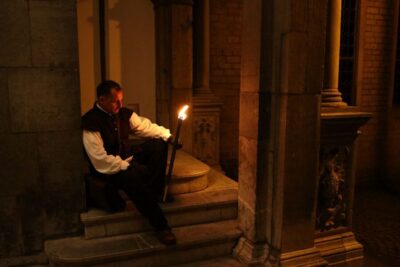
The Night Watchman Old Town Walking Tour in German
Read our review →
Browse the lists this tour appears in