
Reviewed · 2-HOUR EXPERIENCES
Hamburg: Speicherstadt and HafenCity 2-Hour Tour
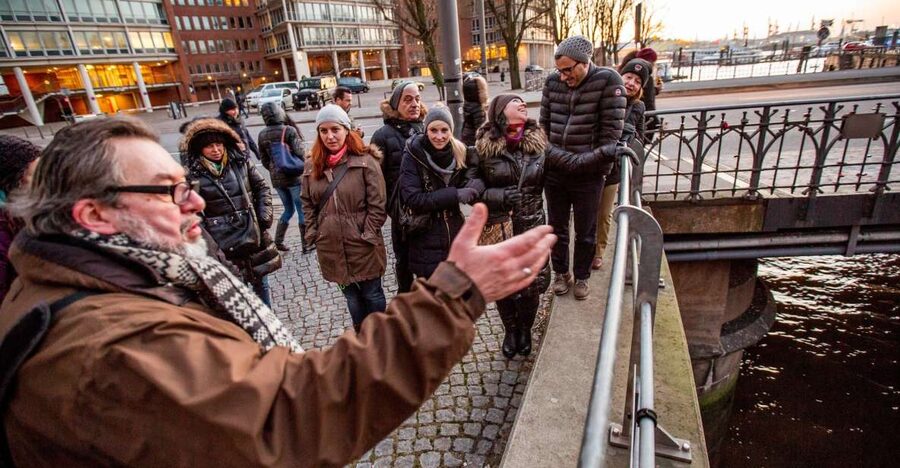
Old Hamburg meets its bold new waterfront. This two-hour walk links the brick warehouses of Speicherstadt with modern HafenCity, giving you coffee, tea, canals, architecture, and harbor stories in one compact outing. I especially like the route’s mix of famous sights and small details, plus the way guides such as Stefan, Mikkel, and André bring facts to life with humor.
I also like the convenient start at Baumwall subway station and the finish at Chile House, which gives you a clear route rather than a vague stroll. The main drawback is simple: this is a walking tour, not a boat trip, and the public version is offered only in German. If you want English, you need to book the private option and confirm the arrangement before paying.
In This Review
- Key things to know before you go
- Why this Hamburg walk works so well
- Starting at Baumwall and the harbor police station
- From Hanseatic Trade Center to Wilhelminenbrücke
- Crossing Kibbelsteg into Speicherstadt
- Tea, coffee, and the working warehouse district
- Fleetschlösschen and the famous Wasserschloss
- Tea merchants, canals, and Poggenmühlen Bridge
- Finishing at Chile House and the Kontorhaus district
- What the two-hour timing really means
- Language, guides, and the private-group question
- Weather, walking, and what to bring
- Who should book this Speicherstadt tour
- Should you book it?
- FAQ
- Is this a boat ride?
- Where does the tour start?
- Where does the tour finish?
- How long does the tour last?
- Is the tour available in English?
- Is this a private tour?
- What sights are included?
- Are attraction entry fees included?
- Can I cancel the tour?
Key things to know before you go
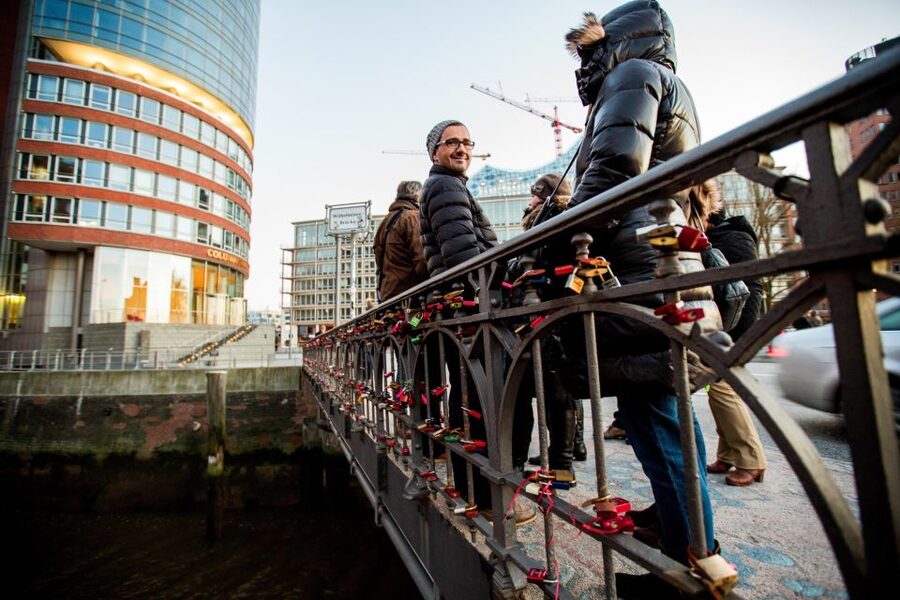
- Speicherstadt’s canals and warehouses form the heart of the tour, with stops at the Wasserschloss, Fleetschlösschen, tea merchants, and historic bridges.
- HafenCity adds a sharp modern contrast, including views and background on the Elbe Philharmonic Hall.
- The route ends at Chile House, a major expressionist brick building in Hamburg’s Kontorhaus district.
- The tour lasts two hours, with several short photo stops and walking sections between them.
- The public tour is German only, while an English-language private tour can be booked.
- The $282 group price covers up to 10 people, making it more attractive for families or small groups than for one or two people.
Why this Hamburg walk works so well
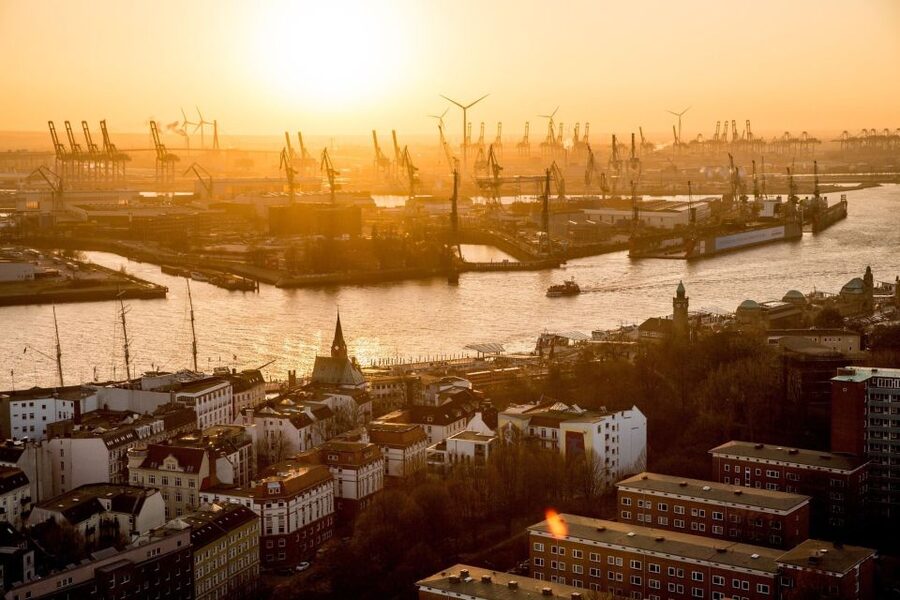
Hamburg is easiest to understand when you see its old trading district beside its new waterfront. That is exactly what this route provides. You begin near the harbor, cross through Speicherstadt, then finish in the Kontorhaus district near Chile House.
The contrast is the point. Speicherstadt is a district of red brick warehouses, narrow waterways, bridges, and tall gables. HafenCity is newer, more open, and shaped by ambitious redevelopment around the Elbe. In two hours, you get a useful introduction to both sides of Hamburg without spending half the day on a bus.
I would choose this experience early in a Hamburg visit. It gives you a map in your head, introduces several major sights, and helps you decide where you want to return for a closer look. It is also a good choice if you want history explained as you walk, rather than simply photographing buildings without knowing what they were built for.
The tour has earned a 4.8 rating from 1,063 ratings, and the strongest praise centers on the guides. Stefan is described as friendly, informative, and amusing. Mikkel handled a small winter group with warmth even in poor weather, while André received praise for answering questions and extending the walk slightly when the group wanted more detail. Those details matter because this route depends heavily on the guide’s storytelling.
A few more Hamburg trips worth comparing
- Hamburg: Sex and Crime in St. Pauli Tour for Ages 18+
★ 4.7 · 15,447 reviews - Hamburg: 1.5-Hour Harbor and Speicherstadt Day Cruise
★ 4.6 · 14,200 reviews - Hamburg: 90-Minute Evening Lights Harbor Cruise
★ 4.5 · 7,728 reviews
Starting at Baumwall and the harbor police station
Meet at Baumwall subway station, using the Kehrwiederspitze exit. The exact meeting point is at the bottom of the stairs, in front of the Back Shop kiosk under the railway bridge. That description is useful, since Baumwall has several nearby paths and waterfront exits.
The first stop is Harbor Police Station No. 2, where the guide spends about ten minutes on sightseeing and explanation. This is a fitting opening because it places you beside the working harbor before you enter the warehouse district.
I like this start because it avoids dropping you straight into a row of pretty buildings with no context. Hamburg’s waterfront was shaped by trade, shipping, storage, and security. Beginning near the harbor police helps connect the city’s grand architecture with the practical work that made the area important.
Bring a coat in colder months. January feedback describes bitter cold and poorly cleared paths, yet the walk still worked well because the guide kept it lively. That is a useful warning: the tour goes ahead as a walk, so winter weather can affect your comfort even when the commentary is excellent.
From Hanseatic Trade Center to Wilhelminenbrücke
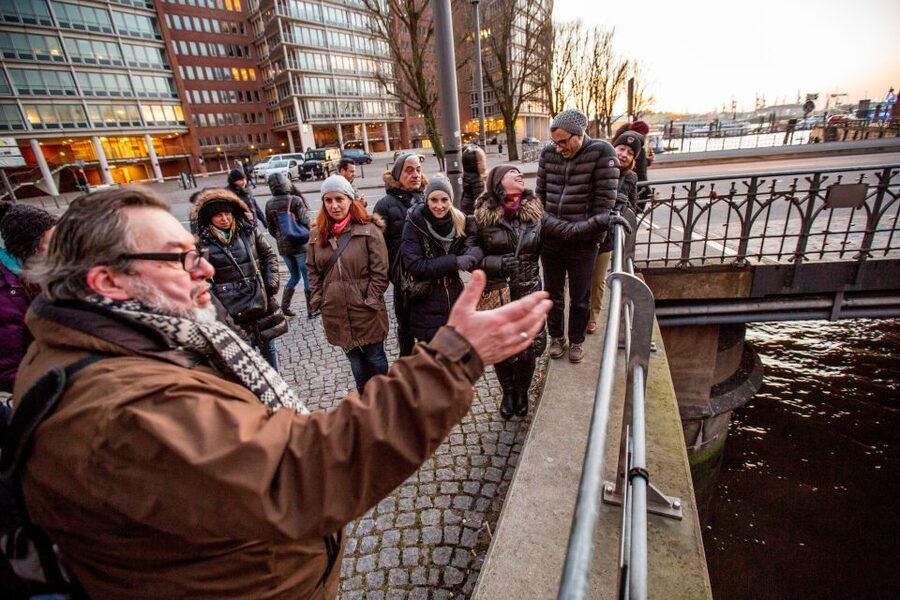
The route continues to the Hanseatic Trade Center for a short photo stop of about five minutes. This part helps you see the commercial side of the waterfront and the way newer construction relates to the historic district.
At Wilhelminenbrücke, another five-minute stop focuses on the bridge and the surrounding views. Bridges matter in Speicherstadt because the district is cut through by canals, known locally as fleets. You are not simply walking along streets. You are repeatedly crossing the water routes that once served the warehouses.
The short stops keep the pace moving, but they also mean you should not expect a long architectural lecture at every location. The guide has many places to cover, so the experience works best if you value a broad introduction over extended time at one building.
Next comes Am Sandtorkai 73, with another five-minute photo and sightseeing stop. The name may mean little before you arrive, but the location helps show how the old warehouse district meets HafenCity. This is one of the first places where Hamburg’s older brick trading world and newer waterfront development come into the same view.
Crossing Kibbelsteg into Speicherstadt
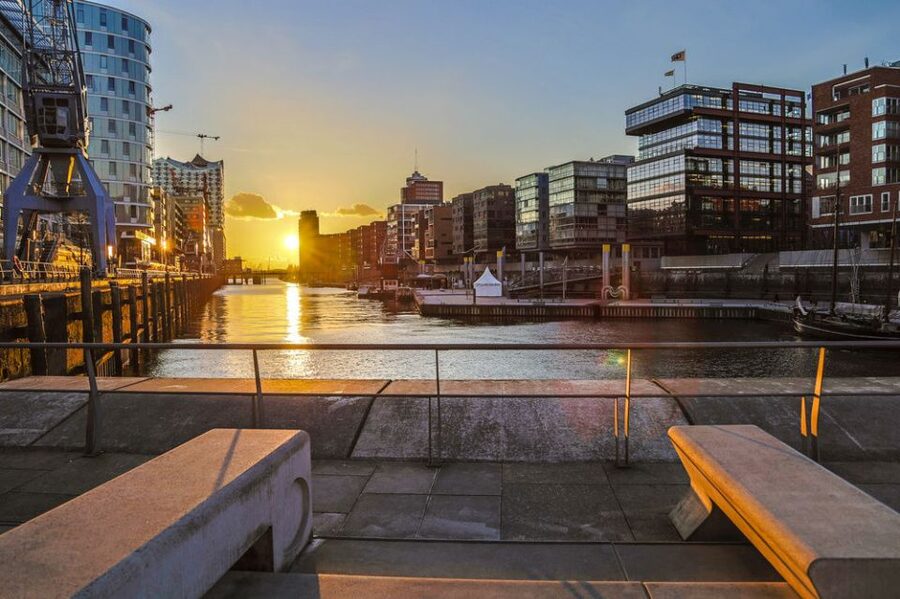
Kibbelsteg is one of the longer walking sections, taking about ten minutes. The bridge and route give you a better sense of Speicherstadt’s canals, walls, and connected warehouse blocks.
The district is recognized as a UNESCO cultural heritage site and is described as the world’s largest connected warehouse complex. Its scale becomes easier to grasp from the bridges. You can look along the waterways, see brick facades continuing block after block, and understand why the area was built as a huge storage and transfer center rather than as a normal residential neighborhood.
The guide’s explanation of coffee, tea, spices, and oriental carpets adds useful depth. These products were not random decorations in Hamburg’s story. They were important cargoes, and Speicherstadt was designed to handle the trade and storage of goods arriving through the port.
You should pay attention to the changing angle of the buildings here. From street level, the warehouses can feel similar. From a bridge, the canals open up the view and reveal the planning behind the district.
Still Hamburg, at a slower pace:
- Hamburg: 2-Hour XXL Port of Hamburg Cruise Tour
★ 4.7 · 6,979 reviews - Hamburg: Line A Sightseeing Hop-On Hop-Off Bus Tour
★ 4.6 · 6,958 reviews - Hamburg: Elbphilharmonie Plaza Guided Tour
★ 4.7 · 5,882 reviews - Hamburg: Hamburg Dungeon Admission Ticket
★ 4.7 · 5,745 reviews
Tea, coffee, and the working warehouse district
At Hälssen & Lyon GmbH, the tour spends about ten minutes on a guided sightseeing stop. The company connects naturally with Speicherstadt’s tea-trading past and gives the conversation a practical focus.
The nearby Sandtorkai-Hof, Block H, receives another ten-minute stop. Here, the guide can point out the structure and architectural details of the warehouse blocks. You will want your camera ready, but this is also a place to listen. The value is in learning how the district functioned, not merely collecting another brick facade for your photo album.
The route then reaches Genuss Speicher. This ten-minute stop continues the food and trade theme. Coffee, tea, spices, and other imported goods help explain why Hamburg became such an important commercial center.
I appreciate this part of the walk because it avoids treating Speicherstadt as a stage set. The district is beautiful, but its beauty came from work. Warehouses, canals, bridges, and loading areas were built to move and store valuable goods. Once you understand that, the repeated brick buildings make more sense.
The information is delivered through stories and anecdotes rather than only dates. That approach received repeated praise from people who found the tours entertaining as well as informative. If you enjoy asking questions, this is a good section to do so, since André was specifically praised for responding to follow-up questions.
Fleetschlösschen and the famous Wasserschloss
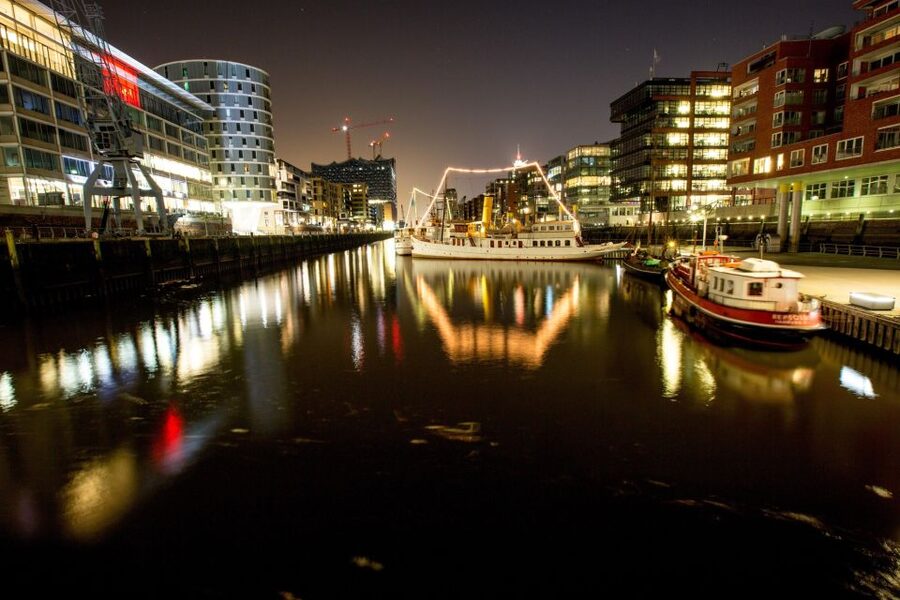
Fleetschlösschen by Daniel Wischer is one of the route’s more distinctive stops. The name suggests a small castle, and the building adds a touch of playful charm to the canal district. The guide uses it as a chance to share more of Speicherstadt’s stories and local character.
The Wasserschloss is the most photographed motif in Speicherstadt. You get a ten-minute guided stop at Bei St. Annen 1, with time for photographs and an explanation of the building and its place in the district.
This is likely to be one of the prettiest moments of the walk. The Wasserschloss is surrounded by water and framed by the warehouse architecture, so it looks especially effective from the canal-side approaches. The practical tip is to listen before taking your photographs. Once the guide explains why the building is important and points out the best view, your pictures will have more meaning.
The tour also includes the Speicherstadt town hall, with its typical neo-Gothic style. The stop is not just about a decorative facade. It shows how a district built for commerce still used formal civic architecture to express order, status, and local pride.
You should keep expectations realistic. The tour does not include entry into attractions, so you see these places from the public route. That is enough for an architectural overview, but not for an indoor visit or a long look at exhibitions.
Tea merchants, canals, and Poggenmühlen Bridge
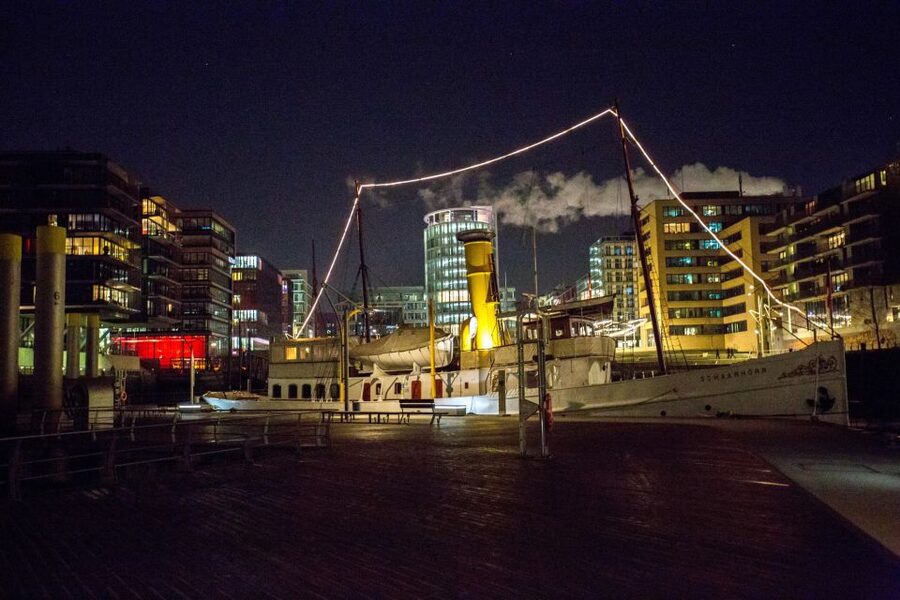
Teekontor receives another ten-minute photo and sightseeing stop. This returns the tour to one of Speicherstadt’s central themes: tea as a major trading product.
The guide’s job here is to tie the individual business and building to the larger story of Hamburg’s port. I find that connection more useful than a list of isolated facts. You begin to see why tea merchants, coffee importers, warehouses, and canal access all belong in the same story.
Poggenmühlen Bridge is the final listed stop before Chile House. It takes about five minutes and provides another canal view. By this point, the bridges have shown you Speicherstadt from several angles, and the route has moved from harbor operations through trade and storage toward Hamburg’s commercial city center.
The route is not a straight line from one famous monument to another. It uses bridges and side streets to show how the district fits together. That makes the walk more informative than a simple photo circuit, though it also means you should wear shoes suited to steady walking.
Finishing at Chile House and the Kontorhaus district
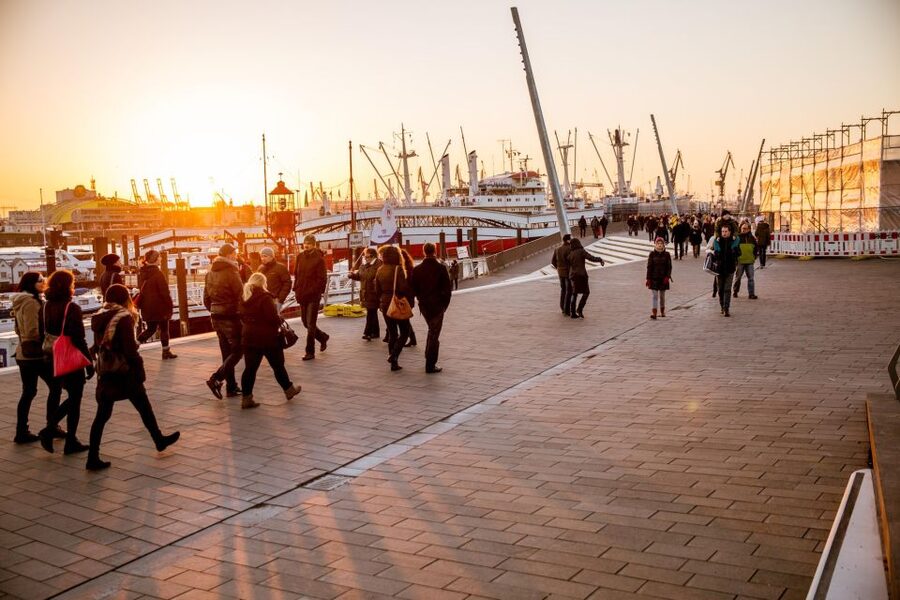
The tour finishes at Chile House, at Fischertwiete in Hamburg’s Kontorhaus district. Chile House is famous for its striking brick expressionist architecture and pointed shape. Ending here gives the walk a strong architectural finale.
The finish also broadens the story. Speicherstadt was a warehouse district, while the Kontorhaus district represented offices and commercial administration. The move from stored goods to business headquarters reflects another part of Hamburg’s trading identity.
The guide also provides insider information about the Elbe Philharmonic Hall during the tour. Even if the route does not finish at the concert hall, that background helps you place HafenCity’s modern architecture within the city’s larger redevelopment.
The end point is practical. You are not returned to Baumwall, so make a plan for what comes next. You can continue exploring the central area, find food nearby, or use public transport. Since pickup and drop-off are not included, you are responsible for getting to the meeting point and moving on after Chile House.
What the two-hour timing really means
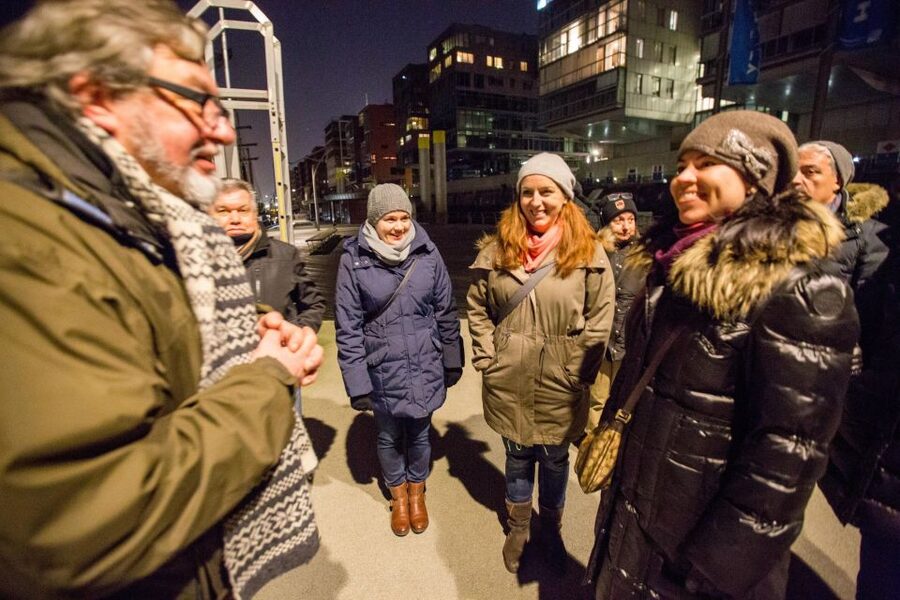
Two hours is enough for a strong orientation, but not enough for slow wandering. The listed stops add up to a series of short explanations, usually five or ten minutes, connected by walking sections.
That format suits you if you want a brisk introduction with plenty of landmarks. It is less suitable if you prefer to sit inside each building, browse shops, or take long, unhurried photographs.
The route includes photo stops at Harbor Police Station No. 2, Hanseatic Trade Center, Wilhelminenbrücke, Am Sandtorkai 73, Sandtorkai-Hof, Genuss Speicher, Bei St. Annen, Teekontor, and Poggenmühlen Bridge. Other sections, such as Kibbelsteg and the route around Fleetschlösschen, focus more on walking and guided explanation.
A small group can make this format especially pleasant. The listed price is $282 for a group of up to 10, so the value changes sharply depending on your party size. For eight to ten people, the per-person cost becomes reasonable for a private guide. For one or two people, it is a costly two-hour walk unless private attention and English-language service are particularly important to you.
Language, guides, and the private-group question
The information lists German and English as available languages, but the important condition is that the public tour is only in German. The private tour can be booked in English.
Do not assume that seeing English in the general activity details means an English public departure. Confirm the private English arrangement when booking. This is the single most important practical point for English-speaking visitors.
The guide quality appears to be a major strength. Stefan is praised for giving many interesting facts in a friendly way and for combining history with amusing stories. Mikkel kept a winter tour engaging despite bitter cold and even handled a first tour with only two people. André’s tour was praised for being lively, informative, responsive, and slightly longer when the group wanted more.
Those comments suggest that the experience depends less on a fixed script than on the personality of the guide. That can be a plus, especially if you enjoy questions and anecdotes. It also means the exact tone may vary by departure.
Weather, walking, and what to bring
This is an outdoor walking route through canals, bridges, streets, and warehouse blocks. You should dress for Hamburg’s weather rather than for an indoor museum.
Winter conditions deserve special attention. One January group dealt with poorly cleared paths, while another walked in bitter cold. The tour still received strong praise, but you should allow for slippery or uncomfortable sections when conditions are poor.
Wear comfortable shoes and bring clothing that handles wind and rain. Keep your camera ready for the Wasserschloss, canal bridges, brick facades, and Chile House. Since there is no boat ride, you will not get a water-level tour or a covered indoor ride.
The route also includes no attraction admission. You are paying for the guided walk and interpretation, not for entry to the Elbe Philharmonic Hall, museums, or other interiors.
Who should book this Speicherstadt tour
I would recommend it to first-time visitors who want Hamburg’s old harbor district explained in a short format. It is also well suited to architecture fans, small private groups, families with older children, and anyone interested in how coffee, tea, spices, and carpets shaped the city.
It works particularly well at the start of a stay. Afterward, you can return to the Wasserschloss for more photographs, explore HafenCity on your own, or spend more time around Chile House.
I would be cautious if you want a boat experience, extensive free time, or a fully English public tour. You should also think twice about the price if you have only one or two people, since $282 is charged per group rather than per person.
The two-hour length is a strength for a packed schedule. You see a lot without giving up an entire morning or afternoon. The tradeoff is a steady pace and limited time at each stop.
Should you book it?
Book this tour if you want a guide to connect Hamburg’s harbor, Speicherstadt, HafenCity, and Chile House in one clear walk. The strongest reasons are the well-chosen route, the mix of major sights and trade history, and the guides’ reported ability to make facts amusing and easy to follow.
For the best value, bring a group of several people and choose the private English option if needed. If you are traveling alone or as a couple, compare the group price with other Hamburg walks before committing.
My final call: this is a strong orientation tour for architecture, harbor history, and local stories. Just remember the two key conditions: it is entirely on foot, and the public version is German only.
FAQ
Is this a boat ride?
No. This is a two-hour guided walking tour through Speicherstadt and HafenCity.
Where does the tour start?
It starts at Baumwall subway station, at the Kehrwiederspitze exit. Meet at the bottom of the stairs in front of the Back Shop kiosk under the railway bridge.
Where does the tour finish?
The tour finishes at Chile House in Hamburg’s Kontorhaus district.
How long does the tour last?
The walking tour lasts two hours.
Is the tour available in English?
The public tour is only available in German. An English-language private tour can be booked.
Is this a private tour?
A private group option is available. The listed price is $282 for a group of up to 10 people.
What sights are included?
The route includes Speicherstadt, HafenCity, Harbor Police Station No. 2, the Hanseatic Trade Center, Wilhelminenbrücke, Kibbelsteg, Fleetschlösschen, the Wasserschloss, Teekontor, Poggenmühlen Bridge, the Elbe Philharmonic Hall area, and Chile House.
Are attraction entry fees included?
No. The tour includes the guided walk and live guide, but entry to attractions is not included.
Can I cancel the tour?
Yes. You can cancel up to 24 hours in advance for a full refund. Reserve-now, pay-later booking is also available.
Just added around Hamburg
- Hamburg: St. Pauli Food and Bier Tour★ 4.7 · 5 reviews
- St. Pauli Tour: Drag-Attack with Barbie Stupid & Lee Jackson★ 4.8 · 280 reviews
- Hamburg: Private Tour Red Light District Walking Tour★ 4.7 · 227 reviews
- St. Michael’s, Elbe Tunnel & Harbor 2-Hour Hamburg Tour★ 4.9 · 21 reviews
- Satt Pauli – der kulinarische Rundgang durch St. Pauli★ 4.8 · 12 reviews
- Hamburg: Safari tour in St. Pauli★ 4.9 · 11 reviews
- Hamburg: Reeperbahn Comedy Club★ 4.3 · 53 reviews
- Radtour um die Alster & durch traumhafte Alsterviertel★ 4.9 · 34 reviews
2-Hour Experiences, compared.
Discover Munich 2-Hour Small Group Walking Tour
Read our review →Browse the lists this tour appears in