
Reviewed · OLD TOWN TOURS
Koblenz: Old Town Tour with the Ehrenbreitstein Fortress
Two rivers, one fortress, three useful hours. This private Koblenz tour packs the city’s major sights into a clear route, beginning at Ehrenbreitstein Fortress and finishing at the Deutsches Eck. I like the exclusive guide, who can focus on your group, and the easy mix of fortress views, medieval churches, fountains, and Roman foundations. The main drawback is the price: $430 is a serious outlay unless you can fill the group with several people.
You also need to budget separately for the fortress entrance fee. The three-hour schedule is efficient, but it leaves little room for a slow museum visit or a long café stop. Still, for a small group arriving by cruise ship or staying near central Koblenz, this is a practical way to get the city’s main story in one sitting.
In This Review
- Key points to know before you book
- Beginning 118 meters above the Rhine at Ehrenbreitstein
- Crossing back for Koblenz’s Roman beginnings at Münzplatz
- Walking the romantic street between two churches
- Finding the Schängel Fountain and Koblenz’s local character
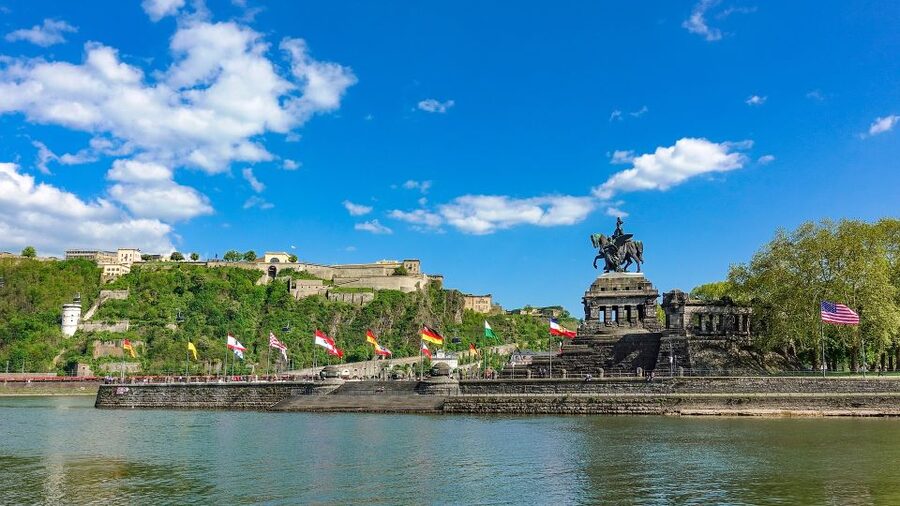
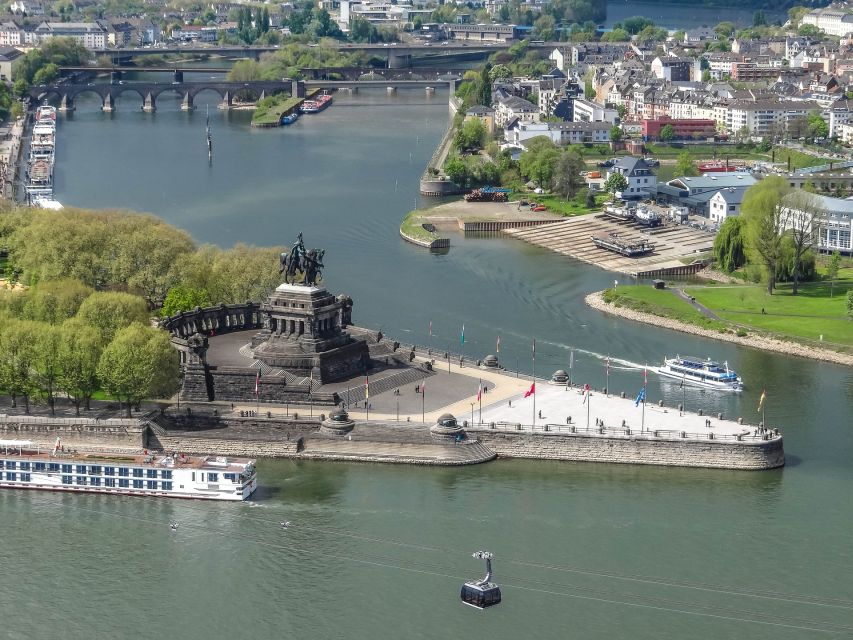
- Ending at the Deutsches Eck and Kaiser Wilhelm memorial
- What the private format adds to the three-hour schedule
- Is $430 good value for your group?
- Who will get the most from this Koblenz tour?
- Practical details that matter on the day
- Should you book it?
- FAQ
- How long does the Koblenz tour last?
- Where does the tour start?
- Where does the tour end?
- Is the tour private?
- Is the Ehrenbreitstein Fortress entrance fee included?
- What languages are available?
- Can I arrange pickup from my hotel or cruise ship?
- Can I cancel the booking for a refund?
Key points to know before you book
- Ehrenbreitstein comes first, with broad views over the Rhine Valley from a fortress 118 meters above the river.
- The route covers Koblenz’s essential sights, including Münzplatz, Liebfrauenkirche, St. Castor Basilica, the Schängel Fountain, and the Deutsches Eck.
- Your guide is private, so the pace and explanations are intended only for your group of up to 20 people.
- The old town route connects several eras, from the Roman Castellum apud confluentes to French rule and the German Empire.
- The tour lasts three hours, making it a good fit for a port call or a first look at Koblenz.
- English, German, and Italian are offered, and the activity is listed as wheelchair accessible.
Beginning 118 meters above the Rhine at Ehrenbreitstein
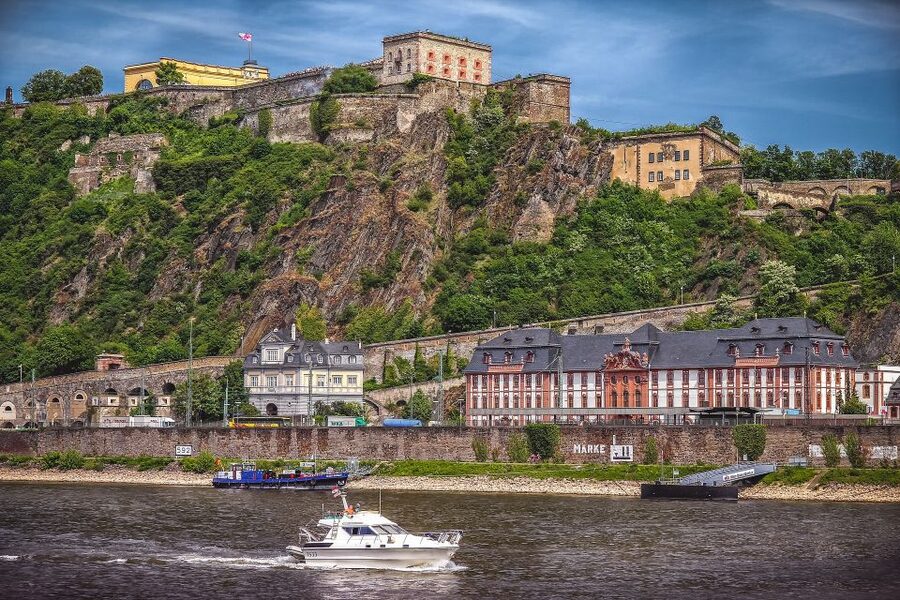
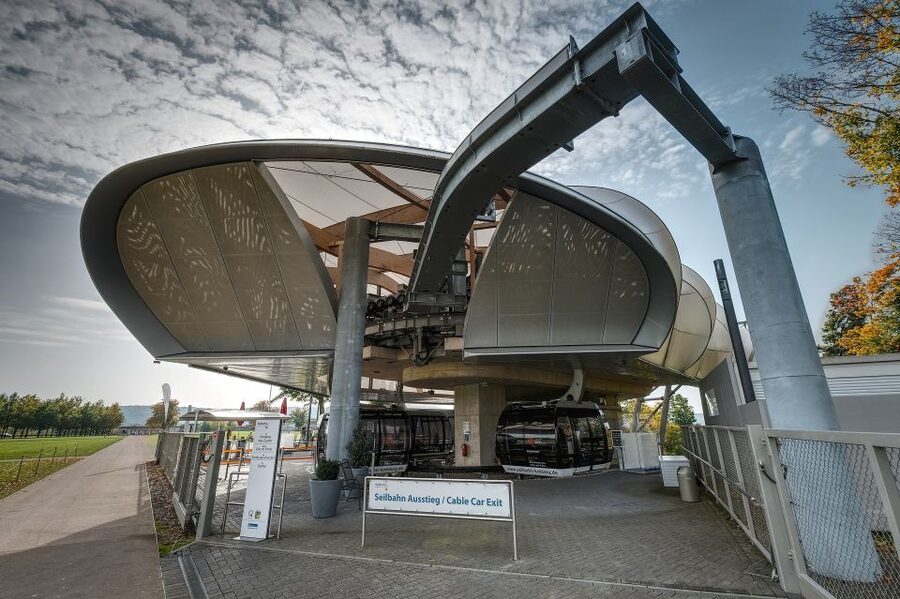
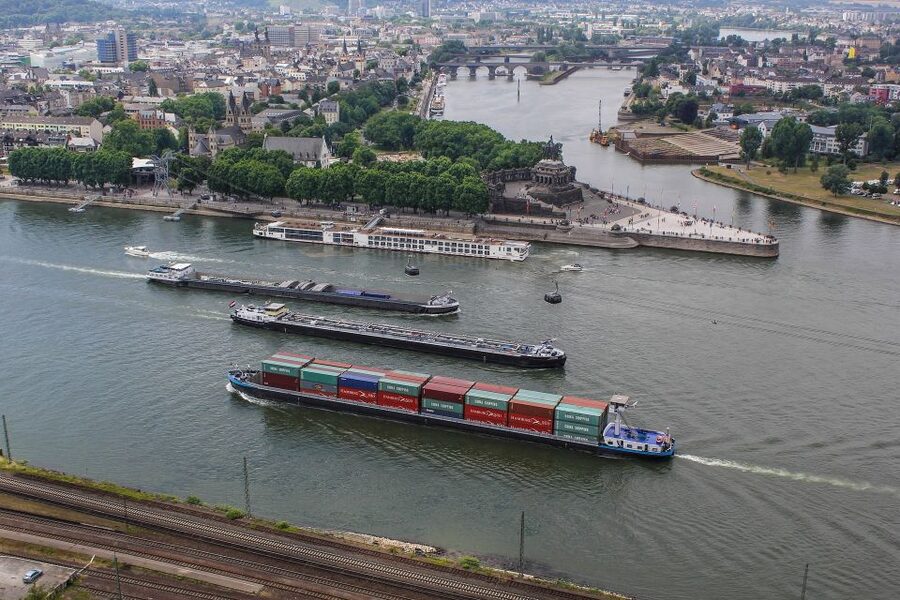
The tour starts at the cable car station on the Koblenz side, beside the crossing that links the city with Ehrenbreitstein Fortress. This opening is smart. You see Koblenz from above before walking through its streets, so the town’s position at the meeting of the Rhine and Moselle becomes clear right away.
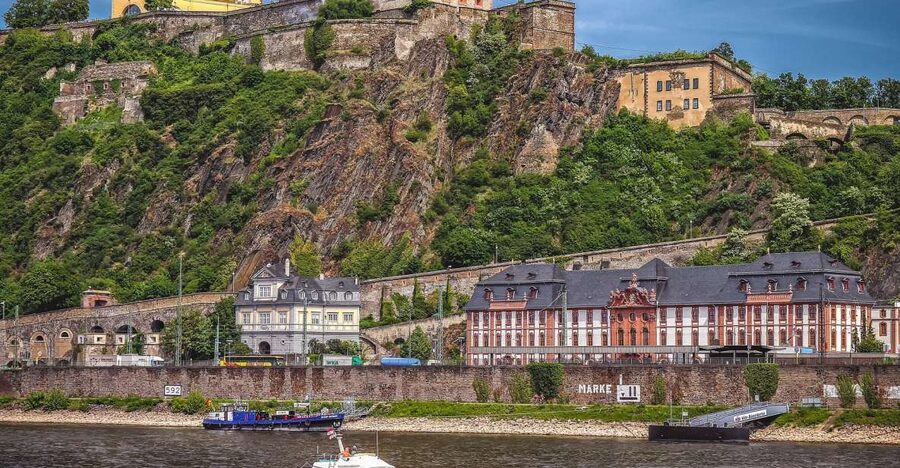
Ehrenbreitstein sits 118 meters above the Rhine. From the fortress, you can look across the river valley and get a useful sense of why this high ground mattered. The site was built to guard the Middle Rhine region, and its walls were designed for defense rather than decoration. You are not simply visiting an old military building. You are seeing the reason Koblenz became important.
The present fortress was constructed between 1817 and 1828. That date matters because the site has a much longer military past, but the buildings you see today belong mainly to the period after the Napoleonic wars. The fortress was destroyed by French troops in 1801 and later rebuilt. The rebuilding gave it a new role as part of the defensive system along the Rhine.
Your guide can help connect the stonework to the political story. In 1672, during a war between France and Germany, the Archbishop refused passage permits to troops from both sides along the Rhine. That small but telling episode shows how local authority could affect major military movements.
The fortress is also linked with Lord Byron, who wrote about its damaged walls after the French destruction. His poem described a place where war had failed to defeat the fortifications, while peace and rebuilding left the roofs open to rain. You do not need to know the poem in advance, but the reference adds a literary touch to what might otherwise feel like a purely military stop.
The main practical point is that the entrance fee is not included in the tour price. Check the current admission cost when booking and allow for it in your budget. Since the fortress visit is the first major part of the outing, it is worth confirming exactly how much of the interior your guide plans to cover.
More Old Town Tours in Koblenz:
- Koblenz: Old Town Sightseeing Cruise along the Rhine
★ 4.5 · 305 reviews - Dresden: Semperoper and Old Town Tour
★ 4.8 · 5,735 reviews - Nuremberg: Old Town Guided Walking Tour
★ 4.6 · 2,416 reviews
Crossing back for Koblenz’s Roman beginnings at Münzplatz
After the fortress, the tour moves into Koblenz’s old town and reaches Münzplatz. The square’s name comes from the electoral coin, or Münz, minted here in the 11th century. It is a useful place to pause because the name points to Koblenz’s role as a center of authority and trade.
The square also recalls the Roman beginning of the city. The Romans established Castellum apud confluentes, meaning a fort at the confluence. Koblenz owes its name to that position where waterways meet. Your guide can make this connection easier to picture than a plaque or museum label alone.
A fountain built for Koblenz’s 2,000-year anniversary in 1992 was designed by Wili Heinzen. It was given to the city and its citizens by Sparkasse Koblenz. This is one of the tour’s smaller stops, but it gives you a local detail that many quick city walks might skip.
I like this part of the route because it shifts the focus from military power to civic life. The fortress explains why the hill mattered. Münzplatz explains how the settlement below developed into a city.
Walking the romantic street between two churches
From Münzplatz, the route follows the old town street between Liebfrauenkirche and the Basilica of St. Castor. This is one of the more attractive sections of the walk, with picturesque squares and two churches that tell very different parts of Koblenz’s story.
Liebfrauenkirche rises from the city’s highest point and is easy to recognize by its onion domes. The church was built in the 17th century and served as one of the main parish churches during the French Revolution. It was destroyed in 1944 and rebuilt in 1955, so what you see today combines older traditions with postwar reconstruction.
That rebuilding is important to keep in mind. Koblenz suffered heavy damage during the Second World War, and not every historic-looking building has survived untouched. A guide can help you read the old town without assuming that every façade is medieval or original.
The Basilica of St. Castor is the oldest church in Koblenz. It was built between 817 and 836 by the Archbishop of Trier, with support from Emperor Louis the Pious. It began as a Carolingian proprietary church, a church controlled by a powerful patron rather than simply serving as an ordinary parish church.
The two churches give the tour a useful contrast. Liebfrauenkirche reflects later urban and religious life, while St. Castor reaches back to the Carolingian era. You get more from the buildings when someone explains their dates, patrons, and changes instead of simply pointing out their towers.
Finding the Schängel Fountain and Koblenz’s local character
The tour then reaches the city hall area and the Schängel Fountain. This fountain is regarded as a symbol of Koblenz, and its name comes from the city’s roughly 20-year allegiance to France between 1794 and 1813.
The fountain was designed by Carl Burger in 1940 and dedicated to the poet Josef Cornelius. Its subject is closely tied to the local identity of Koblenz. That makes it more than a decorative stop. It shows how the city remembers its complicated relationship with France and turns that past into a symbol of civic character.
This is also where the walk feels less like a list of grand monuments. The fortress, churches, and imperial memorial are the big sights. The Schängel Fountain gives you something more local and slightly playful. I appreciate that balance, especially on a short tour.
The route includes several picturesque squares, but you should keep your expectations realistic. Three hours is enough for an overview and guided explanations, not for extended time inside every church or a relaxed exploration of every side street. If you like to photograph details, tell your guide early that you want brief pauses.
A few more Koblenz trips worth comparing
- Koblenz: Rhine Valley Castles and Palaces Boat Tour
★ 4.4 · 1,824 reviews - Koblenz: 2-Hour Sightseeing Cruise on the Rhine
★ 4.6 · 839 reviews - Koblenz: Panoramic Cruise on Moselle River to Winningen
★ 4.4 · 283 reviews - Koblenz: Rhine Valley Castle Sightseeing Cruise
★ 4.6 · 98 reviews
Ending at the Deutsches Eck and Kaiser Wilhelm memorial
The final major stop is the Deutsches Eck, the headland at Koblenz. The name refers to the meeting area of the rivers, and it is one of the city’s defining viewpoints.
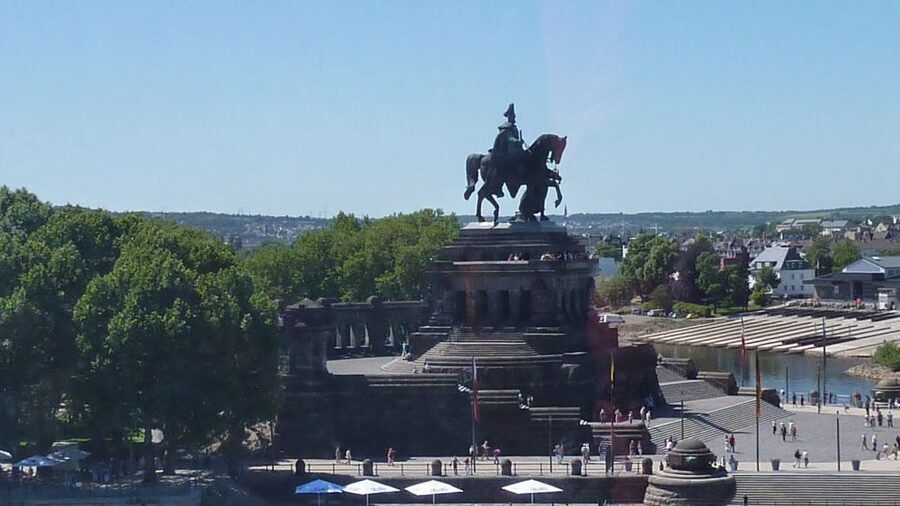
Here you see the Kaiser Wilhelm memorial, erected in 1897 for Kaiser Wilhelm I, the first German Emperor. The monument gives the tour a strong closing point because it shifts the story once again, this time toward the German Empire and national memory.
The Deutsches Eck is also a place where the geography of Koblenz becomes tangible. You can see why the city’s name, Roman foundation, military defenses, and trade routes all relate to the meeting of waterways. The end of the tour brings those threads together without needing a long lecture.
The activity ends back at the meeting point. Since the listed meeting point is the cable car station on the Koblenz side, make sure you understand how your pickup connects with that start. Pickup is available at your cruise docking location or at a centrally located hotel, but the formal tour meeting point is the cable car station.
What the private format adds to the three-hour schedule
The group can include up to 20 people, but it remains a private tour. That means the guide is exclusively with your party rather than combining you with strangers. For a family, cruise group, or several friends, this can make the price much easier to justify.
The private format also matters because the itinerary includes many different kinds of information. You move from military architecture to Roman origins, church history, French rule, local poetry, and imperial symbolism. You may want more detail at the fortress, while someone else in your group may care more about churches or city legends. A private guide can adjust the emphasis.
The tour has received a high overall rating of 4.8 from four ratings. The strongest praise centers on the guide’s clear explanations, historical detail, and ability to include quirky attractions alongside major monuments. One particularly positive account describes a guide who gave extra details during the fortress visit and made the route feel tailored to the group.
That is the quality I would hope for here. The route itself is strong, but the guide makes the difference. Ask questions. If the fortress interests you most, say so. If you want a faster overview before exploring on your own, make that clear too.
The available languages are English, German, and Italian. Live guide availability should be checked for your chosen date and time.
Is $430 good value for your group?
The listed price is $430 per group of up to 20 people. That is not a budget walking tour, but the calculation changes if you share it with a larger party. For 10 people, the guide cost works out to $43 each. For 20 people, it is $21.50 each, before the fortress entrance fee.
For just one or two people, the price is harder to defend unless you place a high value on having a private guide and need a tightly planned introduction to Koblenz. For a family or organized group, the cost becomes more reasonable because you are paying for a dedicated guide rather than a seat on a standard group walk.
The tour also saves planning time. You do not need to work out how to combine the fortress, cable car, old town, churches, fountain, and Deutsches Eck in a short visit. That matters during a cruise stop, when a missed connection or a wandering route can quickly eat into your day.
Still, remember the exclusions. Entrance to Ehrenbreitstein Fortress is extra, and the activity does not promise a meal, refreshments, or extended free time. Think of the $430 as the fee for the private guiding service and route, not the full cost of every part of the outing.
Who will get the most from this Koblenz tour?
I would recommend this experience to you if you want a structured first look at Koblenz and prefer explanations to simply taking photos. It suits history-minded visitors, first-time visitors, cruise passengers, and groups that want to stay together.
It is especially useful if you have only three hours. The route covers the city’s main themes without asking you to choose between the fortress and the old town. The views from Ehrenbreitstein provide the visual highlight, while Münzplatz, the churches, and the Deutsches Eck fill in the city’s story.
Families and mixed-interest groups may also like the private setup. People who want architecture can focus on the churches. Those interested in warfare can spend more time on the fortress. Those who prefer local culture can ask about the Schängel Fountain and Koblenz’s period under French rule.
I would be more cautious if you want a slow, unplanned walk. The tour is packed with stops, and three hours can feel brisk. It is also not the best fit if your main goal is a long fortress visit with plenty of time for every interior section. The entrance fee is extra, and the exact depth of the fortress visit depends on the guide and schedule.
The activity is listed as wheelchair accessible, which is useful for visitors who need that feature. Because the route includes a fortress, a cable car connection, and historic streets, confirm the practical details for your own mobility needs before booking.
Practical details that matter on the day
The tour lasts three hours, with starting times based on availability. Begin at the Koblenz-side cable car station unless your pickup arrangement says otherwise.
Pickup is offered at a cruise docking location or a centrally located hotel. If you are arriving by ship, confirm the meeting instructions carefully. The advertised start and the available pickup options are not identical, so clarity here will prevent a rushed beginning.
Cancellation is free up to 24 hours in advance for a full refund. You can also reserve now and pay later, which helps if your itinerary is still changing.
Because the guide is private, your group can make the most of the time by deciding what matters most before you arrive. I would choose one priority, such as the fortress, churches, or Roman history, and mention it at the start. That small bit of preparation can turn a standard overview into a more personal visit.
Should you book it?
Book this Koblenz tour if you want the city’s major sights explained in a compact route, especially if you are sharing the $430 cost with a group. The combination of Ehrenbreitstein’s Rhine Valley views and the old town’s Roman, religious, French, and imperial stories gives you a strong first introduction.
Skip it if you are traveling alone on a tight budget, want extensive free time, or prefer to explore without a schedule. You will need to pay the fortress admission separately, and three hours leaves limited room for lingering.
For a cruise stop, family group, or first visit to Koblenz, I think the private format offers real value. The route is focused, the historical range is wide, and the guide’s explanations are the feature most likely to make the experience worthwhile.
FAQ
How long does the Koblenz tour last?
The tour lasts three hours.
Where does the tour start?
It starts at the cable car station on the Koblenz side.
Where does the tour end?
The activity ends back at the meeting point.
Is the tour private?
Yes. It is a private group experience, with a guide exclusively for your group. The group can include up to 20 people.
Is the Ehrenbreitstein Fortress entrance fee included?
No. Entrance fees for Ehrenbreitstein Fortress are not included in the tour price.
What languages are available?
Live guiding is available in English, German, and Italian.
Can I arrange pickup from my hotel or cruise ship?
Pickup is available from your cruise docking location or a centrally located hotel. The stated meeting point is the cable car station on the Koblenz side.
Can I cancel the booking for a refund?
Yes. You can cancel up to 24 hours in advance for a full refund. You can also reserve now and pay later.
Just added around Koblenz
- Koblenz: The Living Vineyard, Nature & Wine Enjoyment★ 5.0 · 14 reviews
- Koblenz: Christmas Boat Tour with Mulled Wine★ 4.3 · 35 reviews
- Koblenz: Sunset Boat Cruise★ 4.6 · 80 reviews
- Koblenz: Rhine Valley Castle Sightseeing Cruise★ 4.6 · 98 reviews
- Koblenz: Panoramic Cruise on Moselle River to Winningen★ 4.4 · 283 reviews
- Koblenz: Private pub crawl with insider guide & free shots★ 5.0 · 5 reviews
- Koblenz: Historical Sparkling Wine Museum Guided Tour★ 4.6 · 28 reviews
- Discovery tour – cellar tour with wine tasting★ 4.2 · 26 reviews
Old Town Tours, compared.
Old Town & Viktualienmarkt City Walk in German
Read our review →

The Night Watchman Old Town Walking Tour in German
Read our review →
Browse the lists this tour appears in