
Reviewed · BEER AND BREWERY TOURS
Munich: Food Tour Beer- 3 small beers & “Brotzeit” in GERMAN
Munich tells its beer story over three small pours. This 150-minute walk links the Hofbräuhaus, old brewing sites, and the Beer and Oktoberfest Museum, so you get more than a drink in a famous beer hall. I like the mix of beer history and city streets, and the chance to finish with a proper Bavarian Brotzeit at the Weisses Bräuhaus.
The guides add much of the charm. Eva has led the route with humor, while Hans Jürgen Beumer has been praised for his warmth and energy. My main caution is that the tour is partly a walking history tour, not a nonstop food crawl. Also, the published details about which food and drinks are included are not fully consistent, so check the final inclusions before paying $87 per person.
In This Review
- Key points to know before booking
- A beer tour that begins at Marienplatz
- Hofbräuhaus, with more than the famous beer hall
- Old brewing houses and Munich’s beer streets
- The Beer and Oktoberfest Museum in a historic building
- The Brotzeit finale at Weisses Bräuhaus
- What the three beers add to the experience
- German-language guiding and guide quality
- Shared group or private tour?
- How the value compares with a simple beer hall visit
- Who should book this Munich beer tour?
- Should you book it?
- FAQ
- How long does the Munich beer and food tour last?
- What language is the tour conducted in?
- Where do I meet the guide?
- How much beer is included in the tasting?
- Is the museum entrance included?
- What should I bring, and what is not allowed?
Key points to know before booking
- Three tiny beers, not three full glasses: The tasting includes three 0.1-liter samples from different breweries.
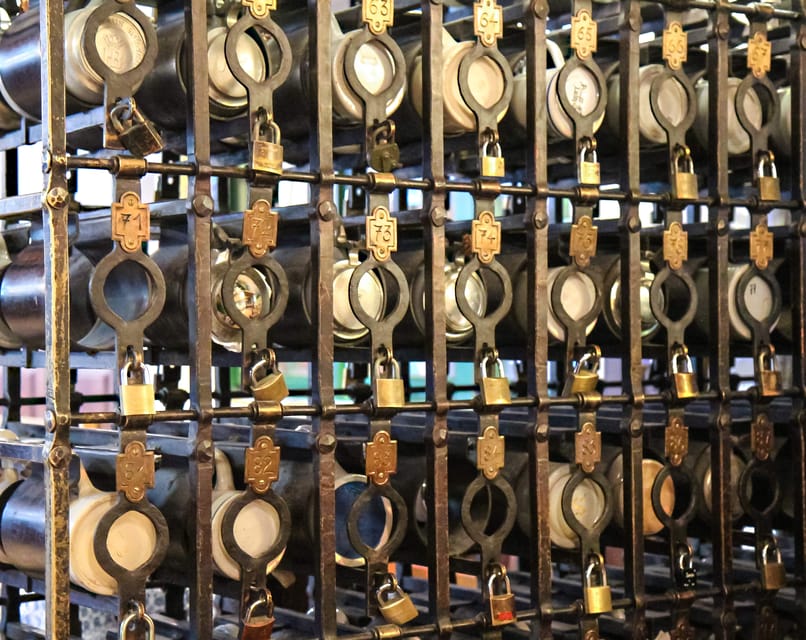
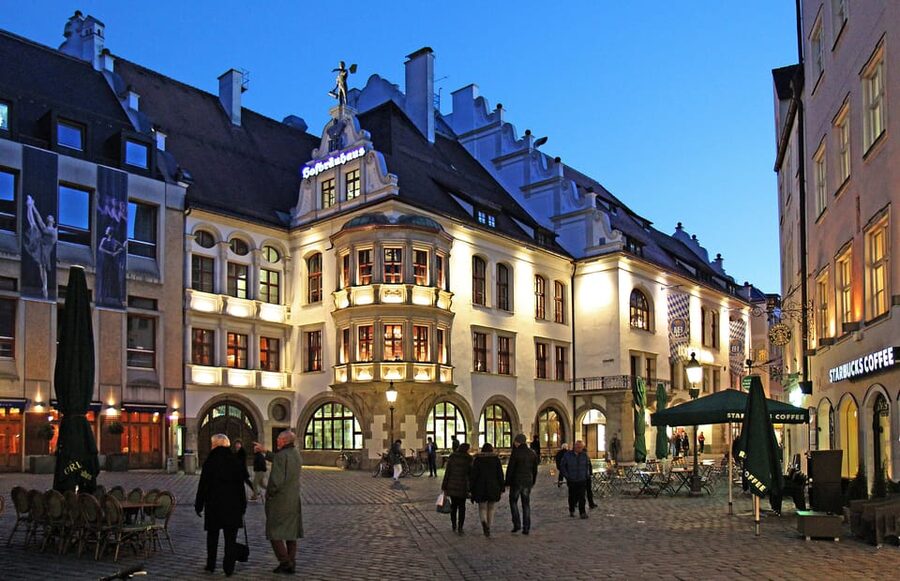
- Hofbräuhaus is part of the route: You hear its stories and see corners you could easily miss on your own.
- The museum gives the tour its historical weight: You learn about medieval brewing, Bavarian purity rules, Oktoberfest, and Carl von Linde’s cooling machine.
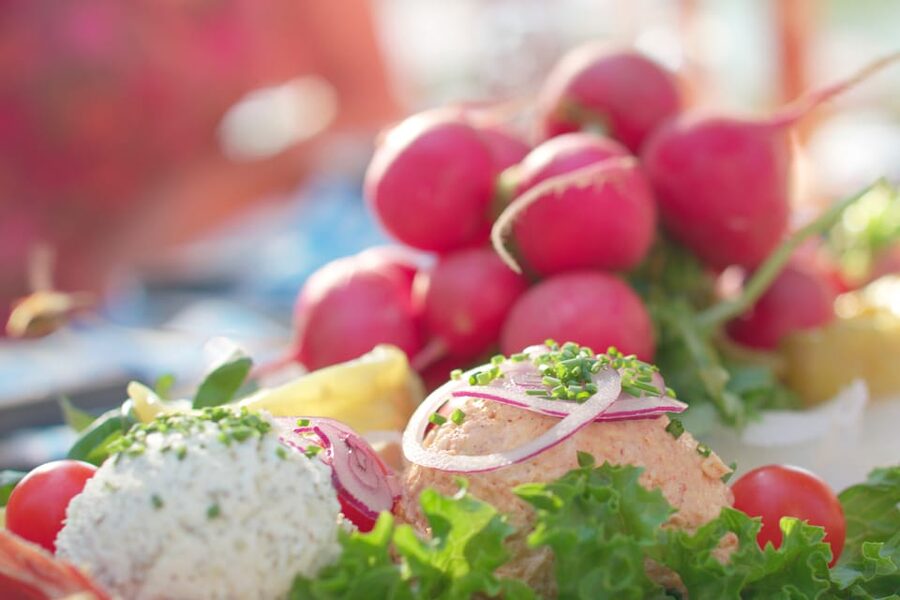
- The final meal is a real Brotzeit: The route ends at the Weisses Bräuhaus with Bavarian food and a drink, though the precise inclusions should be confirmed.
- German is the only stated tour language: This matters if you do not follow spoken German comfortably.
- Meet at Mariensäule: Look for the guide carrying a large blue bag marked Weis(s)er Stadtvogel.
A beer tour that begins at Marienplatz
The meeting point is easy to find in Munich’s center: the large Mariensäule column in Marienplatz. Your guide wears traditional Bavarian clothing, either a Dirndl or a Janker and Lederhosen, and carries the large blue Weis(s)er Stadtvogel bag. That last detail is useful in a busy square where several groups may be gathering.
The tour starts with a small beer called a Schnitt. Think of it as a quick opening pour rather than a full tasting glass. It gets the group in the mood, but it also tells you what kind of experience this is: measured samples, stories, and food, rather than an afternoon of heavy drinking.
From Marienplatz, you move through the old town on foot. The route passes former brewing houses and older buildings tucked into crooked lanes. These stops give the tour a useful sense of place. Beer is not treated as an isolated product served in a glass. Instead, you see how it fits into Munich’s streets, rulers, workshops, and public life.
You should wear comfortable shoes. The tour takes place rain or shine, and large bags or luggage are not allowed. Since the walk combines outdoor stops with indoor visits, comfortable clothing and a weather-ready layer make sense.
More Beer and Brewery Tours in Munich
- Bavarian Beer and Food Evening Tour in Munich
★ 4.5 · 1,575 reviews - Classic Mike’s Bike Tour daily @ 11.30 incl Beer Garden & Surfers
★ 5.0 · 1,246 reviews - Munich: Beer and Food Tour with Dinner & Oktoberfest Museum
★ 4.7 · 1,086 reviews
Hofbräuhaus, with more than the famous beer hall
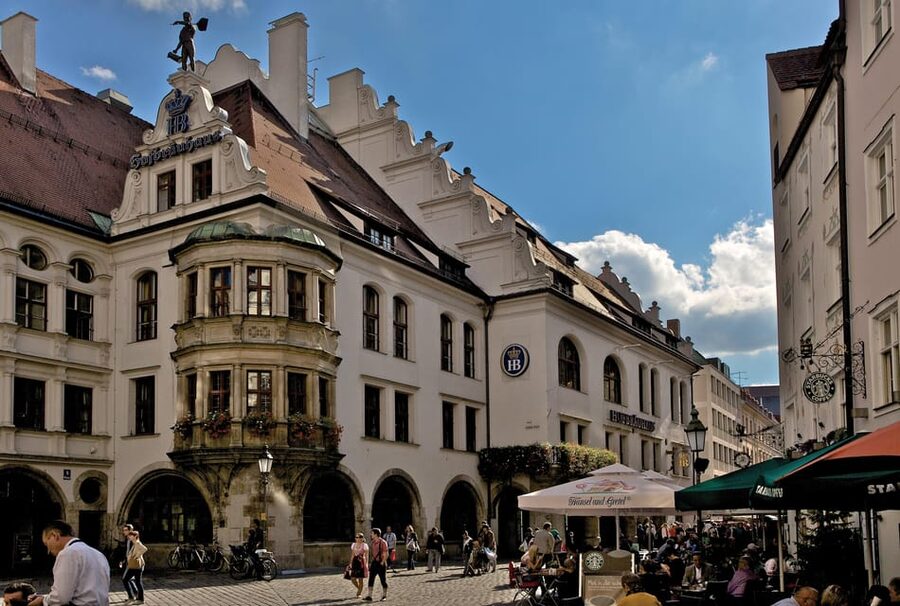
The Hofbräuhaus is the best-known stop, and the tour does more than send you through the front door for a quick look. You learn how it began under Duke William V of Wittelsbach and hear stories connected with the building’s past.
That extra explanation matters. On your own, it is easy to enter, take a photograph, glance at the painted ceilings, and leave with only the general impression that the place is old and famous. A guide can point out details and tell you what happened in the less obvious corners.
The tour promises access to secret nooks and stories that are easy to miss. The supplied details do not specify every room or area visited, so you should not expect a private backstage tour. Still, the focus on overlooked corners gives the stop more value than a simple photo visit.
The Hofbräuhaus can also be a loud and crowded place, especially during popular dining hours. That atmosphere is part of its appeal, but it can make a long talk difficult. If you prefer calm tastings and quiet conversation, this setting may test your patience. If you like the energy of a historic beer hall, it fits the subject well.
The guide’s clothing and the building’s setting help create a traditional Bavarian feel, but the real strength is the context. You learn why this brewery mattered to Munich and how beer production was connected to the city’s ruling family.
Old brewing houses and Munich’s beer streets
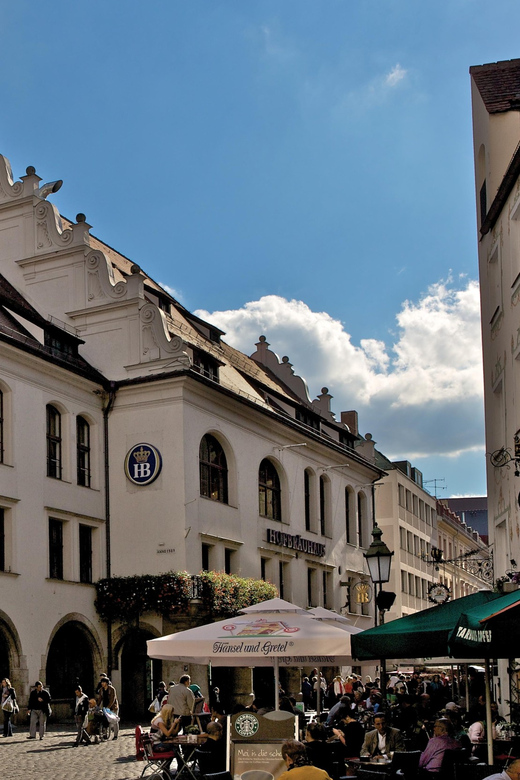
Between the major sights, the walk uses the old town itself as part of the lesson. You pass former brewing houses and interesting sites hidden among narrow, crooked lanes. These short outdoor sections break up the indoor stops and help explain how beer shaped everyday Munich.
I like this part because it gives you a better sense of scale. The Hofbräuhaus is a grand symbol, while the smaller streets suggest the practical side of brewing and selling beer. The route is not only about famous names. It also points toward the older network of brewing places that once filled the city.
The experience does not promise a long list of breweries or a broad survey of modern craft beer. Its focus is Bavarian tradition and Munich’s older beer culture. That makes it a better match for someone who wants local history with a drink than for someone searching for experimental styles or a serious technical tasting.
The walking pace and exact group size are not stated. A shared group option is available, along with a private tour. A shared tour should suit most people who enjoy hearing stories with others, while a private booking may be worth considering if you want more control over the pace or questions.
The Beer and Oktoberfest Museum in a historic building
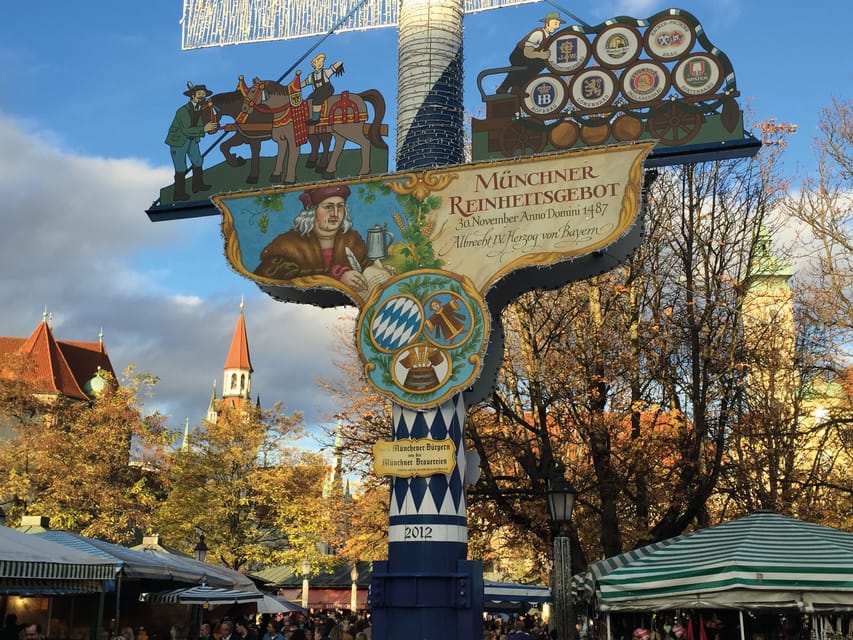
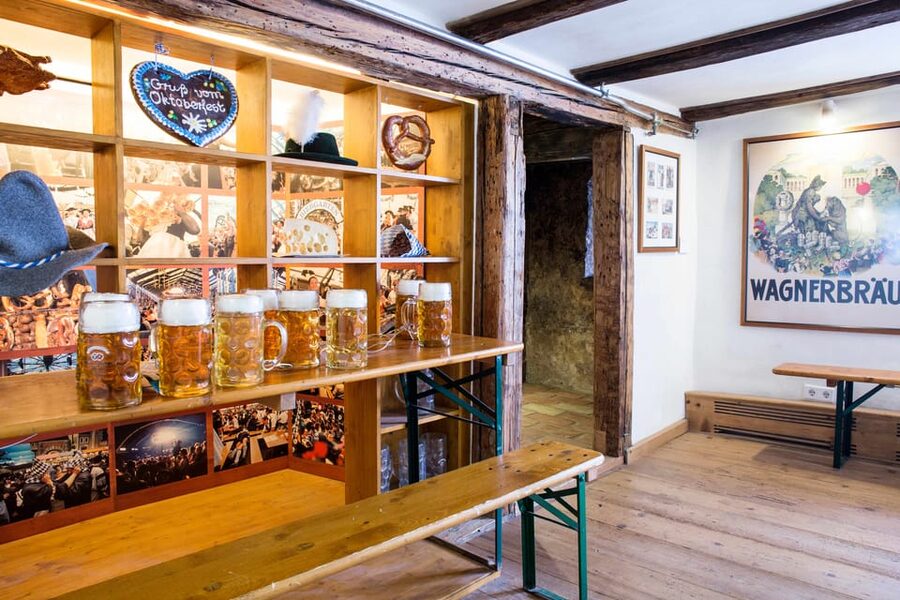
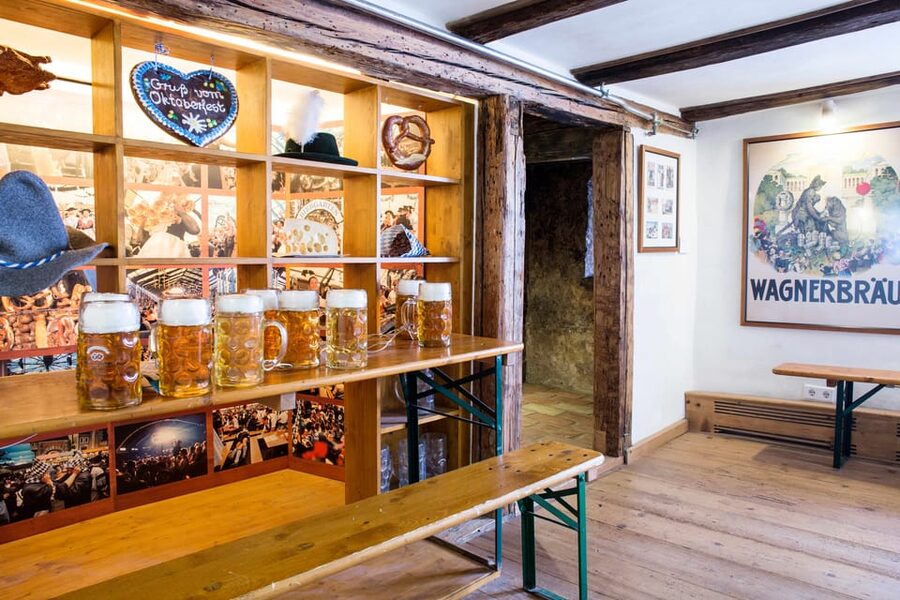
The main museum stop takes you into the Beer and Oktoberfest Museum. Before reaching the exhibits, you sit down for the proper beer tasting and have pretzels with the beer. The setting is part of the appeal: an old building with rough brick walls and a distinctive atmosphere.
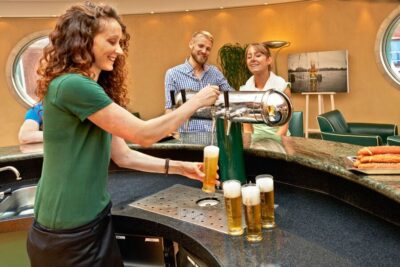
Three different small beers are included in the tasting, each measuring 0.1 liter. That total of 0.3 liters is modest, but it is enough to compare several beers without making the rest of the walk uncomfortable. It also lets the guide connect each pour to Bavarian brewing customs and the story being told.
You should not think of this as a sommelier-style tasting with elaborate tasting notes. The supplied description emphasizes the invention of beer, brewing traditions, and the arrival of beer in Munich. The value lies in the combination of samples and explanation.
Inside the museum, you learn how people brewed in the Middle Ages and why the Bavarian Dukes passed a purity law. The subject is useful because it explains why Bavarian beer carries such a strong sense of tradition. You are not simply told that Bavarians care about beer. You get a look at the rules and methods that helped shape that tradition.
The museum collection includes a model of Carl von Linde’s machine. His cooling invention helped modernize beer storage and production. That detail adds a welcome technical note to a tour that could otherwise focus only on old taverns, dukes, and folklore.
You also see a picture of the first Oktoberfest in 1810. This helps separate the original festival from the enormous modern event many people picture today. The museum visit gives the tour a useful timeline, moving from medieval brewing to technical change and then to Oktoberfest.
The museum entrance fee is included in the stated package. The museum is likely the most valuable stop for anyone who wants facts rather than only atmosphere. It also gives you time to sit down, which is welcome after the opening walk.
More Food and Drink Tours in Munich
- Munich: Viktualienmarkt Food Tour
★ 4.5 · 1,127 reviews - Munich’s Beer Halls and Breweries: 3-Hour Guided Tour
★ 4.6 · 928 reviews - Lunch Like a Local: Munich’s ORIGINAL Viktualienmarkt Food Tour
★ 5.0 · 416 reviews - Munich: Viktualienmarkt Food Tasting Tour in German
★ 4.7 · 394 reviews
The Brotzeit finale at Weisses Bräuhaus
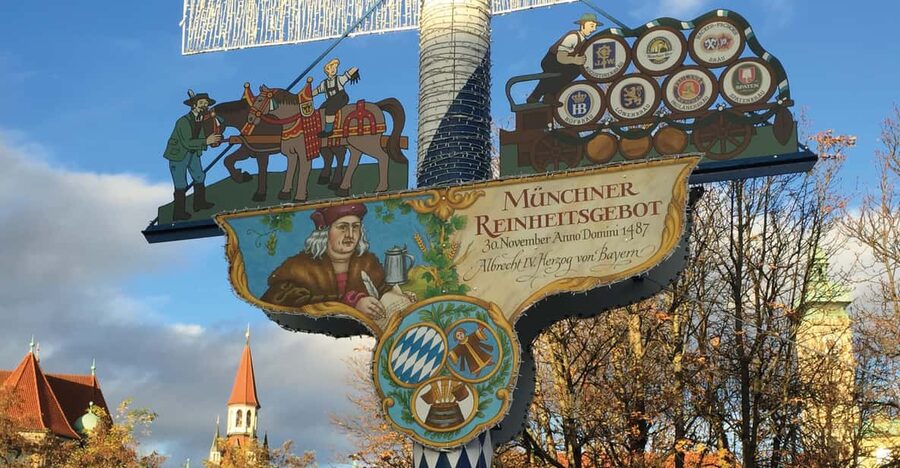
After the museum, you cross the street to the Weisses Bräuhaus, another historic beer location. Here the tour changes pace. Instead of continuing with a guided walk, you settle in for a Bavarian Brotzeit and a drink.
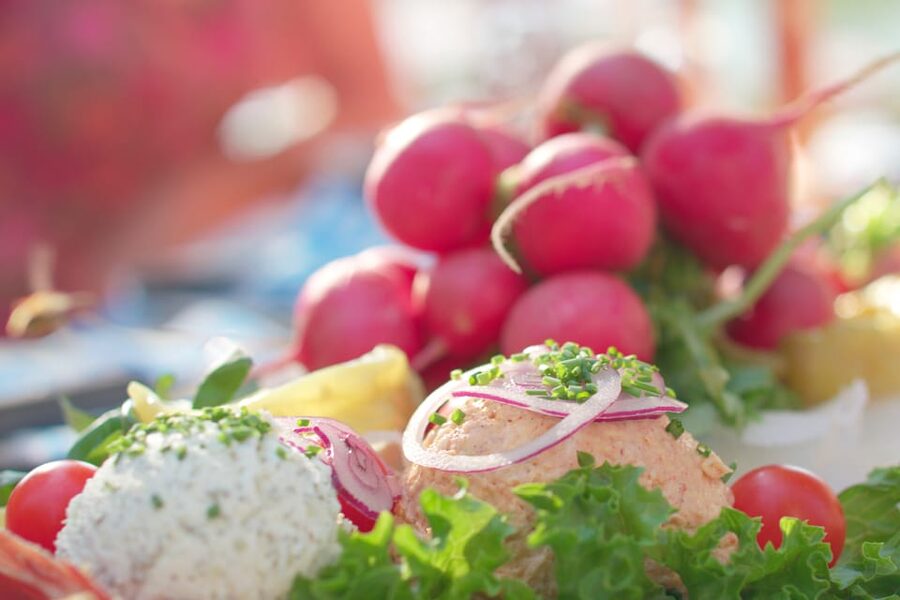
Brotzeit means a casual Bavarian meal built around hearty shared or individual foods. The information supplied for this experience calls it a complete Bavarian light dinner. The exact dishes are not listed, so I would not book this expecting a specific sausage, cheese, or cold-cut plate. The safe expectation is a traditional, filling meal rather than a formal multi-course dinner.
The guide says goodbye once the food arrives, and you can stay as long as you wish. That is a practical touch. You are not rushed out after the final bite, and you can continue the evening at your own pace. It also means the tour ends at the restaurant rather than returning you to Marienplatz.
The final drink is part of the stated meal arrangement, but the details contain a contradiction. One section says the beer tasting, pretzels, museum entrance, and Bavarian light dinner are included. Another section lists the beer tasting with pretzels, the Schnitt, and the Bavarian Brotzeit with a drink as not included. Since those statements conflict, confirm the exact package before booking.
That clarification is especially important at $87 per person. The price can be reasonable if it covers the museum, the three-beer tasting, pretzels, the opening Schnitt, and a substantial Bavarian meal with a drink. It is less attractive if the listed meal and drinks require additional payment. Ask the provider or check the final booking screen for the precise food and drink terms.
What the three beers add to the experience
The beer samples are small, but that is not necessarily a weakness. Three 0.1-liter pours let you try different beers from different breweries without committing to a full mug of each. You can pay attention to how the styles differ, then continue walking and listening.
The route also uses beer as a doorway into local history. You hear about the invention of beer, its arrival in Munich, brewing in the Middle Ages, Bavarian traditions, and the purity law. The tasting works best when you treat it as part of the lesson rather than as the main event.
The opening Schnitt gives you a fourth beer-related moment, but it is separate from the three formal tasting pours. Because the package details are inconsistent, confirm whether that first drink is included and what size it is.
Pretzels accompany the tasting. They are a practical match for beer and provide a small snack before the later meal. Still, do not confuse the pretzels with the Brotzeit. They are two separate food moments in the tour plan.
German-language guiding and guide quality
The tour is conducted in German. This is the single biggest booking question for anyone who does not speak German well. The subject involves stories, jokes, historical explanations, and museum interpretation, so basic conversational German may not be enough to catch the full value.
The guide can make a large difference. Eva has been praised for leading the route with humor while explaining both Munich and beer history. Hans Jürgen Beumer has also been praised for bringing the information across with energy and genuine enthusiasm. Those comments suggest a lively presentation rather than a dry lecture.
Guide assignments can change, so you should not assume that Eva or Hans Jürgen will lead every departure. Their names are useful examples of the tone the provider aims for, not a promise of a particular guide.
The German-only format may be a drawback for international visitors. On the other hand, German speakers who want local stories in the language of the place may find this more natural than an English tour built around simplified explanations.
Shared group or private tour?
You can choose between a shared group tour and a private option. The supplied details do not give the group size or the private-tour surcharge, so compare the final prices carefully.
A shared group makes sense if you want a social outing and do not mind keeping to the guide’s pace. It also spreads the cost of the guide and can make a beer tasting feel more convivial.
A private tour suits you better if you have a strong interest in Munich’s brewing history, want to ask many questions, or need a slower pace. It may also be useful for a family or small group that wants to keep the museum and food stops flexible. Since the guide leaves when the meal arrives, the private option does not turn dinner into a continued guided restaurant experience.
How the value compares with a simple beer hall visit
You could visit the Hofbräuhaus on your own, order a beer, and pay less than $87. That is not the real comparison. This experience bundles a guide, a walking route, museum admission, three small tastings, pretzels, and a Bavarian meal, assuming the conflicting inclusion notes are resolved in your favor.
The tour is strongest for people who want the story behind Munich’s beer culture. You get a connection between the city’s old streets, the Hofbräuhaus, the museum, and the Weisses Bräuhaus. A self-guided visit would give you the buildings and food, but not necessarily the same chain of explanations.
The value drops if you mainly want to drink beer. The pours are small, the route takes two and a half hours, and much of the time is spent walking or listening. You may spend less by visiting one beer hall and ordering a meal yourself.
The price is also less appealing if the Brotzeit, drink, Schnitt, or tasting are charged separately. Confirming those details is not a minor task. It affects the central reason to book.
Who should book this Munich beer tour?
I would recommend it to a German-speaking visitor who wants a structured introduction to Munich’s beer traditions. It suits first-time visitors who want to pair major sights with useful background, and it gives history-minded drinkers more than a standard pub stop.
It is also a good choice if you like traditional food. The final Brotzeit gives you a chance to eat Bavarian food in a historic beer setting without having to choose a dish from scratch while wondering what is truly local.
You may want a different experience if you want a modern craft-beer tour, a full glass at every stop, or an English-language guide. The tour is also not ideal if you dislike walking in bad weather, since it runs rain or shine.
The rating of 4.5 from 14 ratings fits the experience described here: strong local content and engaging guides, with a smaller number of people finding it more like a city tour than a food and beer tour. That distinction is important. The best way to think of this outing is a Munich history walk with beer, museum time, and a meal at the end.
Should you book it?
Book this tour if you want Munich history served with beer, especially if you speak German and value a guide who can add humor and local context. The Hofbräuhaus, Beer and Oktoberfest Museum, and Weisses Bräuhaus form a sensible three-part route, and the final meal gives the afternoon a satisfying finish.
Before paying $87, confirm exactly what is included in the tasting, the Schnitt, the pretzels, the drink, and the Brotzeit. If all those elements are covered, the package offers fair value for a two-and-a-half-hour cultural outing. If the meal and drinks cost extra, you may prefer to explore the beer halls independently and spend the difference on a larger meal.
FAQ
How long does the Munich beer and food tour last?
The tour lasts 150 minutes, or two and a half hours.
What language is the tour conducted in?
The live tour guide conducts the experience in German.
Where do I meet the guide?
Meet at the large Mariensäule column in Marienplatz. The guide carries a large blue bag with the white words Weis(s)er Stadtvogel.
How much beer is included in the tasting?
The formal tasting includes three different small beers, each measuring 0.1 liter. The tour also begins with a small beer called a Schnitt, but the supplied inclusion details give conflicting information about whether it is included.
Is the museum entrance included?
The Beer and Oktoberfest Museum entrance fee is stated as included.
What should I bring, and what is not allowed?
Bring comfortable shoes and comfortable clothing. Luggage and large bags are not allowed. The tour operates rain or shine.
Just added around Munich
- Pub crawl incl. Oktoberfest museum guided tour with beer tasting (private)★ 5.0 · 5 reviews
- South Tyrolean specialties and wine tasting★ 5.0 · 5 reviews
- Size Matters Beer Tour Munich★ 4.6 · 105 reviews
- Short & sweet: Tasting the Viktualienmarkt★ 4.8 · 37 reviews
- Secret Food Tours Munich★ 4.8 · 5 reviews
- Munich: Romantic Wine Experience for Two at Viktualienmarkt★ 4.2 · 14 reviews
- Residence of Munich private tour with skip the line ticket★ 5.0 · 4 reviews
- Munich: Resistance against Hitler – Historical Walking Tour★ 5.0 · 5 reviews
Beer and Brewery Tours, compared.
St. Pauli Highlights Guided Tour with Beer for 18+
Read our review →
Bavarian Beer and Food Evening Tour in Munich
Read our review →
Classic Mike’s Bike Tour daily @ 11.30 incl Beer Garden & Surfers
Read our review →

Beer and Food Tour with Dinner & Oktoberfest Museum
Read our review →Browse the lists this tour appears in