
Reviewed · CITY TOURS
City tour on foot, by S-Bahn and tram
Leipzig rewards curious walkers. I like the mix of old-town arcades and major civic buildings, and I like that the tour uses local rail and trams to reach districts beyond the center. You get a useful introduction to Leipzig’s trade-fair past, the events of 1989, and its music quarter without spending the whole time on foot.
The main consideration is that the tour is conducted in German, with a German audio guide included. Also, public transport can occasionally disrupt the planned route: a strike once forced the group to complete the tour on foot. Still, the guide adapted well, and the tour received a strong 4.5 out of 5 rating from 12 verified bookings.
In This Review
- Key points at a glance
- Starting at the Altes Rathaus in Leipzig
- Mädlerpassage and Leipzig’s old-town arcades
- Nikolaikirche and the events of autumn 1989
- Riding the Bimmel toward Bayrischer Bahnhof
- The Musikviertel and Wilhelminian Leipzig
- The former Reich’s Supreme Court building
- New Town Hall and Augustusplatz
- What the guides add to the experience
- Is $25 a good value?
- Who should book this Leipzig tour?
- Should you book it?
- FAQ
- Where does the Leipzig city tour begin?
- How long does the tour last?
- What languages are available?
- Is public transport included?
- What should I bring?
- Is the tour wheelchair accessible?
Key points at a glance

- A three-part Leipzig introduction: Walk through the old town, ride local transport to Bayrischer Bahnhof, then continue by tram to the Musikviertel.
- Mädlerpassage and Nikolaikirche: See two central Leipzig landmarks while learning about trade fairs, arcades, and the events of autumn 1989.
- Bayrischer Bahnhof: Visit one of Germany’s oldest railway stations as part of the city’s changing transport story.
- The Musikviertel: Explore Leipzig’s largest Wilhelminian-style district, including the old university library and former Reich’s Supreme Court building.
- Public transport is included: The $25 price covers the guide and transport ticket, which makes the route practical as well as informative.
- Small-group feel: One booking described a small group with plenty of room for individual questions.
Starting at the Altes Rathaus in Leipzig
The tour begins at the Altes Rathaus, at the passage beneath the tower at Markt 1. This is a sensible meeting point because you are already in the middle of Leipzig’s historic center, close to the market square, old streets, arcades, and churches.
You should arrive with comfortable shoes. The tour lasts 2.5 hours, and although the transport breaks up the walking, you will still spend a fair amount of time on your feet. There are no meals or drinks included, and umbrellas are not provided, so check the weather before leaving your hotel.
The opening section is designed to give you a quick map of Leipzig’s central story. It does not focus on one single monument. Instead, the guide connects buildings, streets, commerce, music, politics, and public transport. That approach helps you understand how the city works rather than simply collecting a list of sights.
More City Tours in Leipzig
- Leipzig: City History Canal Sightseeing Tour on a Motorboat
★ 4.7 · 6,232 reviews - Combo Tour in Leipzig: Guided City Tour & City Sightseeing
★ 4.7 · 2,317 reviews - Leipzig: 90-Minute Trabi City Tour
★ 4.9 · 728 reviews
Mädlerpassage and Leipzig’s old-town arcades
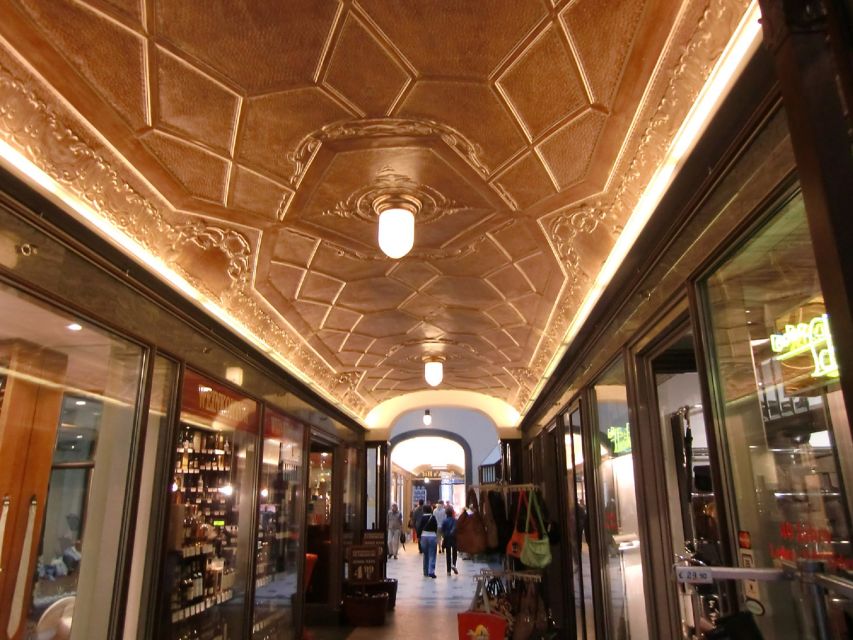
One of the first important stops is the Mädlerpassage, a handsome covered arcade in the city center. Leipzig is known for its unusual system of passages and courtyards, which grew from the city’s long role as a trade-fair center.
These arcades are more than convenient shopping routes. They show how Leipzig adapted its center for merchants, goods, and visitors arriving for trade fairs. A guide can point out how the passage system shaped the city’s architecture and commercial life, something that is easy to miss if you are simply walking from one square to another.
I like this part of the tour because it gives ordinary-looking streets a clearer purpose. Instead of seeing the Mädlerpassage as only a beautiful arcade, you begin to see it as part of the city’s economic design.
The guide also discusses Leipzig’s trade-fair tradition. That context matters because the city’s importance did not come only from royal power or grand government buildings. Commerce helped shape its streets, courtyards, passages, and public image.
Nikolaikirche and the events of autumn 1989

Nikolaikirche is another central stop. The church is closely linked with Leipzig’s peaceful protests in 1989, when public gatherings and demonstrations helped challenge the East German government.
The tour places the events of autumn 1989 within the wider story of Leipzig. You hear about the older city, but also about the more recent past that still influences how Leipzig understands itself. This balance is one of the strongest parts of the experience.
I would pay close attention here, especially if you know little about Leipzig before arriving. The guide can connect the church, the city center, and the public gatherings in a way that a quick photograph cannot.
The tour does not appear to be built around a long interior visit to every landmark. Its strength is the explanation given while moving through the city. If you want extended time inside Nikolaikirche or a detailed art-focused church visit, you may need a separate stop afterward.
Riding the Bimmel toward Bayrischer Bahnhof
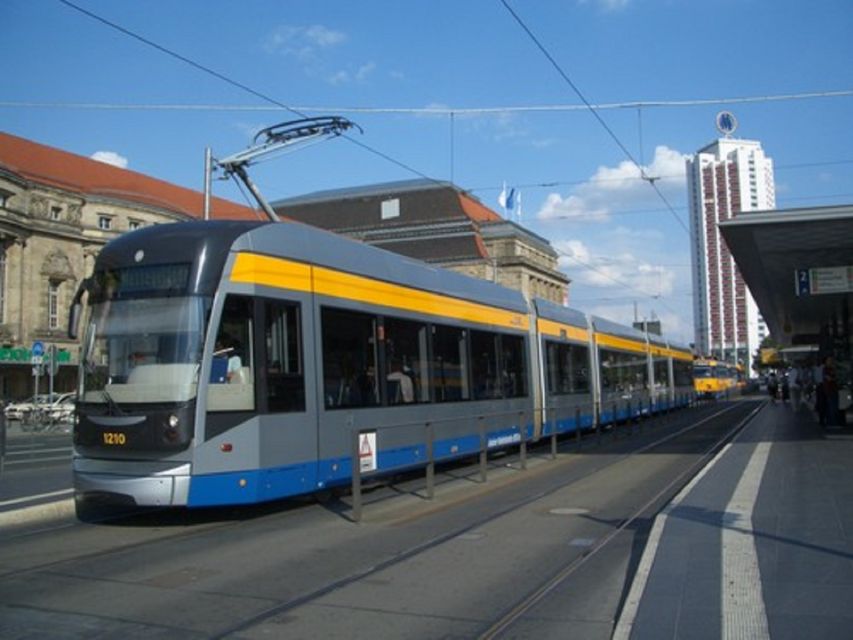
After the central walking section, the group uses Leipzig’s local rail and tram network. The experience description calls the transport the Bimmel, a friendly local term for the tram, and the route also refers to the regional train and S-Bahn system.
This change of pace is useful. You are not confined to the compact old town, and you get a feel for Leipzig as a larger city. The included public transport ticket also adds real value to the $25 price. You do not need to work out the fare system during the tour, and the guide handles the route.
The first major destination is Bayrischer Bahnhof, described as one of Germany’s oldest railway stations. Its name and setting point to Leipzig’s long connection with rail travel, trade, and movement between cities.
You should expect the station stop to be part of a wider explanation rather than a museum visit. The value lies in seeing how an old transport site fits into the modern city. The tour uses rail travel not simply as a way to get from point A to point B, but as part of the subject.
Public transport does bring one practical risk. A strike or service interruption can change the plan. On one occasion, the group had to complete the route on foot, but the guide still delivered an informative tour. That suggests some flexibility, though you should not assume every planned tram or train journey will operate perfectly.
Still Leipzig, at a slower pace:
- Leipzig: 1.5-Hour Public Tour with Night Watchman Bremme
★ 4.6 · 3,116 reviews - Leipzig: 1.5-Hour Historical Walking Tour in German
★ 4.7 · 2,217 reviews - Leipzig: 2-Hour Guided Walking Tour in German
★ 4.8 · 1,612 reviews - Leipzig: 13-Stop Hop-on/Hop-off Bus Ticket
★ 4.6 · 1,468 reviews
The Musikviertel and Wilhelminian Leipzig
From Bayrischer Bahnhof, the route continues by tram toward the Musikviertel, or music district. This is one of Leipzig’s largest Wilhelminian-style districts, with broad streets and grand late nineteenth-century architecture.
The district offers a useful contrast with the old town. In the center, you see passages, market buildings, churches, and commercial routes. In the Musikviertel, the mood shifts toward large civic, academic, and cultural buildings.
This is where the tour earns its title as more than an old-town walk. You get to see a part of Leipzig that is easy to skip if you have only a short stay. The tram ride makes the distance manageable, and the guide gives you a reason to pay attention once you arrive.
The old university library is included among the sights. Even if you are not especially interested in library architecture, the building helps explain the district’s academic role. Leipzig’s identity has long been tied to learning and music, and the Musikviertel brings those themes into view.
The district is best appreciated with your eyes up. Look at the scale and decoration of the buildings, and notice how different the architecture feels from the narrower central streets. The tour does not ask you to study every facade in detail, but it gives you enough context to recognize the district as a major part of Leipzig’s civic development.
The former Reich’s Supreme Court building
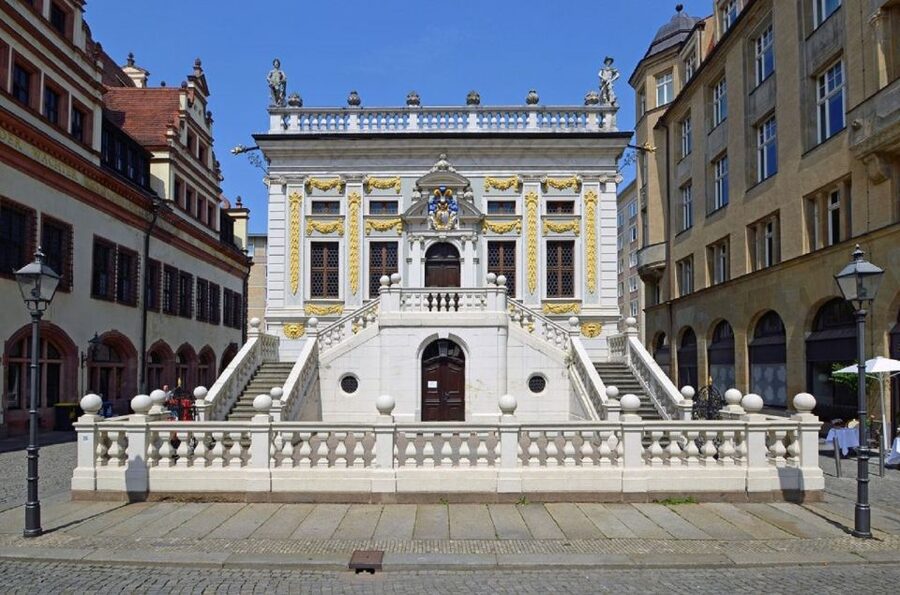
The former Reich’s Supreme Court building, now associated with the Reichsgericht, is one of the tour’s grandest sights. It is described as a magnificent building, and it gives the route a strong architectural finish in the Musikviertel area.
This building is important not only because of its size. It represents Leipzig’s former role as a national legal center. The guide can explain why such a major court building was placed in the city and how it fits into the period’s public architecture.
You should expect to view the building from the outside as part of the guided route. The information provided does not promise an interior tour, courtroom visit, or museum admission. That is not a serious flaw at this price, but it is worth knowing if you want a detailed legal or architectural study.
I like the way this stop broadens the tour. Leipzig is often introduced through music, books, trade fairs, and 1989. The Reichsgericht adds another layer, showing the city’s importance in national government and law.
New Town Hall and Augustusplatz

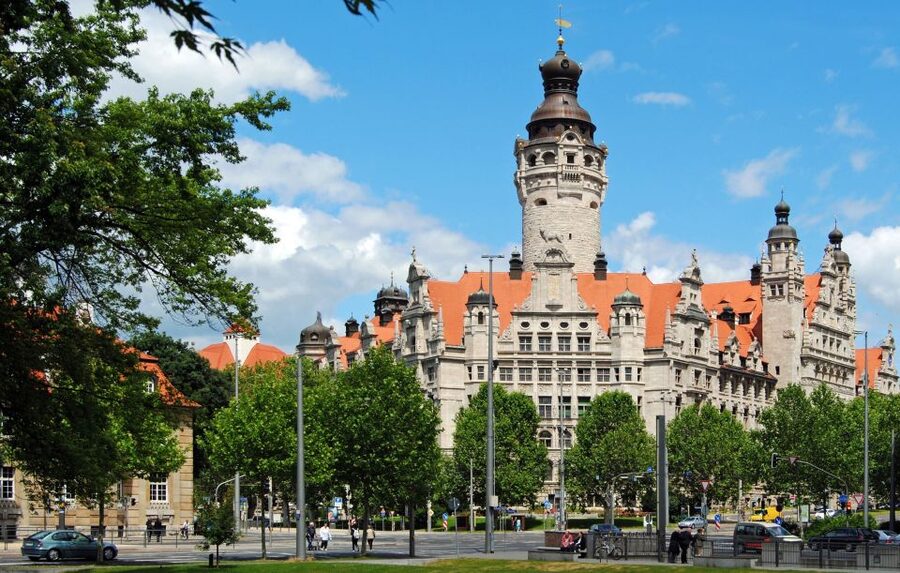
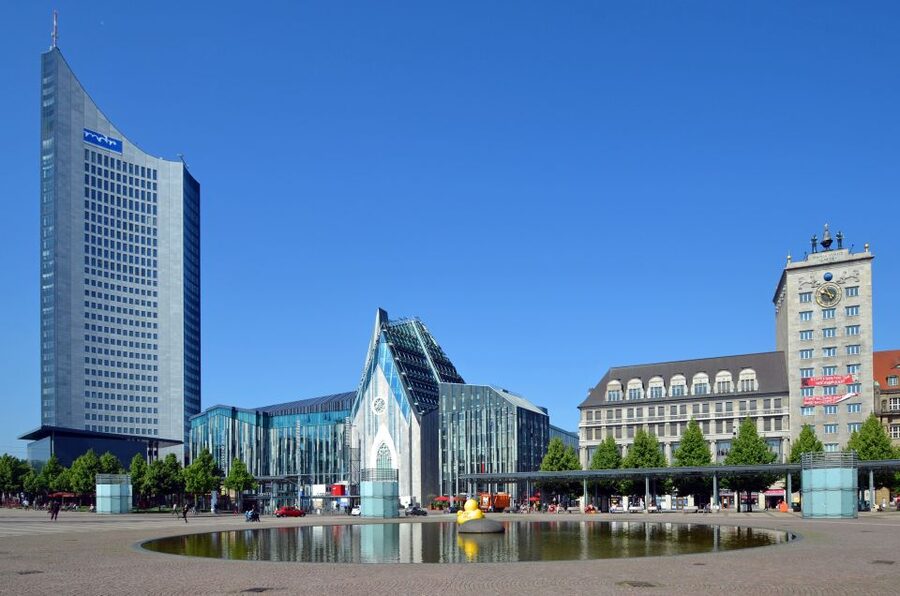
The route later passes the New Town Hall and Augustusplatz before returning to the city center. These stops help tie the separate sections together.
The New Town Hall gives you another large civic building to compare with the former Reich’s Supreme Court. Augustusplatz, meanwhile, is one of the city’s key public spaces and helps you understand the scale of central Leipzig beyond the older market area.
By this point, you have seen several versions of the city: the merchant center, the church connected with 1989, the railway district, the Wilhelminian music quarter, and the major civic buildings. That range is the tour’s main selling point.
The final return to the center is also practical. You finish near the same general area where you began, rather than being left in an unfamiliar outer district. Your guide can also offer further tips for the rest of your stay, which is helpful if this is your first day in Leipzig.
What the guides add to the experience
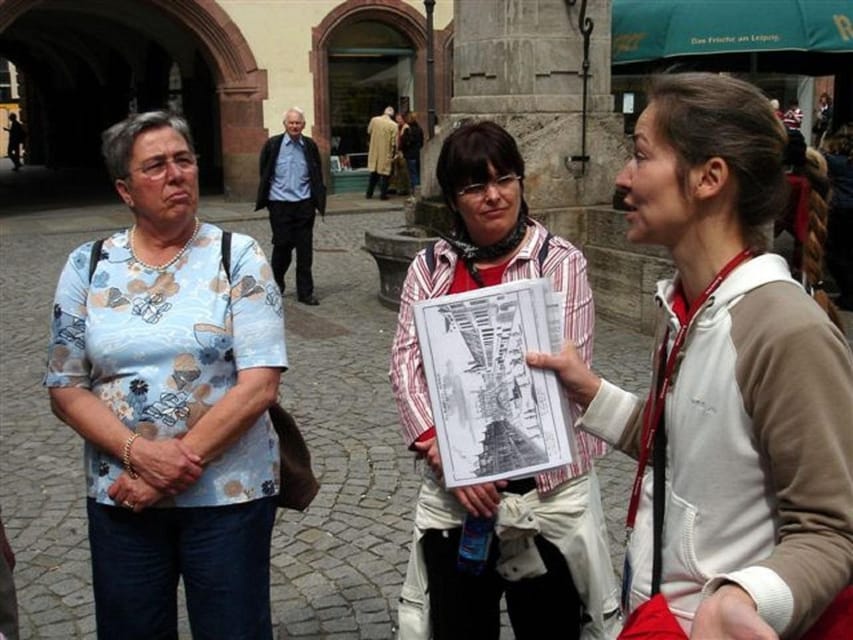
The quality of this tour depends heavily on the guide, and the feedback is especially strong on that point. One German booking praised the guide for making the tour very interesting and for explaining a great deal about Leipzig. Another described the guide as friendly and the experience as informative.
A booking from the Netherlands was particularly positive about the guide’s ability to answer questions and adjust to the group’s interests. The guide covered both older events and more recent history, which is exactly what this route needs.
A small group also makes a difference. One booking described a small group where the guide still responded to individual questions. That is preferable to a rigid speech delivered while everyone marches along. You can ask about a building, a street, or a historical detail while it is directly in front of you.
The tour is in German, and the included audio guide is also in German. If you are comfortable with German, this should be an appealing way to hear local explanations. If you are not, check carefully before booking because no English-language option is provided in the details.
Is $25 a good value?

At $25 per person, I consider this a fair price for a 2.5-hour guided introduction. You receive a live guide, a public transport ticket, and a route that covers more ground than a standard old-town walk.
The value is strongest if you want orientation early in your stay. You see the central sights, then reach Bayrischer Bahnhof and the Musikviertel without having to plan the tram connections yourself. You also gain historical context that would be difficult to pick up from buildings alone.
The price is less attractive if you only want a quick walk around the old town or if you prefer to explore independently. Leipzig’s center is walkable, and some visitors may prefer to spend two and a half hours inside museums, churches, or music venues.
Still, the transport ticket and the wider route make the cost reasonable. You are paying for access to several districts, a guide’s interpretation, and a simple way to get your bearings.
Who should book this Leipzig tour?
I would recommend it to first-time visitors who want a broad introduction before exploring in greater detail. It suits you especially well if you enjoy combining architecture, local transport, trade-fair history, music, and twentieth-century events.
It is also a good choice for anyone who dislikes spending an entire tour on foot. The walking sections are broken up by rail and tram rides, though comfortable shoes remain necessary.
Families and older visitors may appreciate the transport breaks, but accessibility can depend on the exact stops, vehicles, and conditions that day. The activity is listed as wheelchair accessible, which is encouraging, but it is still sensible to confirm any specific mobility needs when booking.
German speakers will get the fullest experience. If you need a tour in English, this is not the right choice based on the available language information.
The main weakness is route dependence. A strike or service problem can remove the tram element, as happened once, and the group may need to walk instead. The guide can still provide a worthwhile tour, but the experience may not match the advertised rhythm exactly.
Should you book it?
Book this tour if you want a well-priced overview of Leipzig beyond the old town, especially during your first day or two in the city. The combination of Mädlerpassage, Nikolaikirche, Bayrischer Bahnhof, the Musikviertel, the former Reichsgericht, New Town Hall, and Augustusplatz gives you a broad sense of place in a short time.
Skip it if you need English commentary, want long interior visits, or prefer to explore at your own pace. For German speakers who value clear explanations and a small-group feel, the $25 price is easy to justify. Free cancellation up to 24 hours before the start and the option to reserve now and pay later also make it a low-risk addition to your Leipzig plans.
FAQ
Where does the Leipzig city tour begin?
The meeting point is the Altes Rathaus, at the passage beneath the tower, Markt 1 in Leipzig.
How long does the tour last?
The tour lasts 2.5 hours.
What languages are available?
The live tour guide speaks German, and the included audio guide is also in German.
Is public transport included?
Yes. A public transport ticket is included in the tour price.
What should I bring?
Bring comfortable shoes. Food, drinks, and umbrellas are not included.
Is the tour wheelchair accessible?
Yes, the activity is listed as wheelchair accessible.
Just added around Leipzig
- Tour on Lake Cospuden★ 4.7 · 58 reviews
- Leipzig: True or false? Walking Tour and Interactive Game★ 4.8 · 28 reviews
- Leipzig: Segway tour to the Battle of the Nations Monument★ 5.0 · 4 reviews
- Leipzig Spirits Manufacture: Guided Tour and Tasting★ 4.8 · 79 reviews
- Leipzig: Scavenger Hunt Self-Guided Tour★ 4.7 · 11 reviews
- Leipzig: Segway City Tour – Discover Sights, Parks & History★ 5.0 · 7 reviews
- Leipzig: Private pub crawl with insider-guide & free shots★ 4.5 · 4 reviews
- Leipzig: Private Walking Tour with a Professional Guide★ 4.6 · 12 reviews
City Tours, compared.

1-Hour City Tour by Boat with Guaranteed Seating
Read our review →
City History Canal Sightseeing Tour on a Motorboat
Read our review →



Browse the lists this tour appears in