
Reviewed · CITY TOURS
Combo Tour in Leipzig: Guided City Tour & City Sightseeing
Leipzig reveals itself in layers. This 2.5-hour combination tour gives you a useful first look at the compact Old Town, then carries you beyond the city center to quarters and monuments that are difficult to cover on foot. I especially like the mix of walking and bus travel, plus the chance to see both Leipzig’s grand civic buildings and its changing neighborhoods for $25 per person. The main drawback is that the tour is officially conducted in German, and bilingual explanations can leave English speakers with less time at each sight.
The route works well if you have only one day in Leipzig or a short stop between trains. You get a quick orientation to places such as the Old Rathaus, St. Thomas Church, Mädler Passage, Gohlis Castle, Plagwitz, and the Battle of Nations Monument without arranging several separate visits. Arrive 15 minutes early at the Tourist Information in the Katharinum on Katharinenstraße 8, since this is a central meeting point but not a hotel pickup service.
In This Review
- Key points at a glance
- Starting in Leipzig’s Katharinum
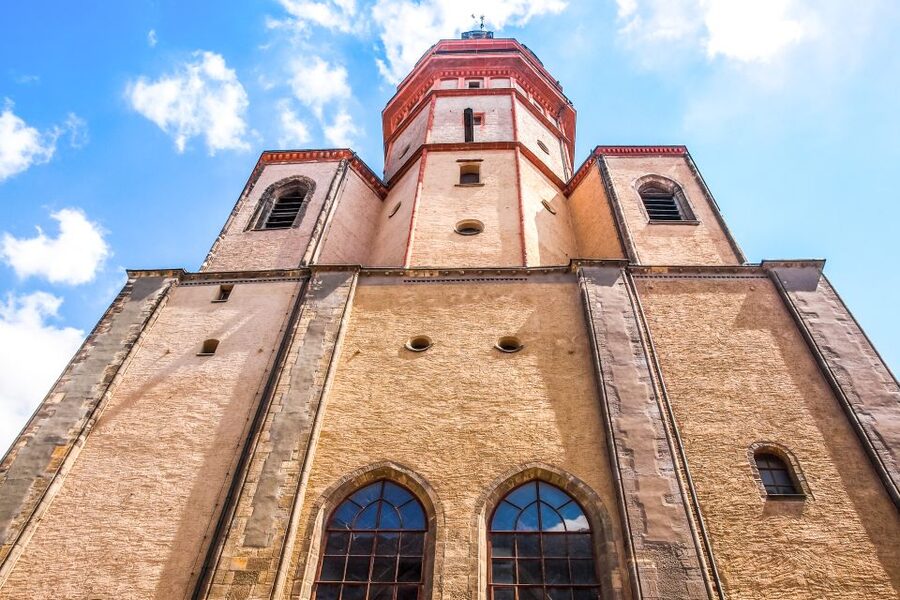
- Nikolai Church and Leipzig’s central story
- Old Market, Mädler Passage, and Auerbachs Keller
- St. Thomas Church and the musical Leipzig
- Switching from walking shoes to the sightseeing bus
- Gohlis Castle and the Schiller House
- Waldstraßen Quarter and Red Bull Arena
- Plagwitz: canals, galleries, and former industrial spaces
- The music district and the former Reich Court
- The Panometer and Battle of Nations Monument
- Ending at Augustusplatz
- How the German-language format affects the tour
- Is $25 a fair price?
- Who will enjoy this Leipzig tour most?
- Practical verdict: book it if you want the big picture
- FAQ
- Where does the Leipzig combination tour begin?
- How long does the tour last?
- What language is the tour conducted in?
- What sights are covered during the walking portion?
- What places are seen from the bus?
- Where does the tour finish?
- Is transportation included?
- Are food and drinks included?
- How early should I arrive?
Key points at a glance
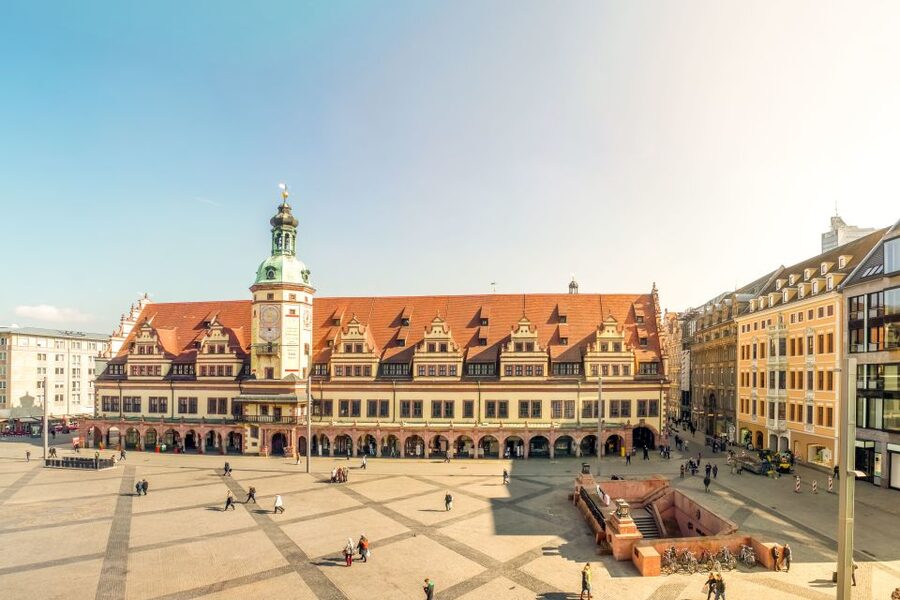
- Old Town highlights on foot: See Nikolai Church, the Old Market, Specks Hof, Mädler Passage, Auerbachs Keller, Barthels Hof, and St. Thomas Church.
- A bus route beyond the ring: Travel in an air-conditioned sightseeing bus through Gohlis, Waldstraßen Quarter, Plagwitz, the music district, and Leipzig’s southern suburbs.
- Major landmarks included: Pass Gohlis Castle, the former Reich Court, the Federal Administrative Court, the Panometer, and the Battle of Nations Monument.
- A practical first-day tour: Use the walking portion to get your bearings, then note which outlying districts you want to revisit independently.
- German-language guiding: Some guides have handled German and English with care, but English service is not guaranteed by the official tour details.
- Flexible booking: The $25 price includes the city guide and bus tour, while meals, drinks, and hotel transfers cost extra or require separate arrangements.
Starting in Leipzig’s Katharinum

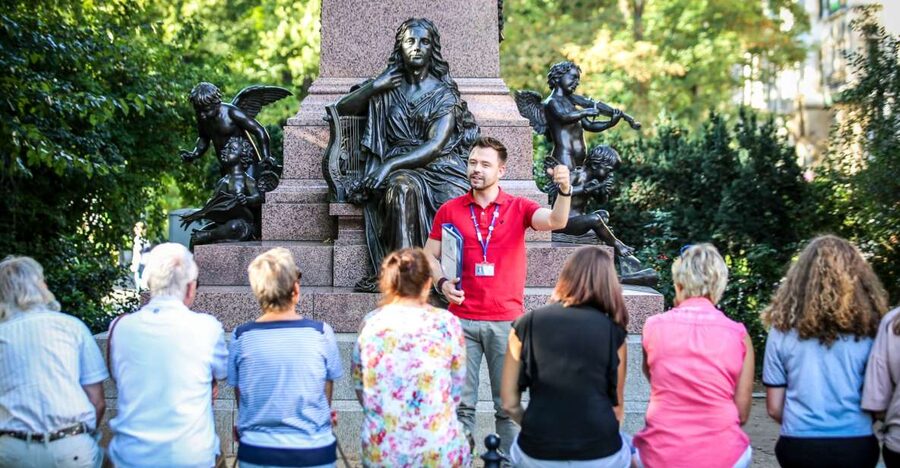
The tour begins at the Tourist Information inside the new Katharinum at Katharinenstraße 8. This puts you right in the center of Leipzig, close to the main shopping streets and the Old Town sights you will see first.
You should be at the counter for city tours at least 15 minutes before departure. The activity does not include pickup or drop-off at your hotel, so build in time to reach the meeting point on your own.
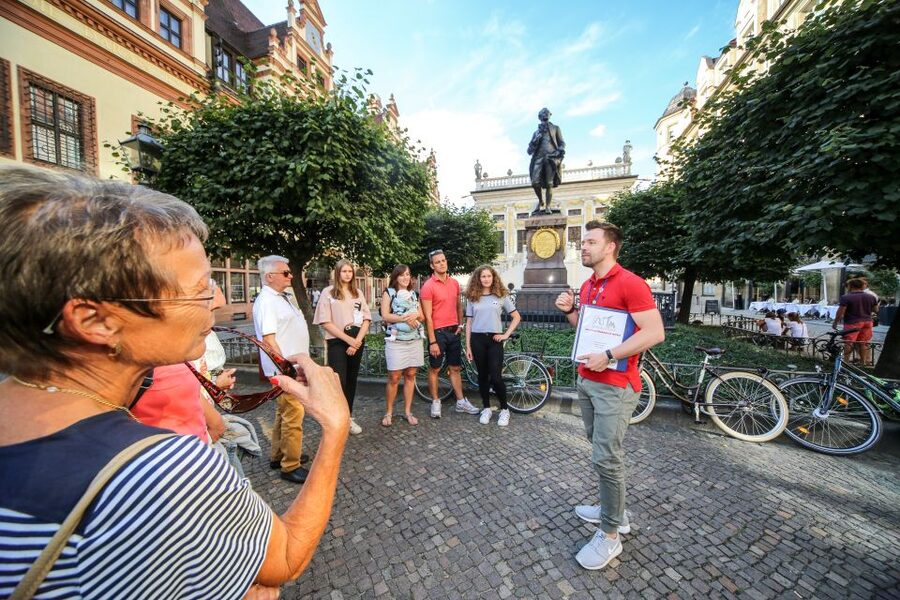
The opening walk is a smart choice. Leipzig’s central sights sit close together, and walking lets your guide point out details that would pass too quickly from a bus window. It also gives you a feel for the city’s scale before the larger circuit begins.
More City Tours in Leipzig
- Leipzig: City History Canal Sightseeing Tour on a Motorboat
★ 4.7 · 6,232 reviews - Leipzig: 90-Minute Trabi City Tour
★ 4.9 · 728 reviews - Leipzig: Floodplain Forest & City River Cruise
★ 4.9 · 334 reviews
Nikolai Church and Leipzig’s central story
One of the first important stops is Nikolai Church, a key place in Leipzig’s civic and religious story. The church is also closely tied to the peaceful demonstrations that helped bring political change in East Germany in 1989, although the exact amount of time devoted to that subject depends on the guide and the group.
From here, the tour moves through the heart of the Old Town. You pass Specks Hof, an elegant shopping passage, and the small Snack Market, where the smell of fresh food adds a welcome everyday note to the grand architecture.
That contrast is one of the pleasures of this walk. Leipzig is not presented only as a collection of monumental buildings. You also see shopping arcades, food stalls, restaurants, and ordinary streets where the city’s history sits alongside modern life.
Old Market, Mädler Passage, and Auerbachs Keller
The Old Market, or Markt, gives you one of the clearest views of Leipzig’s civic center. The Old Rathaus faces the square with its long Renaissance facade, a building that is easy to appreciate from outside even on a fast-moving walking route.
Mädler Passage is another highlight. This refined arcade links several central streets and has long been one of Leipzig’s best-known commercial spaces. The tour also passes Auerbachs Keller, the traditional restaurant made famous by its connection with Goethe’s Faust, as well as Barthels Hof.
These stops are primarily exterior visits. You should not expect a sit-down meal, shopping break, or extended interior tour. That is useful to know because the itinerary packs a lot into a short period. I would return later if you want photographs, a meal, or time to inspect the passages without keeping up with the group.
St. Thomas Church and the musical Leipzig

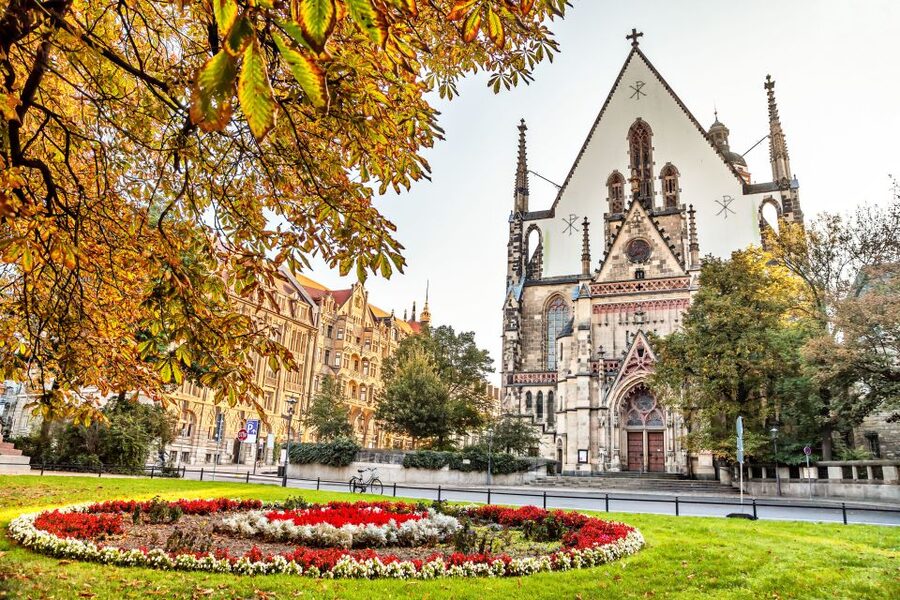
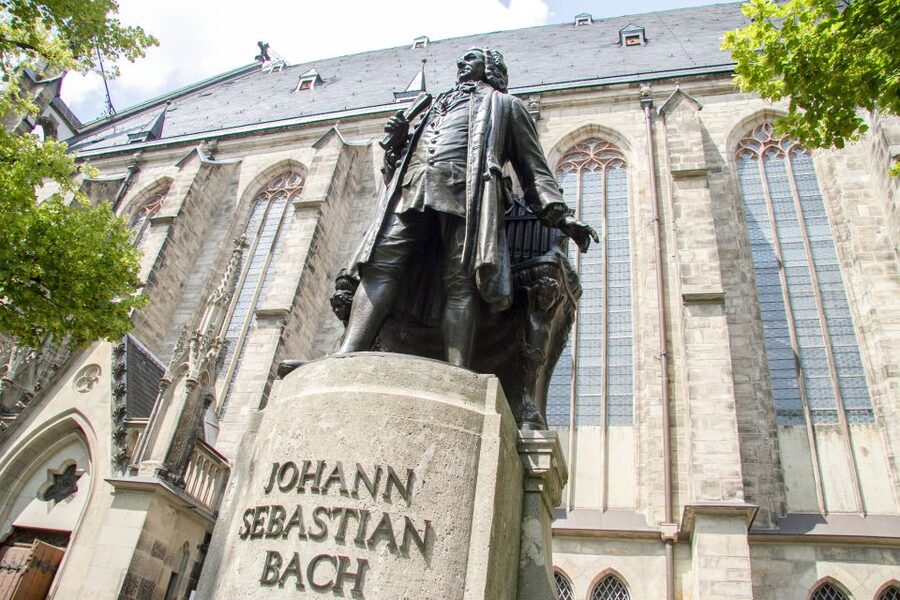
St. Thomas Church brings a different tone to the walk. Its Gothic and Romanesque elements show how Leipzig’s architecture changed over time, while its connection with Johann Sebastian Bach gives it special weight for music lovers.
The tour identifies Leipzig as a music city as well as a commercial and university center. You will later see more of that identity from the bus in the music district, but St. Thomas Church gives the story a clear anchor in the Old Town.
A guide who tells the history well can make this portion much more than a checklist of facades. Several guides have been praised for clear explanations, useful historical context, and humorous details about Leipzig’s people. That storytelling matters here because the tour moves quickly and you may not have time to read every plaque yourself.
Still Leipzig, at a slower pace:
- Leipzig: 1.5-Hour Public Tour with Night Watchman Bremme
★ 4.6 · 3,116 reviews - Leipzig: 1.5-Hour Historical Walking Tour in German
★ 4.7 · 2,217 reviews - Leipzig: 2-Hour Guided Walking Tour in German
★ 4.8 · 1,612 reviews - Leipzig: 13-Stop Hop-on/Hop-off Bus Ticket
★ 4.6 · 1,468 reviews
Switching from walking shoes to the sightseeing bus
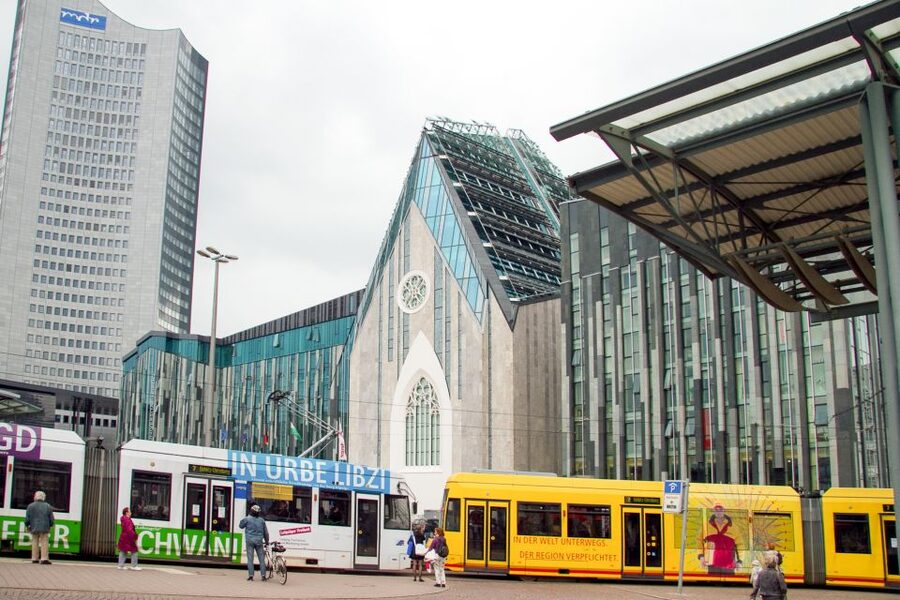
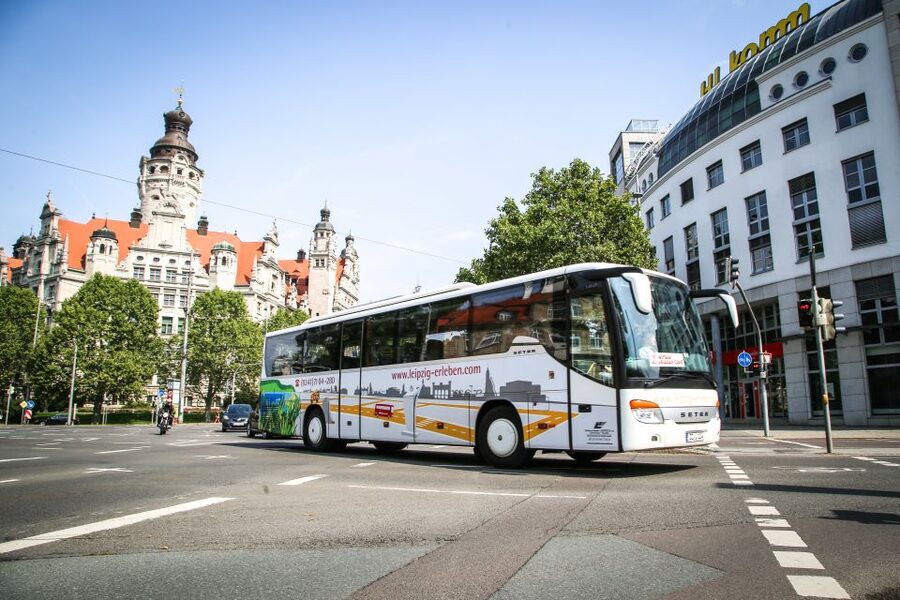
After the Old Town portion, you board a spacious, air-conditioned bus. This is where the tour earns its price. Leipzig’s city center is easy to walk, but the places outside the ring are spread across different quarters and would take much longer to connect by public transport or on foot.
The bus is also a practical break after the walking section. You can sit, listen, and watch the city change through the windows. The tradeoff is clear: you see more ground, but many sights are viewed from the road rather than visited directly.
Keep your camera ready, but do not expect a photo stop at every landmark. One useful criticism of the format is that the bus can move on before you have framed a picture, especially during the second half. The guide may explain each place properly, but the sightseeing portion favors breadth over lingering.
Gohlis Castle and the Schiller House
The bus heads north toward the Gohlis quarter and passes Gohlis Castle, an 18th-century building that adds a quieter, more residential note to the tour. Its setting helps you see that Leipzig is not only a central European city of plazas and churches. It also has districts shaped by villas, gardens, and former country estates.
You also pass the Schiller House, a modest farmhouse where Friedrich Schiller lived for several months in 1785. During that stay, he worked on the text that became Ode to Joy. The story is brief but memorable, especially if you connect Leipzig’s literary heritage with the city’s musical reputation.
This is a good example of the tour’s strength. You may not have planned to seek out Gohlis or the Schiller House on your own, but the bus brings them into the larger story of Leipzig with very little extra effort.
Waldstraßen Quarter and Red Bull Arena
The route continues through the Waldstraßen Quarter and past Red Bull Arena. This section shows how the city’s residential and sporting spaces fit into the wider urban area.
You will not be stepping into the stadium or taking a dedicated architectural tour of the quarter. Instead, the guide gives you a moving introduction while the bus handles the distance. If you want detailed photographs or a closer look, note the location and return another time.
For first-time visitors, this passing view has real value. It helps you understand Leipzig beyond the historic core, where newer uses and older districts sit close together.
Plagwitz: canals, galleries, and former industrial spaces
Plagwitz is among the most interesting parts of the route. The district is known for canals, galleries, lofts, and a changing mix of former industrial buildings and newer creative uses.
From the bus, you get a broad impression rather than a full neighborhood walk. That is both the attraction and the limit. You can see why Plagwitz has become a popular area for art and urban redevelopment, but the 2.5-hour schedule does not leave time to explore its canals or galleries on foot.
I would use this section as a scouting trip. If Plagwitz catches your attention, return later when you can walk at your own pace. The bus tour is especially useful here because it lets you identify an area you might otherwise overlook.
The music district and the former Reich Court
The bus then passes through Leipzig’s music district and by the Federal Administrative Court. The court occupies the former Reich Court building, a grand structure with an important legal and political past.
This portion reinforces the range of Leipzig’s identity. In a single ride, the city moves from churches and Renaissance merchants’ houses to court buildings, music institutions, galleries, canals, and postwar urban spaces.
The guide’s role is especially important here. From a bus seat, an imposing building can be impressive but vague. A clear explanation gives it meaning. The strongest guides on this route have been praised for speaking audibly, handling crowded streets, and making historical material feel connected to the people who lived through it.
The Panometer and Battle of Nations Monument
The route continues through Leipzig’s southern suburbs, passing the Panometer before reaching the Battle of Nations Monument. The monument is one of the city’s most recognizable landmarks and commemorates the 1813 Battle of Leipzig, a major defeat for Napoleon’s forces.
Seeing it from the sightseeing bus gives you a strong first impression of its size and setting. You should not expect this tour to include a full interior visit or a climb. If the monument matters to you, plan a separate return visit so you can spend more time with its architecture and exhibitions.
The Panometer is another outside stop rather than a scheduled admission visit. Its changing panoramic art displays are not included in the tour, and the price does not cover meals, drinks, or other attraction tickets. Still, passing it helps you build a useful map of the southern part of the city.
Ending at Augustusplatz
The tour ends at Augustusplatz, one of Leipzig’s major public spaces. Here you can see the New Concert Hall, the University, and the Opera House.
This is a good endpoint because it leaves you near several central attractions and public transport connections, although no hotel drop-off is provided. It also brings the tour back to Leipzig’s main themes: music, learning, public life, and the rebuilding or reshaping of the modern city.
At this point, you should have a practical sense of direction. You will know where the central churches and passages are, where the major southern monument sits, and which districts may deserve a longer visit.
How the German-language format affects the tour
The official language is German. This is the most important consideration for English-speaking visitors.
Some guides have also delivered tours in both German and English. Strong examples include guides who spoke clearly, switched languages quickly, and gave English speakers direct attention. One guide, Anna, handled a heavily mixed group by explaining the material in German and then English, while another guide named Pikavski was praised for giving a detailed tour in both languages.
Still, you should not book this expecting a guaranteed English-only experience. On bilingual departures, the German explanation may be longer, and English speakers can have less time to examine each sight or take photos. If you understand some German, even at a basic level, you may get much more from the tour.
The guide’s voice also matters. City centers can be noisy, and a large group can make it hard to hear. Past departures have included much bigger groups than expected, so I would stay close to the guide and arrive early enough to find a good position.
Is $25 a fair price?
At $25 per person, this is a solid value if you want a broad introduction rather than a detailed visit to each attraction. The price includes a certified live guide, the Old Town walking tour, and the sightseeing bus circuit beyond the ring.
You are effectively paying for two kinds of orientation in one booking. The walking section covers the central sights that are best understood up close, while the bus saves you the time and effort of reaching distant districts.
The value drops if you want museum admissions, long photo stops, meals, or hotel transport. None of those are included. It also drops if you already know Leipzig well and prefer to explore one neighborhood slowly.
For a first visit, especially a short one, I think the combination makes sense. It gives you enough information to plan the rest of your stay without using a full day.
Who will enjoy this Leipzig tour most?
I would recommend it to first-time visitors, people on a short stopover, and anyone who wants an easy overview before exploring independently. It suits you particularly well if you enjoy seeing how a city changes from its historic center to its outlying quarters.
The tour also works for visitors who do not want to manage several bus or tram connections on their first day. You can sit back while the guide points out Gohlis, Plagwitz, the music district, and the southern suburbs.
It is less suitable if you need a guaranteed English tour, dislike group pacing, or want extensive time inside churches, museums, and monuments. It is also not the right choice if you want a food tour, since the Snack Market is passed during the walk but meals and drinks are not included.
Practical verdict: book it if you want the big picture
Book this tour if you want Leipzig’s main Old Town sights plus a bus-based look at the city beyond the center for a reasonable price. The mix of architecture, music, literature, civic history, canals, and modern neighborhoods gives you a fuller picture than a short central walking tour alone.
Skip it if your priority is an English-only guide or long stops for photographs. If you do book, arrive 15 minutes early, confirm the language at the time of booking, stay near the guide in crowded areas, and treat Plagwitz and the Battle of Nations Monument as possible return visits rather than full explorations.
FAQ
Where does the Leipzig combination tour begin?
It begins at the Tourist Information in the new Katharinenum, Katharinenstraße 8, 04109 Leipzig. Meet at the counter for city tours.
How long does the tour last?
The stated duration is 2.5 hours.
What language is the tour conducted in?
The official tour language is German. Some guides have also provided explanations in English on mixed-language departures, but an English tour is not guaranteed.
What sights are covered during the walking portion?
The walk includes Nikolai Church, Specks Hof Passage, the Snack Market, the Old Market, the Old Rathaus, Mädler Passage, Auerbachs Keller, Barthels Hof, and St. Thomas Church.
What places are seen from the bus?
The bus route includes Gohlis Castle, the Schiller House, the Waldstraßen Quarter, Red Bull Arena, Plagwitz, the music district, the Federal Administrative Court in the former Reich Court building, the Panometer, and the Battle of Nations Monument.
Where does the tour finish?
The tour ends at Augustusplatz, near the New Concert Hall, the University, and the Opera House.
Is transportation included?
The sightseeing bus portion is included. Hotel pickup and drop-off are not included.
Are food and drinks included?
No. Meals and drinks are not included, although the walking route passes the small Snack Market and several traditional restaurants.
How early should I arrive?
You should arrive at the meeting point 15 minutes before the tour starts.
Just added around Leipzig
- City tour on foot, by S-Bahn and tram★ 4.5 · 12 reviews
- Tour on Lake Cospuden★ 4.7 · 58 reviews
- Leipzig: True or false? Walking Tour and Interactive Game★ 4.8 · 28 reviews
- Leipzig: Segway tour to the Battle of the Nations Monument★ 5.0 · 4 reviews
- Leipzig Spirits Manufacture: Guided Tour and Tasting★ 4.8 · 79 reviews
- Leipzig: Scavenger Hunt Self-Guided Tour★ 4.7 · 11 reviews
- Leipzig: Segway City Tour – Discover Sights, Parks & History★ 5.0 · 7 reviews
- Leipzig: Private pub crawl with insider-guide & free shots★ 4.5 · 4 reviews
City Tours, compared.

1-Hour City Tour by Boat with Guaranteed Seating
Read our review →
City History Canal Sightseeing Tour on a Motorboat
Read our review →



Browse the lists this tour appears in