Reviewed · WINE TOURS
Exclusive Wine & Food Tasting in Historic Cellar | Mainz Old Town
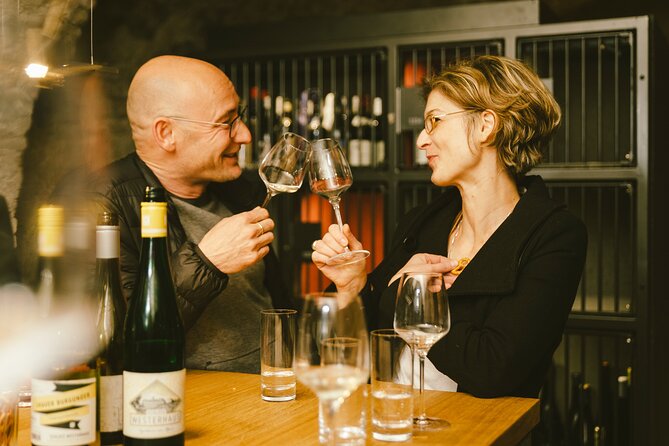
Mainz hides its best welcome underground. This two-hour tasting takes you into a hillside cellar for six local wines, small plates, and an easygoing lesson in German wine culture. I like the personal scale, with no more than 12 people, and I like that Jérôme explains labels, regions, and food pairings without turning the evening into a sales pitch. The one catch is the cellar can feel chilly, so bring a jacket.
This is a strong way to begin an evening in Mainz. You meet at Kupferbergterrasse 23 at 5:30 pm, taste from sparkling wine through Riesling, Pinot Noir, and a red blend, and finish back at the same place. The setting is atmospheric, though one past attendee found it different from what they expected, so do not picture a polished restaurant dining room.
In This Review
- Key points to know before booking
- Why this Mainz tasting works so well
- Meeting Jérôme at 5:30 pm
- Entering the underground cellar
- First glass: Sekt and Mainz’s French connection
- Dry Riesling with Mainz sausage
- Grauburgunder meets cheese
- Spätburgunder and dry-cured sausage
- Red wine and Spundekäs
- The final Riesling and surprise pairing
- What you receive for $102.12
- Who will enjoy this evening most
- Planning advice for your Mainz evening
- Should you book BottleStops in Mainz?
- FAQ
- Where does the wine tasting begin?
- What time does the experience start?
- How long does the tasting last?
- How many wines will I taste?
- Is food included?
- Is the tasting offered in English?
- What is the cancellation policy?
Key points to know before booking
- A small cellar setting: The tasting takes place underground in a historic cellar on the Mainz hillside, giving the evening a sense of place beyond a standard bar tasting.
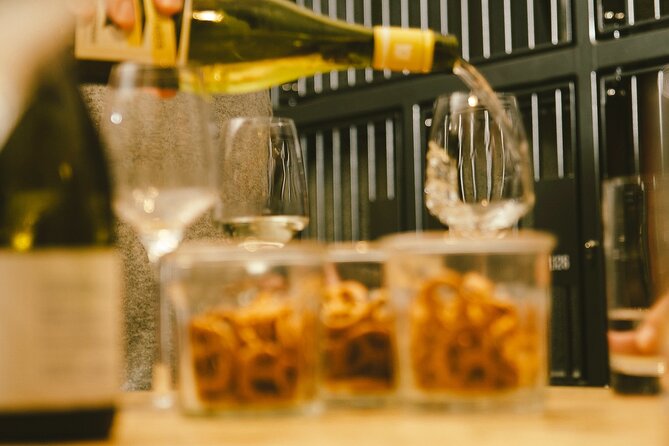
- Six wines with food: You taste a sparkling wine followed by five local wines, each matched with small snacks that reflect Mainz and wider German food traditions.
- Jérôme leads the evening: His English is described as excellent, and his teaching covers wine production, labels, geography, local history, and practical buying advice.
- A genuinely small group: The maximum is 12 people, which gives you a better chance to ask questions and take part in the conversation.
- A useful introduction to German wine: Riesling gets special attention, but the lineup can also include Grauburgunder, Spätburgunder, and a red blend.
- Plan for a cool room: The cellar atmosphere is part of the appeal, but a jacket is a sensible addition.
Why this Mainz tasting works so well
I like wine tastings that give you a way to understand what is in your glass. This one aims to do more than pour a flight and list grape names. Jérôme connects the wines to Mainz, the Rhine region, German wine customs, and the food on your plate.
That approach matters if German wine labels usually leave you puzzled. You should come away with a clearer idea of what Riesling, Grauburgunder, and Spätburgunder are doing in the bottle, along with some help in spotting reputable producers and sensible price ranges when shopping.
The format is friendly rather than formal. The small group, capped at 12, keeps the event from feeling like a lecture. You can ask about sweetness, food matches, production, or anything else that comes up as you taste.
The experience has earned a five-star rating from 42 published ratings, with 100 percent recommending it. More important than the numbers is the pattern in the praise: Jérôme’s warmth, his command of German wine and Mainz, the quality of the snacks, and the memorable cellar setting receive the strongest approval.
More Food and Drink Tours in Frankfurt
- Heidelberg and Rhine Valley Day Trip With Wine Tasting and Dinner from Frankfurt
★ 3.5 · 101 reviews - Rhine Valley Wine Tasting Tour from Frankfurt and Mainz
★ 5.0 · 87 reviews - Sharing Plate Food Tour In Frankfurt
★ 4.0 · 74 reviews
Meeting Jérôme at 5:30 pm
The evening begins at Kupferbergterrasse 23, 55116 Mainz, and ends at the same meeting point. It is near public transportation, which makes the fixed start time of 5:30 pm fairly easy to work into a Mainz sightseeing day.
You should arrive ready for a two-hour seated or standing tasting format in a cellar. The available details do not promise a full meal, so think of the food as carefully chosen small plates rather than dinner. If you are hungry before arrival, a light snack earlier in the day would be sensible.
The timing is useful. You can use the tasting as your introduction to the city, then continue elsewhere for dinner. Or you can treat it as the main food-and-wine event of your evening, knowing that the pairings provide substance without replacing a full restaurant meal.
The activity is offered in English. That point is worth noting for visitors who worry about technical wine vocabulary. Jérôme’s English has been praised as clear and natural, and the conversation appears designed to include people who are new to German wine as well as those who already know a bit.
Entering the underground cellar
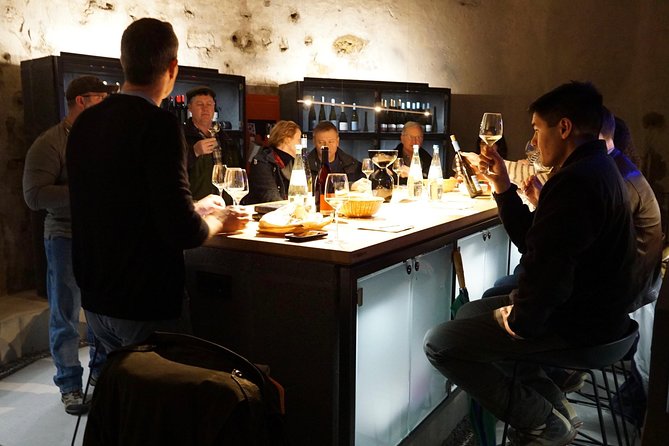
The cellar is one of the experience’s main attractions. It is described as one of the region’s most striking cellars, set deep into the Mainz hillside. You are not simply tasting wine in a generic commercial room. The location gives the evening a physical link to storage, wine, and the old city.
Expect an atmospheric setting rather than a sleek tasting room. The cellar may feel quaint and intimate, but it can also be cold. One person specifically advised bringing a jacket, and that is practical advice. You will enjoy the mood more if you are not distracted by the temperature.
There is also a useful note of realism here. One attendee said the atmosphere was not quite what they expected, though still enjoyable. That tells you to keep your expectations flexible. The appeal is character and atmosphere, not luxury furniture or a formal restaurant presentation.
The underground setting also helps mark the occasion as something different from a quick tasting at a wine shop. You have a sense of entering a separate world for the evening, even though the meeting point is in the heart of Mainz.
First glass: Sekt and Mainz’s French connection
The tasting opens with classic Sekt, the German term for sparkling wine. This first glass is paired with a surprise snack, and Jérôme uses it to explain the old relationship between German Sekt and French Champagne.
That is a smart opening because sparkling wine gives the group an easy starting point. You can begin with a familiar style, then learn why German sparkling wine has its own identity. The surprise pairing also sets the tone for the evening: the food is not an afterthought, and the point is to notice how a bite changes the wine.
Specific wines can change with the season and with availability. You should treat the published menu as a guide to the types of pairings, not a guarantee of every bottle or snack. That flexibility is normal for a small tasting built around local supply.
More History Tours in Frankfurt
- Frankfurt Self-Guided Historical Walking Tour
★ 4.0 · 58 reviews - Frankfurt: Old Town Historical Walking Tour in German
★ 4.7 · 43 reviews - Darmstadt: City Highlights and History Guided Walking Tour
★ 4.0 · 23 reviews - Frankfurt – Old Town Historic Walking Tour
★ 4.9 · 7 reviews
Dry Riesling with Mainz sausage
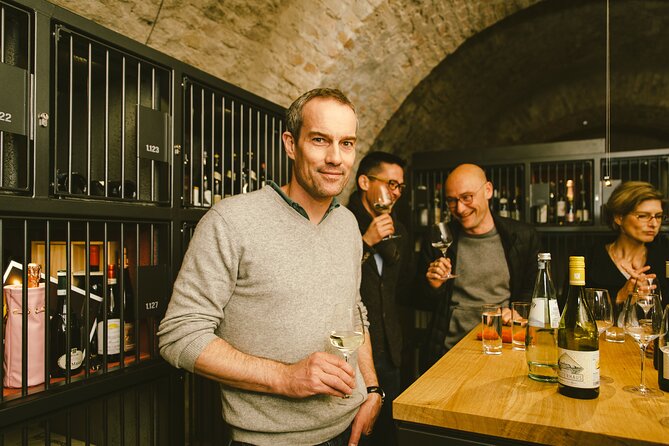
The next pairing brings together dry Riesling and sausage. It refers to Mainz’s local food trio, Weck, Woscht & Woi, meaning bread, sausage, and wine. The sausage is a Fleischwurst, a bologna-style local specialty.
This is a particularly useful pairing if you think Riesling must always be sweet. The dry version shows how the grape can work with savory food, especially a salty, rich sausage. The snack gives you a direct lesson in balance: acidity can refresh the palate and keep a substantial bite from feeling heavy.
Riesling is the grape most likely to challenge your assumptions during this experience. Several people arrived unsure about white wine or convinced they did not like Riesling, then found bottles they enjoyed. Jérôme’s method is not to insist that you change your taste. Instead, he gives you several chances to notice how dryness, food, and regional style affect the result.
One useful tasting tip shared during the evening is to take three sips before deciding what you think of a wine. The first sip prepares your palate, the second gives you a clearer impression, and the third can reveal flavors you missed at the start. It is a simple idea, but it gives beginners something concrete to do with each glass.
Grauburgunder meets cheese
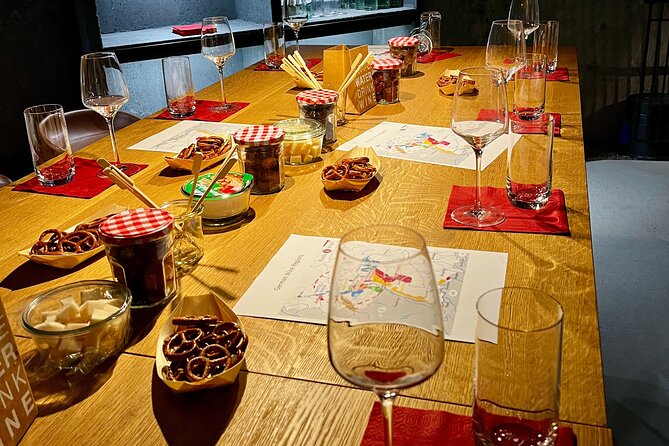
Grauburgunder, known elsewhere as Pinot Grigio, is paired with cheese from northern and southern Germany. This is a good reminder that grape names can shift across borders, and that the same grape can feel different depending on where it is grown and how the wine is made.
The cheese pairing has a practical purpose. It shows how a fairly restrained white wine can become fuller and more expressive with food. If you usually order Pinot Grigio without thinking much about it, this course may encourage you to pay closer attention to German versions.
The pairing also broadens the evening beyond Riesling. That matters because German wine is often reduced to one famous grape. Here, you get a more balanced introduction, with white wine still leading the program but not carrying the whole lesson.
Spätburgunder and dry-cured sausage
Spätburgunder is the German name for Pinot Noir. In this course, it is paired with dry-cured sausage and presented as an expression of the region’s Pinot Noir.
This is a useful stop for anyone who assumes German wine means only crisp whites. The red wine gives the tasting a different rhythm, especially alongside a salty, savory snack. You can compare the structure and fruit of the red with the acidity and freshness of the whites you have already tasted.
The food pairing keeps the red from feeling like an isolated technical sample. You are encouraged to judge it as you might drink it at home, with something to eat. That makes the lesson more useful than memorizing a grape name or a growing area.
Red wine and Spundekäs
The red wine blend is paired with Spundekäs, a popular Mainz snack made from a seasoned cheese spread. The combination brings a local favorite into the tasting and adds a wine with French roots to the lineup.
Spundekäs is exactly the sort of regional food that makes a tasting feel tied to its location. You are not only sampling international wine styles. You are also trying something associated with Mainz and seeing how local people might enjoy it.
This course can be especially helpful if you are unsure how to pair red wine with soft cheese. The answer is not always a heavy, powerful red. A blended wine with the right balance can work well, and the pairing gives you a chance to test that idea yourself.
The final Riesling and surprise pairing
The last course returns to Riesling, this time with another surprise pairing. It is designed to challenge the idea that sweet Riesling is difficult to match with food.
This final comparison gives the tasting a clear arc. You begin with sparkling wine, move through dry whites and reds, and finish by reconsidering sweetness. Instead of treating sweet wine as a dessert-only drink, Jérôme uses the pairing to show how it can work with the right bite.
You should not expect every wine or pairing to be identical on every date. The program includes five to six wines, and the specific bottles and food can change with the season and availability. That is a minor uncertainty, but it also keeps the format connected to what can actually be sourced.
What you receive for $102.12
At $102.12 per person, this is not a budget wine flight. The value depends on what you want from the evening.
You receive five to six alcoholic tastings, water, small food pairings, Jérôme’s instruction, the private-feeling cellar setting, and all fees and taxes. If you only want to sample several wines, the price may feel high compared with buying bottles at a shop. If you want a guided introduction to Mainz wine, local foods, German labels, and pairing technique, the package makes more sense.
I especially like the practical side of the instruction. Jérôme explains how labels can guide your choices, how to identify reputable producers, and what a reasonable price range might be when buying wine later. That information can continue to help you after the two-hour session ends.
The lack of sales pressure is another plus. The tasting is presented as an educational and social experience, not a disguised shopping appointment. You can focus on learning what you like rather than worrying that you will be pushed to buy a case.
The maximum group size of 12 strengthens the value. A larger room could make the same lineup feel less personal. Here, you have a reasonable chance to ask questions and hear the answers clearly.
Who will enjoy this evening most
This experience suits you if you want a friendly introduction to German wine without needing prior knowledge. It works particularly well for couples, friends, and solo visitors who enjoy conversation and do not mind sharing a table or tasting space with a small group.
It is also a good fit if you usually avoid white wine. The program spends time on Riesling and Grauburgunder, and the food makes it easier to understand why these wines matter in the region. You do not need to arrive already convinced.
Food lovers will appreciate the Mainz specialties, especially Fleischwurst and Spundekäs. The portions are described as small snacks, so you should not book this expecting a complete dinner.
The experience is less suitable if you want a grand winery visit, a large meal, or a warm, polished dining room. It is also not recommended for people with mobility issues. The underground cellar and access arrangements may make movement difficult, though the provided details do not specify the exact obstacles.
Since alcohol is central to the activity, it is not the right pick if you do not drink. The package includes alcoholic beverages, and the program is built around tasting them rather than merely discussing wine.
Planning advice for your Mainz evening
This experience is often booked about 43 days ahead, so I would not leave it until the last moment if the date matters to you. The small 12-person limit is a key part of the format, and advance planning gives you a better chance of finding a suitable evening.
The 5:30 pm start is early enough to leave time for dinner afterward. If you plan to eat after the tasting, remember that the snacks are not presented as a full meal. If the tasting will serve as your dinner, keep your expectations modest.
Bring a jacket. That is the simplest practical tip from the available information, and it costs little to follow.
Mobile tickets are accepted, confirmation arrives at booking, and the activity ends at the starting point. Free cancellation is available if you cancel at least 24 hours before the local start time. Changes or cancellations inside that window are not accepted for a refund, and the event needs a minimum number of participants to operate. If that minimum is not reached, you are offered another date or experience, or a full refund.
Should you book BottleStops in Mainz?
I would book this if you want a personable, place-based introduction to German wine and local Mainz snacks. Jérôme’s teaching, the small group, and the atmospheric cellar are the strongest reasons to choose it. The tasting also has a nice habit of questioning easy assumptions, especially the idea that Riesling is always sweet or that German wine is only white.
I would skip it if you want a full dinner, a warm and refined room, or a conventional winery tour with extensive vineyard time. For everyone else, the $102.12 price is fair when you value instruction and atmosphere as much as the wine itself. It is a particularly good first-night activity because you can learn what to order, what to buy, and what local foods to seek out during the rest of your stay.
FAQ
Where does the wine tasting begin?
It begins at Kupferbergterrasse 23, 55116 Mainz, Germany. The activity ends back at the same meeting point.
What time does the experience start?
The start time is 5:30 pm.
How long does the tasting last?
The experience lasts approximately two hours.
How many wines will I taste?
You will taste five to six wines. The program begins with sparkling wine and may include Riesling, Grauburgunder, Spätburgunder, and a red wine blend.
Is food included?
Yes. The wines are matched with small local snacks, including pairings such as sausage, cheese, dry-cured sausage, and Spundekäs. The exact pairings can change with the season and availability.
Is the tasting offered in English?
Yes. The experience is offered in English, and Jérôme leads the session.
What is the cancellation policy?
You can cancel for a full refund up to 24 hours before the experience’s local start time. Cancellations or changes made less than 24 hours before the start are not refunded or accepted.
More Wine Tastings in Frankfurt
- Trier: Guided City Walk with Wine Tasting
★ 4.8 · 979 reviews - Hamburg: Harbor Cruise with Wine and Cheese
★ 4.7 · 795 reviews - Trier: Discovery Tour – Germany’s Oldest Wine Cellar
★ 4.7 · 218 reviews - Heidelberg: Sightseeing Boat Tour with Mulled Wine
★ 3.6 · 202 reviews
More Old Town Tours in Frankfurt
- Frankfurt: New Old Town and Highlights German-Language Tour
★ 4.7 · 1,316 reviews - Heidelberg Castle and Old Town Tour from Frankfurt
★ 4.0 · 587 reviews - Frankfurt: Highlights and New Old Town English-Language Tour
★ 4.7 · 96 reviews - Frankfurt Old Town & Emperors: City Game & Walking Tour
★ 4.5 · 39 reviews
Just added around Frankfurt
- Day Trip to Rothenburg from Frankfurt★ 4.6 · 25 reviews
- Rhine Valley: Half Day Tour from Frankfurt★ 3.7 · 66 reviews
- Private Tour with Native English speaking Local★ 4.9 · 60 reviews
- Darmstadt: Mathildenhöhe UNESCO Site Guided Visit★ 4.7 · 124 reviews
- Mainz: Private custom tour with a local guide★ 3.8 · 11 reviews
- Mainz: guided evening tour of the Rhine embankment/old town in German and English★ 4.9 · 38 reviews
- Mainz Highlights, private walking tour★ 4.9 · 15 reviews
- Hohenzollern Castle: Full-Day Tour from Frankfurt★ 4.3 · 11 reviews
Wine Tours, compared.

Advent Tour with Stollen Tasting and Mulled Wine
Read our review →
Heidelberg and Rhine Valley Day Trip With Wine Tasting and Dinner from Frankfurt
Read our review →