
Reviewed · WINE TOURS
Trier: Guided City Walk with Wine Tasting
Trier tells its story in stone and wine. This two-hour walk links Roman monuments, cathedrals, and medieval squares with five regional wines, making the city easier to understand than it is on a solo stroll. I especially like the way every tasting has a connection to a place in town, and I like that the route ends near the Forum Baths rather than simply circling back to the start.
The strongest part is the guide. Simon, a Trier native who leads many of the tours, brings humor, local pride, and a firm grasp of both city history and Riesling. The main drawback is that you taste wine outdoors while walking, so street noise, rain, or a busy square can occasionally make it harder to hear.
- Five wines, one historic route: Regional bottles are tied to landmarks from the Porta Nigra to the Forum Baths.
- A compact introduction to Trier: In two hours, you see the city’s major Roman, Christian, and royal sights.
- A seasonal change: From mid-November through January, the tasting may switch to four local mulled wines when at least six people register.
- Simon adds local character: His personal connection to Trier is a major part of the experience.
- A useful finish to the day: Your $43 ticket includes water, breadsticks, and a voucher for a glass of wine with a main course at Weinwirtschaft Friedrich-Wilhelm.
In This Review
- Why this Trier walk works so well
- Meeting Simon near the Porta Nigra
- Market Cross and Trier’s central square
- Cathedral and Liebfrauenkirche
- Aula Palatina and the Electoral Palace
- Kaiserthermen and the Forum Baths
- What the wine tasting is really like
- Practical details that affect your day
- Who will get the most from this tour
- Should you book the Trier wine walk?
- FAQ
- Where does the Trier wine walk begin?
- Where does the tour finish?
- How long does the experience last?
- How many wines are included?
- Are nonalcoholic drinks available?
- Is the route wheelchair accessible?
- What happens if it rains?
- Is food included?
Why this Trier walk works so well
Trier is not a city you should rush through with a camera and a checklist. Its Roman remains, churches, palace, and market square sit close together, but the story can feel scattered without some explanation. This tour gives you a clear thread from ancient Rome to the later Christian and political life of the city.
The wine helps. A glass of Moselle Riesling is not just a pleasant extra here. It gives you a way to connect Trier with the surrounding vineyards and with the region’s long wine-making tradition. You are not visiting a vineyard, and you will not spend the afternoon among vines. Instead, you taste local wine while standing beside the places that shaped the city.
At $43 per person, the price is fair if you want both guiding and tastings. Five samples, water, breadsticks, a two-hour walking tour, and the restaurant voucher would cost more if arranged separately. The value is strongest for a first visit, when you want orientation as well as stories.
The tour is less useful if you only want a formal monument tour or a serious wine seminar. The tastings are part of a moving city walk, not a long sit-down lesson on soil, vintages, and production methods.
Meeting Simon near the Porta Nigra
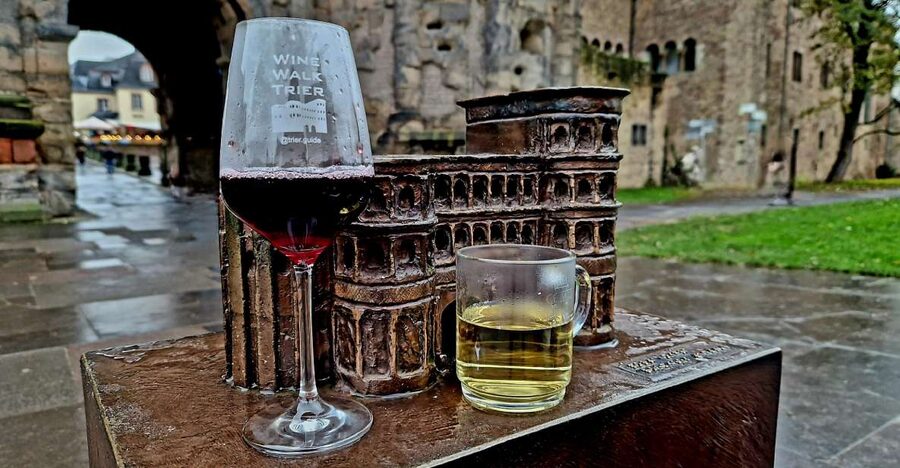
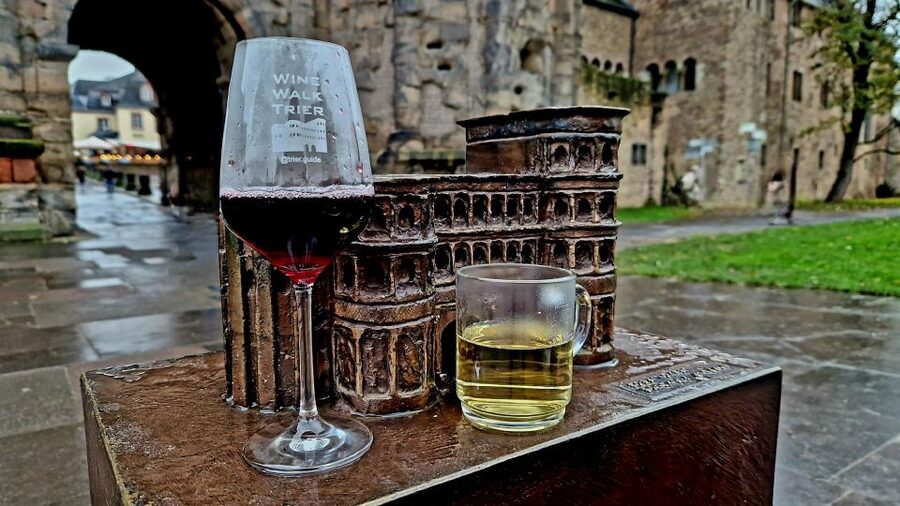
The meeting point is on the left side of the Tourist Information office, in front of the city model and near the flags. It is worth arriving early because the tour does not meet inside the Tourist Information office itself. The nearby city model is a helpful landmark, especially if you are arriving by train and finding your way into the center.
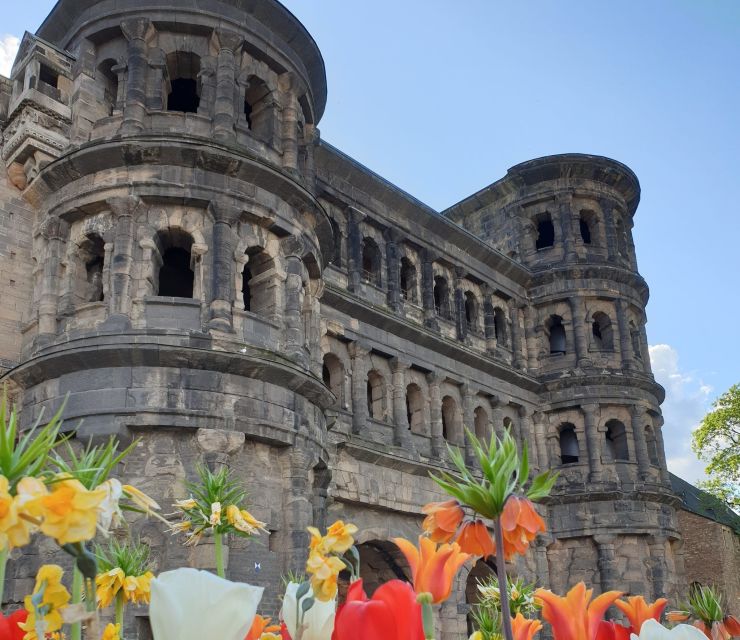
The first stop is the Porta Nigra, the dark Roman gate that once formed part of Trier’s defensive system. It is a powerful place to begin. The scale of the surviving stonework immediately tells you that Trier was no minor provincial settlement.
Here, your guide sets up the city’s Roman chapter before leading you farther into the center. Simon’s local connection is particularly useful at this point. He does not simply identify the gate. He places it within the wider story of Trier and points out how much of the old city remains within a short walk.
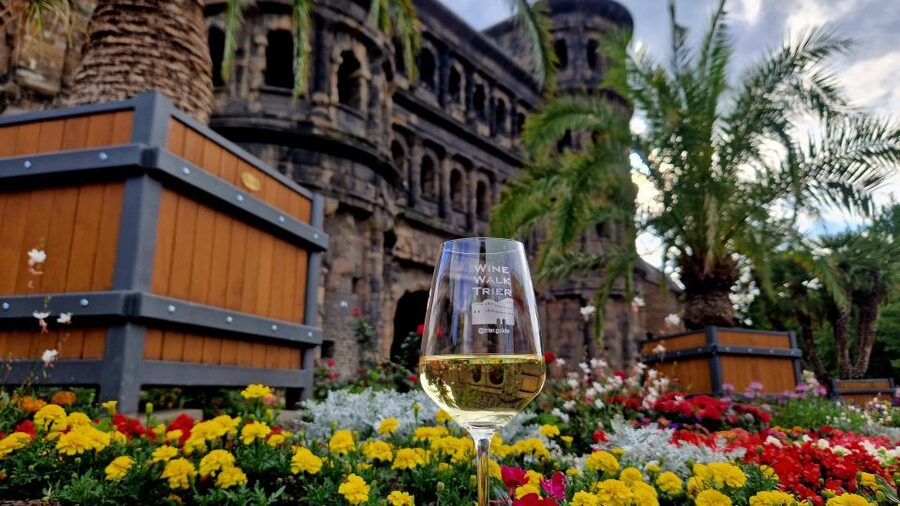
The tasting begins along the route. You may receive a glass linked to the gate or to the nearby part of the city, with an explanation of its regional connection. Breadsticks and water are included, which matters when several pours are spread across two hours.
More Walking Tours in Germany:
- Discover Berlin Half-Day Walking Tour
★ 5.0 · 9,624 reviews - Berlin: Third Reich and Cold War 2 Hour Walking Tour
★ 4.9 · 6,830 reviews - Munich: Third Reich & WWII Walking Tour
★ 4.6 · 6,181 reviews
Market Cross and Trier’s central square
From the Porta Nigra, the route moves to the Market Cross on the Main Market. This is one of the best places to see Trier as a living city rather than an open-air Roman site. The square brings together civic buildings, decorative facades, and the steady movement of people through the center.
The guide uses the square to explain another layer of Trier’s past. You hear how the city developed after the Roman period and how its central public spaces changed over time. This is where a good guide earns the fee: a quick look becomes a story about power, trade, religion, and daily life.
You should expect short stops rather than long lectures. The listed route includes several landmarks, and the tour has to keep moving to reach the Forum Baths in two hours. That pace works well for most people, but you will need to return later if you want detailed photographs or a full look inside each church.
Cathedral and Liebfrauenkirche
The next major pair is the Trier Cathedral and the Liebfrauenkirche. Their closeness makes the contrast especially interesting. The cathedral carries the weight of centuries of Christian worship and political importance, while Liebfrauenkirche offers a different architectural mood and a more intimate sense of sacred space.
The walk does not replace a dedicated visit inside either church. Instead, it gives you enough context to see why these buildings matter before you explore them on your own. Some tour experiences allow a short pause for interior viewing or photographs, but you should not count on an extended indoor visit.
A wine stop near Liebfrauenkirche adds a nice change of pace. You are standing among some of Trier’s most important religious buildings while hearing about a drink associated with the Moselle area. This pairing of place and glass is the tour’s central idea, and it keeps the history from becoming a string of disconnected dates.
If you have mobility concerns, the route is described as completely barrier-free and does not require climbing steps. The tour is wheelchair accessible. Still, you are outdoors for the full walk, so wet weather and crowded pavement may affect comfort even when the route itself has no steps.
Aula Palatina and the Electoral Palace
The route then reaches the Aula Palatina, also called the Basilica of Constantine, and the neighboring Electoral Palace. Together, they show how Trier’s importance continued long after the Roman period.
The Aula Palatina is striking because of its size and plain, imposing form. The Electoral Palace provides a sharp visual contrast with its ornate later design. Put side by side, these buildings show how different rulers and institutions reshaped the same city over many centuries.
This section is especially good for anyone who likes architecture but does not want a specialist lecture. The guide’s job is to help you notice the relationship between the buildings, their historical roles, and the city around them. Simon is often praised for answering questions, so this is a good point to ask about the Roman legacy, the church, or the later rulers of Trier.
Another wine tasting may take place in this part of the route. The exact bottle selection can change, but the principle remains the same: the wine is chosen for its connection to the site or to the wider Moselle wine region. You get a small introduction to local styles without being pushed into buying a bottle or joining a separate winery excursion.
More City Tours in Germany:
- Berlin: 1-Hour City Tour by Boat with Guaranteed Seating
★ 4.3 · 16,993 reviews - Leipzig: City History Canal Sightseeing Tour on a Motorboat
★ 4.7 · 6,232 reviews - Cologne: Panoramic City Cruise
★ 4.3 · 5,698 reviews - Berlin: City Sightseeing Hop-On Hop-Off Bus Tour
★ 4.1 · 4,233 reviews
Kaiserthermen and the Forum Baths
The final Roman chapter comes at the Kaiserthermen, or Imperial Baths. These ruins give you a clearer idea of the size and ambition of Roman Trier. Even when only walls and foundations remain, the complex suggests how much engineering and public organization went into Roman urban life.
The tour finishes at the Forum Baths, another Roman bath complex near Viehmarkt Square. This is a sensible ending because it leaves you near a major sight and a useful part of central Trier. You can continue exploring from here instead of retracing your steps to the Porta Nigra.
The final tasting is connected with this end of the route. By now, the walk has moved through Roman, Christian, civic, and royal Trier, so the last glass feels like a closing note rather than a random drink added to the program.
The itinerary describes brief photo and sightseeing stops at each landmark. In practice, the value lies in the complete sequence, not in spending a long time at any one ruin. If you want to enter the baths, cathedral, or palace interiors, plan extra time after the tour.
What the wine tasting is really like
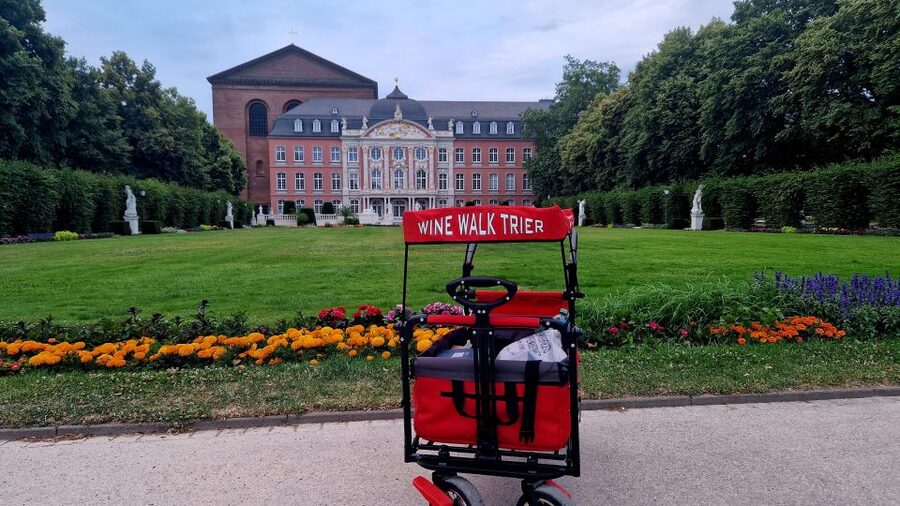
In the warmer months, you taste five different regional wines. The selection centers on the Moselle area, with Riesling receiving particular attention. The guide explains how each wine relates to a location in Trier or to the surrounding wine-growing region.
This is not a formal tasting with a printed flight, tasting mats, or lengthy technical analysis. It is more social and more mobile. You listen to a story, take a sip, walk to the next place, and continue the city tour. That format suits you if you enjoy learning in small portions.
The pours can be generous. One visitor specifically found Simon quite free with the wine, which is pleasant but worth remembering if you are sensitive to alcohol. Five samples over two hours are still enough to affect you, particularly on an empty stomach. Eat before you arrive, use the included water, and treat the walk as a tasting rather than a drinking contest.
Nonalcoholic options are available. You can request four different grape juices by email when booking. It is best to arrange this in advance rather than assume the guide can change the tasting at the meeting point.
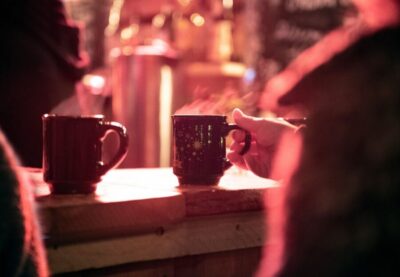
From the middle of November through the end of January, the tour may feature four local mulled wines instead of standard wines when at least six people register. This seasonal version has received warm praise for cold-weather visits, and it changes the character of the experience. You get a cozy introduction to local wine culture, though less of a look at the region’s regular wine styles.
If fewer than six people register during that winter period, the experience may use five different wines as in summer. That detail makes the winter format less predictable, but it also means you are not automatically limited to mulled wine.
Practical details that affect your day
The tour lasts two hours and is offered in English or German. It takes place rain or shine, so a waterproof jacket is more useful than an umbrella on narrow city streets. Comfortable shoes are sensible, although the route is described as an easy, step-free walk.
You do not need hotel pickup. The meeting point is central, and the finish at the Forum Baths puts you near more sights, restaurants, and the next part of your day. The route also works well as a first activity after arriving in Trier because it helps you decide which places deserve a longer return visit.
The supplied glasses are part of the tasting setup. A glass can be purchased afterward for €6, and a wine glass holder costs €3. Those extras are optional, but they are worth considering if you want to carry a souvenir or keep your hands free while walking.
The included restaurant voucher gives you one glass of wine with a main course at Weinwirtschaft Friedrich-Wilhelm, next to the Basilica. It is not a full meal or a discount on the entire bill. Think of it as a useful nudge toward a local dinner, not a reason by itself to book the tour.
Free cancellation is available up to 24 hours before the start, and you can reserve now and pay later. Those terms help if your Trier visit depends on a day trip or changing rail plans.
Who will get the most from this tour
I would choose this walk if you have one day in Trier and want a strong first look at the city. It suits couples, small groups, solo visitors who like meeting people, and anyone who enjoys wine but does not want to spend the whole day at a winery.
It is also a good fit if you are new to Germany or the Moselle region. The guide gives you cultural context, while the tasting introduces local wine without requiring prior knowledge. Simon’s humor and willingness to answer questions can make the experience feel personal rather than scripted.
Families can take the walking portion, but the wine tasting is naturally aimed at adults. Nonalcoholic grape juice is available by prior email arrangement.
I would hesitate if you dislike outdoor tastings, have trouble hearing in busy streets, or want a slow visit inside every monument. One person found the city noise made it harder to hear at times. That is a fair caution, especially in the Main Market or other busy parts of the center.
Should you book the Trier wine walk?
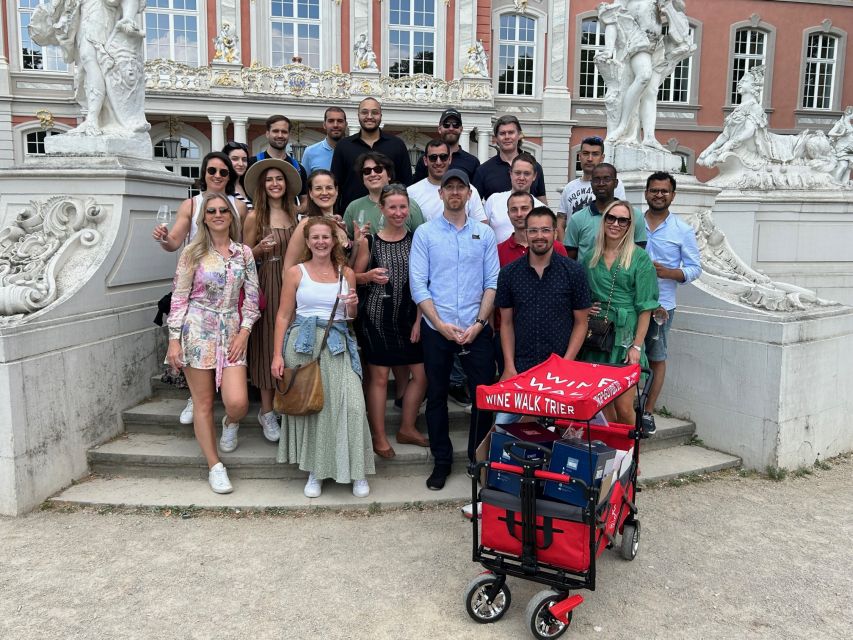
Book it if you want history with a glass in hand. The route covers Trier’s major highlights, the guide brings real local feeling, and the wine is tied to the places you see instead of being an unrelated add-on.
At $43, I consider it good value for a first visit, especially with five wines, water, breadsticks, and the restaurant voucher included. Choose the winter version if mulled wine appeals to you, but remember that the four-wine format depends on a group of at least six.
Skip it if your priority is a long technical wine tasting or extended monument access. For most visitors, though, this is a smart way to get oriented, hear stories you might miss alone, and leave Trier with a clearer sense of how its Roman ruins and Moselle wine culture fit together.
FAQ
Where does the Trier wine walk begin?
Meet on the left side of the Tourist Information office, in front of the city model near the flags. The tour is not provided by the Tourist Information office.
Where does the tour finish?
The walk ends at the Forum Baths near Viehmarkt Square.
How long does the experience last?
The guided walk and wine tasting last two hours.
How many wines are included?
The summer version includes five different regional wines. From mid-November through the end of January, the tour may include four different local mulled wines when at least six people register.
Are nonalcoholic drinks available?
Yes. You can request four different grape juices by email when booking.
Is the route wheelchair accessible?
Yes. The tour is described as completely barrier-free and does not require climbing steps.
What happens if it rains?
The tour operates rain or shine. You should dress for the weather.
Is food included?
Water and breadsticks are included. You also receive a voucher for one glass of wine with a main course at Weinwirtschaft Friedrich-Wilhelm next to the Basilica. A meal itself is not included.
More Food and Drink Tours in Germany
- Cologne: Brewery Tour with 3 Kölsch Beer Tastings
★ 4.7 · 3,108 reviews - Hamburg: St. Pauli Highlights Guided Tour with Beer for 18+
★ 4.7 · 2,353 reviews - Hamburg: Elbphilharmonie Plaza and HafenCity Food Tour
★ 4.7 · 1,711 reviews - Bavarian Beer and Food Evening Tour in Munich
★ 4.5 · 1,575 reviews
More Wine Tastings in Germany
- Hamburg: Harbor Cruise with Wine and Cheese
★ 4.7 · 795 reviews - Trier: Discovery Tour – Germany’s Oldest Wine Cellar
★ 4.7 · 218 reviews - Heidelberg: Sightseeing Boat Tour with Mulled Wine
★ 3.6 · 202 reviews - Freiburg: Veni, vidi, vino – wine hike and tasting
★ 4.5 · 144 reviews
Just added around Germany
- Private Walking Tour in Berlin: Hitler’s Germany & WWII★ 5.0 · 7 reviews
- The History of Berlin: WWII PRIVATE Walking Tour With Locals★ 5.0 · 209 reviews
- Private Berlin WWII and Cold War History Tour with Local Expert Guide★ 5.0 · 28 reviews
- Private Walking Tour Berlin 3 hours: Brandenburg, Historic Center★ 5.0 · 7 reviews
- Berlin: Private Bike Tour of the Berlin Wall and Third Reich★ 5.0 · 23 reviews
- Berlin: Guided Private Bike Tour to Explore the Highlights★ 5.0 · 12 reviews
- Berlin Photography Masterclass – Private Photography Lesson★ 4.5 · 23 reviews
- Group Driving Tour 1 to 6 people. Berlin Shore Excursion incl pick-up at Port★ 5.0 · 8 reviews
Wine Tours, compared.
Advent Tour with Stollen Tasting and Mulled Wine
Read our review →
Heidelberg and Rhine Valley Day Trip With Wine Tasting and Dinner from Frankfurt
Read our review →
Browse the lists this tour appears in