
Reviewed · WALKING TOURS
Hamburg – Freemason Walking Tour in German
Secrets hide in plain sight. This two-hour Hamburg walk connects Freemasonry with city landmarks, symbols, and old buildings, giving you a fresh way to read the city. I especially like the focus on Masonic signs and rituals and the chance to see the present Hamburg Masonic lodge headquarters. I also like that the route stays in central Hamburg, so you can fit it neatly into a sightseeing day.
The main point to consider is language: the live guide speaks German. Some participants have praised the clear structure and authentic subject knowledge, while others wanted fewer stories and more firm facts about symbols on buildings. At $29 per person, the tour offers fair value if the subject genuinely interests you, but it may feel less satisfying if you expect a dramatic hunt for secret clues.
In This Review
- Key points before you book
- Why Freemasonry makes a good Hamburg walking theme
- Starting at the St. Nikolai memorial
- Trostbrücke and the first clues
- Adolphsplatz 1 and Hamburg’s civic center
- Hamburg Town Hall and the public face of power
- Gänsemarkt and the route through central Hamburg
- Stephansplatz and the surrounding streets
- Seeing the Hamburg Masonic Lodge headquarters
- How strong is the guiding?
- Price, language, and practical value
- Who should book this Hamburg tour?
- Should you book the Freemason Walking Tour?
- FAQ
- Where does the Hamburg Freemason walking tour begin?
- How long does the tour last?
- What language is the tour conducted in?
- How much does the experience cost?
- Which Hamburg locations are included?
- Can I see the Hamburg Masonic Lodge headquarters?
- What will I learn about Freemasonry?
- Is the tour suitable for children?
- Is the walking tour wheelchair accessible?
- Can I cancel and receive a refund?
Key points before you book
- Start at St. Nicholas’ Church: Meet at the main entrance of the St. Nikolai memorial, a clear central landmark with a serious connection to Hamburg’s past.
- Follow a city-center route: The walk includes Trostbrücke, Adolphsplatz 1, Hamburg Town Hall, Gänsemarkt, and the area around Stephansplatz.
- Look for symbols, not fantasy: The guide explains Masonic signs, rituals, and their place in Hamburg rather than simply telling spooky secret-society tales.
- Finish near the lodge headquarters: You see the current headquarters of the Hamburg Masonic Lodge, one of the tour’s most distinctive stops.
- German is the tour language: You need enough German to follow a live explanation lasting about two hours.
- Ages 12 and up: The theme suits older children and adults, especially anyone curious about architecture, urban history, or fraternal organizations.
Why Freemasonry makes a good Hamburg walking theme
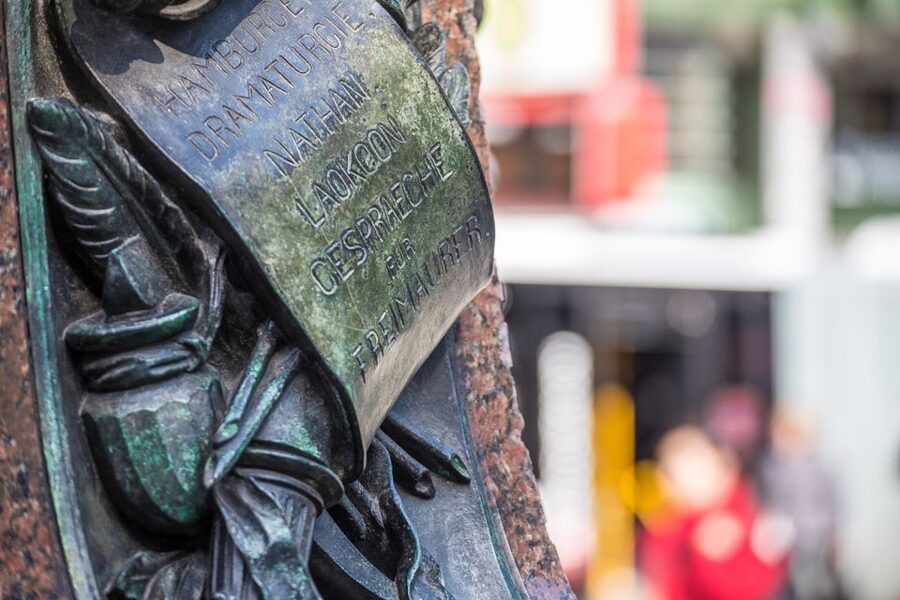
Hamburg can seem easier to understand through its harbor, merchants, churches, and grand civic buildings. This tour adds another layer. It asks you to look at familiar places and consider how Freemasonry operated within the city, where its members met, and how symbols could carry meaning beyond decoration.
That approach gives you a reason to slow down. Instead of rushing from one landmark to the next, you watch for shapes, signs, and repeated ideas. The appeal is not necessarily finding a hidden message on every façade. It is learning how a group with private rituals and public influence could become part of a city’s story.
I like this kind of walk because it changes your attention. Hamburg Town Hall is no longer just a large photograph stop. Trostbrücke is not merely a bridge to cross. Even the streets around Stephansplatz can become part of a wider discussion about power, institutions, and social networks.
Still, you should set sensible expectations. The tour does not promise access to private lodge rooms or a full explanation of every Masonic practice. The information supplied for the experience centers on outside locations, symbols, rituals, and the present lodge headquarters. You are exploring the subject through the city rather than entering a secret meeting.
More Walking Tours in Hamburg
- Hamburg: Guided Walking Tour for Magic Fans
★ 4.8 · 1,992 reviews - Reeperbahn Walking Tour with St. Pauli Local
★ 4.8 · 577 reviews - Hamburg: Speicherstadt Walking Tour with Coffee Tasting
★ 4.6 · 360 reviews
Starting at the St. Nikolai memorial
Your meeting point is Am Mahnmal St. Nikolai, Haupteingang, at the main entrance of the St. Nikolai memorial. This is the former St. Nicholas Church site, now a major Hamburg memorial, and it gives the walk a memorable opening point.
The meeting location matters because large city centers can waste your first ten minutes if the starting spot is vague. Here, you have a named landmark and a specific entrance. Arrive with enough time to identify the main gate, especially if you are unfamiliar with central Hamburg.
The memorial also creates the right mood for a tour about hidden institutions and public history. You begin among remains and reminders rather than in a generic square. The guide then leads you into the city, where the subject becomes tied to streets and buildings you can actually see.
You should wear comfortable shoes. The experience lasts two hours and moves between several central stops. The supplied information does not give a group size, walking distance, or a detailed accessibility route, so you may want to confirm those points when booking if they matter to you.
Trostbrücke and the first clues
The route continues to Trostbrücke, where the guide provides a walking-tour explanation. This is an important early stop because it moves the subject from general talk into the physical city.
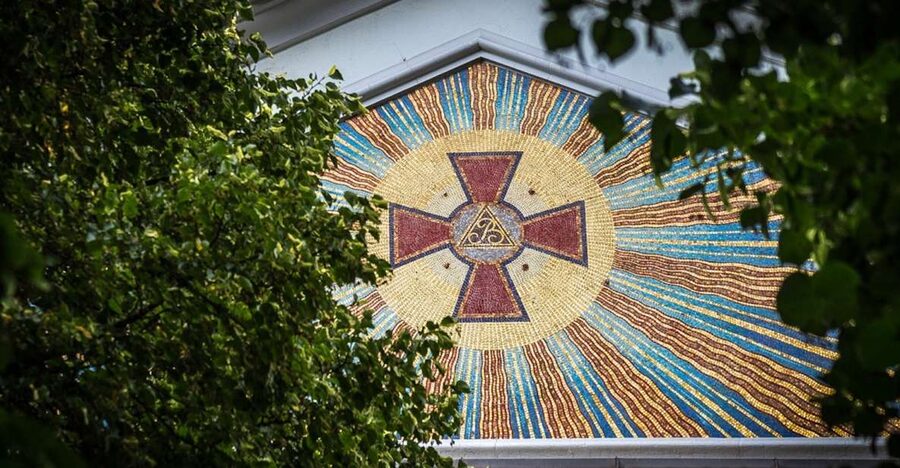
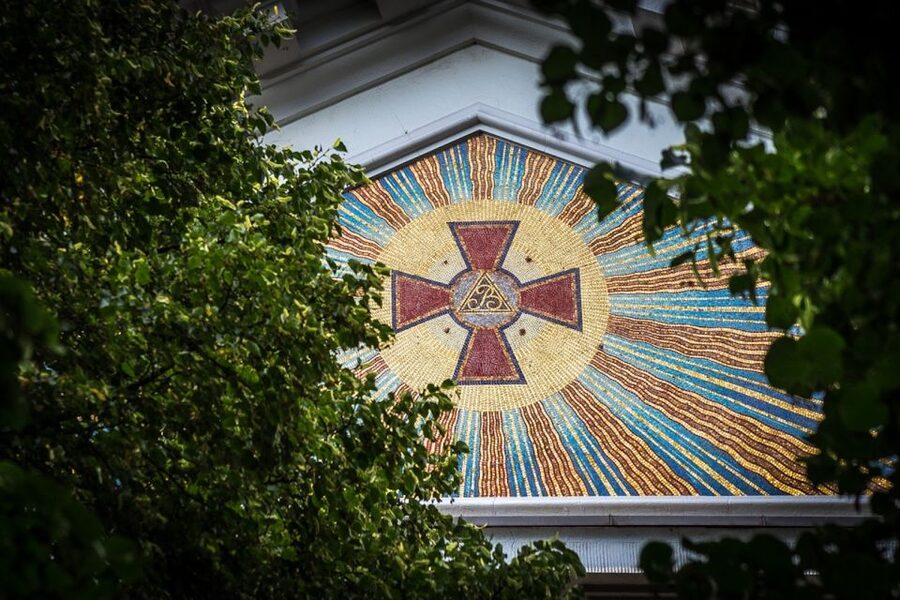
At this point, listen for the method of the tour. You may be shown how to identify symbols or how certain signs are interpreted in a Masonic context. The value comes from learning what to look for, not from treating every triangle, eye, column, or geometric shape as proof of a secret connection.
That distinction is worth keeping in mind. Freemasonry has a visual language, but urban buildings also contain ordinary religious, civic, and decorative symbols. A careful guide should explain the difference between a documented link and an interesting interpretation.
One participant described the tour as well structured, with a clear thread from one subject to the next. That is exactly what you want here. A strong opening at Trostbrücke should establish the basic historical setting before the walk reaches more prominent civic places.
Adolphsplatz 1 and Hamburg’s civic center
The next listed stop is Adolphsplatz 1, where the guide continues the explanation. Its place in the route helps connect the Masonic story to central Hamburg’s civic and commercial core.
You will not be visiting a remote site. This is a city walk through streets that already form part of a normal Hamburg sightseeing plan. That makes the tour easy to combine with other plans, but it also means the surroundings can compete for your attention. Keep listening closely when the guide points out a particular building, sign, or detail.
This stop may appeal most to visitors who enjoy urban history through specific addresses. Rather than hearing only broad claims about a secret society, you get a location that can be placed on a map. Ask yourself what is visible, what is documented, and what the guide is offering as interpretation.
The supplied comments show a useful split in expectations. Some people valued the factual, well-organized approach. Others wanted more facts and less fiction. If you prefer solid evidence, you will get more from the walk by treating dramatic stories as context, then concentrating on the buildings and symbols the guide can explain clearly.
Still Hamburg, at a slower pace:
- Hamburg: Sex and Crime in St. Pauli Tour for Ages 18+
★ 4.7 · 15,447 reviews - Hamburg: 1.5-Hour Harbor and Speicherstadt Day Cruise
★ 4.6 · 14,200 reviews - Hamburg: 90-Minute Evening Lights Harbor Cruise
★ 4.5 · 7,728 reviews - Hamburg: 2-Hour XXL Port of Hamburg Cruise Tour
★ 4.7 · 6,979 reviews
Hamburg Town Hall and the public face of power
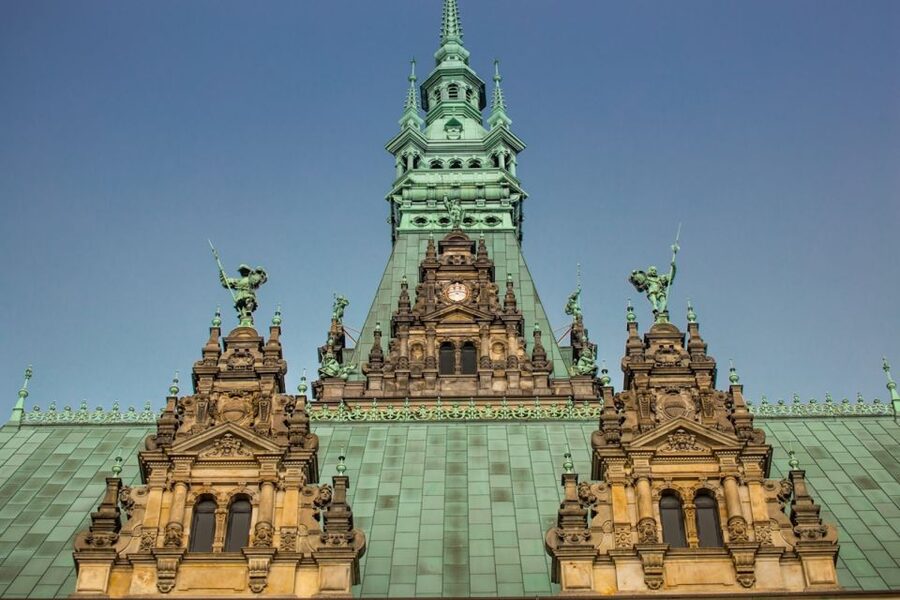
Hamburg Town Hall is the route’s most obvious civic landmark. The guide gives a talk here, using the building and its setting to examine Freemasonry’s connection with Hamburg.
The stop works because a town hall represents public authority. A discussion about a private organization becomes more interesting when placed beside a building associated with civic life, government, and the city’s ruling institutions. You can consider how private associations and public society might overlap without assuming that every important person or building was part of a secret plan.
I like the way this stop can add meaning to a familiar attraction. You may already have photographed the Town Hall, but the tour asks you to inspect it with a different question in mind: which details are merely decorative, and which symbols have a known association?
The quality of this section depends heavily on the guide’s balance. A clear explanation of what is documented will be useful. A string of uncertain connections could feel like filler. One participant specifically wanted more fact and less fiction, so this is the part where you should expect the guide to separate evidence from storytelling.
If you are taking photographs, be considerate of the group and of other people in the square. The focus is on the explanation, not on turning the walk into a race for the best Town Hall picture.
Gänsemarkt and the route through central Hamburg
Gänsemarkt is another guided stop. By this stage, the walk has moved through several parts of the central city, giving you a broader sense of how the subject fits into Hamburg rather than limiting it to one building.
This is where the two-hour length makes sense. A shorter talk could explain Freemasonry in a room, but a walking route lets you connect ideas to separate places. The movement also keeps the experience active, although you should not expect a nonstop parade of spectacular sights. Some of the value lies in listening while standing in ordinary urban spaces.
The central route is practical for a first visit. You can continue sightseeing afterward without a long trip back to your hotel or to a distant transport stop. The information provided does not specify the final return point, so plan your onward schedule with the understanding that the walk concludes somewhere along this central route.
If you are sensitive to long explanations, ask yourself how much historical discussion you enjoy. The walk has a live guide and several guided stops, not a staged performance with constant action. Its pace will suit you best if you like pausing to hear an idea, then moving on to the next location.
Stephansplatz and the surrounding streets
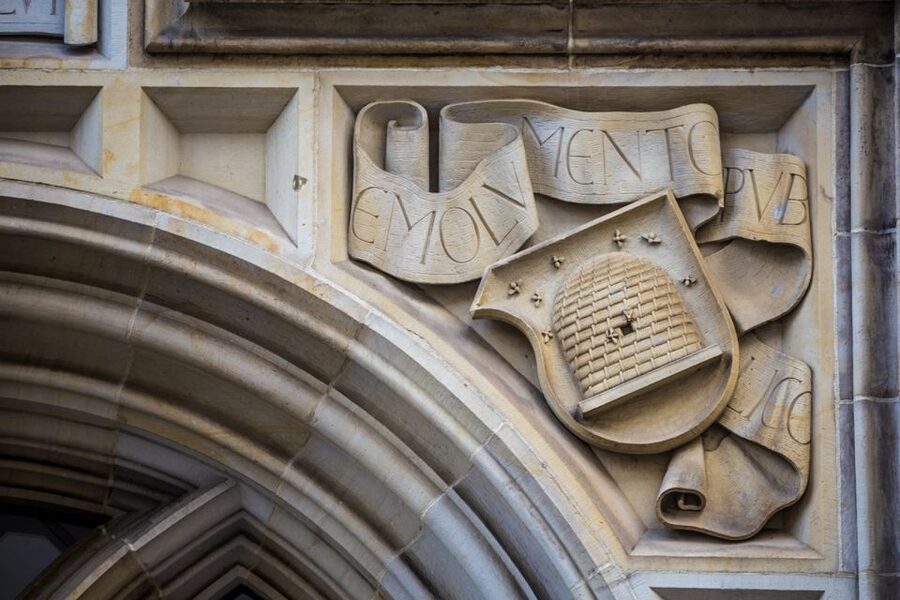
Stephansplatz and its surroundings are part of the advertised area of interest, even though the listed stop sequence also names the other central locations. The district gives the guide another setting for discussing Masonic traces and the way symbols appear around Hamburg.
This kind of stop can be rewarding because the subject is not confined to official monuments. You may find yourself looking at façades, entrances, street views, and small details that would otherwise pass unnoticed. The guide’s job is to explain why a detail matters and how confidently it can be linked to Freemasonry.
Do not expect every mark to reveal a secret. The best use of this portion is to learn a habit of observation. You will leave with a more careful eye for the relationship between architecture, symbolism, and civic identity.
The area also gives the tour a change of rhythm. After civic buildings and major central landmarks, the surrounding streets can make the subject feel more connected to everyday Hamburg. That helps the walk avoid becoming only a lecture about institutions.
Seeing the Hamburg Masonic Lodge headquarters
One of the strongest reasons to choose this experience is the chance to see the present headquarters of the Hamburg Masonic Lodge. The information does not promise an interior visit, so you should regard this as an exterior or location-based stop unless the guide tells you otherwise.
That limitation does not make the stop unimportant. A headquarters gives the tour a present-day connection. You are not only hearing about Freemasonry as an old organization from the past. You are also being shown where the Hamburg Masonic community is based now.
For me, this is more useful than a tour that treats Freemasonry as a spooky historical curiosity. The headquarters helps place the subject in real life. It also gives you a chance to ask sensible questions about continuity, organization, and public presence.
The experience includes a souvenir, which is a modest but welcome extra. The details of the souvenir are not specified, so do not book the tour expecting a particular item. Think of it as a small reminder of the theme rather than a major part of the value.
How strong is the guiding?
The guide makes or breaks this experience. The tour is offered in German, and the guide is described as experienced. The strongest comments praise an authentic approach, a clear structure, and information that changes how you look at older Hamburg buildings.
Kirsten is named in one especially warm response. If she leads your walk, you may get a personable presentation with a strong sense of the city and the subject. Since guides can vary, I would not assume every departure will feel identical, but her name is useful if you are able to see who is scheduled.
The best version of this tour has a visible thread: basic background, signs and symbols, important locations, and the current lodge headquarters. That structure helps you remember what you saw after the walk ends.
The weaker version can feel scattered. One low score described a chaotic route, little clear connection between points, and too little explanation of the meaning of symbols on buildings. That is a fair warning. If your main goal is to identify specific Masonic marks, pay close attention and ask for clarification when a connection seems uncertain.
Price, language, and practical value
At $29 per person, this is not the cheapest way to spend two hours in Hamburg, but the price is reasonable for a specialized live walking tour if the subject is a genuine interest. You are paying for a German-speaking guide, a planned central route, interpretation at several locations, and a souvenir.
The value drops if you are only mildly curious about Freemasonry. You can see Hamburg Town Hall, Gänsemarkt, and central streets without a paid tour. The fee makes more sense when you want someone to frame those places through signs, rituals, and the organization’s local history.
German ability is the key practical issue. The tour is not listed in English, and no translation service is specified. You do not need perfect German for a simple walk, but you should be able to follow a sustained spoken explanation about history and symbolism.
The walk lasts two hours. It is recommended for ages 12 and up, making it a possible choice for families with older teenagers, especially those interested in unusual history. Younger children may find the talk-heavy format less engaging, although no strict younger-age rule is given.
The tour is wheelchair accessible according to the supplied information. Since the exact route conditions and group size are not provided, anyone needing detailed access information should confirm the practical route before reserving.
You can cancel up to 24 hours before the start for a full refund, and you can reserve now while paying later. Those terms are helpful when your Hamburg schedule is still shifting.
Who should book this Hamburg tour?
I would choose this walk if you like architecture, local history, symbolism, social organizations, or city stories that sit outside the standard sightseeing script. It is also a good fit if you have already seen the main Hamburg landmarks and want a new way to look at them.
You will probably enjoy it most if you are comfortable with a guided discussion rather than a theatrical mystery show. The strongest experience will give you facts, context, and careful interpretations. You should be cautious if you want access inside lodge buildings, a detailed account of every Masonic ritual, or a guaranteed hunt for visible symbols on every stop.
The German-language format also makes this a natural choice for German speakers and visitors who can follow historical commentary in German. If you need English, this is not the right booking based on the information available.
Should you book the Freemason Walking Tour?
Book it if the theme is your reason for visiting, not simply because you need another Hamburg activity. The tour offers a focused two-hour route, a look at the lodge headquarters, and a fresh reading of places such as the Town Hall and Trostbrücke.
I would book with realistic expectations: this is a city history walk about Freemasonry, not a theatrical secret-society adventure. If your priority is firm information about symbols and their meaning, ask the guide to distinguish documented signs from speculation. At $29, that careful explanation is what turns an intriguing idea into good value.
FAQ
Where does the Hamburg Freemason walking tour begin?
The meeting point is at the main entrance of the St. Nikolai memorial, listed as Am Mahnmal St. Nikolai, Haupteingang.
How long does the tour last?
The walking tour lasts two hours.
What language is the tour conducted in?
The live tour guide speaks German.
How much does the experience cost?
The price is $29 per person.
Which Hamburg locations are included?
The route includes St. Nicholas’ Church, Trostbrücke, Adolphsplatz 1, Hamburg Town Hall, Gänsemarkt, and the surrounding Stephansplatz area.
Can I see the Hamburg Masonic Lodge headquarters?
The tour includes a visit to the present headquarters of the Hamburg Masonic Lodge as one of its important locations. The information does not specify an interior visit.
What will I learn about Freemasonry?
The guide covers the organization’s history in Hamburg, its signs and symbols, its rituals, and places where it has left a mark on the city.
Is the tour suitable for children?
The tour is recommended for ages 12 and up.
Is the walking tour wheelchair accessible?
Yes. The experience is listed as wheelchair accessible.
Can I cancel and receive a refund?
You can cancel up to 24 hours in advance for a full refund. You can also reserve now and pay later.
Just added around Hamburg
- Hamburg: St. Pauli Food and Bier Tour★ 4.7 · 5 reviews
- St. Pauli Tour: Drag-Attack with Barbie Stupid & Lee Jackson★ 4.8 · 280 reviews
- Hamburg: Private Tour Red Light District Walking Tour★ 4.7 · 227 reviews
- St. Michael’s, Elbe Tunnel & Harbor 2-Hour Hamburg Tour★ 4.9 · 21 reviews
- Satt Pauli – der kulinarische Rundgang durch St. Pauli★ 4.8 · 12 reviews
- Hamburg: Safari tour in St. Pauli★ 4.9 · 11 reviews
- Hamburg: Reeperbahn Comedy Club★ 4.3 · 53 reviews
- Radtour um die Alster & durch traumhafte Alsterviertel★ 4.9 · 34 reviews
Walking Tours, compared.
Old Town & Viktualienmarkt City Walk in German
Read our review →Browse the lists this tour appears in