
Reviewed · WALKING TOURS
Berlin: Hidden Backyards Guided Walking Tour
Berlin keeps some of its best stories behind doors.
I like this two-hour walk for two reasons: it takes you into courtyards you could easily miss, and it connects architecture with the lives of Berliners who lived, worked, and created there. The route through Spandauer Vorstadt also gives you a useful introduction to the area around the New Synagogue, from Jewish tradition to today’s artsy, international character.
The main drawback is simple: language matters. The activity is listed in English and German, but some departures have apparently run in German only. Check the language before booking, especially if the history is the main reason you are going.
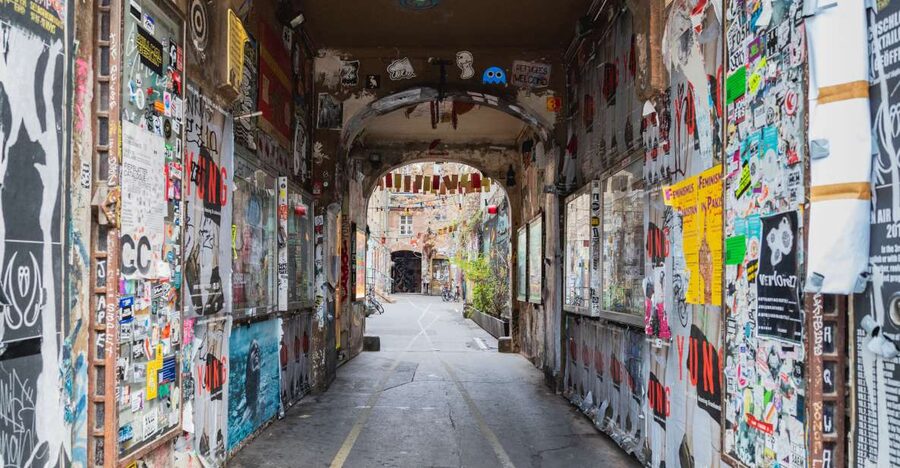
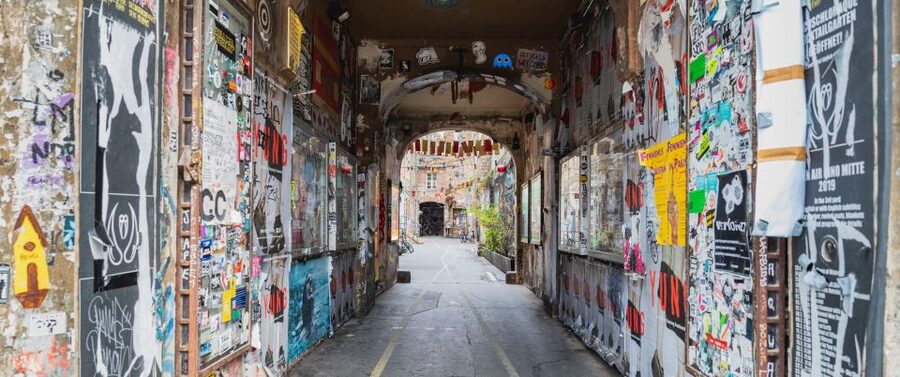
- Haus Schwarzenberg combines Berlin history with rough-edged street art and working art studios.
- The tour explains how Spandauer Vorstadt changed from a historic Jewish center into a fashionable Mitte neighborhood.
- Hackesche Höfe and Heckmann Höfe show two different sides of Berlin courtyard architecture.
- Guides such as Nick, Susanne, Lydia, Alex, and Minit have been praised for clear stories, humor, and strong local knowledge.
- At $23, the tour offers good value if you want context you would not get from simply walking between the courtyards alone.
In This Review
- Why Berlin’s courtyards matter
- Meeting at Hackescher Markt
- Haus Schwarzenberg: art in a rougher Berlin setting
- Hackesche Höfe and Rosenhöfe: the famous courtyards with more to say
- Sophienkirche and Auguststraße: broadening the story
- Jewish Berlin around the New Synagogue
- Heckmann Höfe: a leafy pause near the end
- The guides make or break the experience
- Is $23 a fair price?
- Who should book this Berlin walking tour?
- My verdict on the hidden courtyards tour
- FAQ
- Where does the Berlin Hidden Backyards tour begin?
- How long does the walking tour last?
- What languages are available?
- Is the tour wheelchair accessible?
- Does the tour run in bad weather?
- What places are included on the route?
- Where does the tour finish?
- Are food and drinks included?
- Can I cancel the booking?
Why Berlin’s courtyards matter
The word Höfe means courtyards, but these spaces are more than pretty shortcuts. In central Berlin, courtyards were tied to housing, workshops, factories, shops, studios, and neighborhood life. They show you a practical side of the city that grand landmarks cannot.
That is what makes this tour useful. You are not simply led from one photogenic doorway to another. The guide explains how this quarter developed and how its buildings took on new uses over time.
The route runs through Spandauer Vorstadt, a historic part of Berlin-Mitte. The name can sound grand, but the experience is very much at street level. You move through passageways, courtyards, and side streets while learning how the area became linked with Jewish life around the New Synagogue.
You also see how Berlin keeps changing. Old buildings now hold art spaces, shops, restaurants, and creative studios. Some courtyards are polished and carefully maintained. Others retain chipped walls, graffiti, and a slightly unruly character. That contrast is part of the appeal.
Meeting at Hackescher Markt
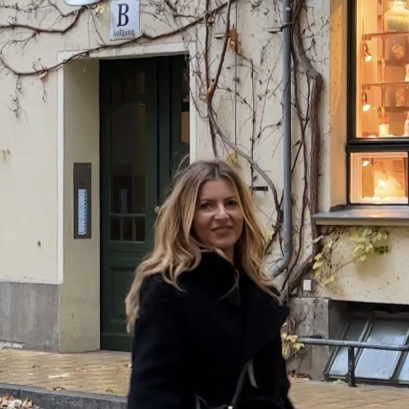
The tour begins in front of the BUTLERS shop at Hackescher Markt 4. This is a useful starting point because Hackescher Markt is easy to reach and already places you near several of the area’s best-known courtyards.
Give yourself a few minutes to find the exact meeting spot. The starting location is in a busy central area, and you do not want to be searching around while the group gathers.
From there, the walk heads into the streets of Mitte. The distance is manageable, and the experience is described as an easy walk. Still, you should wear comfortable shoes. Courtyard tours involve frequent stops, turning through narrow passages, and standing while the guide talks.
The group’s pace appears to suit people who want to listen rather than race through the neighborhood. One especially useful detail from the feedback is that the tour remained enjoyable even in heavy rain and bitter cold. The activity runs rain or shine, so bring a coat or umbrella when the forecast looks poor.
More Walking Tours in Berlin
- Discover Berlin Half-Day Walking Tour
★ 5.0 · 9,624 reviews - Berlin: Third Reich and Cold War 2 Hour Walking Tour
★ 4.9 · 6,830 reviews - Berlin: Discover Berlin Walking Tour
★ 4.9 · 5,998 reviews
Haus Schwarzenberg: art in a rougher Berlin setting
Haus Schwarzenberg is one of the strongest stops on the route. It gives you a less polished picture of Berlin than the restored courtyards nearby.
The courtyard is home to art studios and other creative spaces. Its walls are covered with street art, and the buildings show signs of several different periods and uses. You get the sense of a place that has been adapted again and again rather than frozen into a perfect historical display.
I like this stop because it makes Berlin’s creative identity feel practical. You are not just looking at murals from a distance. You are seeing a working courtyard where artists use the space today.
The condition of Haus Schwarzenberg is also part of its character. If you prefer spotless architecture and carefully controlled exhibits, this may feel untidy. If you like seeing how a city allows old buildings to remain useful, it is likely to be one of the most memorable parts of the tour.
The guide’s explanation adds the value here. On your own, you might see street art and a few old walls, then move on. With context, the courtyard becomes a lesson in Berlin’s changing social and economic life.
Hackesche Höfe and Rosenhöfe: the famous courtyards with more to say
Hackesche Höfe is one of Berlin’s best-known courtyard complexes. It is more polished and public-facing than Haus Schwarzenberg, with a strong architectural presence and a lively mix of shops and businesses.
The tour helps you look beyond the shop windows. You learn how the courtyard design worked as part of a larger urban system, with buildings arranged around connected inner spaces. This is where the idea of Berlin’s backyards becomes clearer. The street frontage is only one layer of the neighborhood.
Rosenhöfe follows as another example of the area’s courtyard style. Its details help you compare different treatments of similar urban spaces. You can pay attention to façades, entrances, decoration, and the way each courtyard feels in relation to the street.
The drawback is that Hackesche Höfe is not a secret corner of Berlin anymore. You may encounter other people, shops, and ordinary city activity. That does not ruin the visit, but it means you should not expect every stop to feel secluded.
The guide makes the difference by pointing out what you might otherwise overlook. Several people have described the route as full of places they would not have found alone. That is a fair assessment: the value lies less in admission to a single major sight and more in having someone connect the small details.
Sophienkirche and Auguststraße: broadening the story
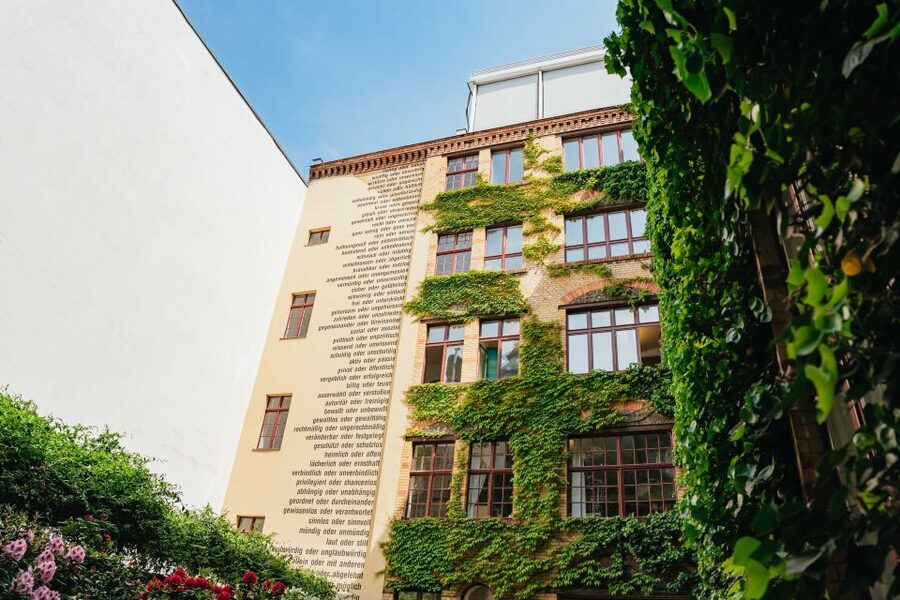
The walk then reaches Sophienkirche and Auguststraße. These stops help prevent the experience from becoming only a tour of attractive courtyards.
Sophienkirche brings another layer of Berlin’s built environment into view. The church sits within a quarter shaped by changing communities, housing needs, commerce, religion, and politics. The guide uses the surrounding streets to explain how the neighborhood developed rather than treating each building as an isolated object.
Auguststraße also helps connect the courtyards with present-day Mitte. The street is part of the area’s modern cultural identity, but the tour keeps the focus on how that identity grew from earlier uses of the neighborhood.
This section may be especially useful if you have already seen Berlin’s major sights. Instead of another broad overview of the Brandenburg Gate or Berlin Wall, you get a close look at one district and the forces that shaped it.
The historical range can be wider than you expect. One guide, Nick, was praised for taking the group through roughly 600 years of Berlin history. That does not mean every departure will follow the same script or cover every period in equal detail, but you should expect more than a quick architectural stroll.
Still Berlin, at a slower pace:
- Berlin: Reichstag, Dome and Government District Guided Tour
★ 4.7 · 18,288 reviews - Berlin: 1-Hour City Tour by Boat with Guaranteed Seating
★ 4.3 · 16,993 reviews - Berlin: Boat Tour Along the River Spree
★ 4.4 · 11,252 reviews - Berlin: Hop-on Hop-off Bus Tour with Live Commentary
★ 4.3 · 8,579 reviews
Jewish Berlin around the New Synagogue
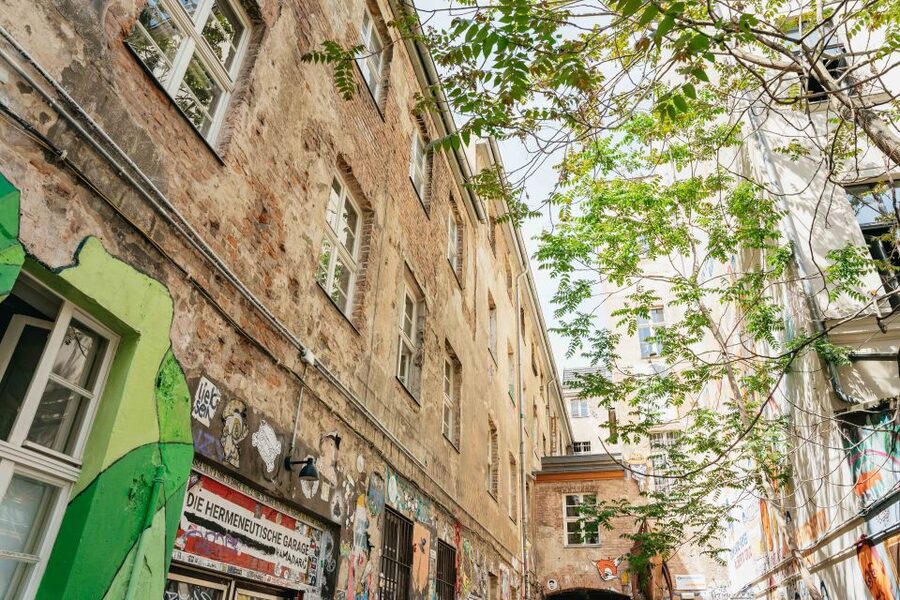
A central part of the tour is the neighborhood around the New Synagogue. The walk explains how Spandauer Vorstadt became a center of Jewish life and how that legacy fits into the area today.
This is an important part of the experience because the courtyards are not just design objects. They belong to a neighborhood with religious, cultural, and social meaning. The guide places the buildings within that larger story, including the transformations that followed.
One review specifically praised an anecdote about the first female rabbi. Details like this can make the history easier to remember because they put individual lives into the wider story of the district.
You should not expect a dedicated museum visit or a full tour of the New Synagogue interior. The listed experience is a walking tour, and the emphasis is on the quarter, its courtyards, and its development. Still, the synagogue area gives the walk a stronger historical focus than a simple architecture tour.
The subject also calls for attention and respect. This is a neighborhood shaped by Jewish tradition and by painful chapters in Berlin’s past. A good guide can make the material accessible without turning it into a list of dates. The strongest feedback points to guides who present the past in a realistic but positive way.
Heckmann Höfe: a leafy pause near the end

Heckmann Höfe is the final major courtyard on the route. It offers a different mood from Haus Schwarzenberg.
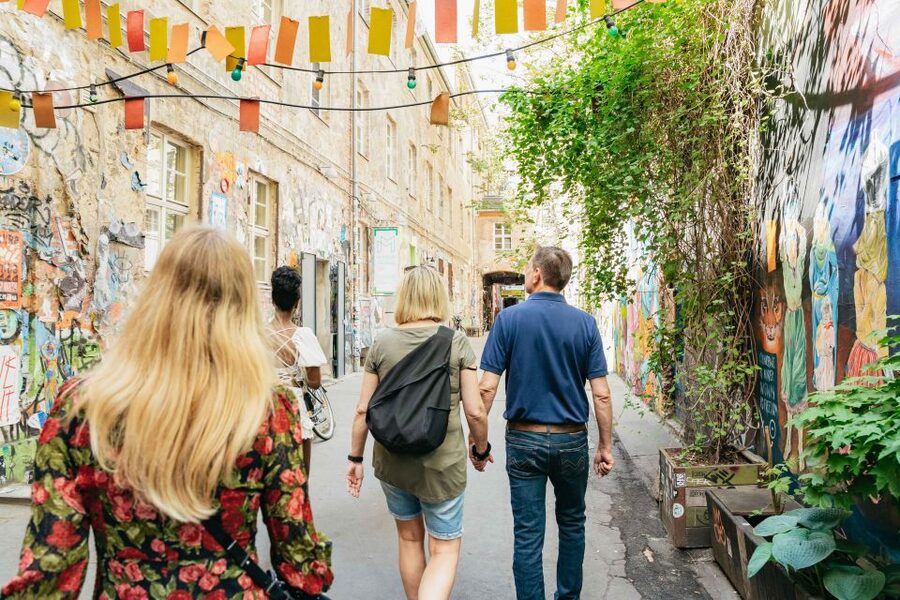
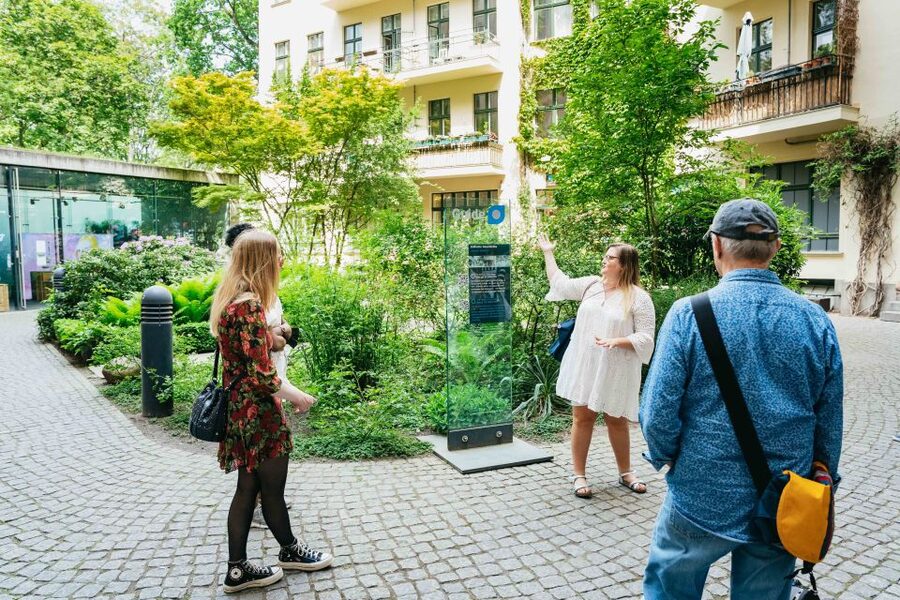
Here, the courtyard is described as colorful, shaded by trees, and bordered by buildings with ivy. It feels more like a small retreat from the busy streets. You may find it easier to pause here and take in the layout, colors, and layers of the buildings.
The courtyard dates to the 19th century and remains a popular local hangout. That current use matters. You are not looking at a preserved shell with no connection to daily life. The space still functions as part of the neighborhood.
I would save a few minutes for photographs here, but do not spend the whole tour looking through your phone. The guide’s explanation is what turns the stop into more than a pleasant courtyard.
The route’s final drop-off area is on Oranienburger Straße. That is convenient for continuing your day near the New Synagogue, cafés, restaurants, and other Mitte sights. The walk does not strand you far from central Berlin.
The guides make or break the experience
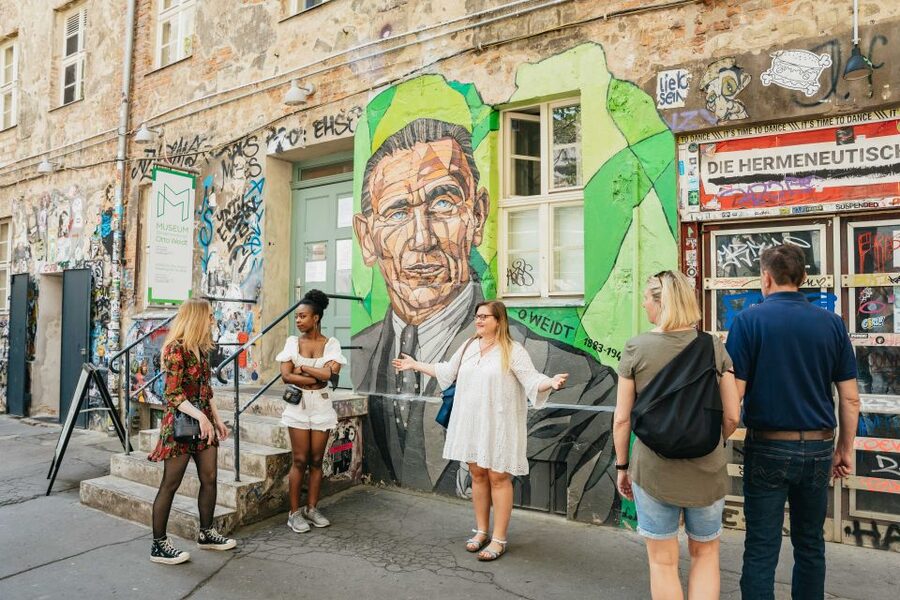
The strongest praise goes to the guides. Nick appears repeatedly in the feedback, with people praising his humor, clarity, enthusiasm, and ability to connect architecture with social change. Susanne is described as a dynamic presenter who can deliver a large amount of information without making the walk dull.
Lydia, Alex, and Minit also received warm praise for friendly and informative guiding. The descriptions point to a personal style, with guides speaking informally and checking that people understand.
That matters on this tour. Courtyards can look similar if you do not know what to notice. A good guide keeps the stops connected and explains why one space feels different from the next.
The experience may vary by departure because several guides lead it. The language issue is worth taking seriously. The activity lists English and German, but one person expected a bilingual tour and found the departure was German only. Another person with intermediate German managed to follow along, with the guide checking in from time to time.
If your German is limited, confirm the departure language before paying. If you get an English-speaking guide such as Nick, the history should be much easier to follow.
Is $23 a fair price?
At $23 per person, this is a fairly priced walking tour for two hours in central Berlin. You are paying for a guide’s local knowledge rather than for entrance tickets, food, or drinks. No refreshments are included, so plan to buy something before or after the walk.
The value is strongest if this is your first time in Mitte or if you have already seen the main landmarks and want a more local-feeling look at the city. You could walk past Hackesche Höfe and Heckmann Höfe by yourself, but you would likely miss the connections between architecture, Jewish life, urban growth, and current creative use.
The price is less compelling if you want a formal museum-style tour or an extensive visit inside historic buildings. The tour is mostly about seeing courtyards and streets from the outside while listening to explanations.
I think the cost is justified because the route gives you access to spaces that are easy to overlook and provides a clear thread through the neighborhood. The guide is the product here, not a ticketed attraction.
Who should book this Berlin walking tour?
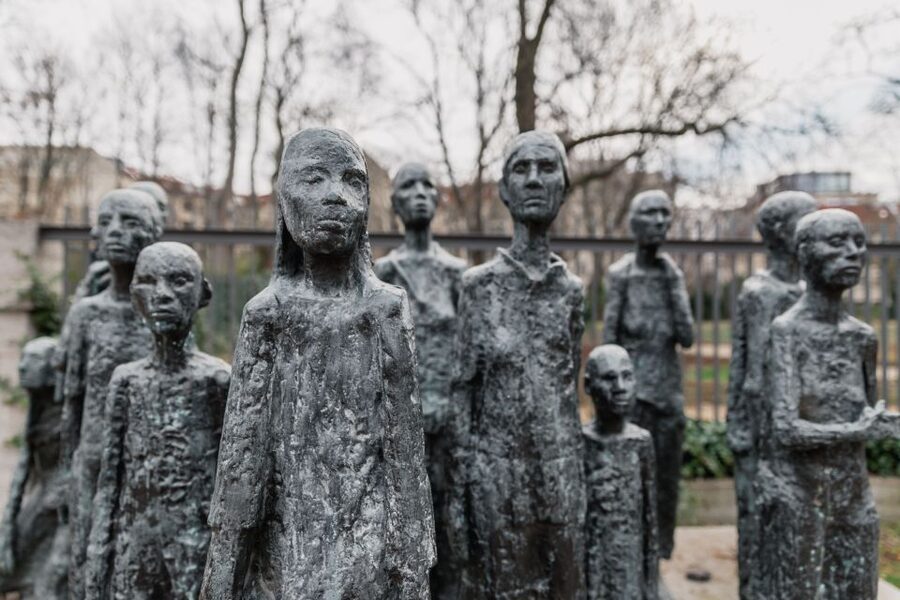
I would recommend it to you if you like architecture, local history, street art, and city neighborhoods that still show layers of change. It also suits repeat visitors who have already covered Berlin’s major sights.
The walk is a good choice for couples, solo visitors, and families with older children who can manage two hours of walking and standing. Its wheelchair accessibility is a useful advantage, though you may still want to confirm the conditions for your particular departure if you need specific assistance.
You should be ready for a tour that is more historical than its title might suggest. The courtyards provide the visual interest, but the explanations about Spandauer Vorstadt and Jewish Berlin give the experience its weight.
I would be cautious if you dislike guided commentary, want a quiet independent stroll, or need guaranteed English without checking the departure details. The tour takes place in all weather, so a wet day may reduce the comfort even if it does not ruin the route.
Free cancellation up to 24 hours before the start and the option to reserve now and pay later make it easier to fit into a changeable Berlin schedule. Check available starting times when you book.
My verdict on the hidden courtyards tour
I see this as a strong, reasonably priced introduction to one of Berlin’s most layered central neighborhoods. The route includes well-known courtyards, less obvious passageways, street art, a historic church, the New Synagogue area, and a clear explanation of how the district changed.
Its biggest strength is the guiding. Names such as Nick and Susanne appear often in praise for good reason: the best departures turn old walls and courtyards into a connected story about people, work, faith, art, and urban change.
Book it if you want Berlin beyond the postcard sights and are willing to listen closely. Just confirm the tour language, wear shoes suited to walking, and bring weather protection. For $23, this is one of the better ways to see the back side of Mitte without wandering past its best details.
FAQ
Where does the Berlin Hidden Backyards tour begin?
Meet your guide in front of the BUTLERS shop at Hackescher Markt 4 in Berlin.
How long does the walking tour last?
The tour lasts two hours.
What languages are available?
The activity is offered with live guides in English and German. Some departures may be conducted only in German, so check the language for your chosen time.
Is the tour wheelchair accessible?
Yes, the activity is listed as wheelchair accessible.
Does the tour run in bad weather?
Yes. The tour takes place rain or shine.
What places are included on the route?
The route includes Haus Schwarzenberg, Hackesche Höfe, Rosenhöfe, Sophienkirche, Auguststraße, and Heckmann Höfe.
Where does the tour finish?
The walk has drop-off locations on Oranienburger Straße.
Are food and drinks included?
No. Food and drinks are not included in the tour price.
Can I cancel the booking?
Yes. You can cancel up to 24 hours in advance for a full refund. You can also reserve now and pay later.
Just added around Berlin
- Private Walking Tour in Berlin: Hitler’s Germany & WWII★ 5.0 · 7 reviews
- The History of Berlin: WWII PRIVATE Walking Tour With Locals★ 5.0 · 209 reviews
- Private Berlin WWII and Cold War History Tour with Local Expert Guide★ 5.0 · 28 reviews
- Private Walking Tour Berlin 3 hours: Brandenburg, Historic Center★ 5.0 · 7 reviews
- Berlin: Private Bike Tour of the Berlin Wall and Third Reich★ 5.0 · 23 reviews
- Berlin: Guided Private Bike Tour to Explore the Highlights★ 5.0 · 12 reviews
- Berlin Photography Masterclass – Private Photography Lesson★ 4.5 · 23 reviews
- Group Driving Tour 1 to 6 people. Berlin Shore Excursion incl pick-up at Port★ 5.0 · 8 reviews
Walking Tours, compared.
Old Town & Viktualienmarkt City Walk in German
Read our review →
Browse the lists this tour appears in