
Reviewed · HISTORICAL TOURS
Hamburg: UNESCO-World Heritage Sites Tour
Hamburg’s brick story starts here. This compact walking tour links the city’s grand Kontorhäuser with the canal-lined Speicherstadt, showing how trade, office work, and port life shaped Hamburg. I like the clear route from the Chilehaus to Magdeburg Harbour, and I like the practical touches, including old rope winches, carpet storage, spice samples, and port images. The main consideration is language: the live tour is in German, and the walk runs in all weather.
At $18, this is an easy-value way to put Hamburg’s UNESCO quarter into context before exploring it on your own. The pace is manageable, and guide Albert has been praised for his clear voice, strong command of the subject, and ability to keep even Hamburg regulars interested.
In This Review
- Key points to know before you book
- Why this two-hour Hamburg walk is worth your time
- Starting at Jacobikirche and entering Hamburg’s business district
- Sprinkenhof shows the scale of old Hamburg commerce
- Chilehaus delivers the tour’s strongest architectural moment
- Meßberg links office work with stored goods
- Speicherstadt turns brick, canals, and warehouses into a story
- Dar es Salaam Square adds a wider port connection
- Magdeburg Harbour provides a fitting finish
- The Saturday ferry option needs careful planning
- The guide makes the difference
- Pace, weather, and what to bring
- Who will get the most from this tour
- Is $18 a fair price?
- Should you book the Hamburg UNESCO World Heritage Sites Tour?
- FAQ
- Where does the tour start?
- Where does the tour finish?
- How long does the walking tour last?
- What language is the tour conducted in?
- Is the ferry ride included on every tour?
- What main areas does the tour visit?
- Does the tour include the International Maritime Museum?
- What does the tour explain about Speicherstadt?
- Does the tour run in bad weather?
- How much does the tour cost?
Key points to know before you book
- The Chilehaus is the architectural star: Its sharp, ship-like form gives the tour an immediate visual high point.
- Speicherstadt is explained through working details: Old rope equipment, carpet storage, canals, and brick warehouses make the district feel like a former workplace, not just a photo stop.
- The route connects two different Hamburgs: The Kontorhäuser represent office commerce, while Speicherstadt shows the storage and shipping side of the port economy.
- The tour ends near Magdeburg Harbour: You finish close to the International Maritime Museum, Überseequartier, and views toward the Elbe.
- A ferry ride is offered only on Saturdays: Treat this as a Saturday extra, not a feature guaranteed on every departure.
- German is the only stated tour language: You should be comfortable following a live explanation in German.
Why this two-hour Hamburg walk is worth your time
Hamburg can feel spread out when you first arrive. The port, Speicherstadt, modern HafenCity, shopping streets, and old churches each pull you in a different direction. This tour helps by joining two nearby historic districts into one short story.
I like the basic idea because it does not treat Hamburg as a collection of pretty facades. The guide explains how the Kontorhäuser worked, who used them, and what they say about the city’s economic growth. Then the route moves into Speicherstadt, where goods were stored, handled, and prepared for trade.
That change matters. You see the polished office world of the city’s merchants, then the warehouses and canals that supported their business. In two hours, you get a useful framework for understanding why Hamburg became an important trading center.
The tour costs $18 per person. That is modest for a guided city walk, especially when the route includes several major sights and a guide rather than just an audio recording. You are paying mainly for explanation and orientation. If you only want photographs, you can visit these districts for free. If you want to know why the buildings look the way they do, the fee makes more sense.
More History Tours in Hamburg
- The Local Tour of Hamburg Historic Centre
★ 5.0 · 1,058 reviews - Hamburg: Historical Tour of the St. Pauli Sex Work District
★ 4.4 · 215 reviews - Sightseeing Tour – Free Tour – Historic Center-Hamburg On Foot
★ 5.0 · 112 reviews
Starting at Jacobikirche and entering Hamburg’s business district
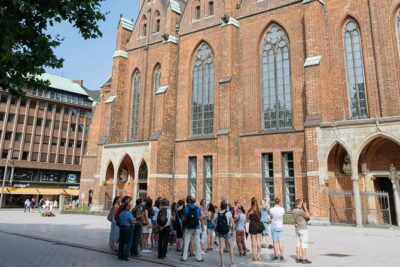
The meeting point is Jacobikirche, at the corner of Bugenhagenstraße and Barkhof. The walk begins at Jakobikirchhof, giving you a clear central starting point before the group moves toward the office buildings.
This first section introduces Hamburg as a Hanseatic city. The Hanseatic League was a trading network of northern European towns, and Hamburg’s identity grew through that commercial connection. The tour uses this background to explain the city’s later rise, rather than treating the Kontorhäuser as isolated architectural curiosities.
You should arrive ready to walk on city streets and pause outdoors. The tour is not built around long indoor visits, and the route takes place in all weather. Comfortable shoes and a waterproof layer are sensible choices, even if the forecast looks friendly.
Sprinkenhof shows the scale of old Hamburg commerce
Sprinkenhof is one of the major Kontorhäuser on the route. These large office buildings were designed for business, with clerks, offices, counting tables, and companies working within a tightly organized commercial system.
This is where a guide can add much more than a caption on a building. You hear about the people who kept trade moving, the clerical work behind international commerce, and the money counting that supported Hamburg’s port economy. The buildings become less about decoration and more about daily work.
I like this stop for the sense of scale. A single office facade can look grand but distant when you pass it alone. Once you hear how the buildings functioned, the size becomes easier to understand. The Kontorhaus was not simply a prestigious address. It was a working machine for trade.
The drawback is that architectural detail may matter more to you than the social history. If you prefer museums or interiors, a street-based explanation can feel brief. For anyone interested in cities, business, and the connection between design and commerce, Sprinkenhof gives the walk a solid start.
Chilehaus delivers the tour’s strongest architectural moment
Chilehaus is the best-known building on the route, and it deserves its reputation. Its dramatic shape is often compared to the pointed front of a ship, fitting for a city whose fortunes were tied to maritime trade.
The building also shows why Hamburg’s Kontorhäuser are more than a row of old offices. The form is bold, the brickwork is carefully handled, and the structure carries a sense of movement even though it is firmly part of the city block. Your guide explains how this kind of architecture expressed commercial confidence and Hamburg’s international reach.
I would give this stop time for photographs, but I would not judge the tour only by the Chilehaus. The value comes from hearing how it fits into the wider group of office buildings and how the buildings reflect the city’s development.
Guide Albert has been praised for giving detailed information without making the walk feel heavy. That balance is especially useful here. Chilehaus invites a quick photo, but a good explanation encourages you to look longer at the brick surfaces, angles, and relationship between the building and the surrounding streets.
Still Hamburg, at a slower pace:
- Hamburg: Sex and Crime in St. Pauli Tour for Ages 18+
★ 4.7 · 15,447 reviews - Hamburg: 1.5-Hour Harbor and Speicherstadt Day Cruise
★ 4.6 · 14,200 reviews - Hamburg: 90-Minute Evening Lights Harbor Cruise
★ 4.5 · 7,728 reviews - Hamburg: 2-Hour XXL Port of Hamburg Cruise Tour
★ 4.7 · 6,979 reviews
Meßberg links office work with stored goods
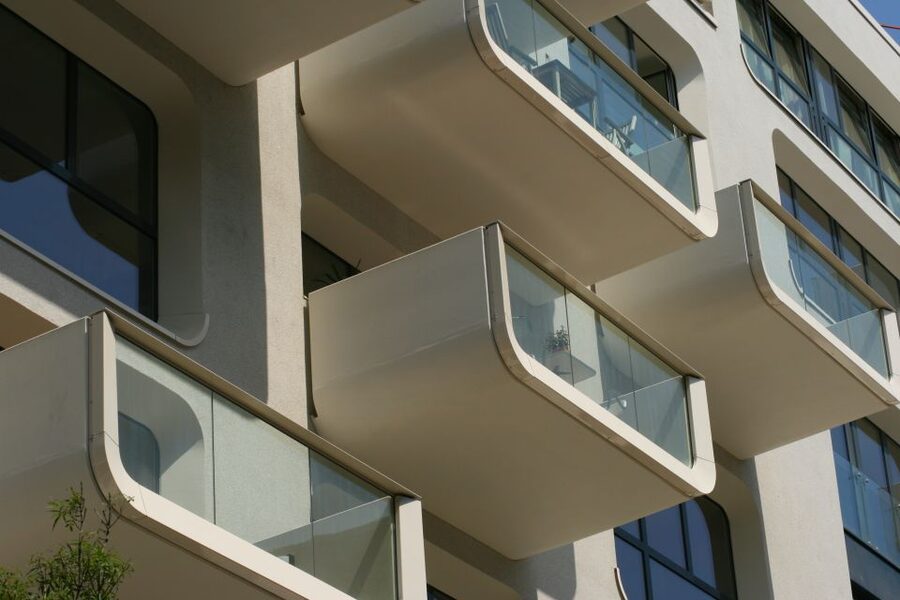
At Meßberg, the tour continues the story of Hamburg’s working center. This stop helps connect the commercial offices with the goods passing through the port and the storage district nearby.
The route is useful because you are not asked to memorize a list of dates and names. Instead, you can follow a physical chain: merchants and clerks worked in the Kontorhäuser, cargo moved through Hamburg, and warehouses held goods before their next stage. That connection gives the city center a practical logic.
Pictures and samples of spices add a sensory touch to the explanation of port activity. This is a small detail, but it helps. Trade is easier to imagine when it involves recognizable cargo rather than only numbers and shipping terms.
The tour’s emphasis remains on history, architecture, and urban development. You should not expect a full food tasting or an extended museum visit. The spice samples support the story; they are not the main event.
Speicherstadt turns brick, canals, and warehouses into a story
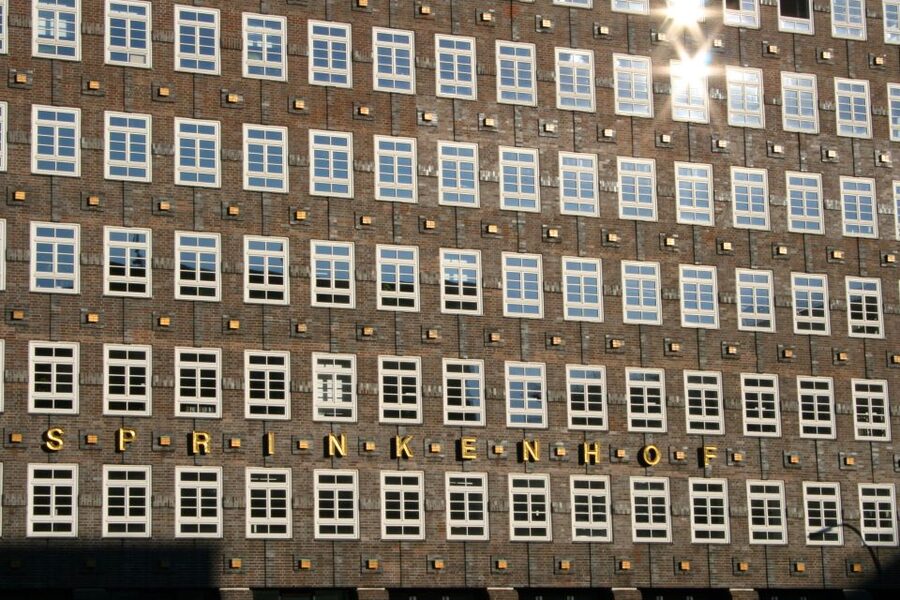
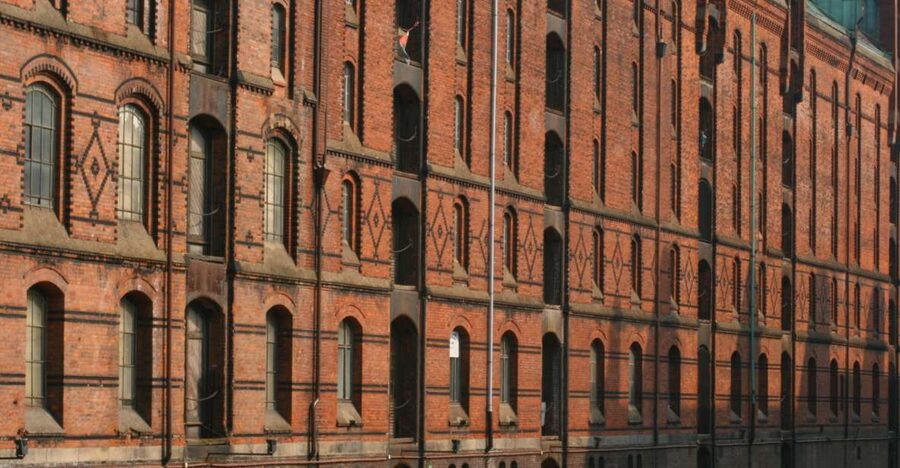
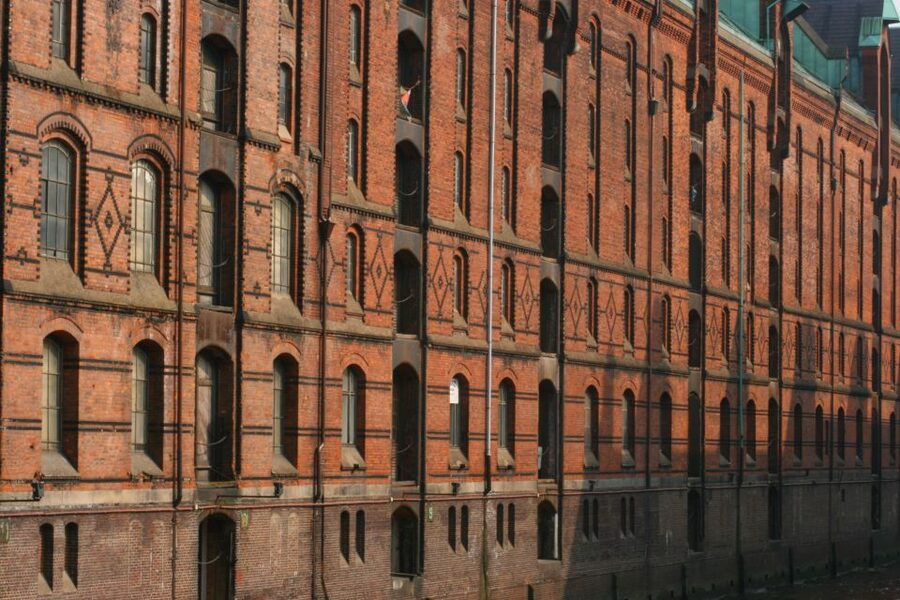
The move into Speicherstadt changes the mood. The district is known for its tall red-brick storehouses, waterways, bridges, and long warehouse facades. It is also the part of the walk most likely to fill your camera.
The guide points out the practical side of the district, including old rope winches and carpet storage. These details matter because they show how workers handled goods inside the warehouses. You are not just looking at brick walls beside canals. You are seeing traces of loading, lifting, storing, and moving cargo.
I especially like the contrast between the old brick facades and newer architecture around them. Hamburg’s historic center is not frozen in one period. Old storehouses sit near new dock promenades, modern buildings, and changing waterfront spaces. The tour explains that contrast as part of Hamburg’s continuing development.
Speicherstadt is also where the weather matters most. The route is outdoors, and the canals can make a damp day feel colder. Bring a coat or rain protection as needed. The walk takes place in all conditions, so you should not count on a weather cancellation.
Dar es Salaam Square adds a wider port connection
Dar es Salaam Square brings the port story into a broader international frame. The name points toward Hamburg’s overseas connections and gives the tour a chance to discuss the city beyond its central streets.
This section is useful if you want more than old buildings. Hamburg’s trade was tied to places far beyond northern Germany, and the port operated through those international links. The tour uses images and examples to help explain how goods and people connected the city with the wider world.
You may find this stop less visually striking than Chilehaus or the Speicherstadt canals. Its value is mainly explanatory. It widens the story and reminds you that Hamburg’s economic growth depended on long-distance exchange, not just local business.
Magdeburg Harbour provides a fitting finish
The tour ends at Magdeburg Harbour, near important buildings such as the International Maritime Museum and the Überseequartier. This is a useful ending because it brings the older port story into contact with Hamburg’s newer waterfront development.
You also get views toward the River Elbe and the dock promenades. After seeing warehouses and office buildings, the water helps you picture the larger system behind them. The finish feels practical too. You are left in an area where you can continue exploring rather than being returned to the starting point.
The International Maritime Museum is not included as a guided interior visit, so plan separately if you want to go inside. The same applies to other attractions in the area. This tour gives you orientation and outside context, not admission to a collection.
The walk’s endpoint may require a little planning if you need to return to your hotel or meet a timed reservation elsewhere. Still, finishing in Magdeburg Harbour is an advantage for a day focused on Hamburg’s port districts.
The Saturday ferry option needs careful planning
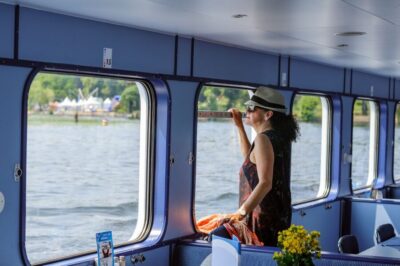
A short ferry trip is available on Saturdays only. That is worth noting because it can add a different view of the waterfront and give you a brief taste of Hamburg’s port transportation.
Do not assume the ferry is part of every departure. If this element matters to you, check the available date and starting time before booking. On another day, the tour remains a walking experience centered on the Kontorhäuser, Speicherstadt, and harbour area.
The ferry should be seen as a bonus rather than the reason to choose the tour. The main route already covers the key material, and the stated duration remains two hours. Saturday departures may be the best fit if you want the added water segment, but the German-language guiding and walking route are the core experience.
The guide makes the difference
A city walk like this rises or falls with the guide. The material is strong, but the buildings are easier to appreciate when someone explains how clerks, merchants, warehouses, and port workers fit together.
The best feedback focuses on clear delivery, useful depth, and a comfortable pace. Albert is specifically praised for speaking clearly enough to hear, covering a lot of information, and keeping the two-hour walk manageable. That combination is important on a route with many buildings and historical terms.
The tour can also work for people who already know Hamburg. One particularly useful point is that the explanations have offered new historical details even to people familiar with the city. That suggests the walk is not limited to first-time visitors, though beginners will likely gain the most from the overall structure.
The stated guide language is German. This is not a small detail. If you do not understand German well, you may miss the main value of the tour, since the information is delivered live rather than through a multilingual audio system.
Pace, weather, and what to bring
The duration is two hours, which is long enough to build a story but short enough to fit into a busy Hamburg day. The pace has been described as manageable, with time to listen and look around rather than race between stops.
You should wear comfortable shoes and dress for changing weather. The tour runs in rain or shine. Since the route includes outdoor streets, canals, squares, and harbour areas, a waterproof jacket is more useful than an umbrella in crowded city spaces.
There is no stated group size, so you should not book expecting an intimate private walk. The experience is a guided sightseeing tour, and the practical benefit comes from joining the route and hearing the explanations as you go.
The route also includes architectural and port vocabulary that may be new to you. That is part of the appeal, but it helps to pay attention to the connections rather than trying to remember every building name.
Who will get the most from this tour
I would recommend this walk to you if you want:
- A short introduction to Hamburg’s UNESCO-listed Speicherstadt and Kontorhaus districts
- Context for the Chilehaus beyond a quick photograph
- Architecture explained alongside trade and working life
- A guided route through historic warehouses, canals, and harbour spaces
- A low-cost activity that can fit before or after other sightseeing
- German-language instruction from a live guide
It is also a good choice for people who have visited Hamburg before but have not connected the city’s office buildings with its port infrastructure. The explanation gives familiar streets a new purpose.
I would be more cautious if you want extensive indoor access, a museum tour, or instruction in English. Those features are not included in the information provided. The tour is also not ideal if you dislike walking outdoors in poor weather.
Is $18 a fair price?
Yes, for the right kind of sightseeing. At $18, you are paying less for admission and more for interpretation. The buildings and streets themselves are public, but a guide can show you why Sprinkenhof, Chilehaus, Meßberg, and Speicherstadt belong in one story.
The value is strongest when you are new to Hamburg or want a better sense of direction in the port quarter. You can take the tour early in your stay, then return to the places that interest you most. It can also work well late in a day when you want a focused activity rather than another large museum.
Free cancellation up to 24 hours before the tour and the option to reserve now and pay later make the booking less rigid. Keep in mind that these flexible booking terms do not change the central issue: you need to be ready for a German-language walk outdoors.
Should you book the Hamburg UNESCO World Heritage Sites Tour?
Book it if you want a well-priced, two-hour introduction to Hamburg’s commercial and port architecture, and you can follow German comfortably. The combination of Chilehaus, Kontorhäuser, Speicherstadt, working details, and harbour views gives you more substance than a simple photo walk.
Choose a Saturday if the short ferry trip matters to you, but confirm that option before setting your plans around it. Skip this tour if you need English guiding, indoor museum time, or a weather-proof activity.
For most German-speaking visitors who want clear history, strong architecture, and an easy route through central Hamburg, this is a sensible choice. It gives you the basic map of the city’s trading past without taking over your entire day.
FAQ
Where does the tour start?
It starts at Jacobikirche, at the corner of Bugenhagenstraße and Barkhof, in Jakobikirchhof.
Where does the tour finish?
The tour finishes at Magdeburg Harbour.
How long does the walking tour last?
The tour lasts two hours.
What language is the tour conducted in?
The live tour guide speaks German.
Is the ferry ride included on every tour?
No. The short ferry trip is available only on Saturdays.
What main areas does the tour visit?
The route covers the Kontorhäuser area, Sprinkenhof, Chilehaus, Meßberg, Speicherstadt, Dar es Salaam Square, and Magdeburg Harbour.
Does the tour include the International Maritime Museum?
The route shows important buildings such as the International Maritime Museum, but entry to the museum is not listed as included.
What does the tour explain about Speicherstadt?
You learn about the historic red-brick warehouses, canals, old rope winches, carpet storage, and the district’s role in Hamburg’s port activity.
Does the tour run in bad weather?
Yes. The tour operates in all weather conditions, so you should dress appropriately.
How much does the tour cost?
The listed price is $18 per person. Free cancellation is available up to 24 hours before the tour, and you can reserve now and pay later.
Just added around Hamburg
- Hamburg: St. Pauli Food and Bier Tour★ 4.7 · 5 reviews
- St. Pauli Tour: Drag-Attack with Barbie Stupid & Lee Jackson★ 4.8 · 280 reviews
- Hamburg: Private Tour Red Light District Walking Tour★ 4.7 · 227 reviews
- St. Michael’s, Elbe Tunnel & Harbor 2-Hour Hamburg Tour★ 4.9 · 21 reviews
- Satt Pauli – der kulinarische Rundgang durch St. Pauli★ 4.8 · 12 reviews
- Hamburg: Safari tour in St. Pauli★ 4.9 · 11 reviews
- Hamburg: Reeperbahn Comedy Club★ 4.3 · 53 reviews
- Radtour um die Alster & durch traumhafte Alsterviertel★ 4.9 · 34 reviews
Historical Tours, compared.
City History Canal Sightseeing Tour on a Motorboat
Read our review →
Browse the lists this tour appears in