
Reviewed · MUSEUMS
Berlin: Natural History Museum Entrance Ticket
Dinosaurs make a big first impression. Berlin’s Museum für Naturkunde brings prehistoric giants, rare fossils, minerals, taxidermy, and modern science together under one roof. I like the Dinosaur Hall for its towering Giraffatitan brancai skeleton, and I like the chance to see the rare Archaeopteryx and Tristan Otto, an original Tyrannosaurus rex skeleton.
At about $12 per person, this is a good-value indoor stop, especially for families and anyone who enjoys natural history. The main drawback is that the museum can feel smaller and less interactive than some famous natural history museums, and the route is not always easy to follow.
In This Review
- Key things to know before you go
- Entering the Museum at Invalidenstraße 43
- The Dinosaur Hall and Berlin’s tallest mounted dinosaur
- Tristan Otto, the T. rex that changes the mood
- The Archaeopteryx, a small fossil with a huge story
- The East Wing and the wet collection
- The Biodiversity Wall and the question of loss
- Minerals, earth science, and the museum’s wider collection
- How long should you allow?
- Using the audio content without a physical guide
- Crowds, children, and the feel of the visit
- Is the $12 admission good value?
- Who should book this museum ticket?
- Final verdict: a strong Berlin stop for science and dinosaurs
- FAQ
- Where is the Museum für Naturkunde Berlin?
- How much does admission cost?
- How long does a visit take?
- Is Tristan Otto a real T. rex skeleton?
- What is the tallest mounted dinosaur skeleton at the museum?
- Can I see the Archaeopteryx?
- Is an audio guide included?
- What languages are available for the audio content?
- Is the museum wheelchair accessible?
Key things to know before you go
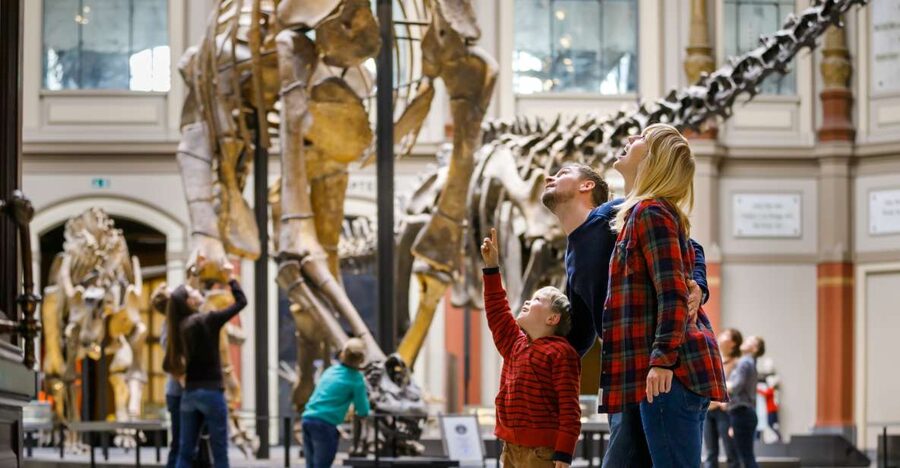
- Giraffatitan brancai reaches above the Dinosaur Hall: The world’s tallest mounted dinosaur skeleton greets you in dramatic fashion.
- Tristan Otto is a real T. rex skeleton: This is one of the museum’s biggest draws, with a presence that makes the dinosaur displays feel unusually immediate.
- The Archaeopteryx is the quiet star: This exceptionally important fossil is displayed in a protective case and rewards a slower look.
- The wet collection contains about one million animals: These specimens are stored in 80 tonnes of alcohol, offering a rare view of scientific research behind the public displays.
- The Biodiversity Wall shows 3,000 species at once: It turns a large scientific idea into one memorable visual display.
- Bring headphones and your phone: The free audio content is accessed through a website, not a traditional physical audio guide.
Entering the Museum at Invalidenstraße 43
The museum is at Invalidenstraße 43 in Berlin, with entry through the main entrance. Your mobile ticket is scanned at the door, and a reserved ticket can help you avoid the regular ticket line.
That detail matters during busy periods. The museum has reached full capacity at times, and some people have had to wait before entering even with a ticket. I would book ahead for weekends, school holidays, and rainy afternoons when an indoor attraction is especially tempting.
The ticket includes the cloakroom, which is useful if you have coats or bags. Bring your passport or another accepted ID, particularly if you are using a reduced ticket. Proof of age or status may be requested at the entrance.
The museum is wheelchair accessible. You can reserve now and pay later, and cancellation is allowed up to 24 hours before the visit for a full refund. Those policies are helpful if your Berlin schedule is still taking shape, but the main practical move is simpler: reserve a time and keep your ticket easy to open on your phone.
More History Tours in Berlin
- Berlin: World Heritage Cruise to Potsdam
★ 4.5 · 1,435 reviews - Berlin Historical Highlights Walking Tour
★ 4.9 · 657 reviews - Berlin Private Complete History All Day Walking Tour
★ 5.0 · 474 reviews
The Dinosaur Hall and Berlin’s tallest mounted dinosaur
The Dinosaur Hall is the museum’s strongest opening act. It presents life as it might have appeared in the Upper Jurassic period, around 150 million years ago, with enormous skeletons arranged across the hall.
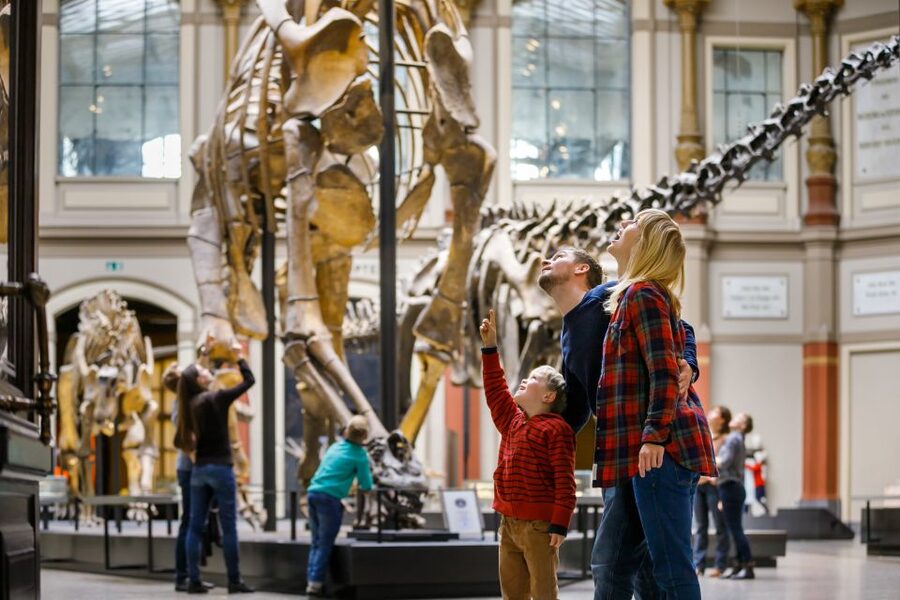
The centerpiece is Giraffatitan brancai, described as the tallest mounted dinosaur skeleton in the world. Its long neck and high frame give the room a real sense of scale. You do not need a strong interest in paleontology to appreciate it. The visual message is immediate: some animals that once walked the earth were simply enormous.
This is also the section most likely to satisfy children quickly. The large skeletons are easy to understand, and the displays create plenty of reasons to stop, point, and compare sizes. Some older reviews praise interactive elements in the dinosaur area, but recent feedback suggests that the museum has fewer hands-on features than some families expect.
That distinction is worth keeping in mind. This is mainly a look-and-learn museum, not a large activity center. If your children enjoy bones, fossils, and giant animals, they should have plenty to see. If they need constant buttons, games, or play areas, you may finish the main displays sooner than expected.
The dinosaurs are not simply decorative objects. The museum explains that its scientists continue to study the fossils, asking new questions about how these animals lived and changed. That gives the displays more weight than a simple lineup of impressive bones.
Tristan Otto, the T. rex that changes the mood
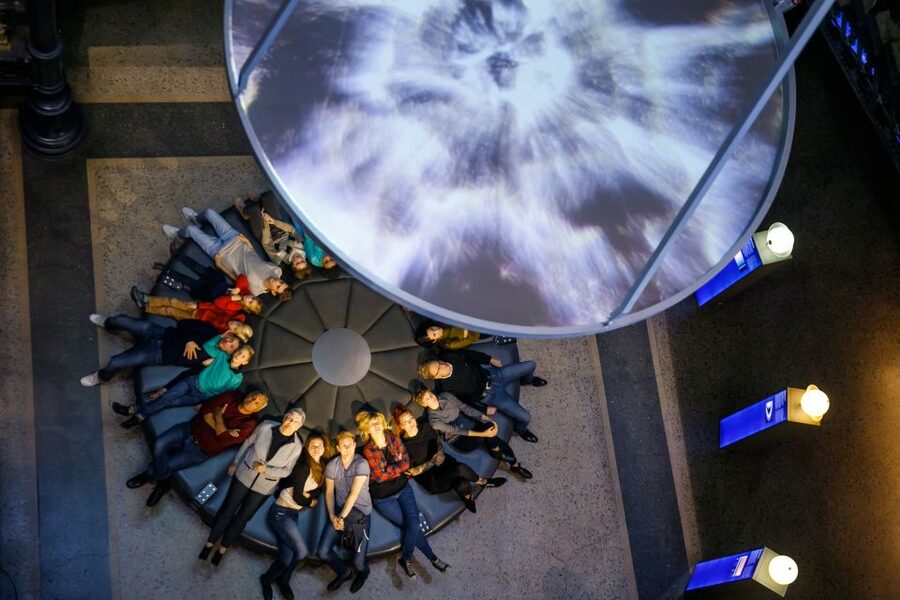
Tristan Otto is the exhibit many people come to see. The original Tyrannosaurus rex skeleton has the drama you expect from a T. rex, but the fact that it is an actual fossil skeleton makes the encounter more serious than a movie-style reconstruction.
The skeleton is displayed with strong lighting, which helps it command attention. You can look at the skull, teeth, limbs, and overall proportions while remembering that this was once a living animal rather than a model built for an exhibition.
For children, Tristan Otto is the easy headline. For adults, it can be the point where the museum shifts from family outing to serious scientific collection. I would give yourself a few minutes here instead of walking past after taking a quick photo.
The museum’s dinosaur presentation has a good balance of spectacle and explanation. You get the big shapes first, then the chance to consider what each fossil can reveal. Some displays may feel less modern than the main T. rex presentation, but the objects themselves carry the visit.
The Archaeopteryx, a small fossil with a huge story
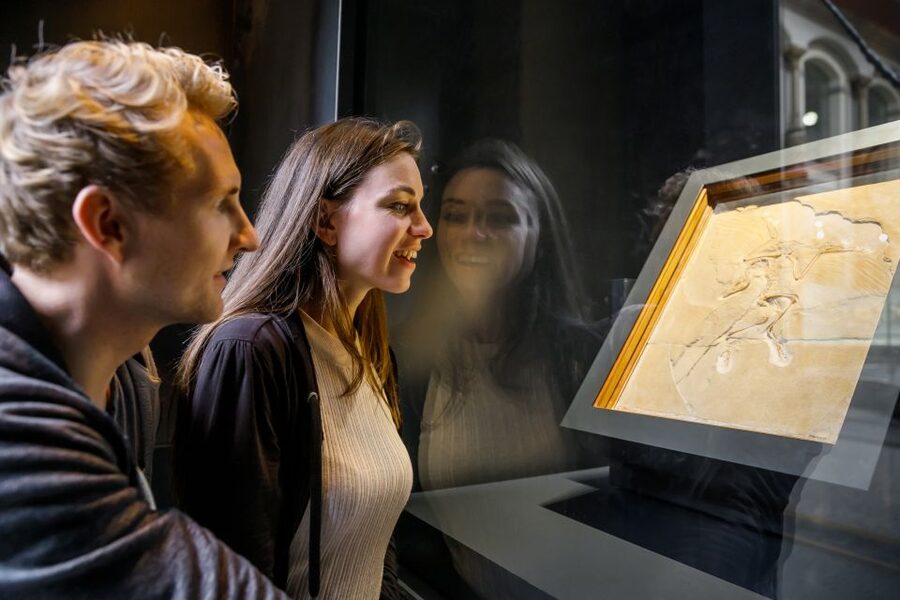
The Archaeopteryx lithographica is displayed in a secure case at the back of the Dinosaur Hall. It is often called the Mona Lisa of natural history, and the comparison makes sense in one important way: the object is small and delicate, but its importance is enormous.
After the tall skeletons, the Archaeopteryx requires a change of pace. You will not get the same instant shock as with Giraffatitan or Tristan Otto. Instead, you are looking at a rare fossil that helps scientists think about the connection between dinosaurs and birds.
I like this part of the museum because it rewards attention. The biggest exhibits are easy to spot, but the Archaeopteryx asks you to slow down and look closely. If you are keen on fossils, this may be the object you remember most clearly.
The museum shop has souvenirs connected with the natural history collection, including small items and a pin related to the Archaeopteryx. The selection may feel limited if you want a substantial keepsake. There are also more expensive fossil-related objects, including a Megalodon tooth, so prices can vary sharply from the modest admission fee.
More Museums in Berlin
- Skip-the-Line: Berlin Wall Museum at Checkpoint Charlie
★ 4.1 · 2,041 reviews - Berlin: Museum Island Multiple Museum Entry Ticket
★ 4.4 · 2,007 reviews - Berlin: Interactive DeJa Vu Museum Entrance Ticket
★ 4.1 · 1,338 reviews - Berlin: “Pergamonmuseum. The Panorama” Exhibition Tickets
★ 4.6 · 1,245 reviews
The East Wing and the wet collection
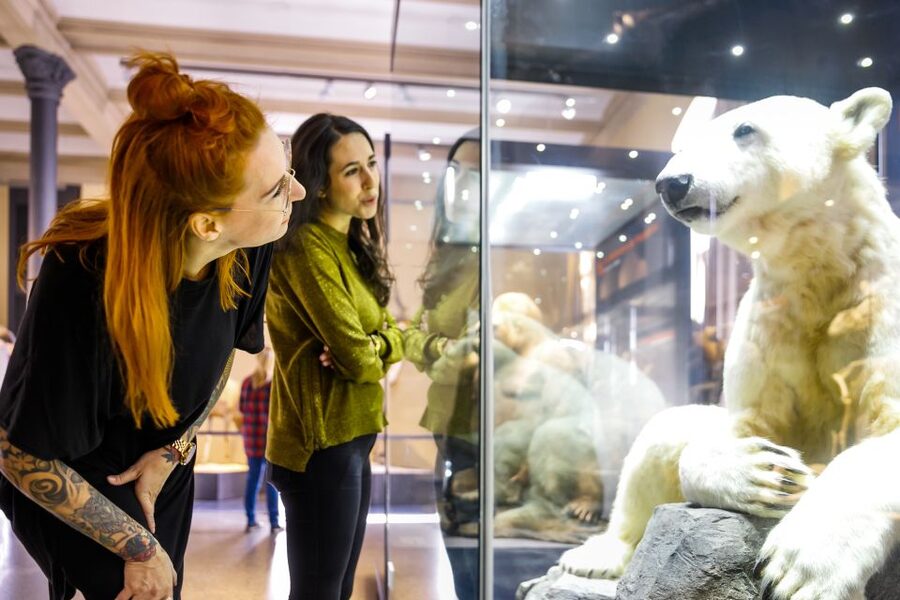
The East Wing shows a different side of the museum. Instead of focusing only on extinct creatures and dramatic fossils, it gives you a sense of how a scientific research collection is organized.
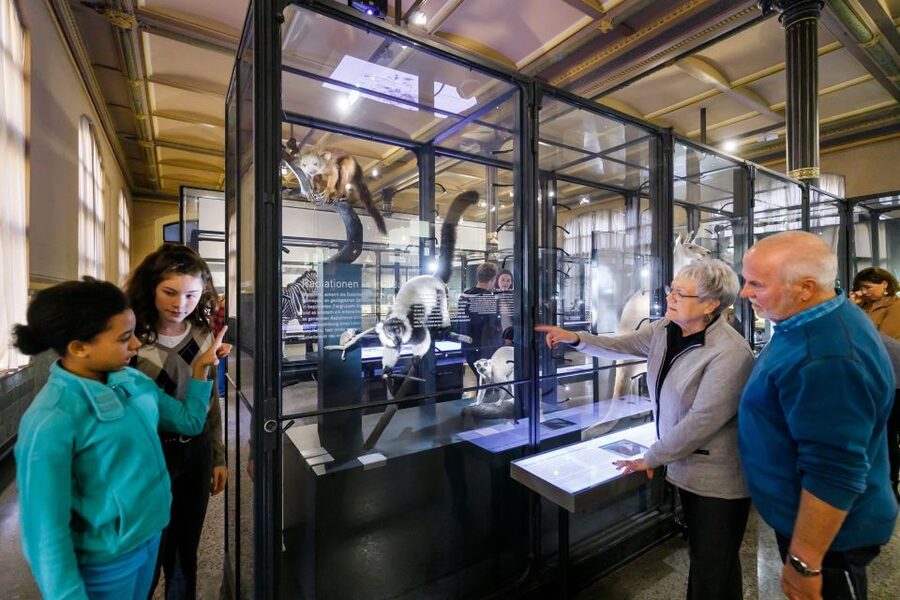
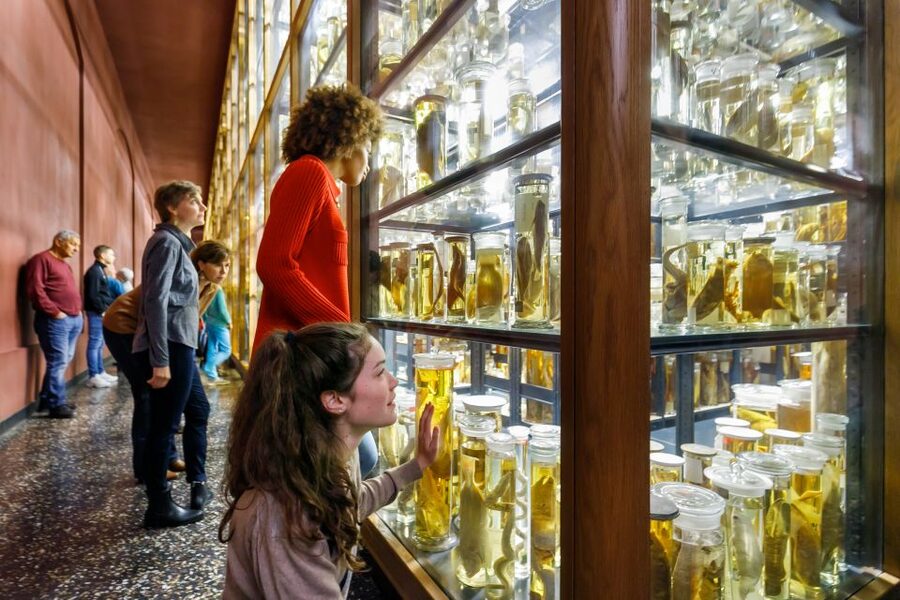
About one million animals are preserved in alcohol, using roughly 80 tonnes of alcohol in total. The scale is hard to picture until you see the specimens arranged together. This is not merely a room of curiosities. It reflects the working material used by scientists studying life on earth.
Some people may find preserved animals unsettling. That reaction is fair, and the displays are not designed to feel like a cheerful animal gallery. For others, the collection offers a valuable look at the careful, less glamorous work behind biological research.
The museum’s researchers draw on more than 30 million collection items, while around 200 scientists work on questions related to life, the earth, and future challenges. You do not need to understand every research project to appreciate the point. Public museums often show the polished result of science. Here, you also get a glimpse of the material that makes the research possible.
The Biodiversity Wall and the question of loss
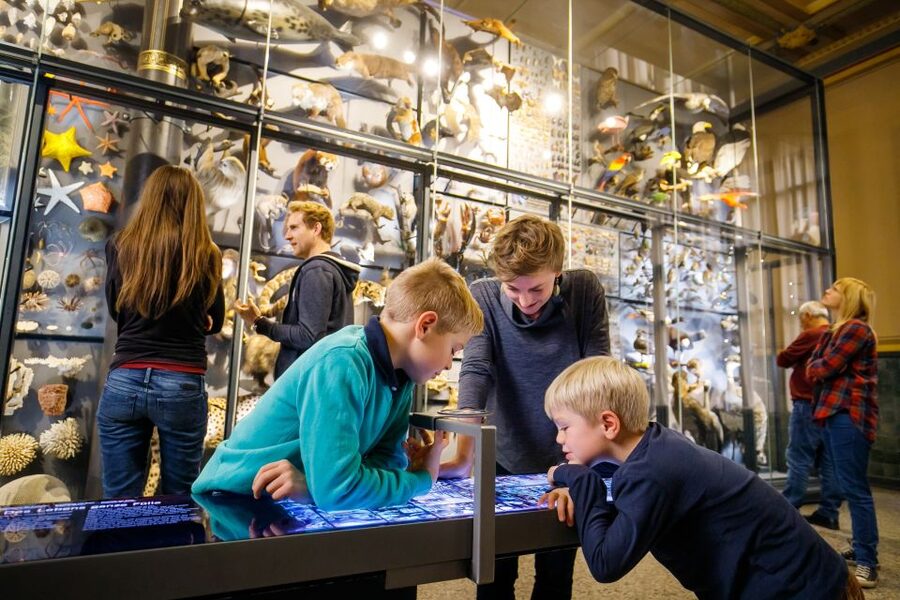
The Biodiversity Wall displays more than 3,000 species in a single installation. It is one of the museum’s most effective ways to turn an abstract subject into something visible.
At first, the wall works as a visual inventory of life. Then the larger message becomes clear. Seeing so many species together also raises questions about biodiversity loss and what disappears when habitats and ecosystems change.
This section gives the museum a useful modern focus. The dinosaur halls look backward by millions of years, while the Biodiversity Wall asks you to think about the present and future. The two ideas belong together: extinction is not only an ancient story.
If you have children with you, this is a good place to ask them to find differences in shape, color, size, and body structure. The display can be viewed quickly, but it becomes more meaningful when you stop to consider how much variety is represented.
Minerals, earth science, and the museum’s wider collection
The museum offers more than dinosaurs and animals. Mineral displays and earth science material add variety, and several people have particularly enjoyed the minerals and the Earth section.
This helps prevent the visit from becoming a single-theme dinosaur stop. You can move from fossils to minerals, from biological specimens to the solar system, and from extinct animals to current scientific research.
The subjects are often arranged by room or theme, which makes individual areas easy to understand. The larger challenge is orientation. Maps are available, but the route can still feel unclear, especially if you are trying to see everything in one short visit.
Some displays may seem dated beside newer installations. That is not necessarily a problem if you enjoy old-school museum presentation, but it does mean the museum does not have the polished, highly interactive feel of every major science center. I would judge it by the quality and rarity of the objects rather than by the number of digital effects.
How long should you allow?
The stated visit time is 30 minutes to one hour, but your pace matters. A quick visit focused on the dinosaur skeletons can fit within that range. One recent two-adult visit took about 30 minutes, while other people have spent much longer examining the many rooms and collections.
I would allow at least one hour if you want to see the main highlights without rushing. Add more time if you plan to use the audio content, read display text, visit the minerals and Earth sections, or browse the shop.
The museum can work well as a short afternoon stop. That is useful in Berlin, where you may want to combine it with another nearby activity rather than spend an entire day indoors. At the same time, the museum has enough material for a longer visit if you read carefully.
Families should plan around attention spans. Younger children may race toward the dinosaurs and lose interest in the quieter scientific rooms. Adults who want to read every panel may need to accept that the family will move on before they are ready.
Using the audio content without a physical guide
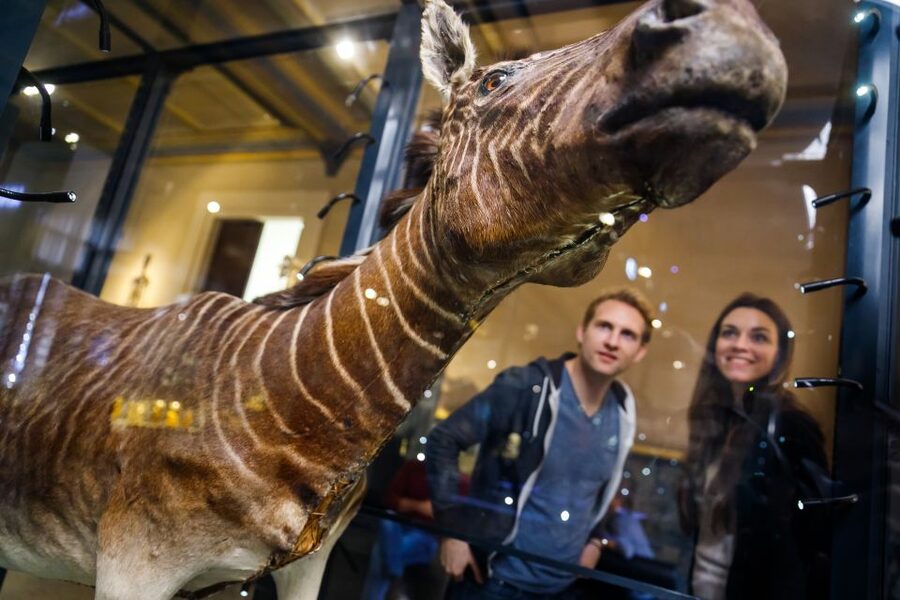
Audio content is included in the ticket, with options in English, French, German, Italian, Japanese, Polish, Portuguese, Russian, Spanish, and Turkish. Ukrainian audio content has also been appreciated by Ukrainian-speaking visitors.
There is no physical audio guide included. You access the material through a website, and you may need to log in. Free Wi-Fi is available, but I would still prepare before entering if possible.
Bring your phone and headphones. This is the single most useful tip for getting more from the museum. Without headphones, playing audio from your phone can be awkward, particularly when the museum is busy.
English text is available for most displays, but not every panel may be equally easy to follow. Some translation is provided through QR codes, and there have been complaints that certain codes did not work. The audio content is therefore worth trying, but do not depend on it as your only way to understand the exhibits.
Crowds, children, and the feel of the visit
The museum is popular with families and school groups. On weekends, you may encounter a higher noise level, with children moving through the Dinosaur Hall and other rooms.
That atmosphere can be a plus if you are visiting with your own children. The museum feels welcoming to young visitors, and children around preschool age can find the large skeletons exciting. It is also engaging for adults who enjoy science and visual displays.
If you prefer quiet galleries, go at a less busy time if you can. The museum is spacious in some areas, but crowding and noise can affect how long you want to stay.
The range of reactions to the taxidermy and preserved animals is also personal. Some people find these displays fascinating, especially when they include extinct species. Others feel uncomfortable seeing real animals preserved for study. You should know this before bringing a child who is sensitive to such material.
Is the $12 admission good value?
At $12 per person, the ticket is reasonably priced for a central Berlin museum with rare fossils, major dinosaur skeletons, minerals, preserved animals, and biodiversity displays.
The best value comes from the headline objects. Seeing Giraffatitan brancai, Tristan Otto, and the Archaeopteryx in one visit gives you three very different kinds of natural history: massive scale, an original predator skeleton, and a delicate fossil of enormous scientific importance.
The value is weaker if you expect a huge museum with nonstop interactive exhibits. Some sections are smaller than people anticipate, and a quick visitor may see the main dinosaur displays in about 30 minutes. The admission still makes sense for a short visit, but your expectations should match the museum’s size.
I would consider it especially good value for families, dinosaur fans, museum lovers, and anyone looking for a weather-proof Berlin activity. The included audio content adds value, provided you bring headphones and can access the website easily.
Who should book this museum ticket?
I would book this experience if you want:
- A family-friendly museum with instantly impressive skeletons
- A chance to see an original T. rex skeleton
- Important fossils such as the Archaeopteryx
- A mix of dinosaurs, minerals, animals, and earth science
- A short indoor activity with flexible visit length
- Audio content in several languages
- A wheelchair-accessible museum in Berlin
I would think twice if you want a very large museum with a carefully marked route and many hands-on activities. You may also prefer another attraction if preserved animals make you uncomfortable or if you dislike using your phone for audio and translations.
Book ahead during busy periods, keep your mobile ticket ready, and bring identification if you have a reduced fare. Most important, bring headphones. They can turn a quick look at the displays into a much more informative visit.
Final verdict: a strong Berlin stop for science and dinosaurs
The Museum für Naturkunde is worth booking for its rare and memorable objects. The giant Giraffatitan skeleton gives you the instant wow moment, Tristan Otto supplies the drama, and the Archaeopteryx adds quiet scientific importance.
I also like that the museum goes beyond extinct animals. The wet collection, biodiversity display, minerals, and Earth sections show how natural history connects the distant past with questions facing the world today.
It is not the largest or most interactive natural history museum, and navigation and translation can sometimes be uneven. Still, at $12, it offers plenty for a short visit and even more if you take your time. For families and dinosaur fans, it is an easy recommendation. For everyone else, book it if you want an affordable museum where the real objects do most of the talking.
FAQ
Where is the Museum für Naturkunde Berlin?
The museum is at Invalidenstraße 43, 10115 Berlin. Entry is through the main entrance.
How much does admission cost?
The listed price is $12 per person.
How long does a visit take?
The stated valid visit period is 30 minutes to one hour. Some people complete the main areas in about 30 minutes, while others spend much longer reading displays and visiting additional sections.
Is Tristan Otto a real T. rex skeleton?
Yes. Tristan Otto is an original Tyrannosaurus rex skeleton and one of the museum’s main exhibits.
What is the tallest mounted dinosaur skeleton at the museum?
Giraffatitan brancai is described as the tallest mounted dinosaur skeleton in the world. It is displayed in the center of the Dinosaur Hall.
Can I see the Archaeopteryx?
Yes. The Archaeopteryx lithographica is displayed in a safety case at the back of the Dinosaur Hall.
Is an audio guide included?
Free downloadable audio content is included. You access it through a website, and you should bring your phone and headphones. A physical audio guide is not included.
What languages are available for the audio content?
The listed languages are English, French, German, Italian, Japanese, Polish, Portuguese, Russian, Spanish, and Turkish. Ukrainian audio content has also been available.
Is the museum wheelchair accessible?
Yes. The museum is wheelchair accessible.
Just added around Berlin
- Private Walking Tour in Berlin: Hitler’s Germany & WWII★ 5.0 · 7 reviews
- The History of Berlin: WWII PRIVATE Walking Tour With Locals★ 5.0 · 209 reviews
- Private Berlin WWII and Cold War History Tour with Local Expert Guide★ 5.0 · 28 reviews
- Private Walking Tour Berlin 3 hours: Brandenburg, Historic Center★ 5.0 · 7 reviews
- Berlin: Private Bike Tour of the Berlin Wall and Third Reich★ 5.0 · 23 reviews
- Berlin: Guided Private Bike Tour to Explore the Highlights★ 5.0 · 12 reviews
- Berlin Photography Masterclass – Private Photography Lesson★ 4.5 · 23 reviews
- Group Driving Tour 1 to 6 people. Berlin Shore Excursion incl pick-up at Port★ 5.0 · 8 reviews
Museums, compared.


Skip-the-Line: Berlin Wall Museum at Checkpoint Charlie
Read our review →
Browse the lists this tour appears in