
Reviewed · HISTORICAL TOURS
Elbfloren: Historical city tour
Dresden’s grand center rewards a good walking route. This two-hour tour links the castle, Frauenkirche, Fürstenzug, Zwinger, cathedral, and Semper Opera House in a compact introduction to Saxony’s royal capital. I like the clear focus on Augustus the Strong and the chance to enter the Frauenkirche, if opening hours allow. I also like the low price, about $15 per person, which makes this an easy first look at Dresden.
The main consideration is language. The tour is conducted in German, so you need enough German to follow spoken explanations. The church visit is not guaranteed, and the tour does not include museum admission or entry to the Zwinger and Semper Opera House. Still, a 4.8 rating from 819 reviews, along with repeated praise for the storytelling and background information, points to a well-received introduction led through Dresden’s most important sights.
In This Review
- Key points at a glance
- Why Dresden’s old center works so well on foot
- Starting at Dresden Castle and Schlossplatz
- The Frauenkirche and its powerful interior
- Fürstenzug, Saxon rulers, and the stable yard
- Augustus the Strong, with a little court gossip
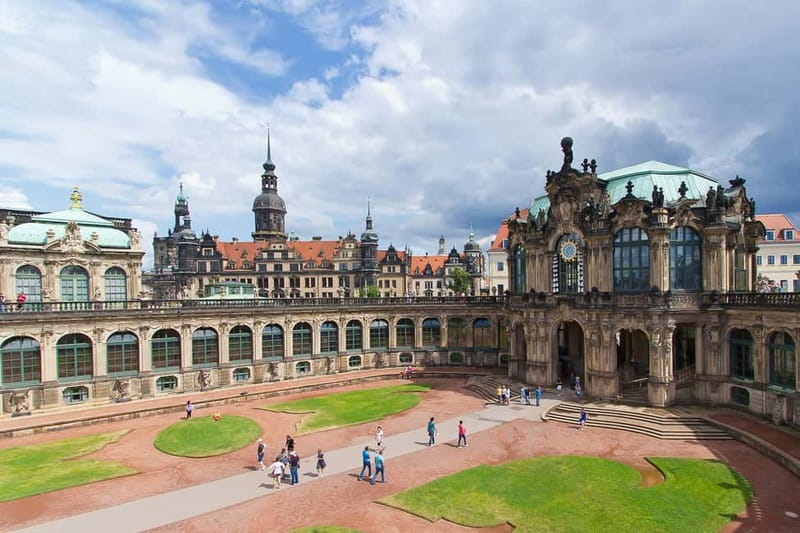
- The Zwinger, Dresden’s Baroque showpiece
- Theaterplatz, the cathedral, and Semper Opera House
- What $15 really buys you
- Who should book this Dresden walk?
- Booking advice for a smooth visit
- Should you book the Elbfloren tour?
- FAQ
- Where does the tour start?
- Where does the tour end?
- How long does the walking tour last?
- What language is the tour conducted in?
- Is entry to Dresden Castle included?
- Can I enter the Frauenkirche?
- Is admission to the Zwinger included?
- Can I enter the Semper Opera House?
- Is the tour wheelchair accessible?
Key points at a glance
- A compact royal route: Begin at Dresden Castle and follow the historic center to the Frauenkirche, Fürstenzug, Zwinger, and Theaterplatz.
- A German-language history lesson: The guide brings Augustus the Strong, Saxon politics, and Dresden’s Baroque age into the walk.
- A possible church interior visit: You may see inside the Frauenkirche, depending on opening hours.
- A strong price for a city orientation: At about $15, the tour covers two hours of guided walking without museum fees.
- Mostly exterior sightseeing: The Zwinger and Semper Opera House are viewed from the outside, while castle access is limited to a short guided visit.
- Good practical flexibility: Cancellation is free up to 24 hours before the start, and you can reserve now and pay later.
Why Dresden’s old center works so well on foot
Dresden’s historic core is unusually easy to read in a short walk. Major buildings sit close together around Schlossplatz, the banks of the Elbe, and Theaterplatz. That means you spend your time looking at architecture and hearing stories, not waiting for transport.
The city’s nickname, Florence on the Elbe, points to its artistic and architectural ambitions. Dresden was shaped by Saxon rulers who wanted a court worthy of Europe’s great capitals. The result is a striking collection of churches, palaces, grand courtyards, and ceremonial buildings.
This tour concentrates on the Baroque period, especially the world connected with Augustus the Strong. That focus gives the walk a useful thread. Instead of hearing disconnected facts about one building after another, you follow the ruler’s court, ambitions, and taste through the city center.
I would choose this tour early in a Dresden visit. It gives you a map in your head, explains why the buildings look as they do, and helps you decide which places deserve a later museum visit.
More City Tours in Dresden
- Dresden: City & Semperoper Guided Walking Tour
★ 4.8 · 2,293 reviews - Dresden: City Sightseeing Tour with Live Guide
★ 4.6 · 1,730 reviews - Dresden: Guided City Walk with a Cup of Coffee
★ 4.7 · 1,568 reviews
Starting at Dresden Castle and Schlossplatz
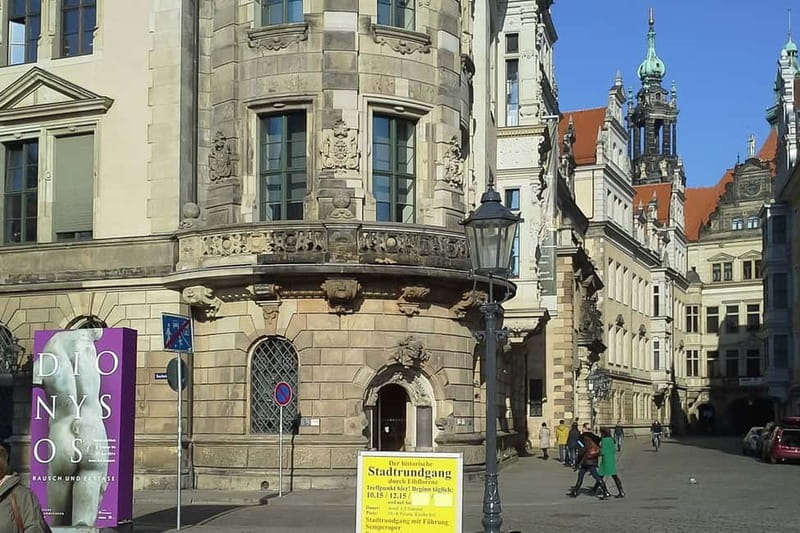
The meeting point is in front of Dresden Castle, at the corner of Schlossstraße and Taschenberg, under the sign. This is a practical starting place because the castle puts you right in the middle of the old royal quarter.
Dresden Castle is not just another palace exterior. It was a central seat of Saxon power, and its location helps explain how the court organized the city around royal ceremonies, religion, art, and administration. On this experience, you receive a short guided tour inside the castle area, but this is not a full museum visit.
That distinction matters. Dresden Castle contains major collections, yet museum admission is not included. If you want to see the Historic Green Vault or other collections, plan a separate visit and purchase the appropriate ticket. The walking tour gives you context, not a full afternoon indoors.
I like this arrangement for a first visit. You get enough of the castle to understand its role without spending the entire two-hour route behind museum walls. If you already know you want a detailed palace visit, treat this stop as an introduction.
The Frauenkirche and its powerful interior
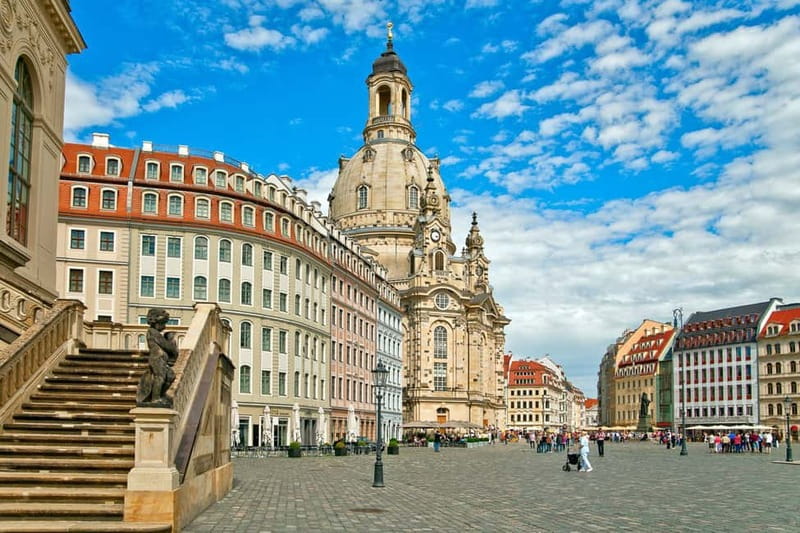
From the castle, the route continues toward Dresden’s most recognizable church, the Frauenkirche, or Church of Our Lady. Its restored stone dome and broad Baroque form make it one of the city’s essential sights.
The church has an especially important place in Dresden’s modern story. It was completely restored after the destruction of the Second World War, and the rebuilt structure now anchors Neumarkt. Its pale stonework and carefully restored interior give the square much of its character.
The tour includes the chance to see inside the church, but only if it is open at the time of your visit. This is the route’s biggest variable. The exterior visit is dependable, while the interior visit can change with opening hours or church activity.
If the doors are open, the interior adds real value. You can better understand the scale of the building, its central design, and the contrast between the restrained outside stone and the ornate Baroque decoration within. If the church is closed, you still receive the outside explanation, but the experience will feel slightly less complete.
Dogs are not allowed inside churches, and pets are not allowed on the tour. The activity is listed as wheelchair accessible, which is useful for visitors who need a more manageable city route, though the tour remains a walking experience through the historic center.
Fürstenzug, Saxon rulers, and the stable yard
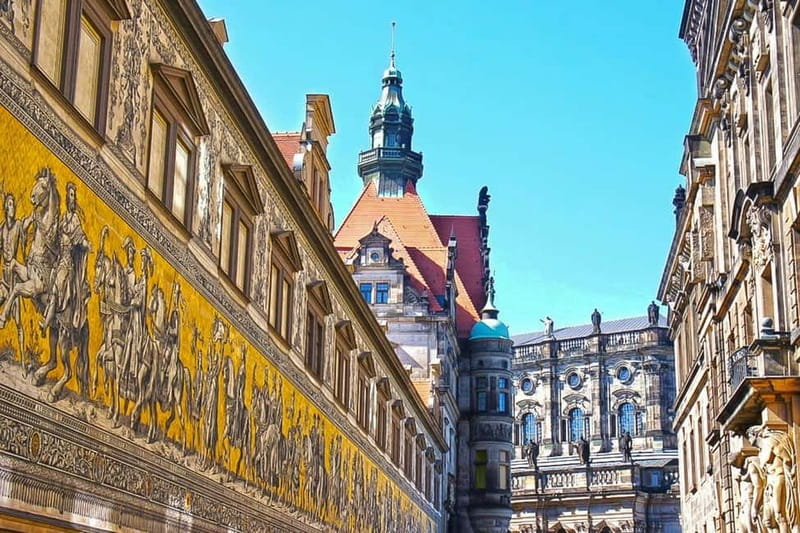
The next section brings you to Fürstenzug, the Procession of Princes. This long outdoor artwork presents Saxon rulers in a grand historical procession and is one of Dresden’s most memorable public displays.
Fürstenzug is valuable because it turns a complicated line of rulers into something you can actually study. You are not simply told that Saxony had a powerful dynasty. You can see the succession presented along the wall, with the visual language of a royal parade.
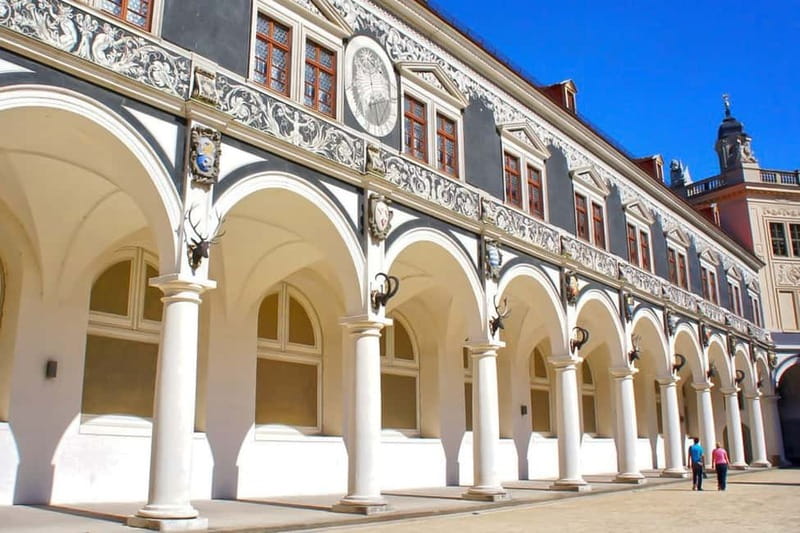
The route then continues to the stable yard of Dresden Castle. This courtyard gives you a closer look at the court complex and its working relationship with the palace. The setting is less immediately famous than the Frauenkirche, but it helps you picture how royal life operated beyond the main ceremonial rooms.
You also get a glimpse of the Taschenbergpalais. This is one of those moments when a guide adds useful value. On your own, you might walk past another impressive building and register only its façade. With the historical thread in place, the buildings begin to relate to one another as parts of a royal district.
More History Tours in Dresden
- Historic Dresden Small-Group Walking Tour in English
★ 5.0 · 160 reviews - Dresden: Guided Beer Tour of the Historic Old City
★ 4.8 · 95 reviews - Historic Dresden Private Walking Tour
★ 5.0 · 32 reviews - Historical tour of the old town including a Saxon dinner
★ 4.7 · 23 reviews
Augustus the Strong, with a little court gossip
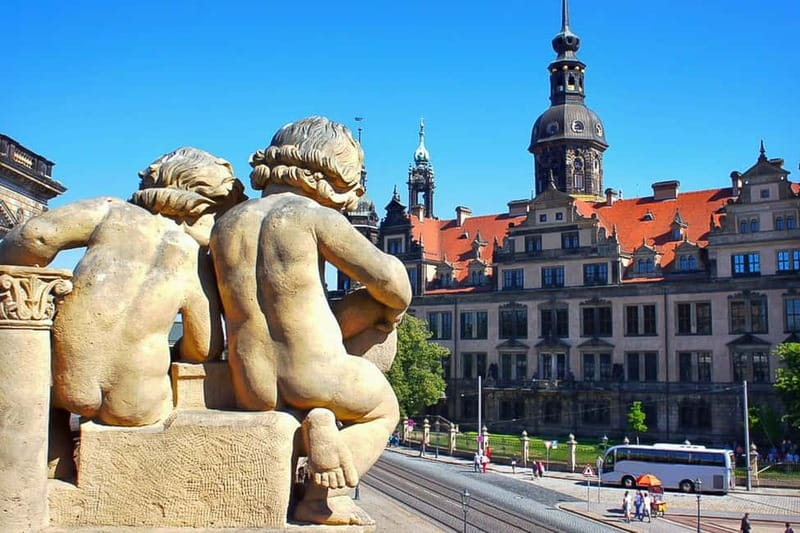
Augustus the Strong is the personality tying the tour together. He was Elector of Saxony and King of Poland, and his reputation combines political ambition, artistic patronage, court spectacle, and personal excess.
The tour promises interesting and amusing details about him, not just dates and titles. That balance matters. A city walk becomes tiring when every stop turns into a lecture. Stories about Augustus help explain why Dresden acquired such a concentration of palaces, galleries, courtyards, and grand public buildings.
You should not expect a specialized biography. The point is to see Dresden through the ruler who helped shape its Baroque identity. His court wanted display, status, and cultural prestige, and the central buildings reflect those goals.
The feedback on the experience gives particular weight to the storytelling and background information. One German-language comment praised the very good narration and the amount of context, while another simply said everything was in order and would gladly do it again. That suggests the guide’s delivery is a major part of the value, especially for people who want more than a list of building names.
The Zwinger, Dresden’s Baroque showpiece
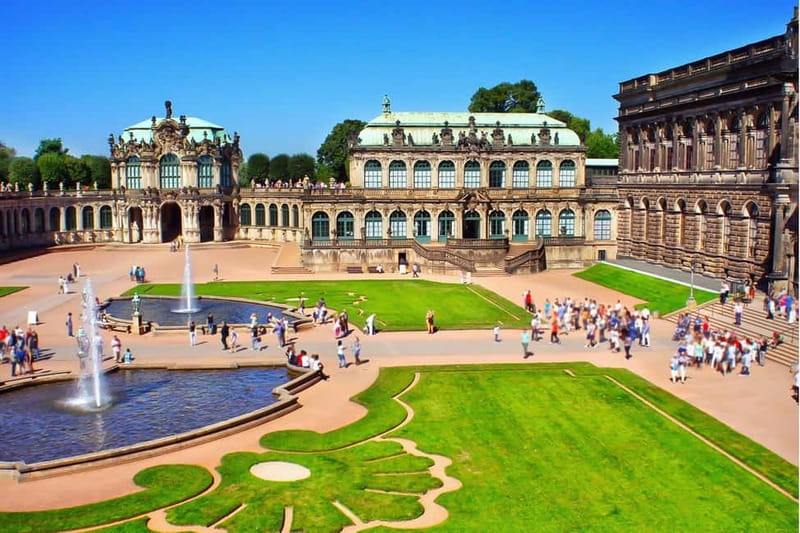
The Zwinger is the architectural high point of the route. This late Baroque complex was designed for court festivities and display, with elaborate façades, pavilions, galleries, and open courtyards.
The word late Baroque can sound abstract until you see the Zwinger. Here, decoration is not a minor detail. Sculptures, curves, gates, and formal garden spaces work together to create a building meant to impress before you even entered its collections.
The tour includes a guided visit to the Zwinger grounds, but entrance to the museums is not included. This is an important value note. You can see the complex’s major exterior features and hear why it mattered, then return later if you want the museums.
For many people, that is the right order. The guide gives you the architectural framework first. Later, you can visit the Old Masters Picture Gallery, Porcelain Collection, or Mathematical and Physical Salon on your own if those collections fit your interests. The tour itself does not cover those museum visits.
The Zwinger stop also gives you a visual change from the heavier stone presence of the castle and Frauenkirche. Its open courtyards and ornamental details make it a good place to pause, look around, and understand Dresden’s taste for theatrical design.
Theaterplatz, the cathedral, and Semper Opera House
The walk ends at Theaterplatz, where several of Dresden’s major buildings face one another. The cathedral and Semper Opera House give the final part of the tour a grand civic setting.
The cathedral, officially the Cathedral of the Holy Trinity, belongs to the same central story of court, religion, and ceremony. Its position beside the castle makes the relationship between political and religious power easy to see.
The Semper Opera House adds another layer. It represents Dresden’s continuing reputation as a city of music and performance, not only a Baroque capital. You see the building from the outside on this tour, since admission is not included.
That limitation is worth keeping in mind if you have your heart set on seeing the opera interior. The walking route gives you the façade, its place on Theaterplatz, and the historical explanation. A performance or interior tour would require a separate plan.
Ending here is sensible. Theaterplatz is one of the best places to review what you have seen: palace, church, procession, courtyard, Baroque complex, cathedral, and opera house, all within a short walk.
What $15 really buys you
At about $15 per person, this is a good-value orientation if you want a guide rather than a self-guided walk. The fee covers two hours of live German-language commentary, a short castle tour, a guided visit to the Zwinger, and the possibility of entering the Frauenkirche.
You are not paying for museum admission, and that keeps the cost low. The tradeoff is that you must budget separately for any castle collections, Zwinger museums, or Semper Opera House visit.
I see the price as especially attractive for first-time visitors who want the city’s main sights explained without committing to a longer excursion. Two hours is enough to establish the historical center, but short enough to leave room for lunch, shopping, or a later museum visit.
The free cancellation policy also reduces the risk. You can cancel up to 24 hours before the tour for a full refund, and reserve now while paying later. Check the available start times before booking, since the tour schedule is not fixed in the basic description.
Who should book this Dresden walk?
I would recommend it to you if you:
- Understand German well enough to follow a live guide.
- Want a fast introduction to central Dresden.
- Prefer famous landmarks linked by historical stories.
- Like seeing exteriors while saving museum visits for later.
- Want a low-cost activity with a flexible cancellation policy.
- Need a wheelchair-accessible walking option.
It is also a good choice for people who enjoy architectural context. The route does not merely point toward the Zwinger or Frauenkirche. It connects those buildings to Saxon rulers, court life, and Dresden’s Baroque ambitions.
I would choose something else if you need an English-language tour, want extensive time inside museums, or expect a full guided visit of Dresden Castle. The German-only format is the clearest reason to skip it if you cannot follow German comfortably.
Families should also note the pet restriction. Pets are not allowed, and dogs cannot enter the churches. The tour is not designed as a special child-focused activity, though the short length may work well for families who want a basic city introduction.
Booking advice for a smooth visit
Wear comfortable shoes. The route covers several important sights on foot, and the value comes from moving through the historic center rather than sitting in one place.
Arrive at the Dresden Castle meeting point with a few minutes to spare. Look for the sign at the corner of Schlossstraße and Taschenberg, then confirm that you are at the correct side of the castle before the start.
Keep your schedule flexible around the Frauenkirche. Its interior visit depends on opening hours, so do not make the whole value of the tour depend on entering the church.
If you want a museum visit, plan it separately. This tour helps you decide what interests you, but it does not include admission to Dresden Castle’s museums, the Zwinger museums, or the Semper Opera House.
Should you book the Elbfloren tour?
Book it if you want an affordable, well-organized introduction to Dresden’s Baroque center and you can follow German. The route covers a lot in two hours, and the strongest feature is the way it links Augustus the Strong to the buildings around him.
The tour is less suitable if you need English, want detailed museum access, or require a guaranteed Frauenkirche interior visit. For everyone else, $15 is a sensible price for a focused historical walk, especially when the storytelling and background information are your main priorities.
FAQ
Where does the tour start?
The tour starts in front of Dresden Castle at the corner of Schlossstraße and Taschenberg, under the sign.
Where does the tour end?
The activity ends back at the meeting point.
How long does the walking tour last?
The tour lasts two hours. Starting times vary, so check availability for the options on your chosen date.
What language is the tour conducted in?
The tour is conducted in German with a live German-speaking guide.
Is entry to Dresden Castle included?
A short guided tour at Dresden Castle is included, but museum visits are not included.
Can I enter the Frauenkirche?
The tour includes a visit to the interior of the Frauenkirche when opening hours allow. The visit is not guaranteed.
Is admission to the Zwinger included?
The guided tour of the Zwinger is included, but entrance fees to the Zwinger are not included.
Can I enter the Semper Opera House?
Entrance to the Semper Opera House is not included. The tour ends at Theaterplatz, where you see the opera house from the outside.
Is the tour wheelchair accessible?
Yes, the activity is listed as wheelchair accessible. Pets are not allowed, and dogs cannot enter the churches.
Just added around Dresden
- Dresden Sightseeing Treasure Hunt★ 5.0 · 57 reviews
- Test Drive Electric Vehicles from the VW brand (ID. model)★ 4.8 · 190 reviews
- SRF CoBi | City Tour by ConferenceBike★ 4.7 · 38 reviews
- Dresden: Scavenger Hunt to Elbe River & Castles★ 4.7 · 15 reviews
- Dresden: Bike Rental – City Bike with Option Children Seat★ 4.5 · 13 reviews
- Moritzburg: Scavenger Hunt Self-Guided Walking Tour★ 4.8 · 12 reviews
- Historical tour of the old town including a Saxon dinner★ 4.7 · 23 reviews
- Climb the mountains together with goats★ 4.8 · 8 reviews
Historical Tours, compared.
City History Canal Sightseeing Tour on a Motorboat
Read our review →

Guided Old Town Highlights and History Walking Tour
Read our review →Browse the lists this tour appears in