
Reviewed · WALKING TOURS
Hamburg: Walking Tour for School Groups
Hamburg turns into a classroom without four walls. This private, 90-minute walking tour gives school groups three clear choices: the brick warehouses of Speicherstadt and HafenCity, historic Hamburg’s Altstadt, or St. Pauli for students aged 14 and over. I like the focused length and the way the guide adapts the talk to children and teenagers.
I also like the strong mix of buildings, history, society, and personal stories. The main consideration is language: the tour is offered in German only, and the St. Pauli option may not suit younger pupils or every school’s preferred tone.
In This Review
- Key points at a glance
- Choosing the right Hamburg route for your class
- Speicherstadt and HafenCity: Hamburg in old brick and new glass
- Altstadt: a broad lesson in Hamburg’s past
- St. Pauli: a daytime look at the Reeperbahn
- A guide who works with the class, not just in front of it
- What the $294 group price really means
- Ninety minutes, rain or shine
- What the feedback suggests about the teaching style
- Who should book this Hamburg school tour?
- Should you book it?
- FAQ
- Who is this walking tour for?
- How long does the tour last?
- How much does the tour cost?
- What language is the tour offered in?
- Which Hamburg neighborhoods can I choose?
- Is the St. Pauli tour suitable for younger children?
- Is hotel pickup and drop-off included?
- What should students bring?
- Can I cancel the booking?
Key points at a glance
- Three routes for three different classes: Choose old warehouses and new architecture, Hamburg’s historic center, or the adult-themed stories of St. Pauli.
- A private group price: The $294 rate covers up to 25 people, making the cost much better for a full class than for a small group.
- A short, useful lesson outside: Ninety minutes is long enough for context without testing young attention spans too hard.
- Age-sensitive St. Pauli route: The Reeperbahn tour is specifically limited to students at least 14 years old.
- Strong group interaction: The guide can adjust the presentation to the students’ age, interests, and needs.
- Rain-or-shine planning: Bring comfortable shoes and be ready to walk in all weather.
Choosing the right Hamburg route for your class
The most important decision is not the booking time or meeting point. It is choosing the neighborhood that matches your class.
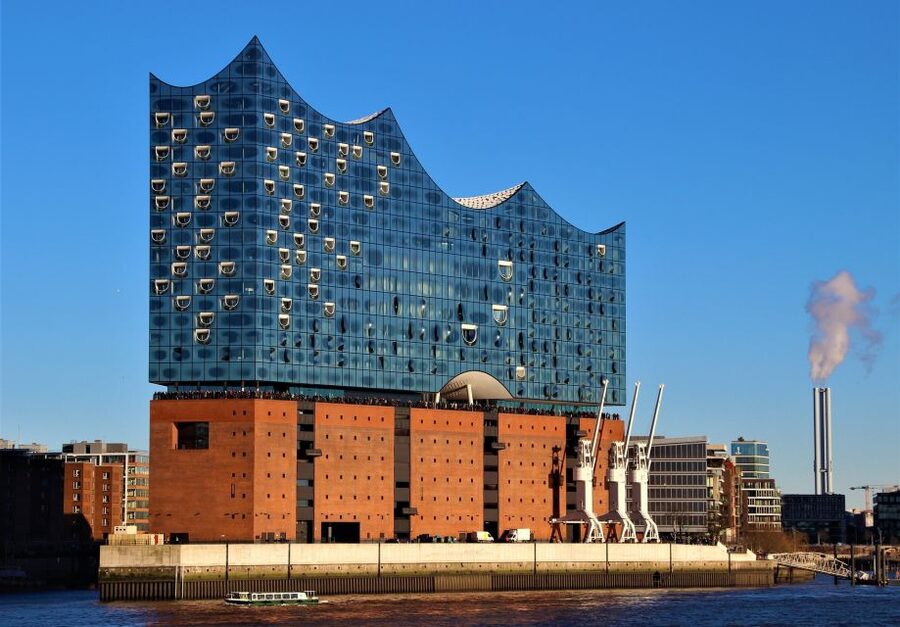
For a general school trip, I would usually choose Speicherstadt and HafenCity. This route gives students a clear contrast between Hamburg’s trading past and its modern city plans. The old warehouse district supplies atmosphere and architecture, while HafenCity brings the story into the present with the Elbphilharmonie Plaza.
For a class studying German history, urban development, or architecture, Hamburg’s Altstadt is the broadest choice. It includes historic Kontorhäuser, City Hall, the city’s main churches, and an especially interesting section of the port. This route seems best when you want one walk to cover several parts of Hamburg’s identity.
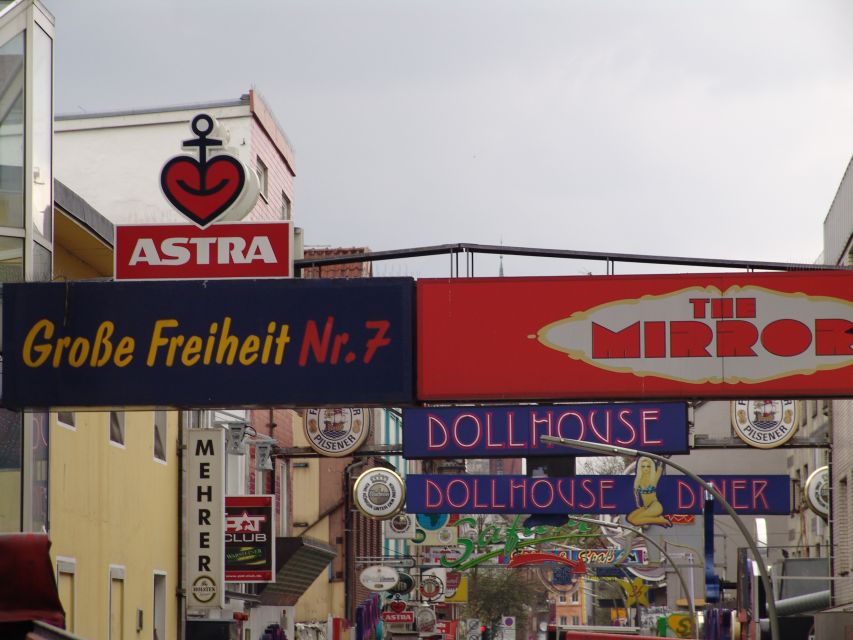
For older teenagers, St. Pauli offers the most unusual subject matter. The daytime walk includes the Reeperbahn and explains the area’s nightlife through stories and facts. It is not simply a stroll past signs and clubs. The focus is on the district’s social side, including subjects such as alcohol and social conflicts, which means teachers should think about class maturity before choosing it.
More Walking Tours in Hamburg
- Hamburg: Guided Walking Tour for Magic Fans
★ 4.8 · 1,992 reviews - Reeperbahn Walking Tour with St. Pauli Local
★ 4.8 · 577 reviews - Hamburg: Speicherstadt Walking Tour with Coffee Tasting
★ 4.6 · 360 reviews
Speicherstadt and HafenCity: Hamburg in old brick and new glass
Speicherstadt is the visual star of this option. Its warehouse complex is the world’s largest and is listed as a UNESCO World Heritage Site. Even students who are not eager history pupils can grasp the basic idea quickly: this was a major storage district, built for the practical business of moving goods through Hamburg.
The dark brick architecture gives the walk a strong sense of place. A guide can turn the warehouses into more than a row of photogenic buildings by explaining how the district fits into Hamburg’s trading past. I like this route for classes because the architecture gives students something solid to look at while they listen.
Then the tour moves into HafenCity, Hamburg’s newer district. The contrast matters. Instead of presenting the city as a museum piece, the route shows how Hamburg continues to change. Students get to compare older commercial buildings with modern urban planning and newer construction.
The Elbphilharmonie Plaza is the major modern stop. It is described as Hamburg’s latest landmark, and it gives the route a strong finish. The plaza also helps students connect architecture with civic pride and the city’s public image.
This option has a useful built-in lesson: cities are not frozen. They preserve important older areas while adding new districts and new symbols. If your group has limited time in Hamburg, I would pick this route when you want an easy-to-follow story with plenty of visual variety.
The drawback is that the route covers two different districts in only 90 minutes. You will get an introduction rather than a full study of either area. That is fine for a school outing, but teachers wanting long pauses, detailed architectural analysis, or extensive time at the Elbphilharmonie should plan another visit.
Altstadt: a broad lesson in Hamburg’s past
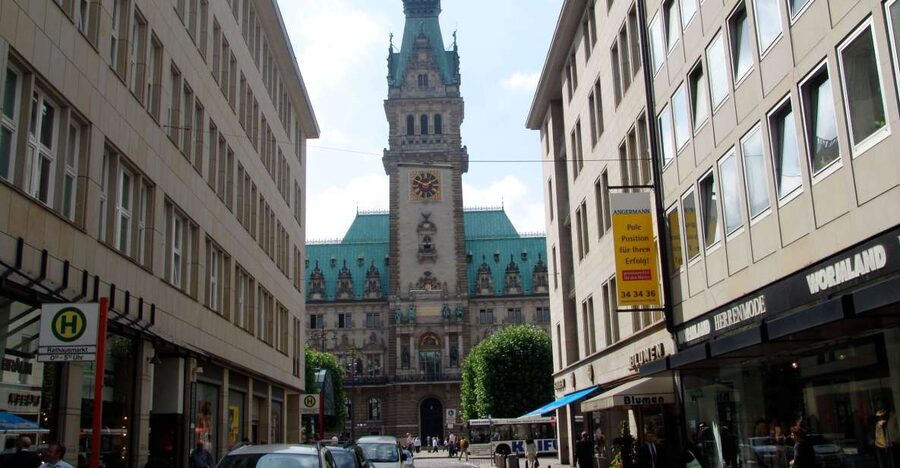
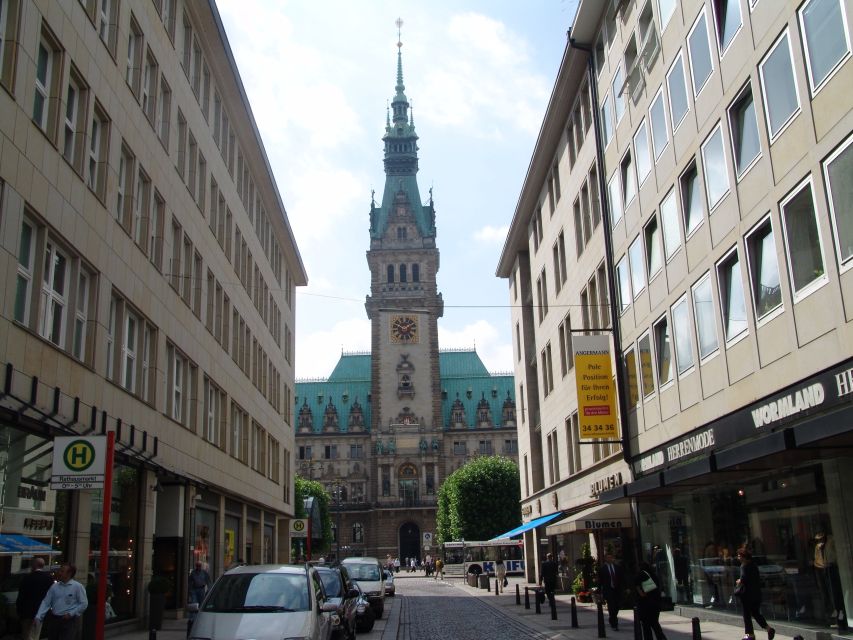
The Altstadt route is the most traditional city walk, but that does not make it dull. It brings together several of Hamburg’s key sights and uses them to explain how the city developed.
The Kontorhäuser are an important part of the route. These historic office buildings reflect Hamburg’s commercial character and give students another way to understand the city beyond ships and port warehouses. Their architecture helps connect business, city planning, and the working life of an earlier Hamburg.
City Hall adds a civic and political stop. The city’s main churches add another layer, showing how religion and public life shaped the center. The walk also includes the most interesting part of Hamburg’s port, linking the city center to its long relationship with trade and shipping.
I would choose this option for a class that needs a general introduction to Hamburg. It gives the guide several subjects to work with, so the talk can move between architecture, local history, religion, public life, and the port.
The route’s breadth is also its limit. You should not expect an in-depth visit inside every building or a long stop at each church. A 90-minute walk has to keep moving. For pupils, that can be an advantage. The guide can keep the pace lively instead of asking them to stand in one place while every detail is explained.
One especially useful feature is the focus on Hamburg’s history rather than a simple list of sights. A good school tour needs to explain why places matter. The strongest feedback about this experience points to a mix of history, society, and personal stories, which should make the Altstadt route more human than a standard monument checklist.
St. Pauli: a daytime look at the Reeperbahn
St. Pauli is the most distinctive option, and it needs the most careful planning. This tour is only suitable for children aged 14 or older. That age rule is not a minor note. The Reeperbahn is linked to nightlife, adult entertainment, alcohol, and social questions that may not fit a younger class.
The walk takes place during the day, when the area can be discussed as a neighborhood rather than experienced as nightlife. The guide explains interesting stories and facts about the Reeperbahn and the district’s exciting after-dark reputation.
I like this route for older teenagers because it can open a useful conversation about how cities manage entertainment, tourism, public behavior, and social conflict. The subject feels direct and current. It may also hold the attention of students who are less interested in churches or office buildings.
The tour can include moral guidance, including comments about alcohol use. One school group found those warnings less successful with its pupils. That is worth noting before you book. If your students respond better to open discussion than direct advice, speak with the guide or organizer about the tone you want.
At its best, this route is lively, age-aware, and connected to real social issues. The guide has been praised for adjusting the language to the students’ age and interests. That matters on St. Pauli, where the same fact can be suitable for older teenagers but awkward or unsuitable for younger pupils.
I would choose this route only after checking the age of every student and making sure the teaching staff are comfortable with the subject. It is not the safest default for a mixed-age school trip. For a mature group of 14-year-olds and above, though, it offers a side of Hamburg that the other two routes cannot match.
Still Hamburg, at a slower pace:
- Hamburg: Sex and Crime in St. Pauli Tour for Ages 18+
★ 4.7 · 15,447 reviews - Hamburg: 1.5-Hour Harbor and Speicherstadt Day Cruise
★ 4.6 · 14,200 reviews - Hamburg: 90-Minute Evening Lights Harbor Cruise
★ 4.5 · 7,728 reviews - Hamburg: 2-Hour XXL Port of Hamburg Cruise Tour
★ 4.7 · 6,979 reviews
A guide who works with the class, not just in front of it
The guide is the central part of this experience. The information describes a live German-speaking guide and a private group, so your class is not combined with strangers. That makes it easier to keep pupils together and gives the guide a better chance to respond to their questions.
The strongest praise has focused on the presentation. The tour has been described as short, entertaining, informative, and aimed at the right age group. A guide also adjusted well to a class’s needs and explained social and cultural conflicts in Hamburg, both past and present.
That is exactly what I want from a school walk. Students need facts, but they also need a reason to care. Personal stories and social context can help turn buildings into places where people made choices, faced problems, and shaped the city.
The language point deserves attention. The listed tour language is German. If your pupils are not comfortable following German for 90 minutes, this may not be the right booking. The supplied information does not promise English or another language, so do not assume an alternative is available.
Teachers should also remember that this is a walking lesson, not a performance designed to keep every child entertained every second. The guide can make the content lively, but students still need to listen, walk, and stay with the group.
What the $294 group price really means
The price is $294 per group of up to 25 people. If you fill the group, that works out to about $11.76 per person. For a full school class, that is a reasonable rate for a private guide and 90 minutes of local context.
The value drops for a small group. Ten participants would pay about $29.40 per person, and five would pay about $58.80 each. I would consider this mainly a class-sized purchase, not a good fit for a handful of pupils.
The fee includes the tour guide. Food, drinks, hotel pickup, and hotel drop-off are not included. Since the experience is built around walking, you should also allow time before or after the tour for refreshments and transport on your own.
There is no separate admission cost described for the walking routes. The experience also offers skip-the-ticket-line access, although the main value is the guide and the route rather than entry to a museum or attraction.
You can reserve now and pay later, which helps if a school trip is still being finalized. Free cancellation is available up to 24 hours before the activity for a full refund. I would still check the final booking conditions before committing, especially when coordinating a whole class.
Ninety minutes, rain or shine
The 90-minute duration is well judged for a school group. It gives you enough time to see several important locations and hear a connected explanation, while limiting the risk of tired pupils and fading attention.
This is not a tour for slow photography or long independent stops. The group needs to keep moving. Comfortable shoes are essential, and the weather rule is clear: the tour takes place rain or shine.
That makes practical preparation important. Tell students to dress for outdoor conditions and bring shoes suitable for city walking. Since there is no hotel pickup or drop-off, teachers also need to organize the group’s route to and from the selected meeting point.
The meeting point varies by the option you book. I would confirm it early and build in extra time for a class to assemble. A school group rarely moves as fast as two adults with a map.
Because the tour is private, you should have more control over the group’s pace than on a large public walk. Still, 25 people is enough to create noise and gaps, so teachers should keep students near the guide and agree on simple behavior rules before setting off.
What the feedback suggests about the teaching style
The overall rating is 4.8 from 10 reviews, a small sample but a strong result. The most repeated strengths are clear presentation, useful information, an entertaining pace, and a good fit for students.
A 2022 St. Pauli group found the Reeperbahn walk refreshing and informative, with the guide presenting the material in language suited to the pupils’ age. Another class valued the background on social and cultural conflicts in Hamburg, both in the past and today.
The tour also seems able to recover when plans change. In one case, bad weather led to a last-minute cancellation, and the organizer helped arrange an alternative. That is encouraging for school planning, though I would not treat it as a promise that every change can be handled the same way.
The one clear caution is the use of moral warnings, particularly around alcohol. One class felt that this part did not connect well with students. I would raise this issue with the organizer if you select St. Pauli or if your school prefers a less judgmental, more discussion-based approach.
Taken together, the feedback points to a guide-led experience that works best when the route and age group are matched carefully. It is not simply the same talk in three places.
Who should book this Hamburg school tour?
I would recommend it for:
- A school class with 25 students or fewer
- Teachers who want a private German-language guide
- Groups seeking a short city introduction rather than a full-day program
- Students interested in architecture, local history, the port, or social issues
- Older teenagers who can handle the St. Pauli route thoughtfully
I would think twice if your group needs English, indoor shelter, hotel transportation, or a tour designed for children under 14 in St. Pauli. I would also avoid choosing the Reeperbahn route simply because it sounds more exciting. The subject needs to fit your pupils and your school’s aims.
Should you book it?
Book this tour if you want a focused, private introduction to Hamburg and can use German comfortably. The best choice for most classes is likely Speicherstadt and HafenCity, thanks to the clear contrast between old warehouses and the modern Elbphilharmonie Plaza.
Choose the Altstadt when you want a wider lesson on Hamburg’s civic buildings, churches, Kontorhäuser, and port. Pick St. Pauli only for students at least 14 years old and after considering the tour’s discussion of nightlife and alcohol.
At $294 for up to 25 people, the price makes the most sense for a full class. Bring comfortable shoes, plan for rain, confirm the meeting point, and prepare students to listen while walking. With those conditions in place, this looks like a useful way to turn Hamburg’s streets into a lively outdoor lesson.
FAQ
Who is this walking tour for?
This tour is only for school groups. It is offered as a private group experience.
How long does the tour last?
The walking tour lasts 90 minutes.
How much does the tour cost?
The price is $294 per group of up to 25 people.
What language is the tour offered in?
The live tour guide speaks German.
Which Hamburg neighborhoods can I choose?
You can choose Speicherstadt and HafenCity, Hamburg’s Altstadt, or St. Pauli.
Is the St. Pauli tour suitable for younger children?
No. The St. Pauli walking tour is only suitable for children at least 14 years old.
Is hotel pickup and drop-off included?
No. Hotel pickup and drop-off are not included.
What should students bring?
Students should bring comfortable shoes because the activity is a walking tour.
Can I cancel the booking?
Yes. You can cancel up to 24 hours in advance for a full refund. You can also reserve now and pay later.
Just added around Hamburg
- Hamburg: St. Pauli Food and Bier Tour★ 4.7 · 5 reviews
- St. Pauli Tour: Drag-Attack with Barbie Stupid & Lee Jackson★ 4.8 · 280 reviews
- Hamburg: Private Tour Red Light District Walking Tour★ 4.7 · 227 reviews
- St. Michael’s, Elbe Tunnel & Harbor 2-Hour Hamburg Tour★ 4.9 · 21 reviews
- Satt Pauli – der kulinarische Rundgang durch St. Pauli★ 4.8 · 12 reviews
- Hamburg: Safari tour in St. Pauli★ 4.9 · 11 reviews
- Hamburg: Reeperbahn Comedy Club★ 4.3 · 53 reviews
- Radtour um die Alster & durch traumhafte Alsterviertel★ 4.9 · 34 reviews
Walking Tours, compared.






Old Town & Viktualienmarkt City Walk in German
Read our review →Browse the lists this tour appears in