
Reviewed · FOOD & DRINK
Munich Food Tour: The Ultimate Bavarian Full Meal & Drinks
Come hungry, leave happily stuffed. This three-hour Munich food tour gives you a useful introduction to Bavarian cooking while leading you through the city center, from the German Hunting and Fishing Museum to Viktualienmarkt, Marienplatz, and several well-known food stops. I like the mix of traditional dishes and local drinks, and I like that the tour includes real sightseeing rather than keeping you indoors at a single restaurant.
The small group size, capped at 12 people, should make it easier to ask questions and hear the guide. Guides such as Renate, Andrea, and Erik have earned especially warm praise for their friendly manner, clear English, food knowledge, and city stories. The main thing to consider is the price: the advertised amount is $90 per person, but the final rate can vary by date or booking screen, so check carefully before paying.
In This Review
- Key points to know before booking
- Why this Munich food tour works
- Meeting at the Wild Boar statue
- Viktualienmarkt: Munich’s open-air pantry
- Weißwurst, pretzel, and the Bavarian breakfast ritual
- Evening option: Leberkäs-semmel
- Platzl and Munich’s dining traditions
- Marienplatz: a short city orientation
- Sankt-Jakobs-Platz and another taste of the city
- The main Bavarian dish in an iconic restaurant
- Dessert, Schmalznudel, and a final drink
- What the guides add to the food
- Price, group size, and overall value
- Who should book this experience?
- Should you book the Munich food tour?
- FAQ
- How long does the Munich food tour last?
- How much does the tour cost?
- Where does the tour meet?
- Where does the tour finish?
- What food is included?
- Are drinks included?
- Is the tour offered in English?
- Can young children join the tour?
Key points to know before booking
- Four food stops fill out a proper meal: You receive at least one serving at each stop, not just tiny samples.
- Weißwurst or Leberkäs-semmel depends on timing: A morning or midday tour may include white sausage, while an evening departure may feature a Bavarian meatloaf sandwich.
- Viktualienmarkt is central to the experience: You visit Munich’s famous food market more than once, with tastings built into the route.
- The group is intentionally small: The tour requires at least two people and accepts no more than 12.
- You get food, history, and practical tips: The guide explains dishes and points out places to eat and shop after the tour.
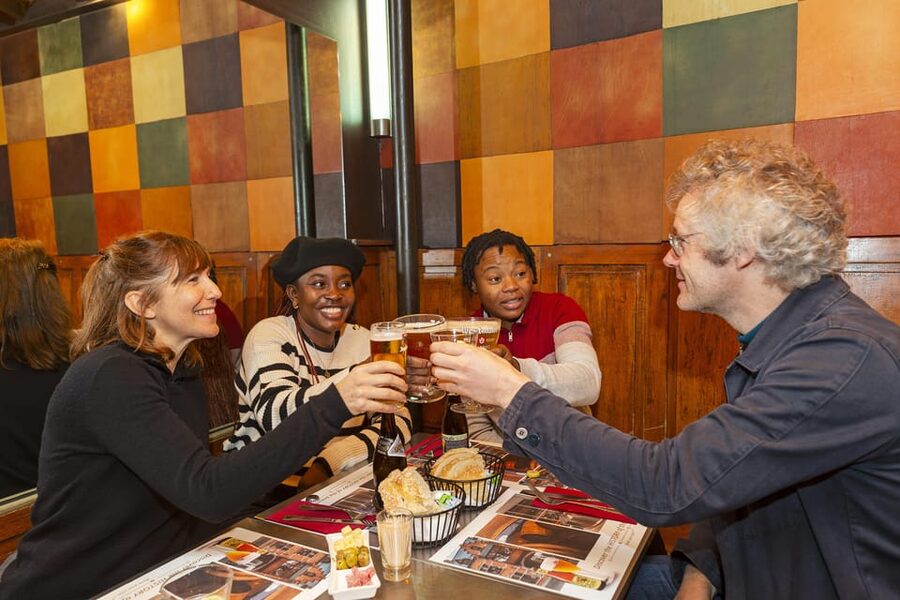
- Come with an empty stomach: The food adds up to a full meal, plus dessert and at least one alcoholic drink.
Why this Munich food tour works
Munich is often introduced through beer halls, pretzels, and Oktoberfest images. Those are part of the picture, but Bavarian food is broader than a stein and a sausage. This tour helps you understand how breakfast foods, market produce, restaurant dishes, pastries, honey wine, and schnapps fit together.
I like the way the experience connects eating with place. You do not simply sit down and wait for plates. You walk through central Munich, hear stories about the city, pass historic squares, and taste food in different settings. That makes the tour useful early in a Munich visit because you get both a meal and a quick orientation.
The group size also matters. With no more than 12 people, you should have a better chance of hearing the guide in a busy market or restaurant. It will not feel as private as a one-to-one tour, but it is much more personal than a large coach outing.
The tour is offered in English and German. The guide may use both languages during the walk, so English speakers should be comfortable asking for clarification if needed. Past guiding has included Renate, Andrea, and Erik, all praised for warmth, city stories, and clear explanations.
More Food and Drink Tours in Munich
- Bavarian Beer and Food Evening Tour in Munich
★ 4.5 · 1,575 reviews - Classic Mike’s Bike Tour daily @ 11.30 incl Beer Garden & Surfers
★ 5.0 · 1,246 reviews - Munich: Viktualienmarkt Food Tour
★ 4.5 · 1,127 reviews
Meeting at the Wild Boar statue
The tour begins at the entrance to the Deutsches Jagd- und Fischereimuseum, also called the German Hunting and Fishing Museum. Look for the statue of the wild boar outside the entrance.
This is a practical meeting point in central Munich, but you should allow a little extra time to find the exact statue. The starting location is not at Viktualienmarkt, even though the market becomes an important part of the tour later.
Wear comfortable shoes and clothes. The route includes walking between food stops and sightseeing points, and you should not bring luggage or a large bag. A small day bag is the sensible choice.
The tour lasts three hours, with departure times depending on availability. A late morning start can feel more like breakfast and lunch combined. One person who joined at 10:45 found the food so plentiful that eating much beforehand would have been a mistake. That is sound advice.
Viktualienmarkt: Munich’s open-air pantry
The first major stop is Viktualienmarkt, Munich’s well-known food market. It is a good place to begin because it gives you a quick look at the ingredients and eating habits that shape local cuisine.
The market visit is not just a walk past stalls. Food tasting is part of the stop, and the route returns to Viktualienmarkt later. That repeated visit helps the market feel like part of the meal rather than a quick photo stop.
You might see a useful contrast between everyday Bavarian foods and more polished restaurant cooking. The exact tastings can change with the season, so you should not expect an identical menu on every date. That flexibility is sensible in a market setting, where the best products may vary throughout the year.
The market also gives the guide a natural place to explain local recipes and ingredients. You can ask why a dish is served in a particular way, how a sweet mustard differs from other mustard, or how a traditional food fits into local routines.
Weißwurst, pretzel, and the Bavarian breakfast ritual
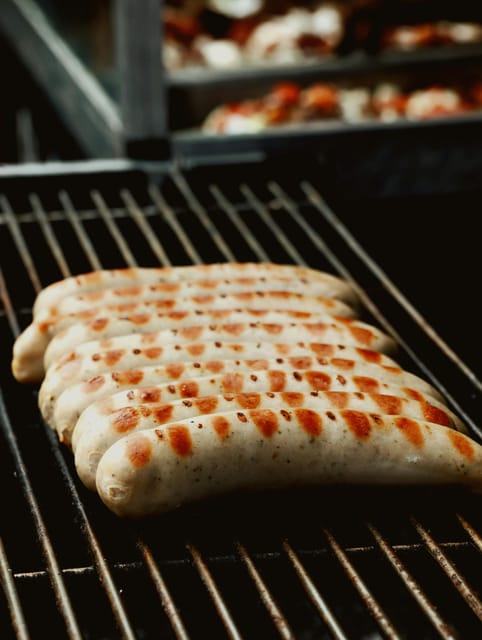
For a morning or midday tour, one possible first tasting is a classic Bavarian breakfast: Weißwurst with a soft, freshly baked pretzel and sweet mustard.
Weißwurst is a pale white sausage traditionally associated with Bavaria. The mild sausage, soft pretzel, and sweet mustard create a simple combination, but the appeal is in the balance. The pretzel brings salt and chew, while the mustard adds sweetness and sharpness to the sausage.
This is more than a random local snack. It gives you a look at a Bavarian food custom that many visitors miss when they go straight to a large beer hall. The guide explains the dish and its place in local eating traditions, so you gain context along with the taste.
The timing affects the experience. If you book at 10:45, think of this as breakfast that runs into lunch. You may want only coffee or a very light bite before the tour. Since at least one serving is included at every food stop, you will be eating steadily.
Still Munich, at a slower pace:
- From Munich: Neuschwanstein & Linderhof Castle Full-Day Trip
★ 4.5 · 12,494 reviews - Neuschwanstein & Linderhof Castle-Fairytale Day Tour from Munich
★ 4.5 · 7,275 reviews - Munich: Third Reich & WWII Walking Tour
★ 4.6 · 6,181 reviews - Dachau Concentration Camp Memorial Site Tour from Munich by Train
★ 4.5 · 5,637 reviews
Evening option: Leberkäs-semmel
Evening departures may replace the Weißwurst breakfast with Leberkäs-semmel, a familiar Bavarian street food.
A Leberkäs-semmel is a slice of baked meatloaf served in a bread roll. It is compact, filling, and well suited to a casual stop while walking through the city. It also gives you a different side of Bavarian eating than the more formal restaurant course later in the tour.
The important point is that the menu is not fixed in every detail. Tastings may change with the season and the time of day. If you have your heart set on Weißwurst, confirm the available departure and menu details before booking.
Platzl and Munich’s dining traditions
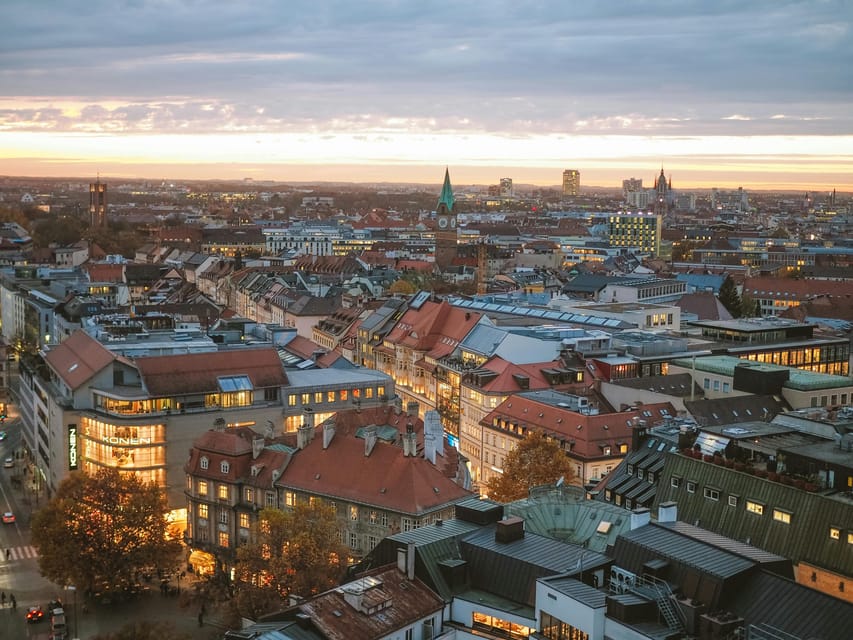
The route continues to Platzl, one of central Munich’s best-known areas. Here you combine sightseeing with another tasting.
Platzl is a useful setting for understanding how Munich presents its traditional food culture. It has long been associated with restaurants and classic city-center dining, so the stop fits the tour’s aim of pairing food with architecture and local stories.
Your guide may point out historic details, explain local customs, and suggest places worth returning to later. Erik, in particular, received praise for sharing plenty of information about history and architecture while keeping the food tour enjoyable.
This is one reason I would not treat the activity as a meal-only outing. You are paying for the guide’s interpretation as much as for the food. If you want nothing but restaurant hopping, the sightseeing may feel like a delay. If you enjoy understanding where you are, the walking sections add real value.
Marienplatz: a short city orientation
Marienplatz is included as a sightseeing stop rather than a separate food course. It gives you one of the clearest central reference points in Munich and breaks up the eating with a little city orientation.
A food tour can be a good way to see Marienplatz because you are already moving through the center with a purpose. Instead of arriving, taking a few photographs, and leaving, you hear some background from a local guide and then continue toward the next tasting.
Do not expect a long guided city tour here. The main purpose remains food, and the three-hour schedule has to leave room for four stops. Still, this short visit helps you place the restaurants and markets within Munich’s central streets.
Sankt-Jakobs-Platz and another taste of the city
The itinerary also passes through Sankt-Jakobs-Platz, where sightseeing and food tasting are combined.
This section adds variety to the route and keeps the experience from becoming a straight line between the same few tourist sights. The guide can connect the square, nearby streets, and food traditions through stories about Munich.
The exact dish served here is not guaranteed in advance. That is worth remembering if you have allergies, strong dislikes, or a strict diet. The tour promises at least one food serving at each stop, but the specific items can vary.
For most people, this flexibility is part of the fun. You get a broader sample of Bavarian cooking rather than a rigid menu that ignores the season.
The main Bavarian dish in an iconic restaurant
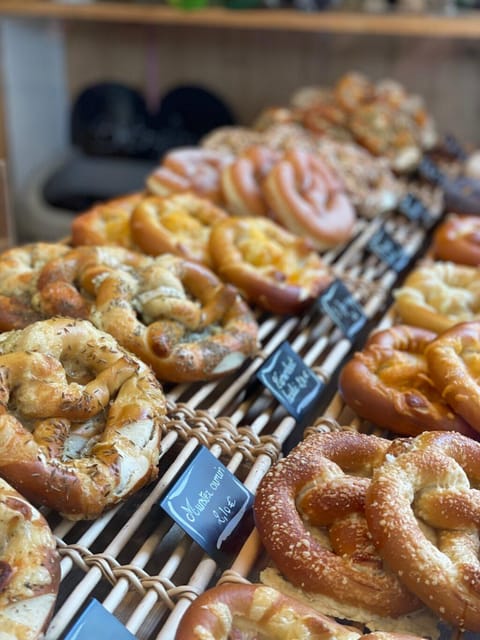
At some point, the tour stops for a main Bavarian dish in an iconic restaurant. This is the part that turns the outing from a tasting walk into a full meal.
A restaurant course gives you a chance to sit down, slow the pace, and try Bavarian cooking in a more traditional setting. The guide can explain what you are eating and how it relates to the simpler foods sampled earlier.
The inclusion of a substantial main course is important when judging the $90 price. You are not paying only for a pretzel and a few bites. The package includes at least four food stops, a full meal, water, and at least one alcoholic drink.
Still, value depends on what you would have ordered on your own. If you would normally spend generously on lunch, dessert, and drinks in central Munich, the price can make sense. If you prefer inexpensive bakery snacks and market food, the tour may feel costly.
One United States visitor also reported receiving more food than expected, including four tastings, a breakfast option, a substantial lunch stop, dessert, and honey wine. Plan around that reality. This is not a sample-only route.
Dessert, Schmalznudel, and a final drink
The final food section is sweet. Possible desserts include Schmalznudel or a local Krapfen, paired with traditional Honigwein or schnapps.
Schmalznudel is a fried pastry, while Krapfen is a filled doughnut-style treat. Either makes a fitting finish after sausage, bread, market food, and a main dish. The dessert gives the tour a different texture and flavor from the earlier courses.
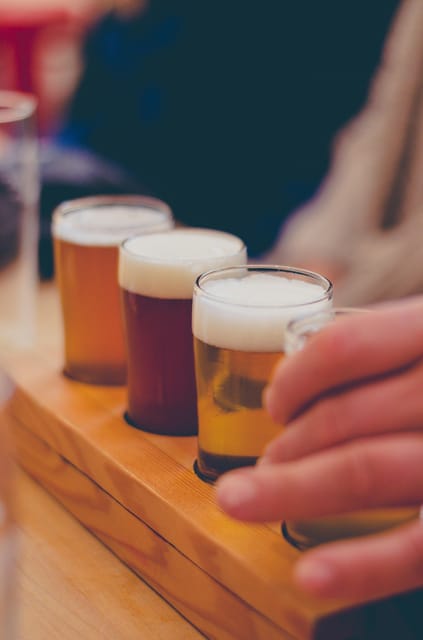
Honigwein, or honey wine, brings a sweet drink option. Schnapps offers a stronger finish, so you can ask the guide what is being served and choose how much you want to drink. At least one alcoholic drink is included, but additional drinks cost extra.
Water is also included. That small detail matters after several tastings and a walk through the city. If you want more alcohol or extra food beyond the planned servings, budget separately.
The tour finishes at Viktualienmarkt, which is convenient for continuing your day in central Munich. You can stay nearby for more sightseeing, shopping, or an evening meal, though you may not need food immediately.
What the guides add to the food
The strongest part of this experience is not one single dish. It is the guide’s ability to connect food with Munich.
Andrea was praised as friendly and well informed. Renate led a private tour that left the group full and satisfied before an evening in Munich. Erik received strong praise for his history and architecture stories. The names matter because guide quality can shape a small-group tour more than the printed route does.
You should expect explanations about recipes, local customs, historic points, and places to eat or shop after the tour. One English-speaking group specifically appreciated the guide’s clear English and extra recommendations between food stops.
The tour may be conducted in both English and German. That is not necessarily a problem, but it can affect the pace if you speak only English. Ask questions directly and let the guide know if you need a little more explanation.
Price, group size, and overall value
The listed price is $90 per person. That is not a budget lunch, but it covers a guide, at least four food servings, a full meal, water, and at least one alcoholic drink.
The small group limit of 12 improves the value because you are buying access to a local guide, not just food. The route also includes several central sights, a market visit, restaurant time, and city advice.
Check the final price carefully before confirming. One booking experience showed a lower price at first, then a much higher amount at checkout. Another available tour appeared at $112 with similar or greater tasting options. Since rates may change by date or tour type, compare the final totals rather than relying on the first price you see.
The tour requires at least two people to operate. If that minimum is not reached, the activity may be rescheduled. Keep that in mind if your schedule in Munich is tight.
Who should book this experience?
I would recommend this tour to first-time Munich visitors who want a quick, guided introduction to Bavarian food. It suits people who enjoy eating a full meal while learning a little about the streets and squares around them.
It is also a good fit if you are unsure what to order in Munich. The guide gives you a safe way to try Weißwurst, Leberkäs-semmel, traditional desserts, honey wine, and restaurant dishes without having to decode every menu alone.
Families can bring children under five free of charge, although the tour still involves three hours of walking and several food stops. People with limited mobility should note that the tour is wheelchair accessible, but the route includes market and city-center movement.
You may want a different activity if you need a fixed menu, want to avoid alcohol completely, or prefer a private meal with no walking. You should also check the menu details in advance if you have food allergies, since seasonal tastings can change.
Should you book the Munich food tour?
Book it if you want a full Bavarian meal with local stories, not merely a list of small samples. The combination of Viktualienmarkt, central squares, a traditional restaurant, dessert, and drinks gives you a useful first taste of Munich.
I especially like it for the first or second day of a visit. You will leave with a better idea of what to eat, where to continue dining, and how Munich’s food fits into the city around you. Arrive hungry, wear good shoes, and verify the final price before booking.
FAQ
How long does the Munich food tour last?
The tour lasts three hours.
How much does the tour cost?
The listed price is $90 per person. The final price may vary by date or booking option, so check the total before confirming.
Where does the tour meet?
Meet by the entrance to the Deutsches Jagd- und Fischereimuseum, beside the statue of the wild boar.
Where does the tour finish?
The tour finishes at Viktualienmarkt.
What food is included?
The tour includes at least one serving at each food stop and at least four food stops overall. Possible tastings include Weißwurst with pretzel and sweet mustard, Leberkäs-semmel, a main Bavarian dish, and dessert such as Schmalznudel or Krapfen.
Are drinks included?
Yes. Water and at least one alcoholic drink are included. The drink may be traditional Honigwein or schnapps. Additional food and drinks are not included.
Is the tour offered in English?
Yes. The tour is offered in English and German. The guide may speak both languages during the experience.
Can young children join the tour?
Yes. Children under five years old can take the tour free of charge. The tour requires at least two people to operate and allows a maximum of 12 participants.
Just added around Munich
- Pub crawl incl. Oktoberfest museum guided tour with beer tasting (private)★ 5.0 · 5 reviews
- South Tyrolean specialties and wine tasting★ 5.0 · 5 reviews
- Size Matters Beer Tour Munich★ 4.6 · 105 reviews
- Short & sweet: Tasting the Viktualienmarkt★ 4.8 · 37 reviews
- Secret Food Tours Munich★ 4.8 · 5 reviews
- Munich: Romantic Wine Experience for Two at Viktualienmarkt★ 4.2 · 14 reviews
- Residence of Munich private tour with skip the line ticket★ 5.0 · 4 reviews
- Munich: Resistance against Hitler – Historical Walking Tour★ 5.0 · 5 reviews
Food & Drink, compared.
St. Pauli Highlights Guided Tour with Beer for 18+
Read our review →
Elbphilharmonie Plaza and HafenCity Food Tour
Read our review →
Bavarian Beer and Food Evening Tour in Munich
Read our review →
Classic Mike’s Bike Tour daily @ 11.30 incl Beer Garden & Surfers
Read our review →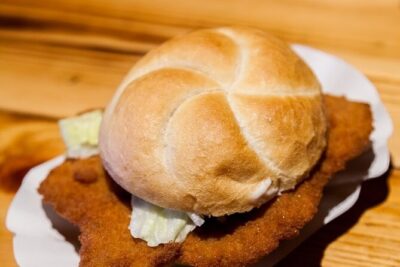
Berlin Center Food Tour with 8+ Authentic Local Tastings
Read our review →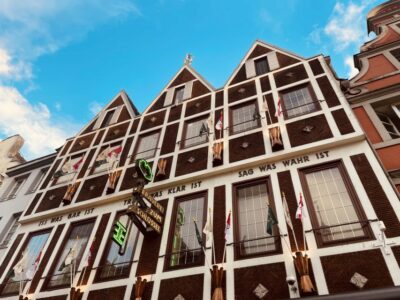
Browse the lists this tour appears in