
Reviewed · THIRD REICH HISTORY TOURS
Munich: Third Reich & WWII Walking Tour
History still speaks in Munich. This 165-minute walking tour follows Hitler’s rise from postwar political chaos to the creation of the Third Reich, using the city’s streets, squares, and beer halls as the classroom. I like the route because it connects major events to real places, and I like that it includes the White Rose resistance movement rather than focusing only on Nazi power. The main consideration is simple: this is a serious outdoor tour, so cold, rain, and a long stretch on foot can affect your comfort.
At $31 per person, the tour offers solid value if you want a guided introduction to Munich’s Nazi-era past. Guides such as Michael, Steve, Alex, Josh, Florian, Danielle, and Ulrich have been praised for clear explanations, strong voices, humor, and respectful handling of painful material. Bring comfortable shoes and warm clothing, especially in winter. The meeting point can change with the option you book, so check your confirmation carefully.
In This Review
- Key points to know before you book
- Why Munich is the right place for this history
- The Hofbräuhaus and the first mass meeting
- Feldherrnhalle and the failed attempt to seize power
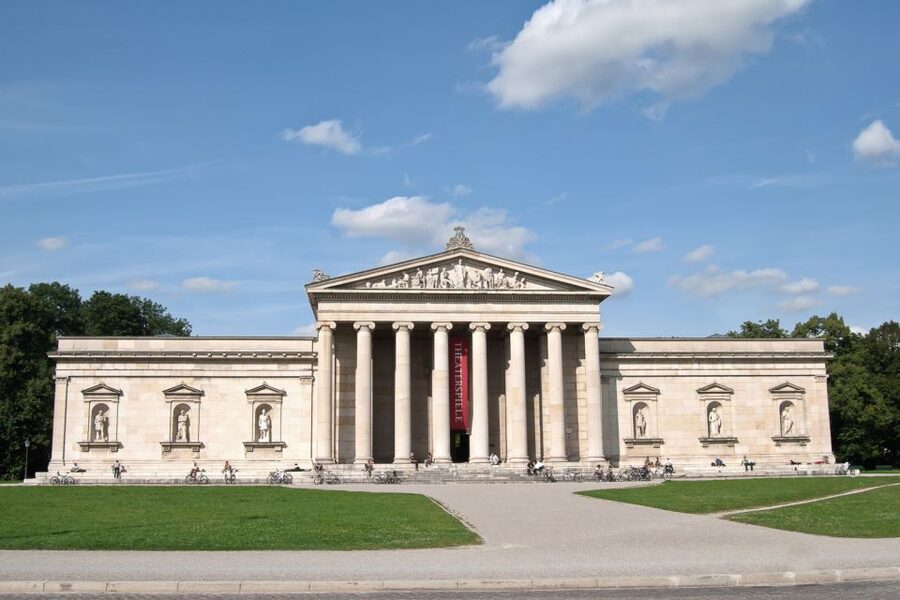
- Königsplatz and the machinery of spectacle
- The Hofgarten and the White Rose movement
- How the guides shape the experience
- Walking pace, weather, and comfort
- Is $31 a fair price?
- Who should book this Munich walking tour?
- Final verdict: book it if you want history tied to place
- FAQ
- How long does the Munich Third Reich and WWII Walking Tour last?
- What places does the tour visit?
- Does the tour discuss the White Rose resistance movement?
- What languages are available?
- What should I bring?
- Can I cancel the booking?
Key points to know before you book
- The Hofbräuhaus connects beer-hall culture with Nazi beginnings: You learn about the first mass meeting of Hitler’s movement in one of Munich’s best-known buildings.
- Feldherrnhalle marks the failed 1923 power grab: This is where the tour explains Hitler’s attempted seizure of control and its political afterlife.
- Königsplatz shows how public space became political theater: The square was used for Nazi rallies and remains one of the most important stops on the route.
- The Hofgarten adds a story of resistance: The White Rose movement offers a vital counterpoint to the story of Nazi expansion.
- Guide quality is a major strength: Michael, Steve, Alex, Josh, and others are repeatedly praised for making difficult material clear and engaging.
- Cold weather can be a real factor: Several tours took place in freezing or snowy conditions, so dress for a long outdoor activity.
Why Munich is the right place for this history
Munich is often sold through beer halls, palaces, museums, and handsome squares. Yet it was also the city where Hitler’s political career took shape and where the Nazi movement found early support, organization, and publicity.
That contrast gives this walk its force. You are not being taken to a distant battlefield or a single memorial. You are moving through an ordinary city center where political meetings, propaganda events, attempted coups, student resistance, and wartime destruction became part of Munich’s story.
The tour begins with Germany’s difficult situation after World War I. The country was defeated and humiliated, while Bavaria faced revolution, political violence, inflation, and assassination. That setting helps explain how extremist politics could gain attention. It does not excuse the crimes that followed, but it gives you the background needed to understand why Munich became such an important base for Hitler and his movement.
I appreciate that this approach deals with cause and effect rather than reducing the story to a parade of Nazi names and dates. The guide’s job is to show how political frustration, public speaking, organized propaganda, and the use of familiar civic spaces helped turn a fringe movement into a force capable of taking power.
More Third Reich History Tours in Munich
- Third Reich Walking Tour Munich
★ 4.5 · 4,291 reviews - Munich: Birthplace of the Third Reich Guided Walking Tour
★ 4.6 · 771 reviews - Munich World War II Sites Including Dachau Concentration Camp
★ 4.5 · 570 reviews
The Hofbräuhaus and the first mass meeting
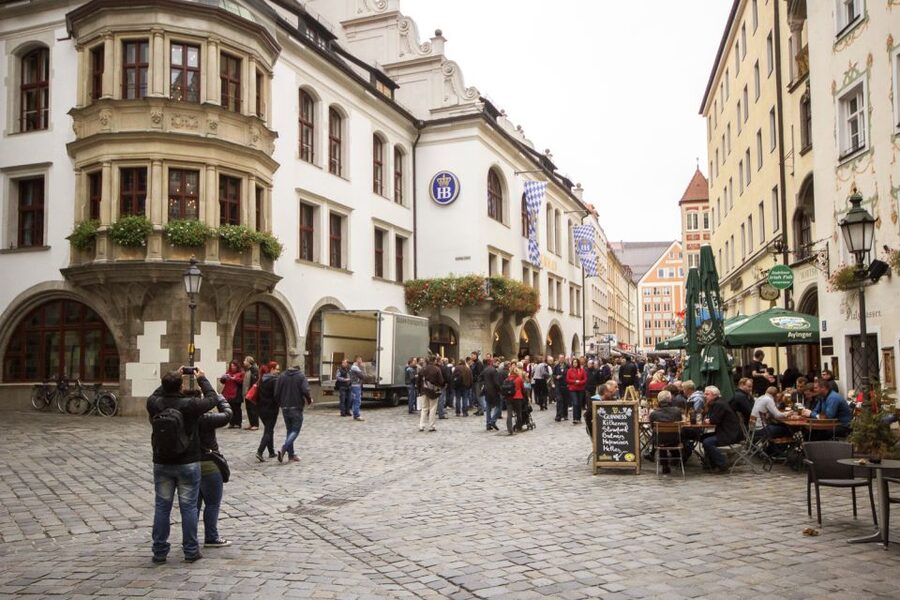
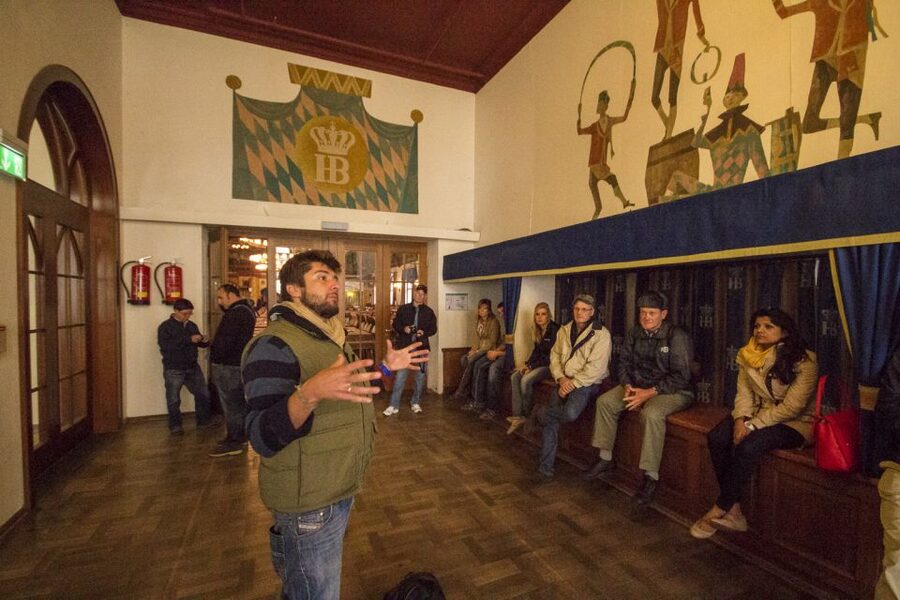
The Hofbräuhaus is one of Munich’s most famous beer halls, which makes it an especially striking place to discuss the birth of Nazism. The tour uses it to explain the first major mass meeting of Hitler’s movement and the way beer halls functioned as political gathering places.
This stop gives you a useful sense of scale. Political movements do not grow only in government offices. They need rooms, audiences, speeches, arguments, and people willing to return for another meeting. In Munich, beer halls provided a familiar setting where politics could be mixed with social life and public debate.
Your guide will place Hitler’s rise within the broader political turmoil of Bavaria after World War I. You should expect a spoken explanation rather than a museum-style display, so the guide’s delivery matters. The strongest guides make the setting easy to picture and explain why the location mattered without turning the talk into a dry list of dates.
Michael has received praise for his clear voice and enthusiasm. Steve has also been singled out for explaining difficult subjects carefully and answering questions. If you get a guide with a similar approach, this opening stop should give you a firm base for the rest of the walk.
The Hofbräuhaus is still a busy public attraction, so listening conditions may vary. One participant suggested that a small speaker would help when crowds are large or city noise is high. That is useful advice, especially if you have hearing difficulty or are joining a larger group.
Feldherrnhalle and the failed attempt to seize power
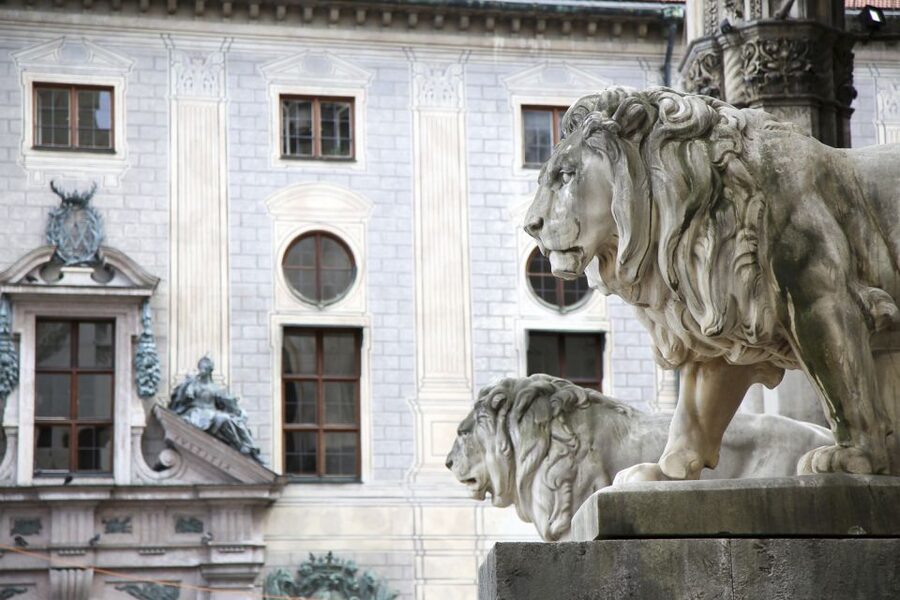
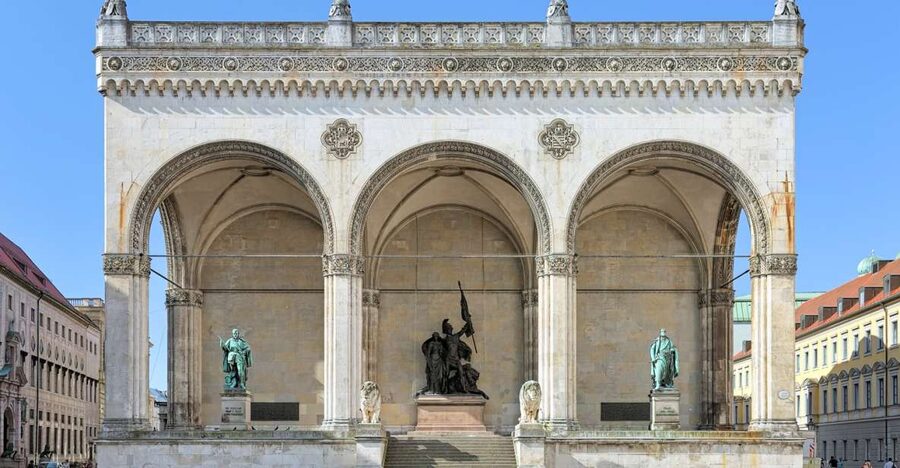
The walk then follows Hitler’s movement toward the Feldherrnhalle, a major monument on Munich’s Odeonsplatz. This is the site associated with the failed attempt to seize power in 1923, often called the Beer Hall Putsch.
The important lesson here is that Hitler did not simply win power through one smooth election campaign. His movement tested force, spectacle, street politics, and public intimidation before later using legal and political tools to gain control. The failed coup could have ended his career, but it instead gave him a national platform and helped shape the mythology surrounding the Nazi Party.
At the Feldherrnhalle, you can better understand how physical locations become political symbols. A monument that appears to be part of the city’s grand architectural setting also became tied to confrontation, loyalty, and Nazi ceremony.
This is one of the places where a live guide can add real value. The details are easier to grasp when someone explains who was present, what Hitler hoped to achieve, and why the failure did not destroy his ambitions. Guides have been praised for bringing lesser-known facts and local details into the story, which helps the stop feel more specific than a standard overview of the 1923 coup.
The site also calls for a respectful tone. This is not a stop for theatrical Nazi reenactment or sensational stories. The best approach is sober, factual, and alert to the human consequences behind the political drama.
Königsplatz and the machinery of spectacle
Königsplatz is one of the tour’s most important locations. The square was used for Nazi Party rallies, and its broad design made it suitable for mass gatherings and carefully staged political displays.
Here, the tour shifts from the early rise of Hitler to the way the Nazi regime used space and ceremony to project power. Large public rallies were not random gatherings. They were designed to create a feeling of unity, discipline, and obedience. Buildings, flags, uniforms, speeches, and crowds all played a part.
Königsplatz also helps you see how the movement tried to reshape Munich’s public identity. A city square could be turned into a stage for ideology. The physical setting mattered because it gave political messages a sense of permanence and authority.
This is a good stop for anyone who already knows the broad outline of the Third Reich but wants to understand how propaganda worked at street level. You can connect the political history to the design and use of a real urban space.
The exact ending point may vary. One person finished near the Munich Documentation Centre and used the opportunity to visit it afterward, while another expected to end at Königsplatz and did not. Do not treat a particular final stop as guaranteed unless it is confirmed for your booking option.
If your tour does finish near the Documentation Centre, it could make a useful follow-up visit. The walking tour and a museum visit serve different purposes: the guide gives you a connected story across the city, while an exhibition can give you documents, photographs, and more time with individual subjects.
More Walking Tours in Munich
- Munich: Old Town & Viktualienmarkt City Walk in German
★ 4.7 · 2,304 reviews - Munich: Night Watchman Walking Tour
★ 4.7 · 2,092 reviews - Munich Ghosts and Spirits Evening Walking Tour
★ 5.0 · 1,900 reviews - Munich Old Town Walking Tour
★ 4.5 · 1,287 reviews
The Hofgarten and the White Rose movement
The stop in the Hofgarten is important because it broadens the story beyond Hitler and his supporters. Here you learn about the White Rose, a student-led resistance movement that opposed the Nazi regime.
Including the White Rose is one of the tour’s best choices. A tour about the Third Reich can easily become too focused on Nazi leaders, party events, and military history. The White Rose reminds you that opposition existed, even under a system built on fear and repression.
The group’s story also changes the emotional rhythm of the walk. After hearing about rallies, political organization, and the growth of dictatorship, you encounter young people who chose to resist. Their actions did not stop the regime, but they remain important because they show that individual choices still mattered.
The Hofgarten itself offers a quieter setting for this part of the discussion. You should expect the guide to explain the movement and its place in Munich’s wartime history rather than visit a large indoor exhibition. It is a reflective stop, and the guide’s sensitivity matters as much as factual accuracy.
Several guides have been praised for treating the subject with respect. Josh, in particular, has been described as direct, thoughtful, and able to connect the history to the world today. That wider perspective can be useful, provided it remains tied to the actual events and does not turn into a modern political lecture.
How the guides shape the experience
The strongest praise for this tour concerns the guides. That is worth emphasizing because a walking tour is only as good as the person leading it.
Michael has been praised for his enthusiasm, strong voice, and ability to explain Munich’s history in a clear way. Steve is repeatedly described as warm, thorough, and especially considerate in cold weather. He has brought hot tea, disposable cups, and mats for sitting on wet or snowy ledges. Those are small gestures, but they matter during a nearly three-hour outdoor walk.
Alex is often described as charismatic, approachable, and able to answer questions. Florian has been praised for combining local knowledge with a personal interest in the subject. Danielle is noted for managing large groups while keeping the mood friendly and informative.
Josh has received especially strong praise for his storytelling and voice projection. He sets expectations at the beginning, keeps the group focused, and explains complex history without making it feel like a rambling lecture. His volunteer experience at Auschwitz has also informed his approach, according to one participant, although your guide will depend on the date and availability.
The range of guide styles means your experience can vary. Some guides use humor to keep a long tour moving, while others take a more solemn approach. Both can work, but you should expect a serious subject handled through spoken storytelling, not a theatrical performance.
One practical issue came up with a large group: keeping everyone together and attentive can lead to more reminders than some people prefer. If you dislike group rules or want to wander at your own pace, a private option may suit you better. A private group is available, though the supplied details do not specify its price or exact format.
Walking pace, weather, and comfort
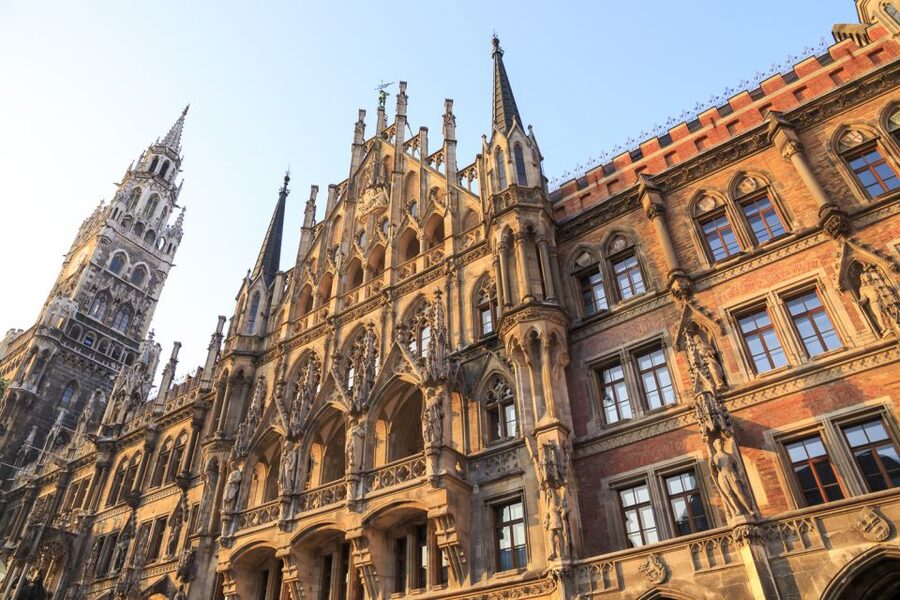
The tour lasts 2.5 hours according to the activity details, with the listed duration also given as 165 minutes. That equals two hours and 45 minutes, so plan for a substantial half-day commitment rather than a quick one-hour orientation.
You will walk between several central locations and stop often for explanations. One participant appreciated the frequent pauses, since the group was not walking continuously for long stretches. Even so, comfortable shoes are essential.
Weather deserves more attention than it usually gets in a tour description. Recent departures included cold, rain, snow, and freezing conditions. Guides have sometimes helped by taking the group indoors when possible, providing tea, or bringing something dry to sit on. You should still bring your own warm layers and rain protection because those extra touches cannot be guaranteed.
The activity is listed as wheelchair accessible. Since the route is outdoors and the meeting point may vary by booking option, check the specific departure details if you need precise access information.
The tour is offered in English and German. A clear voice is particularly useful in central Munich, where traffic, pedestrians, and crowds can make it hard to hear. If the guide is speaking too softly, move close enough to follow the explanations rather than hanging back.
Is $31 a fair price?
At $31 per person, this is a reasonable price for a 165-minute guided walk through several major sites connected with Munich’s Nazi-era history.
The value comes from the connections between locations. You are not paying simply to see the Hofbräuhaus, Feldherrnhalle, Königsplatz, and Hofgarten. You are paying for a guide to explain how those places fit into a sequence: postwar instability, the growth of Hitler’s movement, the failed 1923 coup, propaganda and mass rallies, resistance, and the destruction brought by World War II.
You could visit many of these places on your own, but the meaning would be harder to piece together. The buildings and squares do not always announce their role in the past. A good guide turns familiar city sights into historical evidence.
The tour is also a useful first step before visiting a museum or documentation center. It gives you names, events, and locations to look for afterward. If you have only a short stay in Munich, the price compares well with the time saved by receiving a connected explanation in one session.
The value is lower if you already want a quiet, self-guided visit with time for detailed reading. It is also less suitable if you are not comfortable spending almost three hours outside. In that case, a museum visit may be a better fit.
Who should book this Munich walking tour?
I would recommend it to first-time visitors who want to understand Munich beyond its famous beer halls and royal buildings. It is also a good choice for families with older children, students, and anyone with an interest in twentieth-century European history.
You do not need to arrive with expert knowledge. The tour is structured to explain the background from the beginning, and the guides are used to answering questions from people with different levels of preparation.
It can also work well for people who already know the broad story. The locations add a sense of place, while local details and lesser-known anecdotes can give familiar events more texture.
I would be cautious about booking it for very young children. The subject includes dictatorship, war, genocide, and resistance, and the presentation is designed for people willing to give the topic their full attention.
If you want the most flexible experience, consider the private group option. If you prefer meeting other people and keeping costs down, the standard tour offers stronger value at $31.
Final verdict: book it if you want history tied to place
I would book this tour if Munich’s role in the rise of Nazism is important to your visit. The route covers the essential locations, the White Rose adds moral balance, and the best guides make difficult material clear without turning it into a dry lecture.
Choose a day with enough time afterward to think about what you have heard. Wear comfortable shoes, dress warmly, and confirm the meeting and ending points for your specific option. If the walk finishes near the Munich Documentation Centre, use that as a natural next stop, but do not assume every departure follows the same ending.
Skip it if you want a light sightseeing walk or dislike serious historical discussion. For everyone else, this is a thoughtful, well-priced way to understand how Munich became central to one of Europe’s darkest chapters.
FAQ
How long does the Munich Third Reich and WWII Walking Tour last?
The activity is listed as 2.5 hours, or 165 minutes. The description also gives the duration as 2 hours and 45 minutes, so you should plan for nearly three hours.
What places does the tour visit?
The route includes the Hofbräuhaus, Feldherrnhalle, Königsplatz, and the Hofgarten. The guide explains the historical role of each location.
Does the tour discuss the White Rose resistance movement?
Yes. The tour stops in the Hofgarten to discuss the White Rose, a resistance movement that opposed the Nazi regime.
What languages are available?
The tour is offered in English and German.
What should I bring?
Bring comfortable shoes. Warm clothing is also strongly recommended in cold weather because the tour takes place outdoors and can last close to three hours.
Can I cancel the booking?
You can cancel up to 24 hours in advance for a full refund. The activity also offers reserve now and pay later, so you do not have to pay at the time of booking.
Just added around Munich
- Pub crawl incl. Oktoberfest museum guided tour with beer tasting (private)★ 5.0 · 5 reviews
- South Tyrolean specialties and wine tasting★ 5.0 · 5 reviews
- Size Matters Beer Tour Munich★ 4.6 · 105 reviews
- Short & sweet: Tasting the Viktualienmarkt★ 4.8 · 37 reviews
- Secret Food Tours Munich★ 4.8 · 5 reviews
- Munich: Romantic Wine Experience for Two at Viktualienmarkt★ 4.2 · 14 reviews
- Residence of Munich private tour with skip the line ticket★ 5.0 · 4 reviews
- Munich: Resistance against Hitler – Historical Walking Tour★ 5.0 · 5 reviews