
Reviewed · OLD TOWN TOURS
Munich: Old Town Culinary Tour
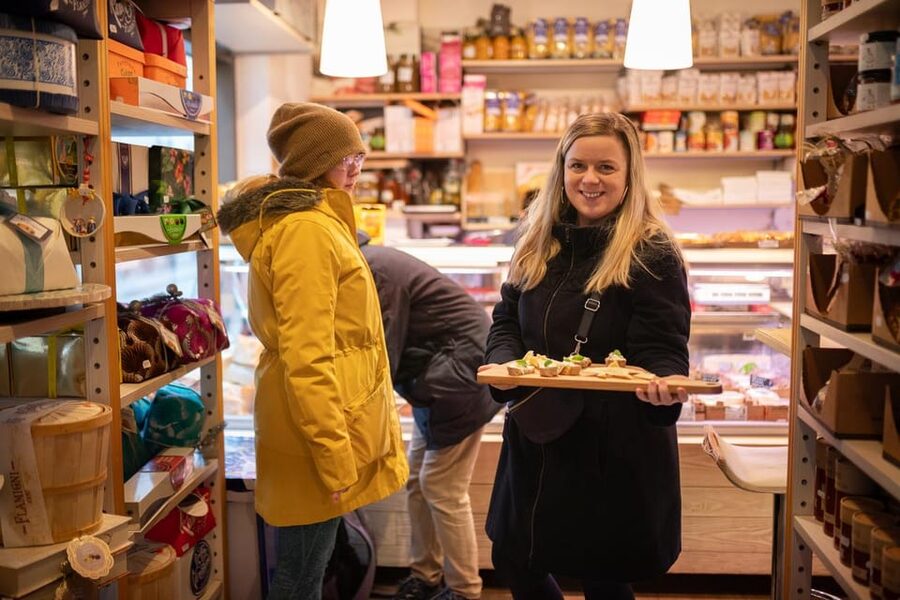
Munich tastes better with a story. This three-hour walk links five food tastings with major Old Town sights, from Marienplatz and St. Peter’s Church to Viktualienmarkt and the Jewish Center. I like the way the tour combines food with local legends, and I like that the stops include more than the usual pretzel routine: Leberkäse, sweet pastries, spices, Italian specialties, and chocolate all enter the picture.
The main consideration is that the tour is conducted in German, and drinks are not included. Seating is also not guaranteed, although a recent small group had a seat at each food stop. If you want a fully planned introduction to Munich’s food and city center, the $51 price is fair. If you mainly want a long sit-down meal, this is not that kind of tour.
In This Review
- Key points at a glance
- Why this tour works well for a first Munich day
- Starting under the Glockenspiel at Marienplatz
- Marienplatz, the Mariensäule, and St. Peter’s Church
- The first tastings: Leberkäse, pastries, and local habits
- The Jewish Center and Munich’s layered past
- Gewürze der Welt and the pleasure of a spice stop
- Small food stops and the question of seating
- Viktualienmarkt: the route’s natural food stage
- The final stop near Dreifaltigkeitsplatz
- What the guide adds to the food
- Is $51 a fair price?
- Who should book this Munich food walk?
- Should you book the Old Town Culinary Tour?
- FAQ
- Where does the Munich Old Town Culinary Tour begin?
- Where does the tour finish?
- How long does the tour last?
- How many tastings are included?
- Are drinks included?
- Is seating guaranteed at the tasting stops?
- What foods may be included?
- What language is the tour conducted in?
- Does the tour visit Viktualienmarkt?
- Can I cancel for a full refund?
Key points at a glance
- Five tastings at five Old Town locations: You move between traditional restaurants, cafés, delicatessens, and a spice shop rather than eating in one place.
- A food tour with serious sightseeing: Marienplatz, the Mariensäule, St. Peter’s Church, the Jewish Center, and Viktualienmarkt are part of the route.
- Guide Eddy brings the personality: His relaxed style, humor, local stories, and practical Munich tips earned especially warm praise.
- The food goes beyond Bavarian classics: Expect a mix that may include Leberkäse, Schmalzgebäck, spice samples, Italian specialties, a chocolate praline, and other local treats.
- A walking format keeps you moving: The tour lasts three hours and finishes near Dreifaltigkeitsplatz, not back at the meeting point.
- German is the tour language: This matters if you need detailed explanations in English or another language.
Why this tour works well for a first Munich day
A food tour can be a smart first activity in Munich because it gives you a map made of flavors. You see where the Old Town’s main sights sit, learn the names of foods you may later order, and get suggestions for the rest of your stay.
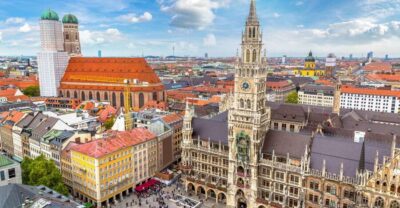
This route does that in a compact way. It begins at the Rathaus-Glockenspiel on Marienplatz, passes churches and memorials, enters the food world around Viktualienmarkt, and finishes near Dreifaltigkeitsplatz. You are not simply marching from restaurant to restaurant. The guide uses the streets between stops to explain Bavarian customs, food origins, legends, and city history.
I especially like the balance between familiar foods and less expected samples. Weisswurst, pretzels, and Leberkäse are part of the Bavarian food story, but the tour also introduces sweets such as Striezel and Knieküchle, plus food from other traditions. One tasting included Italian specialties, and another was a chocolate praline.
That variety makes the tour more useful than a narrow sausage crawl. You get an idea of how Munich eats today, not just a postcard version of Bavaria.
More Old Town Tours in Munich
- Munich: Old Town & Viktualienmarkt City Walk in German
★ 4.7 · 2,304 reviews - Munich Old Town Walking Tour
★ 4.5 · 1,287 reviews - Munich: Spooky Tour of Old Town in German
★ 4.6 · 1,112 reviews
Starting under the Glockenspiel at Marienplatz
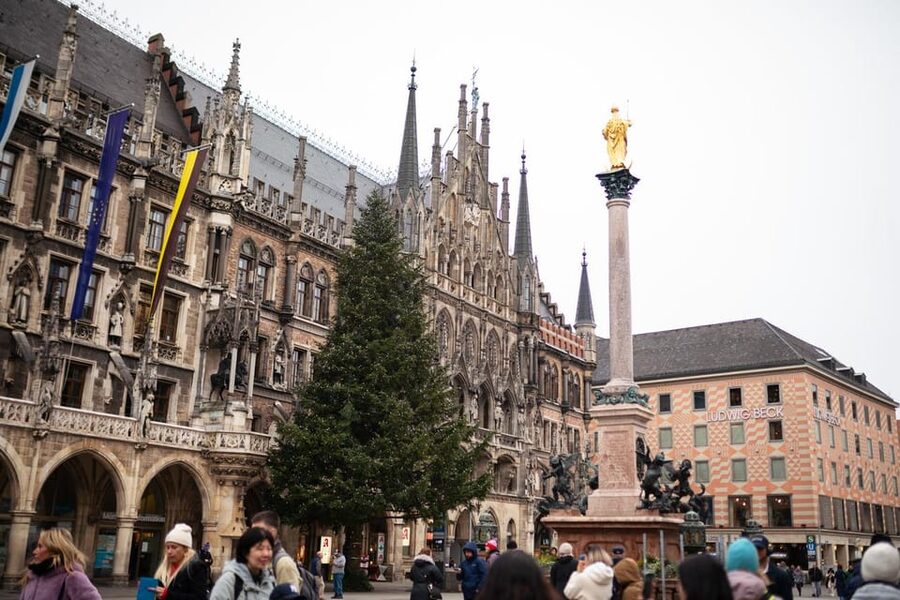
The meeting point is Marienplatz 8, down at the entrance to the Glockenspielturm. This is a central and easy-to-recognize starting place, but it can feel crowded around the town hall, so give yourself time to find the exact entrance.
The Rathaus-Glockenspiel is a natural opening point. From here, the guide can place Munich’s Old Town in context before the food begins. You may hear stories about the city’s traditions, legends, and the myths that have stuck around over time.
The first listed food stop is at Rosenstraße 7, with about 15 minutes for guided sightseeing and a tasting. Since the tour uses several short stops, you should expect sampling rather than a full course. That is useful if you want to try several things, but less suitable if you arrive hungry and expect a large meal right away.
Marienplatz, the Mariensäule, and St. Peter’s Church
From Rosenstraße, the route continues to the Mariensäule, the Marian column on Marienplatz. This is a 25-minute section with a photo stop, sightseeing, and explanation from the guide.
The value here is the connection between the plate and the place. Bavarian food traditions did not develop in a vacuum. Markets, religious customs, city life, and local celebrations all shaped what people cooked and sold. A guide can point out those connections as you stand among Munich’s most familiar buildings.
St. Peter’s Church comes next, with about 20 minutes for a photo stop and guided visit from the outside or nearby area. The itinerary does not promise an interior visit or tower climb, so you should not book this expecting admission to the church tower.
The stop still matters because St. Peter’s, known locally as Alter Peter, is one of the Old Town’s key landmarks. The guide’s stories add texture to what could otherwise be a quick photograph. One of the strongest themes in the feedback is the amount of historical detail. Even people who already knew Munich found that the guide helped them see the city differently.
The first tastings: Leberkäse, pastries, and local habits
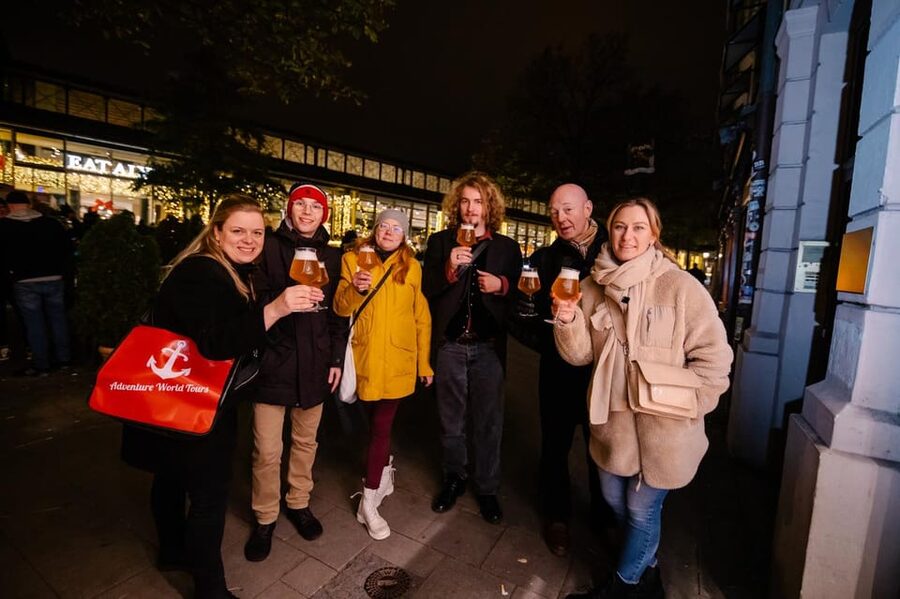
At Prälat-Zistl-Straße 10, you spend about 20 minutes on sightseeing and a food tasting. This is one of the places where the tour settles into the rhythm promised in the description: a short walk, a selected bite, then a conversation about what you are eating and why it matters.
Leberkäse is one of the foods the tour sets out to explain. Despite its name, it is not a cheese dish. It is a smooth baked meat loaf, commonly served warm and often paired with mustard or a roll. The tour may give you a chance to taste it in a local setting rather than treating it as a museum piece.
The sweet side of Bavarian cooking also gets attention. Striezel and Knieküchle are named as examples, along with other pastries and sweet dishes. Schmalzgebäck, a fried pastry, was specifically included in one recent tour experience. These foods help round out the picture, since Munich’s traditional eating is not just sausages, bread, and beer.
Keep in mind that the exact tasting lineup may vary. The experience promises five selected tastings, but it does not publish a fixed menu. That is normal for a food walk using local businesses, but it means you should book for the format and range rather than one exact dish.
Still Munich, at a slower pace:
- From Munich: Neuschwanstein & Linderhof Castle Full-Day Trip
★ 4.5 · 12,494 reviews - Neuschwanstein & Linderhof Castle-Fairytale Day Tour from Munich
★ 4.5 · 7,275 reviews - Munich: Third Reich & WWII Walking Tour
★ 4.6 · 6,181 reviews - Dachau Concentration Camp Memorial Site Tour from Munich by Train
★ 4.5 · 5,637 reviews
The Jewish Center and Munich’s layered past

The route then pauses at the Jüdisches Zentrum München for roughly 20 minutes. This is a sightseeing and walking segment rather than a promised food stop.
That pause is important. A city food tour can become shallow if it treats old streets as scenery only. Including the Jewish Center gives the guide a place to discuss Munich’s past and present beyond royal buildings and market stalls. The description promises stories, legends, and myths, and this part of the route helps widen the conversation.
The stop is also a reminder that Munich’s identity has many layers. The tour does not present food culture as a sealed-off Bavarian tradition. It connects the city’s eating places with the people, communities, and events that shaped the Old Town.
Gewürze der Welt and the pleasure of a spice stop
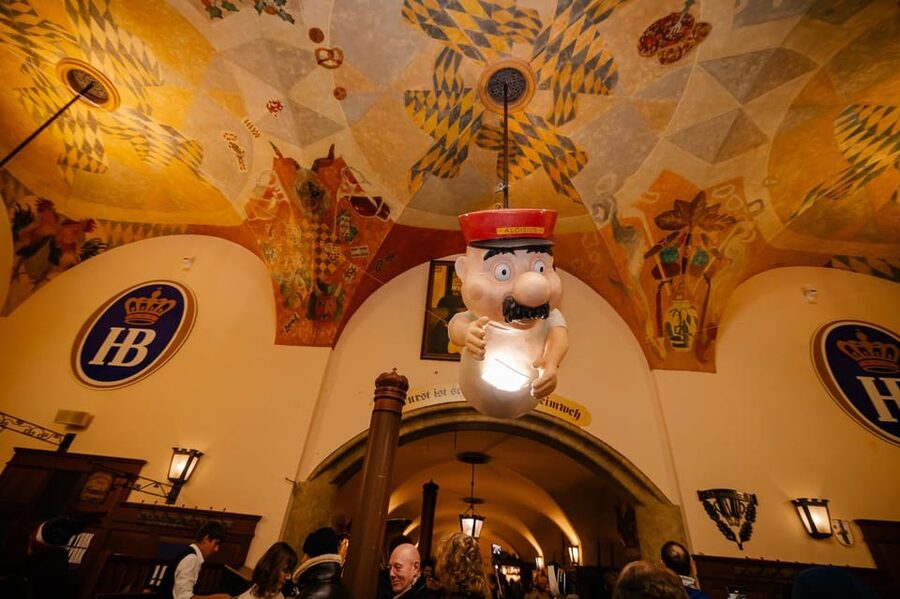
At Gewürze der Welt, you get another guided stop and tasting, scheduled for about 20 minutes. The name means Spices of the World, and the stop adds a welcome change of pace after the meat and pastry samples.
A spice tasting can seem small compared with Leberkäse, but it gives the guide a chance to talk about flavor, trade, cooking habits, and how outside influences reach a local food culture. One recent tasting included spices, and this was singled out as part of a pleasing mix of samples.
This is also the sort of place you might otherwise pass without noticing. One of the tour’s best features is the access to ordinary food businesses and specialist shops that do not always appear in a standard sightseeing route. You are not only looking at grand architecture. You are paying attention to what Munich sells and eats today.
Small food stops and the question of seating
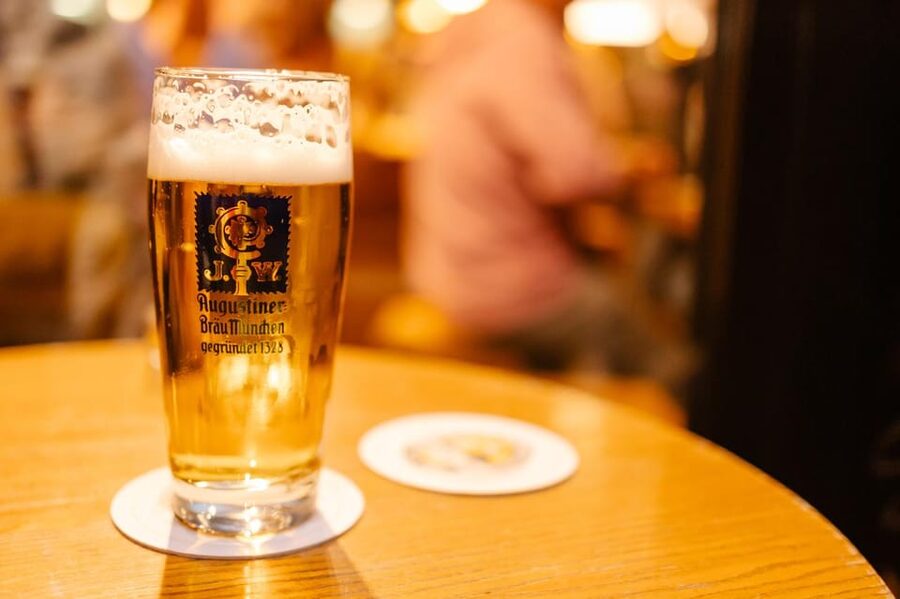
Another stop at Behindertenparkplatz includes about 20 minutes of guided sightseeing and tasting. The name in the schedule is unusual and may simply identify a meeting or access point rather than a shop name, so do not assume it is a separate attraction.
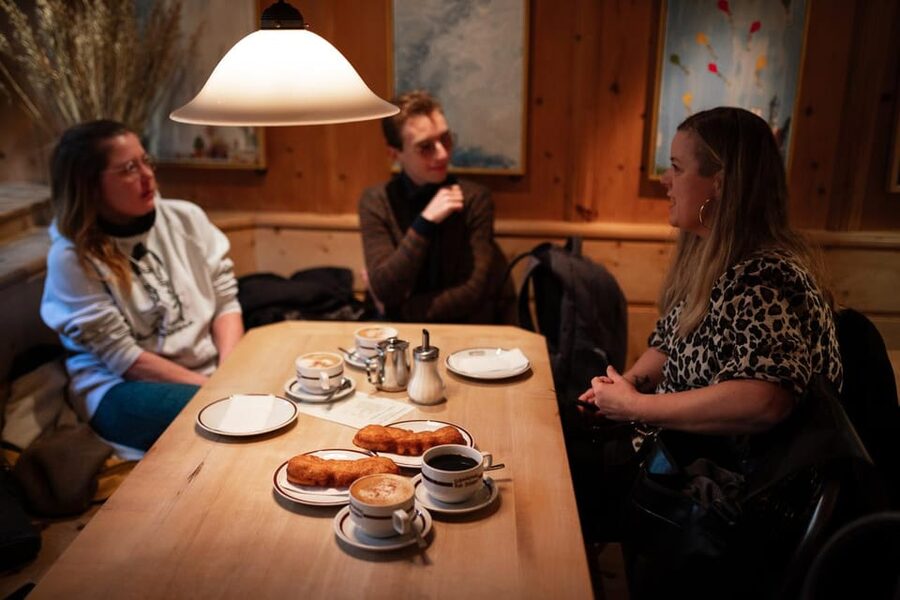
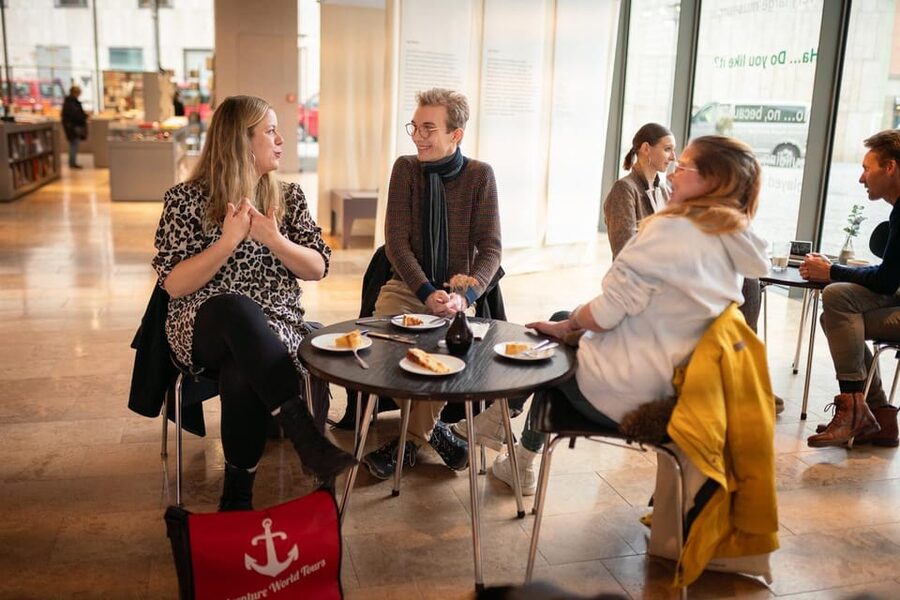
The practical point is the pace. Five tastings in three hours means you will keep walking, listening, and sampling. At some stops, you may sit down for a comfortable chat, as the tour description promises. At other points, you may be standing or moving on fairly soon.
A guaranteed seat is not included. Still, a recent small group reported having a seat at every tasting, which suggests the guide may be able to make that work when numbers are low. I would not count on it during a busy period. Wear comfortable shoes, and think of this as a walking tour with food rather than a restaurant lunch.
Viktualienmarkt: the route’s natural food stage
The 25-minute stop at Viktualienmarkt is likely the most obvious food-focused part of the walk. This central market is exactly the kind of place where Munich’s everyday food culture becomes visible: stalls, local produce, prepared foods, aromas, and shoppers all share the same space.
The tour includes a tasting here, and one participant specifically wished the chocolate stop had instead included a piece of pretzel with Obatzter at Viktualienmarkt. That comment is useful because it shows both the appeal and the limits of the tasting choices. Obatzter, the creamy Bavarian cheese spread often served with bread or pretzels, would make a classic market sample. It is not promised on this tour, so do not book expecting it.
Still, the market stop gives you a practical advantage. After the tour, you will know where to return if you want more food, and you will have a better sense of what to look for. The guide’s suggestions can also help with planning the rest of your stay. Eddy was praised for offering useful tips beyond the scheduled route.
The final stop near Dreifaltigkeitsplatz
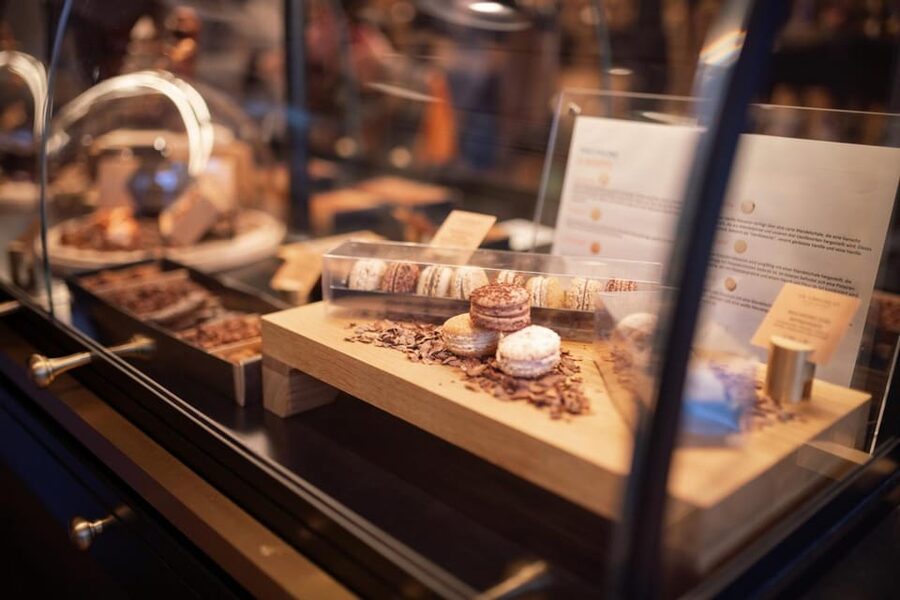
The final listed stop is at Dreifaltigkeitspl. 1A, with about 30 minutes for sightseeing, a photo stop, and a tasting. The tour finishes at Dreifaltigkeitspl. 1, 80331 Munich.
This last section is longer than several earlier stops, giving the group time to slow down and talk. The exact food is not specified, but the tasting may include something sweet. A chocolate praline was part of one recent experience, and it was considered delicious, though the high shop prices discouraged buying more.
That is a helpful warning. A tasting can introduce you to a specialty without being a suggestion that you should purchase a box for the rest of your trip. If you enjoy premium chocolate, you may appreciate the stop. If you would rather spend a tasting on a classic Bavarian snack, you may find this less essential.
Finishing at Dreifaltigkeitsplatz is convenient for continuing your day in the Old Town, but remember that you will not finish at Marienplatz. The ending point is close enough for further sightseeing in central Munich, though the tour does not include transportation back to your hotel.
What the guide adds to the food
The guide is the heart of this experience. Eddy, also spelled Eddi in one account, is repeatedly praised for a relaxed manner, humor, useful local information, and detailed stories. That consistency matters more than any single pastry.
Good guiding changes a tasting from a snack into a memory. You learn what the food is, hear how it fits Bavarian culture, and get the small stories that help you remember it later. One participant already knew Munich but still came away seeing the city in a new way.
The tone also appears to be friendly rather than formal. The tour promises funny anecdotes and insider tips, and the feedback describes an easygoing experience. If you enjoy asking questions, use the walking time well. You may get recommendations for places to eat or sights to see during the rest of your stay.
There is one clear language limit. The live guide speaks German, and some content is presented in its original language. If you do not understand German, you may miss much of the value, since the stories and explanations are as important as the food.
Is $51 a fair price?
At $51 per person, the price is reasonable for three hours, five tastings, a live guide, and a route through Munich’s central sights. You are paying for food, but also for planning, introductions to local businesses, and the guide’s ability to connect the stops.
The value depends on what you want from a meal. Five samples will not replace lunch for everyone, and drinks are extra. On the other hand, eating and drinking separately at five locations could easily cost more once you add the time spent planning and the risk of choosing places that do not suit you.
The strongest value comes if you are new to Munich, interested in food culture, or short on time. The tour gives you a useful first orientation and several ideas for returning later. It is less compelling if you already have a detailed food plan or want a large, leisurely meal at one restaurant.
The rating is 4.8 from seven reviews, with especially strong praise for the guide, stories, food selection, and relaxed pace. That is a small sample, so I would treat it as encouraging rather than final proof. The praise is also specific, which makes it more useful: the guide’s humor and local detail are mentioned again and again.
Who should book this Munich food walk?
I would recommend it to first-time Munich visitors who want to combine eating with sightseeing. It also suits people who already know the city but want local stories and less obvious food stops.
It is a good fit for:
- People who enjoy small tastings rather than one formal meal
- Visitors interested in Bavarian food traditions and sweets
- Anyone who wants help finding the Old Town’s food districts
- Couples or small groups who prefer a relaxed guided walk
- German-speaking visitors who enjoy local anecdotes
I would think twice if you need English guiding, dislike walking between several stops, or want guaranteed seating. You should also avoid treating the tour as a beer-focused experience. Beer is not listed as a tasting, and drinks are not included.
Should you book the Old Town Culinary Tour?
Book it if you want a friendly introduction to Munich that uses food as the thread. The route covers major sights, the guide adds history and humor, and the five tastings offer a broad sample of Bavarian and wider local eating.
The smartest timing is early in your stay, when Eddy’s food and sightseeing suggestions can help shape the days that follow. Arrive ready to walk, eat modest portions, and listen closely. If the chocolate stop does not appeal to you, remember that the menu is not fixed, and the tour’s real strength is the complete mix of stories, places, and samples.
FAQ
Where does the Munich Old Town Culinary Tour begin?
The meeting point is Marienplatz 8 in Munich, down at the entrance to the Glockenspielturm by the Rathaus-Glockenspiel.
Where does the tour finish?
The tour finishes at Dreifaltigkeitspl. 1, 80331 Munich, near Dreifaltigkeitsplatz.
How long does the tour last?
The walking tour lasts three hours.
How many tastings are included?
Five tastings at five different locations in Munich’s Old Town are included.
Are drinks included?
No. Drinks are not included in the tour price.
Is seating guaranteed at the tasting stops?
No. A guaranteed seat is not included, although seating may be available, especially for a small group.
What foods may be included?
The tour discusses Bavarian foods such as pretzels, Weisswurst, and Leberkäse, along with sweets such as Striezel and Knieküchle. Specific tastings described from the experience include Leberkäse, Schmalzgebäck, spices, Italian specialties, and a chocolate praline. The exact menu is not fixed.
What language is the tour conducted in?
The live tour guide speaks German, and some content is shown in its original language.
Does the tour visit Viktualienmarkt?
Yes. Viktualienmarkt is one of the sightseeing and tasting stops, with about 25 minutes scheduled there.
Can I cancel for a full refund?
Yes. You can cancel up to 24 hours in advance for a full refund. You can also reserve now and pay later.
Just added around Munich
- Pub crawl incl. Oktoberfest museum guided tour with beer tasting (private)★ 5.0 · 5 reviews
- South Tyrolean specialties and wine tasting★ 5.0 · 5 reviews
- Size Matters Beer Tour Munich★ 4.6 · 105 reviews
- Short & sweet: Tasting the Viktualienmarkt★ 4.8 · 37 reviews
- Secret Food Tours Munich★ 4.8 · 5 reviews
- Munich: Romantic Wine Experience for Two at Viktualienmarkt★ 4.2 · 14 reviews
- Residence of Munich private tour with skip the line ticket★ 5.0 · 4 reviews
- Munich: Resistance against Hitler – Historical Walking Tour★ 5.0 · 5 reviews
Old Town Tours, compared.
Old Town & Viktualienmarkt City Walk in German
Read our review →
The Night Watchman Old Town Walking Tour in German
Read our review →
Browse the lists this tour appears in