
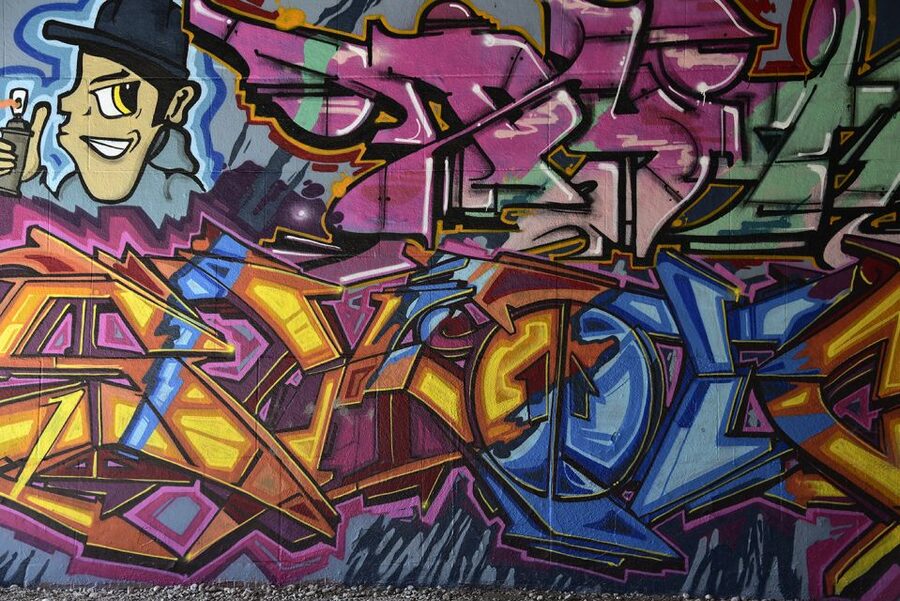
Reviewed · CYCLING TOURS
Munich: Street Art Bike Tour
Munich’s graffiti story begins far from the postcard center. This three-and-a-half-hour bike tour links the city’s 1980s graffiti roots with artwork along the Isar, in Giesing, and around the slaughterhouse district. I like the way it gets you beyond Marienplatz, and I like that the ride is about both art and the places that shaped it. The main consideration is language: the tour is officially in German, and younger children may find the 210-minute route too long.
The route has a clear local flavor. You ride past work by early figures from Munich’s graffiti movement, then see newer street artists carrying the scene forward. At $40 per person, the experience offers a useful mix of transportation, neighborhood exploring, and guided context, but you should be comfortable cycling for several hours and following a German-speaking guide.
In This Review
- Key points to know before you book
- Why Munich is an important graffiti city
- Meeting your guide at Marienplatz
- Riding beside the Isar
- Giesing and the working-class side of Munich
- The slaughterhouse district and the railway bridge break
- Meeting old masters and newer street artists
- What the German-language format means
- Is the $40 price good value?
- Who will enjoy this ride most?
- A few practical ways to prepare
- Should you book the Munich Street Art Bike Tour?
- FAQ
- Where does the Munich Street Art Bike Tour meet?
- How long does the tour last?
- What is included in the price?
- What language is the tour conducted in?
- Is the tour suitable for children?
- Is the tour wheelchair accessible?
- Is a private group available?
- Can I cancel the booking?
Key points to know before you book
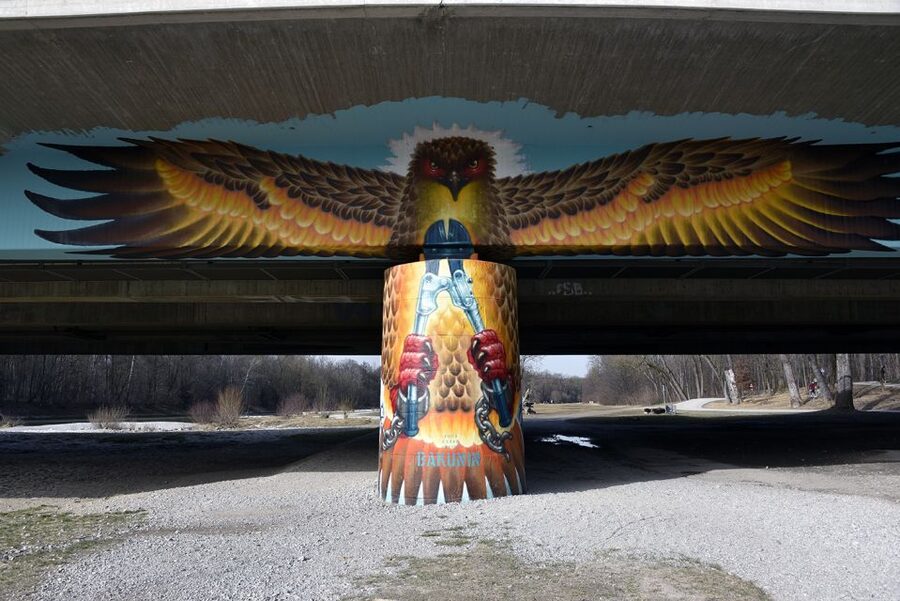
- Munich helped pioneer German graffiti in the 1980s, making this more than a collection of painted walls.
- The route leaves central Munich behind, traveling along the Isar to Giesing and the slaughterhouse district.
- A stop at a boat beneath a railway bridge gives the ride a relaxed pause away from the main tourist routes.
- Rental bikes and a guide are included, so you do not need to organize your own wheels.
- German is the tour language, though guide Ulrike made a strong effort to explain the art to English-speaking participants.
- The tour lasts 210 minutes, and a 12-year-old found the length tiring, while children aged 10 and 12 also enjoyed the experience overall.
Why Munich is an important graffiti city
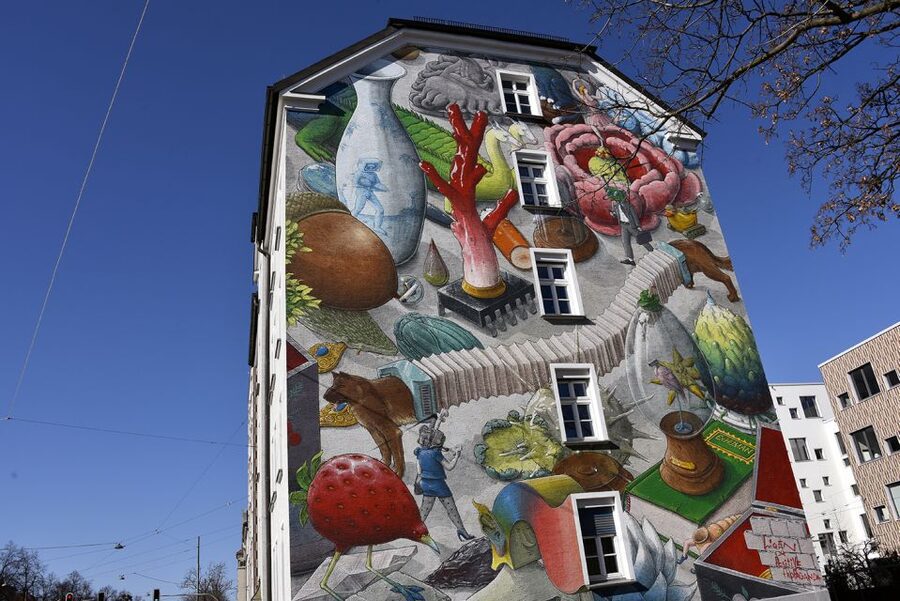
Munich can seem too polished for a serious graffiti story. Its tidy squares, grand museums, and carefully kept streets do not immediately suggest rebellion painted under cover of darkness. Yet the city was considered a major center of graffiti in the 1980s, alongside New York.
That contrast is the key to this tour. You are not simply hunting for colorful walls. You are learning how an art form that began outside official galleries found a place in Munich. The older works connect the city to the early graffiti movement, while newer pieces show that the scene did not end with its first generation.
I find that context important. Street art can be easy to admire for a few seconds and then forget. A guide who explains the people, styles, and local story gives each piece more weight. You begin to notice how the art fits its surroundings rather than treating every wall as a quick photo stop.
The route also shows a side of Munich that many first-time visitors miss. Marienplatz is useful as a starting point, but it tells only part of the city’s story. Giesing, the Isar riverbanks, and the slaughterhouse district offer a different view of Munich, one shaped less by royal architecture and more by working neighborhoods, infrastructure, and everyday urban space.
More Bike Tours in Munich
- Munich 3-Hour Guided Bike Tour
★ 4.5 · 1,731 reviews - Classic Mike’s Bike Tour daily @ 11.30 incl Beer Garden & Surfers
★ 5.0 · 1,246 reviews - Neuschwanstein Castle by Bus Incl. Bike Ride or Hohenschwangau
★ 5.0 · 607 reviews
Meeting your guide at Marienplatz
The tour begins in front of the Tourist Information Office at Marienplatz. Look for a guide holding a yellow street art tour sign with red letters. That detail matters in a busy central square, where several tours may gather at the same time.
Marienplatz is an easy meeting point, but it is not the main subject of the outing. After meeting the guide and receiving a rental bike, you head away from the center. The change is part of the appeal. You start in the Munich most visitors know, then gradually move into places that are less polished and more connected to the city’s creative life.
The supplied information does not specify the bike model, route distance, or helmet arrangements, so I would check those points before booking if they matter to you. The important practical fact is that rental bikes are included. You do not need to carry your own bicycle through Munich or arrange a separate rental.
This is a guided ride rather than a freewheeling art walk. You should be ready to stay with the group, listen while stopped, and cycle through several parts of the city. The private group option can be useful if you want a more personal pace or have a group with different interests.
Riding beside the Isar
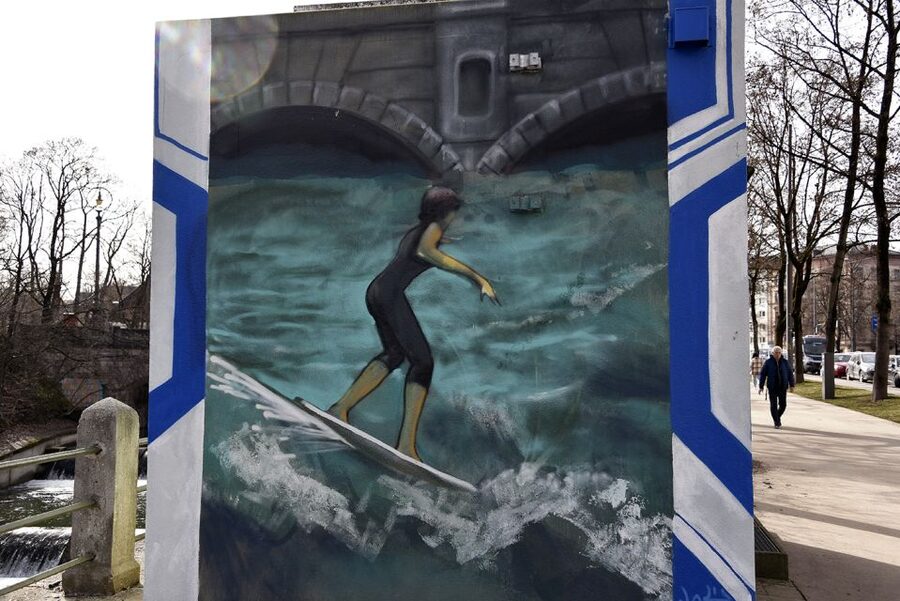
The Isar section adds a natural break from the city streets. You ride along the river and look for places where artists have left their mark. The setting makes the artwork feel less like a formal gallery visit and more like part of Munich’s daily life.
I like this combination of river views and painted work because it keeps the tour from becoming a wall-to-wall art checklist. The river provides room to pause and look around. It also helps show how graffiti can appear in spaces shaped by bridges, paths, public structures, and passing pedestrians.
The guide’s commentary is especially useful here. The art may not always explain itself, and some pieces can be missed if you do not know where to look. A local guide can point out important works and explain why certain artists matter to Munich’s scene.
Do not expect every stop to be a grand mural with a perfect viewing position. Street art changes. Pieces may be partly covered, weathered, or placed where you need to look carefully. That is part of the character, but it also means the experience depends on the guide’s selection and the current condition of the work.
Giesing and the working-class side of Munich
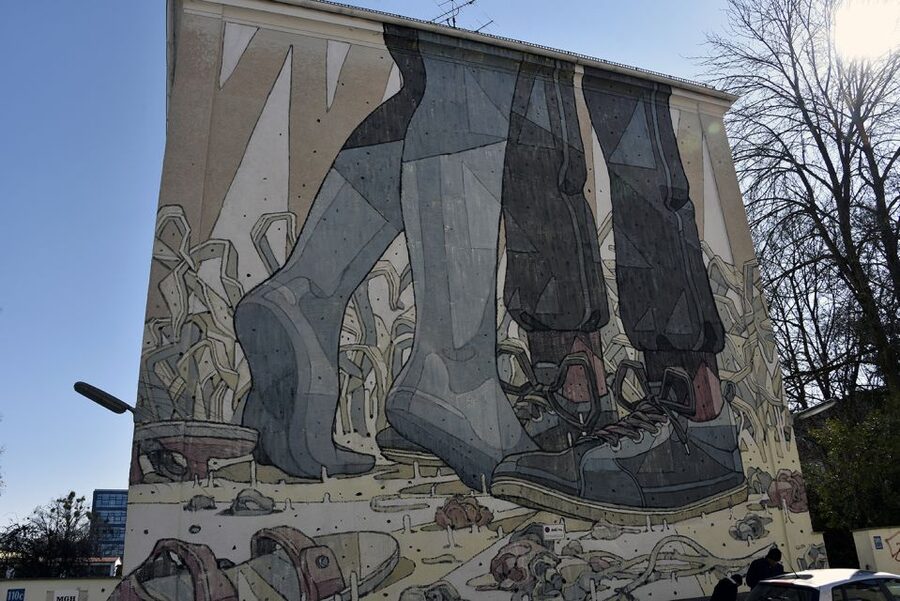
The ride continues to Giesing, a former working-class neighborhood. This is one of the strongest reasons to choose the tour. You are not simply using a bike to move between central attractions. You are seeing a district with a different social and architectural feel from the historic center.
Giesing helps put the graffiti story into place. Art in a former working-class area carries a different meaning from art displayed in a museum or along a carefully planned cultural route. The walls, streets, and local setting become part of what you are looking at.
The tour describes the area as being far from the main tourist crowds. That does not mean the ride is a secret expedition. It means your time is spent in parts of Munich that are less likely to appear on a short first-day sightseeing plan.
I would especially recommend this section to anyone who has already seen the central sights and wants to understand how Munich works beyond its famous squares. You get an alternative city without giving up the convenience of a guide or organized transport.
Still Munich, at a slower pace:
- From Munich: Neuschwanstein & Linderhof Castle Full-Day Trip
★ 4.5 · 12,494 reviews - Neuschwanstein & Linderhof Castle-Fairytale Day Tour from Munich
★ 4.5 · 7,275 reviews - Munich: Third Reich & WWII Walking Tour
★ 4.6 · 6,181 reviews - Dachau Concentration Camp Memorial Site Tour from Munich by Train
★ 4.5 · 5,637 reviews
The slaughterhouse district and the railway bridge break
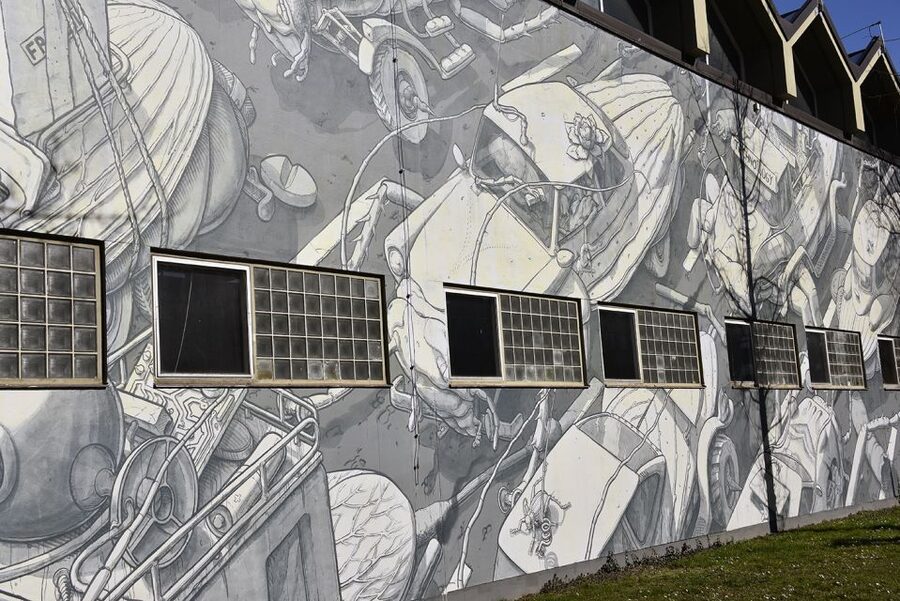
From Giesing, the route heads toward the slaughterhouse district. This change of setting adds another useful layer. Instead of keeping the art in one attractive zone, the tour connects several parts of the city and shows how street art belongs to working urban spaces as well as river paths.
The planned break is on a boat near a railway bridge. That is a memorable detail, and it gives the 210-minute outing a proper pause. You can step away from the bike, take in the surroundings, and let the information settle before continuing.
The boat stop also sounds like one of the tour’s more unusual moments. It is not a standard Munich sightseeing stop, and that is precisely why it works. A railway bridge and a boat are practical pieces of city infrastructure, yet they also create a striking setting for looking at art and the surrounding area.
Keep your expectations sensible. The information provided does not promise food, drinks, or a full boat cruise. Think of this as a rest stop on or near a boat, not as a separate river attraction. Alcohol and drugs are not allowed, so this is an art and cycling excursion rather than a party outing.
Meeting old masters and newer street artists
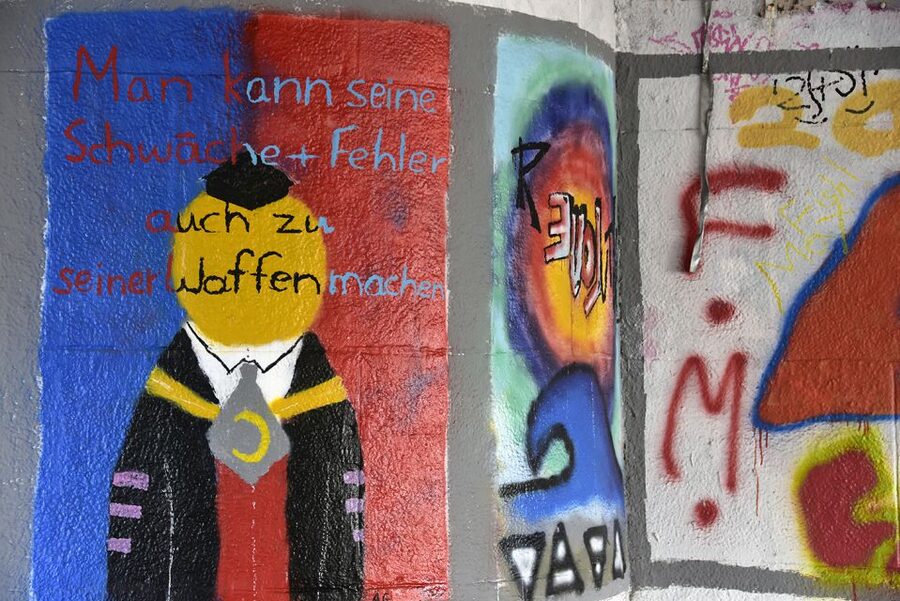
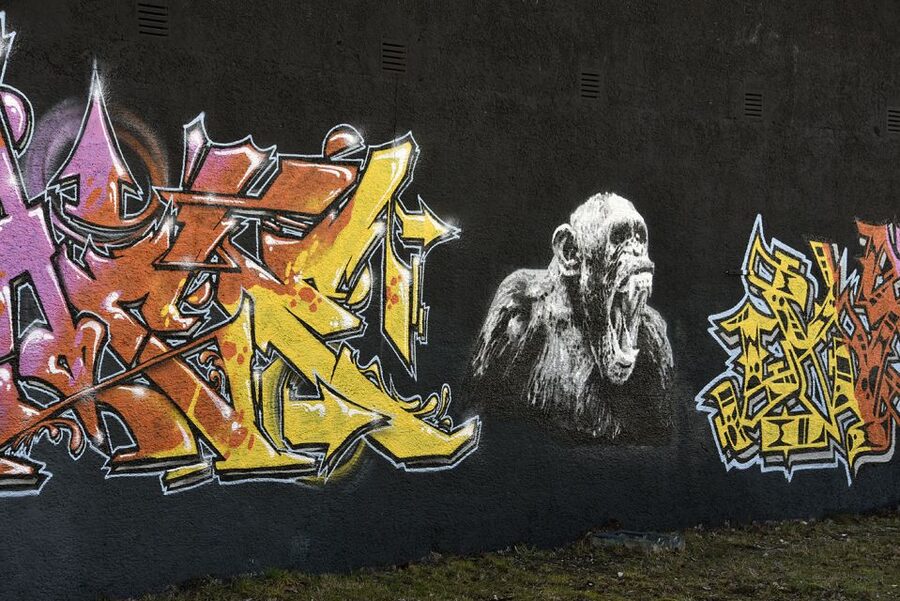
The art selection includes work by established artists who helped shape Munich’s graffiti culture, along with pieces by newer names. That balance is one of the tour’s best features.
The older work gives you a sense of the movement’s roots. You can learn why Munich gained a reputation as a graffiti center and how its scene related to the wider international culture. The newer work keeps the tour from becoming a history lesson frozen in the past.
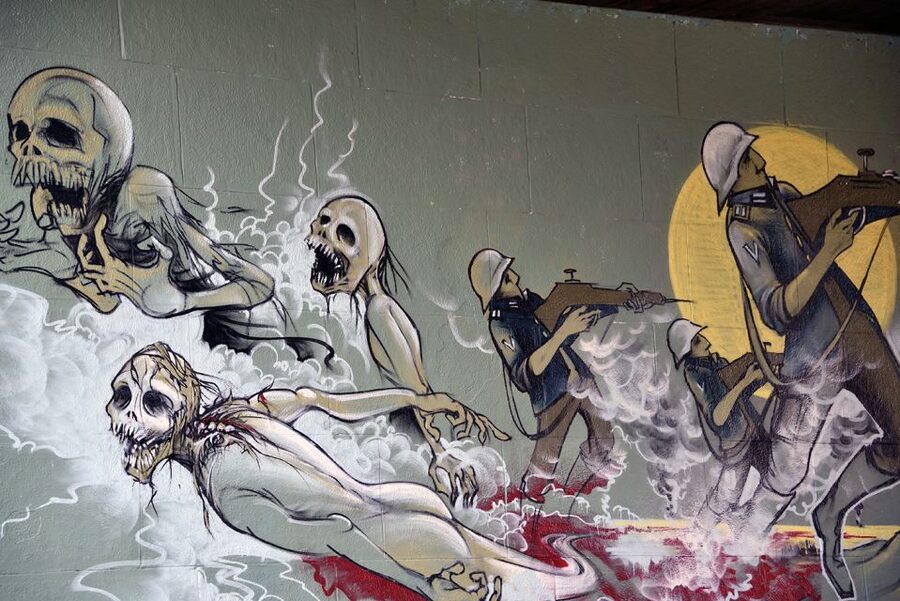
I would pay close attention to the guide’s comparisons between generations. The most useful commentary will help you see changes in lettering, color, scale, subject matter, and public attitude. The provided details do not list individual artists or guarantee specific murals, so the exact art you see may change.
That flexibility is normal for outdoor art. Unlike a museum collection, street art can be painted over or altered. A good guide makes the current route worthwhile by explaining what is visible now and connecting it to the larger story.
The colorful work brings plenty of visual energy to the ride, but the tour is not only for people who already follow graffiti. If you know little about the subject, the historical introduction gives you a way into it. If you already know the scene, the appeal is more local: you are seeing Munich’s own contribution rather than a generic collection of murals.
What the German-language format means
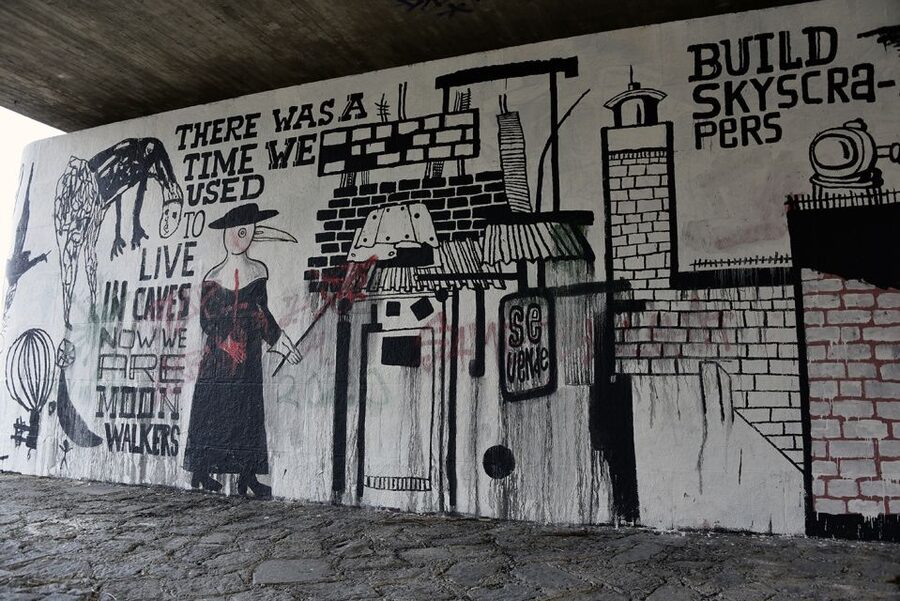
The official tour language is German. That should be your starting assumption when deciding if the experience suits you.
There is a useful exception in the feedback from an English-speaking family. Guide Ulrike made a strong effort to explain the tour in English and was described as friendly, patient, and helpful. That is encouraging, but it should not be treated as a guaranteed English-language tour. If English is essential, ask about the guide and language before reserving.
Ulrike also guided a rainy-day outing that became a private tour when the group arrangement changed. The smaller format allowed her to show the family places in Munich that were new to them and explain the local scene in detail. That suggests the guide can adjust well to the group, though weather and group size are not fully predictable.
One amusingly specific note came from an attendee who pointed out that an Aldi advertisement in Weinbauernstraße uses photocatalytic paint. I would not book the tour just for that detail, but it shows how the route can lead to side stories about public art, advertising, and unusual paint technology.
Is the $40 price good value?
At $40 per person, the price is fair if you want a guided introduction rather than simply a bike rental. You receive a rental bike, a local guide, and three and a half hours of access to parts of Munich that are not easy to connect efficiently on foot.
The value comes from the route and the interpretation. You could ride around Munich independently, but you would need to find the art, understand its background, and plan the path to Giesing and the slaughterhouse district yourself. The tour saves that research time and gives you a local frame for what you see.
The price is less compelling if you want a short activity close to the historic center. This is a long outing, and much of its appeal depends on your interest in cycling, urban neighborhoods, and graffiti history. If you only want a few famous murals and a quick photo stop, three and a half hours may feel like too much.
The private group option may improve the value for families or friends who want their own pace. For a solo participant or a couple, the standard booking is likely the simpler choice. Free cancellation up to 24 hours in advance and the option to reserve now and pay later also reduce the risk when your schedule is still changing.
Who will enjoy this ride most?
This tour suits you if you like seeing a city through a local subject rather than a standard list of monuments. It is especially good for people who enjoy photography, urban culture, public art, and neighborhood exploration.
Families can make it work, but age and stamina matter. Children under 10 are not accepted. One 12-year-old found the route too long, while another family with boys aged 10 and 12 said the children loved it and stayed interested for several hours. That difference is a useful warning: the tour can be enjoyable for older children, but enthusiasm for art and comfort on a bike will make a big difference.
I would also recommend it to repeat visitors who have already seen central Munich. The route takes you to Giesing and other less familiar areas, giving you a better feel for the city outside the usual sightseeing circuit.
It is not suitable for wheelchair users, and it is a poor choice if cycling for 210 minutes sounds tiring. Since the official language is German, you should also be ready for a language gap unless the provider confirms an English-speaking guide.
A few practical ways to prepare
Wear clothing that makes cycling comfortable. The tour is long enough that poor clothing or an awkward bike could become a distraction. You may also want to bring water, although the supplied information does not state that refreshments are included.
Allow extra time to find the meeting point at Marienplatz. The yellow sign with red letters is your main identification clue. Arriving a little early gives you time to locate the guide, settle onto the rental bike, and clarify the language of the tour.
If rain is in the forecast, ask how the outing will operate. A rainy day once changed a group tour into a private experience, which worked well for that party, but weather can affect comfort and the visibility of outdoor artwork.
Most of all, bring curiosity rather than a fixed list of murals you expect to see. The exact works may change, and the guide’s explanations are a major part of the experience.
Should you book the Munich Street Art Bike Tour?
Book it if you want Munich beyond Marienplatz, enjoy cycling, and like the idea of combining graffiti history with river paths and working neighborhoods. The strongest reasons are the unusual route, the city’s important role in German graffiti, and the chance to see both early and newer street artists with local explanation.
Think twice if you need English guaranteed, cannot cycle for three and a half hours, or want a compact activity near the old town. For families, check the children’s energy levels carefully. A 10-year-old may love it, while a 12-year-old may find the length a bit much.
For the right person, $40 is a sensible price for a guided look at a less familiar Munich. It gives you a bike, a route you might not plan alone, and a better understanding of why this polished Bavarian city became an early home of German graffiti.
FAQ
Where does the Munich Street Art Bike Tour meet?
Meet the guide in front of the Tourist Information Office at Marienplatz. The guide will hold a yellow street art tour sign with red letters.
How long does the tour last?
The tour lasts 210 minutes, or three and a half hours.
What is included in the price?
A tour guide and rental bikes are included.
What language is the tour conducted in?
The official tour language is German. English-speaking participants may receive additional help from the guide, but an English-language tour is not guaranteed by the supplied information.
Is the tour suitable for children?
Children under 10 are not suitable for this activity. Older children may enjoy it, though the full 210-minute length can feel long for some 12-year-olds.
Is the tour wheelchair accessible?
No. The activity is not suitable for wheelchair users.
Is a private group available?
Yes. A private group option is available.
Can I cancel the booking?
Yes. You can cancel up to 24 hours before the activity for a full refund. You can also reserve now and pay later.
More Street Art Walks in Munich
- Berlin: City Street Art Guided Walking Tour
★ 4.8 · 886 reviews - Berlin: 3-Hour Street Art Tour
★ 4.7 · 778 reviews - Dresden: Neustadt District Street Art Guided Walking Tour
★ 4.4 · 267 reviews - Cologne: Ehrenfeld District Street Art Walking Tour
★ 4.9 · 202 reviews
Just added around Munich
- Pub crawl incl. Oktoberfest museum guided tour with beer tasting (private)★ 5.0 · 5 reviews
- South Tyrolean specialties and wine tasting★ 5.0 · 5 reviews
- Size Matters Beer Tour Munich★ 4.6 · 105 reviews
- Short & sweet: Tasting the Viktualienmarkt★ 4.8 · 37 reviews
- Secret Food Tours Munich★ 4.8 · 5 reviews
- Munich: Romantic Wine Experience for Two at Viktualienmarkt★ 4.2 · 14 reviews
- Residence of Munich private tour with skip the line ticket★ 5.0 · 4 reviews
- Munich: Resistance against Hitler – Historical Walking Tour★ 5.0 · 5 reviews
Cycling Tours, compared.
Sights and Highlights Bike Tour with a Local Guide
Read our review →
Classic Mike’s Bike Tour daily @ 11.30 incl Beer Garden & Surfers
Read our review →
Browse the lists this tour appears in