
Reviewed · BALTIC COAST TOURS
Rostock: Tour with the Rostocker Executioner
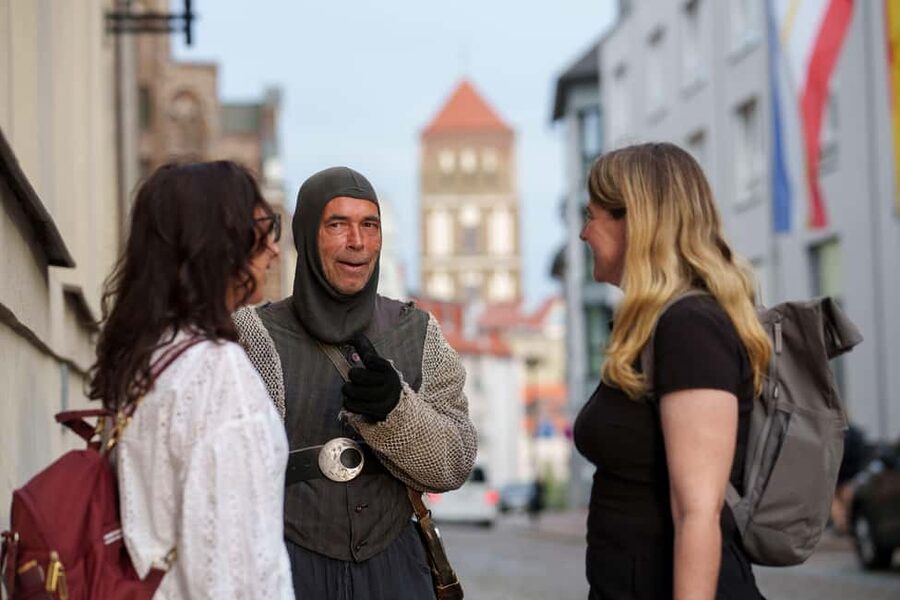
Dark stories make old towns livelier. This 90-minute walking tour follows Rostock’s executioner through the historic center, mixing grim crime tales with strange facts about law, punishment, and daily life. I like the clear focus on the city’s oldest district, and I like that the actor presents history with humor rather than turning the walk into a dry lecture. The price, about $16 per person, is also fair for a guided look at several central sights.
The main consideration is language. The tour is offered in German, and one person noted that the guide spoke quickly at times. The subject matter also includes torture, executions, and criminal cases, so it suits adults and older teens better than families with young children. People under 14 and those with mobility impairments should choose another activity.
In This Review
- Key points at a glance
- Meeting the executioner under Rostock’s town hall
- Rostock’s old center through a darker lens
- Kerkhoff and Krahnstöverhaus: details between the grim tales
- Kuh and Steintor: where odd laws become memorable
- New Market and St. Mary’s Church
- Heiligengeisthof and the final stretch
- How the acting style affects the experience
- Is $16 a fair price for 90 minutes?
- Who should book this Rostock walk?
- Should you book the Rostocker Executioner tour?
- FAQ
- Where does the Rostocker Executioner tour begin?
- How long does the tour last?
- What language is the tour conducted in?
- What is included in the tour?
- How much does the tour cost?
- What places are included on the route?
- Is the tour suitable for children?
- Can I cancel the booking?
Key points at a glance
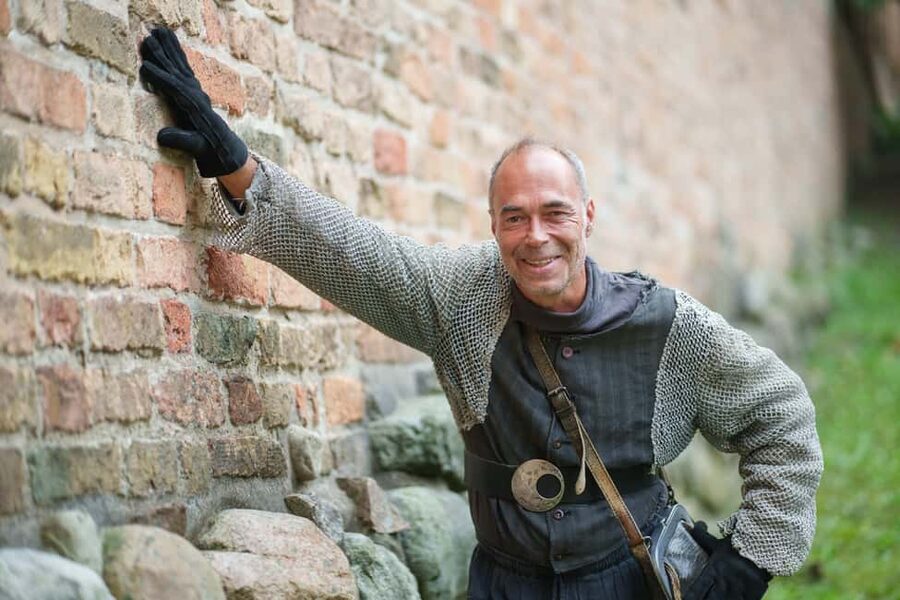
- Meet a single executioner under Rostock’s town hall arcades: The meeting point is easy to identify, with no need to search for a large tour group.
- Follow a route through the old center: The walk links the town hall, Kerkhoff, Krahnstöverhaus, Kuh and Steintor, New Market, St. Mary’s Church, and Heiligengeisthof.
- Learn the odd rules behind old punishments: The sparrow tax, the disposal of privies, and the reason hair had to come off the streets all enter the story.
- Hear how medieval punishments shaped modern speech: The executioner explains how old forms of torture and death still echo in everyday language.
- Expect an actor-led performance: The trained guide uses scary and funny anecdotes, giving the walk a theatrical edge.
- Allow time for questions: The guide has been praised for answering follow-up questions, though the pace may feel quick for some German speakers.
Meeting the executioner under Rostock’s town hall
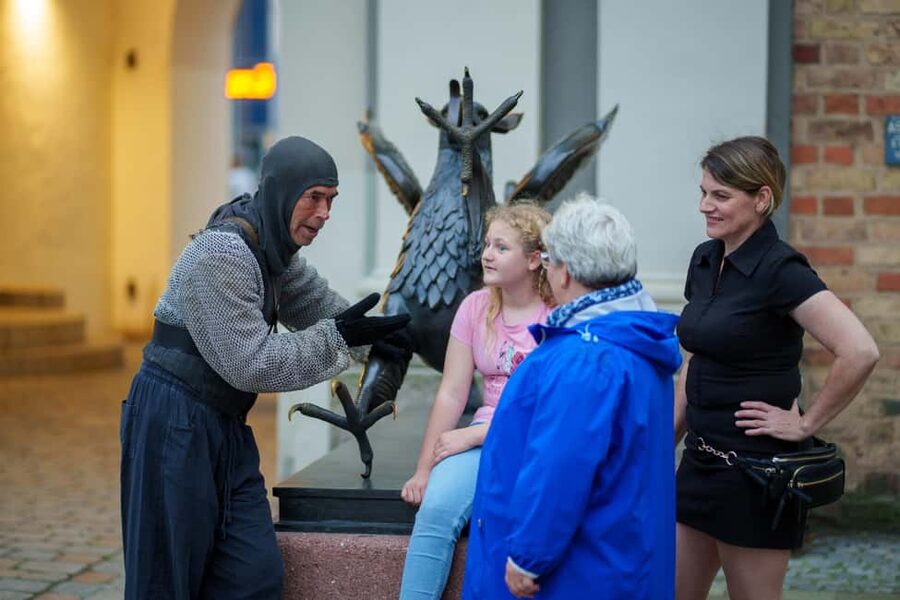
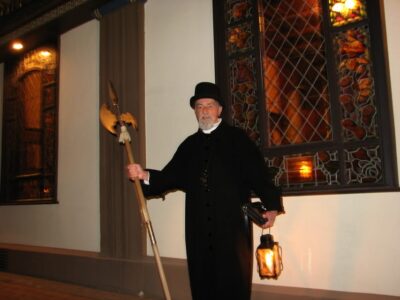
Your tour begins under the arcades in front of Rostock’s town hall. The instructions are deliberately memorable: there will be one hangman, and only one executioner. That is useful in a busy square, since you are looking for a costumed character rather than a standard guide holding a flag.
This opening sets the tone. You are not joining a general city walk with a few dark facts added at the end. The executioner is the central character, and the route is built around his work, his authority, and the rules that governed punishment in earlier Rostock.
I like this approach because it gives the city a clear point of view. You will still hear about buildings and urban history, but the guide keeps returning to questions of justice, crime, punishment, and public order. The result should feel more like a historical performance than a conventional sightseeing lecture.
The guide is a trained actor, so expect a deliberate presentation with comic timing and a touch of menace. That theatrical style is part of the value. It helps the unusual terms and old customs stick in your memory. If you prefer quiet, academic commentary, the performance may feel a bit broad. If you enjoy storytelling, it gives the walk energy.
A few more Baltic Coast trips worth comparing
- Schwerin: City Highlights Guided Tour
★ 4.7 · 541 reviews - Schwerin: Tour with the Night Watchman
★ 4.5 · 366 reviews - Stralsund: 1-Hour Harbor Cruise
★ 4.6 · 365 reviews
Rostock’s old center through a darker lens
The route passes through what is described as Rostock’s oldest and most beautiful district. That matters because the tour does not isolate dark history in a museum or a single memorial. Instead, you walk through the ordinary city center while learning how law and punishment once operated in those same streets.
The town hall is the natural starting point for this subject. It represents civic authority, so it gives the guide a useful place to explain jurisdiction and the relationship between the city and the executioner. The tour is not only about the act of execution. You will also hear about the executioner’s various duties and the legal system that assigned them.
That broader focus is one of the strongest parts of the outing. The executioner was not presented simply as a figure with one job. The talk covers his tasks, the courts, punishments, and curious rules that shaped public life. This helps you see the period as a working system rather than a collection of sensational stories.
From the town hall, the walk continues toward the Kerkhoff and Krahnstöverhaus. The supplied route gives these stops a place in the story, though the exact amount of time spent at each building is not specified. You should expect them to function as points along a connected walk, with the guide using the surroundings to add architectural and historical context.
One useful detail from the feedback is that the tour does not stay narrowly focused on the executioner. The guide also discusses architecture. That gives the walk more balance, especially if you are exploring Rostock for the first time and want more than crime stories.
Kerkhoff and Krahnstöverhaus: details between the grim tales

The section around Kerkhoff and Krahnstöverhaus is likely to appeal to you if you enjoy small facts tied to real places. The guide’s method is to connect the city’s buildings and public spaces with the rules and punishments of the past.
I would listen for transitions between the physical setting and the executioner’s duties. A doorway, square, or old house can become a prompt for discussing jurisdiction, public discipline, or the way an offense was handled. These connections make the walk easier to follow than a string of dates.
The tone is important here. The material is described as both scary and funny, and the guide is praised for being original and entertaining. That does not remove the harshness of the subject, but it keeps the 90 minutes from becoming heavy. The best moments should come when an absurd rule or grim custom reveals something unexpected about how people once understood order.
You should also be ready for a lot of information in a short time. One person found the tour packed with facts, and another felt the guide sometimes spoke quickly. If German is not your first language, or if you need time to process historical terms, stay near the guide and ask for clarification when needed.
Kuh and Steintor: where odd laws become memorable
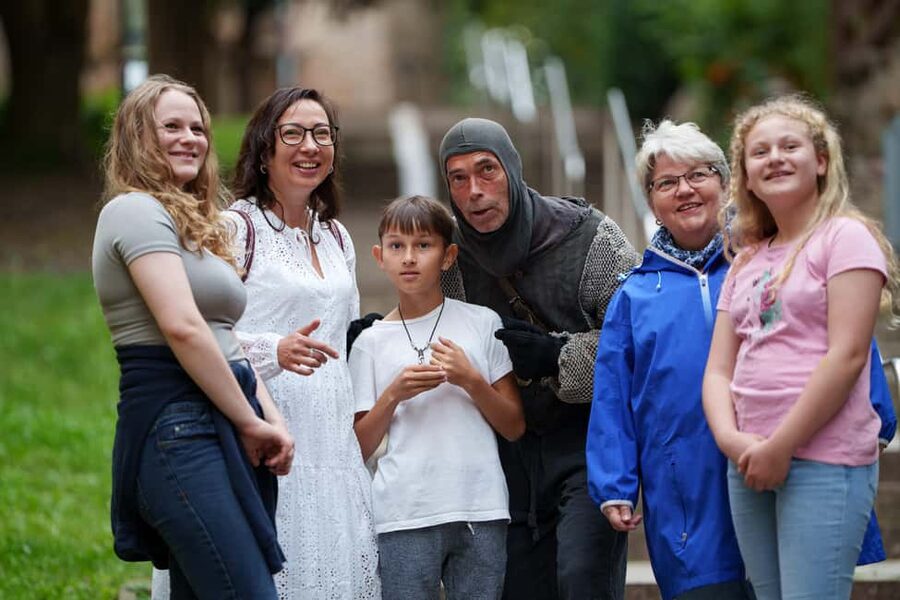
The route then includes Kuh and Steintor. The names are part of the tour’s distinctive geography, but the supplied details do not specify a separate story for each location. What you can count on is a continued walk through the old center, with the executioner explaining how rules, offenses, and punishments fit into Rostock’s past.
This is where the unusual examples become especially useful. The tour asks what the sparrow tax was, what Ausbringen der Priveten involved, and why the hair had to come off the streets. These are the sort of questions that make a historical walk memorable because they are concrete, odd, and hard to guess.
The wording itself may require explanation for German speakers unfamiliar with older expressions. That is not a flaw. It is part of the point. The tour shows how much everyday life can be hidden inside a short phrase or an unfamiliar civic rule.
The reference to hair on the streets is especially effective as a reminder that public cleanliness, trade, appearance, and punishment could overlap. You are not only hearing about dramatic crimes. You are also learning about regulations that touched ordinary life.
I like this part of the tour because it moves away from the predictable image of the executioner standing beside a gallows. The guide’s work included more than the final punishment, and these strange customs help broaden your understanding of the role.
Still Baltic Coast, at a slower pace:
- Rostock: Guided tour of the historic city center
★ 4.5 · 311 reviews - Rostock: City Walking Tour
★ 4.9 · 198 reviews - Rostock: Full-Day, Half-Day, or Sunset Sailing Experience
★ 4.7 · 174 reviews - Rostock: Electric Boat Rental on the Warnow River
★ 4.8 · 106 reviews
New Market and St. Mary’s Church
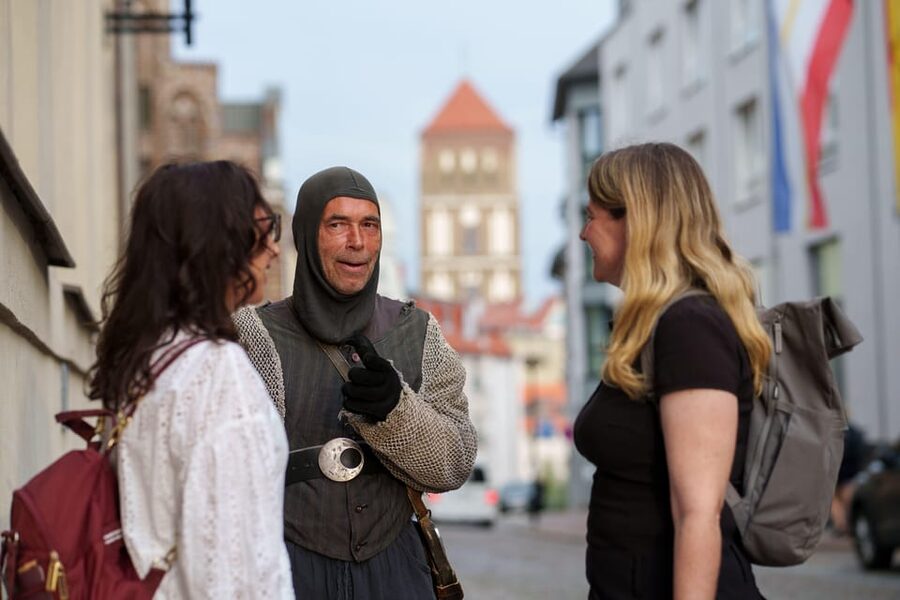
New Market provides another important stop on the route. The market is a natural place to consider how public life and public punishment could meet. The tour information does not promise a specific execution at this location, so I would not book it expecting a detailed account tied to one exact event. Instead, expect the guide to use the setting as part of a wider story about Rostock’s laws and criminal cases.
That distinction matters. This is a themed city walk, not a staged reconstruction of one trial. The route uses several places to build a picture of the period, and the guide adds anecdotes along the way.
St. Mary’s Church is also included. The available details do not state which church features are discussed, but its presence gives the walk a wider civic and religious frame. You can expect the guide to continue combining architecture with historical information, as the tour is not limited to the executioner’s personal duties.
This mixed approach received strong praise. The historical information was described as clearly presented and enjoyable to hear, while the architectural comments added something beyond the main theme. I would choose this tour over a standard ghost-style walk if you want actual context about jurisdiction and punishment along with the darker stories.
The timing may be the only issue. Ninety minutes is long enough to cover a good stretch of the old center, but short enough that the guide must keep moving. One person felt the time passed almost too quickly, while another found that many facts arrived in a short period. You should expect a brisk walk and a steady stream of information.
Heiligengeisthof and the final stretch
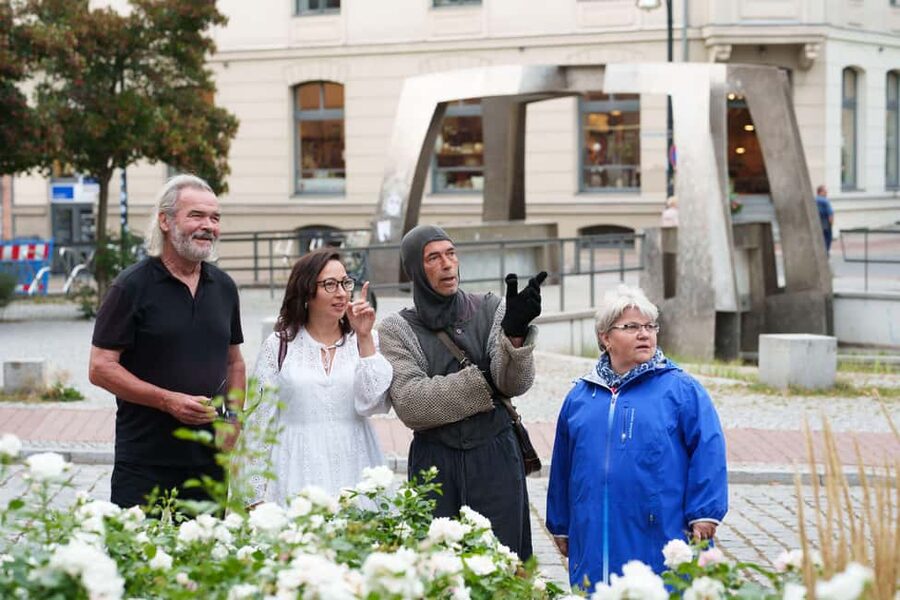
The final listed stop is Heiligengeisthof. As with several points on the route, no detailed stop-by-stop script is provided, so the exact presentation may vary. The important thing is that the tour ends after moving through a substantial portion of the old district rather than remaining in one square.
By this stage, the separate themes should connect: the executioner’s duties, the court system, punishments, odd civic rules, criminal stories, and the language we still use today. The walk’s payoff is not one single shocking fact. It is the way the guide shows that medieval ideas about torture and death left marks on modern speech.
That language lesson is one of the most unusual features of the tour. Many historical walks stop at the event itself. This one asks you to notice how old forms of punishment entered ordinary expressions without your realizing it. The result gives you something to think about after the tour ends.
The closing portion may also be a good time for questions. The guide has been praised for being friendly and willing to answer additional questions. Since the tour contains many facts, asking about one or two points that caught your attention can help you remember the material.
How the acting style affects the experience
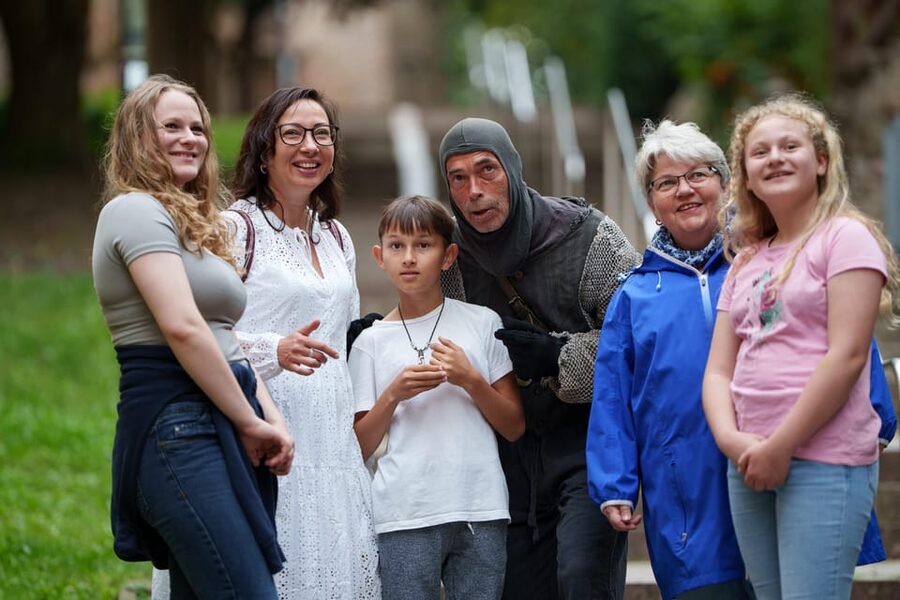
The trained actor matters. A costumed executioner can make the subject easier to picture, but the style will not suit every personality. You should expect an entertaining performance, not a neutral museum talk.
The strongest praise centers on the guide’s originality, humor, and ability to explain history in an engaging way. The tone is described as lively, informative, and good fun. That balance is hard to achieve with material involving torture and death, but it is the reason the tour appeals to adults who want more than a list of dates.
At the same time, performance style can affect comprehension. If the guide speaks quickly, jokes, or uses older German expressions, you may miss a detail. The tour is conducted in German only, and no other language is listed. I would choose a place close to the guide and treat questions as part of the experience, not as an interruption.
The age limit also makes sense. Children under 14 are not admitted, and the subject matter is not softened into a children’s program. Older teenagers may enjoy the theatrical side, but parents should judge their child’s comfort with executions, criminal stories, and punishment.
Is $16 a fair price for 90 minutes?
At about $16 per person, this is a sensible price for a focused city walk. You are paying for a trained actor, a planned route through several central locations, and a theme that gives familiar streets a new meaning.
The value is strongest if you already plan to explore Rostock’s old center. The tour adds structure to your walk and gives you details you would be unlikely to pick up by simply passing the town hall, New Market, or St. Mary’s Church. It also combines architecture and civic history with the darker material, so you are not paying for only one type of story.
The price is less attractive if you want a slow, highly detailed study of every stop. The tour lasts 1.5 hours, and the amount of information can feel dense. You are buying a lively overview with unusual subject matter, not a long research seminar.
Flexible booking improves the value. You can reserve now and pay later, and cancellation is allowed up to 24 hours before the start for a full refund. Check the available start times before booking, since the duration is fixed but the schedule can vary.
Who should book this Rostock walk?
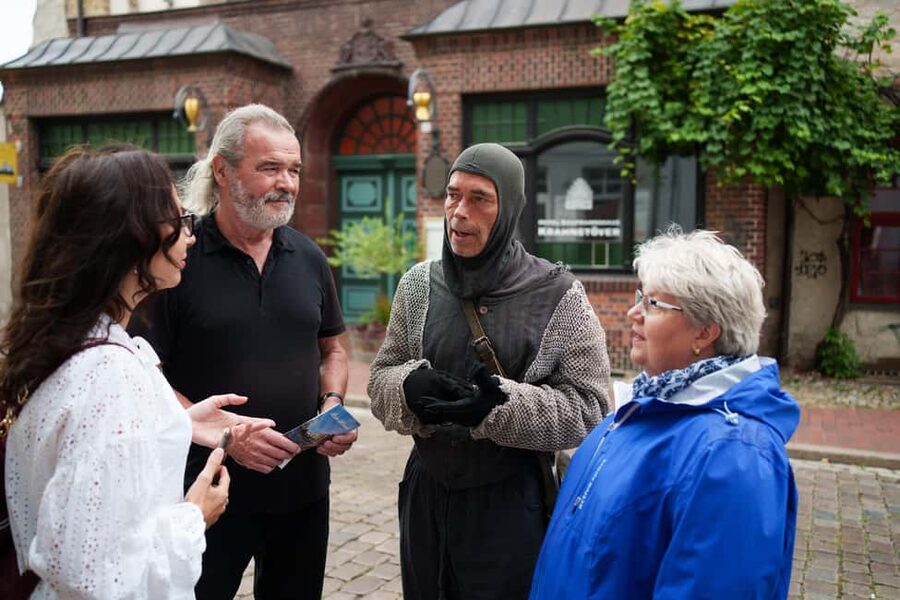
I would recommend it to you if you enjoy:
- Local history told through unusual jobs and old rules
- Dark subjects presented with humor
- Guided walking routes through historic city centers
- Architecture mixed with social and legal history
- Actor-led storytelling rather than a plain lecture
- German-language tours with plenty of historical detail
It is a particularly good choice if you have already seen Rostock’s main sights and want a fresh angle on them. The executioner’s perspective gives the old town a sharper character without requiring a separate museum visit.
You should think twice if you need a slow pace, easy mobility, or translation into another language. The tour is not suitable for people with mobility impairments, and the guide may speak quickly. The amount of information can also feel intense if you prefer a relaxed stroll with only a few facts.
The overall score is 4.7 out of 5 from 28 ratings, with especially strong praise for the information, the entertaining presentation, and the originality of the executioner character. The most useful criticism is not about the content. It concerns pace and information density. That gives you a clear booking test: if you want lively German storytelling and can keep up, the tour offers good value.
Should you book the Rostocker Executioner tour?
Book it if you want to see Rostock’s old center through an unusual human role. The route covers several central sights, but the real subject is how the city handled crime, law, punishment, cleanliness, and public order.
I especially like the mix of grim stories and strange everyday details. The sparrow tax, privy disposal, street hair, and medieval phrases sound more memorable than a standard list of dates. At $16 for 90 minutes, the cost is modest, and the actor-led format gives the walk a clear identity.
Skip it if you do not understand German well, dislike theatrical guides, or want a gentle family activity. For adults and older teens who enjoy history with a dark sense of humor, this is a smart way to spend part of an afternoon or evening in Rostock.
FAQ
Where does the Rostocker Executioner tour begin?
The meeting point is under the arcades in front of Rostock’s town hall.
How long does the tour last?
The tour lasts 1.5 hours.
What language is the tour conducted in?
The live tour is conducted in German.
What is included in the tour?
A trained actor and executioner leads the tour.
How much does the tour cost?
The listed price is about $16 per person.
What places are included on the route?
The route includes the town hall, Kerkhoff, Krahnstöverhaus, Kuh and Steintor, New Market, St. Mary’s Church, and Heiligengeisthof.
Is the tour suitable for children?
No. The activity is not suitable for children under 14.
Can I cancel the booking?
Yes. You can cancel up to 24 hours in advance for a full refund. You can also reserve now and pay later.
Just added around Baltic Coast
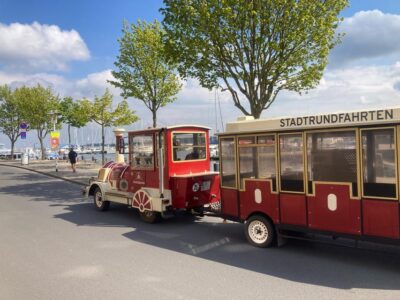
- Stralsund: Stadtrundfahrt durch die historische Altstadt★ 4.0 · 45 reviews
- Stralsund: Factory Tour with Fermented and Organic Tastings★ 4.3 · 15 reviews
- Stralsund: Old Town Highlights Private Walking Tour★ 5.0 · 5 reviews
- Stralsund: Old Town Evening Tour with a Night Watchman★ 4.7 · 20 reviews
- Rostock: Electric Boat Rental on the Warnow River★ 4.8 · 106 reviews
- Rostock: Full-Day, Half-Day, or Sunset Sailing Experience★ 4.7 · 174 reviews
- Rostock: Private Guided Walking Tour★ 5.0 · 4 reviews
- Rostock: Hot Rod Sightseeing Tour to Warnemünde★ 5.0 · 19 reviews
Baltic Coast Tours, compared.


Full-Day, Half-Day, or Sunset Sailing Experience
Read our review →
Browse the lists this tour appears in