
Reviewed · WALKING TOURS
Rostock: Private Guided Walking Tour
Rostock rewards a closer look. This private two-hour walk links the city’s Gothic churches, Hanseatic past, and wartime rebuilding in one easy route. I like the private format, which gives your group room to ask questions and request small changes, and I like the mix of grand landmarks with details such as the Seagulls’ Fountain and the motto on Stone Gate. The main drawback is simple: entrance fees are not included, so the tour works best as a guided orientation rather than a complete indoor sightseeing visit.
The meeting point at Seagulls’ Fountain puts you in the heart of New Market Square from the first minute. Recent praise has singled out guide Jana for beautiful insider details and a warm presentation, while another booking described the guide and tour as simply very good. Guide assignments can vary, but the local, private approach is the real strength here.
In This Review
- Key points to know before you book
- Why Rostock makes a good walking city
- Starting at New Market Square and the Town Hall
- Rostock and the Hanseatic League
- St. Mary’s Church and its 15th-century clock
- St. Petri Church, a landmark rebuilt after war
- Walking the surviving fortifications
- The university and the Fountain of Happiness
- How the wartime story shapes the tour
- What the private format adds
- Price, timing, and who gets the best value
- Who should book this Rostock walk?
- Should you book it?
- FAQ
- Where does the tour meet?
- How long is the walking tour?
- What languages are available?
- Is this a private tour?
- How many people can join the group?
- Are entrance fees included?
- Can the tour be customized?
Key points to know before you book
- New Market Square begins the story: Rostock’s Town Hall, Seagulls’ Fountain, and layered architectural styles all appear at the opening stop.
- The Hanseatic League gives the city its wider meaning: You learn why Rostock mattered as a trading center on the Baltic Sea.
- St. Mary’s Church holds the tour’s most unusual object: Its 15th-century astronomical clock adds a practical, human touch to the church visit.
- World War II is part of the route: St. Petri Church and the surviving fortifications show both wartime damage and later rebuilding.
- The group is private and flexible: One guide leads only your party, with possible on-the-spot adjustments.
- The price favors larger groups: At $280 for up to 15 people, the value improves sharply when shared among family or friends.
Why Rostock makes a good walking city
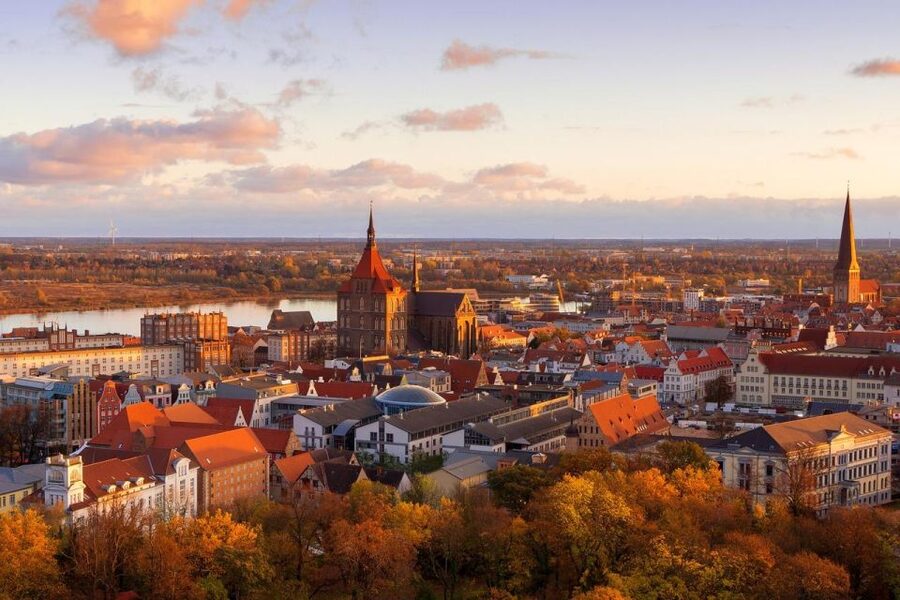
Rostock sits on Germany’s Baltic coast and has long looked outward. Its port connects Germany with major Scandinavian destinations and with cruise routes around the world. That modern role makes more sense once you understand the older city, shaped by trade, shipping, church power, and university life.
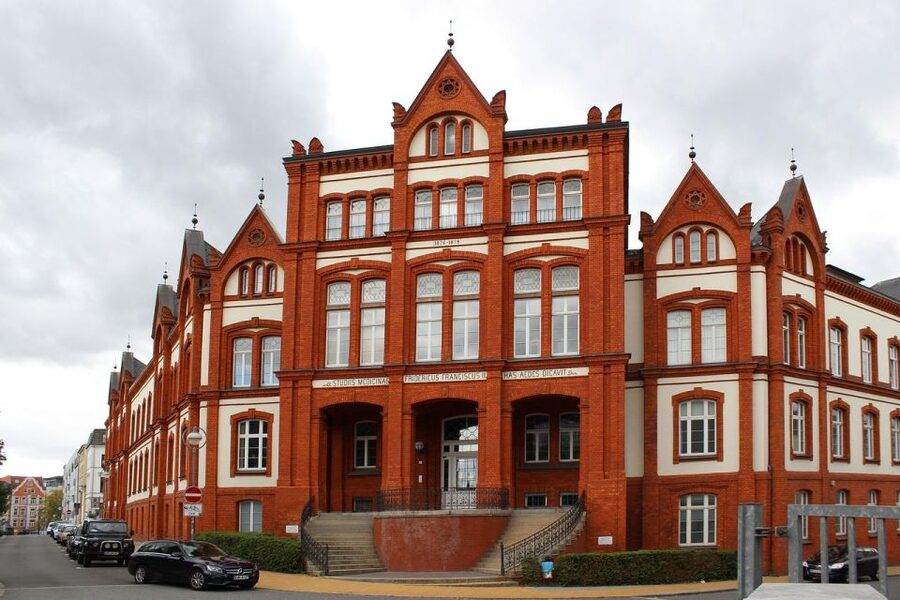
The city is also home to the University of Rostock, founded in 1419. That makes it one of the oldest universities in the world and the oldest in the Baltic region, according to the tour information. You do not simply pass a university building and move on. The tour places the university within Rostock’s wider story as a center of learning, commerce, and civic influence.
A walking tour suits Rostock because many of the main sights sit within the old center. You can move from a square to a church, then to a gate or section of wall without spending your limited time on transport. The two-hour length also keeps the route manageable for a port stop, a short city break, or a first afternoon in town.
More Walking Tours in the Baltic Coast
- Rostock: City Walking Tour
★ 4.9 · 198 reviews - Schwerin: Private Guided Walking Tour
★ 4.9 · 14 reviews - Lubeck Private Walking Tour With A Professional Guide
★ 4.5 · 10 reviews
Starting at New Market Square and the Town Hall
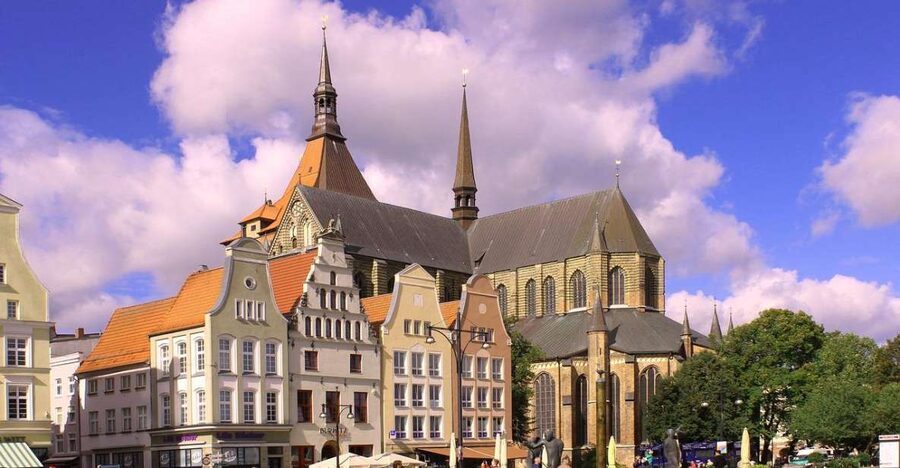
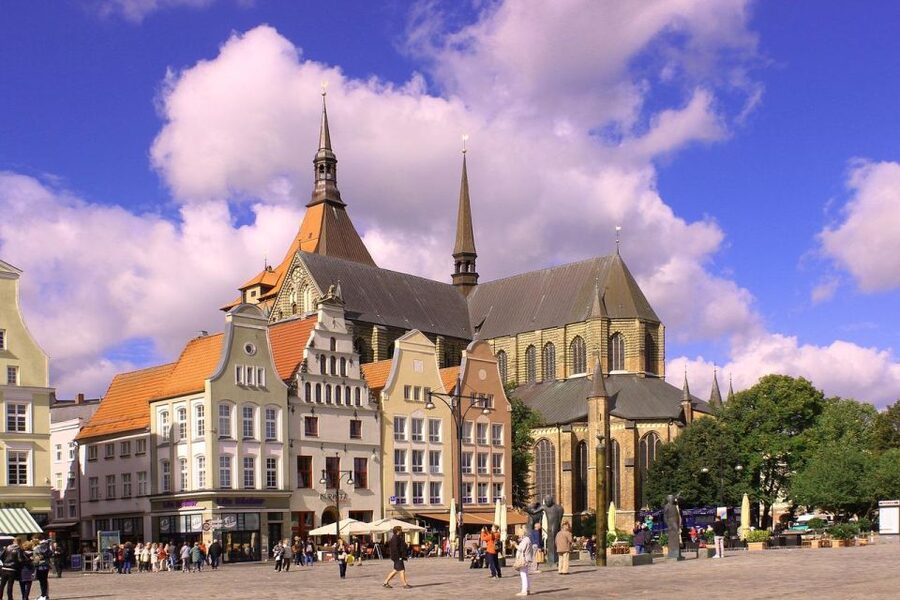
The tour begins by the Seagulls’ Fountain in New Market Square, Neuer Markt, 18055 Rostock. This is a useful meeting point because the square immediately shows you that Rostock is not built in a single style or period.
The Town Hall is the first major visual treat. Its design combines Gothic and Baroque elements, and its seven towers give the building an unmistakable profile. Your guide can help you read those layers rather than treating the Town Hall as just another old European building. Rostock’s public center changed over time, and the building reflects that process.
Look closely at the Seagulls’ Fountain as well. Its figures represent Neptune, the god of the sea, and his sons. That subject is no random decoration in a city whose identity has always been tied to water, ships, and trade. I appreciate this sort of stop because it connects a small public artwork with the larger story of Rostock’s economy.
The square is also where you can begin thinking about the city’s name and origins. The tour explains where Rostock’s name came from and why its position mattered. That background helps the later Hanseatic discussion land with more force.
Rostock and the Hanseatic League
Rostock’s most important historic chapter is its role in the Hanseatic League. This powerful network of trading towns shaped commerce across northern Europe, and Rostock’s port gave it a place in that system.
You will hear how the city’s sea connections helped it deal with Scandinavia and other markets. The point is not simply that Rostock was old or prosperous. The point is that it was tied to a working web of merchants, ships, laws, and port activity stretching across the Baltic and beyond.
This context makes the architectural sights easier to understand. Large churches, city gates, defensive walls, and public buildings required money and civic confidence. A guide can show you how the trading city produced the streets and structures you see today.
I would pay attention here if you enjoy economic history. The tour is not only a sequence of pretty facades. It explains why Rostock became important and why its port still matters. You get a clearer sense of the city as a place that connects Germany with the wider Baltic world.
St. Mary’s Church and its 15th-century clock
St. Mary’s Church is one of the tour’s strongest stops. It was the only main Rostock church to survive the World War II air raids, giving it a special place in the city’s story.
The famous astronomical clock, built in the 15th century, is the church’s unusual star. An astronomical clock is more than a large timepiece. It shows how medieval and early modern communities used public technology to track time and the heavens, while also making civic knowledge visible to everyone who entered the church.
You should ask your guide how the clock works and what its displays represent. The supplied tour details confirm its age and importance, but the exact viewing experience can depend on the visit and any access arrangements. Since entrance fees are not included, check whether you want to pay for an interior visit if one is available during your tour.
Even if you focus on the outside, St. Mary’s gives the wartime section emotional weight. One major church survived while other landmarks were destroyed or badly damaged. That contrast helps you understand that Rostock’s present appearance is partly medieval inheritance and partly postwar reconstruction.
Still Baltic Coast, at a slower pace:
- Schwerin: City Highlights Guided Tour
★ 4.7 · 541 reviews - Schwerin: Tour with the Night Watchman
★ 4.5 · 366 reviews - Stralsund: 1-Hour Harbor Cruise
★ 4.6 · 365 reviews - Rostock: Guided tour of the historic city center
★ 4.5 · 311 reviews
St. Petri Church, a landmark rebuilt after war
St. Petri Church brings a different perspective. Its Gothic tower served as a landmark for local fishermen, a practical role as much as a religious one. In a port city, a tower can guide people home as well as call them to worship.
The church was destroyed during World War II and rebuilt later. That fact gives the stop a direct, visible connection to Rostock’s wartime experience. You are not being asked to picture destruction in the abstract. The city’s churches and walls show where the old fabric was lost and where people chose to rebuild.
The tour uses this contrast well. St. Mary’s Church represents survival, while St. Petri Church represents loss followed by reconstruction. Together, they explain why Rostock can feel both medieval and modern at once.
The tower is also a reminder that historic buildings had everyday uses. It was a reference point for fishermen, not merely a postcard subject. I like that practical detail because it gives the architecture a human purpose.
Walking the surviving fortifications
Parts of Rostock’s old fortifications still remain. You will see sections of ramparts, built-in guard houses, and part of the wooden wall walk. These fragments help you picture the city as a defended trading center rather than an open collection of attractive buildings.
The walls are especially useful for understanding scale. A surviving gate or rampart section shows how the old city controlled movement and protected its commercial core. You can also consider the work involved in maintaining defenses around a busy port.
This section may appeal to you more than a polished monument because it feels closer to the city’s working past. Some parts are partial, and that is the point. Rostock has not preserved every piece intact, but enough remains to make the old boundary readable.
The tour also includes Stone Gate, a Dutch Renaissance city gate. Its Latin motto translates as May harmony and prosperity reign within your walls. That message suits a city built on trade, though the fortified setting adds a practical edge. Prosperity required protection, and protection shaped the city’s entrances.
Take a moment to read the motto rather than rushing past the gate. It is one of the small details that a guide can bring to life, especially if you want more than a list of dates and building names.
The university and the Fountain of Happiness
Rostock’s university adds another layer to the walk. Founded in 1419, it is among the oldest universities in the world and the oldest in the Baltic region. The tour explains its role in the city and takes you to the Fountain of Happiness.
This stop gives the route a useful change of mood. After churches, walls, and wartime damage, the university and fountain point toward civic life, learning, and the city’s continuing identity. Rostock is not presented as a museum frozen in the Hanseatic period.
The Fountain of Happiness is also the sort of local detail that can disappear if you explore without context. Ask your guide what the fountain represents and how it relates to the university. The tour description confirms its connection to Rostock’s academic life, while the guide can supply the local explanation available on the day.
How the wartime story shapes the tour
World War II is not a side note here. Bombing changed Rostock, destroyed St. Petri Church, and left St. Mary’s Church as the only main church to survive the air raids. The route uses these facts to explain how the city was damaged and then rebuilt.
I value this approach because it avoids presenting Rostock as an untouched old town. Some German cities offer long stretches of historic buildings with little visible interruption. Rostock asks you to read survival, absence, and reconstruction together.
The phrase Phoenix from the ashes fits the city’s recovery, but the tour’s value comes from the specific places that support that idea. St. Mary’s survival, St. Petri’s rebuilding, and the remaining fortifications each tell a different part of the story.
You may find this section sobering, especially if you came expecting only medieval architecture. That is not a flaw, but it is worth knowing before you book. The tour is strongest when you want the city’s difficult past included alongside its beauty.
What the private format adds
This is a private group tour for up to 15 people, with an English or German-speaking live guide. Your guide is with your group only, so you do not have to compete with a large crowd for explanations or questions.
The private format matters most if your group has a shared interest. You might want more time on the Hanseatic League, more attention to church architecture, or a clearer explanation of wartime rebuilding. The tour allows possible customization with your local guide on the spot, though the information does not promise unlimited changes or extra time.
A recent booking specifically praised Jana for guiding the group beautifully and offering useful insider details. Another described the guide as friendly and the tour as pleasant. If Jana is assigned to your group, her local tips sound like a valuable bonus, but guide assignments are not guaranteed.
Two hours is enough to cover the main sights, but it is not enough for a slow museum visit or extended time inside every church. Think of this as a strong first look at central Rostock. You can then return to the places that caught your attention.
Price, timing, and who gets the best value
The price is $280 per group of up to 15 people. For a full group, that works out to about $18.67 per person, which is a fair price for a private local guide and a customized walk. For two people, the effective cost is $140 each, so the value is much weaker than it is for a family, reunion, or group of friends.
The two-hour duration helps if you are visiting Rostock during a cruise stop or fitting the city into a busy northern Germany itinerary. It gives you a focused route without taking the whole day. You should allow extra time afterward if you want to enter sights or explore at your own pace.
Entrance fees are not included. That keeps the basic price clear, but you should budget separately if you want to go inside a church or pay for any attraction encountered along the way. The tour is mainly valuable for the guide’s explanation, route planning, and context.
English and German are available. Cancellation is free up to 24 hours in advance, and you can reserve now and pay later. Those terms are useful if your schedule depends on a port arrival or changing travel plans, but the main booking decision is still group size and your interest in guided history.
Who should book this Rostock walk?
I would recommend it to first-time visitors who want the city’s main story quickly. It suits families, couples with limited time, and groups who prefer asking questions instead of following a fixed large-group script.
History-minded visitors will get the most from the Hanseatic League, the university, and the wartime rebuilding. Architecture fans will enjoy the Town Hall, St. Mary’s Church, St. Petri Church, Stone Gate, and the remaining defenses.
You may want something else if you prefer long indoor visits. The tour does not include entrance fees, and two hours leaves limited time for detailed exploration inside the churches. It is also less cost-effective for a very small party, although the private attention may still justify the price for some visitors.
Should you book it?
Book this tour if you want a private introduction to Rostock that connects trade, faith, war, and rebuilding rather than showing monuments without context. The strongest reasons are the flexible group format, the central route, and the contrast between St. Mary’s survival and St. Petri’s reconstruction.
For the best value, bring a group large enough to share the $280 cost and decide in advance whether you want to pay for any entrances. If that suits your plans, this is a practical way to get your bearings fast and see why Rostock remains an important Baltic city.
FAQ
Where does the tour meet?
The meeting point is by the Seagulls’ Fountain in New Market Square, Neuer Markt, 18055 Rostock.
How long is the walking tour?
The tour lasts two hours.
What languages are available?
The live tour guide is available in English or German.
Is this a private tour?
Yes. It is a private group tour with a guide assigned only to your group.
How many people can join the group?
The price covers a group of up to 15 people.
Are entrance fees included?
No. Entrance fees are not included in the tour price.
Can the tour be customized?
Possible customization can be arranged with your local guide on the spot.
Just added around Baltic Coast
- Stralsund: Stadtrundfahrt durch die historische Altstadt★ 4.0 · 45 reviews
- Stralsund: Factory Tour with Fermented and Organic Tastings★ 4.3 · 15 reviews
- Stralsund: Old Town Highlights Private Walking Tour★ 5.0 · 5 reviews
- Stralsund: Old Town Evening Tour with a Night Watchman★ 4.7 · 20 reviews
- Rostock: Tour with the Rostocker Executioner★ 4.7 · 28 reviews
- Rostock: Electric Boat Rental on the Warnow River★ 4.8 · 106 reviews
- Rostock: Full-Day, Half-Day, or Sunset Sailing Experience★ 4.7 · 174 reviews
- Rostock: Hot Rod Sightseeing Tour to Warnemünde★ 5.0 · 19 reviews
Walking Tours, compared.
Old Town & Viktualienmarkt City Walk in German
Read our review →Browse the lists this tour appears in