
Reviewed · FOOD & DRINK
Stuttgart: Bean District Walking Tour with Swabian Food
Stuttgart keeps its best corners close. I like this two-hour walk for its quiet lanes, historic courtyards, and quick look at local life just outside the city center. I also like that the tour ends with a Swabian appetizer plate, not just a list of buildings and dates. The main consideration is language: the tour is conducted in German.
The guide can make or break a walking tour, and Norman Stümpfig has earned especially warm praise for his humor, clear storytelling, and colorful anecdotes. I would also keep expectations practical: access to some rear courtyards and workshops may not always be possible, so the exact route can vary.
In This Review
- Key points at a glance
- Entering Stuttgart’s Bean District
- Narrow lanes, courtyards, and old buildings
- A neighborhood that changed without losing its shape
- What the two-hour route feels like
- The Swabian appetizer plate
- How much value do you get for $42?
- Guide style and the human factor
- Who will enjoy this walk most?
- Practical details before you reserve
- Should you book the Bean District tour?
- FAQ
- Where does the Bean District walking tour meet?
- How long does the tour last?
- What language is the tour conducted in?
- What is included in the price?
- Are drinks included?
- What should I wear?
- What is the Bean District known for?
- What can I see during the walk?
- Is the appetizer plate a full meal?
- Can I cancel the tour for a full refund?
Key points at a glance
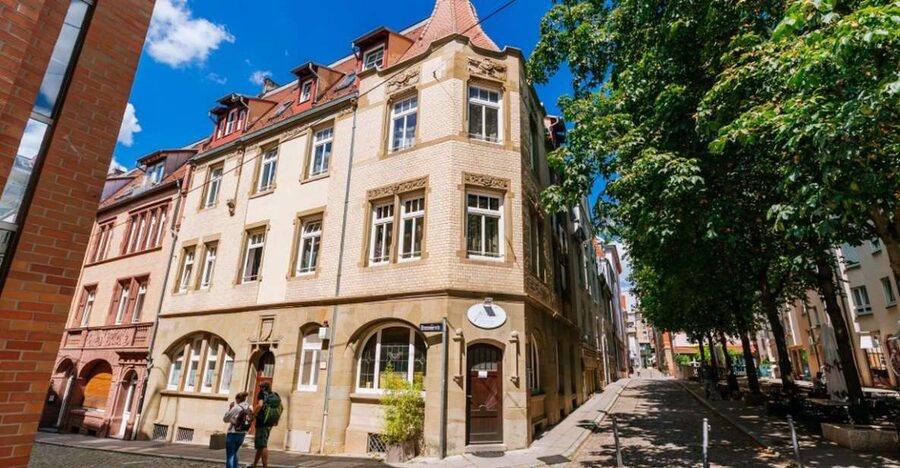
- A historic quarter with a humble name: Stuttgart’s Bean District took its name from the legume that once formed a major part of local diets.
- Two hours on foot: The length is enough to get a feel for the area without turning into an exhausting city march.
- A local food finish: Your included Swabian appetizer plate gives you a small but useful introduction to regional cooking.
- A quieter side of central Stuttgart: Narrow lanes and inner courtyards offer a change from the city’s traffic and crowded main streets.
- A German-language experience: The guide speaks German, so this tour suits German speakers best.
- A lively guide matters here: Norman Stümpfig is praised for mixing useful facts with humor and stories beyond standard textbook history.
Entering Stuttgart’s Bean District
The tour begins at the Biergarten of Restaurant Amadeus, a straightforward meeting point in the city. From there, your guide leads you into the Bean District, known in German as the Bohnenviertel.
The name gives you a clue to the quarter’s earlier character. In the 16th century, this was home to poorer residents of Stuttgart, and beans were an important part of their diet. The name is simple, even a little comic, but it points to a real piece of urban history: this was not originally an elegant district built for wealthy merchants.
That background helps you read the streets differently. You are not simply looking at old façades. You are seeing a former working-class part of Stuttgart that has changed over time while keeping much of its old shape.
The district is close to the center, but its narrow lanes create a noticeable change in mood. You leave behind the broad city streets and move into a smaller world of older buildings, tucked-away courtyards, and independent businesses. I like this contrast because it gives you a more varied picture of Stuttgart than a standard march between major sights.
More Walking Tours in Stuttgart
- Stuttgart: Guided Ghost Walking Tour
★ 4.5 · 662 reviews - Stuttgart: City Highlights – Guided Walking Tour
★ 4.7 · 189 reviews - Stuttgart: Private Guided Circular City Walk
★ 4.7 · 129 reviews
Narrow lanes, courtyards, and old buildings
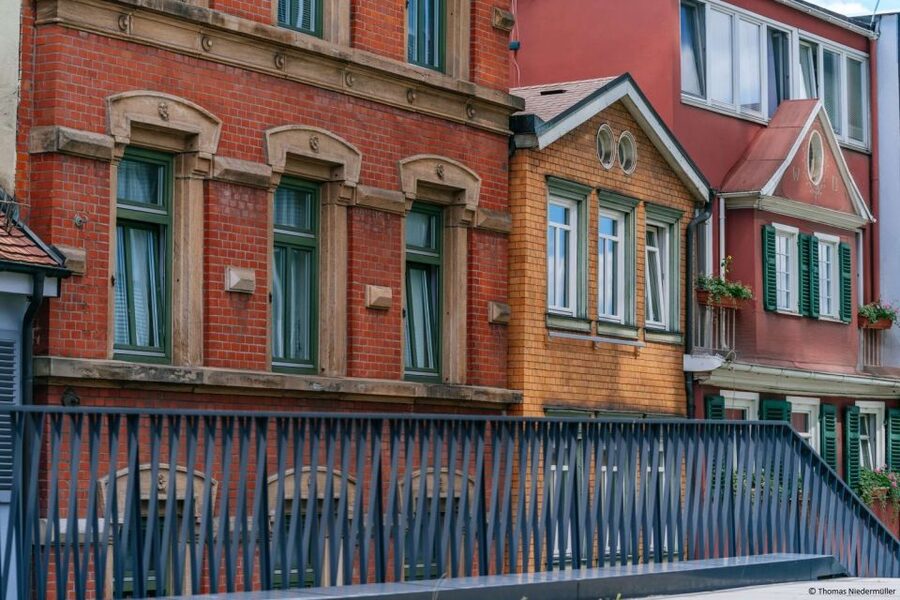
The heart of the walk is the quarter itself. Your guide points out historic buildings and characteristic inner courtyards as you move through the narrow streets.
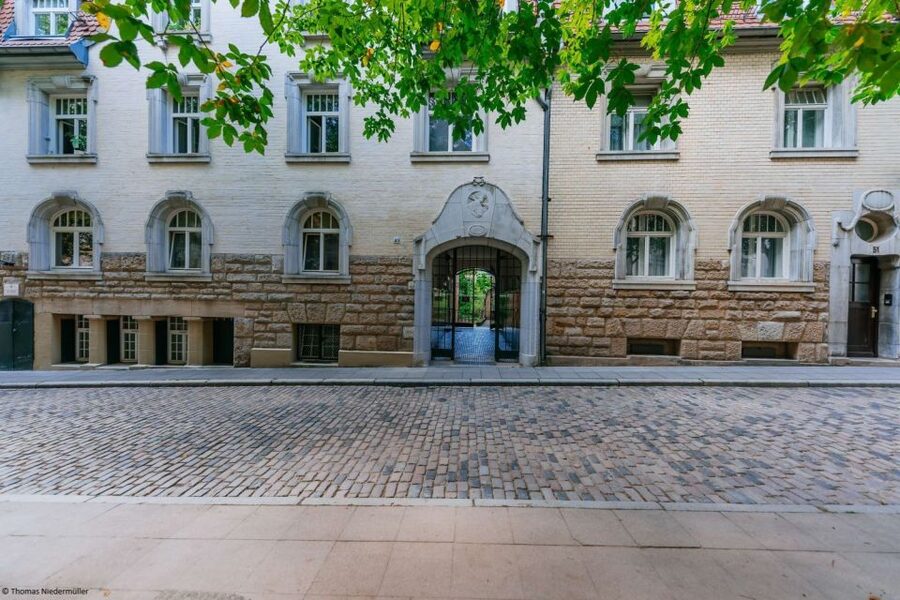
The courtyards are important because they show how the district worked as a lived-in neighborhood. From the street, you may see only a row of façades and shopfronts. Inside, the spaces open into quieter corners with a different sense of scale. Some parts of the quarter have been renovated, but the area has retained enough of its original character to make the walk feel distinct from the newer parts of Stuttgart.
Bring a camera if you enjoy architectural details. The tour offers plenty of photo opportunities in the lanes and courtyards, though you should treat the area as a neighborhood rather than a stage set. The appeal is in the small details and changing views, not in one giant landmark.
Access can vary. One person who had taken the tour before was disappointed that the group could no longer enter some of the rear courtyards and workshops. That is useful to know. The route still covers the quarter’s streets and historic buildings, but you should not assume every private or semi-private space will be open on every departure.
A neighborhood that changed without losing its shape
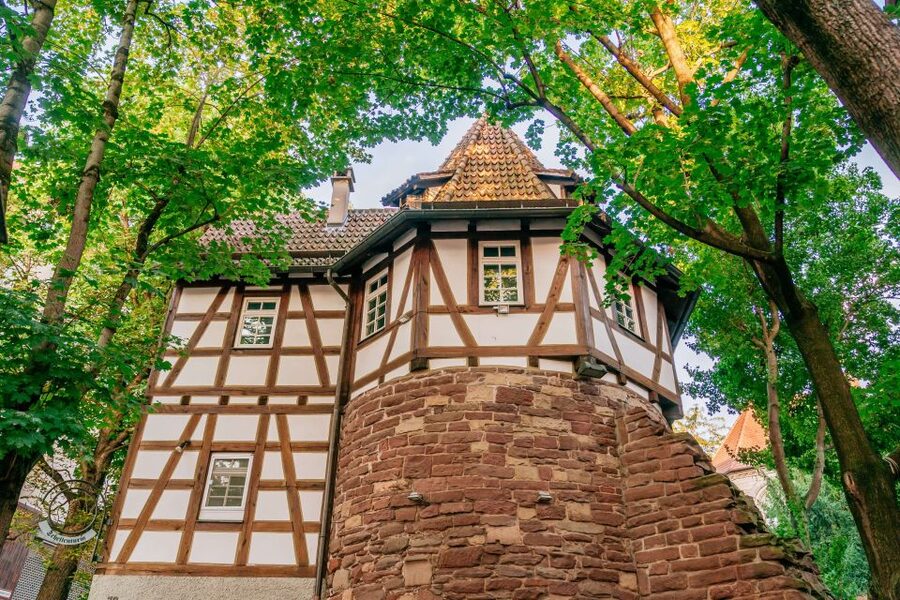
The Bean District has moved from poverty to preservation and small-scale city life. Today, the renovated quarter contains bars, cafés, small fashion shops, antique shops, and other independent businesses.
That mix gives the tour its modern side. You are not walking through a frozen historic zone where every business exists only for sightseeing. You might pass a café, then a fashion boutique, then an antique shop, with the old buildings tying these newer uses together.
I find this useful for first-time visitors because it adds context to Stuttgart’s present-day identity. A city is more than palaces, museums, and grand squares. Here, you get a look at a district where ordinary buildings have been adapted for current life.
The guide’s stories help connect the pieces. Norman Stümpfig has been praised for offering information beyond the usual schoolbook version of history, while keeping the tone relaxed. Another guide, described as both well-informed and humorous, also received strong praise. You should expect a personal, spoken tour rather than a dry lecture.
That style matters in a compact district. The streets themselves are not enormous attractions, so the guide’s explanations give them meaning. A good story about a building, courtyard, or former resident can turn a brief glance into a memorable stop.
What the two-hour route feels like
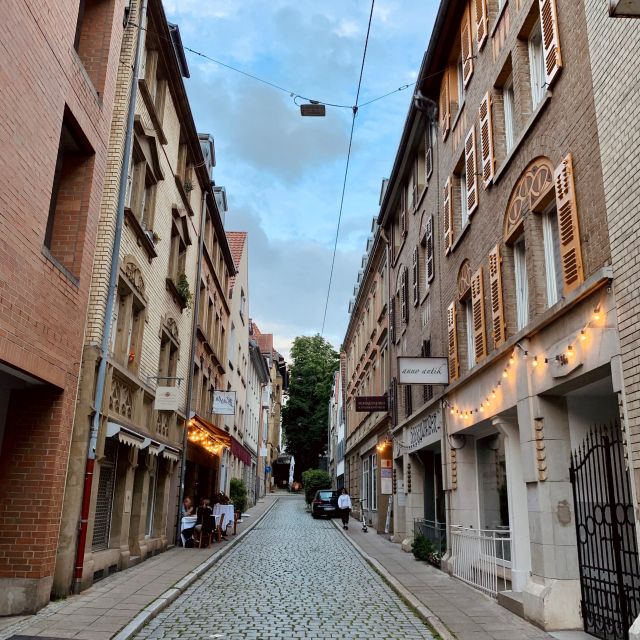
Two hours is a sensible length for this experience. It gives you time to walk at a comfortable pace, listen to local stories, pause for photographs, and finish with food.
The tour is not designed as a full survey of Stuttgart. You will not cover every major sight in the city, and you should not book it expecting a long museum-style history lesson. Instead, it focuses tightly on one old quarter and the way it looks, sounds, smells, and functions today.
That focus is a strength. You get enough time to notice the narrow streets instead of rushing through them. One person specifically praised the moderate pace, and that is worth noting if you prefer a walk that leaves room to look around.
Comfortable shoes are important. The tour takes place entirely on foot, and the route uses narrow lanes and streets in the historic quarter. Comfortable clothing is also recommended. No special equipment is needed, but you should dress for a normal city walk.
Because the guide speaks German, your language ability should shape your decision. If you understand German well, the local humor and side comments may be a major part of the appeal. If you do not, this is not the right choice for an English-language introduction to Stuttgart.
Still Stuttgart, at a slower pace:
- Stuttgart 24-Hour Hop-On Hop-Off Sightseeing Bus Tour
★ 4.4 · 1,647 reviews - Stuttgart: Mercedes-Benz Museum Entry Ticket
★ 4.8 · 1,400 reviews - Tickets SWR Fernsehturm Stuttgart
★ 4.5 · 674 reviews - Stuttgart: Museum of Illusions Entry Ticket
★ 4.2 · 507 reviews
The Swabian appetizer plate
Food is included at the end of the tour in the form of a Swabian appetizer plate. Drinks are not included, so plan to pay separately if you want something to drink.
The plate is more than a small extra. It gives the walk a regional finish and lets you sample several Swabian foods rather than committing to one full meal. The exact items are not specified, so you should not book this expecting a particular dish. Think of it as a selection of local appetizers.
I like this arrangement for a walking tour. You spend the first part seeing the district and hearing its story, then sit down to taste something connected to the region. It also makes the $42 price easier to assess, since the fee covers the guide, the full walk, and food.
The portion is described as an appetizer plate, not lunch or dinner. If you arrive hungry, keep that distinction in mind. You may want a fuller meal later, especially if you are treating this as your main afternoon activity.
The food has been praised for being very good, and it gives you a practical introduction to Swabian cooking. You do not need to know the cuisine in advance. The point is to try a selection and leave with a better sense of what the region puts on the table.
How much value do you get for $42?
At $42 per person, this is not the cheapest way to walk around Stuttgart. You can explore the streets on your own for free, and the Bean District’s shops and lanes do not require an admission ticket.
The value comes from interpretation and structure. You are paying for a guide who can explain why the area is called the Bean District, point out historic features, share local anecdotes, and connect the old quarter with present-day Stuttgart. The appetizer plate adds a second layer by giving you a taste of regional food.
For me, the price makes the most sense in three situations. First, you have limited time and want a focused introduction rather than wandering without a plan. Second, you speak German and enjoy local stories. Third, you want an experience that combines neighborhood history with food.
The value is weaker if you only want major landmarks, need an English-language tour, or prefer to explore shops independently. You may also feel the price less worthwhile if access to some courtyards and workshops is restricted on your departure.
Still, the two-hour format keeps the commitment reasonable. You are not giving up a whole day, and you can use the rest of your schedule for Stuttgart’s museums, central sights, or another neighborhood.
Guide style and the human factor
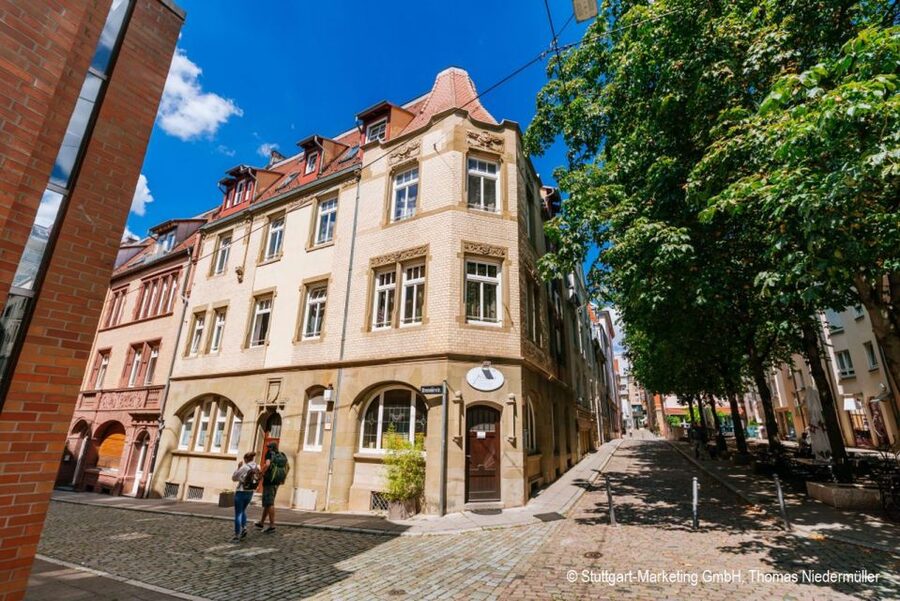
The strongest praise focuses on the guides. Norman Stümpfig is singled out for his engaging manner, interesting anecdotes, humor, and distinctive voice. One person said the time passed quickly and even planned another tour after receiving a recommendation from him.
That tells you what kind of experience this is at its best. The guide is not simply naming streets and reciting dates. The tour depends on conversation, delivery, and the ability to make small details matter.
The feedback also suggests that different guides can lead the experience. A female guide was described as both humorous and well-informed, with an appropriate walking pace. So the quality does not depend only on one individual, though Norman Stümpfig appears to be a particular favorite.
The guide can also suggest other local activities. A recommendation for a tour of Stuttgart’s wholesale market came up after one walk. That kind of local lead can be useful if you want to continue exploring beyond the central sights.
Who will enjoy this walk most?
I would recommend the tour to German-speaking visitors who want a close look at one of Stuttgart’s oldest quarters. It is a good fit if you enjoy architecture, neighborhood stories, independent shops, and regional food more than a checklist of famous monuments.
It also suits repeat visitors. If you have already seen Stuttgart’s best-known sights, the Bean District offers a different angle. You get a quieter part of the center and a sense of how an old neighborhood has adapted to modern city life.
The tour can work for first-time visitors too, especially at the start of a Stuttgart stay. It gives you a compact orientation to one area and may help you decide where to return for a café, shop, or later meal.
I would be more cautious if you need English. The stated tour language is German, with no English option listed. I would also look elsewhere if your main goal is a substantial meal, a full city overview, or guaranteed access to every courtyard and workshop.
Practical details before you reserve
The activity lasts two hours and starts at a time selected from the available departures. Meet at the Biergarten of Restaurant Amadeus.
Wear comfortable shoes and clothes. The route is a walking tour through narrow streets, so practical clothing will serve you better than anything formal or restrictive.
The guide is included, as is the Swabian appetizer plate. Drinks cost extra. If you have dietary concerns, the available information does not specify substitutions or ingredients, so you should check before booking rather than assume the plate can be adapted.
The booking terms are flexible. You can reserve now and pay later, and cancellation is available up to 24 hours before the tour for a full refund. These terms are useful if your Stuttgart schedule is still shifting.
Should you book the Bean District tour?
Book it if you speak German, enjoy local neighborhoods, and want a small taste of Swabian food with your history. The tour’s best features are its compact length, relaxed pace, independent shops, historic courtyards, and guides who bring the quarter to life with humor and side stories.
Skip it if you need English, want a major-sight tour, or expect a full meal and access to every back courtyard. The $42 price is fair when you use the guide and food as part of the experience, but it is less compelling if you only want to stroll the streets.
For the right audience, this is a useful two-hour look at Stuttgart beyond traffic, shopping streets, and headline attractions. The Bean District shows a more intimate city, with beans in its name, old lanes underfoot, and a plate of Swabian food waiting at the end.
FAQ
Where does the Bean District walking tour meet?
Meet your guide at the Biergarten of Restaurant Amadeus.
How long does the tour last?
The walking tour lasts two hours.
What language is the tour conducted in?
The live tour guide speaks German.
What is included in the price?
The price includes the walking tour, a guide, and a Swabian appetizer plate.
Are drinks included?
No. Drinks are not included in the tour price.
What should I wear?
Wear comfortable shoes and comfortable clothes suitable for walking.
What is the Bean District known for?
In the 16th century, the area was inhabited by Stuttgart’s poorer population, whose diet included many beans. This legume gave the district its name.
What can I see during the walk?
You can see historic buildings, narrow lanes, characteristic courtyards, bars, cafés, small fashion boutiques, and antique shops.
Is the appetizer plate a full meal?
No. It is described as an appetizer plate with a variety of Swabian foods.
Can I cancel the tour for a full refund?
Yes. You can cancel up to 24 hours in advance for a full refund.
More Food and Drink Tours in Stuttgart
- Stuttgart: Stuttgart Wine Museum Wine Tasting
★ 4.7 · 55 reviews - Stuttgart: Guided Wine Walk & Wine Tasting
★ 4.6 · 28 reviews - Stuttgart: Hiking Tour with Craft Beer Tasting
★ 3.7 · 9 reviews - Cologne: Brewery Tour with 3 Kölsch Beer Tastings
★ 4.7 · 3,108 reviews
Just added around Stuttgart
- Stuttgart: Exklusive Floßboote Finne & Fischle★ 4.5 · 23 reviews
- Stuttgart: Landesmuseum Württemberg Old Castle Entry Ticket★ 4.5 · 15 reviews
- Stuttgart: Wilhelma Zoological-Botanical Garden Ticket★ 4.7 · 121 reviews
- Stuttgart: Winter Sunday Brunch Buffet★ 4.6 · 16 reviews
- SUP Yoga with Guide★ 4.1 · 4 reviews
- Stuttgart: Walking Custom Tour with a Local Guide★ 3.8 · 4 reviews
- Stuttgart: Wine Tour with wines of the best winemakers★ 4.0 · 7 reviews
- Stuttgart: Stand Up Paddling Rental★ 4.6 · 55 reviews
Food & Drink, compared.

St. Pauli Highlights Guided Tour with Beer for 18+
Read our review →
Elbphilharmonie Plaza and HafenCity Food Tour
Read our review →
Bavarian Beer and Food Evening Tour in Munich
Read our review →
Classic Mike’s Bike Tour daily @ 11.30 incl Beer Garden & Surfers
Read our review →
Berlin Center Food Tour with 8+ Authentic Local Tastings
Read our review →
Browse the lists this tour appears in