
Reviewed · MUSEUMS
Stuttgart: Mercedes-Benz Museum Entry Ticket
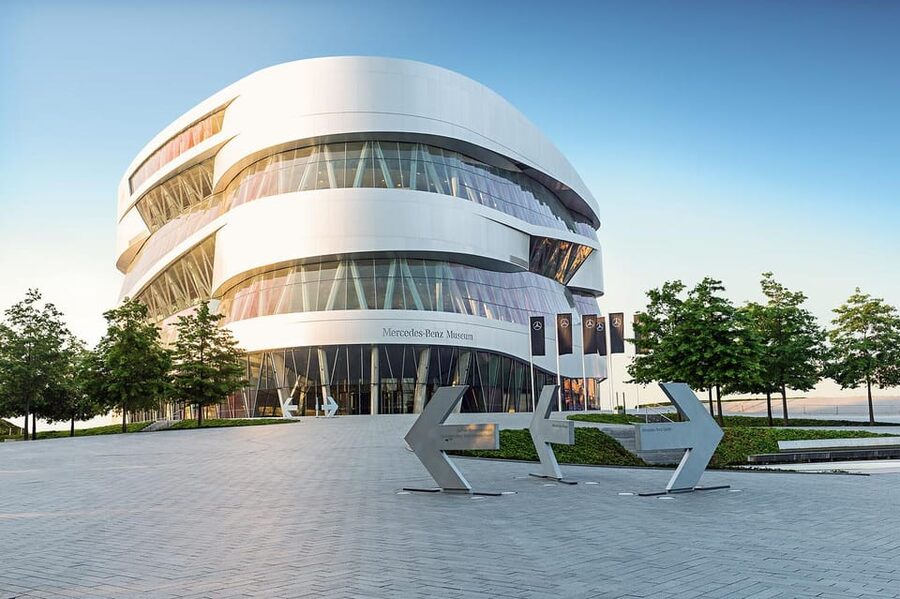
Cars tell bigger stories here. The Mercedes-Benz Museum turns the automobile’s birth in 1886 into a sweeping journey through technology, daily life, industry, and popular culture. I especially like the stunning seven-floor design and the sheer range of vehicles, from the earliest motorcars to Formula 1 racers and futuristic research cars. The free audioguide, available in eight languages, adds useful context without raising the ticket price.
My one caution is simple: this is not a quick one-hour stop. The museum covers 16,500 square meters, with more than 160 vehicles arranged across twelve exhibition rooms. If you arrive late in the day, you may end up rushing past some of the best displays.
In This Review
- Key things to know before you go
- Why Stuttgart’s Mercedes-Benz Museum deserves your time
- Entering through the main entrance
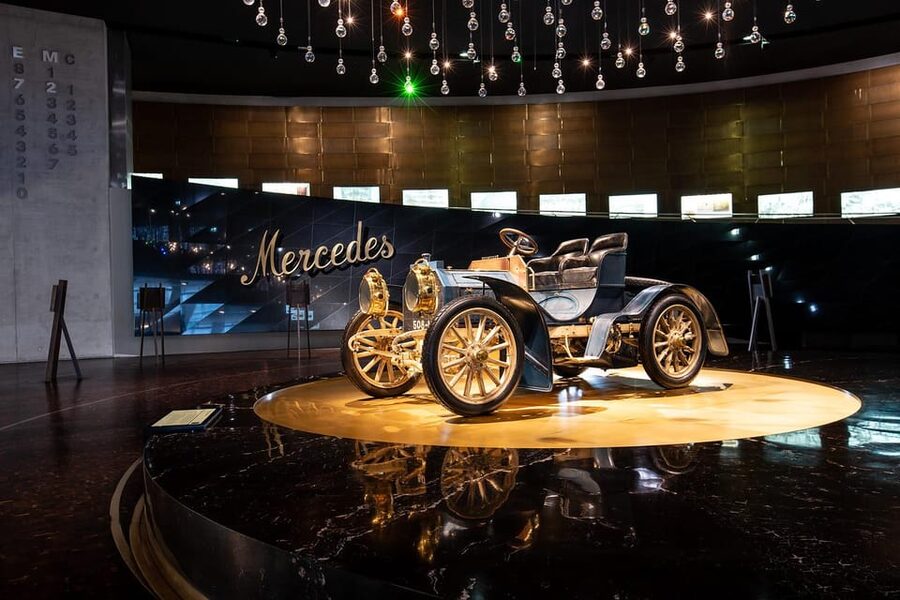
- The first automobile and the Legend route
- The Collection route and the variety of vehicles
- The audioguide in eight languages
- Why the architecture matters
- How long should you spend inside?
- Is $18 good value?
- Who will enjoy it most?
- A practical plan for your visit
- Should you book the Mercedes-Benz Museum?
- FAQ
- How much does the Mercedes-Benz Museum entry ticket cost?
- How long is the ticket valid?
- When is the Mercedes-Benz Museum open?
- Which languages are available for the audioguide?
- What does the ticket include?
- Is the museum wheelchair accessible?
Key things to know before you go
- Plan at least two to three hours: Four to five hours is better if you want to read, listen, and see the collection properly.
- Follow two connected stories: The Legend and Collection routes trace the company’s development from the first automobile to racing and research vehicles.
- The building is part of the experience: Its modern interior carries you through the exhibition across several levels.
- The audioguide is free: Choose German, English, Italian, Spanish, French, Chinese, Japanese, or Russian.
- Advance tickets can save time: The ticket allows entry through the main entrance, and prepaid visitors can scan at the entrance carousel.
- It works for non-car fans, too: Social history, design, aircraft, trams, family activities, and cultural change give the museum wider appeal.
Why Stuttgart’s Mercedes-Benz Museum deserves your time
The Mercedes-Benz Museum is not simply a room full of expensive cars. It uses the automobile to explain how modern life changed. The story begins with Carl Benz’s 1886 invention and then moves through engineering, transport, industrial growth, war, design, racing, and consumer culture.
That wider frame is what makes this experience work for me. You do not need to know the difference between every engine type to enjoy it. The vehicles are the stars, but the surrounding information explains why each period mattered.
The exhibition contains more than 160 vehicles, a number large enough to feel substantial without turning into an endless warehouse of similar models. You will see early automobiles, elegant classic cars, racing machines, commercial vehicles, and experimental designs. The collection also reaches beyond cars, showing how engine technology affected aircraft, trams, and other forms of transport.
The presentation earns much of the praise. The interior is clean, orderly, and visually striking, with a chronological flow that makes the museum easy to follow. You can move through the story in two ways, using the Legend route and the Collection route. Together, they give the visit a clear shape instead of leaving you to wander without context.
A few more Stuttgart trips worth comparing
- Tickets SWR Fernsehturm Stuttgart
★ 4.5 · 674 reviews - Stuttgart: Museum of Illusions Entry Ticket
★ 4.2 · 507 reviews - Stuttgart: Wilhelma Zoological-Botanical Garden Ticket
★ 4.7 · 121 reviews
Entering through the main entrance
Your ticket is valid for one day, and you enter directly through the museum’s main entrance. The attraction is open Tuesday through Sunday from 9 a.m. to 6 p.m., with last admission at 5 p.m.
That final admission time matters. A 4:30 p.m. arrival gives you only 90 minutes before closing, which is enough for a fast look but not enough for a relaxed visit. I would treat the museum as a major Stuttgart stop, not something to squeeze in after a full day of sightseeing.
The ticket includes admission to the permanent exhibition and the audioguide. Advance purchase can be useful at busy times, since prepaid admission may let you scan and enter without waiting at the ticket line. Still, follow the signs carefully. One useful practical point is that prepaid admission has not always been clearly explained by staff, so keep your ticket ready and ask at the entrance if you are unsure where to go.
The museum is wheelchair accessible. That makes the large, multi-level exhibition easier for more people to enjoy, though the size of the building means you should still allow plenty of time and take breaks as needed.
The first automobile and the Legend route
The Legend route gives the museum its strongest narrative. It begins with the invention of the automobile and follows the company’s development through major eras.
Carl Benz’s 1886 motorcar is the natural starting point. Seeing the early machine in the context of later cars helps you understand how radical the idea was. The museum is not only saying that Mercedes-Benz produced famous vehicles. It is showing how the motorcar developed from a novel mechanical invention into a central part of everyday life.
As you continue, the route connects engineering progress with major events in German and world history. The exhibition explains how industrial change affected the company and how the automobile became part of popular culture.
That approach is particularly useful if you are not a dedicated car enthusiast. You can focus on the broad story of invention, production, design, and social change. The cars become evidence of those changes, rather than isolated objects behind glass.
The chronological layout also helps families. Younger children can focus on shapes, colors, and unusual vehicles, while older children can follow the technology and historical timeline. A six-year-old can use the children’s audioguide and puzzles, while videos on each floor give older children another way to stay involved.
The Collection route and the variety of vehicles
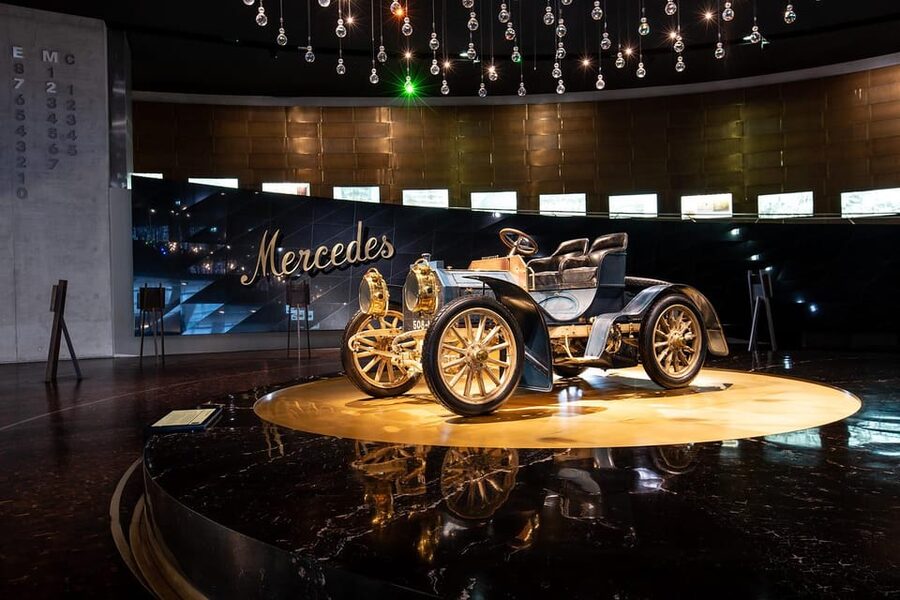
The Collection route gives you a different way to view the company’s work. Instead of following only a timeline, it groups vehicles and developments by purpose and theme.
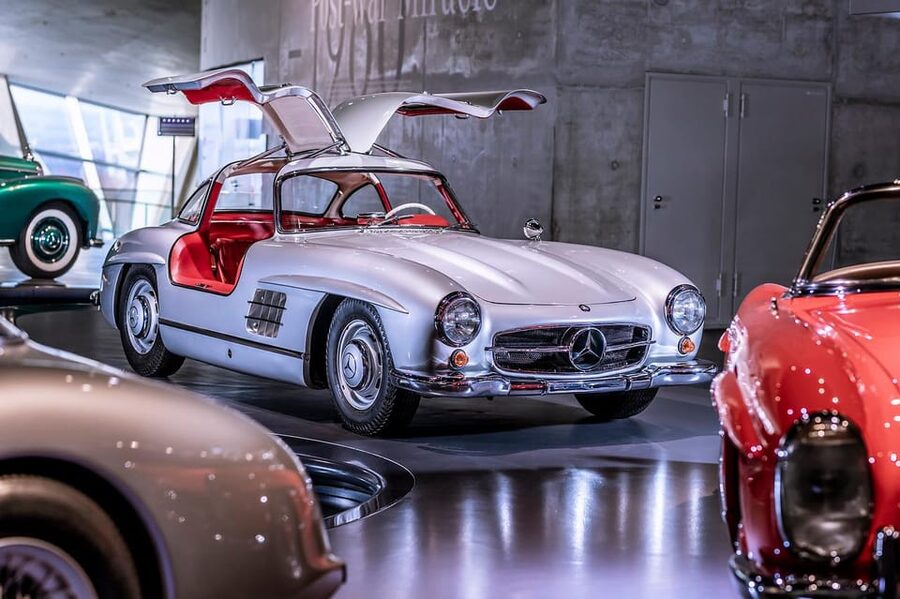
This is where the range of the collection becomes clear. The museum includes passenger cars, racing cars, older commercial designs, and research vehicles. Some displays show the refined styling associated with Mercedes-Benz. Others are more technical, unusual, or experimental.
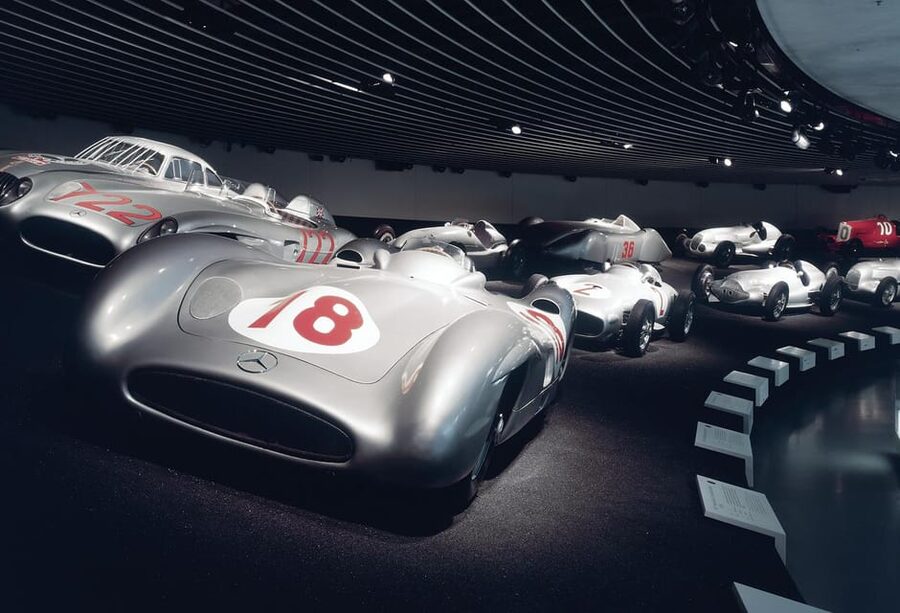
The racing cars are a major highlight. The exhibition finishes with powerful competition vehicles and Formula 1 examples, giving the visit a lively final stretch. Even if you have little interest in racing, the engineering and visual drama are hard to miss.
The futuristic research vehicles provide a useful contrast. After seeing the first automobile and early production models, you can look at designs that imagine where vehicle technology might go next. That contrast gives the museum a satisfying beginning, middle, and end.
You may also find displays that connect engine development with aircraft, trams, and other applications. This wider material is one reason the museum works for couples or families with mixed interests. You can appreciate design, industrial history, transport, or engineering without spending the entire visit focused on car specifications.
More Museums in Stuttgart:
- Stuttgart: Stuttgart Wine Museum Wine Tasting
★ 4.7 · 55 reviews - Berlin: Jewish Museum Berlin Entrance Ticket
★ 4.5 · 8,393 reviews - Berlin: DDR Museum Tickets
★ 4.3 · 3,443 reviews - Berlin: Natural History Museum Entrance Ticket
★ 4.6 · 3,382 reviews
The audioguide in eight languages
The included audioguide is worth using. It brings dates, inventions, and individual vehicles into a clearer story, especially if you are unfamiliar with Mercedes-Benz history.
You can choose German, English, Italian, Spanish, French, Chinese, Japanese, or Russian. That broad choice is a real benefit for international visitors and makes the $18 admission feel stronger.
The device is not perfect. Some handheld units have failed to activate, and one practical issue is that the volume can feel too low when the museum is noisy. If your unit does not work, ask staff for help early rather than carrying it around and hoping it improves.
I would also allow time to look at the vehicles without listening to every explanation. The audioguide can add detail, but trying to hear every stop may stretch your visit well beyond three hours. Pick the displays that interest you most, then use the wider exhibition for visual browsing.
Why the architecture matters
The building is one of the museum’s major attractions. Its modern design sets the tone before you have even reached the most famous vehicles.
The interior uses height, curves, and long sightlines to make the exhibition feel like one connected journey. The multi-story layout is visually impressive, but it also means you are walking through a large space with plenty of material to absorb.
This design gives the museum a sense of occasion. A car is not displayed as a simple object on a platform. It becomes part of a carefully arranged sequence that links invention, production, racing, and future research.
The polished setting can feel almost like a work of modern art. That is good news if you enjoy architecture and design as much as transport. It also explains why the museum remains interesting for people who would not normally choose a car museum.
The trade-off is that there are not always enough places to rest. If you need frequent seating, plan your pace instead of trying to complete every room quickly. The museum’s size is a strength, but it asks for energy.
How long should you spend inside?
Give yourself two to three hours at the very least. That allows a reasonably complete visit, with time for the main vehicles and selected audioguide stops.
Four to five hours is a better target if you want to read the displays, listen carefully, watch the floor videos, and compare the different eras. Car enthusiasts may need even longer. Three hours can disappear quickly when you stop at early motorcars, racing machines, classic designs, and research vehicles.
An hour is too short for most people. Train delays and tight schedules have forced some visitors to make do with 60 or 90 minutes, but that means choosing highlights and leaving much unseen.
If you have only 90 minutes, I would focus on the beginning and the racing cars, then use the Collection route for vehicles that catch your eye. If you arrive at 4:30 p.m., expect a quick visit because the doors close at 6 p.m. Do not book that time slot if your main goal is to understand the full evolution of the company.
Is $18 good value?
At $18 per person, the ticket is fairly priced for the amount of exhibition space and the number of vehicles on display. You receive access for the full day, plus an audioguide in eight languages.
The value is strongest when you stay for several hours. If you rush in for a brief look, the price may feel less rewarding simply because you have not had time to use what you paid for.
The museum also offers more than a brand showcase. You are paying for automotive history, industrial history, design, architecture, and cultural context in one visit. That wider content makes the ticket easier to recommend to a mixed group.
Families may find especially good value here. Children can use puzzles and a children’s audioguide, while adults can spend time with classic vehicles, historical displays, and racing cars. There is also a gift shop, which adds a pleasant final stop, though purchases are separate from admission.
The ticket includes free cancellation up to 24 hours before the visit and a reserve-now, pay-later option. Those terms are useful if your Stuttgart plans are still shifting, but the main value question remains time. Book it when you can give the museum a proper afternoon or morning.
Who will enjoy it most?
Car enthusiasts will find plenty to keep them busy. The oldest automobiles, legendary race cars, and futuristic research vehicles create a strong mix of engineering, design, and spectacle.
The museum also suits:
- Families with children who enjoy vehicles, puzzles, or visual exhibits
- Adults interested in German industry and social change
- Architecture fans
- Couples with different interests
- Anyone comparing Stuttgart’s major car museums
- Visitors who want an indoor activity with a clear structure
You do not need to be a Mercedes-Benz loyalist. The museum explains the company’s development, but it also places the automobile in a much larger story.
It may be less suitable if you want a short, informal attraction with lots of hands-on simulators. One point to know is that there is no simulator, and some people would welcome more interactive digital material. The experience is mainly about seeing, reading, listening, and following the exhibition’s routes.
A practical plan for your visit
I would arrive earlier rather than later, especially if you want to use the audioguide fully. Enter through the main entrance, collect or activate your guide, and begin with the Legend route so the story has a clear starting point.
Keep an eye on the time as you move through the seven floors. It is easy to spend too long with the earliest cars or the racing section and then hurry through the middle.
For a two-hour visit, move steadily and choose only the vehicles and explanations that interest you most. For three hours, follow the main route and stop at the standout displays. For four or five hours, take your time with both the Legend and Collection narratives, the videos, and the historical context.
If your audioguide is too quiet or will not activate, get help promptly. A noisy room can make low volume frustrating, and you should not lose half your visit troubleshooting a device.
The museum is open Tuesday through Sunday only, so do not plan it for Monday. Last admission is at 5 p.m., but a late entry is best reserved for a short visit.
Should you book the Mercedes-Benz Museum?
Yes, if you can give it at least two to three hours. The ticket offers strong value, the building is striking, and the exhibition has enough variety to satisfy both serious car fans and people who simply enjoy design, technology, and history.
Book with confidence if your schedule includes a full morning or afternoon in Stuttgart. I would be more cautious if you have only an hour, need many rest points, or want hands-on driving activities. For everyone else, the museum is one of the city’s most rewarding indoor attractions, and the free multilingual audioguide makes the story much easier to follow.
FAQ
How much does the Mercedes-Benz Museum entry ticket cost?
The listed price is $18 per person.
How long is the ticket valid?
The ticket is valid for one day.
When is the Mercedes-Benz Museum open?
It is open Tuesday through Sunday from 9 a.m. to 6 p.m. Last admission is at 5 p.m.
Which languages are available for the audioguide?
The audioguide is available in German, English, Italian, Spanish, French, Chinese, Japanese, and Russian.
What does the ticket include?
It includes admission to the Mercedes-Benz Museum exhibition and the audioguide.
Is the museum wheelchair accessible?
Yes, the museum is wheelchair accessible.
Just added around Stuttgart
- Stuttgart: Exklusive Floßboote Finne & Fischle★ 4.5 · 23 reviews
- Stuttgart: Landesmuseum Württemberg Old Castle Entry Ticket★ 4.5 · 15 reviews
- Stuttgart: Winter Sunday Brunch Buffet★ 4.6 · 16 reviews
- Stuttgart: Wilhelma Zoological-Botanical Garden Ticket★ 4.7 · 121 reviews
- SUP Yoga with Guide★ 4.1 · 4 reviews
- Stuttgart: Walking Custom Tour with a Local Guide★ 3.8 · 4 reviews
- Stuttgart: Wine Tour with wines of the best winemakers★ 4.0 · 7 reviews
- Stuttgart: Stand Up Paddling Rental★ 4.6 · 55 reviews
Museums, compared.



Skip-the-Line: Berlin Wall Museum at Checkpoint Charlie
Read our review →
Browse the lists this tour appears in