
Reviewed · WALKING TOURS
Aachen classic walking tour
Aachen wears its past in plain sight. This 1.5-hour walk brings Roman baths, Charlemagne, imperial coronations, and warm sulphur springs into one compact old-town route. I especially like the Italian-language storytelling and the use of historical images and anecdotes to make old stones easier to understand. The main drawback is clear: the guided visit covers monuments from the outside, so you will not receive explanations inside the cathedral or other historic buildings.
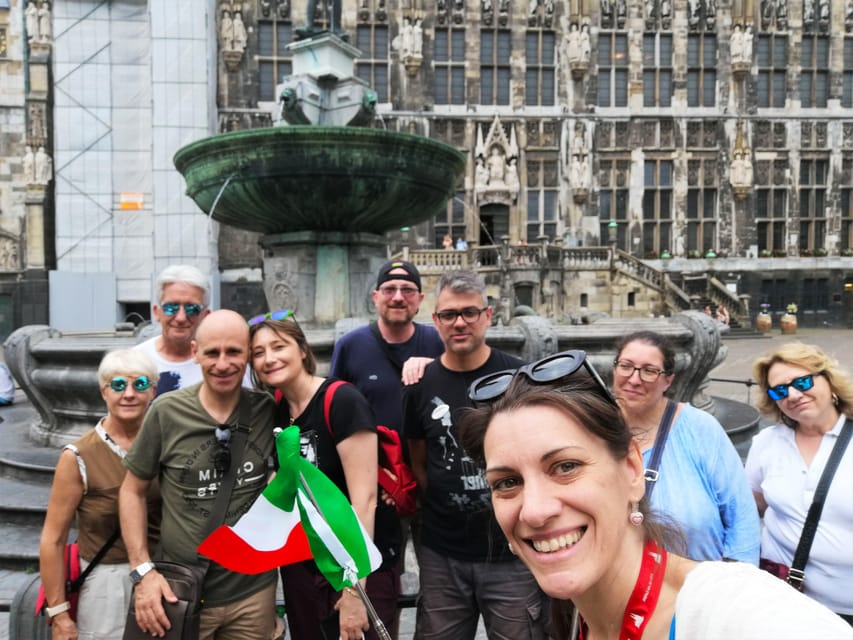
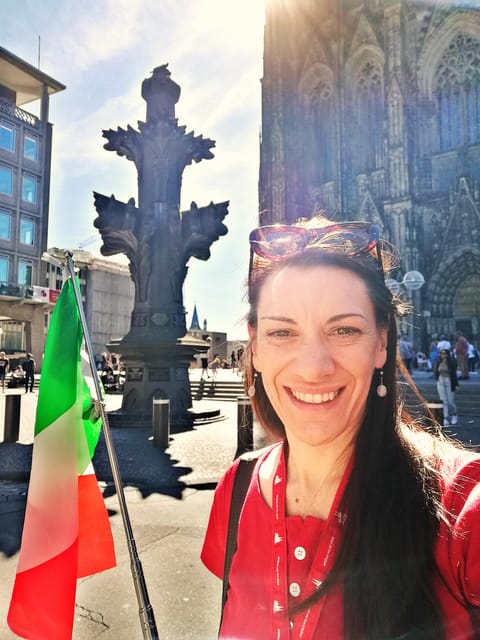
Guide Sara is praised for being prepared, friendly, funny, and passionate. I also like the easy meeting point in front of the tourist board, where she carries an Italian flag. At $29 per person, the tour offers good value if you want a lively orientation to Aachen, but you should budget extra time and possibly separate admission if seeing the interiors matters to you.
In This Review
- Key points to know before booking
- Why Aachen makes a fine walking-tour city
- Elisenbrunnen and the smell of Aachen’s spa past
- Roman remains and the archaeological view
- Charlemagne’s Aachen, told through places and stories
- Couven Museum and the city’s later civic life
- Granus Tower and the old imperial center
- Fountains, courtyards, and the route to the cathedral
- Aachen Cathedral, Charlemagne, and the coronation tradition
- Treasury Chamber and what the tour can and cannot cover
- Sara’s style and the Italian-language advantage
- Is $29 good value for 90 minutes?
- Who should book this Aachen walking tour?
- Should you book it?
- FAQ
- How long does the Aachen Classic Walking Tour last?
- What language is the tour conducted in?
- Who is the guide?
- Where is the meeting point?
- Are the cathedral and other monuments visited inside?
- How much does the tour cost?
Key points to know before booking
- Roman beginnings: Follow Aachen’s story back to Aquae Granni, the ancient Roman spa settlement.
- Charlemagne’s city: Learn how Aachen became the political center of Charlemagne’s empire.
- A cathedral with first-place status: See Aachen Cathedral, Germany’s first UNESCO World Heritage Site, from the outside.
- Italian guide Sara: Expect clear storytelling, historical pictures, curious details, and an easygoing style.
- Short, focused route: The 1.5-hour walk covers many landmarks without taking up your whole day.
- Exterior visit only: The price includes a guided walk around monuments, not a full indoor tour.
Why Aachen makes a fine walking-tour city
Aachen sits in northern Germany near the borders with Belgium and the Netherlands. Its old center is compact, and its story is unusually dense. Roman bath culture, medieval empire, religious ceremony, civic power, and 18th-century spa life all meet within a short walk.
That density is the chief reason to take this tour. You are not simply moving from one pretty square to another. You are watching Aachen change roles over time. First it was a Roman thermal settlement. Later it became Charlemagne’s favored seat of power. For centuries after that, kings of the Holy Roman Empire came here for coronation ceremonies.
I like tours that explain why a place matters before asking you to admire it. Aachen can otherwise feel like a collection of handsome buildings with unfamiliar names. A guide gives you the connecting thread, especially when the route moves quickly from Roman remains to imperial monuments and then to modern city life.
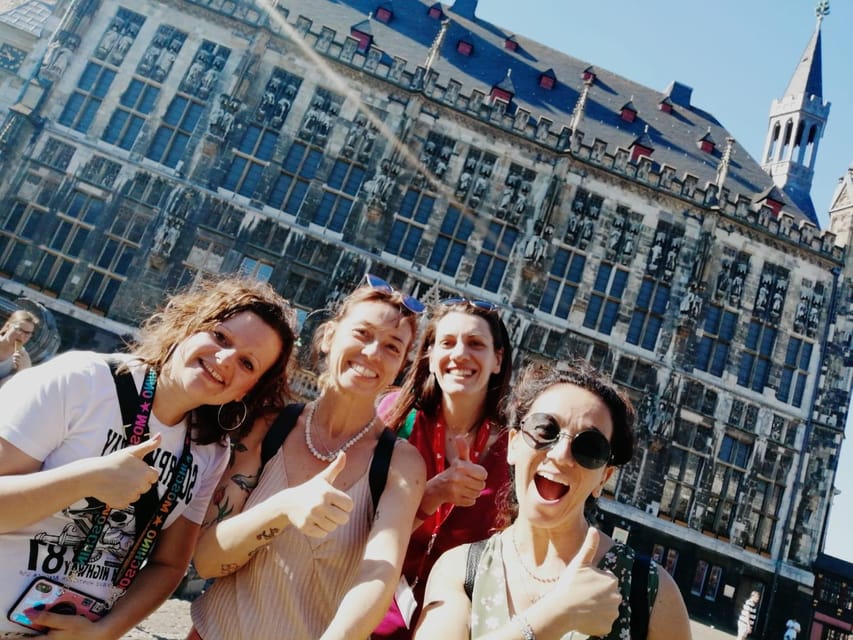
The Italian-language setting is important. Sara leads in Italian, and her style has earned a 4.8 rating from seven published ratings. The strongest praise focuses on her preparation, humor, availability, and passion. One Italian-speaking customer described the visit as interesting without ever becoming boring, with stories about Aachen and Charlemagne mixed with anecdotes and curiosities.
More Walking Tours in Cologne
- Cologne: The Night Watchman Old Town Walking Tour in German
★ 4.6 · 1,395 reviews - Cologne: Old Town Highlights Walking Tour
★ 4.6 · 1,093 reviews - Cologne: Südstadt Guided Foodie Walking Tour
★ 4.6 · 624 reviews
Elisenbrunnen and the smell of Aachen’s spa past
The tour begins at Elisenbrunnen, the grand fountain near the old town. Its sulphurous vapors point to the hot thermal waters beneath Aachen. You may notice the smell before you fully understand the monument, which is one of the more memorable ways to begin a city walk.
The springs helped shape Aachen long before Charlemagne arrived. The water is described as the hottest thermal water in north-central Europe, and the city later became a spa destination for 18th-century nobility. Elisenbrunnen gives your guide a useful opening: Aachen was not important only because of emperors and church ceremonies. Its natural springs also drew people seeking the benefits of the baths.
I find this stop valuable because it adds a physical sense of place. Roman Aquae Granni is not just a name in a textbook. The hot water still helps explain why people settled here and why the city kept attracting powerful visitors.
Do not expect a long spa treatment or a bath visit as part of the tour. Elisenbrunnen is a sightseeing stop and a doorway into the city’s Roman and spa story. If you are sensitive to sulphur odors, the air around the fountain may be strong, but that is also part of its character.
Roman remains and the archaeological view
The archaeological site brings the oldest layer of Aachen into the route. Here, the focus shifts from the visible city above ground to the traces of earlier settlement. Your guide explains the Roman connection and the role of Aquae Granni, giving you a clearer sense of what made this location worth developing.
The value of an archaeological stop often depends on explanation. Ruins can look modest when you first see them. Historical images and Sara’s storytelling help fill in the missing pieces, turning fragments into evidence of a working ancient spa town.
This is also where the tour’s short length becomes useful. You get a concise introduction rather than an extended excavation lecture. If Roman archaeology is your main interest, you may want more time afterward, but the stop gives you a sound starting point for exploring Aachen on your own.
The Coin Fountain follows the Roman and civic theme in a lighter way. Public fountains around Aachen carry layers of local meaning, and this one helps show how the city continues to place history into everyday streets. The route does not treat every stop as a grand monument. That mix of major buildings and smaller details keeps the walk moving.
Charlemagne’s Aachen, told through places and stories
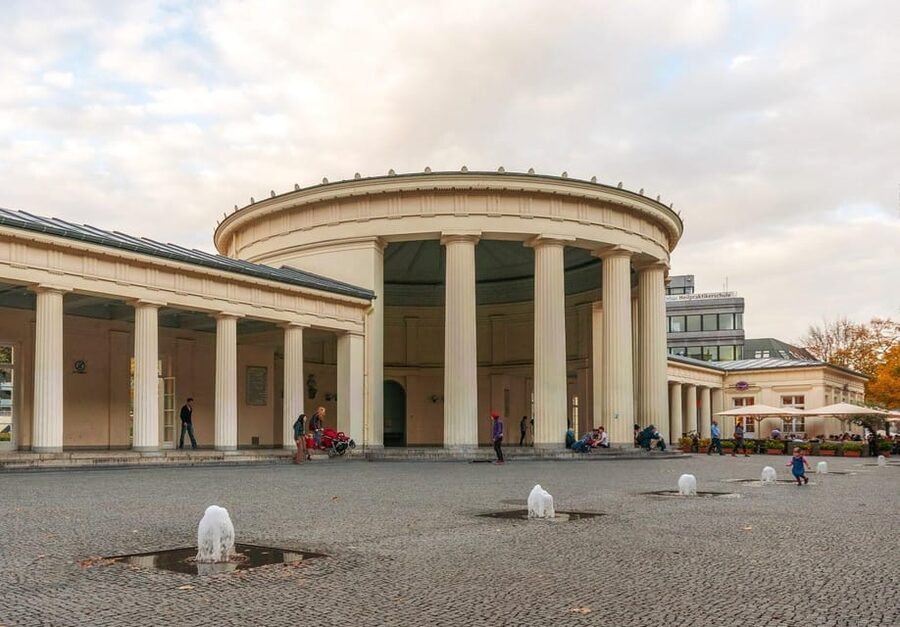
Charlemagne is the central figure in Aachen’s medieval story. The city served as his main seat, and the route uses several locations to explain his political and religious influence. You will hear how Aachen became tied to the Holy Roman Empire and why rulers continued to associate the city with imperial authority.
At Nobis Printen, the tour includes a local food reference. Printen is Aachen’s traditional spiced baked good, and the stop adds a bit of daily life to a route otherwise filled with emperors, churches, and civic buildings. Even if you do not buy anything during the walk, the name helps connect the grand story to a recognizable local specialty.
The Puppet Fountain offers another change of pace. Its moving figures and civic symbolism make it a more playful stop than the cathedral or town hall. I appreciate this sort of pause because a history walk needs visual variety. You can absorb a complicated political story more easily when the next landmark has a touch of humor.
At Am Hof, the route returns to the old center and its layers of development. This area helps you read Aachen as a living city rather than a museum. Medieval power, later urban changes, and present-day streets overlap here.
Still Cologne, at a slower pace:
- Cologne: Panoramic City Cruise
★ 4.3 · 5,698 reviews - Cologne: Brewery Tour with 3 Kölsch Beer Tastings
★ 4.7 · 3,108 reviews - Cologne: Top Sights Rhine River Cruise – Skyline Tour
★ 4.4 · 3,030 reviews - Cologne: Chocolate Museum Entrance Ticket
★ 4.4 · 2,790 reviews
Couven Museum and the city’s later civic life
The Couven Museum adds an 18th-century perspective. Its name recalls Aachen’s later architectural and domestic culture, a useful contrast with the Roman and medieval material earlier in the walk. The route may not take you through the museum’s rooms, since the guided monuments are covered from the outside, but the building helps mark a different chapter in the city’s development.
This is a good point to remember what you are buying. The $29 price pays for a guided interpretation of the old town, not a series of indoor admissions. You see the setting, hear the background, and get advice on what deserves a closer look later.
I think that arrangement works well for a first visit. You can use the tour to decide where to spend your limited sightseeing time. If you already know you want the Couven Museum, cathedral interior, or treasury, keep those visits separate in your plan.
Granus Tower and the old imperial center
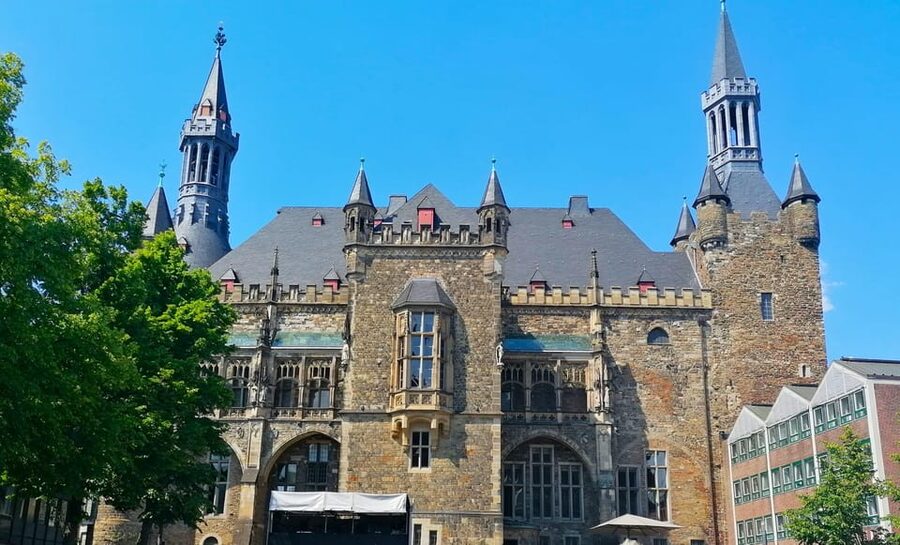
Granus Tower connects the route to Aachen’s medieval defenses and imperial center. Towers are useful city markers because they let you picture the old town as a protected settlement rather than only a group of monuments. The guide’s role here is to explain how the parts fitted together.
The route then reaches the Town Hall, one of Aachen’s strongest civic landmarks. The building occupies foundations associated with the palatine hall used in the eighth and ninth centuries. In simple terms, this was not an ordinary municipal site. It was tied to the center of Charlemagne’s court and later became the base for Aachen’s city government.
That change from palatine power to town administration tells you a great deal about Aachen. The city kept building on its earlier importance, even as political structures changed. I like this stop because it shows history as a process, not a row of unrelated dates.
The Market Square gives the Town Hall its proper setting. Here, civic power and public life meet. Your guide explains Aachen’s political role at the center of Europe, both in the past and today. The square also gives you a practical pause point, with room to look back at the buildings you have just encountered.
Fountains, courtyards, and the route to the cathedral
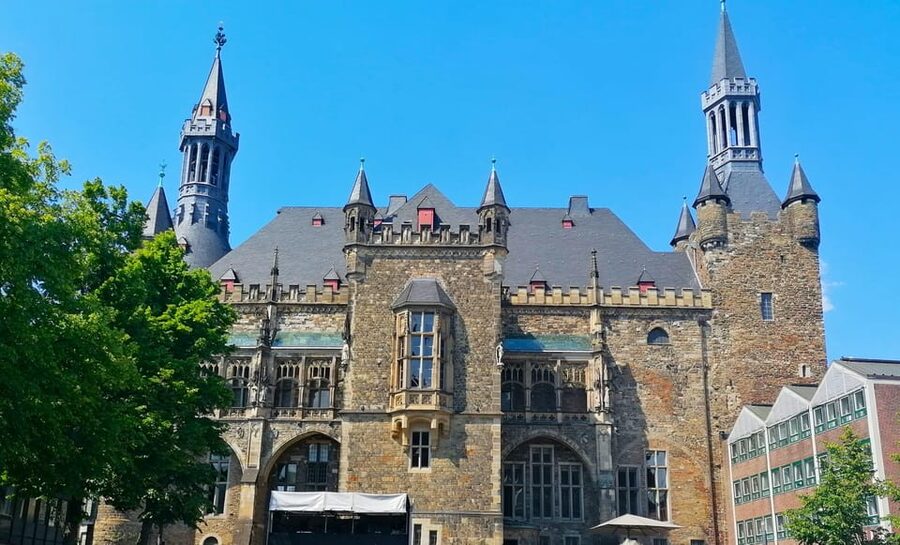
The Charles Fountain continues the Charlemagne theme. Fountains are easy to pass without a second thought, but this one helps keep the emperor present in the city’s visual language. With Sara’s explanations, you can read the monument as part of Aachen’s long effort to remember its founder and imperial past.
The Palatine Courtyard leads you toward the most important sight on the walk. The courtyard gives context before you face the Palatine Chapel and cathedral. Rather than seeing the church as an isolated masterpiece, you begin to understand it as the religious center of Charlemagne’s palace complex.
This approach is one of the tour’s strengths. The story builds through smaller markers, towers, fountains, and civic buildings before arriving at the biggest monument. You get a sense of how power was arranged around the old palace.
The walking is a key part of the experience. The tour lasts 90 minutes and covers a long list of stops, so you should expect a steady pace. Wear comfortable shoes, and leave yourself enough attention for the guide. Aachen’s old center is best understood on foot, but the number of landmarks means the walk is not a slow, lingering architecture session at every stop.
Aachen Cathedral, Charlemagne, and the coronation tradition
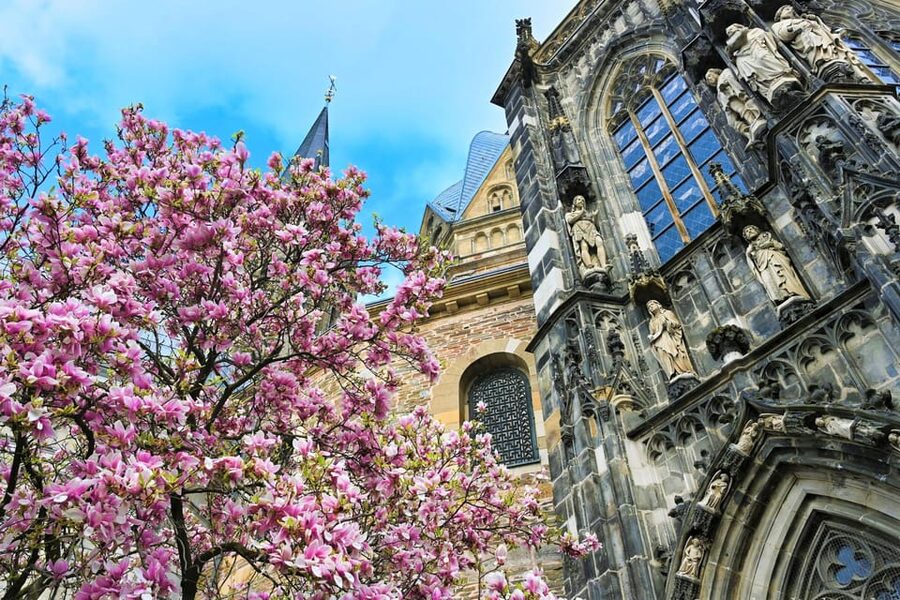
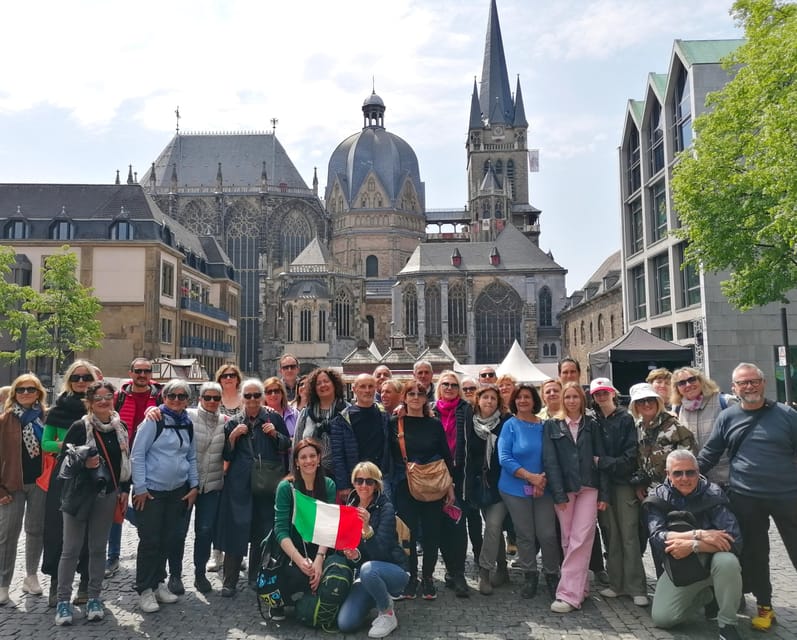
Aachen Cathedral is the emotional high point of the route. It is Germany’s first UNESCO World Heritage Site and the final resting place of Charlemagne. The building also holds remarkable artworks and treasures, which explains why it has drawn visitors for centuries.
From the outside, you can appreciate the cathedral’s place in the old town and its unusual architectural importance. The tour presents the building from different sides, allowing you to see how its forms relate to the surrounding palace area. Sara’s historical pictures and stories help you picture the cathedral across different periods.
The cathedral was also the coronation site of emperors of the Holy Roman Empire. That fact gives Aachen a reach far beyond its size. Rulers came here to connect themselves with Charlemagne and with the authority of the old imperial center.
Here is the most important limitation: this walking tour does not provide interior explanations. One rating gave four stars specifically because the customer wished the monuments could have been explained from inside. That is a fair caution, not a flaw in the outdoor route itself. If the cathedral interior is your priority, treat this walk as the introduction and arrange your own indoor visit.
Treasury Chamber and what the tour can and cannot cover
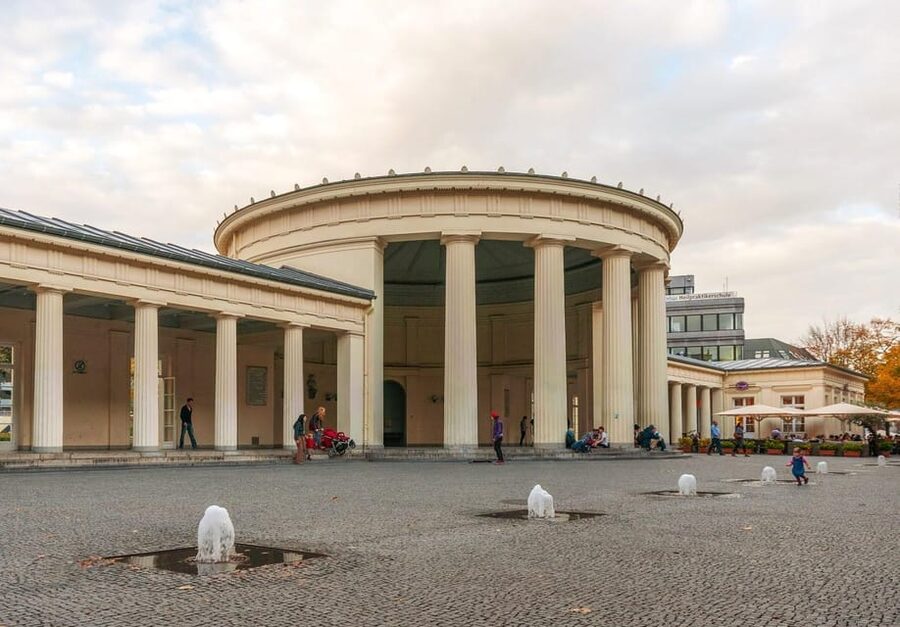
The route includes the area of the Treasury Chamber, one of the places associated with Aachen’s major religious and imperial objects. The surrounding context matters even if the guided portion does not include an indoor explanation of the collection.
You will hear about the cathedral’s artworks and treasures, but you should not assume the $29 ticket includes entry or a detailed gallery visit. The supplied activity information describes a walking tour of monuments from the outside. That distinction protects you from a common disappointment: seeing a famous building is not the same as touring every room inside it.
I would use the guide’s visit to learn what to look for, then decide if you want to return. The short duration makes that practical. You finish with a clearer plan instead of spending your whole day in one structured activity.
Sara’s style and the Italian-language advantage
The guide is Sara, a certified native Italian-speaking professional. Her strongest qualities are preparation, warmth, humor, and passion. The praise is consistent enough to matter: multiple ratings describe her as very prepared and friendly, while another highlights the way she keeps the account interesting and full of anecdotes.
That style suits Aachen. The city’s story contains plenty of names, dates, and political changes. A dry recital would make the route feel heavy. Sara’s use of historical images and curious stories gives you visual and human anchors.
The Italian language is also more than a basic feature. You can ask questions and follow the complicated links between Roman Aquae Granni, Charlemagne, the cathedral, and the Holy Roman Empire in your strongest language. If you speak Italian comfortably, that can make the difference between recognizing names and truly following the story.
One published comment also refers to explanations stretching from the Romans through World War II. The supplied route is centered on the old town and its monuments, so the exact amount of later history may depend on the conversation and available time. Still, you can expect the guide to place Aachen in a wider timeline, not stop abruptly with Charlemagne.
Is $29 good value for 90 minutes?
At $29 per person, the tour costs more than a self-guided stroll, but it offers something a map cannot: a connected explanation of the city. You receive a focused route through Roman, imperial, religious, and civic Aachen, led in Italian by a guide whose manner has earned a 4.8 rating from seven ratings.
The value is strongest if you are visiting Aachen for the first time or want help sorting its complicated past. It is also a good fit if you prefer stories and visual context to reading plaques. The price is less attractive if you mainly want cathedral admission or long stops inside museums, since those are not included.
The booking terms add useful flexibility. You can reserve now and pay later, and cancellation is free up to 24 hours before the tour for a full refund. Check the available starting times because the walk is offered at scheduled times rather than as an anytime activity.
Meet in front of the tourist board and look for the Italian flag. That simple marker removes much of the usual first-meeting uncertainty.
Who should book this Aachen walking tour?
I would choose this tour if you:
- Prefer a live Italian-speaking guide to an audio guide.
- Want Charlemagne and Aachen Cathedral explained within the wider city story.
- Enjoy historical pictures, anecdotes, and a friendly guide.
- Have 90 minutes and want a useful orientation before independent sightseeing.
- Are happy to see the main monuments from the outside.
I would look elsewhere, or plan a second activity, if you need a full cathedral interior visit, museum admission, or a slow architectural study. The outdoor format is a feature for some people and a limit for others.
Should you book it?
Book the Aachen Classic Walking Tour if you want a short, story-led introduction to one of Germany’s most historically important cities. Sara’s preparation, humor, and passion receive the clearest praise, and the route covers an impressive number of landmarks in only 1.5 hours.
For the best value, use it early in your Aachen visit. Let the walk explain the Roman baths, Charlemagne’s palace, the Town Hall, and the cathedral, then return on your own to the interior sights that catch your interest. If you expect every monument to include an indoor visit, this is not the right product. If you want a lively Italian-language foundation, $29 is a sensible price.
FAQ
How long does the Aachen Classic Walking Tour last?
The tour lasts 1.5 hours.
What language is the tour conducted in?
The live guided tour is conducted in Italian by a certified native Italian-speaking guide.
Who is the guide?
The guide is Sara, from Guida di Colonia Sara.
Where is the meeting point?
Meet in front of the tourist board. The guide will have an Italian flag.
Are the cathedral and other monuments visited inside?
No. The activity includes a walking guided tour of the monuments from the outside. One published rating specifically noted that indoor explanations were not available.
How much does the tour cost?
The listed price is $29 per person. You can reserve now and pay later, and cancellation is available up to 24 hours in advance for a full refund.
Just added around Cologne
- The rather unknown Melaten★ 4.9 · 26 reviews
- Rickshaw Glühwein Ride★ 4.6 · 24 reviews
- Public brewhouse tour Cologne in English★ 4.9 · 154 reviews
- Informative and fun brewery tour in German, public★ 4.9 · 47 reviews
- Private photoshoot in Cologne★ 5.0 · 5 reviews
- Cologne: Old City Guided Walking Tour★ 4.9 · 63 reviews
- Cologne-Nippes: Gourmet wine tasting with cheese platter★ 4.6 · 26 reviews
- Cologne-Nippes: wine hopping (wine trip)★ 4.9 · 7 reviews
Walking Tours, compared.

Old Town & Viktualienmarkt City Walk in German
Read our review →Browse the lists this tour appears in