
Reviewed · CONCENTRATION CAMP MEMORIAL VISITS
Dachau Small-Group Half-Day Tour from Munich By Train
History is more powerful when you walk through it. This five-hour tour takes you from Munich’s Marienplatz to the Dachau Concentration Camp Memorial Site by public transport, with a licensed guide providing context before and during the visit. I like the included train and bus travel, and I like the small group size of up to 20 people. The main consideration is emotional: Dachau is a difficult place, and the tour is not suitable for children under 14.
The tour is especially useful if you want help with the train and bus connections, or if you want more than a quick walk around the grounds. Guides such as James have been praised for explaining the Nazi rise to power, keeping groups together, adjusting the route around crowds, and treating the memorial with care. You should arrive by 8:45 a.m. because the group leaves Marienplatz at 9:00 sharp.
In This Review
- Key points to know before booking
- Why this Dachau tour is worth serious consideration
- Leaving Munich at 9:00 a.m. from Marienplatz
- Arriving at the Dachau Concentration Camp Memorial Site
- The Jourhaus and the message at the entrance
- Understanding daily life, registration, and persecution
- Liberation and what happened after 1945
- How the small group affects the experience
- The $60.46 price and what you receive
- Who should book this experience
- Booking, weather, and cancellation details
- Should you book the Dachau half-day tour?
- FAQ
- How long does the Dachau tour from Munich last?
- Where does the tour begin?
- What time should I arrive?
- Is train travel included?
- Is admission to the memorial site included?
- Are food and drinks included?
- Can children join the guided tour?
- What should I wear?
- What is the cancellation policy?
Key points to know before booking
- The day begins at Marienplatz: Meet at Marienplatz 15 by 8:45 a.m. for a 9:00 departure.
- Train and bus travel are included: Your guide handles the public transport connections to and from the memorial.
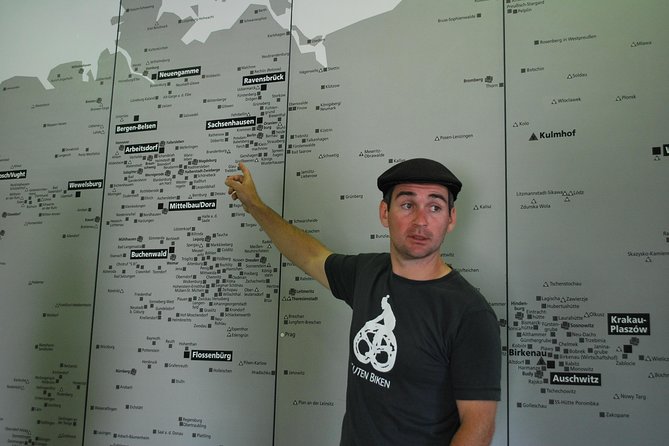
- The tour covers more than the camp grounds: Expect background on Hitler’s rise, the Nazi camp system, Dachau’s role as a model camp, liberation, and the site’s postwar history.
- The experience is emotionally heavy: You will see a carefully maintained memorial built on the site of terrible crimes.
- Small groups make a difference: The maximum group size is 20, which helps you hear the guide and stay with the group.
- Bring weather-ready clothing and comfortable shoes: Much of the visit is outdoors, with gravel and concrete underfoot.
Why this Dachau tour is worth serious consideration
Dachau is not a light sightseeing stop. It asks for attention, patience, and respect. Yet it is one of the most important historical visits you can make from Munich, and a guide can help you understand what you are seeing rather than leaving you to piece it together from signs.
I like that the tour begins with the wider political story. You do not simply arrive at the Jourhaus gate and receive a list of dates. The guide explains the rise of Adolf Hitler and the Nazi Party during the 1920s, Hitler’s appointment as Chancellor in 1933, the burning of the Reichstag, and the creation of concentration camps.
That background matters. Without it, the memorial can feel like a collection of grim buildings and empty spaces. With it, you can better understand how dictatorship developed, how persecution became organized, and how Dachau fit into a much larger system.
The tour has earned a 4.9 rating from 811 reviews, with 98 percent of people recommending it. That strong response appears to come less from comfort or entertainment than from the quality of the guiding. James is repeatedly praised for his clear explanations, calm organization, and respectful handling of painful material. One detailed account also praises Samuel for connecting the history of the camp to questions of government and injustice today.
Other memorial sites open to visitors:
- Dachau Concentration Camp Memorial Site Tour from Munich by Train
★ 4.5 · 5,637 reviews - From Munich: Dachau Memorial Site Day Tour
★ 4.8 · 2,723 reviews - From Munich: Dachau Memorial Site Half-Day Trip
★ 4.7 · 2,526 reviews
Leaving Munich at 9:00 a.m. from Marienplatz
Your meeting point is Marienplatz 15 in central Munich. You should arrive at least 15 minutes early, which means being there by 8:45 a.m. The tour leaves at 9:00 sharp and cannot wait for late arrivals.
This early meeting point is practical. Marienplatz is easy to reach by public transport, but central Munich can be busy, and finding a guide in a crowded square takes a little time. Keep your phone charged and your confirmation available as a mobile ticket.
The guide leads the group onto the train and then onward by bus to the memorial site. The transport itself is not complicated, but a connection can be stressful if you do not know where to wait or which direction to take. James has received particular praise for choosing the best end of the platform, reducing waiting time, and using short waits to explain the history of the Nazi Party.
That is one of the tour’s practical strengths. You are not spending part of the morning trying to read signs, count heads, or work out whether you are on the right platform. Public transport costs are included in the price, and the guide manages the movement of the group.
The trip is not a private vehicle transfer, so you should expect ordinary public transport rather than door-to-door comfort. If you prefer complete privacy or dislike trains and buses, this is worth noting. For most people, though, the included transport and local guidance make the journey simple.
Arriving at the Dachau Concentration Camp Memorial Site
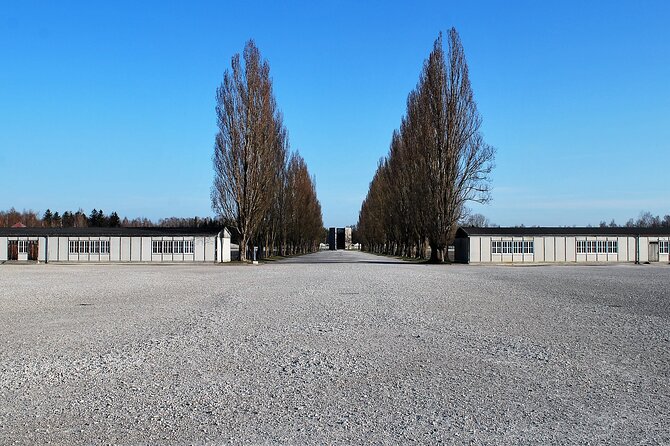
The visit covers the areas open to the public at the memorial site. The setting is quiet and carefully maintained, but the calm surroundings should not be mistaken for an easy experience.
Your guide introduces Dachau as both a former concentration camp and a memorial site. The focus is not only on individual buildings. You also learn how the camp operated, how prisoners were registered and classified, and how the system changed over time.
The tour explains the three major phases of the camp system and Dachau’s role as a model for other camps. It also covers the SS training facility, an important part of the site’s function. This helps place Dachau within the machinery of Nazi repression rather than treating it as an isolated prison.
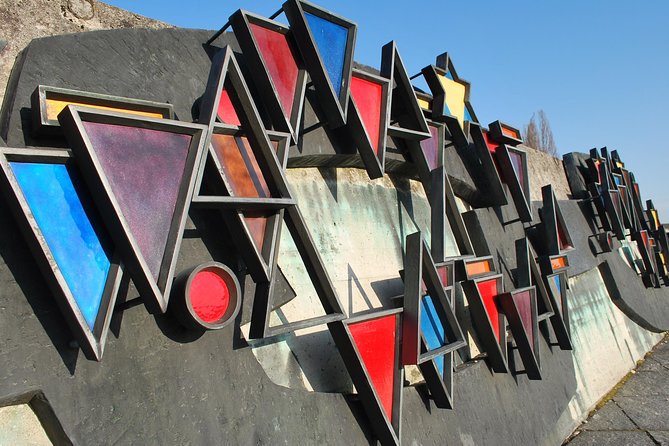
One useful feature is the attention given to prisoner categories. The color-coded markings on prisoner uniforms were not random details. They formed part of the classification system used by the camp authorities, and the guide explains how prisoners were categorized and why that mattered.
You should expect a mixture of indoor and outdoor time. Rain, cold, or heat can affect your comfort, so check the forecast and dress sensibly. Comfortable shoes are important because the grounds include gravel and concrete. There are no refreshments or snacks provided during the tour, although food and drinks can be purchased at several places around the meeting area.
The Jourhaus and the message at the entrance
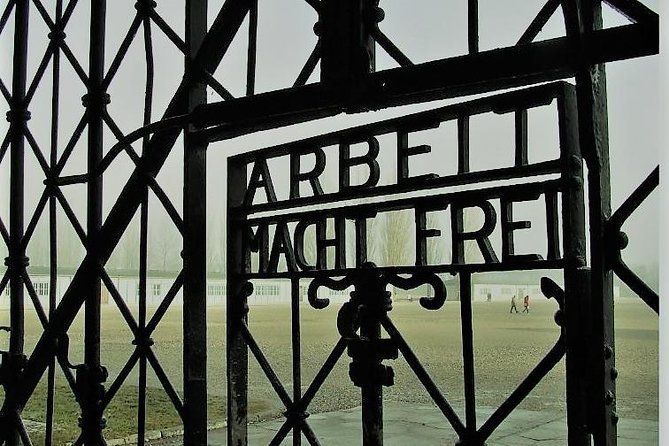
The Jourhaus, or main gatehouse, is one of the most recognizable parts of the memorial. Its entrance carries the infamous slogan Arbeit Macht Frei, a phrase used by the Nazis to disguise forced labor as a path to freedom.
Seeing the gate in person can be striking because of its ordinary architectural form. It does not look like a dramatic movie set. That plainness is part of what makes the site so difficult to process. The memorial does not need theatrical effects. The facts and the physical setting do the work.
The guide gives the gate its proper context and explains what arriving prisoners would have encountered. You are encouraged to listen carefully, but the tour also allows some time to take in the site on your own.
That balance is important. Several comments praise the pace and say the tour allows time to explore independently. One criticism is that there may be slightly too little time to read every exhibit inside the museum. If you like studying every panel and document at length, you may want to return independently another day or accept that the guided visit gives priority to the main story.
A few more Munich trips worth comparing
- From Munich: Neuschwanstein & Linderhof Castle Full-Day Trip
★ 4.5 · 12,494 reviews - Neuschwanstein & Linderhof Castle-Fairytale Day Tour from Munich
★ 4.5 · 7,275 reviews - Munich: Third Reich & WWII Walking Tour
★ 4.6 · 6,181 reviews - Neuschwanstein Castle Tour from Munich
★ 4.5 · 5,117 reviews
Understanding daily life, registration, and persecution
The tour explains what happened after prisoners arrived, including registration and classification. It also discusses how the camp population changed over time and how the system expanded beyond political opponents to target many groups.
Kristallnacht, the November 1938 pogrom against Jewish people, receives specific attention. The guide explains its connection to the first major influx of Jewish prisoners at Dachau. This is valuable because it shows how public persecution and organized imprisonment became linked.
The tour also places Dachau beside the wider system of ghettos and extermination camps. Dachau was not an extermination camp, and that distinction matters. The guide explains the different functions within the Nazi camp system while showing how the parts worked together as instruments of terror.
You will hear about the camp’s role as an SS training facility and about the way Dachau influenced the organization of other camps. This broader view gives the visit a clear historical structure. You are not only learning what happened at this one site. You are learning how a system was built and maintained.
The material can be especially useful for families with older teenagers and for anyone who has read about the Holocaust but wants to understand the physical setting. One family described the visit as a powerful way to move the subject beyond photographs and books. That is a fair description, but you should think carefully about your own readiness before booking.
Liberation and what happened after 1945
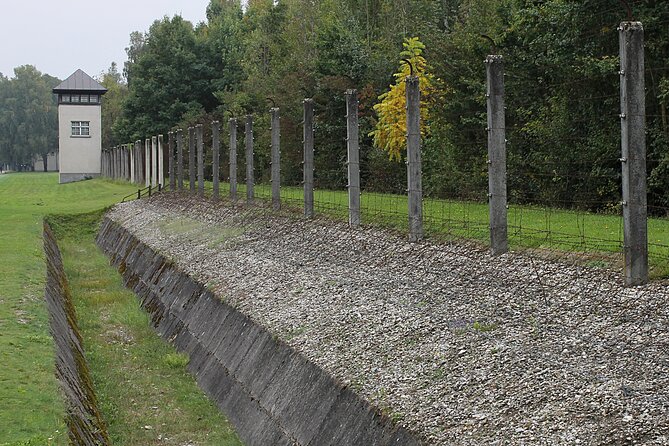
The story does not end with the liberation of Dachau. The tour covers the liberation of the camp, the immediate aftermath, and what happened at the site between 1945 and the opening of the Documentation Center in 1965.
This later history is easy to overlook, but it is essential. Memorial sites do not simply appear after a war. They are shaped by political decisions, public memory, survivors’ efforts, and changing attitudes toward the past.
Learning about the period after 1945 gives you a fuller understanding of why Dachau looks the way it does today. The site is not frozen in 1945. It has been interpreted, preserved, changed, and presented to the public over many years.
The guides are also praised for making the visit educational without becoming theatrical. James, in particular, is described as respectful toward the victims and able to provide enough detail without turning the tour into a performance. That tone is exactly what you want here.
How the small group affects the experience
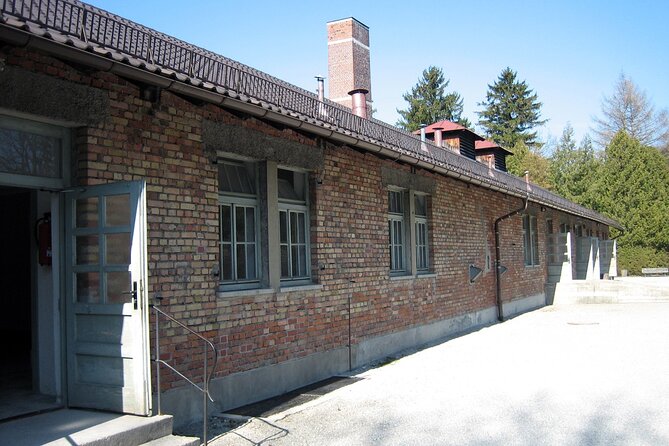
The maximum group size is 20 people. That is not an intimate private tour, but it is small enough to make a real difference at a large memorial site.
A good guide needs to keep the group together across trains, buses, entrances, outdoor paths, and exhibit areas. Several detailed accounts praise the organization of this process. James is described as adjusting the route when areas became crowded, avoiding long waits, and making sure everyone could hear.
You should still expect other groups at Dachau. This is a major memorial and can become crowded. A small group cannot remove that reality, but it can help you move with less confusion.
The guides also use waiting time well. Instead of leaving you standing silently at a bus stop, they may explain the rise of the Nazi Party or add context about the camp system. That makes the transport part feel connected to the visit rather than like dead time.
The $60.46 price and what you receive
At $60.46 per person, the tour is reasonably priced for a five-hour guided experience from Munich. The price includes a licensed professional guide and public transport to and from the memorial. Admission to the memorial site itself is free.
You are mainly paying for structure, transport help, and interpretation. If you already know the Munich transport system, have strong background knowledge, and prefer to read every exhibit at your own speed, an independent visit may offer more freedom.
I would choose the guided option if this is your first visit to Dachau. The subject is too important to reduce to a quick walk through the grounds, and the practical train and bus connections add real value. The guide also provides historical links that are hard to assemble on your own during a single half-day.
Food and drinks are not included. Since the tour lasts about five hours, eat beforehand and bring water if you need it. Snacks are not available as part of the activity.
Who should book this experience
This tour suits adults, history-minded visitors, older teenagers, and anyone who wants a serious introduction to Dachau without arranging every detail alone. It also works well for people staying in central Munich, since the tour starts and ends at Marienplatz.
I would particularly recommend it if you value a strong guide. The clearest praise goes to James, who is described as an encyclopedia of the subject, a careful group leader, and a respectful speaker. Other guides may lead the tour, and Samuel is also praised in one account, so the exact guiding experience can vary.
The tour is not suited to children under 14 because the memorial does not allow them to join guided tours. It may also be a poor fit if you want a cheerful half-day excursion, dislike walking on gravel and concrete, or find Holocaust history too upsetting right now.
Service animals are allowed, and the activity is near public transportation. Most people can participate, but the mixture of outdoor walking and emotionally difficult material deserves more thought than a standard sightseeing trip.
Booking, weather, and cancellation details
Confirmation is provided when you book, and the ticket is available on your mobile device. You should arrive by 8:45 a.m. with enough time to find the guide and check in.
Dress for the forecast. The tour includes both indoor and outdoor areas, and cold rain can make the visit physically harder. One account describes a freezing, rainy day when the guide kept the group indoors whenever possible, but good clothing remains your responsibility.
Free cancellation is available if you cancel at least 24 hours before the local start time. Cancellations or changes made within 24 hours are not accepted for a refund. The tour also requires a minimum number of participants, so if the provider cancels because that number is not reached, you will be offered another date or experience, or a full refund.
Should you book the Dachau half-day tour?
I would book this tour if you want a guided, serious, and well-organized visit to Dachau from Munich. The included train and bus travel removes much of the morning’s hassle, while the guide gives the memorial historical shape and emotional care.
Do not book it expecting entertainment or a casual outing. Dachau is a sobering place, and the five-hour schedule may not leave enough time to read every museum display at leisure. Still, for $60.46, the combination of transport, a small group, and strong guiding makes this a good choice for a first visit.
Arrive early, wear comfortable weatherproof clothing, eat before you go, and leave room in your day afterward. This is the kind of experience you should approach with time and attention, not squeeze between two lighter attractions.
FAQ
How long does the Dachau tour from Munich last?
The tour lasts approximately five hours, including travel between Munich and the memorial site.
Where does the tour begin?
The meeting point is Marienplatz 15, 80331 Munich, Germany.
What time should I arrive?
You should arrive by 8:45 a.m. for check-in. The tour departs at 9:00 a.m. sharp and cannot wait for late arrivals.
Is train travel included?
Yes. Public transport costs to and from the Dachau memorial site are included. The journey involves train and bus travel.
Is admission to the memorial site included?
Admission to the memorial site is listed as free. The tour price includes the professional guide and public transport.
Are food and drinks included?
No. Refreshments and snacks are not provided during the tour. Food and drinks can be purchased at several locations around the meeting area.
Can children join the guided tour?
Children under 14 cannot join guided tours at the memorial site.
What should I wear?
The tour includes indoor and outdoor areas, so you should check the weather and dress appropriately. Comfortable shoes are recommended because some walking takes place on gravel and concrete.
What is the cancellation policy?
You can cancel for a full refund up to 24 hours before the experience starts. Cancellations and changes made less than 24 hours before the start time are not accepted for a refund.
Just added around Munich
- Pub crawl incl. Oktoberfest museum guided tour with beer tasting (private)★ 5.0 · 5 reviews
- South Tyrolean specialties and wine tasting★ 5.0 · 5 reviews
- Size Matters Beer Tour Munich★ 4.6 · 105 reviews
- Short & sweet: Tasting the Viktualienmarkt★ 4.8 · 37 reviews
- Secret Food Tours Munich★ 4.8 · 5 reviews
- Munich: Romantic Wine Experience for Two at Viktualienmarkt★ 4.2 · 14 reviews
- Residence of Munich private tour with skip the line ticket★ 5.0 · 4 reviews
- Munich: Resistance against Hitler – Historical Walking Tour★ 5.0 · 5 reviews