
Reviewed · GERMANY
Der Klassiker RAVENSBURGER STADTGESCHICHTE
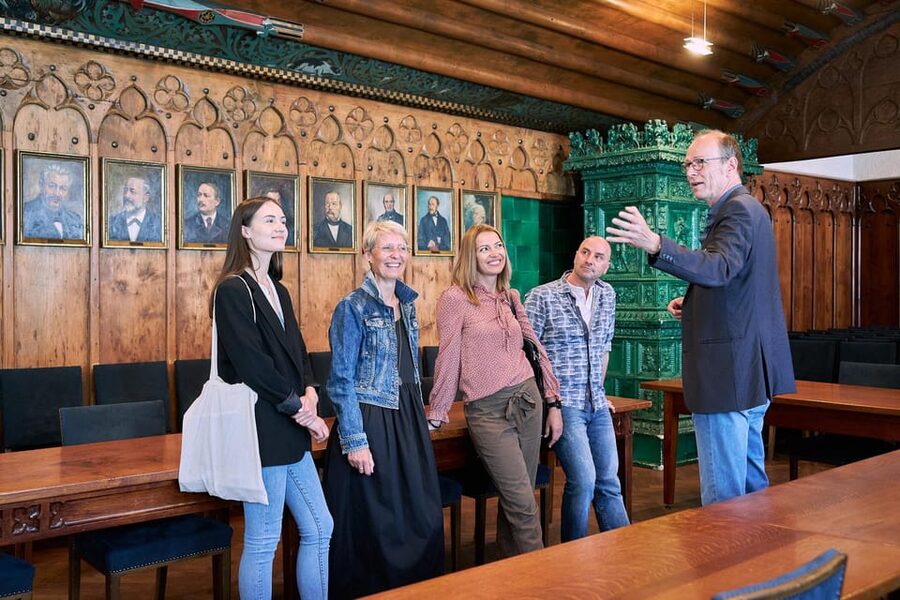
Medieval Ravensburg rewards a closer look. This 90-minute walking tour makes sense of the city’s gates, towers, squares, and old buildings while tracing its rise as an imperial city and trading center near Lake Constance. I like the clear route through the old town, and I especially like that it reaches the upper town and museum district rather than stopping with the obvious postcard views.
The guides also seem to strike a useful balance between facts and fun. Recent feedback praises the tour as concise, humorous, entertaining, and flexible in the moment. The main consideration is language: the tour is conducted in German, so you will get the most from it if you understand German well enough to follow spoken history.
In This Review
- Key points at a glance
- Why Ravensburg makes a good walking-tour city
- Starting at the Lederhaus Tourist Information
- Marienplatz and the civic heart of town
- Bachstrasse and the texture of the old town
- The town hall and Kornhaus
- The Evangelical City Church and changing beliefs
- Upper town, towers, and the Humpis Quarter
- What the guide style adds
- Is $14 a fair price?
- Who should book this tour?
- Practical details before you go
- Should you book Der Klassiker Ravensburger Stadtgeschichte?
- FAQ
- Where does the Ravensburg city tour begin?
- Where does the tour finish?
- How long does the tour last?
- What language is the tour conducted in?
- Is the tour wheelchair accessible?
- What sights are included on the route?
- Does the tour include Ravensburg’s towers and gates?
- How much does the tour cost?
Key points at a glance
- A compact 90-minute introduction: You get a useful first look at Ravensburg without giving up half a day.
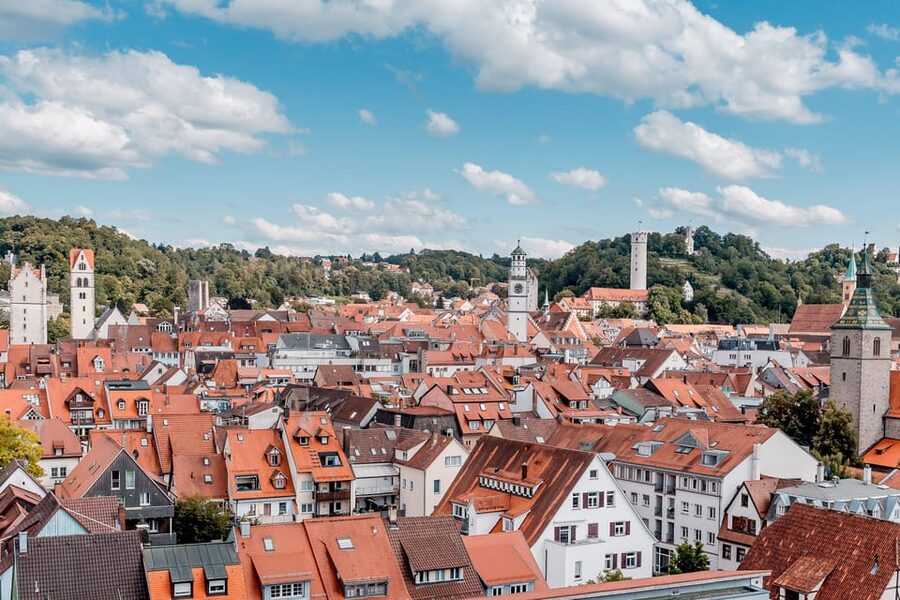
- A city shaped by trade: The tour explains how Ravensburg became an imperial city and the center of the Lake Constance region in the late Middle Ages.
- Gates, towers, and preserved streets: The old town itself is the main attraction, with striking architecture along a walkable historic route.
- A route with several viewpoints on the city: Stops include Marienplatz, Bachstrasse, the town hall, Kornhaus, the Evangelical City Church, and the upper town.
- The Humpis Quarter adds human detail: The museum district helps connect grand civic history with medieval living quarters.
- Good value at $14: For a guided introduction to a largely preserved old town, the price is modest, especially if this is your first visit.
Why Ravensburg makes a good walking-tour city
Ravensburg is not simply a collection of old façades. Its historic center reflects the city’s former importance. In the late Middle Ages, Ravensburg grew as an imperial city and became the center of the Lake Constance region. The Ravensburger trading company also helped give the city a commercial role that reached beyond its local streets.
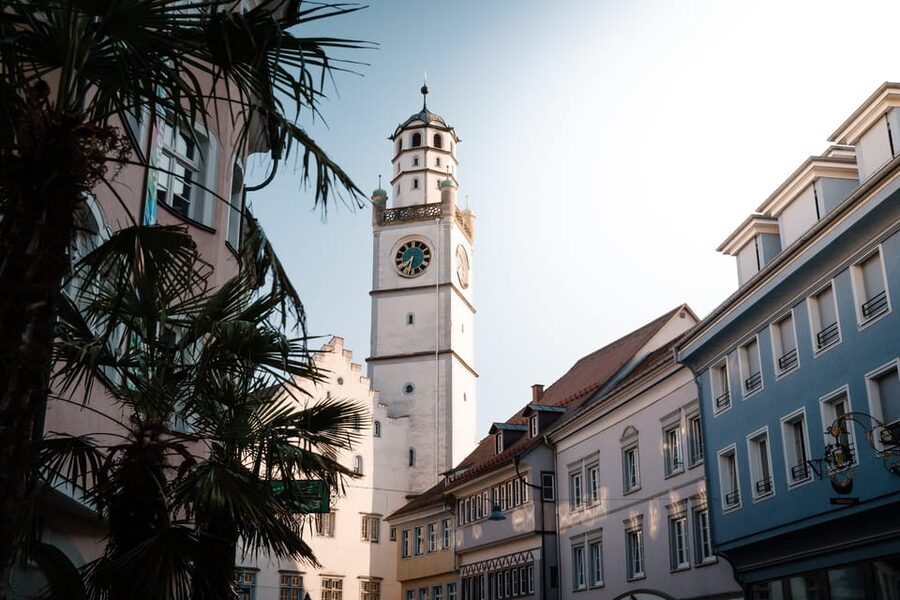
That background matters because the buildings you see are tied to civic power, trade, religion, and daily life. A tower is not just a tower. A market square is not just an open space for photographs. With a guide, the old town becomes a sequence of clues about how the city worked.
I like this kind of tour for a first visit. You get the broad outline quickly, then you can return to the places that catch your eye. The route also avoids making the city feel like a history lecture trapped indoors. Most of the experience takes place in the streets and squares of the Altstadt.
The city is particularly well preserved, which gives the walk a strong sense of place. You can see how streets, public buildings, religious sites, and defensive structures fit together. That is more useful than seeing each sight in isolation.
Other ways to spend a day in Germany:
- Berlin: Reichstag, Dome and Government District Guided Tour
★ 4.7 · 18,288 reviews - Berlin: 1-Hour City Tour by Boat with Guaranteed Seating
★ 4.3 · 16,993 reviews - Hamburg: Sex and Crime in St. Pauli Tour for Ages 18+
★ 4.7 · 15,447 reviews
Starting at the Lederhaus Tourist Information
The meeting point is the front entrance of the Tourist Information in the Lederhaus. This is a practical start because you do not need to search for an obscure street corner or a distant landmark. Arriving a little early gives you time to find the entrance and settle in before the walk begins.
From there, the guide takes you into Ravensburg’s old town. The experience lasts 1.5 hours, or 90 minutes, which is long enough to cover the main story without becoming an all-day commitment.
That timing is one of the tour’s strengths. You can fit it into a morning or afternoon and still have time for your own exploring. It also works well near the beginning of a stay because the route helps you understand the city’s layout before you set off alone.
The tour is wheelchair accessible, an important practical point for visitors who need a more manageable way to see the historic center. Still, historic town centers can have varied surfaces and tight street layouts, so it is sensible to confirm current route details if you have particular mobility needs.
Marienplatz and the civic heart of town
Marienplatz is one of the early stops and gives the tour a useful sense of scale. Public squares are where a city’s major functions often meet, and here you can begin to see how Ravensburg’s old town was organized around civic activity.
This is also the sort of place where a guide can add context that is easy to miss on your own. You may notice a building’s shape or an old street alignment, but the explanation connects it to Ravensburg’s development as an imperial city and trading center.
I appreciate that the tour does not treat the square as a quick photo stop. The larger value comes from understanding how the square relates to the streets and buildings around it. Once that pattern becomes clear, later stops make more sense.
If you enjoy architecture, keep your attention above street level. The tour description emphasizes striking buildings, squares, and streets throughout the historic center. The best details may not be at eye level, especially when the group is moving between stops.
Bachstrasse and the texture of the old town
Bachstrasse brings the focus from the major square to the character of the streets themselves. This part of the walk helps show why Ravensburg feels like a preserved historic city rather than a modern center with a few old monuments added on.
The appeal is in the connections. You move through streets that link the larger civic spaces with the upper town, the churches, and the museum district. A guide can point out how these pieces fit into the city’s story instead of leaving you to assemble the route from a map.
This is where the tour’s compact format works well. You are not expected to memorize every date or architectural label. The goal is to understand the main stages of Ravensburg’s past and recognize the places that deserve a slower look later.
The recent praise for the guiding style is useful here. The strongest descriptions point to a tour that is informative but not stiff, with humor and the ability to react to the situation. That matters on a walking tour. A guide who can keep the pace lively makes even street-level details easier to remember.
Still Germany, at a slower pace:
- Hamburg: 1.5-Hour Harbor and Speicherstadt Day Cruise
★ 4.6 · 14,200 reviews - From Munich: Neuschwanstein & Linderhof Castle Full-Day Trip
★ 4.5 · 12,494 reviews - Dresden: Semperoper Tickets and Guided Tour
★ 4.7 · 12,102 reviews - Berlin: Boat Tour Along the River Spree
★ 4.4 · 11,252 reviews
The town hall and Kornhaus
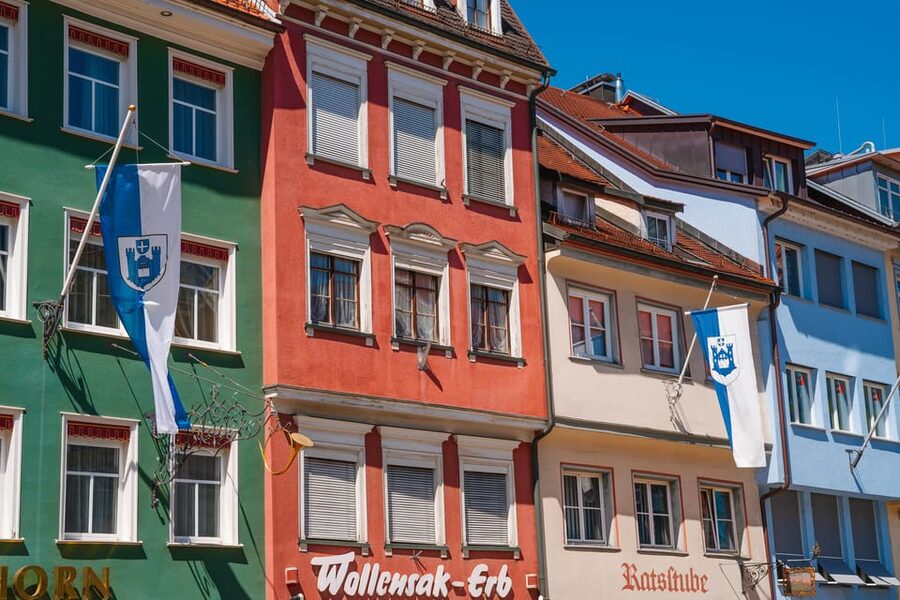
The town hall and Kornhaus represent two different sides of old Ravensburg. The town hall points toward civic administration and public life. The Kornhaus brings attention to storage, trade, and the practical systems that supported a growing city.
Together, these stops help explain why the city’s trading past is not just an abstract historical note. Ravensburg’s importance rested on people, goods, markets, and institutions. Looking at civic and commercial buildings side by side gives you a more complete picture.
I find this kind of contrast especially helpful for families and visitors who do not want a long list of rulers and dates. You can understand a city’s past through the buildings that handled its everyday needs.
The exact depth of explanation may depend on the guide and the group, but the route is designed to give you an overview of the city’s origins, major eras, important sights, and present-day Ravensburg. It is an introduction, not a specialist architectural seminar.
The Evangelical City Church and changing beliefs
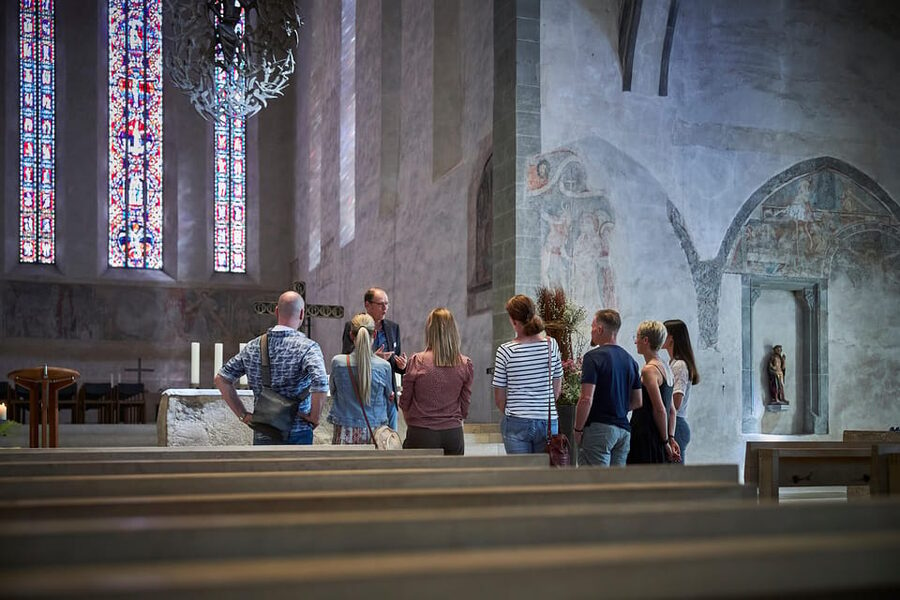
The Evangelical City Church adds a religious and social layer to the walk. Churches often preserve several periods of a city’s life in one place, and this stop helps broaden the story beyond trade and municipal power.
The tour’s stated aim is to cover Ravensburg from its beginnings through its major historical periods and into the present. A church stop supports that goal because it brings belief, community, and change into the picture.
You should not expect a full interior-focused church visit unless the guide specifically includes one on the day. The attraction here is the church as part of the historic route and the wider story of the old town.
For me, that balance is sensible. The tour has limited time, and it needs to cover several major areas. Rather than spending the entire walk inside one monument, it uses the church as one part of a broader city portrait.
Upper town, towers, and the Humpis Quarter
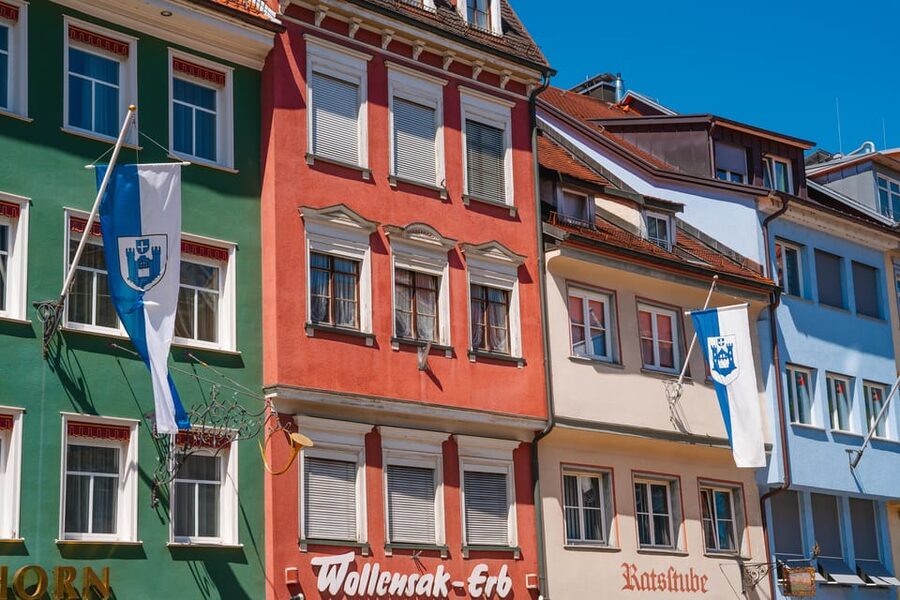
The route continues to the upper town and museum district, where Ravensburg’s defensive character becomes more visible. The city is often described as a city of gates and towers, and this section is central to that identity.
The upper town is also where the tour reaches one of its most distinctive subjects, the medieval living quarters preserved in the Humpis Quarter Museum. The museum adds an everyday human scale to the grander story of imperial cities and trading companies.
That contrast is valuable. Towers tell you about protection and status. Town halls tell you about government. Trading buildings suggest commerce. The Humpis Quarter helps you think about how people actually lived within that urban system.
The experience is a guided city tour, so you should check the day’s exact arrangements if you are hoping for a full museum admission or a detailed indoor visit. The supplied tour information places the upper town and museum district on the route, but the included service is specifically a 90-minute guided walk through the old town.
The route finishes at Obertor Ravensburg. Ending at a major gate gives the walk a fitting final image and leaves you in a useful position to continue exploring the upper town or return toward the center.
What the guide style adds
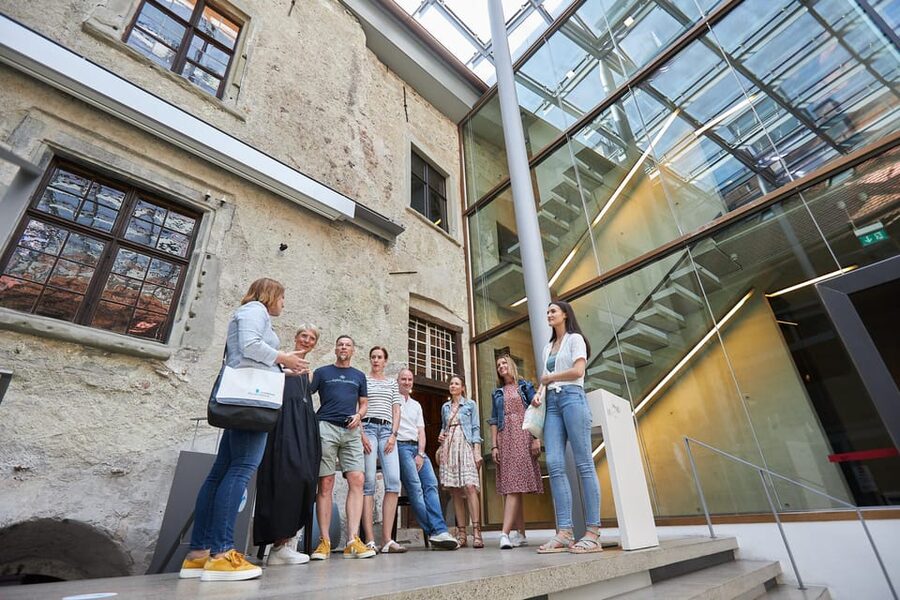
A city-history tour can be dry if it piles up dates without showing why they matter. This one receives its strongest praise for being short, funny, entertaining, and able to respond flexibly to the situation.
That combination is worth paying attention to. A good guide does more than recite information. The guide helps you notice the right building, ties one stop to the next, and adjusts the explanation so the group stays with the story.
The tour is in German, and that is the biggest factor in deciding if it suits you. If you speak German comfortably, the language format should give you direct access to the guide’s humor and detail. If your German is limited, the visual setting will still be worthwhile, but you may miss much of the historical explanation.
No guide name is provided, so you should not book this expecting a particular presenter. The experience appears to depend on the local guide leading that departure. The positive feedback points to a lively presentation style, but individual delivery can naturally vary.
Is $14 a fair price?
At $14 per person, I consider this good value for a 90-minute guided introduction to one of southern Germany’s well-preserved historic cities.
You are paying for more than a stroll through attractive streets. The guide provides a framework for understanding Ravensburg’s rise as an imperial city, its role in the Lake Constance region, its trading connections, and the way its historic buildings fit together.
The value is highest if you are visiting Ravensburg for the first time. A self-guided walk can show you the same streets, but it may not explain why Marienplatz, the Kornhaus, the church, the upper town, and the towers belong to the same story.
The price is also reasonable for a short activity that does not consume an entire day. You can take the tour, pause for a meal or coffee, and then revisit the sights that interested you most.
The limitation is that this is an overview. If you want extended museum time, a specialist architecture tour, or a tour in English, this may not be the right choice. At $14, though, it is priced as an accessible orientation rather than an in-depth private experience.
Who should book this tour?
I would choose this tour if you want a clear introduction before exploring Ravensburg independently. It suits first-time visitors, history-minded families, couples, and anyone who prefers local context over wandering with only a map.
It is also a good fit if your schedule is tight. Ninety minutes is enough to see the historic core and get the city’s main story without sacrificing the rest of your day.
German speakers will benefit most because the live guide uses German. The tour is wheelchair accessible, which widens its appeal, though it is still wise to check the route if you have specific access requirements.
I would hesitate only if you have already studied Ravensburg closely or need an English-language experience. In that case, the tour may feel too general or difficult to follow.
Practical details before you go
Meet at the front entrance of the Tourist Information in the Lederhaus. The tour lasts 1.5 hours and finishes at Obertor Ravensburg.
The activity includes a live tour guide and is conducted in German. It is wheelchair accessible. Starting times vary, so check availability for the date you want.
You can cancel up to 24 hours in advance for a full refund, and you can reserve now and pay later. Those terms are useful if your plans around southern Germany are still shifting.
Should you book Der Klassiker Ravensburger Stadtgeschichte?
Book it if you want Ravensburg to make sense quickly. The route covers the city’s key historic areas, from Marienplatz and Bachstrasse to the town hall, Kornhaus, Evangelical City Church, upper town, towers, gates, and museum district.
The strongest reason to go is the combination of well-preserved streets and a lively guide. At $14, you get a practical overview with enough historical context to make the rest of your time in Ravensburg more rewarding.
Skip it if you need English or want a long, museum-heavy study of medieval life. Otherwise, this is a sensible, fairly priced way to meet Ravensburg on foot and learn why its old town matters.
FAQ
Where does the Ravensburg city tour begin?
The tour begins at the front entrance of the Tourist Information in the Lederhaus.
Where does the tour finish?
The tour finishes at Obertor Ravensburg.
How long does the tour last?
The guided city tour lasts 1.5 hours, or 90 minutes.
What language is the tour conducted in?
The live tour guide conducts the experience in German.
Is the tour wheelchair accessible?
Yes, the tour is listed as wheelchair accessible.
What sights are included on the route?
The route includes Marienplatz, Bachstrasse, the town hall, the Kornhaus, the Evangelical City Church, and the upper town with its museum district.
Does the tour include Ravensburg’s towers and gates?
The tour presents Ravensburg as a city of gates and towers and finishes at Obertor Ravensburg.
How much does the tour cost?
The listed price is $14 per person.
Just added around Germany
- Private Tour: Potsdam Day Trip from Berlin★ 4.5 · 43 reviews
- Berlin’s Gallery Scene★ 5.0 · 4 reviews
- Private Tour: Secret Food Tours Berlin★ 5.0 · 4 reviews
- Private Tour: Jewish Heritage Walking Tour of Berlin★ 5.0 · 29 reviews
- Private Sachsenhausen Concentration Camp tour with train★ 5.0 · 205 reviews
- Private walking Tour: Berlin Architecture Tour★ 5.0 · 14 reviews
- Private Tour: Daytime Food Tour Trends & Classics★ 5.0 · 24 reviews
- Private Tour: Berlin by Trabant Stretch-Limousine★ 5.0 · 186 reviews