
Reviewed · WALKING TOURS
Private walking Tour: Berlin Architecture Tour
Berlin makes politics visible in stone. This four-hour private tour connects grand neoclassical buildings, communist-era housing, modern concert halls, and post-Wall redevelopment in a way that makes the city easier to read. I especially like the custom route and the chance to compare eastern and western Berlin with a guide, though the price of $191.87 per person is a serious consideration unless you are sharing it with a small group.
The tour also earns praise for its guides. Sara, an architect, helped one design-focused group see both Berlin’s successes and its less successful buildings, while Thomas, Tom, Daniel, Heiko, Ariel, and Tarek Ibrahim were each singled out for clear explanations, flexibility, or strong historical insight. The drawback is pace: ten major stops in four hours means you will usually see buildings from the outside rather than tour their interiors.
In This Review
- Key points to know before booking
- Why Berlin architecture works best with a guide
- Starting on Museum Island
- Gendarmenmarkt and Berlin’s grand civic face
- The Philharmonie at Kulturforum
- The Reichstag and the old meeting the new
- Potsdamer Platz and Berlin’s rebuilt center
- Berliner Dom and the grand historic skyline
- Kreuzberg and Friedrichshain after the Wall
- Pariser Platz and the Brandenburg Gate
- Hackescher Höfe and Art Nouveau detail
- Guides, pace, and the private format
- Is $191.87 per person a fair price?
- Who should book this Berlin architecture tour?
- Should you book it?
- FAQ
- How long is the Berlin architecture tour?
- Is the tour private?
- How much does the tour cost?
- Is hotel pickup included?
- Can the tour be done by bike?
- What language is offered?
- Are food and drinks included?
- Are admission tickets included?
- Can I cancel for a full refund?
Key points to know before booking
- Berlin’s divided architecture is the main lesson: Compare communist-era apartment blocks in the former East with the modern planning of West Berlin.
- The route is private and adjustable: You can discuss particular buildings or districts with your guide, and the experience can be done on foot or by bike.
- Museum Island and Gendarmenmarkt bring the grand old Berlin: Expect neoclassical museums, domed cathedrals, and Schinkel’s Konzerthaus.
- Kulturforum and the Philharmonie show postwar West Berlin: The Philharmonie’s unusual tent-like form makes one of the tour’s best photo stops.
- Potsdamer Platz explains the city’s rebirth: Ruins and Cold War emptiness gave way to glass towers, public squares, and ambitious new construction.
- Hotel pickup and drop-off simplify the day: Food, drinks, and interior admissions are not included.
Why Berlin architecture works best with a guide
Berlin is not a city where every important building is old, pretty, or easy to understand. Some of its most revealing streets were shaped by war, political division, demolition, and hurried rebuilding. A private guide helps you connect those layers instead of treating each façade as an isolated photo stop.
I like the way this experience treats architecture as political evidence. East Berlin’s large apartment blocks were tied to socialist planning and practical housing needs. West Berlin used bold modern buildings and cultural projects to show that the divided city remained connected to the democratic West.
The private format matters here. You are not being moved through a fixed group talk with a one-size-fits-all script. If you care about concert halls, postwar planning, Art Nouveau courtyards, or the effects of the Berlin Wall, you can ask the guide to give those subjects more attention.
The tour is offered in English, with hotel pickup and drop-off. It is listed as a walking tour, but you may choose to do it by bike. Since the route covers central Berlin and several separated districts, ask about the bike option if you prefer covering more ground with less time between stops.
More Walking Tours in Berlin
- Discover Berlin Half-Day Walking Tour
★ 5.0 · 9,624 reviews - Berlin: Third Reich and Cold War 2 Hour Walking Tour
★ 4.9 · 6,830 reviews - Berlin: Discover Berlin Walking Tour
★ 4.9 · 5,998 reviews
Starting on Museum Island
Museum Island gives the tour an impressive opening. The Altes Museum presents a calm neoclassical face with grand columns and a broad portico. It helps you see the formal, ordered style used for Berlin’s great cultural institutions.
The Pergamon Museum adds monumental classical forms, while the Bode Museum changes the mood with an elegant dome and curved profile. The Neues Museum is especially useful for discussing restoration because wartime damage was repaired alongside modern design rather than hidden completely.
You are allotted about 20 minutes here, enough for an architectural orientation and photos. It is not enough for a museum visit, and no admission is included. Think of this stop as an outdoor introduction to Berlin’s cultural center, not a chance to explore the collections.
The Spree River views add another angle. From the water, the buildings read as a planned group, even though each museum has its own period and personality. If you have a particular interest in one museum, tell the guide early so the conversation can give it proper attention.
Gendarmenmarkt and Berlin’s grand civic face
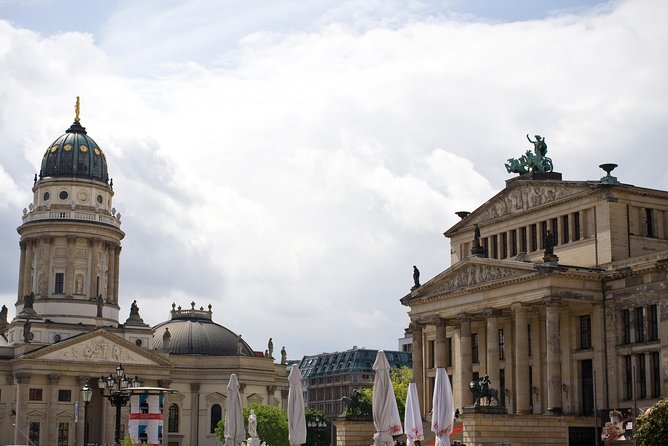
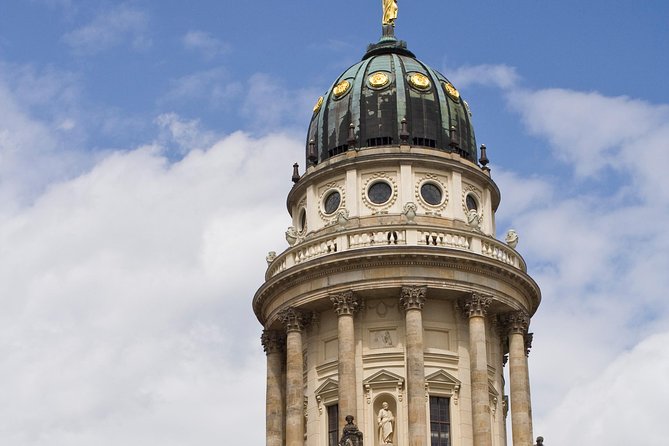
Gendarmenmarkt is one of the tour’s most satisfying short stops. The square is framed by the French Cathedral, the German Cathedral, and Schinkel’s Konzerthaus, with Friedrich Schiller’s statue at the center.
The arrangement is so balanced that it can feel almost theatrical. That is useful because your guide can explain how the buildings work together rather than simply identify them. The domes of the two cathedrals frame the concert hall, creating one of Berlin’s clearest examples of urban composition.
You get about 15 minutes here. That is enough for the essential story and photographs, but not much more. Interior visits are not part of the experience, and the square is best treated as an architectural pause between longer stretches of the city.
The Philharmonie at Kulturforum
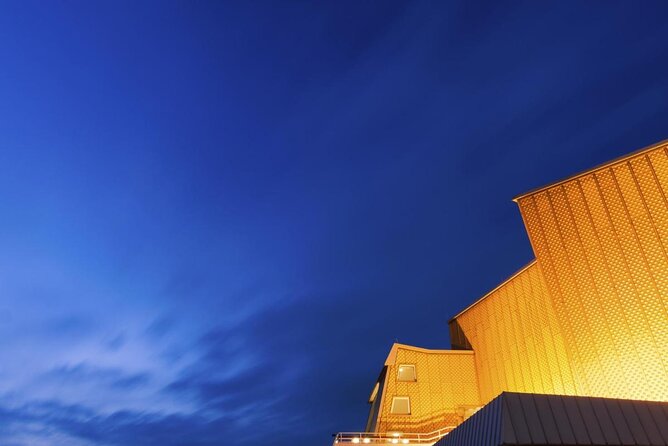
The Berliner Philharmonie is a strong choice for anyone interested in modern design. Its bright, asymmetrical exterior has a tent-like profile, a sharp break from the heavy historic forms seen at Museum Island and Gendarmenmarkt.
The building was part of Kulturforum, a collection of museums, libraries, concert halls, and research institutions built in the 1950s and 1960s. These projects took shape in West Berlin after important cultural institutions were left behind the Wall in the eastern part of the city.
That political setting gives the stop more weight. The Philharmonie is not simply an unusual concert hall. It was part of West Berlin’s effort to create a major cultural center of its own.
You have about 15 minutes here, mainly for explanation and photographs. The interior seating arrangement and acoustics are important to the building’s design, but this tour does not include a concert or interior admission. The exterior is still rewarding, especially for anyone who enjoys Expressionist architecture.
Still Berlin, at a slower pace:
- Berlin: Reichstag, Dome and Government District Guided Tour
★ 4.7 · 18,288 reviews - Berlin: 1-Hour City Tour by Boat with Guaranteed Seating
★ 4.3 · 16,993 reviews - Berlin: Boat Tour Along the River Spree
★ 4.4 · 11,252 reviews - Berlin: Hop-on Hop-off Bus Tour with Live Commentary
★ 4.3 · 8,579 reviews
The Reichstag and the old meeting the new
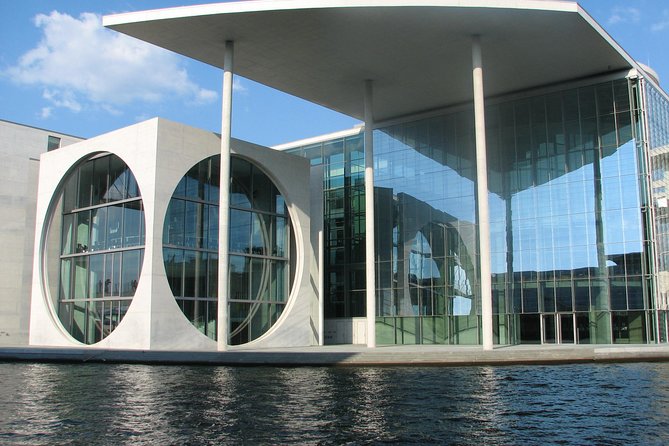
The Reichstag offers a compact lesson in German political symbolism. Its original 1894 building has a formal classical façade, grand portico, and detailed decoration. The glass dome added during Norman Foster’s renovation after reunification gives the building a completely different visual language.
The dome’s transparency is meant to suggest open government and democracy. From the outside, it also creates a striking contrast: a modern glass structure placed above a historic seat of power.
The planned stop is about 10 minutes, the briefest of the day. You should not expect to visit the dome during this tour. The building is still worth seeing, but if the interior matters to you, confirm how your guide can handle that request before booking.
This is one point where the private format helps. Your guide can explain the building’s political meaning while you take in the relationship between the Reichstag, nearby government buildings, and the open spaces around it.
Potsdamer Platz and Berlin’s rebuilt center
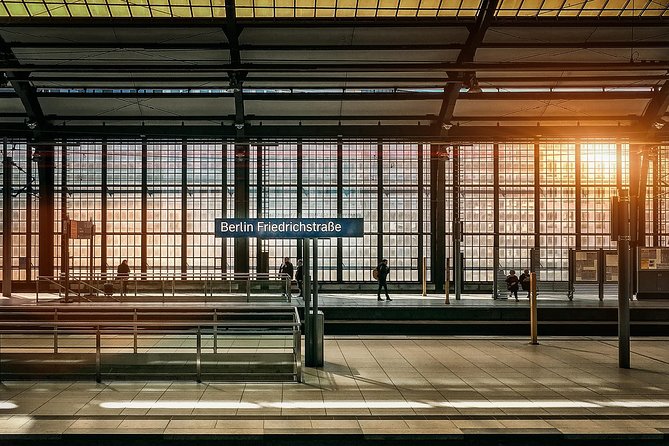
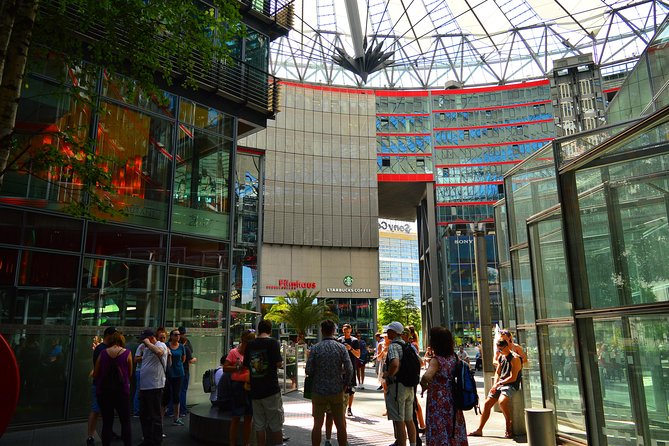
Potsdamer Platz is where Berlin’s recent story becomes easiest to see. Before World War II, it was a major urban center. War damage and Cold War division left it broken and divided, with the Berlin Wall passing through the area.
Today, glass towers and large public spaces fill the site. The Sony Center is the most recognizable feature, with a flowing structure beneath a dramatic glass roof. The DB Tower adds a sleek, glass-clad vertical form, while Panoramapunkt offers a higher view of the changing city, though admission is not included.
You spend about 20 minutes here. That is enough to discuss the area’s before-and-after story and photograph the modern buildings. It is not enough for a full study of the many towers and planning decisions, so ask questions if urban redevelopment is one of your main interests.
I find this stop valuable because it avoids presenting new Berlin as simple progress. The area is a product of reunification, commercial development, and large-scale planning. Your guide can help you judge what works, what feels corporate, and how the site differs from older Berlin squares.
Berliner Dom and the grand historic skyline
The Berliner Dom returns you to monumental historic architecture. Completed in 1905, the cathedral combines Baroque and Renaissance Revival elements. Its huge central dome dominates the view, while the façade uses columns, carved details, and a symmetrical plan to create a formal sense of power.
The interior, with marble columns, mosaics, soaring arches, and heavy decoration, is not part of the free outdoor stop. You have about 15 minutes, so expect an exterior explanation and photographs rather than a cathedral visit.
Placed near Museum Island, the Dom also shows how Berlin used architecture to express national and imperial ambition. It is a useful contrast with the lighter, more experimental forms found later at the Philharmonie and Potsdamer Platz.
Kreuzberg and Friedrichshain after the Wall
The tour becomes more local and less ceremonial in Kreuzberg. Here you see 19th-century Altbau apartment buildings with ornate façades, high ceilings, and tall windows alongside converted industrial spaces and newer urban construction.
The Oberbaum Bridge is the area’s signature structure. Its red brick towers and Gothic-inspired arches cross the Spree and link Kreuzberg with Friedrichshain. You get about 30 minutes in the district, giving the guide more time to discuss the neighborhood’s changes than at the shorter central stops.
Friedrichshain adds prewar apartment buildings, socialist-era structures, and modern additions. The East Side Gallery, painted on a remaining section of the Berlin Wall, brings art and political memory into the architectural story.
The combined 60 minutes in Kreuzberg and Friedrichshain is one of the tour’s strongest features. These districts show how Berlin works at street level, where old façades, altered industrial buildings, murals, cafes, and new housing share the same blocks.
Keep in mind that the route is ambitious. The information says the tour can be done on foot or by bike, but walking between all these areas would require an efficient plan. Ask your guide how the day will be paced, especially if you want meaningful time in both neighborhoods.
Pariser Platz and the Brandenburg Gate
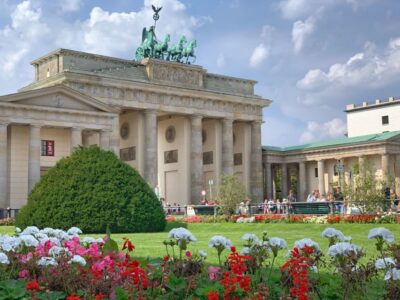
Pariser Platz gathers several architectural voices in one formal setting. The Brandenburg Gate is the centerpiece, with its neoclassical columns and triumphal form. Nearby are the Hotel Adlon, French Embassy, American Embassy, Academy of Arts, and the sculptural DZ Bank building by Frank Gehry.
The contrast is the point. Gehry’s curved glass and steel design has little visual connection to the Brandenburg Gate, yet the two sit within the same carefully controlled square. This makes Pariser Platz a good place to discuss how Berlin manages new construction beside symbols that carry enormous national meaning.
You have about 20 minutes here. The stop is well suited to photographs and a short explanation of the square’s role in Berlin’s history. It also gives you a chance to compare traditional façades with more restrained contemporary buildings.
Hackescher Höfe and Art Nouveau detail
Hackescher Höfe provides a welcome change from monumental public buildings. Built in 1906 by August Endell, the eight connected courtyards use Art Nouveau decoration, colored ceramic tiles, ironwork, curved lines, and patterned brick.
The first courtyard is especially decorative, while the others show how design and daily urban use can work together. This is not architecture set apart for government or culture. It is a group of working courtyards that turned practical city space into something visually distinctive.
The stop lasts about 20 minutes. Shops and cafes are present, but food and drinks are not included. You may have time to look around, but this is not a scheduled meal break.
Hackescher Höfe is a good final stop because it leaves you with a more intimate picture of Berlin. After domes, concert halls, towers, and government buildings, you end with details that reward slower looking.
Guides, pace, and the private format
The strongest praise for this experience centers on the guides’ ability to explain rather than simply point. One guide was described as an architect who could discuss design and history together. Another helped a family with a 15-year-old understand the city through lively conversation.
Flexibility is another repeated strength. Ariel adjusted the timing to suit the group, and Sara walked with one group to its lunch reservation after the scheduled tour. Heiko’s tour worked especially well as a first-day orientation, helping the group decide what to see during the rest of its stay.
If a particular guide matters to you, Sara was specifically recommended by name, subject to availability. Other guides associated with strong feedback include Thomas, Tom, Daniel, Heiko, Ariel, and Tarek Ibrahim. You cannot assume a certain person will lead your tour, so request a name when booking rather than treating it as guaranteed.
The private setup is best for people who ask questions. You can request desired attractions, adjust emphasis, and spend more time on subjects that matter to your group. A private guide costs more than joining a standard group walk, but the value improves when several people share the price or when you want a serious architecture discussion.
Is $191.87 per person a fair price?
At $191.87 per person, this is not a budget sightseeing walk. The price includes a professional guide plus hotel pickup and drop-off, but not food, drinks, or admission fees.
The value depends heavily on group size and your interests. For a group that wants a tailored introduction to Berlin’s architecture, the private format can make sense. You are paying for direct conversation, route flexibility, and historical interpretation, not simply transportation between photo stops.
For a solo visitor focused on seeing as many landmarks as possible, the cost is harder to justify. The tour covers a lot, but the short stop times mean you will not explore each building in depth. I would book it for a first or second day in Berlin if you want help understanding the city before choosing which places to revisit.
The average booking lead time is 48 days, so planning ahead is sensible. Confirmation is normally provided at booking, though reservations made within three days of the tour may take up to 48 hours to confirm and remain subject to availability.
Who should book this Berlin architecture tour?
I recommend it most for:
- Design professionals, architecture students, and serious enthusiasts
- Families or friends who want a private pace
- First-time visitors who want a city orientation with historical context
- People interested in the contrast between East and West Berlin
- Anyone willing to ask for a tailored route
- Groups that want hotel pickup and drop-off
I would think twice if you want long interior visits, museum admissions, or a relaxed neighborhood walk. The tour is broad by design. It gives you a useful framework, then leaves you to return to the buildings that catch your eye.
Free cancellation is available up to 24 hours before the start time for a full refund. Changes or cancellations made less than 24 hours ahead are not accepted for a refund.
Should you book it?
Book this tour if you want Berlin explained through its buildings, not just photographed. The best parts are the political context, the private guide, the sharp contrast between historic and modern design, and the time in Kreuzberg and Friedrichshain.
The price is high, and the schedule is packed. Still, the strong guide feedback suggests that the right guide can turn a fast-moving route into a useful, memorable introduction. Request a tailored focus, ask about the bike option, and name any must-see buildings before the tour begins.
If that sounds like your kind of sightseeing, this is a worthwhile splurge. If you prefer entering museums and spending an hour at each landmark, choose a narrower architecture walk instead.
FAQ
How long is the Berlin architecture tour?
The tour lasts approximately four hours.
Is the tour private?
Yes. Only your group participates in the private tour.
How much does the tour cost?
The listed price is $191.87 per person. Group discounts are offered.
Is hotel pickup included?
Yes. Hotel pickup and drop-off are included, with the tour beginning at a central Berlin hotel lobby.
Can the tour be done by bike?
Yes. You can choose to do the experience on foot or by bike.
What language is offered?
The tour is offered in English.
Are food and drinks included?
No. Food and drinks are not included.
Are admission tickets included?
The listed stops are presented as free admission outdoor visits. The experience does not include paid interior admissions, such as entering museums or the Reichstag dome.
Can I cancel for a full refund?
Yes. You can cancel at least 24 hours before the experience start time for a full refund. Cancellations or changes made less than 24 hours before the start time are not accepted for a refund.
Just added around Berlin
- Private Tour: Potsdam Day Trip from Berlin★ 4.5 · 43 reviews
- Berlin’s Gallery Scene★ 5.0 · 4 reviews
- Private Tour: Secret Food Tours Berlin★ 5.0 · 4 reviews
- Private Tour: Jewish Heritage Walking Tour of Berlin★ 5.0 · 29 reviews
- Private Sachsenhausen Concentration Camp tour with train★ 5.0 · 205 reviews
- Private Tour: Daytime Food Tour Trends & Classics★ 5.0 · 24 reviews
- Private Tour: Berlin by Trabant Stretch-Limousine★ 5.0 · 186 reviews
- Private Photo Tour in Kreuzberg★ 5.0 · 3 reviews
Walking Tours, compared.
Old Town & Viktualienmarkt City Walk in German
Read our review →Browse the lists this tour appears in