
Reviewed · FOOD & DRINK
Private Tour: Secret Food Tours Berlin
Berlin puts its past on the plate. This three-hour private walk pairs currywurst, kebab, and local pastries with war ruins, Jewish heritage, Soviet-era reminders, and lively old lanes. I like the way the tour treats food as a doorway into Berlin’s story rather than as a string of disconnected tastings.
I also like the private format. Your group sets the pace more easily, and guides such as Francesco, Foteini, Fotini, and Alex have been praised for making the walk warm, entertaining, and easy to follow. The main drawback is the price: at $387.80 per person, this is a costly choice unless your group values privacy, flexible timing, and a full meal’s worth of tastings.
In This Review
- Key Points Before You Book
- What This Berlin Food Tour Is Really Selling
- Burgstraße and Berlin’s Medieval Beginning
- Market Terraces and a Surviving Train Station
- The Barn Quarter’s Alleys and Courtyards
- Jewish Heritage and the Restored Synagogue
- The Eighteenth-Century Church and a Cold War Secret
- What You Will Eat Along the Way
- The Guides Make or Break the Walk
- Is $387.80 Per Person Good Value?
- Timing, Meeting Point, and Cancellation Details
- Who Will Get the Most From This Tour?
- Should You Book Secret Food Tours Berlin?
- FAQ
- How long is Secret Food Tours Berlin?
- Is this a private tour?
- Where does the tour begin?
- Where does the tour end?
- What food is included?
- Is hotel pickup included?
- Is the tour near public transportation?
- What is the cancellation policy?
Key Points Before You Book
- Private three-hour walk: Only your group takes part, with more flexible start times than a standard group tour.
- Food and history together: Berlin classics appear alongside stories about the city’s war damage, Jewish heritage, Cold War years, and multicultural food culture.
- A generous tasting list: Expect kebab, currywurst, traditional meats, small plates, flammkuchen, Spritzkuchen, spiced biscuits, and a secret dish.
- East Berlin setting: The route covers the historic centre, the Barn Quarter, street art, courtyards, cafés, and Hackescher Markt.
- Strong guide element: Francesco, Foteini, Fotini, and Alex have each been praised for being welcoming, lively, and good at linking food with local history.
- Useful practical setup: The tour begins at Burgstraße 19 and ends at Hackescher Markt, near public transportation.
What This Berlin Food Tour Is Really Selling
This is not simply a meal with a few facts sprinkled on top. It is a walking tour through central Berlin where each food stop helps explain the city’s mixed identity.
You will try old German favorites, but the tour also points to the multicultural influences that shape modern Berlin eating. The famous Berlin kebab sits beside traditional meats, small plates, currywurst, and baked specialties. That combination matters because Berlin food is not frozen in one national style. It reflects migration, street life, changing neighborhoods, and the city’s habit of borrowing good ideas.
The private setup changes the feel. You are not joining a large crowd that must move on a strict schedule. Your guide can focus on your group, answer questions, and adjust the rhythm within the tour’s roughly three-hour length. The description also notes that start times and dates can be more flexible for private bookings, though availability still controls what can be arranged.
I would think of this as a compact introduction to Berlin’s centre. It gives you a meal, a walk, and a useful first layer of context. It does not replace a full Berlin history tour, but it can help you understand what you are seeing as you move through the streets.
More Food and Drink Tours in Berlin
- Berlin Center Food Tour with 8+ Authentic Local Tastings
★ 5.0 · 1,227 reviews - Berlin City Bike Tour with Beer Garden Stop
★ 5.0 · 917 reviews - Kreuzberg: Culinary Food Tour
★ 4.5 · 770 reviews
Burgstraße and Berlin’s Medieval Beginning
The meeting point is Burgstraße 19, 10178 Berlin, in the historic centre. The walk begins near the area of Berlin’s medieval settlement, giving the tour an early anchor before moving into later chapters of the city’s past.
That is a smart starting point. Berlin can feel like a city built in a hurry, with grand avenues, postwar blocks, restored façades, and modern art all competing for attention. Beginning with the medieval settlement reminds you that the city existed long before the twentieth century gave it much of its current character.
The food here is part of the orientation. Instead of asking you to memorize dates, the guide can use a dish or local custom to make the city feel more approachable. I like that method, especially during a first visit when names and landmarks can blur together.
The route is on foot, so comfortable shoes are sensible. You should also expect time outside, since the tour moves between eateries and street locations. One cold-weather account specifically praised the guide for breaking up indoor and outdoor time on a winter day. That is useful to know if you visit when Berlin’s weather is less friendly.
Market Terraces and a Surviving Train Station
One stop brings you to a busy market and café area sheltered beneath one of the few surviving prewar train stations. This section gives the walk a more everyday Berlin feel, with terraces, food activity, and the practical architecture of an older transport setting.
The contrast is part of the appeal. Berlin’s history is not confined to museums and monuments. It appears in stations, courtyards, cafés, and the routes people still use to get across town. You get a glimpse of how an old structure can remain part of daily life rather than becoming a sealed historic object.
This is also a natural place for food to do its work. Market areas make sense for a tour built around small portions and local bites. You can take in the surroundings while trying dishes that are meant to be eaten casually, not ceremonially.
The stop may be less meaningful if you want only formal landmarks. It is not presented as a grand palace or major museum. Instead, it offers atmosphere and a sense of how Berlin’s central neighborhoods function. I would value it most as part of the larger sequence, not as a destination worth visiting alone.
The Barn Quarter’s Alleys and Courtyards
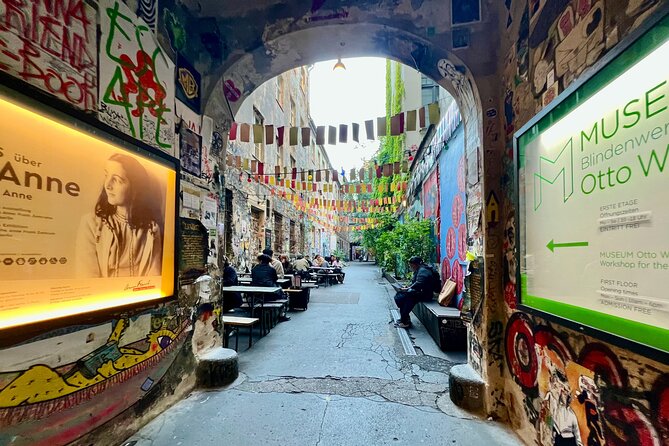
The tour then heads through the Barn Quarter, a maze of nineteenth-century lanes, courtyards, cafés, cinemas, and street art. This is likely to be one of the most visually varied parts of the walk.
The alleyways are important because they show a side of Berlin that wide avenues cannot. You may find layers of older brickwork, painted walls, tucked-away courtyards, and signs of the creative life that has taken root in central neighborhoods. The route description points to cinemas and cafés as well as street art, so the focus is not only on monuments. It is on how the area is used now.
The guide’s role matters here. Without context, a courtyard can look like a pleasant shortcut and street art can become mere decoration. With a good explanation, you can connect the physical setting to Berlin’s changing social and cultural life.
This section also helps explain why the tour takes three hours. You are not simply walking from restaurant to restaurant. You are stopping to look, listen, eat, and move through a sequence of streets that reward a slower pace.
I would not book this expecting a polished sightseeing route with every corner preserved exactly as it once was. Berlin’s centre is a mix of restoration, rebuilding, modern businesses, and old traces. That unevenness is part of the city’s character, though visitors who prefer tidy historic districts may find it less predictable.
Still Berlin, at a slower pace:
- Berlin: Reichstag, Dome and Government District Guided Tour
★ 4.7 · 18,288 reviews - Berlin: 1-Hour City Tour by Boat with Guaranteed Seating
★ 4.3 · 16,993 reviews - Berlin: Boat Tour Along the River Spree
★ 4.4 · 11,252 reviews - Discover Berlin Half-Day Walking Tour
★ 5.0 · 9,624 reviews
Jewish Heritage and the Restored Synagogue
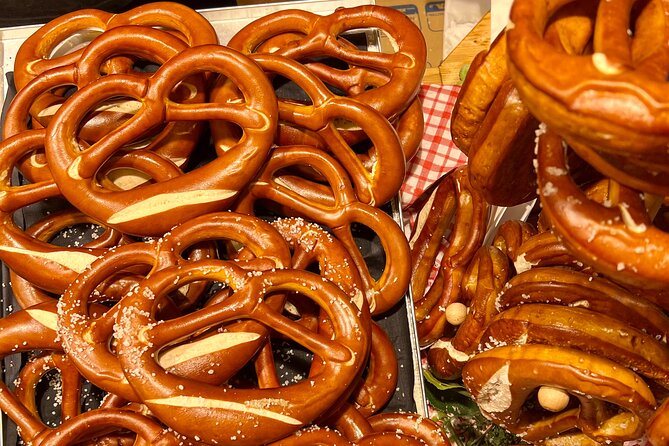
The itinerary includes the tragic remains of a historic Jewish cemetery and the restoration of a grand synagogue. This is the most solemn portion of the walk, and it gives the food tour a necessary sense of weight.
The cemetery helps place Jewish life in Berlin before the destruction and persecution of the Nazi period. The restored synagogue points to both loss and renewal. Together, these sites show that Berlin’s Jewish story is not only about disappearance. It also includes survival, preservation, and the continuing effort to care for difficult places.
I appreciate that this material is included alongside food and neighborhood life. A city’s cuisine can reflect its communities, but food should not soften or distract from painful history. Your guide’s handling of this stop will shape the experience, so it is worth asking questions respectfully and allowing the mood to change.
This may be a challenging moment for families with young children or anyone hoping for a lighthearted afternoon from beginning to end. The tour does not appear to treat every stop as entertainment. That balance is a strength for many people, but it is also something to consider before booking.
The Eighteenth-Century Church and a Cold War Secret
Another stop is an Evangelical church from the 1700s, known as the place of a clandestine mass led by Martin Luther King during the Cold War. It is a striking detail because it joins religious space, political tension, and Berlin’s divided past in one location.
The story gives you a sharper sense of how unusual life in Cold War Berlin could be. A church was not merely an old building. It could become a place for quiet resistance, international attention, and a gathering that official powers would prefer to keep out of sight.
This is the kind of fact that can stay with you after the tour. You may forget the exact date of a building’s construction, but a secret service held under Cold War pressure gives the site a human scale.
The stop also breaks up the food rhythm in a useful way. You are not eating continuously, and the historical pauses keep the tour from feeling like a progressive restaurant crawl. The result is a better balance between appetite and attention.
What You Will Eat Along the Way
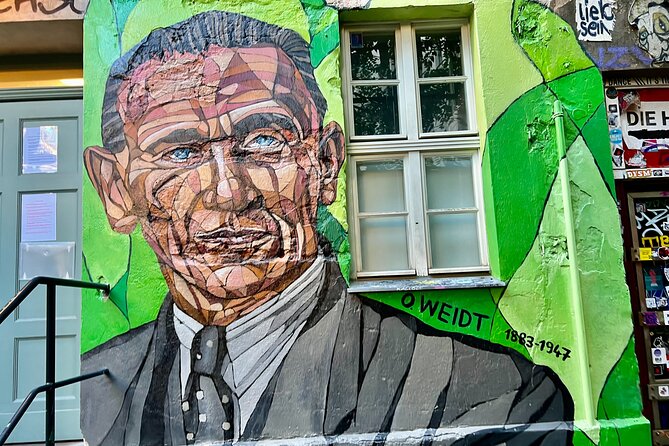
The tasting list is broad enough to function as lunch for many people. It includes:
- A famous Berlin kebab
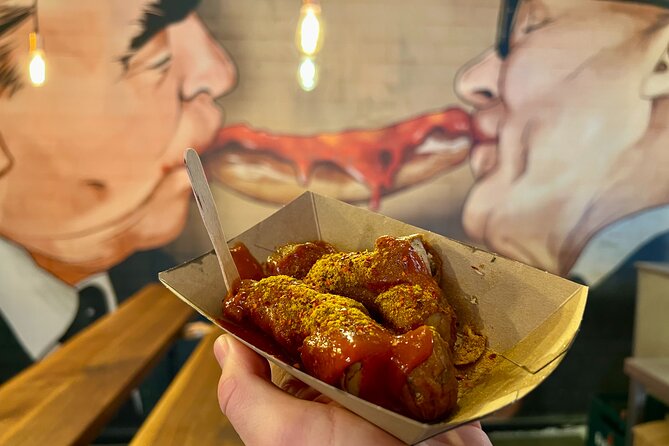
- Original Berlin currywurst
- Traditional meats, dishes, and small plates
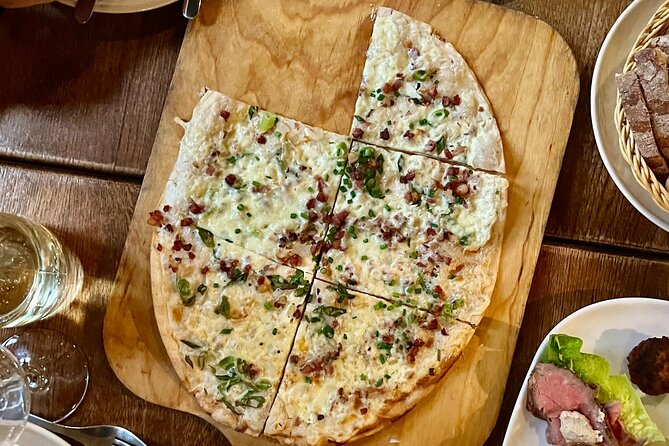
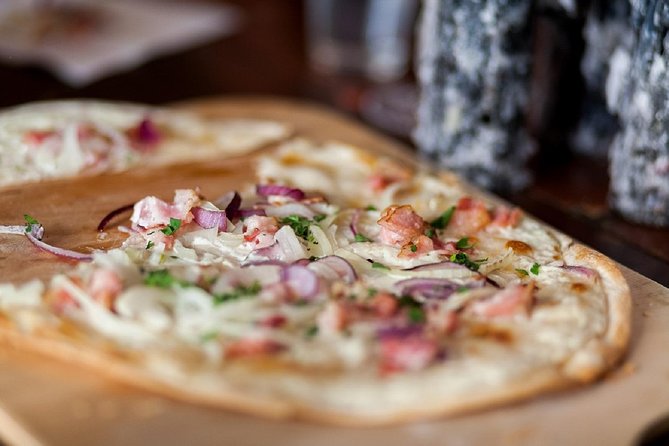
- Flammkuchen
- Spritzkuchen, a local Berlin doughnut
- German spiced biscuits
- A secret dish
The currywurst is the obvious Berlin classic. It is simple, filling, and closely tied to the city’s street food identity. The kebab adds another important piece of the modern Berlin food story. Having both on the same walk makes the point that local food is often shaped by more than one community.
Flammkuchen gives you a different texture and style, while Spritzkuchen brings in the sweet side of the city’s baking tradition. The spiced biscuits are a small detail, but they help widen the tasting beyond the two most famous dishes.
The traditional meats and small plates should make the meal feel less like a collection of snacks. You are getting a wider sample of German flavors, though the exact dishes and serving sizes are not specified. I would not assume every item will suit every diet, so ask about ingredients before the tour if you have food restrictions.
The secret dish is deliberately left undisclosed. That adds a little fun, but it also means you cannot plan around it. If you are a cautious eater, tell the guide about allergies or strong dislikes when you meet.
The Guides Make or Break the Walk
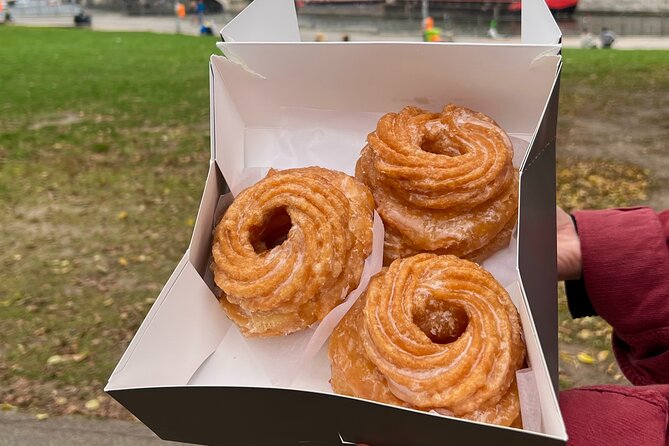
The strongest praise has gone to the guides’ personalities and storytelling. Francesco has been described as interesting and good at linking food with history. Foteini was praised for her charisma and approachability, while Fotini was singled out for making everyone feel welcome and for mixing walking with short history lessons. Alex was noted for keeping the group entertained while explaining East Berlin.
That range suggests the company’s best asset is not a fixed script. It is the person leading you through the neighborhood. Food tours work best when the guide can explain why a dish matters, not just identify it on a plate.
I would especially value the guide on the historical sections. The cemetery, synagogue, war-damaged areas, Soviet reminders, and Cold War church all need clear and respectful explanation. The food may bring you to the tour, but the guide determines how much Berlin you take away.
Because this is private, you can ask more questions than you might in a large group. You can also say if you need a short pause, though the tour still has a fixed overall duration and planned route.
Is $387.80 Per Person Good Value?
At $387.80 per person, this is an expensive food experience. The price can make sense for a private group that wants personal attention, easier scheduling, and a generous mix of food and sightseeing. It is harder to justify if you are mainly looking for a cheap way to try currywurst and kebab.
The value comes from four parts working together:
- Several substantial tastings over about three hours
- A private guide for your group only
- A central walking route with historic stops
- Flexible start times and dates, subject to availability
A standard food walk would usually be the better choice for a solo visitor or a couple watching costs. This private tour is more suited to families, small groups, or people who place a high value on convenience and conversation.
The group discount feature may improve the calculation, but no discount amount is provided. Check the final price for your party rather than assuming the listed per-person figure will change substantially.
Timing, Meeting Point, and Cancellation Details
The tour lasts about three hours and ends at Hackescher Markt, 10178 Berlin. Ending there is practical because the area is near public transportation and offers a useful point from which to continue exploring central Berlin.
Hotel pickup and drop-off are not included. You will need to reach Burgstraße 19 on your own and make your own way onward after the final stop.
Confirmation is sent within 48 hours of booking, subject to availability. The experience requires good weather and a minimum number of participants, though the private format means only your own group takes part once the booking is confirmed.
Free cancellation is available up to 24 hours before the start time for a full refund. Inside that 24-hour window, changes are not accepted and the payment is not refunded. If poor weather or an unmet minimum causes the operator to cancel, you will be offered another date or experience, or a full refund.
Who Will Get the Most From This Tour?
I would recommend it most to you if you want food to guide your first look at Berlin. It suits people who enjoy walking, asking questions, and moving between cheerful food stops and serious historic places.
It is also a strong match for a private family outing or a small group with mixed interests. One person can focus on food, another on architecture, and another on Cold War stories without anyone having to spend the whole afternoon in a museum.
You may want a different option if your budget is tight, you need a fully indoor activity, or you want a tour focused only on German cuisine. The route includes multicultural food and several outdoor stretches, and its historical material gives the afternoon more range than a simple tasting menu.
Should You Book Secret Food Tours Berlin?
Book it if you want a private, food-led introduction to central Berlin and you are willing to pay for personal service. The mix of kebab, currywurst, meats, pastries, and a secret dish gives you a broad first taste, while the Barn Quarter, Jewish sites, war ruins, and Cold War church add real substance.
Skip it if $387.80 per person feels hard to defend or if you prefer to choose your own inexpensive street-food stops. For the right small group, though, this is a well-shaped three-hour experience: enough food to fill you up, enough walking to keep the meal moving, and enough history to make the city feel more than picturesque.
FAQ
How long is Secret Food Tours Berlin?
The tour lasts approximately three hours.
Is this a private tour?
Yes. Only your group participates in the activity.
Where does the tour begin?
It begins at Burgstraße 19, 10178 Berlin, Germany.
Where does the tour end?
The tour ends at Hackescher Markt, 10178 Berlin, Germany.
What food is included?
Included tastings are Berlin kebab, German spiced biscuits, traditional meats and small plates, original Berlin currywurst, flammkuchen, Spritzkuchen, and a secret dish.
Is hotel pickup included?
No. Hotel pickup and drop-off are not included.
Is the tour near public transportation?
Yes. The experience is listed as being near public transportation.
What is the cancellation policy?
You can cancel at least 24 hours before the start time for a full refund. Cancellations or changes made less than 24 hours before the start time are not refunded or accepted. If poor weather or an unmet minimum causes cancellation, you will be offered another date or a full refund.
Just added around Berlin
- Private Tour: Potsdam Day Trip from Berlin★ 4.5 · 43 reviews
- Berlin’s Gallery Scene★ 5.0 · 4 reviews
- Private Tour: Jewish Heritage Walking Tour of Berlin★ 5.0 · 29 reviews
- Private Sachsenhausen Concentration Camp tour with train★ 5.0 · 205 reviews
- Private Tour: Berlin by Trabant Stretch-Limousine★ 5.0 · 186 reviews
- Private walking Tour: Berlin Architecture Tour★ 5.0 · 14 reviews
- Private Tour: Daytime Food Tour Trends & Classics★ 5.0 · 24 reviews
- Private Photo Tour in Kreuzberg★ 5.0 · 3 reviews
Food & Drink, compared.

St. Pauli Highlights Guided Tour with Beer for 18+
Read our review →
Elbphilharmonie Plaza and HafenCity Food Tour
Read our review →
Bavarian Beer and Food Evening Tour in Munich
Read our review →
Classic Mike’s Bike Tour daily @ 11.30 incl Beer Garden & Surfers
Read our review →
Berlin Center Food Tour with 8+ Authentic Local Tastings
Read our review →
Browse the lists this tour appears in