
Reviewed · CONCENTRATION CAMP MEMORIAL VISITS
Private Sachsenhausen Concentration Camp tour with train
History can be hard to face. This six-hour private trip from Berlin to Sachsenhausen combines public transport, a guided walk through Oranienburg, and careful teaching at one of Germany’s most important memorial sites. I especially like the one-to-one attention and the chance to ask questions without being tied to a large group. I also value the way the tour connects the camp to the town around it, not just to the isolated memorial grounds. The main drawback is practical: this is a long walking day, and the train-based format may disappoint you if you expect a private vehicle.
You meet your guide at your hotel, travel by train toward Oranienburg, and continue on foot or by local transport to the memorial. The guide handles the history, orientation, and return trip, while you can focus on the place itself. Guides such as Maria, Xavier, Natalie, Klaus, Paul, Ioana, Martin, and Nickolai have been praised for clear explanations, thoughtful pacing, and the ability to adjust the day to different groups.
This is not a light sightseeing outing. Sachsenhausen was a place of imprisonment, forced labor, disease, terror, and murder. You should arrive ready for difficult material and plenty of walking. Comfortable shoes, water, and a packed lunch will make the day easier, since amenities around the memorial are limited.
In This Review
- Key points before you book
- Why Sachsenhausen deserves a full day from Berlin
- The train from Berlin: useful, local, and not private transport
- Oranienburg reveals the camp’s local connection
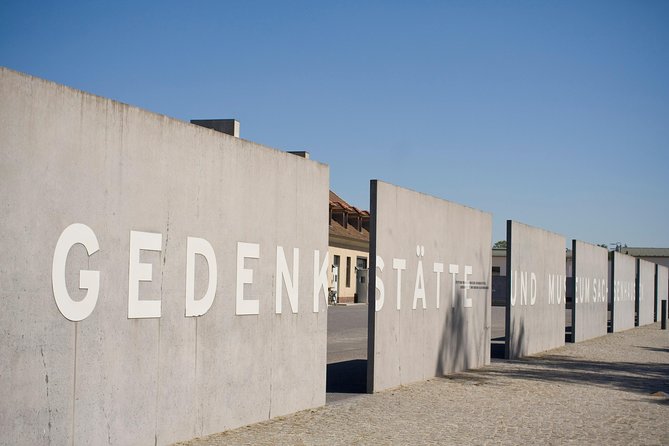
- Entering the Sachsenhausen memorial grounds
- Station Z and the machinery of murder
- What makes a private guide worth the higher price
- The physical demands are easy to underestimate
- Emotional preparation is part of good planning
- Is $338.15 per person good value?
- Should you book this Sachsenhausen tour?
- FAQ
- How long does the private Sachsenhausen tour last?
- How do I reach Sachsenhausen from Berlin?
- Is hotel pickup included?
- Is a private vehicle included?
- Are train tickets included?
- Is the tour offered in English?
- Is food included?
- Is the tour suitable for people with limited mobility?
- Can I cancel for a full refund?
Key points before you book
- The train ride is part of the experience: You travel from Berlin to Oranienburg by public transport, rather than riding in a dedicated tour vehicle.
- Oranienburg adds important context: The town benefited from forced labor connected to Sachsenhausen, making the camp part of the local story rather than a distant site outside town.
- A private guide changes the pace: You can stop for questions, spend more time with an exhibit, or ask for more background on Nazi Germany, postwar East Germany, or the camp system.
- Expect roughly 11,000 to 16,000 steps: The route includes the station, town, memorial grounds, and return journey, with some uneven pavement.
- The subject requires emotional preparation: You will hear about systematic cruelty, overcrowding, forced labor, and industrialized killing.
- The price pays mainly for personal service: At $338.15 per person, the tour makes the most sense for families or small groups who want hotel pickup, a private guide, and a tailored day.
Why Sachsenhausen deserves a full day from Berlin
Sachsenhausen lies in Oranienburg, north of Berlin. It is close enough for a day trip, but far enough that the journey gives the visit a different rhythm. You leave the capital’s museums and boulevards behind and follow the same broad route that many people use to reach the town today.
The camp was built in 1936, during the period when Nazi Germany was presenting itself to the world through the Berlin Olympics. Prisoners were forced to construct a new concentration camp north of Berlin. It was intended to hold political enemies, but its prisoner population expanded as Nazi persecution widened.
Around 200,000 people were imprisoned at Sachsenhausen during the Nazi period. The site was evacuated by the Soviets in 1945. After the war, the Soviet authorities used it as a special camp for about five years, holding around 60,000 people, including Nazis and Nazi collaborators.
That second chapter matters. A visit here is not only a lesson about Nazi persecution. It also shows how a place of imprisonment was reused under a different dictatorship. Your guide can help you separate these periods and understand what changed, what did not, and why the memorial presents both.
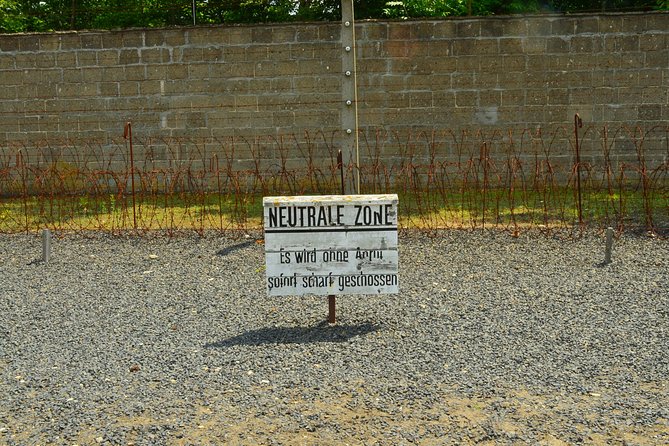
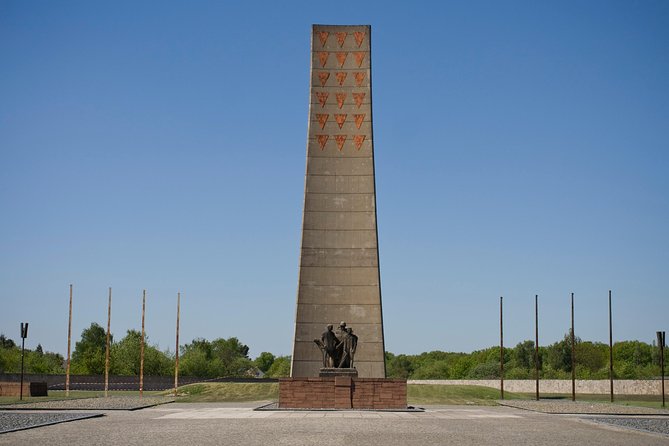
The physical remains are powerful because they are not arranged like a conventional museum attraction. You walk through an actual site of imprisonment, with open space, reconstructed buildings, foundations, memorial markers, and surviving structures. The emptiness can be as affecting as the exhibits.
Other memorial sites open to visitors:
- Berlin: Sachsenhausen Concentration Camp Tour in English
★ 5.0 · 5,711 reviews - Berlin: Sachsenhausen Concentration Camp Memorial Tour
★ 4.7 · 3,716 reviews - Sachsenhausen Concentration Camp Bus Tour in English from Berlin
★ 5.0 · 1,962 reviews
The train from Berlin: useful, local, and not private transport
The tour begins with pickup at your hotel. Your guide then takes you toward the station and accompanies you on the train to Oranienburg. This is a practical way to reach the memorial, and it lets you see an ordinary part of life in Berlin and Brandenburg.
It also requires clear expectations. Hotel pickup means the guide meets you there, not necessarily that a private car collects you. The title of the experience identifies the train as the main transport, and the included services specify hotel pickup and drop-off, not a chauffeur-driven vehicle.
Train and local transport arrangements can vary by guide and booking. Some guides have supplied or arranged transport passes, while some participants have needed to buy tickets separately. I would confirm exactly what is included before departure, especially if you are booking for several people.
The trip from Berlin to Oranienburg takes about 30 minutes according to one account, followed by a walk of roughly 20 to 25 minutes from the station. Depending on the schedule and the group’s needs, a taxi may be used for part of the route. One reported taxi fare was about 6 euros, but you should treat that as a guide rather than a guaranteed price.
The walk is easy for many people, but it adds up. By the end of the day, some people have recorded around 11,000 steps, while one particularly long day reached 16,000. The route can include uneven pavement, so sensible shoes matter more than fashionable ones.
Oranienburg reveals the camp’s local connection
The first stop is a short walk through Oranienburg, lasting about 25 minutes. At first, this may seem like an unusual addition to a concentration camp visit. In fact, it helps answer a difficult question: how could such a system operate near a populated town?
Oranienburg was tied to Sachsenhausen through business, labor, and government. Local factories, including plants producing war materials, used prisoners as forced labor. The town benefited from this system, while residents had varying degrees of awareness, involvement, or silence.
Your guide uses this part of the route to place the camp in its surroundings. The camp was not an invisible island. It was connected to roads, workplaces, supply chains, and local administration. That connection makes the history harder to dismiss as something done only by a small group of people behind a fence.
The town walk is brief, so do not expect a full city tour. Its value is the framing. You begin to see the memorial not simply as a collection of barracks and exhibits, but as part of a wider system that reached into ordinary economic life.
Entering the Sachsenhausen memorial grounds
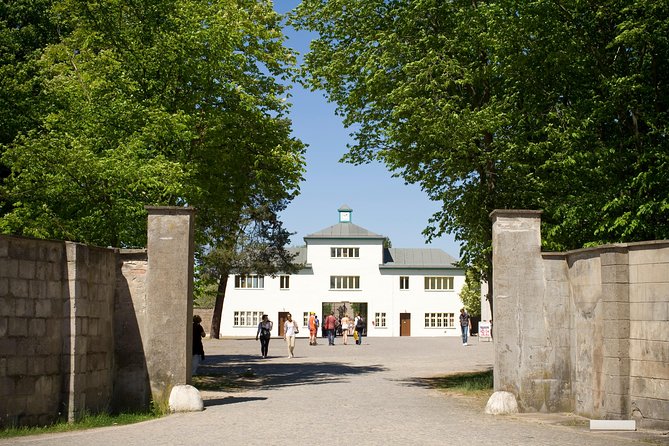
The central memorial visit lasts about three hours in total, with roughly 90 minutes listed for the included museum and memorial admission and another 90 minutes for the guided walk through the former camp. In practice, the exact division can depend on your guide and your questions.
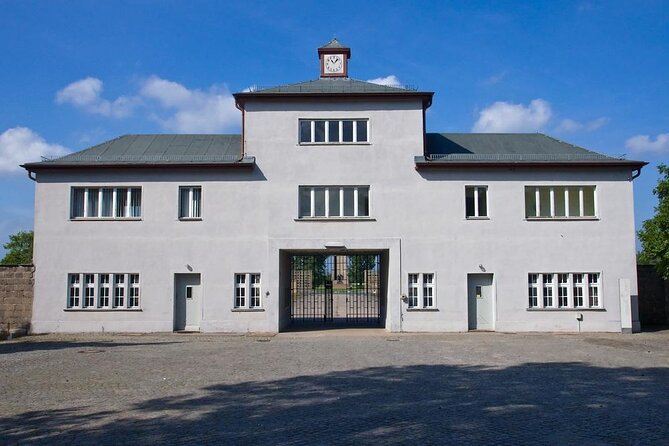
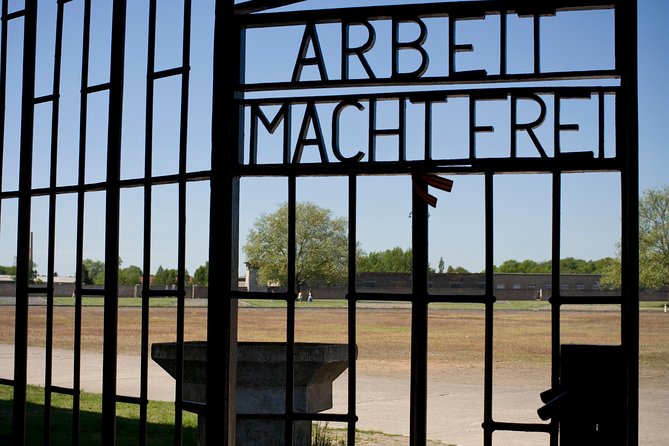
The entrance is one of the site’s most memorable features. Tower A was the main gateway, and the camp was designed around a triangular layout. The arrangement allowed guards to monitor a large area from a central position. The design was deliberate, efficient, and built to control people.
The roll call square helps you understand the daily routine imposed on prisoners. People were forced to line up for counting, sometimes for long periods in cold or poor weather. The scale of the square and the open exposure make the cruelty of this routine easier to grasp than a paragraph in a textbook.
Inside the surviving and reconstructed areas, your guide explains prison conditions, forced labor, camp administration, and the role of SS guards. One particularly grim detail concerns barracks designed for about 150 people but at times holding around 700. Overcrowding was not a minor failure of planning. It was part of a system that reduced people to bodies that could be controlled and worked.
The forced labor program was designed to exhaust prisoners physically and mentally. Your guide may explain how work was used not only for production, but also for punishment and the destruction of morale. The site’s history is at its clearest when you see how architecture, labor, food, discipline, and violence worked together.
A few more Berlin trips worth comparing
- Berlin: Reichstag, Dome and Government District Guided Tour
★ 4.7 · 18,288 reviews - Berlin: 1-Hour City Tour by Boat with Guaranteed Seating
★ 4.3 · 16,993 reviews - Berlin: Boat Tour Along the River Spree
★ 4.4 · 11,252 reviews - Discover Berlin Half-Day Walking Tour
★ 5.0 · 9,624 reviews
Station Z and the machinery of murder
Station Z is one of the most disturbing parts of the visit. It was the area used for mass killing, and its name carries a grim symbolic meaning. Tower A was the entrance, while Station Z functioned as the final destination.
You should not expect a dramatic presentation. The power of the place comes from the facts, the remains, and the restraint of a good guide. Several guides have been praised for knowing when to stop speaking and allow silence. That matters here. Constant commentary can make a serious site feel like a performance, while thoughtful pauses give you room to process what you are seeing.
The tour also addresses how Sachsenhausen helped shape the wider camp system. It was not merely a holding place. Methods of control, forced labor, punishment, and murder were developed and applied within the Nazi camp network. The site therefore helps explain how persecution became organized and industrial.
A private guide can adjust the amount of detail to your group. You can ask about Nazi ideology, the rise of Hitler, the role of propaganda, international failures such as the Évian Conference, or the experiences of particular prisoner groups. You can also ask to pause if the material becomes too much.
What makes a private guide worth the higher price
At $338.15 per person, this is expensive compared with meeting a guide at a Berlin station or joining a larger group. You are not paying for luxury transport. You are paying for personal service, hotel pickup and return, a private group, and a guide who can shape the day around your interests and energy.
That difference matters most if you are traveling with family, have limited time in Berlin, or want to ask detailed questions. Guides have tailored the tour to families, adjusted explanations to a person’s prior knowledge, and found easier routes for participants with mobility needs.
The strongest part of the experience is the guide. Maria has been praised for a well-paced presentation. Xavier made the day personal and focused on learning. Natalie was patient and found a more accessible route for a family member using a wheelchair. Klaus added useful Berlin advice and knew when to let the group sit quietly with the material.
Other praised guides include Paul, Daniel, Ioana, Martin, Nickolai, Hannah, Chloe, Walid, Pip, Taylor, and Brian Bell. The recurring qualities are clear: strong command of the subject, punctuality, patience, respect, and the ability to explain difficult issues without turning them into a dry lecture.
Guide quality can never be guaranteed by a list of names, but the operator says guides are licensed and trained by the memorial authority. That is a meaningful point for a site where accuracy and tone both matter.
The physical demands are easy to underestimate
The advertised duration is about six hours, but this is not six hours of sitting in a vehicle. You will walk through Oranienburg, reach the memorial from the station or a local transport stop, cover a large open site, and return to Berlin.
Some people have completed around 11,000 steps. Others have reached 16,000, especially when walking from hotels, stations, or the camp. The memorial grounds can include uneven pavement, and seating and food options are limited during much of the day.
I would bring:
- Comfortable walking shoes
- Water
- A packed lunch or substantial snack
- Weather protection
- Any required train or local transport money unless your guide confirms it is supplied
The tour is not recommended for people with limited mobility or walking impairments. That guidance is sensible, though one guide did adapt the route for a person using a wheelchair. If accessibility is important for you, contact the operator before booking and explain your exact needs rather than relying on a general promise.
Rain can make the grounds more tiring. One group completed the visit during heavy rain and storms, with a guide who continued to explain the site clearly. Still, poor weather can reduce your comfort and attention, so dress for the forecast.
Emotional preparation is part of good planning
Sachsenhausen is a memorial, not an entertainment stop. You will hear about imprisonment, forced labor, violence, overcrowding, and systematic killing. Even people who know the broad outline of Nazi history can find the physical setting hard to absorb.
I recommend planning a quieter evening afterward. Do not stack this tour between a party lunch and a packed list of cheerful attractions. The subject deserves time, and you may need a break once you return to Berlin.
A strong guide does not soften the facts, but also does not sensationalize them. The best accounts connect the camp’s machinery to individual lives and survivor testimony. They also explain the importance of preserving memorials as direct witnesses become fewer.
The experience can be educational for teenagers and adults who are ready for the subject. It is particularly useful if you want to understand how Nazi Germany moved from political persecution to a wider system of imprisonment, forced labor, and murder.
Is $338.15 per person good value?
The answer depends on what you want from the day. If you mainly need transport to Sachsenhausen and a basic orientation, a cheaper group option or independent visit may suit you better. You may also prefer a group tour that meets at a central Berlin station.
If you value hotel pickup, a private guide, flexible questions, and help with the train and local route, the cost is easier to justify. A private group can also be more comfortable for families, couples, or friends who want to move at their own pace.
The price feels less worthwhile if you expect a private car, door-to-door driving, or a short three-hour outing. The train is central to the experience, and some of the day is spent walking between transport points. Be clear about that before paying.
The tour is offered in English, includes a mobile ticket, and offers a range of departure times. It is often reserved well ahead, with an average booking time of about 41 days. Free cancellation is available until 24 hours before the start time. Late cancellations and changes are not accepted for a refund.
Should you book this Sachsenhausen tour?
I would book it if you want a serious, personal introduction to Sachsenhausen and are comfortable using public transport and walking for much of the day. The guides are the main reason to choose this option. Their best work adds local context, survivor accounts, historical connections, and quiet moments that are difficult to reproduce with a map and audio guide alone.
I would choose another option if you want a vehicle, have limited stamina, or are mainly looking for a quick visit. Before booking, confirm train ticket arrangements, ask about the walking route, and explain any mobility concerns.
For the right group, this is a thoughtful and carefully guided day. It will not be easy, but it can leave you with a clearer understanding of how persecution was organized, how local communities were involved, and why remembrance still demands attention.
FAQ
How long does the private Sachsenhausen tour last?
The experience lasts approximately six hours, including transport from Berlin, the walk through Oranienburg, and time at the memorial and museum.
How do I reach Sachsenhausen from Berlin?
You meet your guide at your hotel and travel by train to Oranienburg. From there, the route may include walking or local transport to the memorial.
Is hotel pickup included?
Yes. Hotel pickup and drop-off are included in the tour.
Is a private vehicle included?
No private vehicle is specified as part of the experience. The tour is described as traveling by train, and local taxis may sometimes be used for part of the route.
Are train tickets included?
The information does not clearly state that train tickets are included. Some guides have arranged or supplied transport passes, while some participants have bought tickets separately. Confirm this before departure.
Is the tour offered in English?
Yes. The tour is offered in English.
Is food included?
No. Food and drinks are not included. Bringing water and a packed lunch is sensible because amenities are limited for much of the day.
Is the tour suitable for people with limited mobility?
The tour is not recommended for people with limited mobility or walking impairments. The route can involve about 11,000 steps, uneven pavement, and a large memorial site, though an individual guide may be able to adjust the route in some cases.
Can I cancel for a full refund?
Yes. You can cancel at least 24 hours before the start time for a full refund. Cancellations or changes made less than 24 hours before the experience are not accepted for a refund.
Just added around Berlin
- Private Tour: Secret Food Tours Berlin★ 5.0 · 4 reviews
- Private Tour: Potsdam Day Trip from Berlin★ 4.5 · 43 reviews
- Berlin’s Gallery Scene★ 5.0 · 4 reviews
- Private Tour: Jewish Heritage Walking Tour of Berlin★ 5.0 · 29 reviews
- Private walking Tour: Berlin Architecture Tour★ 5.0 · 14 reviews
- Private Tour: Daytime Food Tour Trends & Classics★ 5.0 · 24 reviews
- Private Tour: Berlin by Trabant Stretch-Limousine★ 5.0 · 186 reviews
- Private Photo Tour in Kreuzberg★ 5.0 · 3 reviews