
Reviewed · WALKING TOURS
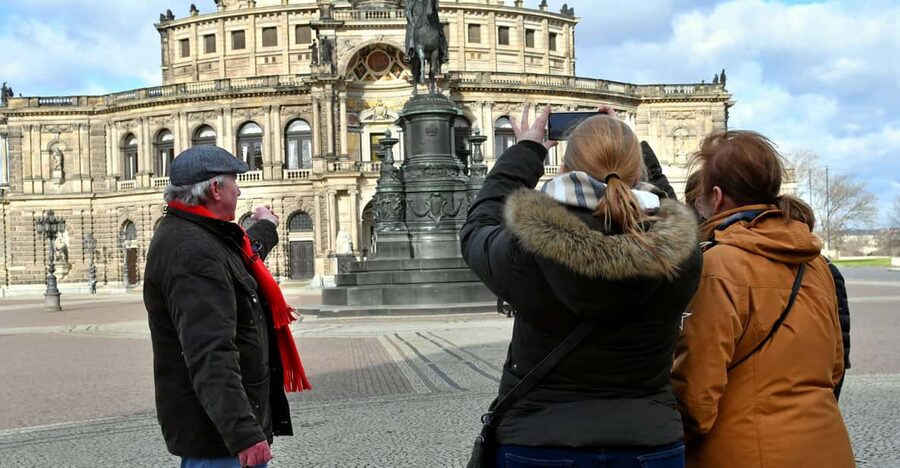
Dresden: Sightseeing Walking Tour in English
Dresden’s center tells a complicated story. This 1.5-hour walk links the city’s grand Baroque buildings with the Middle Ages, the Reformation, the destruction of World War II, and the peaceful revolution of 1989. I like the way the tour joins famous sights with local stories, and I especially like that it stays on foot in a compact historic center. The main consideration is time: you will see many major landmarks, but you will not have time for a long interior visit at each one.
The small-group format should make it easier to ask questions, which matters on a history-heavy tour. I also like the practical advice about restaurants, shopping, nightlife, and local events. Guide Franziska, also listed as Franceska in some feedback, earned repeated praise for her patience, warmth, and clear explanations. At $15 per person, this is a strong-value introduction, though travelers wanting detailed museum visits will need to explore further on their own.
In This Review
- Key points at a glance
- Why this short Dresden walk works well
- Meeting at the QF Passage
- Neumarkt and the Frauenkirche
- Palace Stables and the Procession of Princes
- Zwinger Palace and the Nymphenbad
- Semper Opera House and the Catholic Cathedral
- Royal Castle and Taschenbergpalais
- Brühl Terrace and Augustus Bridge
- From medieval Dresden to the peaceful revolution of 1989
- The value of local tips
- Who should book this tour?
- Price, timing, and booking flexibility
- Should you book the Dresden walking tour?
- FAQ
- How long does the Dresden walking tour last?
- What language is the tour offered in?
- Where is the meeting point?
- Which major Dresden sights are included?
- Is the Nymphenbad included?
- Is the walking tour wheelchair accessible?
- Can I cancel the booking?
Key points at a glance
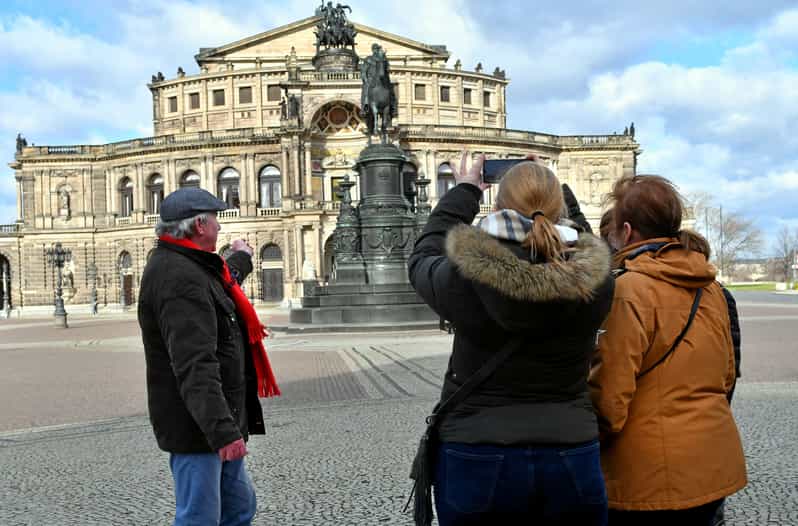
- The tour covers Dresden’s essential old-town sights: Frauenkirche, Zwinger Palace, Royal Castle, Semper Opera House, Brühl Terrace, and the Procession of Princes.
- The history reaches beyond Baroque beauty: your guide discusses the Middle Ages, the Reformation, World War II destruction, and the peaceful revolution of 1989.
- A local guide adds personal context: one guide shared memories of growing up in Dresden after World War II, giving the city’s recent past a human scale.
- The Nymphenbad adds an unusual stop: this mysterious feature inside Zwinger Palace is included alongside the better-known monuments.
- You receive useful local tips: the tour covers places to eat, shop, go out, and find events.
- The format is practical: English guiding, wheelchair access, a 1.5-hour duration, and free cancellation up to 24 hours before the start.
Why this short Dresden walk works well
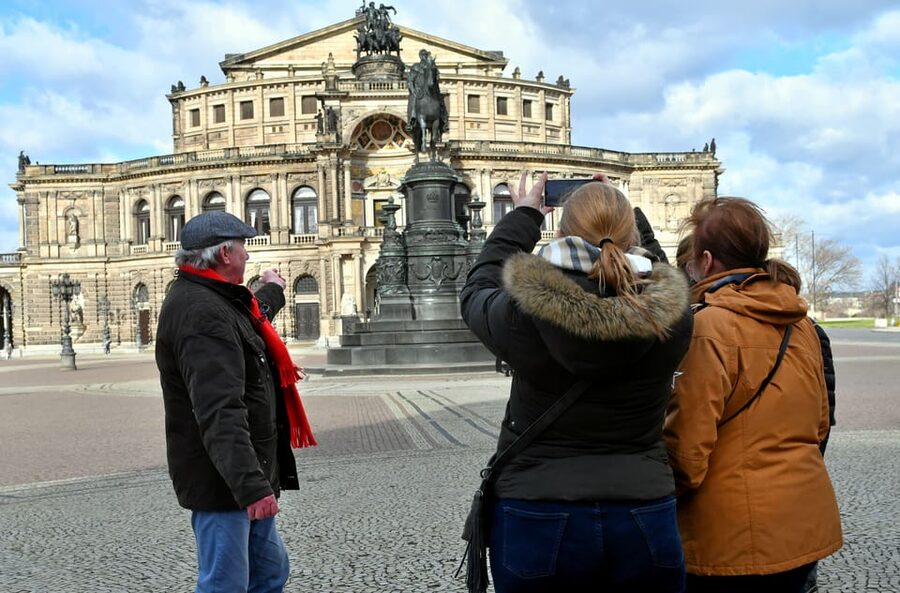
Dresden can feel like a city of separate chapters. One minute you are looking at a grand palace, and the next you are confronting the scars left by war or the political change of 1989. A good first walk needs to connect those pieces. This one does.
Your guide leads through the historic center rather than sending you between distant sights. That keeps the pace manageable and leaves you with a useful mental map of the old town. You will hear about more than architectural dates. The story moves from medieval Dresden to the noise of the Reformation, through the courtly Baroque period, and into the city’s difficult 20th century.
The tour is also a good fit if you want orientation before choosing what to visit inside. You can see the main buildings from the outside, learn why they matter, then decide where to spend your free time. At $15, the price is modest for a live English tour covering this many central sights.
The tradeoff is clear. One and a half hours goes quickly. You should expect an overview with stories and explanations, not a full guided visit to the Royal Palace museums, the Frauenkirche interior, or the Semper Opera House. If you prefer a slow pace with long stops, this may feel brisk.
More Walking Tours in Dresden
- Dresden: City & Semperoper Guided Walking Tour
★ 4.8 · 2,293 reviews - Dresden: Guided City Walk with a Cup of Coffee
★ 4.7 · 1,568 reviews - Dresden: Complete Walking Tour with Frauenkirche Visit
★ 4.8 · 700 reviews
Meeting at the QF Passage
The meeting point is the seating area at the Tourist Information in the basement of QF Passage. That detail matters because the old town has several open squares, churches, and tourism offices. Go to the specified seating area rather than waiting outside at a landmark.
From there, the walk heads into Dresden’s historic core. The group format is small, although no exact maximum group size is given. That usually makes a difference when you want to ask about a building, clarify a historical point, or request a restaurant suggestion.
English is the tour language, and the guide is local and licensed. The personal connection is one of the strongest parts of the experience. One guide described Dresden from the perspective of someone who grew up there after World War II, offering a view you are unlikely to get from a plaque or a basic audio guide.
Neumarkt and the Frauenkirche
Neumarkt, or Newmarket Square, gives you the first major sense of Dresden’s old-town character. It is a natural place to begin thinking about the city’s Baroque image, with the Frauenkirche dominating the square.
The Church of Our Lady is not just a pretty church on the route. It represents Dresden’s destruction and reconstruction, so it gives the guide a way to discuss both the wartime past and the city’s later recovery. The tour includes stories about the destruction of Dresden, described as untold local accounts rather than a simple list of dates.
Expect the guide to explain the church and its setting as part of the wider city story. The walk is more useful if you listen for the changes in Dresden’s identity: medieval settlement, Protestant city, royal capital, wartime ruin, and restored historic center.
Because the tour lasts only 90 minutes, you should not count on an extended interior visit. If the Frauenkirche is high on your list, plan separate time for it. This walking tour helps you understand its place in Dresden, but it is not a substitute for visiting the church at your own pace.
Palace Stables and the Procession of Princes
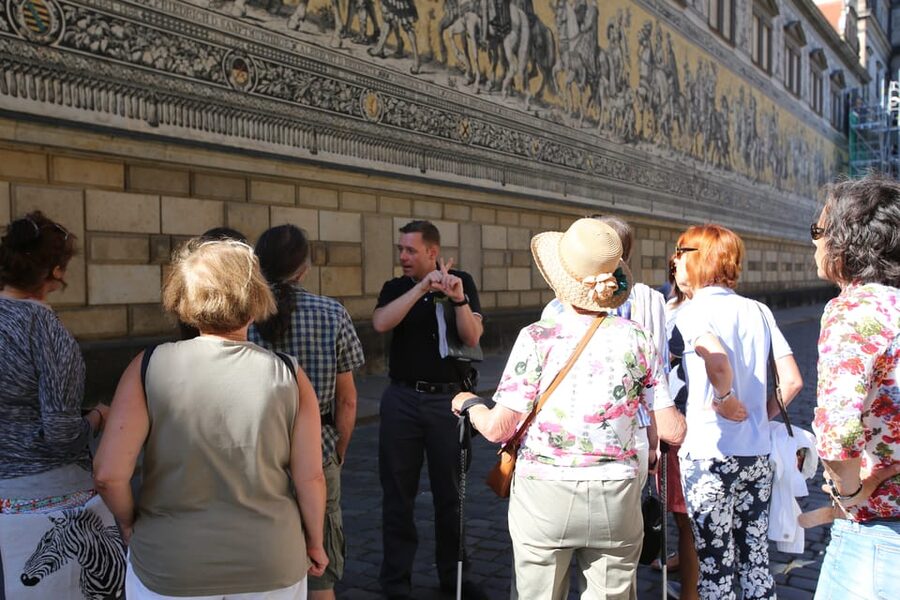
From Neumarkt, the route takes in the Palace Stables and the Procession of Princes. These stops bring the Saxon royal story into view without turning the entire tour into a lesson about rulers and dates.
The Procession of Princes is especially useful for understanding how Dresden presents its past in public spaces. You can study the long outdoor artwork while your guide explains the people and power behind it. This is the kind of stop where a local guide adds value, since the meaning can be easy to miss if you simply walk past.
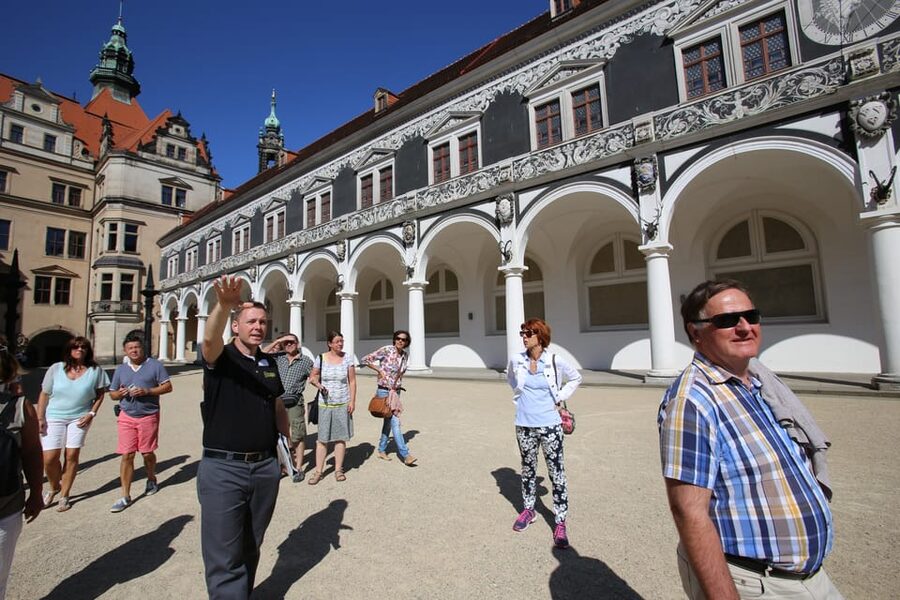
The Palace Stables continue that courtly theme. Together, these sights help explain why Dresden became known for ceremony, art, and grand building projects. You will also begin to see how tightly packed the historic center is. Major monuments sit within an easy walking route, which is one reason this tour can cover so much in a short time.
Do not expect deep detail on every figure shown or every royal building. The advantage is breadth. You get the main story, then can return later to the sites that catch your interest.
Still Dresden, at a slower pace:
- Dresden: Semperoper Tickets and Guided Tour
★ 4.7 · 12,102 reviews - Dresden: The Original Night Watchman Tour in Lantern Light
★ 4.6 · 6,653 reviews - Dresden: Semperoper and Old Town Tour
★ 4.8 · 5,735 reviews - Dresden: River Sightseeing Boat Cruise
★ 4.3 · 5,323 reviews
Zwinger Palace and the Nymphenbad
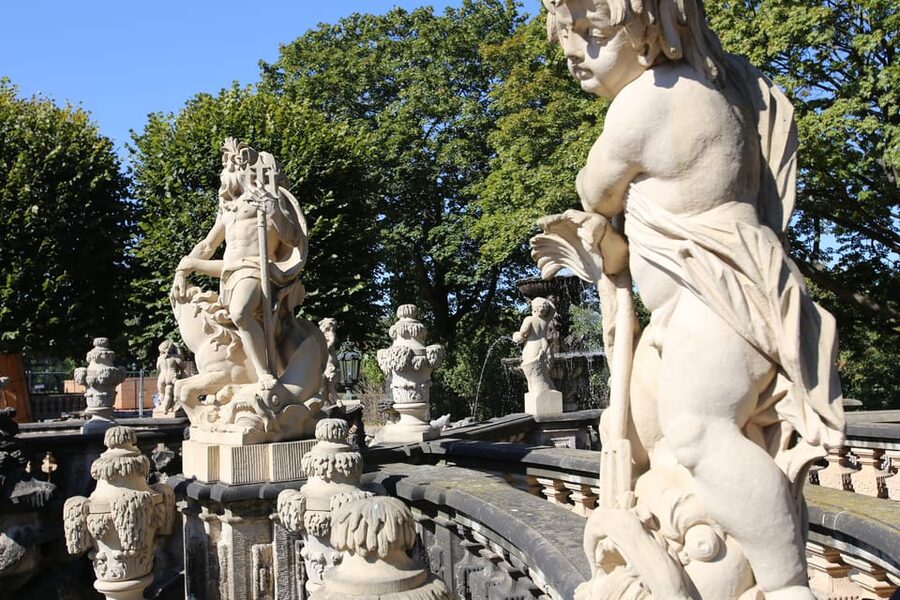
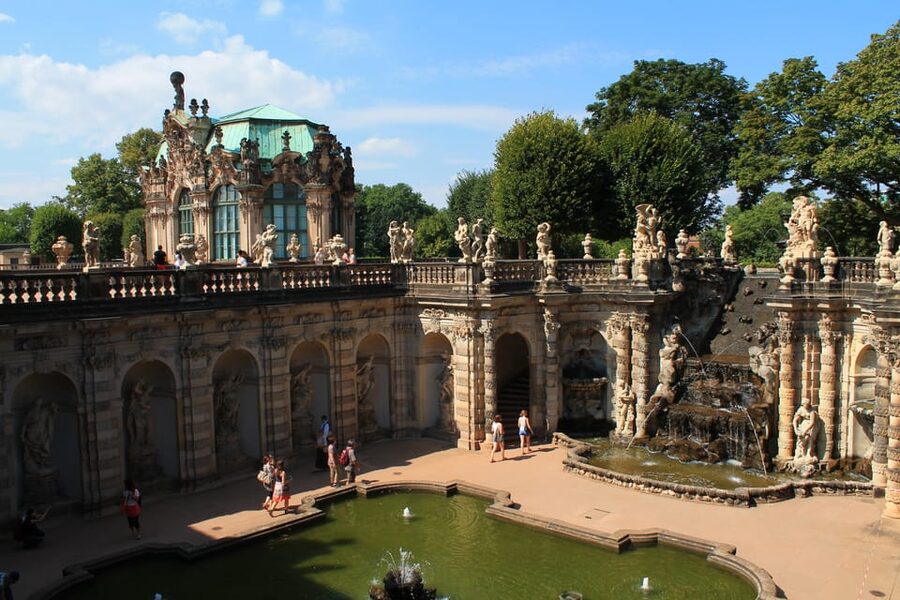
Zwinger Palace is one of the tour’s visual high points. Its Baroque design shows the ambition of Dresden’s court at its most decorative. The guide places the palace within the larger Baroque age, when architecture, ceremony, and royal display worked together.
The included visit to the Nymphenbad gives the stop an unusual twist. This feature is described as mysterious, and it is less obvious than the palace’s grand courtyards and façades. It adds something different to the standard Dresden checklist.
You should think of this as a guided look at the palace complex rather than a full museum tour. The tour information does not promise entry to every collection or interior room, so keep your expectations realistic. If you want paintings, porcelain, or a longer look at the palace grounds, set aside extra time after the walk.
Still, the Zwinger is exactly the sort of place where a short explanation helps. Without context, you may see ornate decoration. With context, you can connect the design to the confidence and showmanship of Baroque Dresden.
Semper Opera House and the Catholic Cathedral

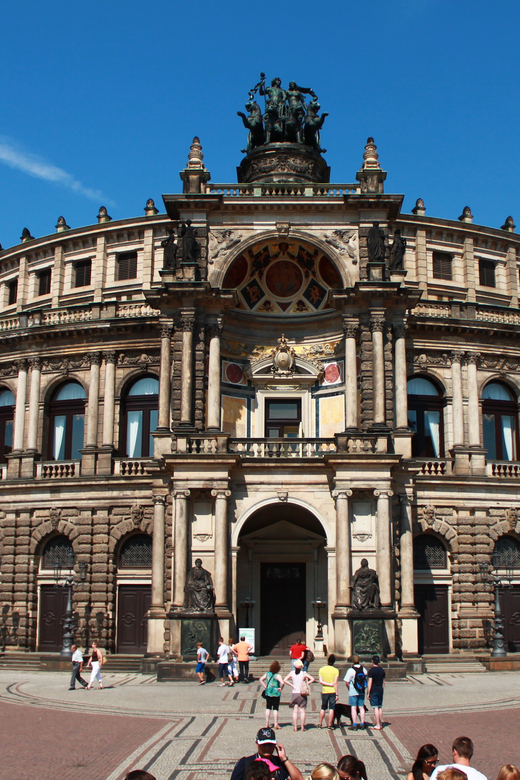
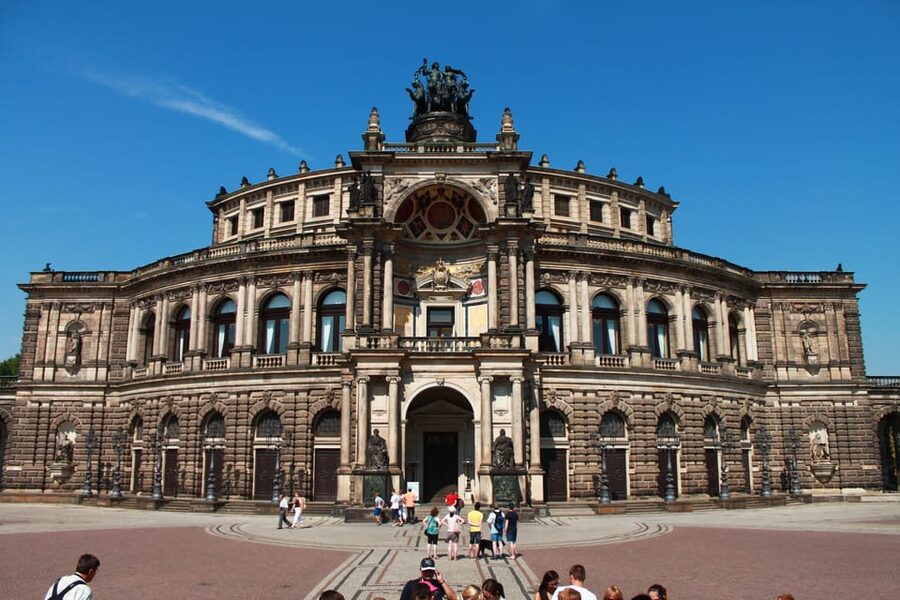
The Semper Opera House and Catholic Cathedral show another side of the old town. Their proximity makes it easy to compare different buildings and traditions within Dresden’s royal center.
The opera house is one of the city’s signature landmarks, and the tour lets you place it within the grand architectural setting around the old town. The Catholic Cathedral adds religious and political context, particularly in a city shaped by the Reformation and later royal power.
The guide’s role here is to explain how the buildings relate to Dresden rather than merely point them out. That is useful because a short walk can otherwise become a parade of names. You will hear the buildings connected to the broader story of religion, court life, and public culture.
Again, this is an exterior-focused sightseeing stop unless otherwise stated at the time of the tour. Anyone hoping to attend a performance or study the opera house inside should make separate plans.
Royal Castle and Taschenbergpalais
The Royal Castle adds another major chapter to Dresden’s courtly past. It helps you see the old town not just as a collection of attractive façades, but as the working center of Saxon power.
The Taschenbergpalais continues that theme. Your guide can use these buildings to explain the scale of royal Dresden and the links between palaces, ceremonial spaces, churches, and public squares.
This part of the walk should appeal to anyone who likes architecture with a human story behind it. The best questions here are practical ones: Who used these buildings? How did the city change around them? What survived, and what had to be rebuilt?
The tour description promises more than standard architectural commentary. It also includes local tips for restaurants, shopping, nightlife, and events. Ask while you are near the center, when the advice can be tied to the streets and districts you are actually seeing.
Brühl Terrace and Augustus Bridge
Brühl Terrace gives you a change of mood. After the close streets and monumental buildings of the old town, the route reaches one of Dresden’s best-known riverside viewpoints.
The terrace helps you understand the city’s setting and its connection to the Elbe. It also offers a place to pause and take in the scale of the historic center. The tour does not promise a long photo stop, so keep your camera ready and listen for the guide’s explanation while you look.
The route includes Augustus Bridge, another useful point for seeing Dresden from a broader angle. Together, the terrace and bridge make the city easier to picture as a whole, rather than as isolated attractions.
This is also where pace may matter most. A 90-minute tour has to keep moving. If you like lingering at viewpoints, you may want to return later. The walk gives you the orientation; your own free time gives you the slower version.
From medieval Dresden to the peaceful revolution of 1989
The strongest feature of this tour is its time span. You are not getting only Baroque Dresden, even though the architecture often steals the show.
The guide discusses the Middle Ages, the Reformation, the Baroque period, the destruction of Dresden, and the events of 1989. That last chapter is particularly important. The peaceful revolution helped change the course of German history, and Dresden was part of that movement.
This broad timeline gives you a better way to read the city. A restored palace can look purely decorative until you understand what happened to Dresden during the war and under later political systems. A church square can seem quiet until you learn how public gatherings and political pressure shaped the city’s recent past.
The personal angle is valuable here. A local guide who grew up in Dresden after World War II can explain the city as a lived place, not only as a heritage display. That does not turn the walk into a private memoir, but it can add emotional weight to the modern history.
If you want a tour focused only on art history, this may include more politics and recent history than expected. I see that as a strength, especially for a first visit, but it is worth knowing before you book.
The value of local tips
The restaurant, shopping, nightlife, and event advice is not a minor extra. It can shape the rest of your stay.
Ask your guide for recommendations that fit your plans and budget. You can also ask about the best time to return to a sight, places near the old town, or current events. The experience provider specifically presents the tour as a way to support local businesses, so the advice is meant to point you beyond the most obvious tourist stops.
Do not expect a printed dining guide or a guaranteed list of named venues. The useful part is the conversation. Since the group is small, you have a better chance to ask about what you actually want to do that evening.
The strongest guide feedback centers on Franziska and Franceska. Robert from the United Kingdom praised Franziska for being informative and easy to question in a small group. Linda from Australia described Franceska as warm and well informed about Dresden’s attractions, while Sudipta highlighted her patience and polite manner. Those details suggest a guide style that should suit curious visitors who prefer conversation over a scripted speech.
Who should book this tour?
I would choose this walk if you are visiting Dresden for the first time and want a clear introduction before exploring independently. It also suits couples, families, solo visitors, and anyone who likes a mix of architecture and modern history.
The 1.5-hour length works well on a first afternoon. You can learn the layout, note places to revisit, and still have most of the day available. Wheelchair access is listed, which makes the route a practical option for many visitors, though the provider does not give detailed information about every surface or restroom.
Families should note the booking rule: no more than four children’s tickets can be booked per adult. Children who enjoy stories about palaces, churches, kings, war, and peaceful protest may get a lot from it. Very young children may find the historical explanations long, particularly because the route covers so many periods.
History fans will appreciate the range, but museum specialists should see this as a starting point. You will not receive a full scholarly treatment of each landmark in 90 minutes.
Price, timing, and booking flexibility
At $15 per person, the tour offers good value. You get a live English guide, a compact route through many major sights, local recommendations, and historical context that would take effort to assemble on your own.
The low price is especially fair for visitors who want orientation rather than a private tour. A private guide would cost more, while a self-guided walk would not answer questions or provide local memories.
You can cancel up to 24 hours before the start for a full refund, and the reserve-now, pay-later option keeps your plans flexible. Starting times vary, so check availability for your date. Since the duration is fixed at 1.5 hours, you can fit it around a museum visit, meal, or train connection, but leave enough breathing room to reach the QF Passage meeting point.
The current rating is 4.8 out of 5 from 25 reviews, with the praise focused most strongly on the guides. That is the right way to judge this experience: the buildings are excellent, but the guide determines how much meaning you take away.
Should you book the Dresden walking tour?
Book it if you want a friendly, affordable first look at Dresden with an English-speaking local guide. The route covers the city’s essential monuments, but its real value is the connection between Baroque splendor, wartime destruction, personal memory, and the peaceful revolution of 1989.
Skip it if you want long interior visits, detailed museum commentary, or a slow photographic walk. In that case, explore the old town independently and spend your money on individual attractions.
For most first-time visitors, I would book the tour early in the stay. Use it to get your bearings, ask for local suggestions, and mark the places you want to revisit. At $15, it is an easy way to turn Dresden’s beautiful center into a city you understand.
FAQ
How long does the Dresden walking tour last?
The tour lasts 1.5 hours.
What language is the tour offered in?
The tour is conducted in English by a live guide.
Where is the meeting point?
Meet your guide at the seating area of the Tourist Information in the basement of QF Passage.
Which major Dresden sights are included?
The route includes Neumarkt, the Frauenkirche, Palace Stables, Procession of Princes, Brühl Terrace, Catholic Cathedral, Royal Castle, Semper Opera House, Taschenbergpalais, Augustus Bridge, and Zwinger Palace.
Is the Nymphenbad included?
Yes. The tour includes a visit to the Nymphenbad in Zwinger Palace.
Is the walking tour wheelchair accessible?
Yes, the activity is listed as wheelchair accessible.
Can I cancel the booking?
Yes. You can cancel up to 24 hours in advance for a full refund. You can also reserve now and pay later.
Just added around Dresden
- Dresden Sightseeing Treasure Hunt★ 5.0 · 57 reviews
- Test Drive Electric Vehicles from the VW brand (ID. model)★ 4.8 · 190 reviews
- SRF CoBi | City Tour by ConferenceBike★ 4.7 · 38 reviews
- Dresden: Scavenger Hunt to Elbe River & Castles★ 4.7 · 15 reviews
- Dresden: Bike Rental – City Bike with Option Children Seat★ 4.5 · 13 reviews
- Moritzburg: Scavenger Hunt Self-Guided Walking Tour★ 4.8 · 12 reviews
- Historical tour of the old town including a Saxon dinner★ 4.7 · 23 reviews
- Climb the mountains together with goats★ 4.8 · 8 reviews
Walking Tours, compared.
Old Town & Viktualienmarkt City Walk in German
Read our review →Browse the lists this tour appears in