
Reviewed · LEIPZIG TOURS
Guided tour of the Federal Administrative Court in Leipzig
Justice has an impressive address. Leipzig’s Federal Administrative Court occupies the former Imperial Court of Justice, a grand late-19th-century building where architecture and German legal history meet. On this 1.5-hour guided tour, you explore rooms normally closed to the public and learn how Germany’s highest administrative court works today.
I especially like the chance to see the domed hall and historic courtrooms, along with the unusual ceremonial rooms in the president’s apartment. I also like the clear link between the building and major events, including Karl Liebknecht’s self-defense against high-treason charges and the 1933 Reichstag Fire Trial. The main drawback is practical: the tour is in German, and you cannot enter after it begins, so arriving early matters.
The price is about $16 per person, a fair deal for a guided look inside Germany’s largest Palace of Justice. This is not a quick photo stop. It suits you best if you enjoy architecture, legal history, or the complicated story of Germany’s political past.
In This Review
- Key points to know before booking
- Why this courthouse is worth your time
- Entering the former Imperial Court of Justice
- The domed hall and ceremonial architecture
- Historic courtrooms and the work of the court today
- The judges’ ancestral gallery
- The president’s apartment and its ceremonial hall
- Karl Liebknecht, treason charges, and political conflict
- The large hall and the Reichstag Fire Trial
- What the guide adds to the visit
- Is the $16 price good value?
- Timing, luggage, and access details
- Who should book this Leipzig tour?
- Should you book the Federal Administrative Court tour?
- FAQ
- Where does the guided tour begin and end?
- How long does the tour last?
- What language is the tour in?
- What rooms and areas are included?
- Is the courthouse tour wheelchair accessible?
- How early should I arrive, and do I need anything for luggage?
Key points to know before booking
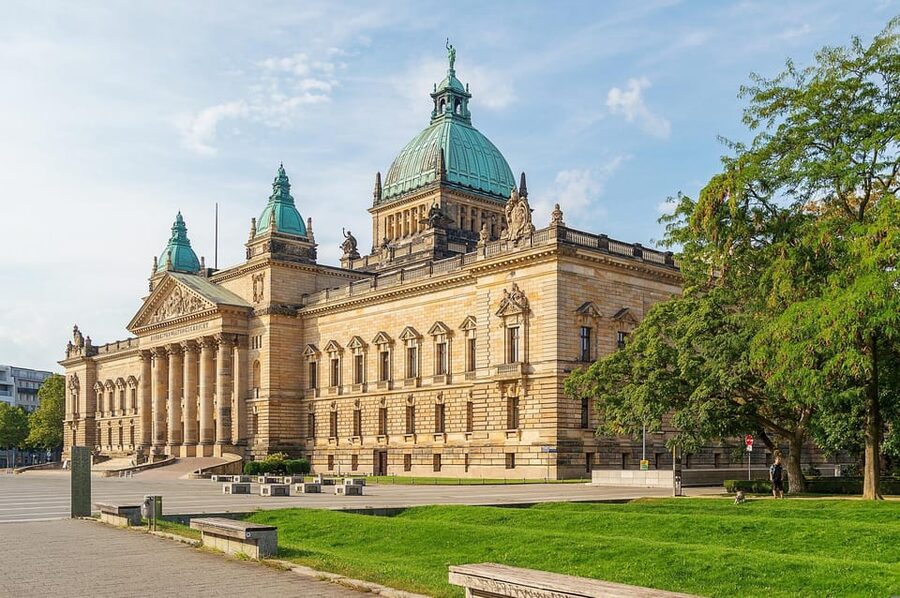
- A working supreme court in a former imperial courthouse: The building has housed the Federal Administrative Court since 2002.
- The tour lasts 1.5 hours: That gives you enough time for the major rooms without turning the visit into an all-day history lecture.
- The domed hall is a central highlight: You also see historic courtrooms and the judges’ ancestral gallery.
- The president’s apartment adds an unexpected twist: Its ceremonial hall offers a glimpse of the court’s formal side.
- German is the tour language: A certified live guide explains both the building and the court’s present-day work.
- Arrive 10 minutes early: Late entry is not possible, and a 1 euro coin is needed for the luggage compartment.
Why this courthouse is worth your time
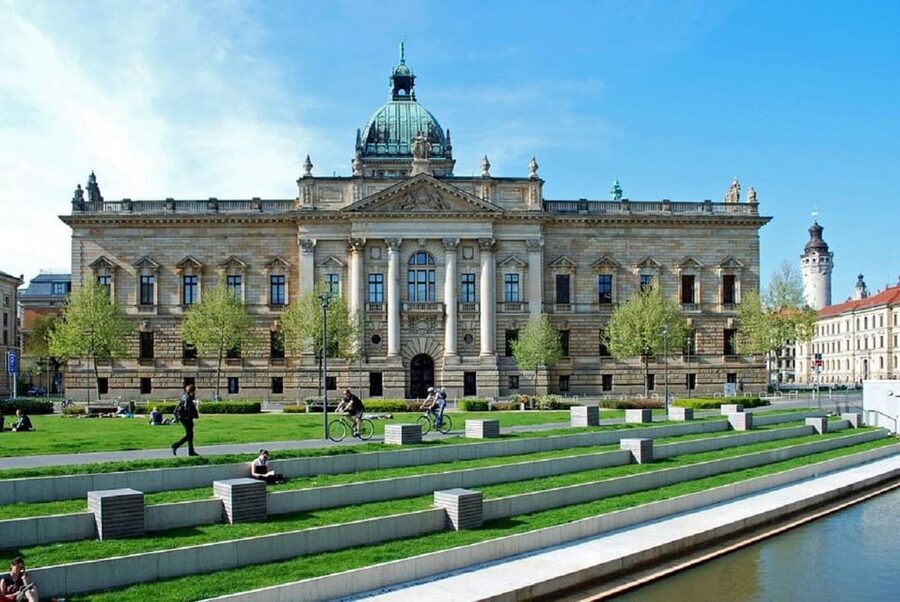
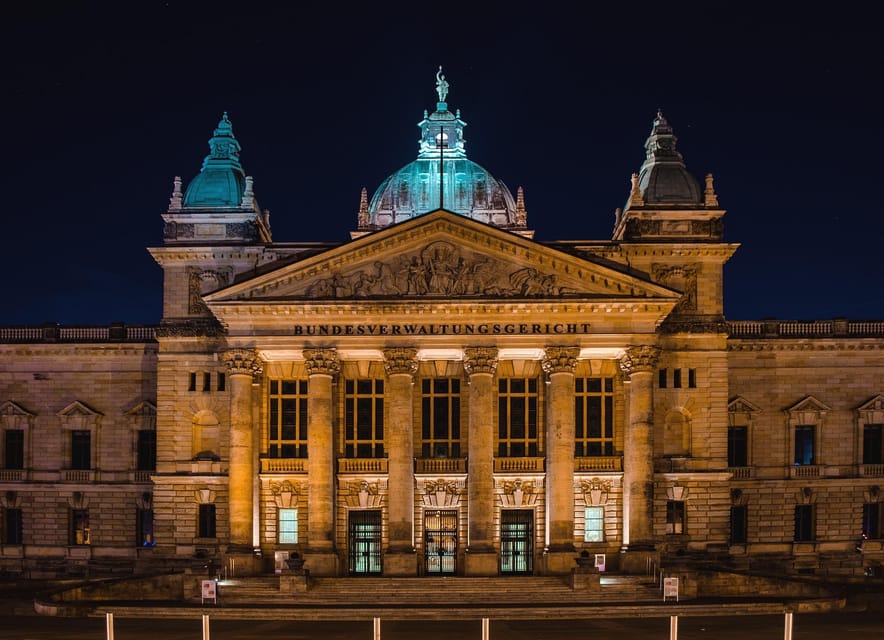
Leipzig has plenty of grand buildings, but this one gives you more than impressive stonework. The former Imperial Court of Justice was built after the court was founded in 1879 as the supreme court of the German Reich. Its scale and decoration were meant to express the authority of law.
That message is still visible inside. The tour lets you read the building as both architecture and political document. Formal rooms, ceremonial spaces, and galleries of judges show how the court wanted justice to be seen. At the same time, the building’s past includes moments when law and politics collided in painful ways.
Since 2002, the building has been home to the Federal Administrative Court, known in German as the BVerwG. It is the highest administrative court in the Federal Republic of Germany. The court handles disputes involving administrative law, so the tour connects historical courtroom traditions with a functioning institution.
I find that combination more useful than a simple palace tour. You are not only looking at grand interiors. You are also learning what a modern administrative court does and why its decisions matter.
A few more Leipzig trips worth comparing
- Leipzig: City History Canal Sightseeing Tour on a Motorboat
★ 4.7 · 6,232 reviews - Leipzig: 1.5-Hour Public Tour with Night Watchman Bremme
★ 4.6 · 3,116 reviews - Combo Tour in Leipzig: Guided City Tour & City Sightseeing
★ 4.7 · 2,317 reviews
Entering the former Imperial Court of Justice
You begin in the foyer of the Federal Administrative Court. This is both the meeting point and the ending point, so you do not need to arrange separate transportation between different parts of the building.
The first impression is likely to be formal and imposing. The building was designed as a representative home for the Imperial Court of Justice, and its interior reflects that purpose. The architecture gives the tour a sense of occasion, but the guide keeps the visit connected to practical legal work.
A certified guide leads the tour in German. That is important to understand before booking. If you do not speak German, the building may still be interesting visually, but you will miss much of the explanation about the court’s duties and decisions.
The tour is wheelchair accessible. Still, because this is an active federal court, you should follow the arrival instructions closely. You must be there 10 minutes before the scheduled start. Once the tour has started, entry is not possible.
The domed hall and ceremonial architecture
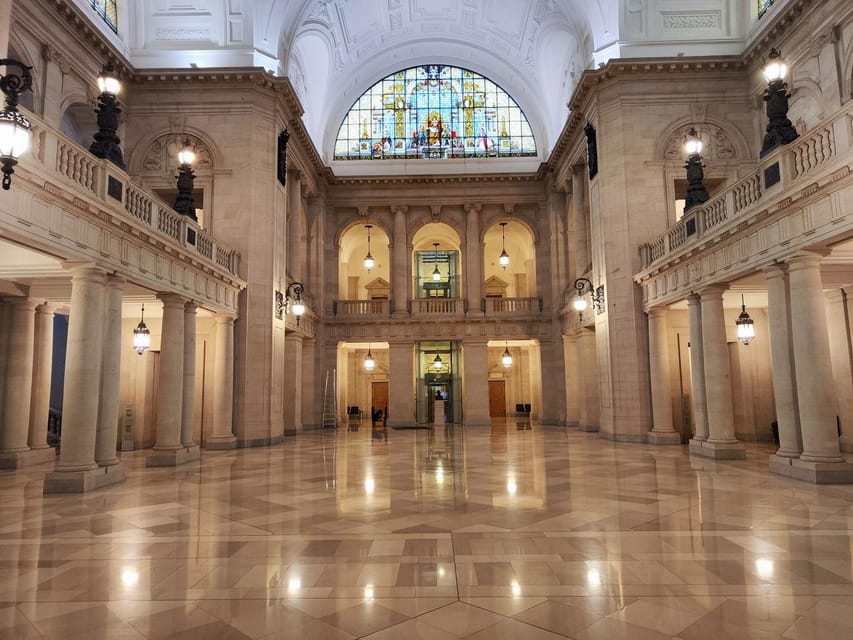
The domed hall is one of the tour’s strongest visual moments. Large central spaces like this were designed to make visitors feel the importance of the institution. Here, the architecture does part of the storytelling before the guide says a word.
Look up, but also pay attention to how the room organizes movement and attention. A grand hall is not just decoration. It creates a formal setting for public institutions and makes the court feel separate from ordinary daily life.
This is a good stop for anyone interested in architecture, even if legal history is not your main interest. The room gives you a clear sense of the building’s original purpose and the way imperial Germany represented judicial authority.
The drawback is that grand spaces can be easier to appreciate than to understand. If you are hoping for a museum-style display with extensive written panels, this tour may feel different. The guide’s explanation is central, so your experience depends heavily on following German-language commentary.
Historic courtrooms and the work of the court today
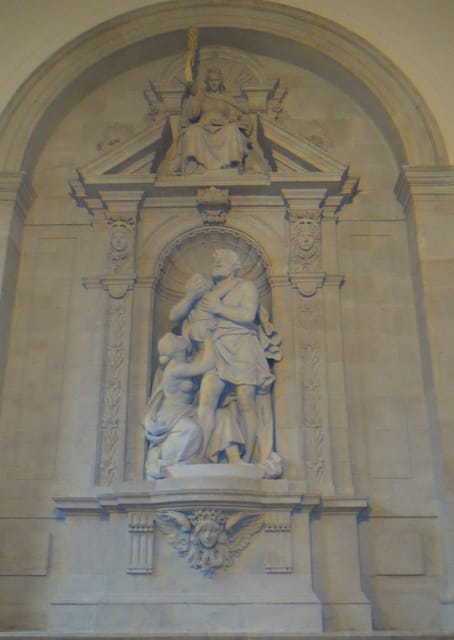
The tour continues through historic courtrooms. These rooms help you picture how the building functioned when the Imperial Court of Justice was Germany’s highest court.
You also hear about the Federal Administrative Court’s current role. Its work concerns disputes in administrative law, the area of law dealing with actions and decisions by public authorities. That may sound technical, but it affects the relationship between individuals, organizations, and the state.
The value here is the link between place and purpose. You see rooms designed for judicial proceedings, then learn how a modern federal court uses the legal system to settle administrative disputes. The tour does not treat the building as a frozen relic.
I like this part because it gives the visit a present-day reason. Some historic court buildings are empty shells. This one remains connected to national legal work, even though its institutional role has changed since the imperial period.
Still Leipzig, at a slower pace:
- Leipzig: 1.5-Hour Historical Walking Tour in German
★ 4.7 · 2,217 reviews - Leipzig: 2-Hour Guided Walking Tour in German
★ 4.8 · 1,612 reviews - Leipzig: 13-Stop Hop-on/Hop-off Bus Ticket
★ 4.6 · 1,468 reviews - Gruseltour Leipzig: A Haunted Guided Tour
★ 4.5 · 1,385 reviews
The judges’ ancestral gallery
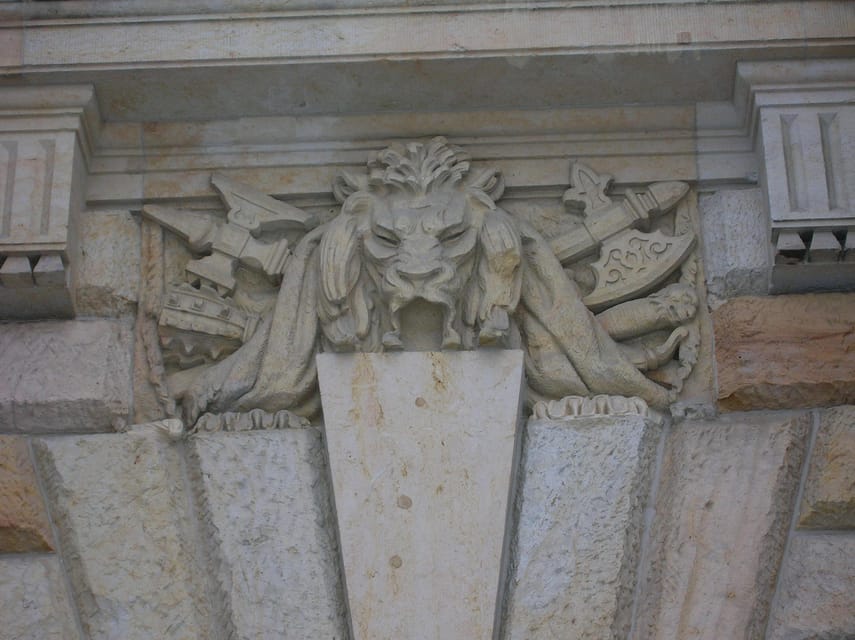
The judges’ ancestral gallery adds a more personal element to the visit. Rather than focusing only on courtrooms and grand halls, the gallery draws attention to the people who served within the judicial tradition.
The word ancestral is worth considering here. A gallery of former judges can present continuity and dignity, but it can also raise questions about who held authority and how institutions chose to remember themselves. The guide’s context helps you see the gallery as part of the court’s identity, not just a corridor lined with portraits.
This stop may appeal particularly to you if you enjoy institutional history. It shows how courts build a sense of lineage. The gallery also helps break up the architectural tour with a more human focus.
Do not expect a long independent viewing period. The full tour lasts 1.5 hours and includes several important rooms, so the guide controls the pace. You will want to stay close and listen rather than wander off for detailed portrait study.
The president’s apartment and its ceremonial hall

One of the more unusual features is the president’s apartment. The tour includes its ceremonial hall, giving you access to a part of the building that feels different from the courtrooms.
This space shows the court’s formal social side. A president’s apartment is not simply another office. It reflects the status attached to the head of the institution and the ceremonial traditions surrounding the court.
For me, this is one of the details that makes the tour more distinctive. Many courthouse visits focus only on legal proceedings. Here, you also see how official life was staged beyond the courtroom.
It is best to keep your expectations in check. The information provided does not promise access to every room in the apartment or a domestic-life exhibition. The specific inclusion is the ceremonial hall, so think of this as a formal historical interior rather than a full private-home tour.
Karl Liebknecht, treason charges, and political conflict
The building’s story becomes more serious when the tour turns to Karl Liebknecht. He defended himself here against accusations of high treason.
That episode gives the courthouse a direct connection to the political pressures of its time. The legal setting was not isolated from public conflict. Proceedings in a supreme court could become part of a much larger argument about the state, political opposition, and the limits of dissent.
You do not need to be a specialist in German history to see why this matters. A courtroom can look neutral and permanent, but the cases heard inside it reflect the society around it. This stop helps you think about how law operates when political stakes are high.
Because the tour is guided in German, you may want to review a little background on Liebknecht before arriving if this subject is new to you. The building itself provides the setting, but the guide supplies the detail.
The large hall and the Reichstag Fire Trial
The large hall connected with the 1933 Reichstag Fire Trial is likely to be the most historically charged stop. The trial took place during a crucial period in German history, when the Nazi regime was tightening its control over the country.
Seeing the room where the trial took place gives the event a physical setting. You are not just reading a date in a book. You are standing in a hall that was used for a trial tied to one of Germany’s most consequential political turning points.
This is also where the tour demands a thoughtful attitude. The room may be architecturally impressive, but its importance comes from what happened there and the wider consequences surrounding the trial. The guide’s historical explanation is especially valuable at this point.
I would not treat this as a light sightseeing stop. If you are interested in 20th-century German history, this room may be the reason to book. If you prefer purely decorative architecture and want to avoid difficult political subjects, you may find the material heavier than expected.
What the guide adds to the visit
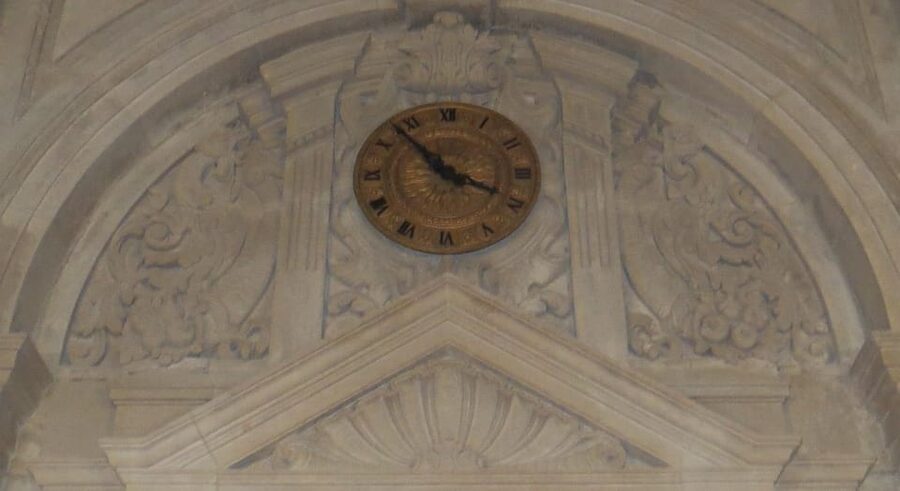
A certified live guide leads the experience, and the tour’s subject requires that personal explanation. The building contains many visual details, but without context, you could easily miss why certain rooms matter.
The guide covers two connected subjects. First comes the architectural and judicial history of the former Imperial Court of Justice. Then the tour explains the role and decisions of the Federal Administrative Court today.
That blend is useful because it prevents the visit from becoming either a dry legal briefing or a simple building walk. You get the story of the institution, the history of the rooms, and an introduction to current administrative justice.
German is the only listed tour language. I would book this confidently if you understand German well enough to follow a sustained guided presentation. If not, you should think carefully about value. The architecture remains visible, but much of the $16 price pays for the guide’s explanation.
Is the $16 price good value?
At about $16 per person, this is a reasonably priced specialty tour. You receive 1.5 hours with a certified guide and access to several important interiors: the domed hall, historic courtrooms, judges’ gallery, and ceremonial hall in the president’s apartment.
The price looks especially fair if you already plan to explore Leipzig’s architectural and historical sights. A normal exterior visit would not show you these rooms or explain the Federal Administrative Court’s current work.
The value is less clear if you do not speak German or have little interest in courts, political history, or formal architecture. This is not a casual attraction that works equally well for everyone. Its strongest rewards come from the guided interpretation.
A 4.8 rating from 54 reviews suggests a high level of satisfaction, but I would still match the tour to your interests rather than book on the number alone. For the right visitor, the mix of access and history makes the cost modest.
Timing, luggage, and access details
The tour begins and ends in the foyer of the Federal Administrative Court. Check the available start times when booking, since the schedule is not fixed in the information provided.
Arrive at least 10 minutes early. Late entry is not possible once the group has gone inside, which is a firm rule rather than a minor suggestion. Build in enough time to reach the courthouse and find the foyer without rushing.
A 1 euro coin is required for the luggage compartment. This is the sort of small detail that can cause needless trouble if you discover it at the door, so keep a euro coin handy.
Pets are not allowed, although assistance dogs are permitted. Party groups and bachelor or bachelorette groups are also not allowed. The activity is wheelchair accessible.
You can cancel up to 24 hours in advance for a full refund, and the reserve-now, pay-later option lets you hold a place without paying immediately. Those terms are useful if your Leipzig plans are still shifting.
Who should book this Leipzig tour?
I would recommend this tour to you if you enjoy:
- German political and legal history
- Grand institutional architecture
- Historic courtrooms and official interiors
- Guided visits with a clear historical story
- Learning how a national court works today
It is a particularly good fit if you have already seen Leipzig’s better-known sights and want something more specialized. The tour offers a different view of the city, one shaped by national government, law, and memory.
Families with older children may also find it worthwhile if the children can follow a German-language tour and stay engaged with historical subjects. Younger children who mainly want interactive displays may not get much from it.
You should think twice if you need an English-language tour, want to explore independently, or prefer a short visit with little political discussion. The 1.5-hour length is manageable, but the content is focused and serious.
Should you book the Federal Administrative Court tour?
Book it if you want to enter a major Leipzig building that most people can only admire from outside. The domed hall, historic courtrooms, judges’ gallery, presidential ceremonial hall, and Reichstag Fire Trial setting give the visit real substance.
The best reason to go is the combination of architecture and history. You see a grand former imperial courthouse, then learn how the same building now serves Germany’s highest administrative court. That change in purpose makes the visit more interesting than a standard historic-building tour.
Skip it if you do not understand German or if court history holds little appeal. For everyone else, $16 buys a focused and unusual look at Leipzig’s judicial past and present. Arrive early, bring a 1 euro coin, and give yourself time to listen carefully.
FAQ
Where does the guided tour begin and end?
The tour begins in the foyer of the Federal Administrative Court and ends back at the same meeting point.
How long does the tour last?
The guided tour lasts 1.5 hours. Starting times vary, so check availability when booking.
What language is the tour in?
The live guided tour is in German.
What rooms and areas are included?
The tour includes the domed hall, historic courtrooms, the judges’ ancestral gallery, and the ceremonial hall in the president’s apartment.
Is the courthouse tour wheelchair accessible?
Yes, the activity is wheelchair accessible.
How early should I arrive, and do I need anything for luggage?
Arrive 10 minutes before the scheduled start. You need a 1 euro coin for the luggage compartment, and entry is not possible after the tour has started.
Just added around Leipzig
- City tour on foot, by S-Bahn and tram★ 4.5 · 12 reviews
- Tour on Lake Cospuden★ 4.7 · 58 reviews
- Leipzig: True or false? Walking Tour and Interactive Game★ 4.8 · 28 reviews
- Leipzig: Segway tour to the Battle of the Nations Monument★ 5.0 · 4 reviews
- Leipzig Spirits Manufacture: Guided Tour and Tasting★ 4.8 · 79 reviews
- Leipzig: Scavenger Hunt Self-Guided Tour★ 4.7 · 11 reviews
- Leipzig: Segway City Tour – Discover Sights, Parks & History★ 5.0 · 7 reviews
- Leipzig: Private pub crawl with insider-guide & free shots★ 4.5 · 4 reviews
Leipzig Tours, compared.
City History Canal Sightseeing Tour on a Motorboat
Read our review →
1.5-Hour Public Tour with Night Watchman Bremme
Read our review →
Combo Tour in Leipzig: Guided City Tour & City Sightseeing
Read our review →



Browse the lists this tour appears in