
Reviewed · HISTORICAL TOURS
Hamburg: Discover Hamburg from landmark to landmark
Hamburg changes quickly on foot. This two-hour city tour links the old port city to its modern waterfront, beginning at St. Michael’s Church and passing through Speicherstadt, HafenCity, and the Elbphilharmonie. I like the clear route, which gives you a useful first look at several major sights without asking you to spend a full day on a guided walk.
I also like the modest $25 price, especially if you want basic orientation before exploring Hamburg on your own. The main consideration is language: the live guide speaks German, and the amount of historical detail can depend on who leads the walk. If you need an English tour, this is not the right choice.
In This Review
- Five things to know before you book
- Starting beneath Hamburg’s largest church clock
- Walking through Hamburg’s older port districts
- Speicherstadt, Hamburg’s brick-built warehouse district
- HafenCity and the sharp turn toward modern Hamburg
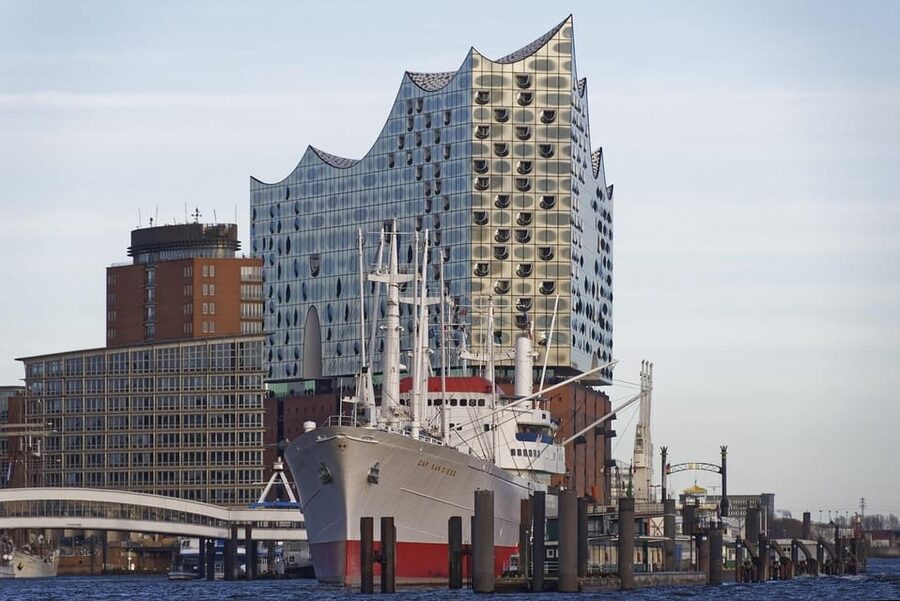
- Ending at the Elbphilharmonie
- What the two-hour format means for you
- Is $25 good value in Hamburg?
- Who will get the most from this walk?
- Practical tips for a smoother experience
- Should you book Hamburg from the Michel to the Elbphilharmonie?
- FAQ
- How long does the Hamburg landmark tour last?
- How much does the tour cost?
- Where does the tour begin?
- How can I identify the guide?
- What language is the tour conducted in?
- Is the tour wheelchair accessible?
- Can children and dogs join the tour?
- Does the tour include a visit inside the Elbphilharmonie?
Five things to know before you book
- The tour begins at the Michel: Meet beside St. Michaelis Church, to the right of the main entrance, where guides carry white shoulder bags.
- The route connects old and new Hamburg: You walk from the historic church district through Speicherstadt and HafenCity to the Elbphilharmonie.
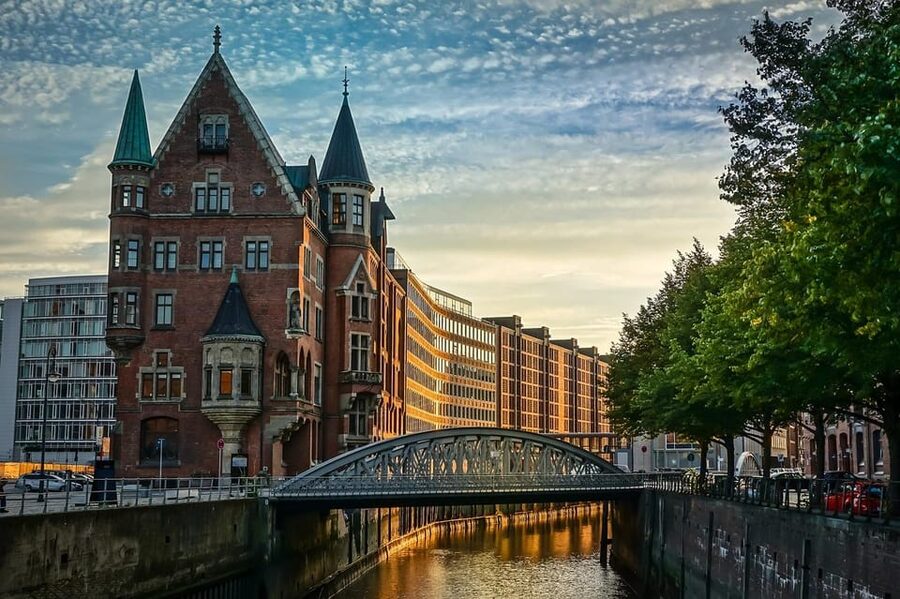
- Speicherstadt is the historical centerpiece: The UNESCO World Heritage Site shows Hamburg’s former warehouse and port economy.
- The Elbphilharmonie finishes the story: Its modern design gives the tour a strong final image and a view toward the port.
- It is short, accessible, and family-friendly: The walk lasts two hours, is listed as wheelchair accessible, and welcomes children and dogs.
Starting beneath Hamburg’s largest church clock
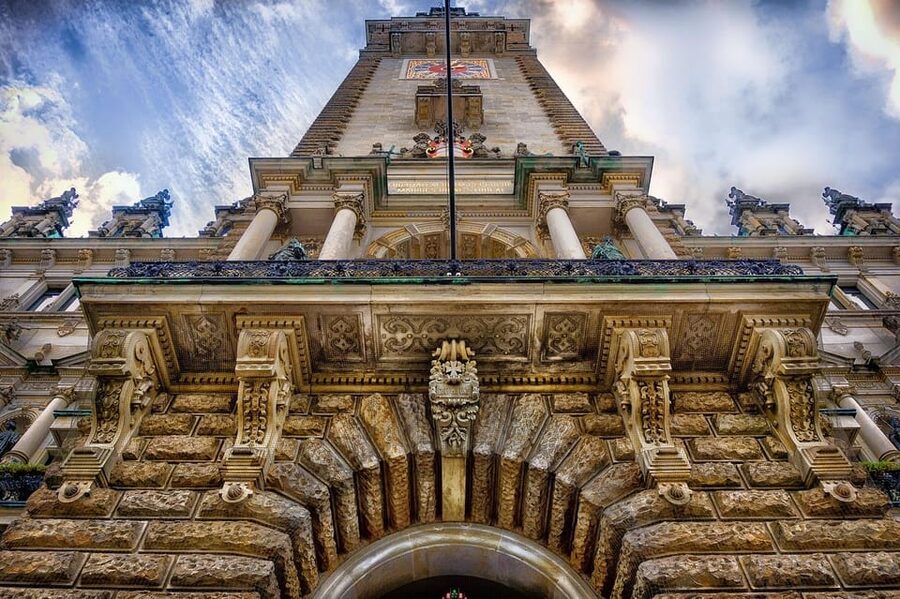
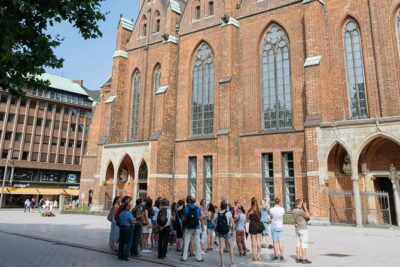
Your meeting point is easy to identify: St. Michaelis Church, known locally as the Michel. Look to the right of the main entrance for a guide with a white shoulder bag. That small identifying detail matters in a busy city center, especially if several groups gather near the church.
The Michel is a fitting starting point. St. Michaelis was regarded as Hamburg’s city landmark for many years, and its tower remains one of the most recognizable features in the central city. The tour uses the church to begin a story about changing Hamburg, from religious and merchant power to port trade, storage, music, and modern construction.
One highlight is the church tower clock, described as the largest church tower clock in Germany. You should not expect a long interior visit to be the main purpose here. The focus is on the church’s place in Hamburg and on setting up the walking route that follows.
The beginning should also help you get your bearings. Rather than dropping you into a long list of unrelated monuments, the guide starts with one major landmark and then leads you westward toward the water and newer parts of the city.
More History Tours in Hamburg
- The Local Tour of Hamburg Historic Centre
★ 5.0 · 1,058 reviews - Hamburg: Historical Tour of the St. Pauli Sex Work District
★ 4.4 · 215 reviews - Hamburg: UNESCO-World Heritage Sites Tour
★ 4.7 · 137 reviews
Walking through Hamburg’s older port districts
From the Michel, the tour heads toward the historic port area. This is where Hamburg’s past becomes easier to picture. The city grew through trade, shipping, and storage, and the route shows how those needs shaped its buildings.
The guide adds anecdotes about Hamburg personalities and offers gastronomic tips along the way. That combination gives the walk some local flavor without turning it into a restaurant tour. You might pick up ideas for where to eat later, but the core subject remains the city itself.
I would pay attention to the contrast between practical buildings and grand landmarks. Hamburg’s story is not only about famous facades. It is also about warehouses, goods, port work, and the systems that helped the city become an international trading center.
Because the walk lasts two hours, the guide has to keep moving. You will get an introduction to several districts rather than a detailed examination of every street. That is useful on a first visit, but anyone seeking dense architectural history may want a longer specialist tour afterward.
Speicherstadt, Hamburg’s brick-built warehouse district
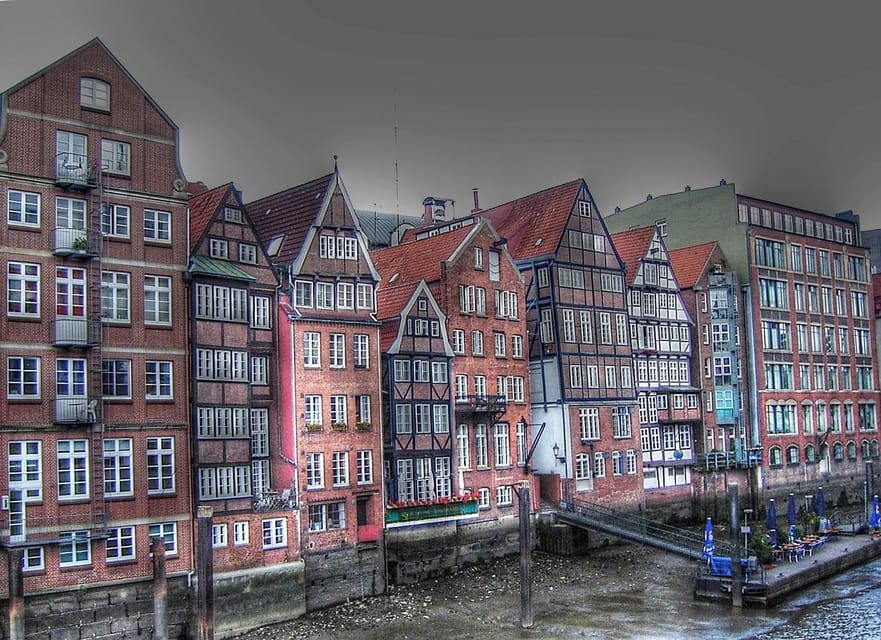
The historic Speicherstadt is the most important stop between the Michel and the Elbphilharmonie. This large warehouse complex is now a UNESCO World Heritage Site, and it gives the tour its clearest connection to Hamburg’s former commercial life.
Speicherstadt is valuable because you can read the city’s economic story in its buildings. The district was created for storage, not for grand civic display. Its scale and character show how closely Hamburg’s identity was tied to the port and the movement of goods.
The tour does not simply treat Speicherstadt as a photogenic backdrop. It places the district within the larger shift from a port city with a huge warehouse complex to a global metropolis. That makes the stop more useful than a quick photo pause.
Still, keep your expectations sensible. The supplied information does not promise entry into museums, warehouse interiors, or extended time at individual buildings. You will walk through the district, hear the guide’s explanations, and see how its older construction differs from the modern quarter nearby.
The best way to appreciate Speicherstadt is to listen for the connection between form and function. The warehouses were built to serve trade. Later, the area became part of Hamburg’s cultural and sightseeing identity. That change is one of the main themes of the entire experience.
HafenCity and the sharp turn toward modern Hamburg
After Speicherstadt, the route reaches HafenCity, which is connected to the older warehouse district but looks entirely different. This is the tour’s clearest visual change. You move from historic storage buildings into a modern waterfront quarter shaped by new construction and changing ideas about the port.
The guide uses this contrast to explain the meeting of tradition and modernity in Hamburg. You do not need to know every planning detail to understand the point. The two districts sit close together, yet they represent very different periods in the city’s development.
I like this part of the route because it avoids treating old Hamburg and new Hamburg as separate subjects. You see them in sequence, which makes the city’s transformation easier to understand. The modern quarter is not presented as a replacement for Speicherstadt. Instead, the walk shows how both now form part of Hamburg’s public image.
The newer architecture also prepares you for the final stop. By the time you reach the Elbphilharmonie, you have already seen why a modern concert hall could become such a powerful symbol for the port.
Still Hamburg, at a slower pace:
- Hamburg: Sex and Crime in St. Pauli Tour for Ages 18+
★ 4.7 · 15,447 reviews - Hamburg: 1.5-Hour Harbor and Speicherstadt Day Cruise
★ 4.6 · 14,200 reviews - Hamburg: 90-Minute Evening Lights Harbor Cruise
★ 4.5 · 7,728 reviews - Hamburg: 2-Hour XXL Port of Hamburg Cruise Tour
★ 4.7 · 6,979 reviews
Ending at the Elbphilharmonie
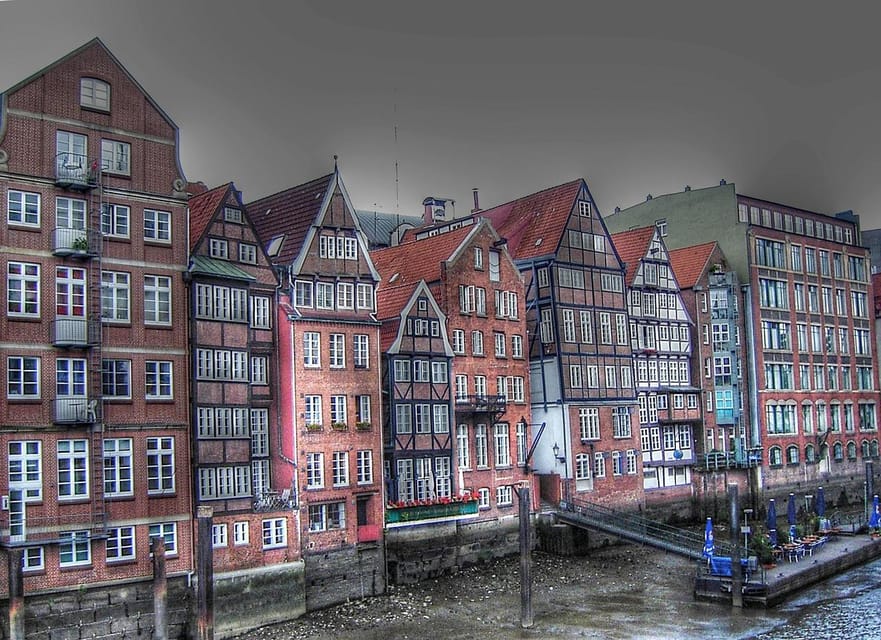
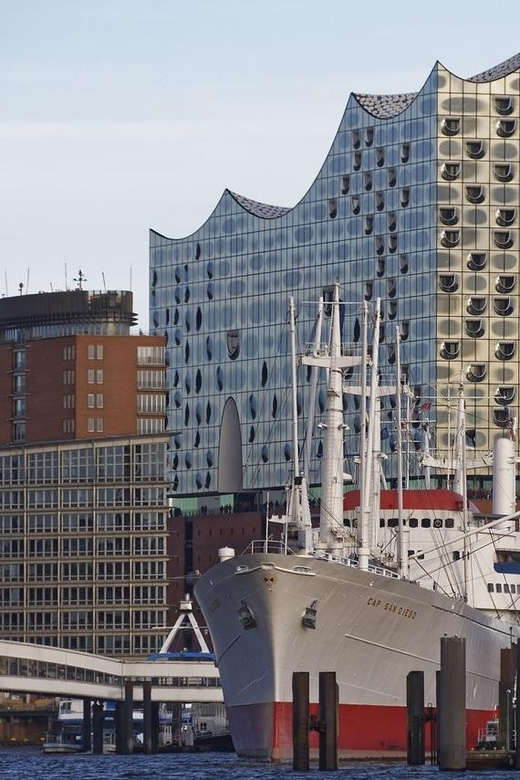
The Elbphilharmonie is the tour’s grand finish. The building is described as a concert hall of superlatives and as a symbol of Hamburg’s mix of tradition and modernity. Its position near the port gives the final section a strong sense of place.
Your guide explains more about the building and its meaning for Hamburg. The experience ends with a view of the port, which gives you a chance to connect the whole route: church, warehouses, waterfront redevelopment, and a major modern music venue.
You can visit the Elbphilharmonie on your own after the tour, but access to its plaza depends on whether the plaza is open. That condition is important. The tour does not guarantee that you will be able to enter the building or reach the plaza at the end.
The information also contains a practical inconsistency. The route describes the Elbphilharmonie as the finish, while the meeting-point details say the activity ends back at the original meeting point. I would confirm the exact end location before booking, especially if you have a later reservation, train, or harbor activity.
What the two-hour format means for you
Two hours is enough time to connect the main sights, but it is not enough for a slow, exhaustive tour of Hamburg. You will be walking, listening, taking occasional photos, and moving on.
That pace is useful if you are new to the city. You can learn the basic shape of central Hamburg, identify places to revisit, and hear suggestions for food along the way. It also works well near the start of a short stay because the route gives you several possible follow-up stops.
The limitation is depth. One assessment of the tour found it enjoyable but less detailed than a similar walk taken two years earlier. That suggests you should view this as an orientation tour, with the quality of background depending partly on the individual guide.
The German-language format is another major factor. If you understand German, the tour may offer a pleasant, local way to see the city. If you do not, the practical value drops sharply because the live explanations and anecdotes are given in German.
Comfortable shoes and weather-appropriate clothing are essential. The activity is listed as wheelchair accessible, but a city walk can still involve the ordinary challenges of moving between several districts. If you use a wheelchair, confirm the precise route and final stopping point before arrival.
Is $25 good value in Hamburg?
At $25 per person, this is priced as an affordable introduction rather than a premium specialist tour. I think the value is good if you want a guide to connect several major landmarks in a single outing.
You are paying for the route and the explanation, not for attraction admissions. There is no stated entry to St. Michaelis, the Speicherstadt buildings, or the Elbphilharmonie. You should budget separately for anything you choose to visit after the walk.
The strongest value comes from the sequence. Seeing the Michel, Speicherstadt, HafenCity, and Elbphilharmonie in one guided route would take more planning on your own. The guide also adds Hamburg anecdotes and food suggestions, which can help you decide what to do next.
The price is less attractive if you want extensive historical detail, an English-language explanation, or a long interior visit at the famous sights. In that case, a different tour may suit you better, even if it costs more.
Free cancellation up to 24 hours before the start and the option to reserve now and pay later make the booking fairly flexible. Those policies are useful if your Hamburg schedule is still taking shape.
Who will get the most from this walk?
I would recommend it most to first-time visitors who speak German and want a concise introduction to Hamburg’s central historic and modern districts. It is also a good fit for anyone who prefers a walk with a clear beginning and end rather than a general city stroll.
Families can consider it too. Children and dogs are welcome, and the two-hour length is easier to manage than a full-day outing. The landmarks also give the walk some variety, from a church tower and warehouse district to modern waterfront architecture.
The tour may also suit repeat visitors who want a fresh route through familiar areas. Even if you have already seen the Michel or Speicherstadt, the connection between the older port economy and HafenCity’s modern development can give those places a new frame.
I would hesitate to book it if you need English, want guaranteed access to the Elbphilharmonie, or prefer a slow tour focused on interiors and detailed architectural analysis. The experience is about seeing Hamburg from landmark to landmark, not spending an hour inside one attraction.
Practical tips for a smoother experience
Arrive at the Michel with enough time to locate the right side of the main entrance. Look for the white shoulder bag rather than relying only on a general meeting-point description.
Wear shoes you can comfortably use for two hours. The route connects multiple areas, and the tour is designed as a walk rather than a stationary lecture.
Bring clothing suited to the weather. The route is outdoors, and the port area can make conditions feel less comfortable than they do at the start near the church.
If the Elbphilharmonie is your main goal, check plaza availability before you go. The post-tour visit is independent and subject to closure, so do not assume the tour includes entry.
Finally, confirm the ending point. The stated route finishes at the Elbphilharmonie, while another detail says the activity returns to the Michel. That small uncertainty matters if you are arranging onward plans.
Should you book Hamburg from the Michel to the Elbphilharmonie?
Book it if you speak German, value a short guided overview, and want to connect Hamburg’s best-known landmarks for $25. The walk gives you a useful story arc: the Michel represents the old city, Speicherstadt recalls the port economy, HafenCity shows change, and the Elbphilharmonie points toward modern Hamburg.
Skip it if you need English, expect attraction entry, or want highly detailed historical commentary at every stop. For the right audience, this is a friendly and practical way to get oriented, with enough flexibility afterward to revisit the places that catch your eye.
FAQ
How long does the Hamburg landmark tour last?
The tour lasts two hours. Starting times vary, so you need to check availability for the date you want.
How much does the tour cost?
The listed price is $25 per person.
Where does the tour begin?
The meeting point is at St. Michaelis Church, known as the Michel, to the right of the main entrance.
How can I identify the guide?
The guides can be recognized by their white shoulder bags.
What language is the tour conducted in?
The live tour guide speaks German.
Is the tour wheelchair accessible?
Yes, the activity is listed as wheelchair accessible.
Can children and dogs join the tour?
Yes. Children and dogs are welcome.
Does the tour include a visit inside the Elbphilharmonie?
No interior visit is included in the stated tour. You can visit the Elbphilharmonie on your own afterward, subject to plaza closures.
Just added around Hamburg
- Hamburg: St. Pauli Food and Bier Tour★ 4.7 · 5 reviews
- St. Pauli Tour: Drag-Attack with Barbie Stupid & Lee Jackson★ 4.8 · 280 reviews
- Hamburg: Private Tour Red Light District Walking Tour★ 4.7 · 227 reviews
- St. Michael’s, Elbe Tunnel & Harbor 2-Hour Hamburg Tour★ 4.9 · 21 reviews
- Satt Pauli – der kulinarische Rundgang durch St. Pauli★ 4.8 · 12 reviews
- Hamburg: Safari tour in St. Pauli★ 4.9 · 11 reviews
- Hamburg: Reeperbahn Comedy Club★ 4.3 · 53 reviews
- Radtour um die Alster & durch traumhafte Alsterviertel★ 4.9 · 34 reviews
Historical Tours, compared.
City History Canal Sightseeing Tour on a Motorboat
Read our review →
Browse the lists this tour appears in