
Reviewed · TICKETS
Hamburg: Kunsthalle Entrance Ticket
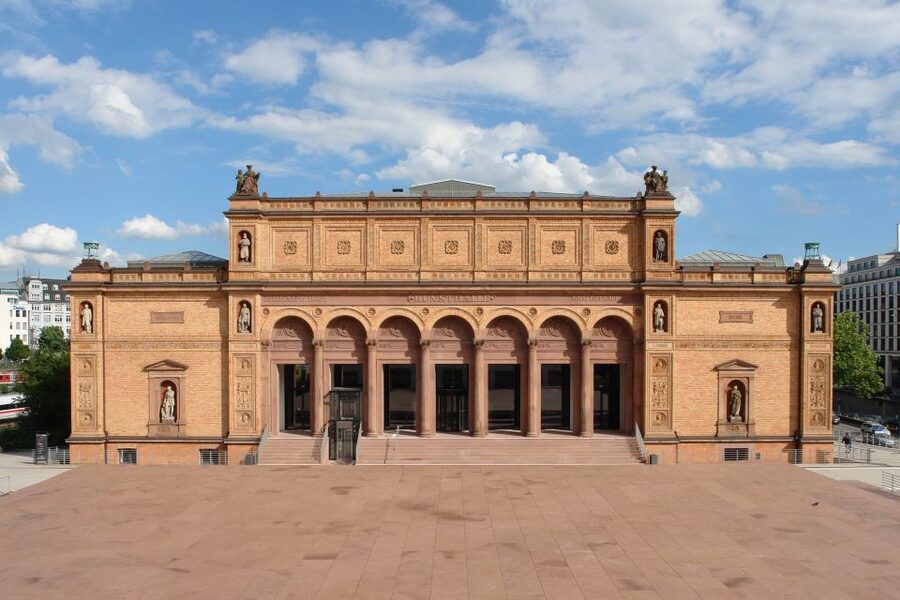
Art rewards slow looking. Hamburg’s Kunsthalle brings eight centuries of European art into one museum visit, from northern German altarpieces and Dutch masters to Caspar David Friedrich, Edvard Munch, Andy Warhol, and contemporary artists. I especially like the chance to see Friedrich’s famous Wanderer above the Sea of Fog and the museum’s strong collection of 19th-century German painting. I also like the freedom of a one-day ticket, since you can set your own pace rather than follow a fixed tour.
The main consideration is size. With medieval art, Renaissance painting, Dutch Golden Age works, 19th-century art, modern art, and contemporary pieces all in the mix, you can easily tire before giving the best works the attention they deserve. The audio guide costs an extra €6 as a loan device, although you can also use the museum’s free app.
In This Review
- Key points to know before you go
- Why the Kunsthalle deserves a place in your Hamburg plan
- Begin with northern German medieval painting
- Meet Rembrandt and the Dutch Golden Age
- Save time for Friedrich’s misty summit
- Follow the sharp turn into modern art
- Finish with international contemporary art
- How to plan a one-day visit
- The audio guide and the museum app
- A useful pause at Das Liebermann or The Cube
- Is the $21 admission good value?
- Who will enjoy this museum most?
- Should you book the Hamburg Kunsthalle ticket?
- FAQ
- What does the Hamburg Kunsthalle entrance ticket include?
- Is the ticket valid for a full day?
- Is the audio guide included?
- Is the audio guide available in English?
- Can I bring a large bag into the museum?
- Is the Hamburger Kunsthalle wheelchair accessible?
Key points to know before you go
- Caspar David Friedrich is the star attraction: See Wanderer above the Sea of Fog, along with major works by Philipp Otto Runge and Max Liebermann.
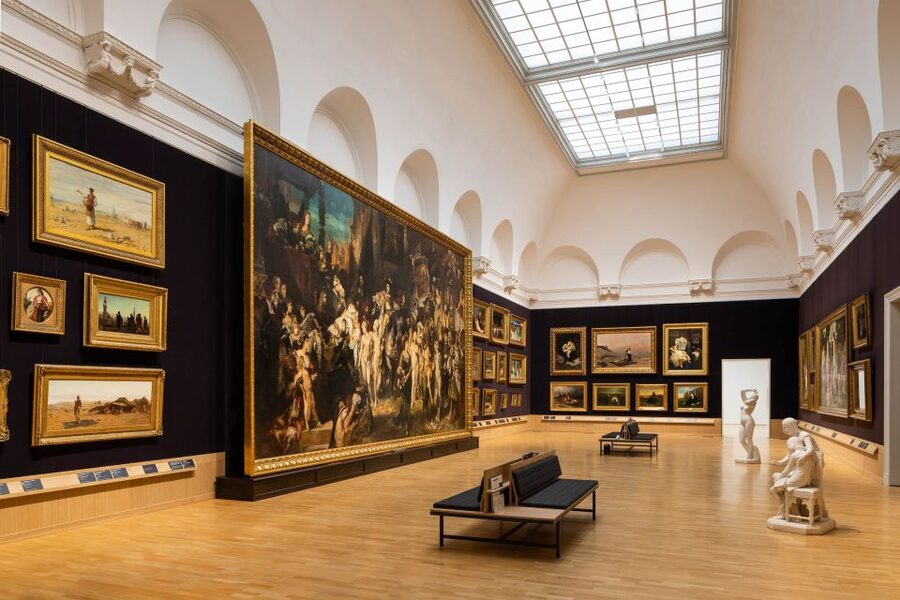
- Eight centuries fit under one roof: The collection moves from medieval altarpieces to Bruce Nauman, Gerhard Richter, and Andy Warhol.
- The permanent collection is included: Your ticket covers the main collection, while special exhibitions may have separate arrangements.
- You control the pace: The ticket is valid for one day, making it useful for a short visit or a full museum afternoon.
- The €6 audio guide is optional: It is available in English and German at the desk, or through the Hamburger Kunsthalle app.
- A lake-view meal is possible: The Cube serves snacks and lunch by day, dinner in the evening, with views toward the Inner Alster Lake.
Why the Kunsthalle deserves a place in your Hamburg plan
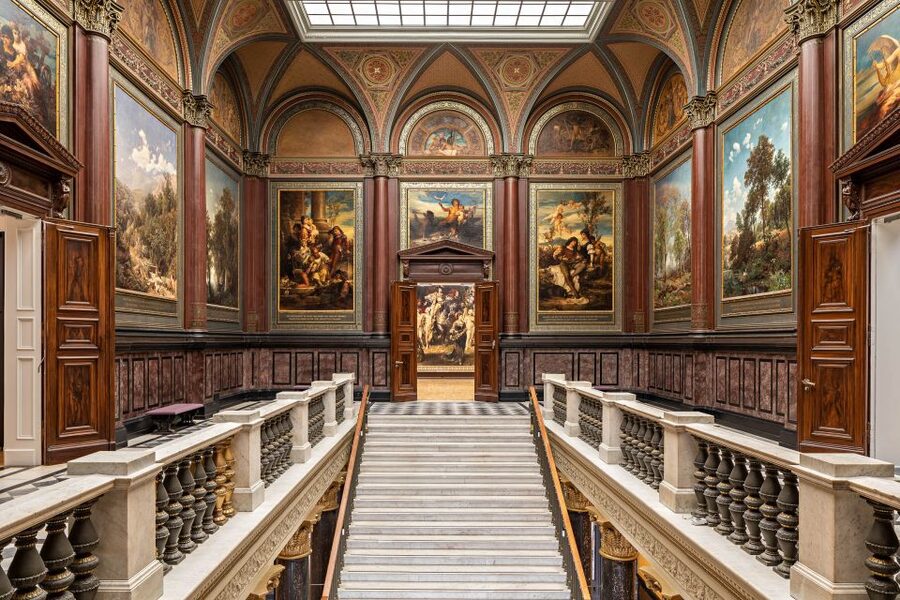
Hamburg has plenty of maritime sights, shopping streets, and handsome civic buildings. The Kunsthalle gives you a different way to understand the city: through paintings that connect northern Germany to the wider European art story.
The museum’s collection is not limited to one school or century. You can begin with religious art from the Middle Ages, move through the Italian and northern European Renaissance, pause with Rembrandt and Pieter de Hooch, then continue into Romanticism, Impressionism, Expressionism, and postwar contemporary art.
I like this broad range because it lets you compare changes in style without crossing town. You can see how artists handled light, religion, nature, portraiture, city life, and personal emotion across hundreds of years. The visit works best when you treat it as a sequence of encounters rather than a test of art knowledge.
The museum also has a high public rating, 4.6 out of 5 from 235 reviews. Recent short comments describe the experience as perfect and impressive, with praise for the beauty of the displays. That fits the museum’s main strength: it offers many famous names, but also gives you plenty of room to find a work you did not expect to like.
A few more Hamburg trips worth comparing
- Hamburg: Hamburg Dungeon Admission Ticket
★ 4.7 · 5,745 reviews - Hamburg: Ticket to the Panoptikum Waxworks
★ 4.3 · 2,489 reviews - Hamburg: International Maritime Museum Entrance Ticket
★ 4.7 · 547 reviews
Begin with northern German medieval painting
The Old Masters section is a good place to begin if you want to understand the local connection. The Kunsthalle holds important examples of northern German medieval painting, including altarpieces by Bertram von Minden and Master Francke.
These works can look formal at first, especially beside the bold colors and loose brushwork of later centuries. Give them a little time. Their careful figures, religious scenes, and carved or painted details show how art served devotion and storytelling before museums became the setting for most paintings.
You will also encounter Renaissance works by Lucas Cranach the Elder, Hans Holbein, and Paris Bordone. Here the visual world begins to shift. Portraits become more focused on individual identity, and artists show increasing interest in clothing, space, architecture, and the human body.
I recommend slowing down for Holbein and Cranach rather than trying to cover every room equally. The museum is large enough that you need to make choices. A few carefully viewed paintings will stay with you longer than a rapid march past dozens of famous names.
Meet Rembrandt and the Dutch Golden Age
The 17th-century Dutch collection gives the visit a different mood. Rembrandt van Rijn is the major name, but works by Pieter de Hooch and Anton van Dyck help broaden the picture.
Rembrandt is known for dramatic light and emotional faces, yet the real pleasure is seeing how his paintings reward close attention. Look at the handling of expression and shadow. Then compare that with de Hooch’s domestic interiors, where doorways, tiled floors, and filtered light create a more ordered world.
Van Dyck brings another kind of polish through portraiture. His sitters appear carefully dressed and aware of their public image. Together, these artists show how varied European painting had become by the 17th century.
This section is especially useful if you want more than a list of celebrated artists. You can compare private rooms, public portraits, religious subjects, and the changing role of light. The Kunsthalle’s wide collection makes these links easy to spot.
Save time for Friedrich’s misty summit
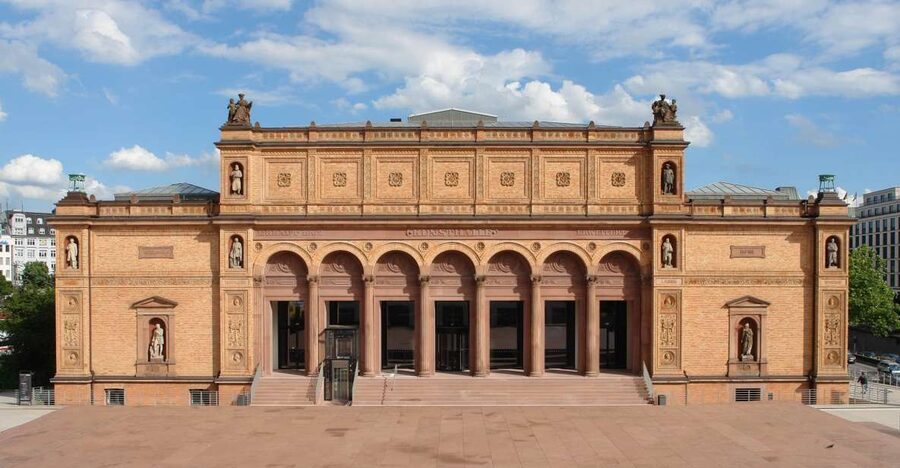
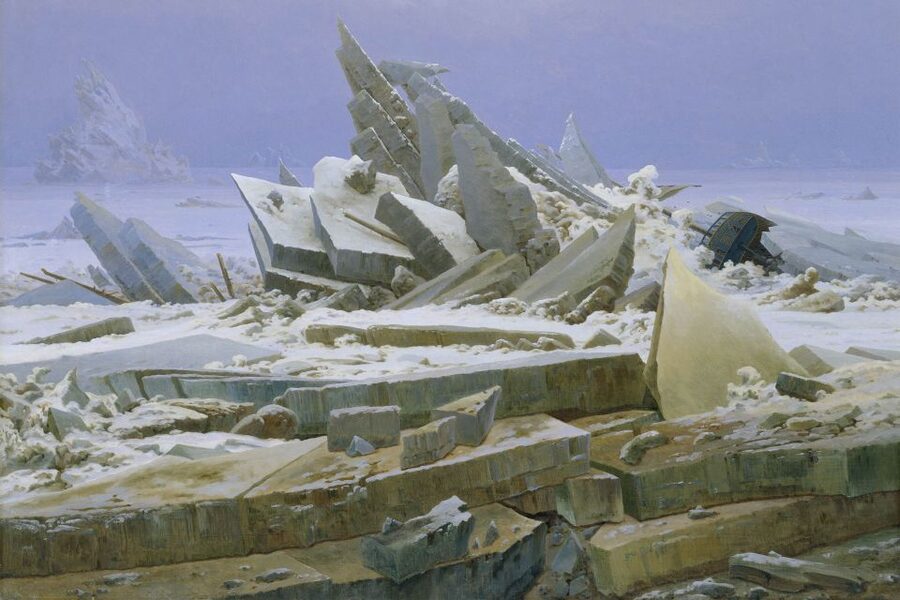
For many people, the most important stop is Caspar David Friedrich’s Wanderer above the Sea of Fog. It is one of those paintings you may already know from reproductions, but seeing the real work matters. Scale, surface, and the position of the figure change how you read it.
The painting shows a lone figure viewed from behind, looking across a fog-filled mountain scene. Friedrich does not give you a clear destination or a tidy story. The figure’s pose invites you to share the view while leaving the meaning open.
That uncertainty is part of its power. Is the man triumphant, thoughtful, lost, or simply taking in the scene? You can decide for yourself. I suggest standing back first, then moving closer to study the details, and finally stepping away again to see how the full composition works.
The 19th-century collection contains much more than this one famous work. It also includes substantial holdings by Philipp Otto Runge and Max Liebermann, along with important French Realist and Impressionist paintings.
Runge’s work connects to the symbolic and spiritual side of German Romanticism. Liebermann takes you toward a more modern interest in everyday life and direct observation. French Realism and Impressionism add another layer, with attention to ordinary subjects, changing light, and looser technique.
If you have limited time, this is the section I would protect. Friedrich alone may justify the admission price for art lovers, but the surrounding collection gives his work useful context.
Still Hamburg, at a slower pace:
- Hamburg: Sex and Crime in St. Pauli Tour for Ages 18+
★ 4.7 · 15,447 reviews - Hamburg: 1.5-Hour Harbor and Speicherstadt Day Cruise
★ 4.6 · 14,200 reviews - Hamburg: 90-Minute Evening Lights Harbor Cruise
★ 4.5 · 7,728 reviews - Hamburg: 2-Hour XXL Port of Hamburg Cruise Tour
★ 4.7 · 6,979 reviews
Follow the sharp turn into modern art
The modern collection presents the unsettled first half of the 20th century. The mood changes quickly from Romantic reflection to fractured forms, stronger color, and more urgent subjects.
Works by the Brücke group are central here. The group’s paintings are known for forceful color and simplified forms, and they reflect a period when artists questioned older rules of representation. The Kunsthalle also holds important works by Edvard Munch, Paul Klee, Wilhelm Lehmbruck, Paula Modersohn-Becker, Lovis Corinth, and Max Beckmann.
This part of the museum can feel more demanding than the Old Masters. You may not know immediately what a painting is showing, or why the artist chose such sharp distortions. That is exactly why the section deserves time. Modern art often asks you to notice mood, tension, and viewpoint rather than simply identify the subject.
Munch can bring a strong emotional charge. Klee invites closer attention to signs, shapes, and color. Modersohn-Becker and Beckmann offer different paths into modern portraiture and figure painting. The collection does not present one simple story of progress. Instead, it shows many artists responding in different ways to a changing world.
Finish with international contemporary art
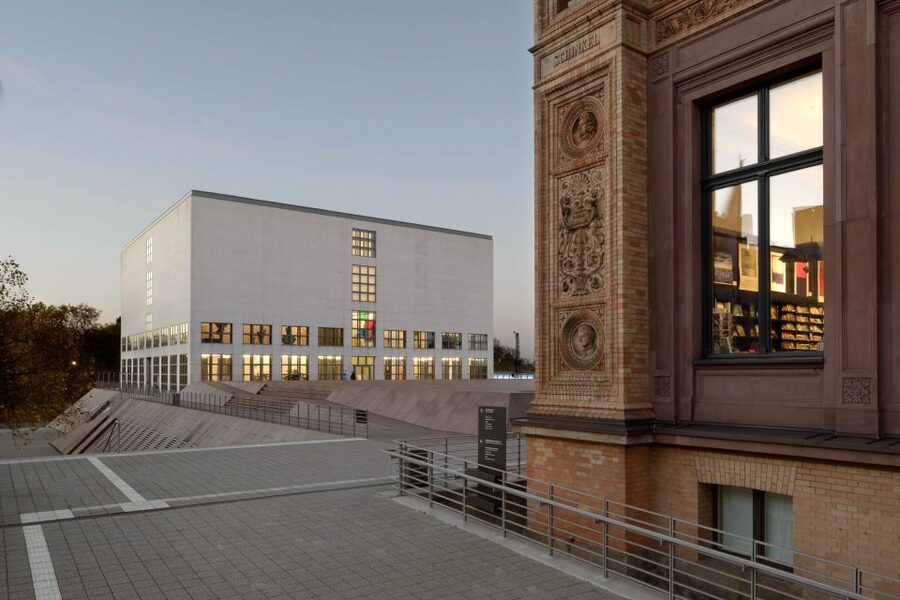
The contemporary collection brings the museum into the present through works by Bruce Nauman, Gerhard Richter, Jenny Holzer, Nan Goldin, Andy Warhol, Richard Serra, and Sigmar Polke.
This is a useful final stop because it breaks the expectation that art must look like a recognizable scene or portrait. Some works may be direct and familiar, such as Warhol’s use of popular imagery. Others may ask more of you through large scale, text, material, or repetition.
Richter’s work can make you think about the boundary between photography and painting. Holzer uses language as an artistic tool. Serra’s work draws attention to weight and physical space. Nauman, Goldin, and Polke each bring different questions about the body, memory, media, and modern life.
You might not connect with every work, and that is normal. Contemporary galleries often work best when you stop trying to decide instantly if something is beautiful. Ask instead what the piece makes you notice, or why it was made in that form.
How to plan a one-day visit
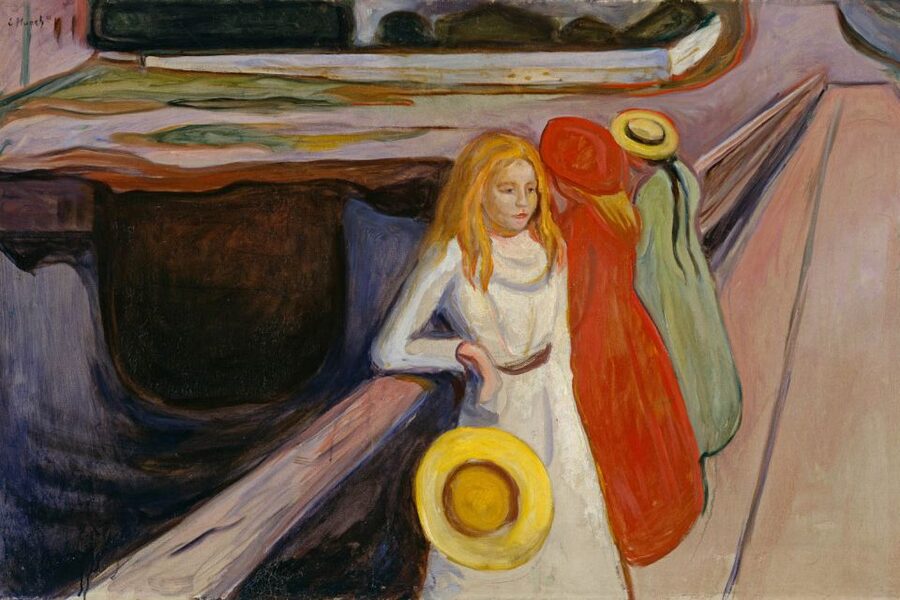
Your ticket is valid for one day, so you can build the museum into a flexible Hamburg schedule. The information provided does not set a fixed starting time, so check availability when choosing your date.
I would allow several hours if you want to see the major collections without rushing. If your schedule is tight, choose two or three priorities in advance: Friedrich and the 19th century, the Old Masters, or the modern and contemporary galleries.
A sensible route is:
- Begin with the medieval and Renaissance works.
- Continue through the Dutch Golden Age.
- Spend your longest pause with Friedrich and the 19th-century collection.
- Move into modern art.
- Finish with contemporary works.
You do not need to follow that order. If Friedrich is your main reason for coming, go to him early while your attention is fresh. If you prefer to build a historical sequence, start with the Old Masters.
Large bags, backpacks, umbrellas, suitcases, and trolleys must be deposited. Lockers are available, but a small day bag is the easiest choice. Bags larger than DIN A4 are also subject to deposit, so plan for that before you arrive.
The museum is wheelchair accessible. That matters in a collection of this size, since a comfortable route can make the difference between a rewarding visit and an exhausting one.
The audio guide and the museum app
The audio guide is available in English and German. It covers both the collection areas and current special exhibitions, and it can be borrowed at the ticket desk for €6.
You can also access the audio guide through the Hamburger Kunsthalle app, which is free to download. If you prefer not to pay for the loan device, the app is the practical alternative. Downloading it before you arrive may save time at the desk.
I would not automatically choose the audio guide for the entire museum. The collection is too broad for every room to receive equal attention. Use it for Friedrich, unfamiliar medieval works, or pieces in the modern and contemporary galleries where a little context can help.
Keep in mind that the entrance ticket includes access to the permanent collection. The details provided do not say that every special exhibition is included, so check the current exhibition arrangements if one is a major reason for your visit.
A useful pause at Das Liebermann or The Cube
A long museum visit needs a break, and the Kunsthalle gives you two food options.
Das Liebermann is the refurbished café in the pillared hall of the Kunsthalle. It is suited to a drink or a snack, and its setting adds a little ceremony to a simple rest.
The Cube is in the Gallery of Contemporary Art and offers views of the Inner Alster Lake. Its daytime menu includes snacks and lunch, while the evening menu moves to à la carte dinner. The food is described as crossover cuisine with a regional focus.
I like having these choices inside the museum because you do not need to abandon your visit when your energy drops. The Cube may be the better choice if you want a proper meal and a view. Das Liebermann is likely more useful for a shorter pause between galleries.
Is the $21 admission good value?
At $21 per person, the ticket is fair value if you care about art and plan to spend at least a few hours inside. You are paying for access to a major collection that covers eight centuries, not a single themed display.
The value is strongest for visitors who want variety. You can see northern German medieval painting, Renaissance masters, Dutch Golden Age art, German Romanticism, French Realism and Impressionism, Expressionism, and international contemporary art in one place.
The value is weaker if you only want one famous painting and plan to leave quickly. In that case, the ticket still provides access to Friedrich and the permanent collection, but the museum’s size means you are paying for far more than a brief stop.
The flexible cancellation policy also helps if your Hamburg schedule is uncertain. You can cancel up to 24 hours in advance for a full refund, and the reserve-now, pay-later option lets you hold a place without paying immediately.
Who will enjoy this museum most?
I would recommend the Kunsthalle to anyone who likes comparing art across periods. It suits first-time museum visitors because the collection includes familiar names, but it also gives experienced art fans enough range for a serious visit.
It is a good choice for:
- Art lovers who want Friedrich, Munch, Rembrandt, and Warhol in one visit.
- Visitors with a free afternoon in Hamburg.
- Couples or friends with different art tastes, since the collection covers many styles.
- Anyone who prefers self-guided visits over a fixed group tour.
- Families with older children who can handle several centuries of painting.
You may want to shorten the visit if you find large museums tiring or if contemporary art is not your interest. The best approach is to choose a focus instead of attempting every room.
Should you book the Hamburg Kunsthalle ticket?
Book it if you want a serious art museum with a broad permanent collection, flexible timing, and several major names in one building. The strongest reasons are Friedrich’s Wanderer above the Sea of Fog, the northern German medieval works, and the clear sweep from Renaissance painting to contemporary art.
Skip it if your Hamburg schedule is packed and you would only have time for a quick glance. The Kunsthalle rewards patience. At $21, it is a solid buy for a half-day art visit, especially if you use the app, take a proper break, and give the paintings room to work on you.
FAQ
What does the Hamburg Kunsthalle entrance ticket include?
The ticket includes entrance to the Hamburger Kunsthalle and access to its permanent collection.
Is the ticket valid for a full day?
Yes. The ticket is valid for one day. Starting times and availability should be checked when booking.
Is the audio guide included?
The audio guide is not included as a free loan device. It can be borrowed at the ticket desk for €6, or accessed through the free Hamburger Kunsthalle app.
Is the audio guide available in English?
Yes. The audio guide is available in English and German. It covers the collection areas and current special exhibitions.
Can I bring a large bag into the museum?
Large bags, backpacks, umbrellas, suitcases, and trolleys must be deposited. Bags larger than DIN A4 also need to be left in the available lockers.
Is the Hamburger Kunsthalle wheelchair accessible?
Yes. The museum is wheelchair accessible.
Just added around Hamburg
- Hamburg: St. Pauli Food and Bier Tour★ 4.7 · 5 reviews
- St. Pauli Tour: Drag-Attack with Barbie Stupid & Lee Jackson★ 4.8 · 280 reviews
- Hamburg: Private Tour Red Light District Walking Tour★ 4.7 · 227 reviews
- St. Michael’s, Elbe Tunnel & Harbor 2-Hour Hamburg Tour★ 4.9 · 21 reviews
- Satt Pauli – der kulinarische Rundgang durch St. Pauli★ 4.8 · 12 reviews
- Hamburg: Safari tour in St. Pauli★ 4.9 · 11 reviews
- Hamburg: Reeperbahn Comedy Club★ 4.3 · 53 reviews
- Radtour um die Alster & durch traumhafte Alsterviertel★ 4.9 · 34 reviews
Tickets, compared.

Munich Hop-On Hop-Off Tour: 1-Day or 2-Day Ticket
Read our review →


Browse the lists this tour appears in