Reviewed · TICKETS
Berlin: Berlin Story Bunker Entry Ticket
Berlin’s darkest rooms tell a long story. The Berlin Story Bunker combines a chronological account of Berlin with a sobering exhibition on National Socialism, all inside a real Second World War bunker near Anhalter Bahnhof. I like the clear timeline and the freedom to move at your own pace. I also like the full-scale Führerbunker reconstruction, which gives the final section a strong sense of place. The main drawback is simple: there is a lot to read, and two hours can feel rushed.
This is not a light museum stop. The photographs and films can be graphic, the subject is grim, and the bunker setting may bother anyone who dislikes enclosed spaces. Still, the audio guide, careful layout, and huge amount of material make this one of Berlin’s most useful history visits. Bring comfortable shoes, allow at least three hours if you can, and do not leave it until late in the day.
In This Review
- Key points to know before entering
- Finding the Berlin Story Bunker near Anhalter Bahnhof
- Starting with 800 years of Berlin history
- Following Hitler’s rise and Nazi rule
- Seeing Berlin as the center of power
- The Führerbunker replica and the final rooms
- From the war to the Berlin Wall
- How much time should you allow?
- Audio guide languages and how to use it well
- Who will get the most from this visit?
- Is the $21 ticket good value?
- What you cannot do inside
- Should you book the Berlin Story Bunker?
- FAQ
- Where is the Berlin Story Bunker?
- How much does admission cost?
- How long is the ticket valid?
- What is included with admission?
- Which languages are available for the audio guide?
- What are the museum’s opening time limits?
- Can I take photographs or record video?
- Are pets allowed?
- Is the museum suitable for people with mobility impairments?
- How much time should I plan for the exhibition?
Key points to know before entering
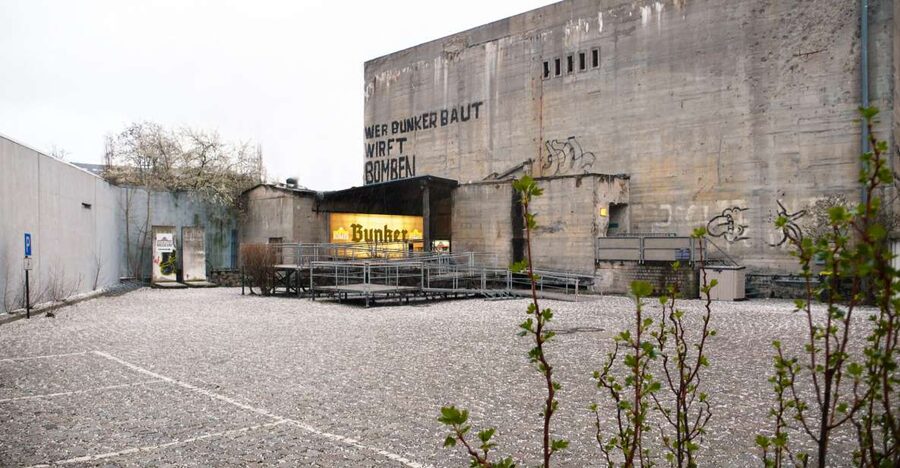
- A real wartime bunker: The museum occupies the Berlin Story Bunker on Schöneberger Str. 23a, close to Anhalter Bahnhof and Potsdamer Platz.
- Two connected stories: You follow Berlin’s history across more than 800 years, then move into the rise of Hitler, Nazi rule, and the Second World War.
- The audio guide saves time: It is available in English, German, Spanish, French, Italian, Danish, Dutch, Russian, Hebrew, Portuguese, and Ukrainian.
- The Führerbunker replica is downstairs: The full-scale reconstruction and model give the final part of the exhibition its most memorable setting.
- Plan for three to six hours: You can rush through in around 90 minutes, but the displays reward slow reading and repeated pauses.
- No photographs inside: Cameras, photography, and video recording are not allowed, which fits the serious nature of the exhibition.
Finding the Berlin Story Bunker near Anhalter Bahnhof
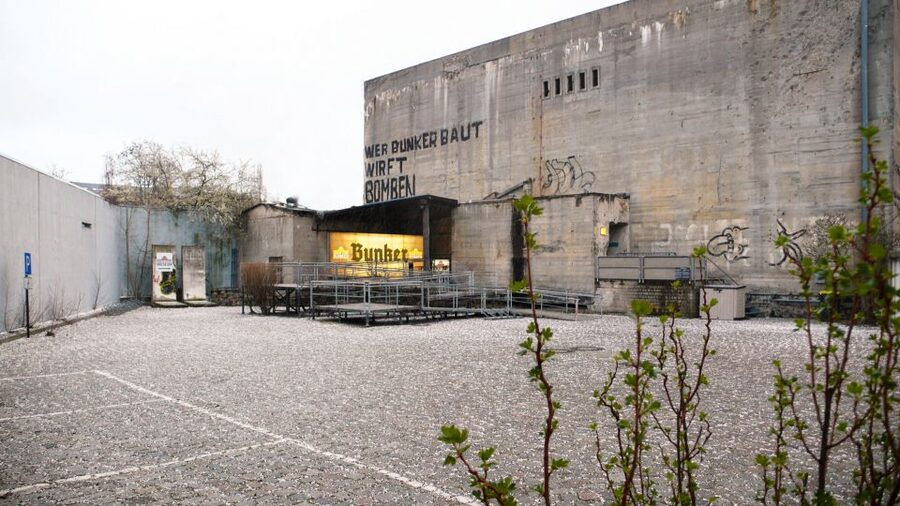
The meeting point is the ticket office at Schöneberger Str. 23a, 10963 Berlin. The location near Anhalter Bahnhof and Potsdamer Platz makes this easy to pair with other central Berlin sights, though you will want to check your route before setting out.
At the entrance, you receive admission and an audio guide. The ticket is advertised at $21 per person, with entry valid for one day. That price is reasonable if you are willing to spend several hours inside, especially since the visit is self-paced and includes audio commentary in many languages.
I would not book this as a quick filler activity between lunch and another appointment. The last entrance is at 5:30 PM, and the sheer volume of material means you can lose track of time. Several people who allowed only an hour or two found themselves rushing near closing, while others spent three to five hours inside.
The building is not designed for people with mobility impairments. Expect walking, standing, and stairs. The interior can also feel warm, so dress lightly and carry water if you plan to stay for much of the day. A café and toilets are available on site.
A few more Berlin trips worth comparing
- Berlin: Illuseum Berlin Entrance Ticket
★ 4.1 · 3,970 reviews - Berlin: Madame Tussauds Admission Ticket
★ 4.6 · 3,941 reviews - Berlin: Natural History Museum Entrance Ticket
★ 4.6 · 3,382 reviews
Starting with 800 years of Berlin history
The exhibition does not begin with Hitler. That is one of its strengths.
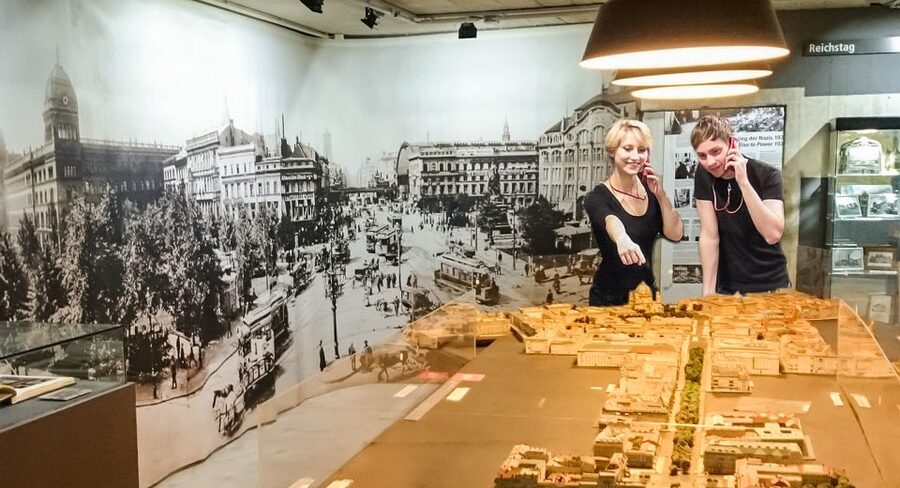
The first sections trace Berlin from its early development through the Imperial period and into the political and social changes that shaped modern Germany. Large installations, photographs, short films, and information panels place the later events in a wider setting.
You move through roughly 50 stations. Some are simple displays, while others use large scenic installations to make a period easier to picture. The method is helpful because Berlin’s story can otherwise feel like a stack of disconnected dates. Here, the timeline gives you a route to follow.
The material is presented in chronological order, so I find it easier to understand how the city changed over time. The German and English text on the displays helps if you want to read while listening, and the audio guide provides a spoken overview of each section.
This opening section can take longer than expected. If you are mainly interested in the Nazi period, it is tempting to hurry ahead. I would resist that urge. The early rooms explain how Berlin became the center of political power and why the city mattered so much in the twentieth century.
Following Hitler’s rise and Nazi rule
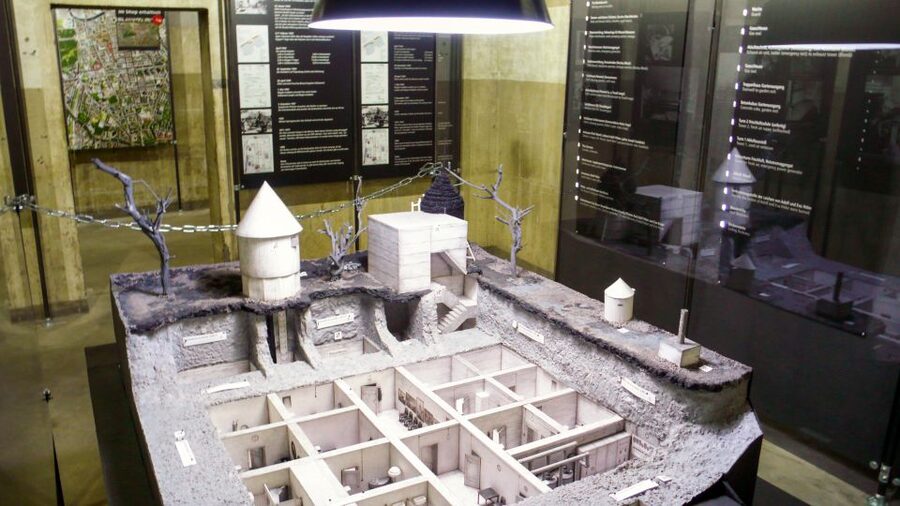
The central section focuses on Hitler’s life, his rise to power, and the machinery of National Socialism. The exhibition follows the story from his childhood through his political career, dictatorship, war, and death.
The displays are direct. You will see photographs, posters, newspapers, film material, and other historical evidence. Some images are disturbing and graphic. Nothing about this section is softened for comfort, which makes it suitable for adults and for older children who already have an interest in history and can handle difficult subjects.
I like the way the exhibition connects individual decisions to the wider Nazi system. It does not treat the war as a string of military events alone. It also addresses propaganda, racism, repression, and the human cost of fascism.
The audio guide helps you get the broad story before you tackle the written panels. If you listen to every track and read every board, you will need much longer than the advertised one-day validity suggests. You can use the audio as a framework, then pause where a photograph or display catches your attention.
One practical warning: the audio device may take a little patience. Entering a section number can occasionally send you to a different track, such as 105 instead of 5. Using the next button once you understand the sequence is easier than typing every number.
Seeing Berlin as the center of power
The exhibition’s Berlin focus gives it a useful edge over a general Second World War museum. You are not simply learning what happened across Europe. You are seeing how the capital functioned as the center of Nazi power and how the city experienced the war.
The photographs and short films help connect political decisions with Berlin’s streets and buildings. The bunker setting adds weight, but the exhibition does not rely on atmosphere alone. There is a large amount of written material, and the displays do the hard work of explaining dates, people, and events.
This is also where the museum asks difficult questions. The tone is serious rather than theatrical. If you want a polished, interactive attraction with lots of hands-on elements, you may find the experience more traditional than expected. It is mainly a reading, listening, and looking museum, with the setting providing much of the physical impact.
That is not a weakness for everyone. I prefer having time to stop at a newspaper or photograph without being pushed along by a group. You can walk quickly through familiar material or spend ten minutes on a single display.
Still Berlin, at a slower pace:
- Berlin: Reichstag, Dome and Government District Guided Tour
★ 4.7 · 18,288 reviews - Berlin: 1-Hour City Tour by Boat with Guaranteed Seating
★ 4.3 · 16,993 reviews - Berlin: Boat Tour Along the River Spree
★ 4.4 · 11,252 reviews - Discover Berlin Half-Day Walking Tour
★ 5.0 · 9,624 reviews
The Führerbunker replica and the final rooms
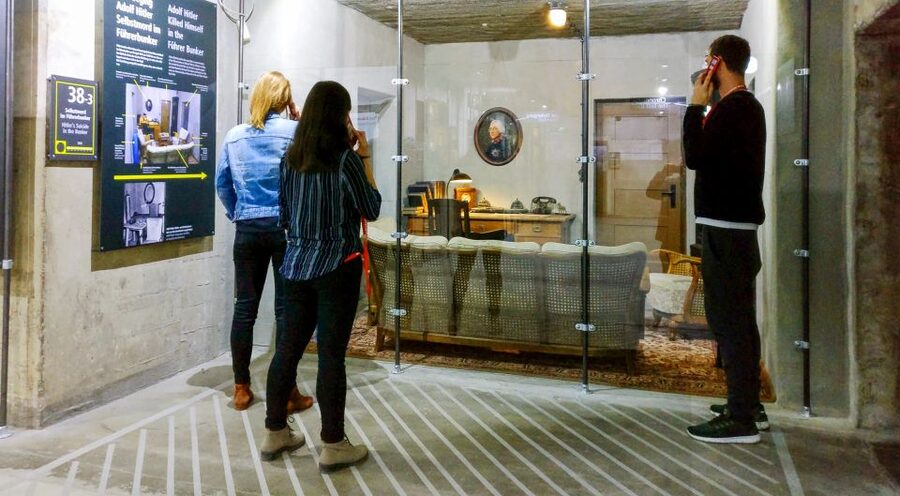
The lower section contains a full-scale replication of Hitler’s bunker, along with a model of the Führerbunker. This is the part many people remember most clearly.
The reconstruction gives you a sense of the bunker’s rooms and layout without pretending that the original structure remains intact as a normal museum site. It helps explain the final days of the Nazi leadership and the cramped, doomed world beneath Berlin.
The model is especially useful because the real Führerbunker is not an ordinary open attraction. Seeing a physical representation lets you understand where it sat in relation to the surrounding city and why its story has become so closely tied to Berlin’s final weeks of the war.
Do not expect a room filled with original objects. One useful way to set your expectations is to think of this as a documentary exhibition with a reconstructed setting, not a treasure house of artifacts. The power comes from the combination of photographs, text, films, audio, and the bunker space.
The subject is unsettling, as it should be. The display does not turn Hitler’s headquarters into a place of fascination without context. It keeps the focus on the consequences of dictatorship, war, and racial persecution.
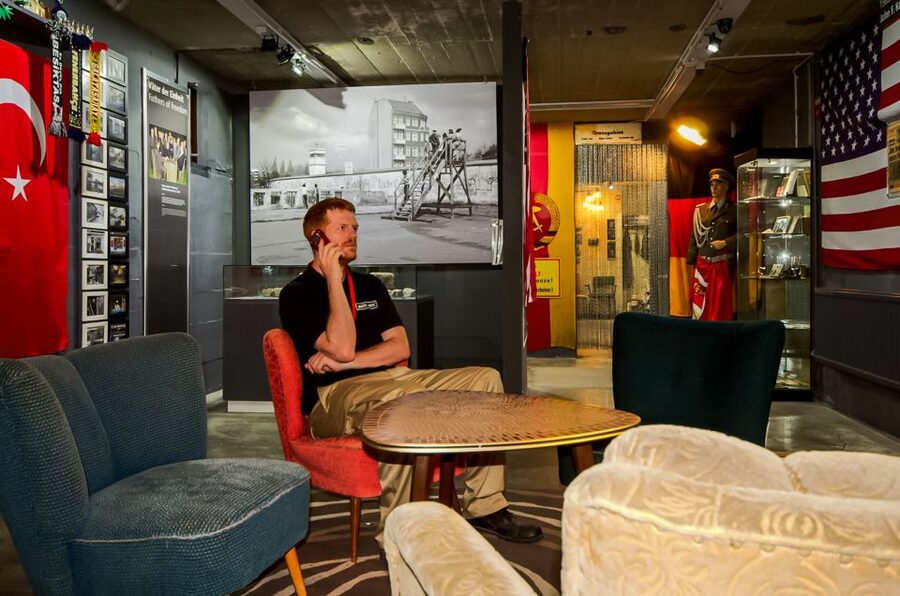
From the war to the Berlin Wall
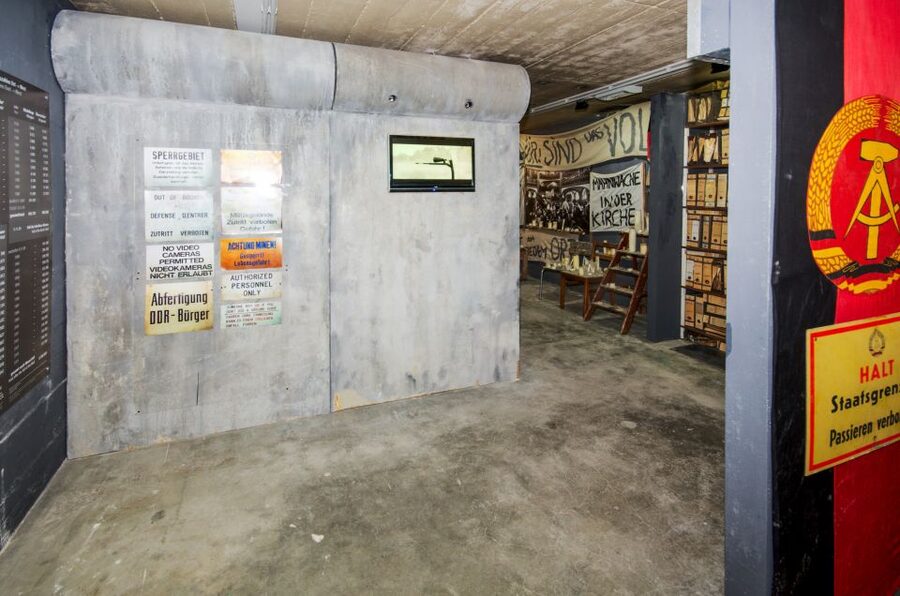
The story continues beyond Hitler’s death and the end of the war. The audio guide takes you through the postwar period and onward to the fall of the Berlin Wall.
That wider ending matters. Berlin’s history did not stop in 1945, and the division of the city shaped daily life and politics for decades afterward. The final sections help connect the ruins and political collapse of the Nazi era with the divided Berlin that later became a symbol of the Cold War.
The exhibition covers a lot of ground, so this part may feel shorter if you have spent hours on the earlier rooms. Give yourself enough time to reach the end without rushing. If the Berlin Wall interests you most, you may want to manage your pace from the beginning.
The visit can feel emotionally heavy by this stage. A quiet break, a seat, or a drink at the café can help before you continue with the rest of your day.
How much time should you allow?
For a quick overview, allow about 90 minutes. That will give you the main sequence and a look at the key displays, but you will need to move quickly and skip much of the written material.
Two hours is the bare minimum for a serious visit. Three hours is more comfortable, especially if you listen to the audio guide and stop for photographs, documents, and films. History fans may want four to six hours, and some people choose to return the next day to finish the exhibition.
The one-day validity is useful because you are not forced to complete everything in one sitting. If your schedule allows, you can take a break and return rather than trying to absorb every detail in a single push.
This is a museum for patient reading. The more you already know, the faster you may move through familiar sections. If the subject is new to you, slow down. The chronological arrangement makes it manageable, but the amount of content is still substantial.
Wear comfortable shoes. You will walk and stand for long stretches, with stairs in the building. Seating is available in parts of the exhibition, which helps if you need regular breaks.
Audio guide languages and how to use it well
The audio guide is included and available in Spanish, English, French, German, Italian, Danish, Dutch, Russian, Hebrew, Portuguese, and Ukrainian.
I would listen to the audio first at each station, then read the panels that interest you. That approach gives you a clear outline without requiring you to read every line. If you already know the basic story, you can use the guide selectively and spend more time with the visual material.
The guide is especially helpful because the displays contain so much information. It gives context where a photograph or installation might otherwise be hard to place. The English and German text on the displays adds another option for visitors who prefer reading.
The equipment is generally easy to operate, though number selection may be fiddly. The next-track function is often simpler. Bring your own headphones only if you prefer them, but the included audio equipment is part of the admission.
Who will get the most from this visit?
I would recommend the bunker to anyone who wants a serious account of Berlin during National Socialism and the Second World War. It is also valuable if you are trying to understand how Berlin moved from imperial capital to Nazi power center, wartime ruin, divided city, and finally a reunified capital.
Families can make it work with older children and teenagers who are ready for difficult material. One family found the displays clear enough for an interested 11-year-old, but you should judge your own child’s comfort with graphic photographs and discussions of persecution.
You do not need to be a history specialist. The chronological layout and audio guide provide a starting point. Still, this is not the best choice if you want a light, entertaining afternoon or a short attraction with little reading.
People who dislike enclosed spaces should think carefully. The rooms are not all tiny, fans are present, and some sections feel open enough, but the bunker environment may still cause discomfort. Anyone with mobility limitations should also note that the experience is not considered suitable for people with mobility impairments.
Is the $21 ticket good value?
At $21 per person, the ticket offers good value if you stay for three hours or more. You receive admission, the multilingual audio guide, and access to a substantial exhibition rather than a short display.
The value depends on how you visit. If you rush through in 60 to 90 minutes, the price feels less attractive. If you read carefully, watch the films, and explore the Führerbunker reconstruction, it becomes one of the more substantial history stops you can make in central Berlin.
A few comments have referred to a lower museum price in euros, so it is sensible to check the current price before booking. The supplied activity price is $21, and the option to reserve now and pay later may help if your itinerary is still shifting.
Free cancellation up to 24 hours ahead also makes the booking low-risk. Those details are useful, but the real question is time. You are paying for access to a large amount of material, so the ticket works best when you protect a generous block in your schedule.
What you cannot do inside
Photography and video recording are not allowed, and cameras are listed among the prohibited items. This may disappoint anyone hoping to photograph the replica bunker or the large installations, but it is also a reasonable rule given the graphic content and the need for a respectful atmosphere.
Pets are not allowed, and all museum rules apply. Plan to leave your camera equipment behind and focus on the displays themselves.
The lack of photographs also means you should not use the visit as a quick stop for a few memorable pictures. Take notes if you want to remember particular facts, and allow your attention to stay with the exhibition.
Should you book the Berlin Story Bunker?
Book it if you want a serious, detailed, self-guided history visit and can spare at least three hours. The real bunker, 50 display stations, multilingual audio, Berlin timeline, and Führerbunker replica create a strong package for the price.
Skip it if you dislike graphic war material, enclosed buildings, stairs, or long stretches of reading. This is not a casual attraction, and it can feel intensive.
My best advice is to go earlier rather than later, wear comfortable shoes, bring water, and use the audio guide as a helpful outline rather than trying to listen to every word. If Berlin’s wartime history matters to you, this is a worthwhile and sobering stop near Anhalter Bahnhof.
FAQ
Where is the Berlin Story Bunker?
The meeting point is the ticket office at Schöneberger Str. 23a, 10963 Berlin, near Anhalter Bahnhof and Potsdamer Platz.
How much does admission cost?
The supplied price is $21 per person. Check the current price before booking because prices can change.
How long is the ticket valid?
The ticket is valid for one day.
What is included with admission?
Admission and an audio guide are included.
Which languages are available for the audio guide?
The audio guide is available in Spanish, English, French, German, Italian, Danish, Dutch, Russian, Hebrew, Portuguese, and Ukrainian.
What are the museum’s opening time limits?
The last entrance is at 5:30 PM. You should arrive early if you want several hours inside.
Can I take photographs or record video?
No. Cameras, photography, and video recording are not allowed inside.
Are pets allowed?
No. Pets are not allowed.
Is the museum suitable for people with mobility impairments?
No. The experience is not considered suitable for people with mobility impairments, and the visit includes walking, standing, and stairs.
How much time should I plan for the exhibition?
You can see the main sections in about 90 minutes, but two to three hours is more realistic. If you read most of the material and watch the films, you may want four to six hours.
Just added around Berlin
- Private Walking Tour in Berlin: Hitler’s Germany & WWII★ 5.0 · 7 reviews
- The History of Berlin: WWII PRIVATE Walking Tour With Locals★ 5.0 · 209 reviews
- Private Berlin WWII and Cold War History Tour with Local Expert Guide★ 5.0 · 28 reviews
- Private Walking Tour Berlin 3 hours: Brandenburg, Historic Center★ 5.0 · 7 reviews
- Berlin: Private Bike Tour of the Berlin Wall and Third Reich★ 5.0 · 23 reviews
- Group Driving Tour 1 to 6 people. Berlin Shore Excursion incl pick-up at Port★ 5.0 · 8 reviews
- Berlin: Guided Private Bike Tour to Explore the Highlights★ 5.0 · 12 reviews
- Berlin Photography Masterclass – Private Photography Lesson★ 4.5 · 23 reviews
Tickets, compared.
Munich Hop-On Hop-Off Tour: 1-Day or 2-Day Ticket
Read our review →