
Reviewed · WALKING TOURS
Hanover: Guided Walking Tour of the Linden-Limmer District
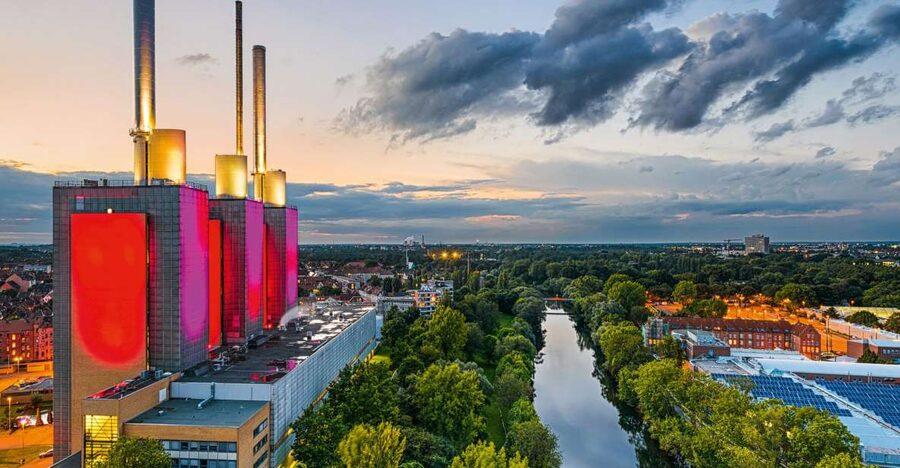
Linden tells Hanover’s working story. This two-hour walk links royal gardens, factory growth, modern art, and everyday café life in one of the city’s most distinctive districts. I like the mix of social history and real neighborhood streets, and I like that the tour costs only $17. The main consideration is that it is conducted in German, so you will need enough language skill to follow the guide.
The route also has an appealing range of sights. You move from the old kitchen garden and weavers’ houses to the controversial Ihme center, then onward to a cultural center, graffiti-lined streets, and Limmerstraße. With only six reviews recorded, the rating is a perfect 5, including praise for the relaxed small-group feel and the clear explanation of Linden’s famous residents and past.
In This Review
- Key points at a glance
- Why Linden-Limmer makes a good walking tour
- From the royal kitchen garden to Lindener Berg
- Linden’s industrial turn and the rise of a workers’ quarter
- The Ihme center and Hanover’s concrete debate
- Faust: an old bed factory with a new purpose
- Nedderfeldstraße, graffiti, and the Apollo cinema
- Limmerstraße and the local art of Limmern
- What the $17 price delivers
- Meeting point, timing, and practical planning
- Who will enjoy this walk most?
- Should you book the Linden-Limmer walk?
- FAQ
- Where does the Linden-Limmer walking tour meet?
- How long does the tour last?
- How much does the tour cost?
- What language is the tour conducted in?
- Is the tour wheelchair accessible?
- Which historic buildings are included?
- What is the kitchen garden?
- Does the tour include the Ihme center?
- What is Faust?
- Can I cancel for a full refund?
Key points at a glance
- Royal gardens turned city district: See the former kitchen garden that supplied Hanover’s royal family, along with a pavilion dating from 1749.
- A village changed by industry: Follow Linden’s shift from a favored village to a workers’ quarter shaped by lime production, machinery, and textiles.
- Brutalist Hanover: Discuss the Ihme center, an unpopular building for some residents and a point of interest for people drawn to its stark concrete design.
- Culture in an old factory: Visit Faust, a former Werner & Ehlers bed factory now used for concerts, exhibitions, readings, and other events.
- Street life on Limmerstraße: Finish among kiosks, cafés, restaurants, and the local custom known as Limmern.
- Good value in German: The two-hour guided walk costs $17, is wheelchair accessible, and allows cancellation up to 24 hours before departure.
Why Linden-Limmer makes a good walking tour

Linden-Limmer is useful for understanding Hanover beyond grand civic buildings and royal connections. The district shows how power, industry, housing, transport, art, and nightlife can leave their marks on the same few streets.
The story begins in a courtly setting. The royal kitchen garden supplied the ruling family, making it more than a pleasant green space. It was part of the practical machinery of the court. Later, once the area became available for wider development, the same ground helped support rail freight facilities and a middle-class residential district.
That change gives the walk a clear thread. You are not simply checking off isolated sights. You are following Linden as it changed from a favored village into an industrial workers’ neighborhood, and then into a district known for culture, restaurants, nightlife, and strong local character.
I also like the scale. Two hours is long enough to connect the main ideas without making the outing consume half your day. If you have just arrived in Hanover, this can help you understand where Linden fits in the city. If you already know central Hanover, it gives you a different side of local life.
More Walking Tours in Hanover
- Hannover: Guided Old Town Walking Tour
★ 4.5 · 338 reviews - Hanover: Crime Walking Tour
★ 4.5 · 243 reviews - Hanover: Flashlight Guided Walking Tour at Night
★ 4.7 · 52 reviews
From the royal kitchen garden to Lindener Berg
The kitchen garden is an important early stop because it explains the district’s connection to the Hanoverian court. The garden once supplied the royal household, so its purpose was practical as well as decorative. That makes it a useful reminder that royal life depended on food production, workers, and carefully managed land.
A pavilion from 1749 has survived from this period. It was moved to Lindener Berg in 1913, a detail that adds another layer to the story. You are seeing not only an old structure, but also an example of how historic buildings can be preserved by relocating them.
The tour also includes the former weavers’ houses at Weberstraße 20 and 21. These buildings survived from the courtly period and provide a more modest counterpoint to royal associations. Their value is in the scale and texture of ordinary historic housing. They help you picture a district before factory smoke, large industrial sites, and dense urban development reshaped it.
Do not expect a formal palace tour here. The appeal is the connection between small surviving buildings and the larger story of Hanover’s growth. Your guide can explain why these traces matter even when they are not grand monuments.
Linden’s industrial turn and the rise of a workers’ quarter
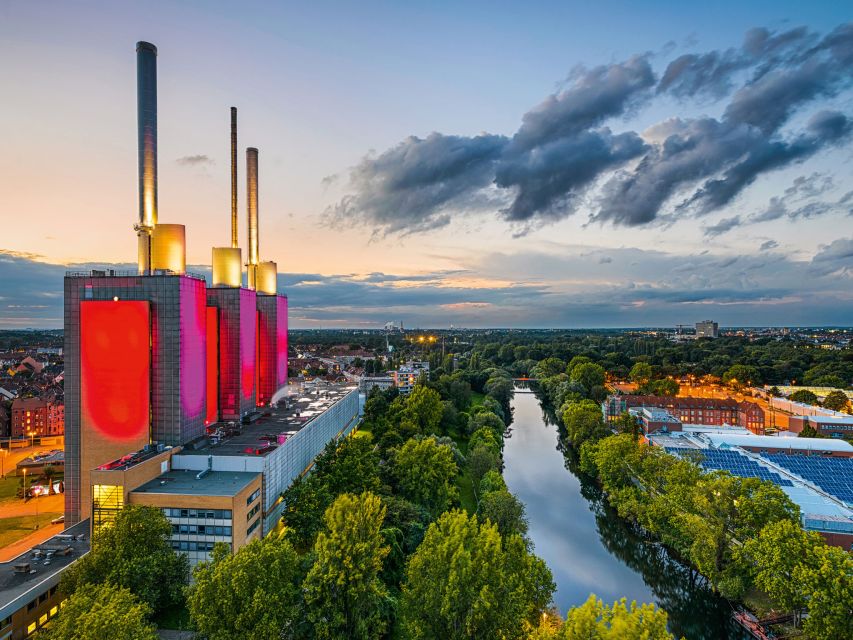
The next part of the walk follows the beginning of factory production, linked here with Johann Egestorff and lime production. The industrial story then expands into machinery and textiles.
This is where Linden’s identity changed sharply. It moved from being described as the most beautiful village in the Kingdom of Hanover to becoming a district strongly associated with factory work and working-class housing. That contrast is one of the most useful ideas on the tour because it shows that city character is not fixed. Economic change can remake a place within a few generations.
The guide also explains the importance of 1866, when Hanover was annexed by Prussia. After that change, the royal kitchen garden area became available for new development. A freight station was built, and a middle-class residential area grew around Lichtenbergplatz.
For you, this part of the tour puts streets and buildings into context. A residential square is not just an attractive urban space, and a former industrial zone is not simply old architecture. Each reflects who had access to land, where goods moved, and how different social groups found housing.
The route does not present industrialization as either entirely good or entirely bad. It brought factories, jobs, and growth, but it also produced a district known as a workers’ quarter. That balanced approach makes the story more useful than a simple parade of attractive buildings.
The Ihme center and Hanover’s concrete debate
The Ihme center introduces a very different kind of heritage. Many people in Hanover regard it as an eyesore, while many younger people are strongly interested in its brutalist construction.
That tension is exactly why it belongs on the route. You do not need to love the building to find it worth discussing. Its severe concrete style raises questions about taste, age, planning, and what a city chooses to preserve. A guided explanation can help you look at it as a product of its time rather than judging it only by modern preferences.
The tour does not promise access to every part of the complex, and the supplied details do not specify an interior visit. Treat the Ihme center as a discussion point and a visual stop. If you enjoy architecture that divides opinion, this may be one of the most memorable parts of the walk. If you prefer medieval streets and ornate façades, it may be the least appealing section.
That difference in taste is not a flaw in the tour. It is part of Linden-Limmer’s character. The district is not presented as a polished historic quarter. It contains old buildings, industrial remnants, concrete development, creative spaces, and busy local streets.
Still Hanover, at a slower pace:
- Hannover: 24-Hour Hop-On Hop-Off Sightseeing Bus Ticket
★ 4.2 · 298 reviews - SEA LIFE Hannover Ticket
★ 4.0 · 96 reviews - Hanover: Royal Gardens of Herrenhausen Guided Tour
★ 4.6 · 78 reviews - Hanover: Night tour with night watchman Melchior
★ 4.4 · 72 reviews
Faust: an old bed factory with a new purpose
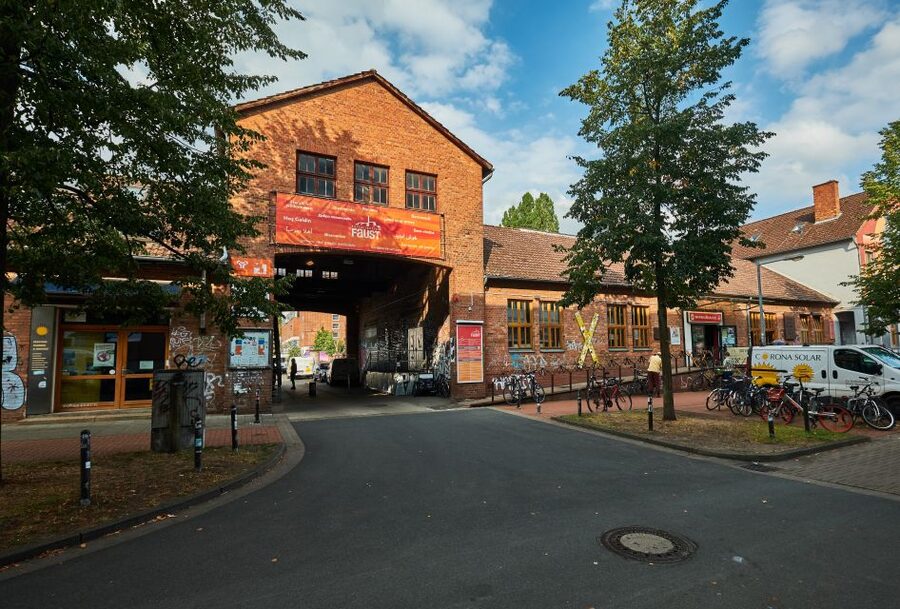
Faust gives the industrial story a cultural ending. The site occupies the former Werner & Ehlers bed factory, linking present-day events to the manufacturing past of Linden.
Today Faust is used for concerts, exhibitions, readings, and other cultural activities. That change in use shows how former industrial buildings can remain part of neighborhood life without continuing to make the same products.
I find this kind of stop especially valuable because it connects architecture with current use. You are not only looking at a former factory and hearing what happened there. You are seeing how an old work site can become a place for music, art, and public gatherings.
The visit may be especially appealing if you want a sense of Hanover’s alternative cultural side. Still, the tour is a walking introduction rather than a scheduled concert or exhibition visit. The information provided does not promise entry to a specific event, so plan to appreciate Faust as a cultural center and former factory site, not as a separate performance booking.
Nedderfeldstraße, graffiti, and the Apollo cinema
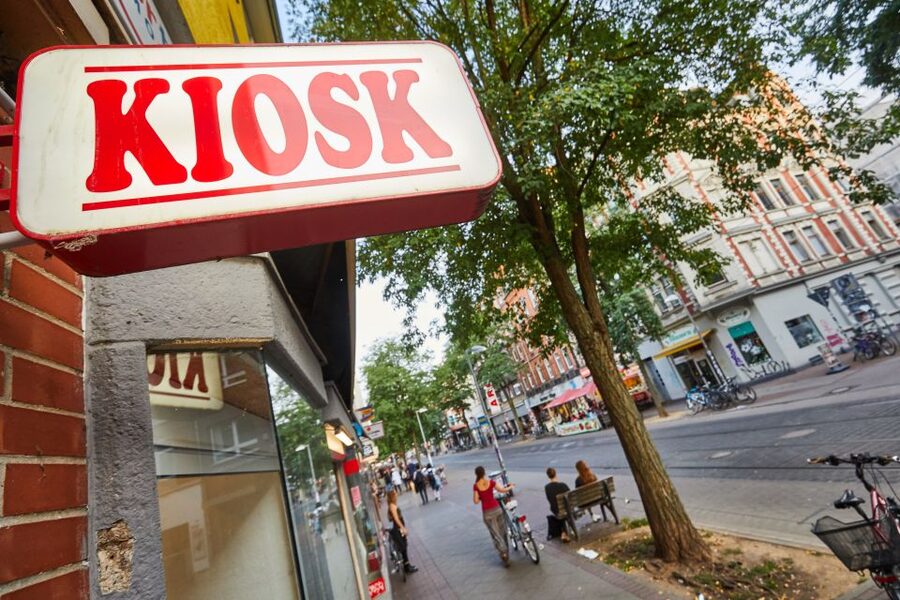
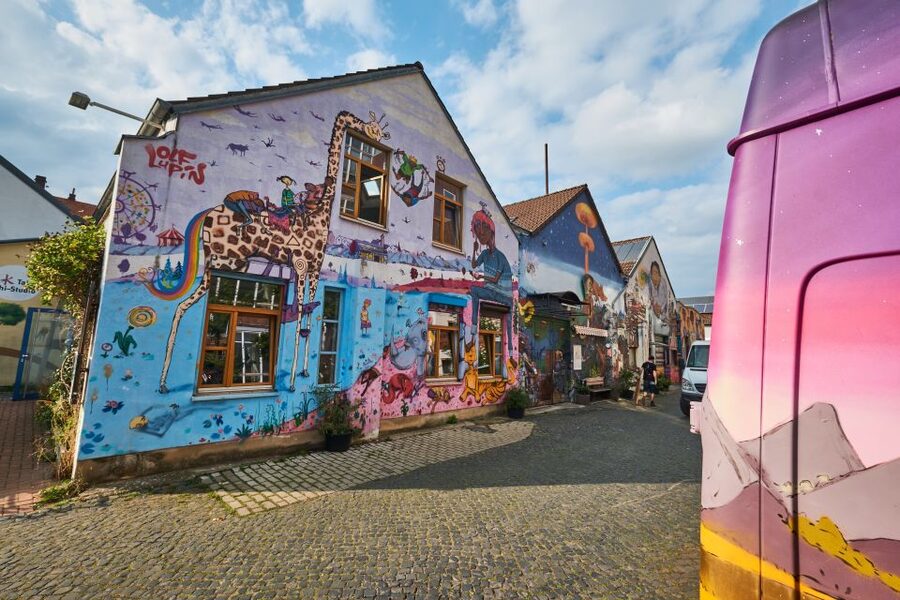
On Nedderfeldstraße, the mood shifts again. The route takes you through an area with graffiti art and numerous pubs. This is a good place to see how Linden’s identity is expressed in public space, rather than only through official monuments.
Graffiti makes the area feel current and informal. The pubs add to that local, lived-in quality. You might find this section more visually interesting than the earlier historic stops, particularly if you prefer neighborhoods with signs of present-day creative life.
Near Nedderfeldstraße, the guide also discusses the Apollo cinema, described as one of the first arthouse cinemas in Germany. That gives the route another cultural connection, this time through film rather than live music or visual art.
The Apollo stop is a reminder that cultural history does not always take place in museums. A cinema can shape a city’s tastes and offer a home for films outside the mainstream. Since the provided details do not specify a screening or interior visit, expect an explanation of the cinema’s place in Hanover rather than a moviegoing experience.
Limmerstraße and the local art of Limmern
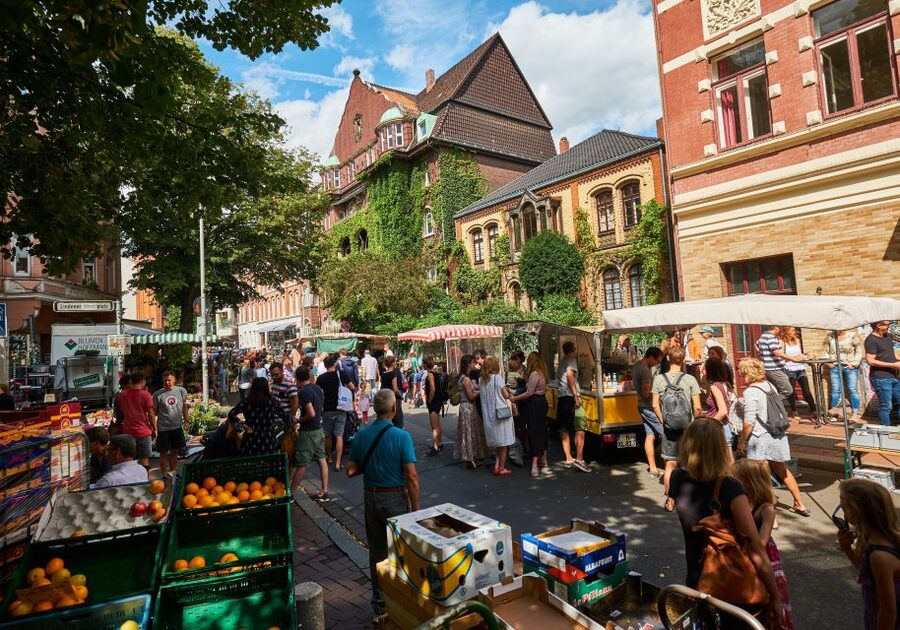
Limmerstraße is the lively finish to the route. It has a high density of kiosks, along with many restaurants and cafés. The local habit of spending time along the street is known as Limmern.
This is a useful ending because it brings the tour back to ordinary city life. You begin with royal food production and industrial development, then finish where people eat, meet, stop for a drink, and spend time outdoors. The district’s identity is not locked in its past. It continues through the way people use its streets.
You may want to leave time after the tour for a café or meal on Limmerstraße, although the guided experience itself includes only the walking tour. The many kiosks and food spots make this an easy place to continue your afternoon or evening independently.
If you prefer quiet historic lanes, Limmerstraße may feel crowded or noisy at busy times. If you enjoy street life and casual local routines, it may be your favorite part. The tour is wise to end here because it lets you see Linden-Limmer as a real neighborhood, not just an open-air history lesson.
What the $17 price delivers
At $17 per person, this is a strong-value tour if you want context rather than a long list of famous monuments. The fee covers a live guided walk lasting two hours, and the route includes several distinct themes: royal history, industrial change, architecture, cultural reuse, film, graffiti, and food-and-drink streets.
The value comes from the connections. You could walk past the kitchen garden, Ihme center, Faust, and Limmerstraße on your own, but the meaning of those places would be less clear without the timeline linking them.
The recorded feedback is small in number, but the two detailed comments are positive. Andrea described a pleasant, relaxed experience in a small group, while another person praised the interesting explanation of the district and notable people associated with Linden. That suggests the guide’s storytelling and atmosphere are central strengths.
Because the tour is in German, the price is less useful if you cannot follow German conversation. There is no language option listed beyond German, and no written translation is specified. You should book it if you understand German well enough to follow a live explanation for two hours.
Meeting point, timing, and practical planning

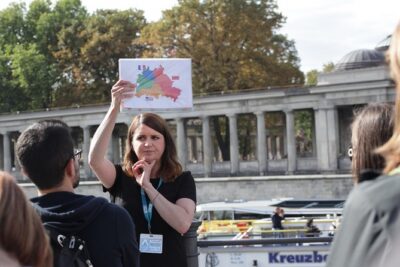
The guide waits at TAK, Die Kabarett Bühne. Look for a guide wearing a Hannover Marketing & Tourismus GmbH card around their neck. This identification detail matters, especially if several groups are gathering near the venue.
The walk lasts two hours, but starting times depend on availability. Check the schedule before you build the rest of your day around it. The route is wheelchair accessible, which makes it a practical choice for many visitors who need an accessible walking activity, although the supplied information does not describe specific pavement conditions or restroom access.
You can cancel up to 24 hours before departure for a full refund. You can also reserve now and pay later, which helps if your Hanover plans are still changing. These policies are useful, but the central planning question is still language. A flexible booking does not help if the German tour does not suit your needs.
The experience provider is Hannover Marketing & Tourismus GmbH. That gives the walk a city tourism connection, while the subject matter keeps it focused on local streets rather than only the standard central sights.
Who will enjoy this walk most?
I would recommend it most strongly to people who like urban history, architecture, and neighborhoods with several layers of use. It suits anyone who wants to see how Hanover changed from a royal setting into an industrial city and then into a culture and nightlife district.
It is also a good choice if you have already seen central Hanover and want something less formal. The old weavers’ houses and kitchen garden pavilion offer historic detail, while the Ihme center, Faust, graffiti, Apollo cinema, and Limmerstraße keep the route connected to modern life.
Families with older children may find the changing architecture and factory story easier to enjoy than a traditional monument tour. The accessible route is also a plus for anyone seeking a wheelchair-accessible activity.
I would be more cautious if you want a tour in English, a museum interior, a food tasting, or a fixed list of major landmarks. This is a German-language neighborhood walk, and its best moments come from interpretation and atmosphere rather than admission to famous attractions.
Should you book the Linden-Limmer walk?
Book this tour if you want a compact, affordable way to understand one of Hanover’s most distinctive districts. For $17, you get two hours of guided context, from the royal kitchen garden and early industry to brutalist architecture, cultural reuse, and Limmerstraße’s café and kiosk life.
Skip it if German is not comfortable for you or if you mainly want grand historic sights. For German speakers who enjoy local stories and changing city spaces, this is an easy recommendation. The small-group praise, relaxed tone, and full five-star rating support its appeal, while the modest price keeps the risk low.
FAQ
Where does the Linden-Limmer walking tour meet?
The guide meets you at TAK, Die Kabarett Bühne. The guide will wear a Hannover Marketing & Tourismus GmbH card around their neck.
How long does the tour last?
The guided walk lasts two hours.
How much does the tour cost?
The price is $17 per person.
What language is the tour conducted in?
The live tour guide speaks German. German is the only language listed for this activity.
Is the tour wheelchair accessible?
Yes, the tour is listed as wheelchair accessible.
Which historic buildings are included?
The walk includes the weavers’ houses at Weberstraße 20 and 21, as well as the kitchen garden pavilion dating from 1749.
What is the kitchen garden?
The kitchen garden once supplied Hanover’s royal family. The pavilion was later moved to Lindener Berg in 1913.
Does the tour include the Ihme center?
Yes. The route includes the Ihme center and discusses its controversial reputation and brutalist construction.
What is Faust?
Faust is a cultural center in the former Werner & Ehlers bed factory. It is used for concerts, exhibitions, readings, and other events.
Can I cancel for a full refund?
Yes. You can cancel up to 24 hours before the tour for a full refund. You can also reserve now and pay later.
Just added around Hanover
- Hanover: Royal Gardens of Herrenhausen Guided Tour★ 4.6 · 78 reviews
- Hanover: Old Town Historical Walking Tour by Geo Epoche★ 4.4 · 11 reviews
- Hanover Center: Outdoor Escape Game★ 4.7 · 13 reviews
- Hanover: Linden-Limmer Krimi-Rätsel-Tour★ 4.5 · 15 reviews
- Hanover: Night tour with night watchman Melchior★ 4.4 · 72 reviews
- Hannover: Private pub crawl with insider-guide & free shots★ 4.0 · 11 reviews
- Hanover: Crime Tour by Bike★ 4.8 · 25 reviews
- Hannover: Culinary Walking Tour Old Town★ 4.6 · 25 reviews
Walking Tours, compared.


Old Town & Viktualienmarkt City Walk in German
Read our review →Browse the lists this tour appears in