

Reviewed · HISTORICAL TOURS
Historic Dresden Small-Group Walking Tour in English
Dresden’s grand center tells a dramatic story. This two-hour English walking tour brings together the city’s royal buildings, wartime destruction, careful rebuilding, and modern life in one compact route. I like the small group limit of 15, which gives you a better chance to hear the guide and ask questions. I also like that the tour focuses on the outside of the major sights, leaving you with useful advice on which museums deserve your own time and money.
The main drawback is simple: no headsets are provided. That has caused hearing problems when the group grows, especially in busy squares or on windy river terraces. Still, the tour costs $30.25 per person, and the strong guide team, central route, and useful historical background make it a solid first step into Dresden.
In This Review
- Key points to know before booking
- Why this two-hour walk works well in Dresden
- Theaterplatz opens with Dresden at full volume
- The Zwinger reveals Augustus the Strong’s taste
- The Residenzschloss courtyard gives the royal story a darker edge
- Stallhof and the Procession of Princes add human detail
- Dresden Cathedral tells a story of religious tension
- Brühl’s Terrace opens the city toward the Elbe
- Neumarkt and the Frauenkirche show Dresden rebuilt
- What the guides do best
- Group size, hearing, and the practical details
- Who should book this Dresden walk?
- Should you book it?
- FAQ
- How long is the Historic Dresden Small-Group Walking Tour?
- What language is the tour offered in?
- What sights are included on the walking route?
- Does the tour include museum admission?
- Where does the tour begin and end?
- Can I cancel for a full refund?
Key points to know before booking
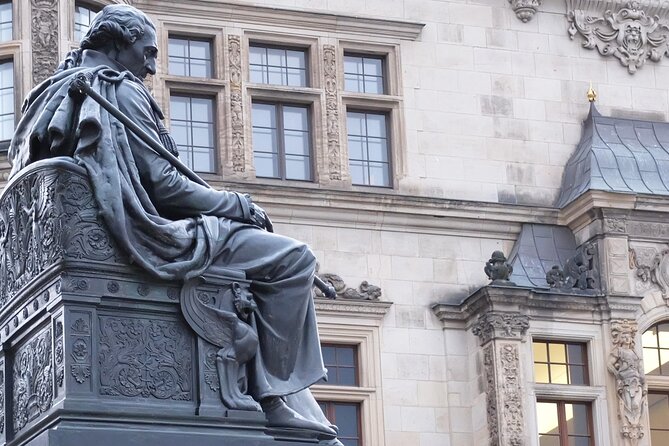
- A compact route through Dresden’s royal center: You see Theaterplatz, the Zwinger, the Residenzschloss courtyard, Stallhof, the Procession of Princes, Brühl’s Terrace, Neumarkt, and the Frauenkirche.
- The guides carry the experience: Laura, Leo, Christina, Doris, Karen, Helga, Marion, and Robert have all received praise for clear English, lively stories, and personal insight.
- The tour stays outside the museums: You learn what each collection contains, then decide what to visit later.
- Expect a gentle but active walk: The pace suits many older walkers, though there are some stairs.
- The story covers both beauty and destruction: Dresden’s Baroque splendor is explained alongside the bombing, ruins, division, and rebuilding that shaped the city.
- Sound may be the weak point: The group is supposed to be capped at 15, but a larger group has occasionally made it hard to hear.
Why this two-hour walk works well in Dresden
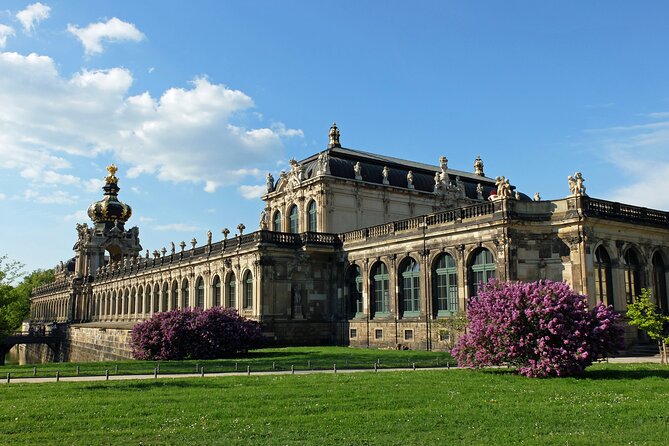
Dresden can feel confusing at first because its key sights are packed into a small area, yet each one belongs to a different chapter of the city’s story. A palace, an opera house, a church, a mural, and a river terrace may sit within a few minutes of one another, but their connections are not always obvious.
This walk gives you that framework before you spend hours inside museums. You get the basic timeline, the important names, and the reasons these buildings matter. I find that especially useful in Dresden, where restored Baroque façades can look old enough to have survived untouched, even though much of the center was rebuilt after World War II.
The guides also add personal interpretation. Helga has spoken about Dresden from before German reunification, while Doris has brought attention to the changes since reunification and the city today. That kind of perspective helps connect the grand royal story to the Dresden you see now.
At $30.25, the tour is not the cheapest way to walk around town. But it is a reasonable price if you want a licensed English-speaking guide, a small group, and a clear introduction rather than a quick pass by the buildings. A free walk may cost less, but this tour’s value depends on the depth of explanation and the chance to ask questions.
More History Tours in Dresden
- Elbfloren: Historical city tour
★ 4.8 · 819 reviews - Dresden: Guided Beer Tour of the Historic Old City
★ 4.8 · 95 reviews - Historic Dresden Private Walking Tour
★ 5.0 · 32 reviews
Theaterplatz opens with Dresden at full volume
The walk begins at Schloßplatz in the Altstadt, close to the historic center’s main sights. The first major stop is Theaterplatz, one of Dresden’s most striking squares.
Here, the Semper Opera House takes much of your attention. Its graceful 19th-century design reflects Dresden’s long connection with music and performance. Your guide places the building within the wider royal setting, rather than treating it as an isolated photo stop.
Look around the square and you will also see the Zwinger, the Residenzschloss, and Dresden Cathedral. From this viewpoint, your guide can point out the Old Masters Gallery, helping you understand which parts of the Zwinger belong to the museum complex.
The stop lasts about 15 minutes and does not include admission. That is important. You are getting orientation and interpretation here, not entry into the opera house or gallery.
The Zwinger reveals Augustus the Strong’s taste
The Zwinger is one of the tour’s best stops. It was designed as a unified piece of sculpture and ceremony, intended to serve as the grand entrance to a new royal palace that was never built.
That unfinished plan is part of the fun. Instead of being merely a palace approach, the Zwinger became its own world of courtyards, ornament, fountains, and elaborate details. Your guide explains the festivities held here around 300 years ago and the ruler who commissioned the complex, Augustus the Strong.
The story is not just about dates and construction. Augustus was ambitious, theatrical, and deeply fond of beauty. His personality appears in the Zwinger’s scale and decoration. Once you know that, the building feels less like a quiet museum shell and more like a stage built for royal display.
If conditions allow and the space is open, your guide may show you an open-air grotto that is easy to miss. This is a small detail, but it captures one of the tour’s best qualities: the guides do not simply point toward the famous façade and move on. Christina, in particular, has been praised for showing small details and less obvious features.
The Residenzschloss courtyard gives the royal story a darker edge
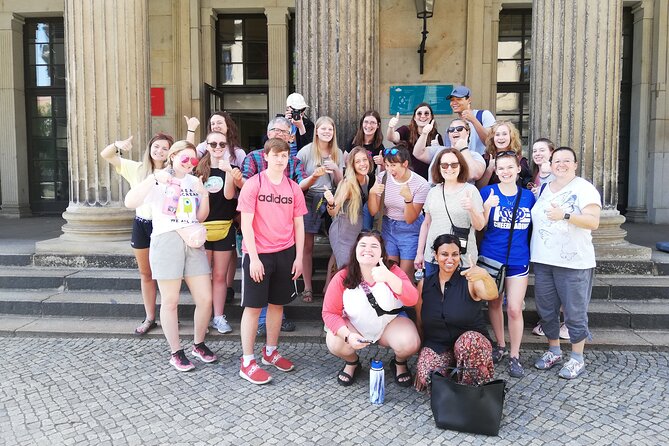
The Residenzschloss, or Royal Palace, carries Dresden’s complicated royal past. It was built, destroyed by fire, rebuilt, repaired, extended, and damaged again. Its present form reflects many periods rather than one neat architectural style.
The walk takes you through one of the palace courtyards, where you can see Renaissance-style Sgraffito decoration. This technique uses layers of plaster, with parts of the surface scratched away to create patterns and images. It rewards a closer look, so do not rush through the courtyard while listening.
You do not enter the palace museums on this tour. That may disappoint you if you hoped to see the royal treasures immediately, but there is a practical benefit. The guide can explain the collections and help you decide what to visit later and which ticket makes sense for your interests.
Dresden’s palace museums contain more than one major attraction, so this advice can save time and prevent you from buying an entry ticket without knowing what it covers. The walking tour acts as a filter. It tells you what you are looking at before you commit to an indoor visit.
More Walking Tours in Dresden
- Dresden: City & Semperoper Guided Walking Tour
★ 4.8 · 2,293 reviews - Dresden: Guided City Walk with a Cup of Coffee
★ 4.7 · 1,568 reviews - Dresden: Complete Walking Tour with Frauenkirche Visit
★ 4.8 · 700 reviews - Dresden: Walking Tour with a Night Watchman and Meal
★ 4.4 · 487 reviews
Stallhof and the Procession of Princes add human detail
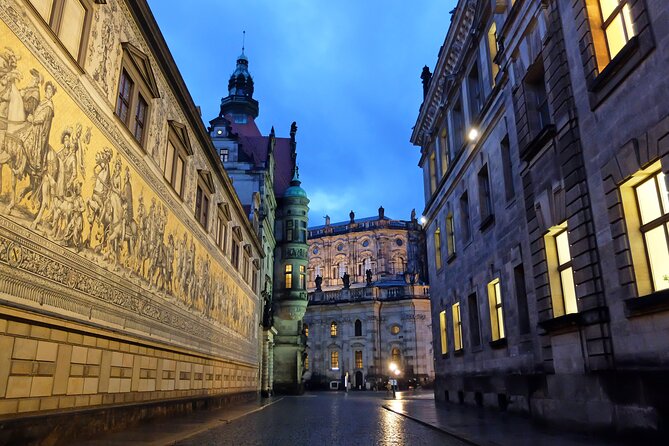
Behind the palace, Stallhof offers a quieter pause. This Renaissance courtyard once hosted jousting contests and court festivities. Its arcades and sandstone columns make it easier to picture the ceremonial side of Saxon court life.
The stop is brief, about five minutes, but it breaks up the larger palace story. You get a more intimate setting after the grand scale of Theaterplatz and the Zwinger.
Nearby, the Procession of Princes mural stretches about 100 meters and uses roughly 24,000 porcelain tiles. It is described as the longest outdoor porcelain artwork in the world. Your guide points out stories and details hidden in the scene, so take a moment to scan the figures rather than treating it as a simple wall decoration.
This is a good place to ask questions. The tour’s small format matters most at stops like this, where you may want to know who appears in the procession or how the artwork survived Dresden’s destruction.
Dresden Cathedral tells a story of religious tension

Dresden Cathedral is one of the city’s most unusual buildings because of the circumstances behind its construction. A Catholic ruler had it built in secret within Protestant Saxony.
The tour views the cathedral from outside and explains its role as a former court church. It is also one of the burial places of the Saxon royal family. The building adds a religious and political layer to the royal story, showing that Dresden’s history was not only about art, wealth, and ceremony.
You should not expect an interior visit during the tour. The value here is the explanation of why this Catholic church appeared in a Protestant state and how it fitted into court life.
Brühl’s Terrace opens the city toward the Elbe

Brühl’s Terrace is known as the Balcony of Europe, and the nickname makes sense once you reach the top of the stairs. From here, your guide points out the Elbe River, Dresden’s historic White Fleet steam boats, church steeples, riverside buildings, and distant wine slopes.
The view gives you a break from close-up architecture. It also helps you plan the rest of your stay. Dresden’s old center is only one part of the city, and the river provides a useful sense of direction.
Most guides on the See my Dresden team take the group up the stairs for this view. The stairs are worth noting if you have mobility concerns, though the walking itself is not especially demanding according to the tour information and direct feedback from people who found the pace suitable for seniors.
Weather matters here. On a rainy or cold day, the terrace can be less comfortable, but the guides have continued to offer an engaging experience in poor weather. Wear shoes with good grip and bring a layer. The tour runs outdoors throughout.
Neumarkt and the Frauenkirche show Dresden rebuilt
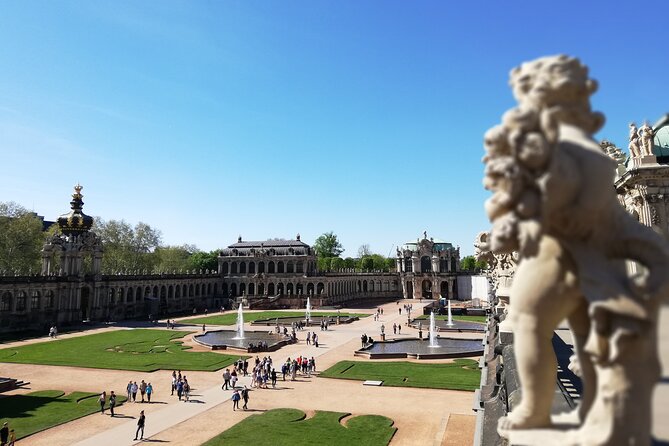
The route usually ends at Neumarkt, the square anchored by the Frauenkirche. Once reduced to rubble, Neumarkt has been restored with colorful Baroque façades that recall the city before the war.
The restored square is not an untouched old town. That distinction matters. Dresden’s center presents a careful reconstruction of an earlier appearance, and the guide helps you understand what was lost, what survived, and what was rebuilt.
The Frauenkirche is the emotional center of the walk. Its dome was reconstructed from the ruins after World War II, and the rebuilding became a symbol of Dresden’s recovery and reconciliation. The story is more meaningful when you know that the church was left in ruins for decades before reconstruction began.
Your guide explains the destruction, the long rebuilding process, and the international effort behind it. After the walk, you can enter the church on your own, sit quietly inside, or visit the crypt, where a small exhibition explains the rebuilding.
Neumarkt is also a practical ending point. You can find German, Saxon, and international food nearby, making it easy to continue your afternoon without crossing the city.
What the guides do best
The guide is the real reason to choose this experience. Several guides have received strong praise for combining facts with stories and for making Dresden’s difficult past understandable without turning the walk into a dry lecture.
Laura is repeatedly praised for her clear English, warm manner, personal stories, and ability to answer questions. One particularly strong feature of her style is pace. She keeps the walk moving while leaving room for discussion.
Leo has been praised for his love of Dresden and his entertaining explanations. Doris brings a useful view of the period before German reunification, the years after it, and present-day Dresden. Christina has an art history background and pays close attention to small details.
Karen is known for humor, energy, and an engaging way of explaining the city. Helga offers personal impressions from Dresden before reunification, which adds a layer that a standard textbook account cannot provide. Robert and Marion have also been praised for clear, informative walks.
The style may vary by guide. One direct assessment found a guide’s manner slightly too familiar and chatty, though still acceptable overall. If you prefer a formal lecture, this may not be your ideal format. If you like conversation and questions, it is likely a strength.
Group size, hearing, and the practical details
The maximum group size is 15. That is small enough for personal questions, but it is not the same as a private tour. In open squares, beside traffic, or near the river, hearing can still be difficult.
Headsets are not provided. This is the clearest weakness in the experience. One group of about 15 had trouble hearing at times, and another group became difficult when 18 people were present. The operator says groups are normally capped at 15, but occasional scheduling problems have led to a larger group.
If hearing clearly is important to you, arrive early and position yourself close to the guide. Ask questions when the group gathers at each stop rather than waiting until the walk is moving again.
The tour accepts mobile tickets, runs in English, and begins at Schloßplatz in Dresden’s Altstadt. It ends back at the meeting point according to the tour details, though the usual route description also places the final stop at Neumarkt. Confirm the exact end point when you meet the guide, especially if you have a timed museum entry afterward.
Service animals are allowed, the meeting point is near public transportation, and most people can take part. Free cancellation is available up to 24 hours before the start time. Cancellations or changes inside that window are not refunded or accepted, and the tour requires a minimum number of participants.
Who should book this Dresden walk?
I would choose this tour if you are visiting Dresden for the first time and want the old center to make sense before exploring museums. It also suits anyone who likes history told through buildings, courtyards, political decisions, and personal stories.
It is a good match for older walkers who can manage some stairs but do not want a strenuous hike. The route is short enough to feel manageable, yet full enough to cover the major sights.
Families and curious independent visitors can also benefit because there is time for questions. The tour does not lock you into indoor admissions, so you can choose your own follow-up visits afterward.
You may want another option if you need guaranteed audio amplification, dislike outdoor walking in poor weather, or want to go inside every major sight. This experience is an introduction, not a museum tour.
Should you book it?
For $30.25, I consider this a worthwhile introduction to Dresden, especially if you value a trained English-speaking guide and a clear explanation of the city’s destruction and rebuilding. The route covers the essential historic center, and the best guides turn familiar buildings into connected stories.
Book it early if your schedule is fixed. The tour is often reserved about three weeks ahead, and you can cancel for a full refund until 24 hours before the start time.
My advice is to take the walk early in your stay, then return to the Residenzschloss museums, Frauenkirche, or Zwinger galleries with a better sense of what you are seeing. Stay near the guide, keep your questions ready, and treat the missing headsets as the one practical flaw in an otherwise strong city introduction.
FAQ
How long is the Historic Dresden Small-Group Walking Tour?
The walking tour lasts approximately two hours.
What language is the tour offered in?
The tour is offered in English.
What sights are included on the walking route?
The route includes Theaterplatz, the Dresden Zwinger, the Residenzschloss courtyard, Stallhof, the Procession of Princes mural, Dresden Cathedral from outside, Brühl’s Terrace, Neumarkt, and the Frauenkirche from outside.
Does the tour include museum admission?
No. Museum and attraction admission is not included. The tour stays outside the museums, while the guide provides advice about the collections and tickets for later visits.
Where does the tour begin and end?
The meeting point is Schloßplatz in Dresden’s Altstadt. The activity details say it ends back at the meeting point, while the usual route ends at Neumarkt near the Frauenkirche. Confirm the final location with the guide.
Can I cancel for a full refund?
Yes. You can cancel at least 24 hours before the experience start time for a full refund. Cancellations or changes made less than 24 hours before the start time are not accepted or refunded.
Just added around Dresden
- Dresden Sightseeing Treasure Hunt★ 5.0 · 57 reviews
- Test Drive Electric Vehicles from the VW brand (ID. model)★ 4.8 · 190 reviews
- SRF CoBi | City Tour by ConferenceBike★ 4.7 · 38 reviews
- Dresden: Scavenger Hunt to Elbe River & Castles★ 4.7 · 15 reviews
- Dresden: Bike Rental – City Bike with Option Children Seat★ 4.5 · 13 reviews
- Moritzburg: Scavenger Hunt Self-Guided Walking Tour★ 4.8 · 12 reviews
- Historical tour of the old town including a Saxon dinner★ 4.7 · 23 reviews
- Climb the mountains together with goats★ 4.8 · 8 reviews
Historical Tours, compared.
City History Canal Sightseeing Tour on a Motorboat
Read our review →

Browse the lists this tour appears in