
Reviewed · LUBECK TOURS
Lübeck: Architecture and Local Craft Private Guided Tour
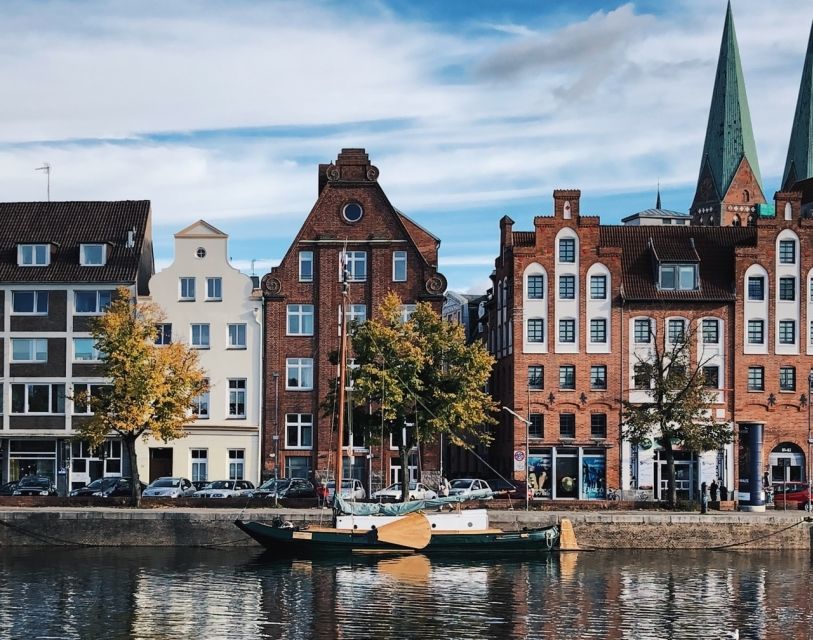
Brick tells Lübeck’s story. This private walk brings the city’s Gothic brick architecture to life through old churches, playful gables, hidden passages, and merchant houses. I especially like the look at medieval brick-making and the close attention to Lübeck’s unusual street plan. The guide also explains practical details such as sagging houses and later gable changes, rather than giving you only dates and grand names.
I also like the private format, which gives your group room to ask questions as you move from the Holstentor through the old town. The main drawback is the short 90-minute duration. Lübeck offers far more architecture than one walk can cover, and optional church entry fees of €2 are not included.
In This Review
- Key points to know before you book
- Why Lübeck’s brick architecture deserves a guided walk
- Meeting at the Holstentor and getting your bearings
- Town Hall and St. Marien: Lübeck’s grand public face
- Buddenbrockhaus and the shift from public to private buildings
- Glockengießerstraße’s passages and courtyards
- A merchant’s house and the craft behind the walls
- Stories of residents, secrets, and changing houses
- What $277 means for your group
- Who will enjoy this 90-minute route most
- Practical details that affect your day
- Should you book this Lübeck architecture tour?
- FAQ
- Where does the Lübeck tour begin?
- How long does the tour last?
- What time can the tour start?
- Which languages are available?
- How many people can join the private group?
- Is church admission included?
- Are food and drinks included?
- Can I cancel the booking?
Key points to know before you book
- The focus is brick architecture: You learn why fired brick mattered so much in northern Germany and how it shaped Lübeck.
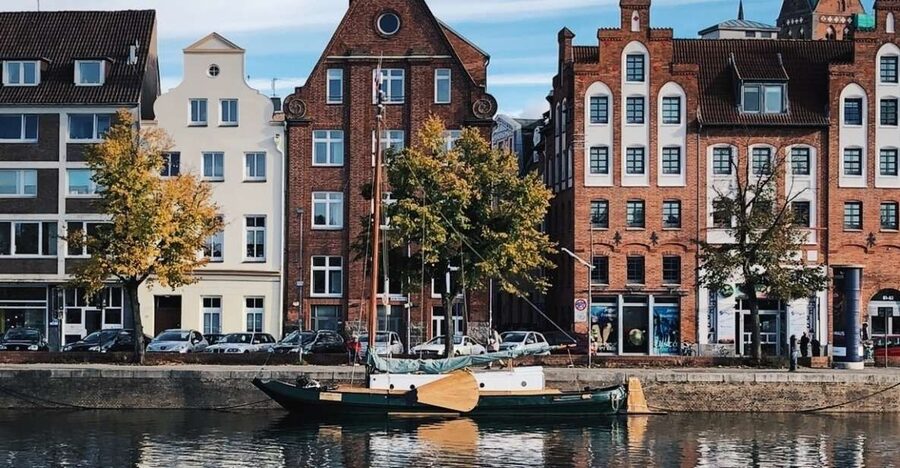
- The route covers major landmarks and small details: Expect the Holstentor, town hall, St. Marien, Buddenbrockhaus, merchant buildings, passages, and courtyards.
- It is fully private: Your group of up to eight receives its own guide, with no larger party to slow the pace.
- The tour lasts 90 minutes: That works well for a first look, but you will need extra time if you want to enter churches or explore interiors.
- Guiding is available in English or German: The guide contacts you after booking to arrange a start time between 9 a.m. and 7 p.m.
- The strongest praise concerns the guiding: The guide is repeatedly described as engaging, competent, friendly, and ready to answer questions in detail.
Why Lübeck’s brick architecture deserves a guided walk
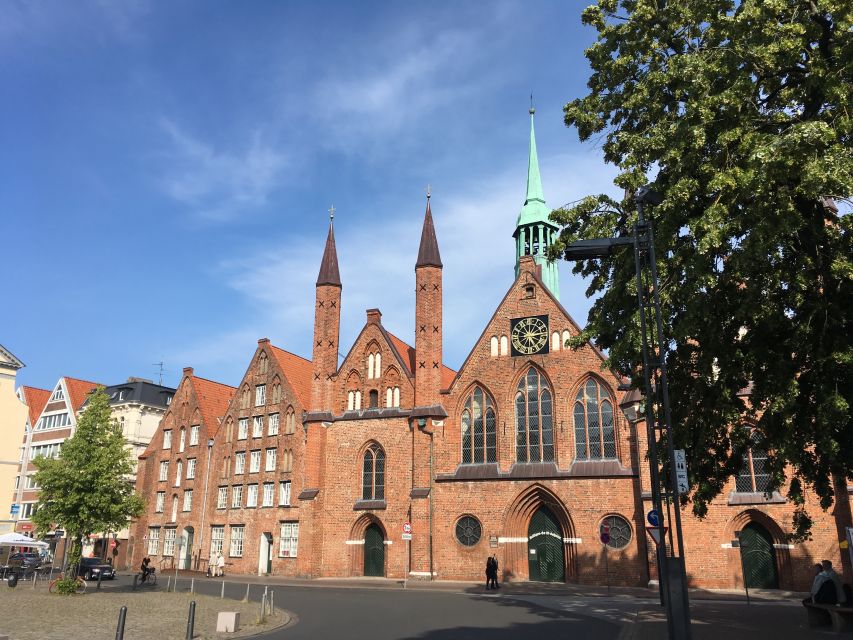
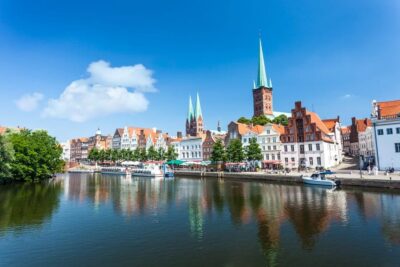
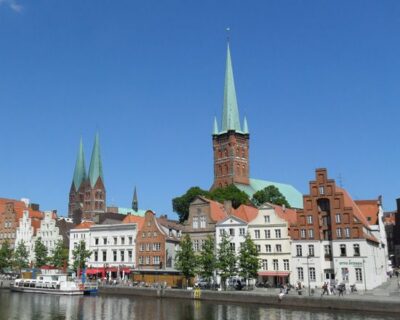
Lübeck is a UNESCO World Heritage site known for its Gothic brick buildings. That phrase can sound dry until you notice how much the material controls the city’s appearance. In a region with little easily available building stone, brick became the practical choice for churches, civic buildings, warehouses, and homes.
On your own, you can admire the warm red walls and stepped or curved gables. With a guide, you get the useful layer underneath: how the city grew, how building plots changed, and why the buildings look the way they do.
The tour is especially good for readers who enjoy cities as working places rather than postcard backdrops. You hear about Lübeck’s original street system, the artificial expansion of construction areas in the Middle Ages, and the odd problems that came with older buildings. Sagging houses and altered gables are not just charming details. They show how the city kept adapting long after its first construction.
I like this approach because it gives you things to look for. After the guide points out a change in a gable or the way a house leans, the old town becomes less like a row of pretty façades and more like a record of decisions, repairs, and changing tastes.
A few more Lubeck trips worth comparing
- Lübeck: 1-Hour Splash Bus City Tour
★ 4.0 · 2,626 reviews - Lübeck: entertaining guided tour to old town highlights
★ 4.7 · 594 reviews - Lübeck: Entertaining Tour Through Hidden Courtyards
★ 4.8 · 483 reviews
Meeting at the Holstentor and getting your bearings
The tour begins at the Holstentor, Lübeck’s most famous landmark. Meet your guide directly at the entrance, not merely somewhere in the surrounding area. That matters because the broad space around a major monument can make a vague meeting point awkward.
The Holstentor is an effective starting place. It immediately gives you a sense of Lübeck’s former importance and offers a strong visual introduction to the city’s brick tradition. The tour description also places the Holstentor at the end of the experience, so your exact walking pattern may use the monument as both a meeting landmark and a final point. Your guide will arrange the timing and details with you after booking.
The tour can begin at any time from 9 a.m. to 7 p.m. That flexibility is useful if you are fitting Lübeck between train connections, a museum visit, or another part of your day. I would choose a time that leaves you enough room afterward to revisit the interiors that catch your eye.
The walk is on city streets, so comfortable shoes are sensible. The supplied details do not promise transport, seating, food, or drinks. Think of this as a focused walking tour, not a sightseeing ride.
Town Hall and St. Marien: Lübeck’s grand public face
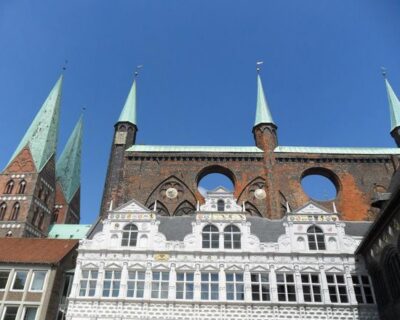
A major stop is the town market place, where you can look at Lübeck’s town hall and the Ratskirche, St. Marienchurch. This is one of the tour’s best moments because civic power and religious power meet in one compact setting.
The town hall represents Lübeck as a major Hanseatic city. The guide’s job here is not simply to point at the façade, but to explain how the building fits into the city’s wider story. The Hanseatic connection gives the architecture a purpose: these were buildings made for a city with trade, money, local government, and strong regional influence.
St. Marien adds a different scale and mood. The church is among Lübeck’s famous brick buildings, and its presence helps you understand why the city’s churches are such an important part of its identity. Church entry is optional and costs €2, so the tour itself does not include admission.
That small extra charge is worth keeping in mind if you want to see interiors. The 90-minute walk may allow only a quick look, depending on the guide’s route and your start time. If St. Marien catches your attention, you may prefer to return after the guided portion instead of trying to squeeze everything into the walk.
Buddenbrockhaus and the shift from public to private buildings
The route passes through the Baroque Buddenbrockhaus before reaching Glockengießerstraße. This change in setting is useful. You move from the grand public center into the streets where domestic architecture, courtyards, and trade shaped daily life.
The Buddenbrockhaus gives the tour a chance to discuss later architectural changes. Lübeck is not a city frozen in one medieval moment. Baroque alterations and modern gable changes reveal how owners updated old buildings for new needs and new fashions.
That is one reason a local guide adds value here. You may notice the age of a wall, but you are less likely to know which parts were changed later. The guide can help separate medieval structure from later decoration without turning the walk into a technical building survey.
The tour also discusses playfully decorated townhouses. These details keep the walk from feeling too solemn. Lübeck’s old homes were not all stern merchant blocks. Their gables and façades could show pride, taste, status, and a little display.
Still Lubeck, at a slower pace:
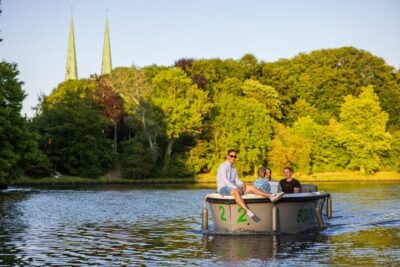
- Lübeck: Electric Boat Rental – without driving licence
★ 4.8 · 174 reviews - Lübeck: Classic Tour of the Hanseatic City
★ 4.8 · 64 reviews - Lübeck: Hanseatic League History Walking Tour
★ 4.9 · 57 reviews - Lübeck zwischen Grusel und Geschichte Truecrime zu Halloween
★ 4.9 · 35 reviews
Glockengießerstraße’s passages and courtyards
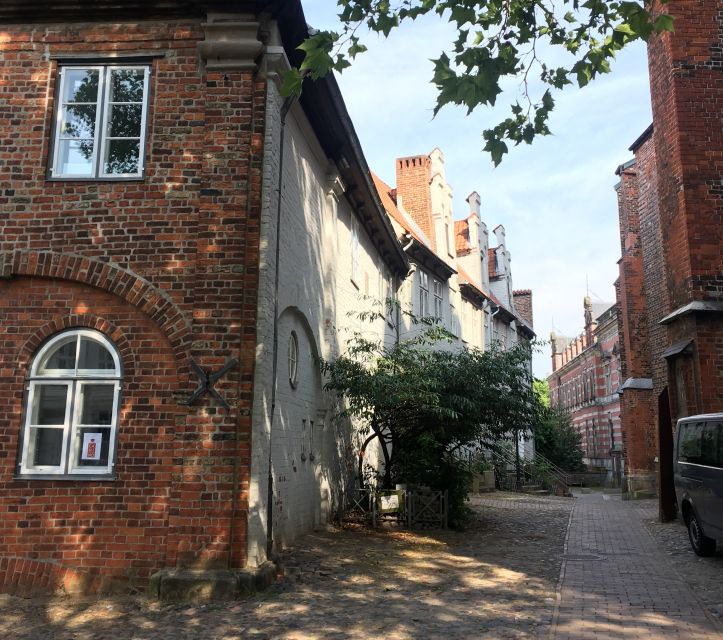
Glockengießerstraße is where the tour becomes more intimate. Here you can see several passages and courtyards and hear how they were built and used.
These smaller spaces are valuable because the main streets show Lübeck’s public image, while passages and courtyards reveal how people actually organized life behind the street façades. The route gives you a look at the relationship between the visible house and the less obvious spaces behind it.
I would pay close attention when the guide explains construction. The appeal is not just visual. You learn how a dense medieval city made use of limited building space and how added or altered areas affected the shape of the old town.
This is also where the tour’s private format helps. A group of up to eight is small enough for questions, and the guide can spend a little more time on the features that interest you. If your party cares about architecture, ask about the passages, courtyard layouts, and later repairs. If you are more interested in social history, ask who used these spaces and how they connected to the merchant houses.
The listing does not promise entry into every passage or courtyard at all times, so access may depend on the route and conditions. Still, this section is a strong reason to choose the tour over a simple monument checklist.
A merchant’s house and the craft behind the walls
The visit to a local merchant’s house gives the tour a human scale. Lübeck’s brick buildings were not abstract works of art. They were homes, workplaces, storage areas, and signs of commercial success.
Here you hear about brick-making and why control of that craft mattered to Lübeck’s inhabitants. Brick was a building material, but it was also a practical skill and part of the city’s economic life. Understanding the work behind the walls helps explain why brick architecture became such a clear regional mark.
This may be the most distinctive part of the experience for you. Many city walks cover churches and town halls. Fewer take time to explain how a basic material was made and why mastering it mattered to the people who built the city.
The merchant house also ties architecture to personal stories. The tour promises accounts of Lübeck and its residents, including events that happened behind closed doors. That wording suggests a mix of local anecdotes and historical context, rather than a purely formal lecture.
You should not expect a long house museum visit unless your guide confirms it. The tour is only 90 minutes, and the supplied details do not list an extended interior program. Think of the house as a focused stop within a larger city walk.
Stories of residents, secrets, and changing houses
The tour’s subject is architecture, but its appeal comes from the people connected to it. You hear about residents, private events, construction choices, and the ways homes changed over time.
That human angle is important in Lübeck. A façade can tell you about wealth and taste, but a guide can connect it to the people who lived behind it. The promised stories about secret events behind closed doors add a bit of drama without taking the tour away from its main subject.
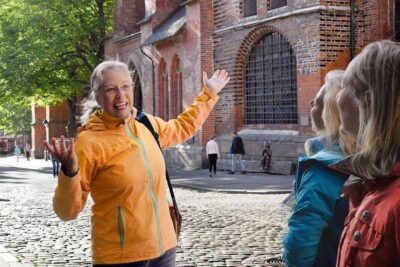
The best guiding praise centers on this personal delivery. The guide has been described as very engaging, friendly, highly competent, and willing to answer questions fully. One German-language account specifically praises the detailed answers and the exciting insight into Lübeck’s past. Another calls the guide especially committed, while a Danish participant highlights the guide’s command of local history.
No individual guide name is provided, so you cannot request a particular person. You can choose English or German, and the live format lets you ask for clarification as the walk unfolds. That is a real advantage over a recorded audio route, especially when you want to understand a strange building alteration or a local term.
What $277 means for your group
The price is $277 per group of up to eight, not per person. At the full group size, that works out to about $34.63 per person for 90 minutes. For two people, the effective cost is $138.50 each, which makes the value much less compelling unless you place a high value on privacy and personal questions.
The private format is the main reason to consider the price. Your group controls the conversation more than it would on a standard shared walk. You can ask about architecture, residents, brick-making, churches, or the exact details that catch your attention.
The tour includes a professional city guide. Food, drinks, and optional church admission are extra. There is no need to budget for transport within the tour because the experience is a city walk, but you should allow time and energy for standing and moving through old streets.
For a family or group of friends, the price can be fair, especially if eight people share it. For a couple on a tight budget, a public city walk may offer better value. I would book this private version when conversation and flexibility matter more than getting the lowest possible cost.
Who will enjoy this 90-minute route most
I would recommend this tour to you if you like architecture but want more than a list of dates. It suits people who notice façades, building materials, city plans, and small changes in old homes.
It also works well for first-time visitors who want an organized introduction to Lübeck. The route connects the Holstentor, market place, town hall, St. Marien, Buddenbrockhaus, Glockengießerstraße, courtyards, and a merchant’s house. You leave with a useful map of the old town in your head.
The private format is helpful for families, mixed-interest groups, and anyone who prefers to ask questions freely. English and German options make it practical for both international and German-speaking groups.
I would hesitate if you want a long interior visit, a food tasting, or a broad survey of every major attraction. The focus is brick architecture and local stories, and the clock stops after 90 minutes. Optional church entry is available for €2, but that fee does not turn the walk into a full church tour.
Practical details that affect your day
You can cancel up to 24 hours before the experience for a full refund, and you can reserve now while paying later. Those terms help if your Lübeck schedule depends on weather, train plans, or a changing itinerary.
After booking, the guide contacts you to set the start time. The available window runs from 9 a.m. to 7 p.m., so confirm the meeting details and make sure you wait directly at the Holstentor entrance.
The advertised language options are English and German. The tour is private, with a maximum group size of eight. Food and drinks are not included, so plan those before or after the walk rather than expecting a café stop during it.
Should you book this Lübeck architecture tour?
Book it if you want Lübeck explained through its buildings, materials, streets, and residents. The strongest features are the private guide, the brick-making context, the passages and courtyards, and the clear attention to unusual details such as sagging houses and altered gables.
I would book it for a group of four to eight, where the price spreads more comfortably. For two people, compare the private cost with other city walks before committing.
The tour is short, focused, and best used as an introduction. If you want a friendly guide who can answer questions and show you how Lübeck’s old buildings work, it is a sound choice. If you want extensive interiors or a full-day exploration, use this as a starting walk and keep the rest of the day free for your own return visits.
FAQ
Where does the Lübeck tour begin?
The guide meets you directly at the entrance to the Holstentor.
How long does the tour last?
The guided tour lasts 90 minutes.
What time can the tour start?
The private tour can begin at any time between 9 a.m. and 7 p.m., based on your preference and the agreed schedule.
Which languages are available?
Live guiding is available in English and German.
How many people can join the private group?
The price covers a private group of up to eight people.
Is church admission included?
No. Entrance fees for churches are not included. Optional admission costs €2.
Are food and drinks included?
No. Food and drinks are not included in the tour price.
Can I cancel the booking?
Yes. You can cancel up to 24 hours in advance for a full refund. You can also reserve now and pay later.
Just added around Lubeck
- Lübeck: Private Historical and Architectural Walking Tour★ 4.5 · 6 reviews
- Lübeck zwischen Grusel und Geschichte Truecrime zu Halloween★ 4.9 · 35 reviews
- Lübeck: Old Town Highlights Private Walking Tour★ 4.8 · 8 reviews
- Lübeck: Hanseatic League History Walking Tour★ 4.9 · 57 reviews
- Lübeck Day Pass – Day ticket for Lübeck museums★ 4.0 · 15 reviews
- Lübeck: Express Walk with a Local★ 4.9 · 10 reviews
- Lübeck: Classic Tour of the Hanseatic City★ 4.8 · 64 reviews
- Lübeck: Backyards and Town Houses Private Guided Tour★ 4.9 · 23 reviews
Lubeck Tours, compared.
entertaining guided tour to old town highlights
Read our review →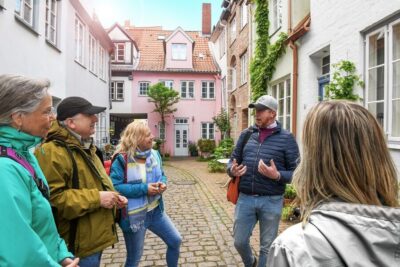
Lübeck zwischen Grusel und Geschichte Truecrime zu Halloween
Read our review →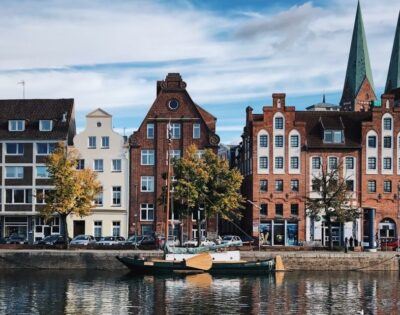
Browse the lists this tour appears in