
Reviewed · HISTORICAL TOURS
Lübeck: Private Historical and Architectural Walking Tour
Lübeck’s skyline tells a story. This private 90-minute walk links the city’s most important sights, from the brick Gothic Holsten Gate to St. Mary’s Church, the Town Hall, Buddenbrook House, and a traditional marzipan bakery. A live guide gives the buildings a human story, explaining how Baltic Sea trade shaped Lübeck and why its old center earned UNESCO World Heritage status.
I especially like the private group format, which gives you room to ask questions and keep the pace personal. I also like the marzipan tasting, a small but memorable stop that connects Lübeck’s famous sweet with the city’s cultural identity. The main drawback is time: 90 minutes passes quickly, and entry tickets are not included. You will see several major sights from the outside, but this is primarily a guided city walk rather than a series of museum visits.
The tour costs $265 per group of up to 15 people. That is a strong deal for a full group, working out to about $18 per person if all 15 places are filled. For a couple, the price is much harder to justify unless you place a high value on having a private guide.
In This Review
- Key points to know before booking
- Starting beneath the Holsten Gate
- Reading the skyline from the old city streets
- Buddenbrook House and the Mann family connection
- St. Mary’s Church and the little devil outside
- Marzipan, tasting, and a sweet piece of Lübeck
- Lübeck Town Hall and the final city view
- How the private format affects the experience
- Is $265 a fair price for 90 minutes?
- Who should book this Lübeck walk?
- Should you book it?
- FAQ
- Where does the Lübeck walking tour begin?
- How long does the tour last?
- How much does the private tour cost?
- Which languages are available?
- Are entry tickets included?
- What should I wear or bring?
- Is the tour suitable for wheelchair users?
Key points to know before booking
- Holsten Gate begins the story: Meet beside Lübeck’s most recognizable medieval landmark, built in 1464.
- A compact route covers major sights: The walk includes five historic churches in the skyline, the Merchants’ Quarter, Buddenbrook House, St. Mary’s Church, the marzipan stop, and the Town Hall.
- The private format suits questions: Your group can focus on architecture, trade, literature, or local stories instead of following a fixed large-group script.
- Marzipan is part of the history: You taste several varieties while learning why this almond sweet became linked with Lübeck.
- The tour is mostly visual: Entry tickets are not included, so plan on seeing the listed landmarks from the outside unless you arrange admission separately.
- Comfortable shoes matter: The route follows cobbled streets, and the activity is not suitable for wheelchair users or people with mobility impairments.
Starting beneath the Holsten Gate
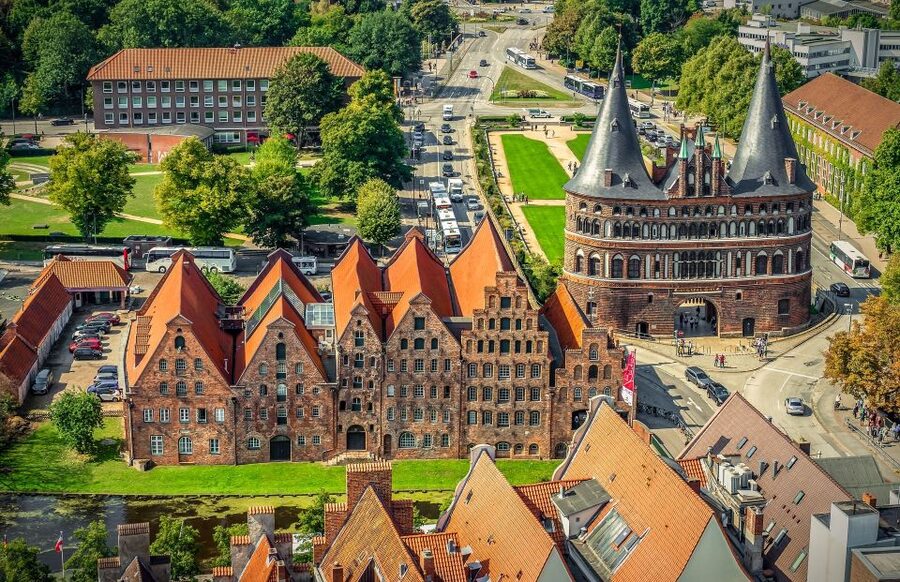
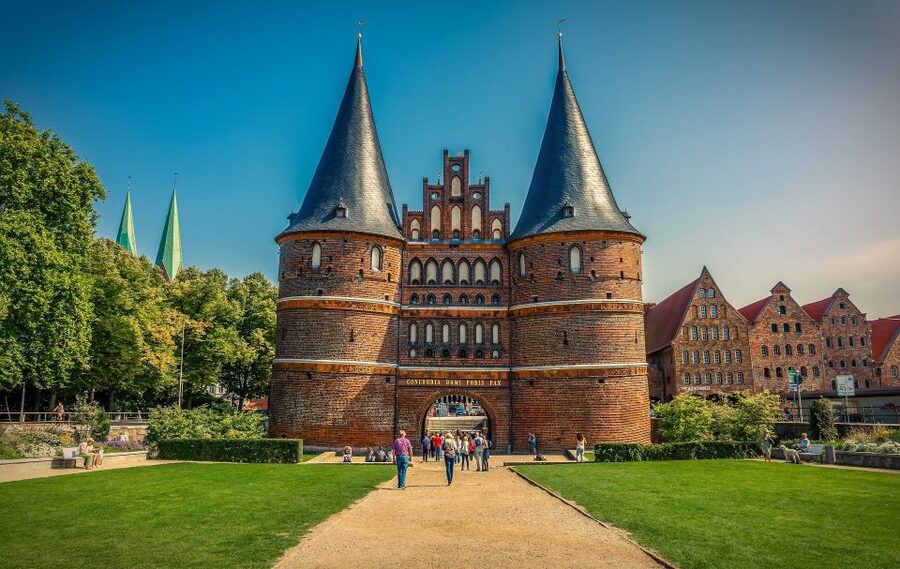
Your meeting point is in front of the Holsten Gate, near Museum Holstentor. This is a practical place to begin because the gate gives you an immediate sense of old Lübeck. Its dark red brick, rounded towers, and slightly leaning appearance make it one of northern Germany’s most memorable city entrances.
Built in 1464, the Holsten Gate is one of only two remaining city gates and one of the last surviving pieces of Lübeck’s medieval fortifications. It was built to signal the city’s strength and freedom, not simply to let people pass through. Your guide uses it to explain how Lübeck protected its position as a major Baltic trading center.
The gate is also a good introduction to Lübeck’s building style. Brick was the essential material in a region without plentiful natural stone. Local builders turned that practical choice into a distinctive Gothic style, with tall walls, pointed forms, and carefully arranged brickwork.
You will want to look up before setting off. The gate is more than a photo stop. Its heavy construction, towers, and position at the edge of the old city help you picture Lübeck as a powerful medieval town with something valuable to defend.
More History Tours in Lubeck:
- Lübeck: Hanseatic League History Walking Tour
★ 4.9 · 57 reviews - Leipzig: City History Canal Sightseeing Tour on a Motorboat
★ 4.7 · 6,232 reviews - Berlin: Natural History Museum Entrance Ticket
★ 4.6 · 3,382 reviews
Reading the skyline from the old city streets
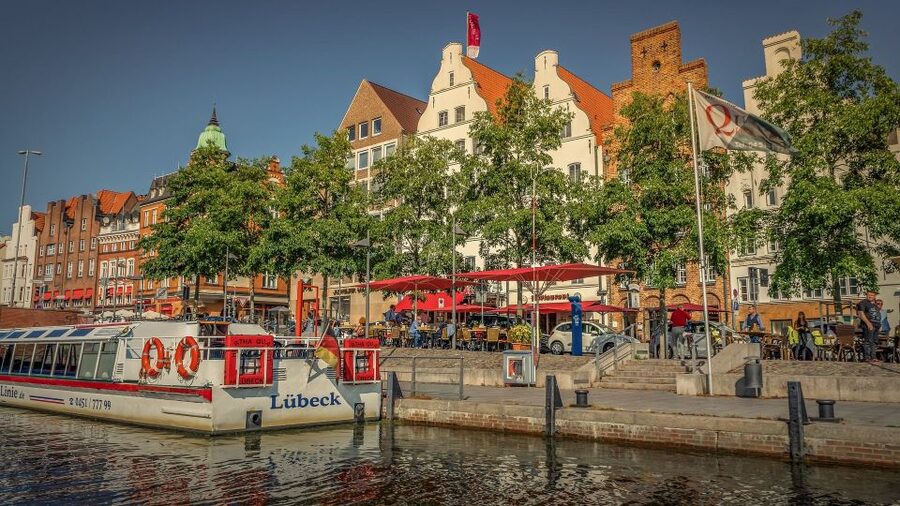
As you continue into the historic center, the guide draws your attention to the skyline. Lübeck is often called the City of Seven Spires, and the view includes five churches, salt storehouses, and grand brick homes linked to wealthy merchants.
This is where a private guide can add real value. On your own, you may notice attractive façades but miss the reason they are there. The route explains how Baltic Sea trade changed the city’s fortunes and how merchants influenced both the economy and the architecture.
The old homes are not just pretty backdrops. They reflect the money that flowed through Lübeck and the social position of the families who controlled trade. The salt storehouses offer another clue. Salt was a valuable commodity, and its movement through Lübeck helped connect the city with wider commercial routes around the Baltic.
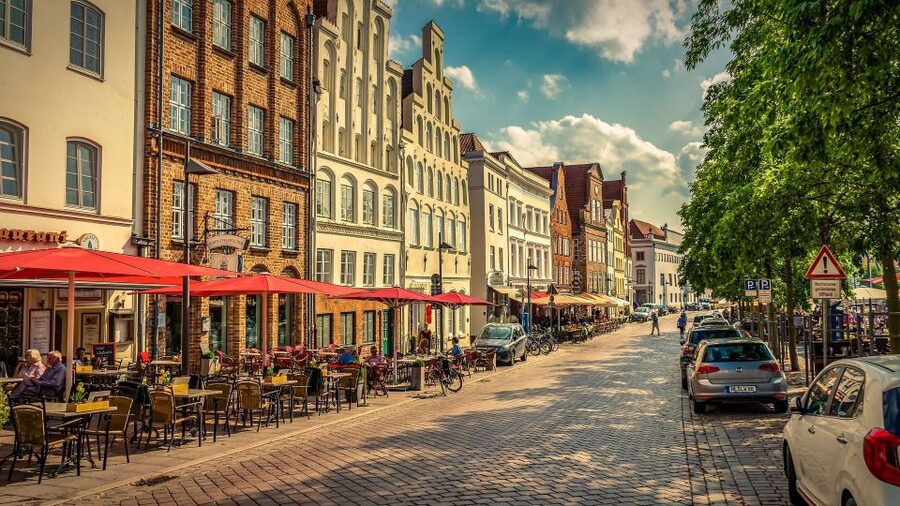
The route passes through cobbled streets within the UNESCO World Heritage old town. That designation reflects the unusual survival of the medieval street pattern and its brick-built architecture. You are not looking at a single monument in isolation. The real attraction is the way gates, churches, warehouses, public buildings, and merchant homes fit together.
The cobbles can be uneven, so wear shoes with good support. The tour does not require special equipment, but thin soles and uncomfortable footwear will make the walk less pleasant.
Buddenbrook House and the Mann family connection
The next major stop is Buddenbrook House, associated with German writers Thomas Mann and Heinrich Mann. For visitors interested in literature, this gives the tour a different tone. Lübeck is not only a trading city of churches and merchants. It is also a place connected with one of Germany’s best-known literary families.
The house is especially linked with Thomas Mann’s novel Buddenbrooks, which follows a merchant family and examines social change, family expectations, and commercial decline. The tour connects the building and the Mann family with Lübeck’s merchant culture, helping you see how the city’s real economic world became part of its literary identity.
Entry tickets are not included, so the walking tour should be understood as an exterior-focused introduction unless you purchase admission separately. The guide can still explain why the house matters and how it fits into the city’s story, but anyone hoping for a detailed museum visit should allow extra time and budget.
I like this stop because it broadens the tour beyond architecture. You get a look at Lübeck as a place of business, family life, and artistic memory. If you have read Thomas Mann, the connection will carry extra weight. If not, the guide’s explanation still gives you a useful link between the city’s merchant past and its modern cultural reputation.
St. Mary’s Church and the little devil outside
St. Mary’s Church is one of the tour’s strongest architectural stops. It is the third-largest brick Gothic church in Germany, a fact that helps explain its scale and importance in Lübeck’s skyline.
The church’s size reflects more than religious devotion. Major churches in medieval trading towns also expressed civic pride and economic power. Lübeck’s merchants helped build a city that could compete with other ports around the Baltic, and St. Mary’s Church was part of that public statement.
Your guide also shares the story of the little devil outside the church. This local tale adds a lighter touch to the heavy brick and soaring Gothic forms. It is the kind of small story that helps you remember a building after the formal dates and architectural terms have faded.
Again, check what is included. The tour price covers the private guide and walking tour, but not entry tickets. You may see the church from the outside during the scheduled route. If going inside matters to you, ask about available time and admission before booking or plan a separate visit.
More Walking Tours in Lubeck:
- Lübeck: Express Walk with a Local
★ 4.9 · 10 reviews - Lübeck: Old Town Highlights Private Walking Tour
★ 4.8 · 8 reviews - Discover Berlin Half-Day Walking Tour
★ 5.0 · 9,624 reviews - Berlin: Third Reich and Cold War 2 Hour Walking Tour
★ 4.9 · 6,830 reviews
Marzipan, tasting, and a sweet piece of Lübeck
The marzipan bakery stop is one of the tour’s most appealing details. Lübeck is strongly associated with marzipan, and tasting several varieties gives the subject a practical, pleasant turn.
You are not simply handed a sweet and sent on your way. The guide explains the importance of marzipan and its connection with the city. That makes the tasting feel less like a random shopping stop and more like a small lesson in local food culture.
Freshly baked marzipan also breaks up the architecture-heavy route. After gates, churches, trade, and literature, a taste of almond confection gives you something immediate and sensory to remember. It is a particularly good touch for families and anyone who likes food stories alongside city history.
The description does not specify how many pieces you taste or whether additional purchases are included. Treat the stop as a tasting opportunity, not a full food tour. If you enjoy it, you can decide for yourself how much more to buy.
Lübeck Town Hall and the final city view
The walk ends at Lübeck’s Town Hall, considered one of Germany’s most beautiful town halls. Its importance is both architectural and civic. A town hall was the place where the city’s commercial and political power took shape, so it makes sense as the final stop on a route centered on merchants, trade, and public buildings.
The Town Hall is also part of Lübeck’s UNESCO World Heritage setting. By the time you reach it, the different pieces of the tour should fit together: the Holsten Gate shows the city’s defenses, the churches show its wealth and ambition, the merchant buildings show its trade, Buddenbrook House shows its literary identity, and the Town Hall shows its civic authority.
The ending is well chosen because it leaves you in the heart of the old city. You can continue exploring afterward, return to a sight that caught your attention, or find a place to eat nearby. The tour itself does not include transportation, and none is needed for the listed route.
How the private format affects the experience
This is a private tour for your group, with a maximum size of 15 people. That setup matters most when you want to ask questions or shape the conversation around your interests.
A family might focus on the devil story, marzipan, and the city gates. A history-minded group might spend more time on Baltic trade, fortifications, and merchant wealth. Readers interested in German literature can give more attention to Buddenbrook House and the Mann family.
The guide languages are German and English. The available feedback gives a strong impression of enthusiastic guiding. One German-speaking guest described the female guide as someone who had lived and breathed Lübeck and seemed to know every brick. Another praised her as friendly and competent, while noting that she could have made herself easier to identify at the meeting point.
That last point is useful. Since you meet in front of the Holsten Gate, a busy public area, look carefully for the guide and confirm the meeting details before the start. The positive comments suggest that the human side of the tour is a major strength, but clear identification at the beginning would make things smoother.
Is $265 a fair price for 90 minutes?
The price makes sense mainly for a larger group. At the maximum of 15 people, the cost is about $17.67 per person. For 10 people, it is $26.50 each. For four people, it reaches $66.25 each, and for two people, it is $132.50 each.
That pricing structure is important. You are paying for a private guide, not a low-cost shared walk. If your group is large, the tour offers a focused introduction to Lübeck at a reasonable per-person price. If you are a couple, you should compare it with a shared walking tour or a longer private experience before booking.
The 90-minute length is efficient but limited. It is enough to see the main landmarks and understand the broad story of Lübeck. It is not enough for long interior visits, extensive shopping, or a slow architectural study of every street.
The best value comes when you use the tour as an orientation. Afterward, you can return to the places that interest you most, buy museum tickets, or explore the old town with a better sense of what you are seeing.
Who should book this Lübeck walk?
I would recommend it for first-time visitors who want a clear introduction without spending half a day on their feet. It also suits families, small private groups, and people who prefer asking a guide direct questions.
The tour is a good match if you care about:
- Medieval city walls and gates
- Brick Gothic architecture
- Baltic Sea trade
- German literature and the Mann family
- Local food traditions
- A private pace rather than a large group
It may not suit you if your main goal is extensive indoor sightseeing. Entry tickets are not included, and the schedule is short. It is also not suitable for wheelchair users or people with mobility impairments. The cobbled streets and amount of walking make comfortable shoes and practical clothing essential.
Free cancellation is available up to 24 hours before the start for a full refund. You can also reserve now and pay later, which helps if your Lübeck schedule is still changing.
Should you book it?
Book this tour if you want Lübeck’s major stories explained in one compact walk and you can share the cost with a group. The route has a smart mix of architecture, trade, literature, local legend, and marzipan, and the guide appears to be the main reason the experience earns such strong marks.
For two people, I would book only if a private guide is important to you. Otherwise, consider a shared tour and spend the difference on entry tickets or a longer visit to Buddenbrook House and St. Mary’s Church. For a family or group of friends, this is a practical way to get oriented quickly and see why Lübeck’s old center is so distinctive.
FAQ
Where does the Lübeck walking tour begin?
The meeting point is in front of the Holsten Gate, near Museum Holstentor.
How long does the tour last?
The walking tour lasts 90 minutes.
How much does the private tour cost?
The price is $265 per group of up to 15 people.
Which languages are available?
The live guide is available in German and English.
Are entry tickets included?
No. Entry tickets are not included in the tour price.
What should I wear or bring?
Bring comfortable shoes and comfortable clothes. The route includes cobbled streets and walking through the historic center.
Is the tour suitable for wheelchair users?
No. The activity is not suitable for wheelchair users or people with mobility impairments.
Just added around Lubeck
- Lübeck zwischen Grusel und Geschichte Truecrime zu Halloween★ 4.9 · 35 reviews
- Lübeck: Old Town Highlights Private Walking Tour★ 4.8 · 8 reviews
- Lübeck: Hanseatic League History Walking Tour★ 4.9 · 57 reviews
- Lübeck Day Pass – Day ticket for Lübeck museums★ 4.0 · 15 reviews
- Lübeck: Classic Tour of the Hanseatic City★ 4.8 · 64 reviews
- Lübeck: Express Walk with a Local★ 4.9 · 10 reviews
- Lübeck: Backyards and Town Houses Private Guided Tour★ 4.9 · 23 reviews
- Lübeck: Architecture and Local Craft Private Guided Tour★ 4.0 · 6 reviews
Historical Tours, compared.
City History Canal Sightseeing Tour on a Motorboat
Read our review →

Browse the lists this tour appears in