
Reviewed · HISTORICAL TOURS
Lübeck: Hanseatic League History Walking Tour
Lübeck keeps its Hanseatic story underfoot. I like the way this private walk links major sights with small details, from the Holsten Gate and Trave Harbour to narrow lanes and tucked-away courtyards. I also like the clear historical arc, showing how merchant connections grew into a powerful network of about 300 cities. The main consideration is time: 90 minutes gives you a brisk introduction, not a full tour of every corner.
The private group format is a real plus if you are traveling with up to six people, since your guide can respond to your interests. Guides including Bernd, Chris, and Karin have been praised for lively explanations and for adjusting the route, especially when visitors wanted to see more courtyards. At $259 per group, the price is easier to justify with five or six people than with one or two.
In This Review
- Key points to know before you book
- Why Lübeck’s Hanseatic story works well on foot
- Starting beside the Holsten Gate
- From salt storehouses to the Trave Harbour
- Große Petersgrube and Lübeck’s brick character
- St. Mary’s Church and the Hanseatic model
- Rathausmarkt and Lübeck’s civic power
- Buddenbrook House and the Mann family connection
- The Schiffergesellschaft guild hall
- Ending at the Hospital of the Holy Spirit
- What the private format adds
- Is $259 a fair price for 90 minutes?
- Who should book this walk?
- FAQ
- Where does the Lübeck walking tour begin?
- Where does the tour end?
- How long does the tour last?
- How many people can join the private group?
- What languages are available?
- Is a professional guide included?
- Are transfers included?
- Are food and drinks included?
- Can I cancel for a full refund?
Key points to know before you book
- Start at the Holsten Gate: The tour begins beside Lübeck’s best-known fortification, making it easy to find and giving you an immediate introduction to the old city.
- Follow the Hanseatic story: You learn how North German merchants protected trade routes and how their association grew into a network reaching from Riga to Bruges.
- See Lübeck’s main historic sights: The route includes the Trave Harbour, salt storehouses, Rathausmarkt, St. Mary’s Church, Buddenbrook House, and the Schiffergesellschaft guild hall.
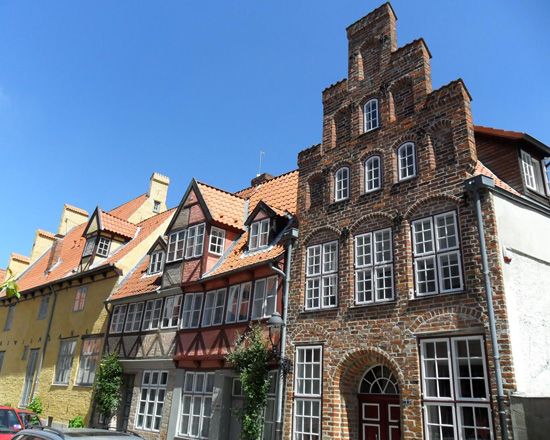
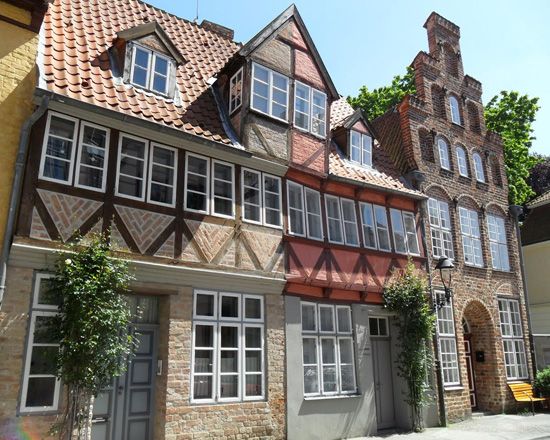
- Walk through Große Petersgrube: This old street is lined with traditional brick buildings and stepped gables, some of Lübeck’s most recognizable architectural details.
- Expect a compact walking tour: The 90-minute route covers plenty, but it leaves little time for long stops inside buildings.
- Best for small groups: The private format works especially well for families, friends, or business groups who want a guide focused on their questions.
Why Lübeck’s Hanseatic story works well on foot
Lübeck is a good city for a history walk because the old trading world is still easy to read in the streets. Brick churches, merchant houses, harbor facilities, guild buildings, and city gates are not scattered far apart. You can connect them with your own footsteps instead of trying to picture the past from a museum label.
The Hanseatic League was not a single country or empire. It began as a connection among merchants, especially North German traders who needed safe and dependable sea links. Over time, the association became a confederation of cities. At its height, about 300 maritime and inland cities across Northern Europe were involved, stretching from Riga in the east to Bruges in the west.
That scale is what gives the tour its value. Lübeck was not simply a prosperous medieval town. It was part of a trading system that tied ports and inland markets together. As you move through the old center, the buildings become evidence of that system: storage, worship, government, lodging, merchant organization, and shipping all appear along the way.
I like this approach because you are not asked to memorize a string of dates. You are shown how commerce shaped the city. The result is more useful than a list of rulers and battles, especially if this is your first visit to Lübeck.
More History Tours in Lubeck:
- Lübeck: Private Historical and Architectural Walking Tour
★ 4.5 · 6 reviews - Leipzig: City History Canal Sightseeing Tour on a Motorboat
★ 4.7 · 6,232 reviews - Berlin: Natural History Museum Entrance Ticket
★ 4.6 · 3,382 reviews
Starting beside the Holsten Gate
Meet your guide at the Holsten Gate, or Holstentor, a practical and memorable starting point. This famous brick gate marks one of Lübeck’s historic entrances and immediately gives the walk a sense of place. It was one of four city fortification gates at this wall passage alone, a detail that helps you understand how carefully the city protected its trade and residents.
The gate is also a strong orientation point. You begin outside the central old town, then move toward the historic center and the Trave River. That progression mirrors Lübeck’s basic story: defended city, working port, wealthy merchant center.
Do not expect a long architectural lecture before you start walking. The tour is only 90 minutes, so the guide needs to keep things moving. You will get the most from this stop if you look closely at the heavy brick construction and think about the message a gate like this sent to approaching merchants and visitors.
Because the meeting point is fixed and prominent, arriving there should be simple. The activity does not include transfers, so you need to make your own way to the Holsten Gate.
From salt storehouses to the Trave Harbour
After the gate, the route passes the salt storehouses and continues toward the Trave Harbour. This section helps turn the Hanseatic League from an abstract idea into something practical. Trade required goods to be stored, moved, taxed, protected, and loaded. A port was not just a pretty waterfront. It was the working engine of the city.
The salt storehouses are especially useful in this story. Salt was a valuable commodity, and storehouses show how Lübeck handled goods before they moved onward. You may find this part more revealing than a grand church because it connects directly to the daily mechanics of trade.
The Trave Harbour adds another layer. The Hanseatic network depended on water routes, and the river gave Lübeck access to maritime commerce. Your guide can place the city’s fortunes within the wider northern European system, explaining why links between ports mattered so much to merchants.
This is still a walking tour rather than a harbor cruise. You will see the river and harbor area as part of the city route, but food, drinks, and transport are not included. If you want time for a relaxed waterfront stop, plan that separately after the tour.
Große Petersgrube and Lübeck’s brick character
The walk then reaches Große Petersgrube, one of Lübeck’s oldest streets. This is where the city’s architecture becomes especially enjoyable. Look for traditional brick buildings and stepped gables, the pointed rooflines that give northern German towns their distinctive profile.
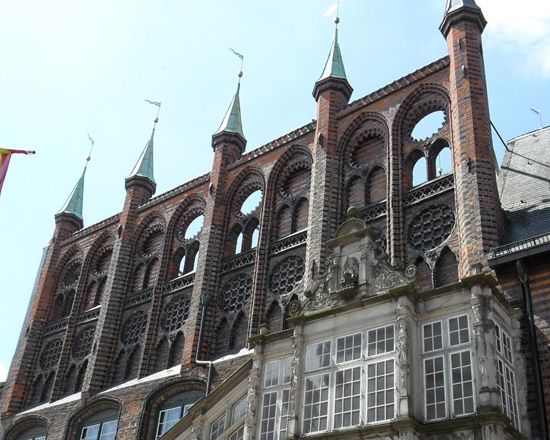
Brick was more than a decorative choice. In a region with limited local building stone, brick offered a practical material for large churches, houses, warehouses, and civic buildings. Lübeck’s old streets show how merchants and institutions used the material at different scales.
Große Petersgrube is also a reminder that Lübeck is not only about famous monuments. Narrow streets and older buildings often tell you more about the texture of urban life than a single landmark does. You can see how a medieval trading city was organized and how much of its character survives in the street plan.
The tradeoff is that the route moves at a useful but steady pace. You will have chances to look and ask questions, but this is not designed as a slow photography walk. If stepped gables and old brickwork are your main interest, tell the guide early so the private format can work in your favor.
More Walking Tours in Lubeck:
- Lübeck: Express Walk with a Local
★ 4.9 · 10 reviews - Lübeck: Old Town Highlights Private Walking Tour
★ 4.8 · 8 reviews - Discover Berlin Half-Day Walking Tour
★ 5.0 · 9,624 reviews - Berlin: Third Reich and Cold War 2 Hour Walking Tour
★ 4.9 · 6,830 reviews
St. Mary’s Church and the Hanseatic model
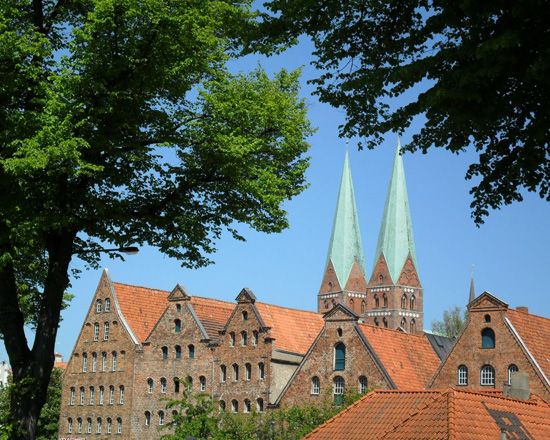
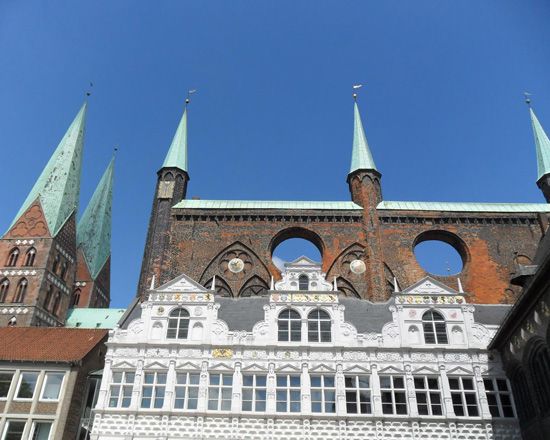
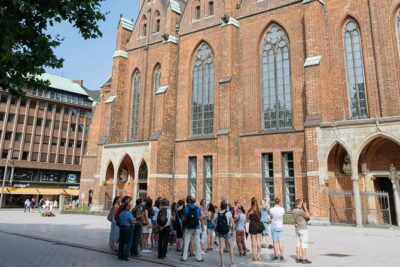
St. Mary’s Church is one of the tour’s major architectural stops. It served as a model for numerous churches in Hanseatic cities around the Baltic region, so its importance goes beyond Lübeck itself. The church helps explain how the city’s influence traveled through architecture as well as trade.
The building also shows how merchants expressed civic pride and religious commitment. Large churches required money, organization, skilled labor, and long-term planning. Their size and design reflect the confidence of a city benefiting from commercial connections.
You should treat this as an exterior-focused stop unless your guide specifically indicates otherwise. The experience is described as a city walk, and there is no promise of an extended interior visit. Still, seeing St. Mary’s in the context of Lübeck’s merchant power gives the building more meaning than a quick photograph would.
This part will suit you if you enjoy linking art and architecture to economics. It may feel less satisfying if you want detailed church interiors, art collections, or a long quiet visit. In that case, return on your own after the guided walk.
Rathausmarkt and Lübeck’s civic power
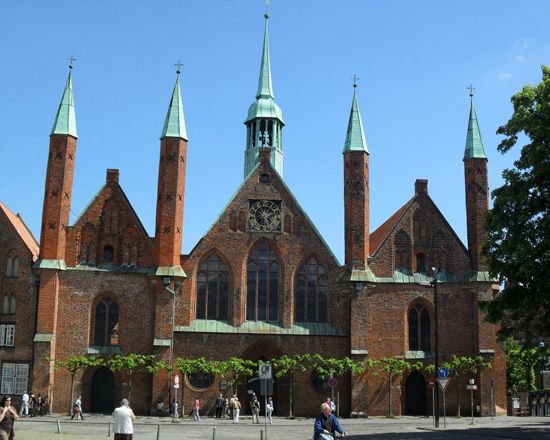
The route includes Rathausmarkt square and the City Hall, two places that help explain how the city governed itself. The Hanseatic League was built around trade, but trade needed rules, negotiation, and local authority. Civic spaces show where commercial interests met public decisions.
A guide can make this connection clear in a way a casual walk may not. Instead of seeing the square as just another attractive stop, you begin to notice how a prosperous merchant city presented its power. The setting also gives you a useful change of rhythm after the narrower lanes.
The tour does not promise a formal City Hall visit. Its strength is the connection among the square, the old center, and the wider Hanseatic story. If you want photographs of Lübeck’s civic architecture, this stop gives you a good opportunity, but keep your camera ready because the group continues on a schedule.
Buddenbrook House and the Mann family connection
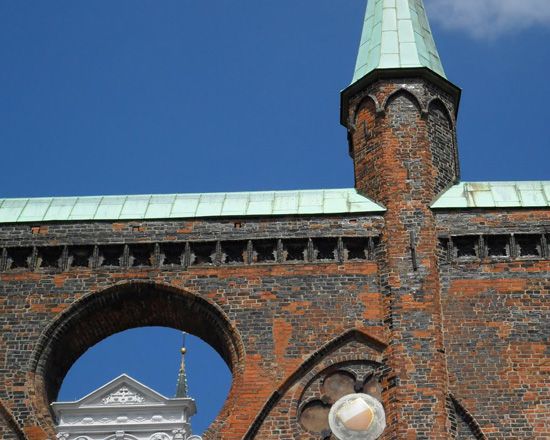
Buddenbrook House adds a literary note to a tour mainly focused on trade and medieval commerce. The building is associated with the Mann family and connects Lübeck’s historic center with the city’s later cultural identity.
You will not be taking a separate literary tour here, and the visit is part of the walking route rather than a long museum session. Even so, it is a worthwhile contrast. Lübeck’s story did not end when Hanseatic power declined. The same streets continued to shape the city’s public and private life.
This stop is useful if you are interested in how a historic city accumulates different layers of meaning. A medieval merchant center can later become a setting for influential literature, and the buildings remain part of both stories.
The Schiffergesellschaft guild hall
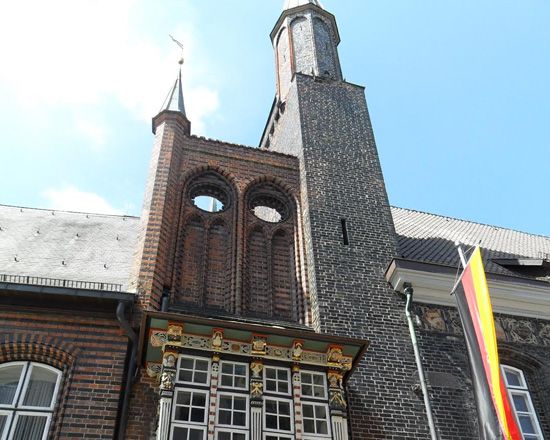
Near the end of the route, you pass the Schiffergesellschaft guild hall. This was a place where sailors connected with the Hanseatic League used to stop, making it one of the most direct links between the city and its seafaring past.
Guild halls matter because they show how professional groups organized themselves. The Hanseatic world depended on merchants, but sailors and other working groups were part of the same system. A stop here rounds out the story, taking you beyond wealthy civic leaders and grand churches.
The building is also a good example of how a stop can carry social history. You are not just looking at old brick and timber. You are being reminded that trade required people who traveled, loaded goods, negotiated contracts, and spent time away from home.
If you are choosing between a general city walk and this themed route, the Schiffergesellschaft helps tip the balance toward this one. It gives the Hanseatic subject a human, working-world dimension.
Ending at the Hospital of the Holy Spirit
The tour ends at the Hospital of the Holy Spirit, one of Lübeck’s oldest social institutions. This final stop broadens the city story again. Lübeck’s wealth supported more than trade and impressive buildings. It also helped create institutions for social care.
The ending is particularly pleasant because you can look into one or two romantic backyards. These smaller spaces offer a quieter finish after the gate, harbor, church, square, and guild hall. They also reveal a side of Lübeck that you could easily miss if you stayed only on the main streets.
I like the way the tour ends here rather than simply returning to the starting point. You finish with a reminder that a city’s history includes ordinary welfare, community life, and private spaces, not only merchants and monuments.
Since the route ends at a different place from the Holsten Gate, pay attention to your onward plans. The tour does not include transfers, so you will need to continue independently after the final stop.
What the private format adds
This is a private group for up to six people, with a professional guide speaking German or English. That setup makes a real difference in a city where narrow lanes and small courtyards reward questions.
The strongest feedback centers on guides who keep the history lively and adapt to the group. Bernd has been praised for combining a large store of information with humor and enthusiasm, while also responding to requests such as seeing more courtyards. Karin has been praised for explaining the city clearly and suggesting things to do after the official walk. Chris also received direct praise for helping an English-speaking visitor learn a great deal about Lübeck.
You should not assume you will receive a particular guide, but these comments point to the kind of experience the operator is aiming for. Ask questions early. Tell the guide if you care most about architecture, Hanseatic trade, courtyards, literature, or practical ideas for the rest of your day.
The private setup is especially useful for a family, a group of friends, or a business gathering. One group used the walk to round out a business meeting, which makes sense: the format is polished, focused, and easy to fit into a busy schedule.
Is $259 a fair price for 90 minutes?
The cost is $259 per group of up to six people. That works out to about $43 per person if you fill every place, or about $129.50 each for two people. The value depends heavily on your group size.
For six people, the price is reasonable for a private professional guide in a historic city. You are paying for a focused route, live explanation, and the ability to shape the conversation around your interests. For one or two people, the same price feels much steeper than a shared walking tour would.
The 90-minute length is another factor. It is long enough to see a wide range of sights and understand the main Hanseatic story, but short enough to fit before another appointment or activity. Several positive comments point to the timing and walking distance feeling well judged.
You are not paying for meals, drinks, transfers, or an extended admission program. Think of the price as covering the guide and the private experience, not a full-day package.
Who should book this walk?
I would choose this tour if you want a strong first look at Lübeck and prefer history explained in place. It suits you especially well if you like architecture, port cities, medieval commerce, and compact routes with many stops.
It is also a good fit for visitors who want personal attention. Families and small groups can ask questions without worrying about a large crowd. English and German are both available, which makes the walk practical for mixed-language groups.
You may want something else if you prefer long museum visits, extensive church interiors, or a slow wander with no fixed pace. The tour covers a lot in 90 minutes, so you will need to save time afterward for returning to favorite sights.
Book it if you are traveling with several people and want a clear, lively introduction to Lübeck’s old center. If you are a solo visitor or a couple watching costs closely, compare the private price with other walking options first. The tour’s best value comes from the small-group attention, not from the number of minutes alone.
Cancellation is flexible up to 24 hours before the start for a full refund, and you can reserve now while paying later. Starting times vary, so check availability before planning the rest of your day.
FAQ
Where does the Lübeck walking tour begin?
The tour begins at the Holsten Gate.
Where does the tour end?
The walk ends at the Hospital of the Holy Spirit.
How long does the tour last?
The tour lasts 90 minutes.
How many people can join the private group?
The private group can include up to six people.
What languages are available?
The live guide is available in German and English.
Is a professional guide included?
Yes, a professional city guide is included.
Are transfers included?
No. Transfers are not included.
Are food and drinks included?
No. Food and drinks are not included.
Can I cancel for a full refund?
Yes. You can cancel up to 24 hours in advance for a full refund.
Just added around Lubeck
- Lübeck: Old Town Highlights Private Walking Tour★ 4.8 · 8 reviews
- Lübeck: Private Historical and Architectural Walking Tour★ 4.5 · 6 reviews
- Lübeck zwischen Grusel und Geschichte Truecrime zu Halloween★ 4.9 · 35 reviews
- Lübeck Day Pass – Day ticket for Lübeck museums★ 4.0 · 15 reviews
- Lübeck: Classic Tour of the Hanseatic City★ 4.8 · 64 reviews
- Lübeck: Express Walk with a Local★ 4.9 · 10 reviews
- Lübeck: Architecture and Local Craft Private Guided Tour★ 4.0 · 6 reviews
- Lübeck: Backyards and Town Houses Private Guided Tour★ 4.9 · 23 reviews
Historical Tours, compared.
City History Canal Sightseeing Tour on a Motorboat
Read our review →

Browse the lists this tour appears in