
Reviewed · 3-HOUR EXPERIENCES
Munich: 3-Hour Culinary Nightwatch Tour
Munich gets darker after dinner. This three-hour evening walk pairs a costumed night watchman with a tavern meal, old town legends, and a second stop for dessert and a nightcap. I like the way the tour turns familiar sights into medieval story settings, and I like that food is built into the evening rather than treated as an afterthought. The main consideration is that the tour is conducted in German, and one booking was canceled two days ahead because too few people had signed up.
The route covers a surprising amount of central Munich, from St. Peter’s Church and the Old Town Hall to the Frauenkirche, Promenadeplatz, and the Theatine Church. The historical costume and theatrical storytelling give the walk a clear character, though the meal may feel ordinary to anyone expecting a full restaurant experience.
In This Review
- Key points to know before booking
- Starting beneath the Mariensäule at Marienplatz
- The tavern meal gives the tour a sturdy beginning
- St. Peter’s Church and the unpleasant side of old Munich
- Old Town Hall and the old city gate
- The torture chamber, prison, and Old Court
- Gruftgasse and Schäfflergasse reveal a different Munich
- Frauenkirche, Promenadeplatz, and the grander city
- Salvatorkirche and the Theatine Church
- Dessert and a nightcap bring the evening back indoors
- Is $88 a fair price?
- Who will enjoy this Munich evening?
- Practical details that affect your decision
- Should you book the culinary nightwatch tour?
- FAQ
- Where does the Munich culinary nightwatch tour meet?
- How long does the tour last?
- What language is the tour conducted in?
- Is food included?
- Is dessert included?
- Which Munich sights does the route visit?
- Is the tour wheelchair accessible?
- How much does the tour cost?
- Can I cancel for a full refund?
- Can I reserve now and pay later?
Key points to know before booking
- The evening begins and ends with food: You receive a hearty meal and drink at the first tavern stop, then dessert and a nightcap later.
- The stories can be grim: Expect funerary customs, foul-smelling corpses, torture, prison, host desecration, and other unsettling tales from Munich’s past.
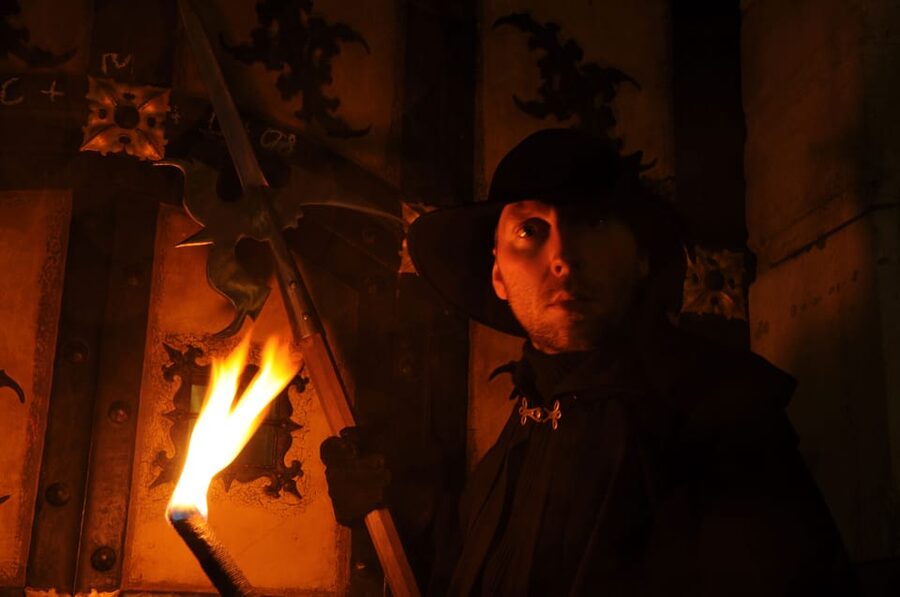
- The guide is part of the show: The night watchman wears historical clothing and leads the group through the old town in character.
- The tour is conducted in German: You need a strong enough command of German to follow spoken storytelling and jokes.
- The walking route is packed with landmarks: The path includes St. Peter’s Church, the Old Town Hall, the Old Court, Frauenkirche, Salvatorkirche, and the Theatine Church.
- The price includes more than a basic walk: At $88 per person, the cost covers the guide, the main meal and drink, dessert, and a nightcap.
Starting beneath the Mariensäule at Marienplatz
Your meeting point is the Mariensäule, the Marian column at Marienplatz in central Munich. Look for a guide carrying a large blue bag marked Weis(s)er Stadtvogel in white. That is the practical detail that matters most at a crowded square, especially in the evening when several tour groups may gather nearby.
The activity information also refers to the meeting area as Marktplatz, but the specific meeting point given is Mariensäule at Marienplatz. I would use the column as your target and arrive with enough time to spot the blue bag without rushing.
The opening has a useful bit of theater. Instead of beginning with a standard lecture about dates and buildings, the night watchman presents himself as someone responsible for keeping the streets clear of dishonorable folk. That role gives the walk a simple thread: you are following a municipal watchman through a city where darkness brought practical worries, superstition, crime, illness, and bad smells.
The guide’s costume helps set the mood, but the quality of the evening depends heavily on the person leading it. The strongest feedback points to humor, strong subject knowledge, and lively delivery. Matthias, in particular, received praise for keeping the group laughing, talking, and even singing during a tour that lasted a little more than three hours.
A few more Munich trips worth comparing
- From Munich: Neuschwanstein & Linderhof Castle Full-Day Trip
★ 4.5 · 12,494 reviews - Neuschwanstein & Linderhof Castle-Fairytale Day Tour from Munich
★ 4.5 · 7,275 reviews - Munich: Third Reich & WWII Walking Tour
★ 4.6 · 6,181 reviews
The tavern meal gives the tour a sturdy beginning
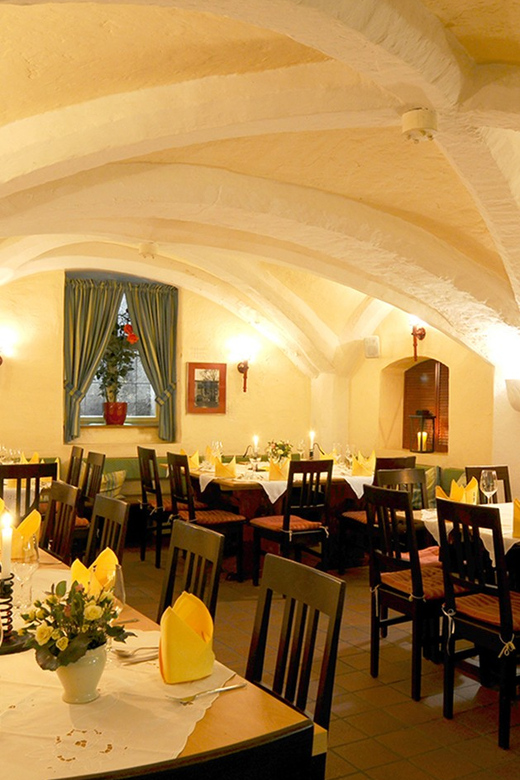
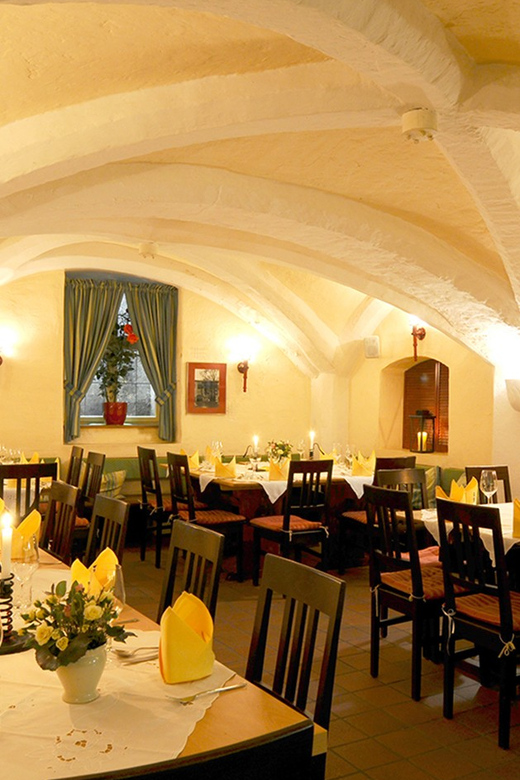
Before the walking starts in earnest, you visit a quaint Munich tavern for a hearty night watch meal and a drink. The stated meal includes meat and bread. It is the sort of food that fits the theme: plain, filling, and suited to a watchman who needed something substantial before heading into the streets.
This first stop is more than a convenient dinner break. It lets you meet the guide and the rest of the group while seated, and it gives the evening a social rhythm. You are not asked to spend three hours walking while waiting for food at the end. You eat first, then set off with the tour’s stories already underway.
Still, keep your expectations measured. One detailed assessment called the food very good, but another found the meal only average. That difference tells you how to judge the $88 price. The food is part of the package and adds comfort and atmosphere, but this is not primarily a fine dining evening.
A large group can also change the meal. One person enjoyed the food and the entertainment but found the seating cramped because so many people were placed together. If you prefer quiet, spacious dining, that could be a drawback. If you like a social evening with a bit of noise and shared amusement, it may suit you well.
St. Peter’s Church and the unpleasant side of old Munich
The walk moves toward St. Peter’s Church, one of the central landmarks in Munich’s old town. Here, the night watchman focuses on the church cemetery and the customs surrounding death.
Expect stories about funerary practices, epitaphs, unpleasant odors from decomposing bodies, and even missing church pews. These details show how different a medieval city could feel from the polished center you see today. Churches were not only places for worship. Cemeteries occupied valuable urban space, death was visible, and basic sanitation was poor.
This part of the tour is a good test of your taste in historical storytelling. The material is intentionally grisly. If you enjoy the rougher, less polished side of the past, the details make the old streets feel immediate. If you prefer art, architecture, and royal anecdotes, the talk may seem overly focused on death and bodily discomfort.
The night watchman format works well here because the guide can connect the setting to the concerns of someone who walked the streets after dark. You get a sense of what a watchman might have noticed: suspicious behavior, disorder, bad smells, and the daily problems that official history often leaves out.
Old Town Hall and the old city gate
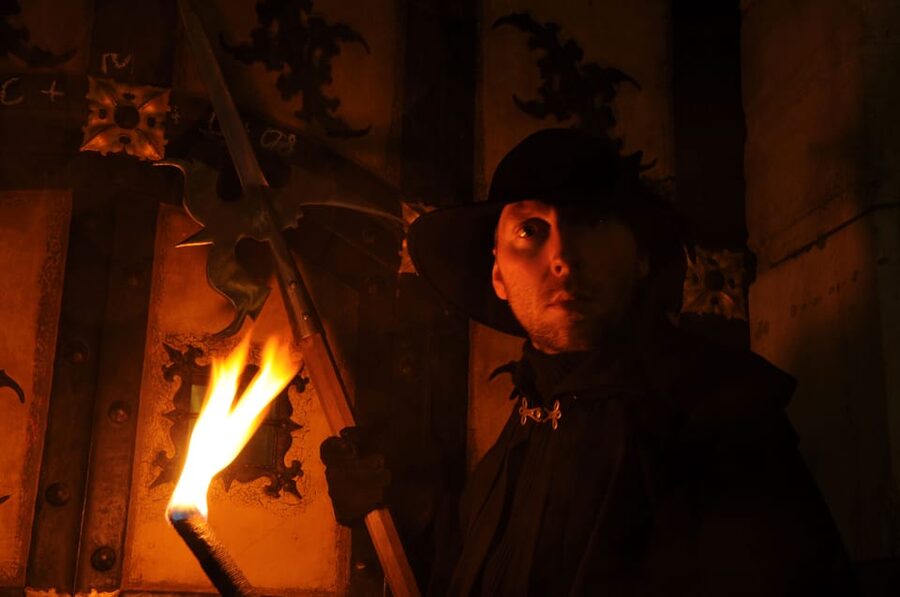
At the Old Town Hall, the route follows the historic Salzstraße. The stop includes stories about the old city gate and the reconstruction of the building’s spire in the 1970s.
This is one of the tour’s useful contrasts. The guide moves from medieval urban defenses to the modern work needed to repair Munich’s architectural symbols. You are not simply looking at a façade. You are hearing how the city changed, lost parts of itself, and later rebuilt them.
The mention of the old gate also helps you read the streets as part of a former fortified town. Modern Munich is easy to experience as a shopping and dining center, but this route keeps pointing back to walls, gates, courts, and controlled entry. The city’s shape begins to make more sense when you imagine where people once entered, worked, worshiped, and tried to stay safe after dark.
Still Munich, at a slower pace:
- Dachau Concentration Camp Memorial Site Tour from Munich by Train
★ 4.5 · 5,637 reviews - Neuschwanstein Castle Tour from Munich
★ 4.5 · 5,117 reviews - Third Reich Walking Tour Munich
★ 4.5 · 4,291 reviews - Munich Hop-On Hop-Off Tour: 1-Day or 2-Day Ticket
★ 4.3 · 4,161 reviews
The torture chamber, prison, and Old Court
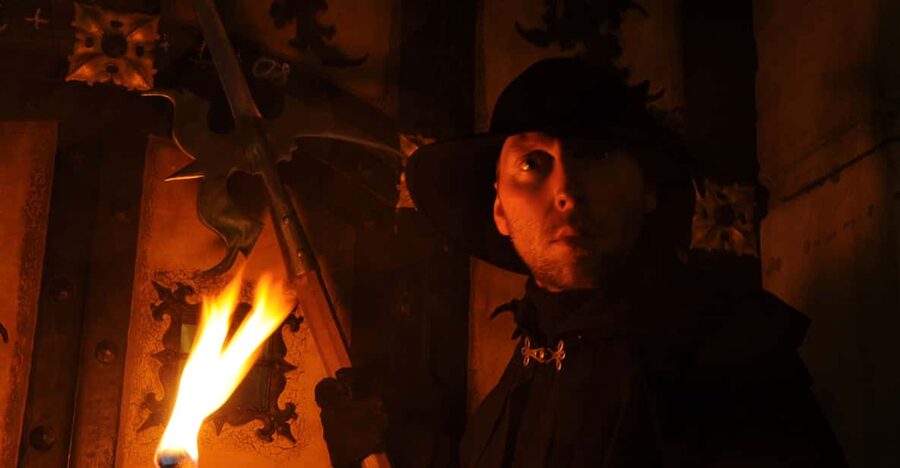
Next comes a darker section near a torture chamber and prison, followed by the Old Court. The subject matter shifts from street patrols to the machinery of justice.
The tour then follows the line where Munich’s original 12th-century city wall once stood. You leave the moated castle and continue west along the former defensive trail. This is a smart way to explain the city: instead of stopping only at famous buildings, the guide traces the boundaries that once shaped daily life.
For you, the key value is connection. The Old Court, the moat, the city wall, and the prison are not isolated curiosities. Together they suggest how authority operated in the medieval city. The night watchman’s role becomes clearer as you pass places tied to rulers, punishment, and protection.
The material is also likely to appeal to anyone who enjoys a little theatrical darkness. The guide does not present Munich as a spotless postcard. The stories include fear, violence, and social rules enforced in very physical ways.
Gruftgasse and Schäfflergasse reveal a different Munich
Gruftgasse brings another set of gruesome tales. The name itself fits the mood, and the stories here continue the tour’s interest in burial, death, and the less pleasant corners of urban life.
At Schäfflergasse, you hear that wine, not beer, was the drink of choice in medieval Munich. This is a memorable correction to the usual modern image of Bavaria. Munich is now strongly associated with beer halls and large steins, but the drinking habits of earlier centuries were not identical to those you see today.
That detail gives the walk some needed variety. After several stops involving cemeteries, punishment, and corpses, a discussion of wine culture offers a lighter change of pace. It also reminds you that food and drink history can be just as revealing as political history.
The route is not a pub crawl. The drink stops are part of the meal arrangement, not an invitation to sample several bars. If you want a serious tasting program, this is not the right choice. If you like a historical walk that uses a meal and drinks to make the past easier to picture, the format makes sense.
Frauenkirche, Promenadeplatz, and the grander city
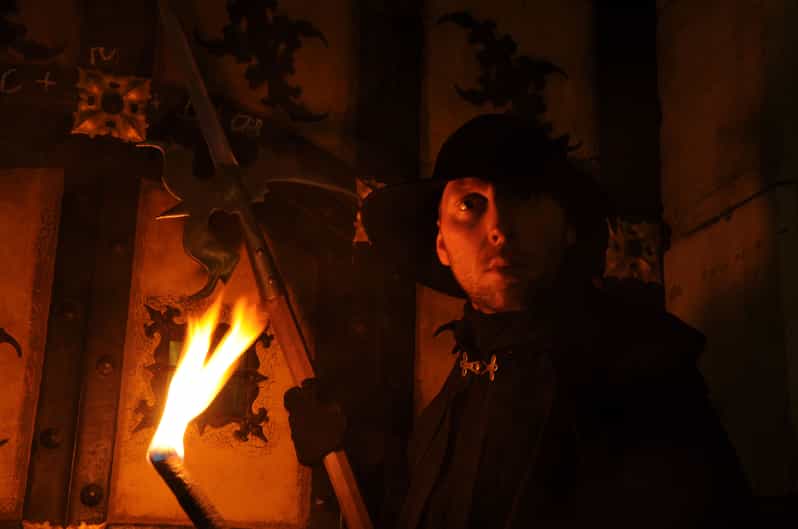
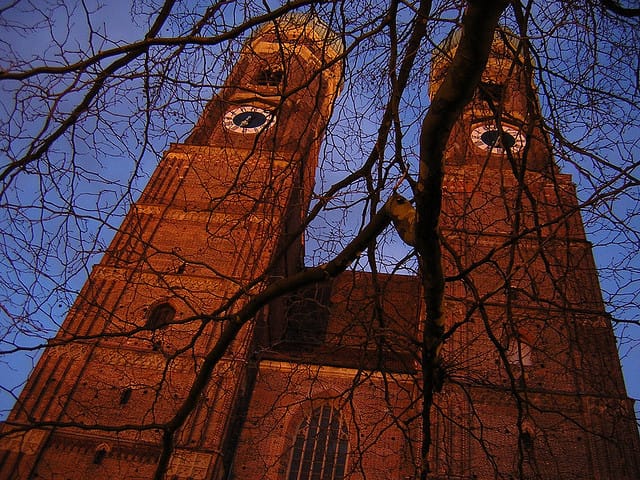
The twin towers of the Frauenkirche provide one of the evening’s most recognizable sights. Even without entering, the church gives the route a strong visual anchor and helps place you in the heart of Munich.
From there, the walk passes Promenadeplatz, Palais Portia, and Palais Holnstein. The tone shifts toward the city’s grander buildings and aristocratic world. These palaces add a useful counterpoint to the earlier material about prisons, cemeteries, and street disorder.
I like this change of setting because it shows that the old town was never only one thing. Munich held ordinary workers, religious institutions, royal power, punishment, trade, and ceremony within a compact area. The walk’s short distance between humble streets and formal palaces makes that contrast easy to grasp.
The exact walking pace is not given, but the experience lasts three hours and includes multiple stops. You should wear comfortable shoes and expect to remain outdoors for much of the evening, with the tavern visits providing breaks from the street.
Salvatorkirche and the Theatine Church
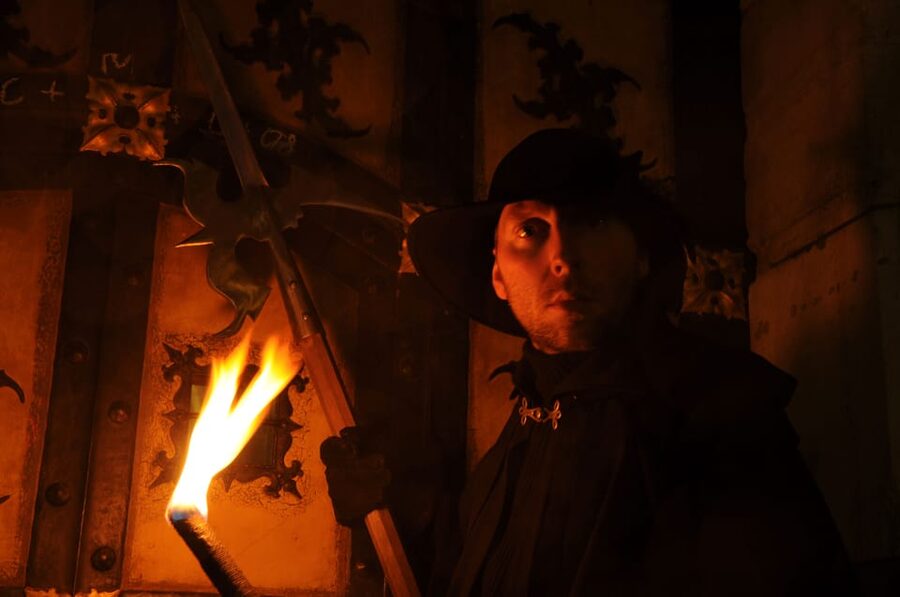
At Salvatorkirche, the night watchman tells the story of a shocking host desecration. This is another example of the tour’s interest in religious fear and the severe consequences attached to perceived offenses.
The story may be uncomfortable, but it explains how powerful religious beliefs were in earlier Munich. In a period when accusations could quickly become public crises, a church-related incident could affect far more than the people directly involved.
The final church stop is the Theatine Church, where you learn about Henriette Adelaide. Her son later ensured that the Theatine cloister was built. This brings the tour back toward dynastic history, architecture, and the influence of courtly figures.
Together, these two stops offer a strong ending to the historical route. Salvatorkirche supplies the shocking tale, while the Theatine Church provides a more political and architectural story. You get both the darker popular legends and the decisions made by powerful families.
Dessert and a nightcap bring the evening back indoors
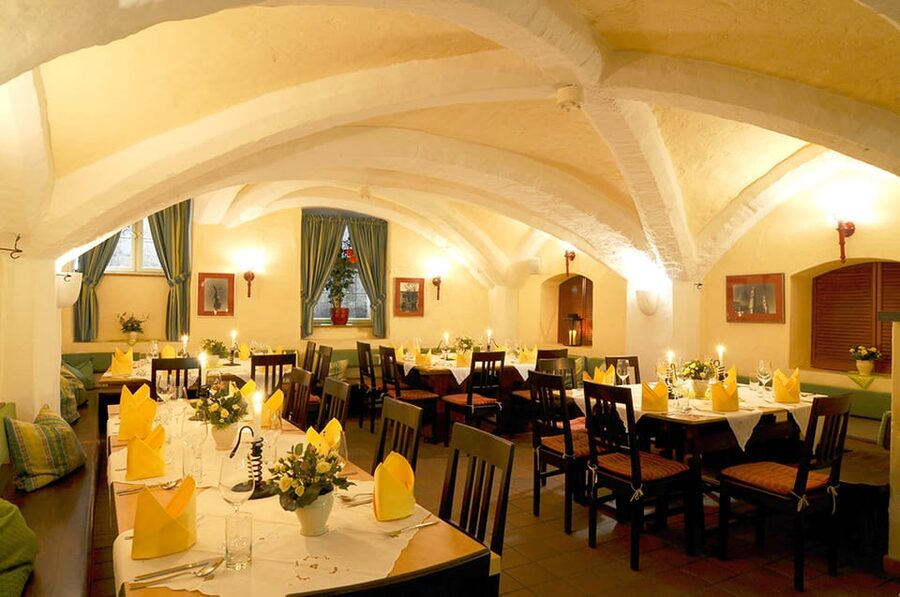
The tour returns to the tavern for dessert and a nightcap. Kaiserschmarren was specifically noted as the dessert on one occasion. This shredded, sweet pancake-style dish is a fitting final course after a hearty meal and a long walk.
There is one possible weakness here: the dessert takes place in the same restaurant as the first meal. One person disliked returning to the same location for the final course. That is fair if you want the tour to keep changing scenery until the last minute.
I see the return as practical rather than disappointing. You can sit down, warm up, finish the evening with something sweet, and have a final drink without searching for another restaurant. The nightcap also gives the guide and group time to relax after the formal route.
One important point is that the tour may run a little longer than three hours. That happened on one occasion when the guide kept the group entertained with stories, laughter, and singing. Build in some flexibility afterward rather than booking a tight late-night train or performance.
Is $88 a fair price?
At $88 per person, this is not a cheap walking tour. The value comes from the full evening package: a historical guide in costume, a three-hour old town route, a main meal and drink, dessert, and a nightcap.
If you compare it with a basic city walk, the price is high. If you compare it with an evening meal plus a separate guided tour, it becomes easier to justify. You are paying for the performance, the route design, and the convenience of having food built into the experience.
The food quality seems less consistent than the storytelling. That means I would book this for the guide-led atmosphere and the unusual subject matter, not because you expect Munich’s best dinner. The strongest praise centers on humorous, engaging guides and good subject knowledge. Matthias was singled out as especially entertaining and well informed.
The overall rating is 4.3 out of 5 from 87 reviews, which fits the picture: generally strong, with some concerns about food, seating, and the possibility of cancellation when participation is too low.
Who will enjoy this Munich evening?
You are a good match for this tour if you:
- Enjoy old town walks with legends and dark historical details
- Understand spoken German well
- Like combining sightseeing with a social meal
- Prefer a guide with theatrical flair over a quiet academic lecture
- Want to see central landmarks after sunset
- Are comfortable with stories about death, torture, corpses, and religious offenses
Families with older children might enjoy the costume and storytelling, but the grim material is not aimed at young children. The supplied information does not give an age recommendation, so use your own judgment based on how your group handles unsettling subjects.
This also suits repeat visitors to Munich who have already seen Marienplatz, Frauenkirche, and the main old town sights in daylight. The buildings may be familiar, but the night watchman’s stories give you a different reason to stop.
It is less suitable if you want an English-language tour, a quiet gourmet dinner, or a short stroll with few stops. The listed live guide language is German only, and the evening includes a lot of spoken content.
Practical details that affect your decision
The tour lasts three hours, though it may run slightly longer. Check the starting time when booking because the available schedule can vary.
The tour is listed as wheelchair accessible. Since the route passes through old town streets, the most useful step is to confirm any specific access needs before booking, but no separate restriction is provided in the activity details.
You can cancel up to 24 hours before departure for a full refund. The reserve now and pay later option lets you hold a place without paying immediately, which is useful while your Munich plans are still moving.
There is one planning risk worth taking seriously. A booking for seven people was canceled two days before departure because participation was too low. That does not mean cancellation is common, but if this evening is central to your plans, avoid making it the only fixed activity of the night.
Should you book the culinary nightwatch tour?
Book it if you want German-language storytelling, medieval scares, and a meal-centered evening rather than a standard sightseeing walk. The cost is reasonable when you treat it as dinner, dessert, drinks, and entertainment in one package, though the food itself may be merely average.
I would give this tour extra weight if you enjoy humor and live performance. The best guide feedback describes an evening that felt social, funny, and full of stories, with Matthias earning particular praise. I would skip it if you do not understand German well or if grisly tales of cemeteries, torture, and religious crimes sound unpleasant.
For the right audience, it offers a memorable way to see Munich after dark. Just meet at the Mariensäule, find the big blue bag, wear good shoes, and leave room in your schedule for the night watchman to keep talking.
FAQ
Where does the Munich culinary nightwatch tour meet?
The meeting point is the Mariensäule at Marienplatz in Munich. Look for the guide carrying a big blue bag with the white words Weis(s)er Stadtvogel.
How long does the tour last?
The tour is scheduled for three hours. It may last slightly longer, as one reported experience continued for more than three hours.
What language is the tour conducted in?
The live tour guide language is German.
Is food included?
Yes. The first stop includes a night watch meal and a drink. The meal is described as meat and bread.
Is dessert included?
Yes. The second tavern stop includes dessert and a nightcap. Kaiserschmarren was served as dessert on one occasion.
Which Munich sights does the route visit?
The route includes St. Peter’s Church, the Old Town Hall on Salzstraße, the Old Court, the former line of the 12th-century city wall, Frauenkirche, Promenadeplatz, Palais Portia, Palais Holnstein, Salvatorkirche, and the Theatine Church.
Is the tour wheelchair accessible?
The activity is listed as wheelchair accessible.
How much does the tour cost?
The listed price is $88 per person.
Can I cancel for a full refund?
Yes. You can cancel up to 24 hours in advance for a full refund.
Can I reserve now and pay later?
Yes. The activity offers a reserve now and pay later option, so you do not need to pay at the time of booking.
Just added around Munich
- Pub crawl incl. Oktoberfest museum guided tour with beer tasting (private)★ 5.0 · 5 reviews
- South Tyrolean specialties and wine tasting★ 5.0 · 5 reviews
- Size Matters Beer Tour Munich★ 4.6 · 105 reviews
- Short & sweet: Tasting the Viktualienmarkt★ 4.8 · 37 reviews
- Secret Food Tours Munich★ 4.8 · 5 reviews
- Munich: Romantic Wine Experience for Two at Viktualienmarkt★ 4.2 · 14 reviews
- Residence of Munich private tour with skip the line ticket★ 5.0 · 4 reviews
- Munich: Resistance against Hitler – Historical Walking Tour★ 5.0 · 5 reviews
3-Hour Experiences, compared.



Munich’s Beer Halls and Breweries: 3-Hour Guided Tour
Read our review →
Browse the lists this tour appears in