
Reviewed · THIRD REICH HISTORY TOURS
Third Reich Walking Tour Munich
Munich’s past is impossible to ignore. This 2.5-hour English walking tour connects the city’s Nazi-era sites with the story of how Adolf Hitler and the Nazi Party gained power, while also remembering those who resisted. I like the route’s mix of major landmarks and lesser-noticed corners, and I like that the guides use clear explanations, photos, and room for questions. The main drawback is simple: it is entirely outdoors, so cold, rain, or a fast pace can affect the experience.
At $45.95 per person, this is not the cheapest way to spend a morning or afternoon in Munich. Still, the cost buys more than a walk past famous buildings. A good guide adds the political and social links that are easy to miss on your own. You should arrive ready to focus, though, because several decades of difficult history are packed into a short tour.
In This Review
- Key points to know before you book
- Why this Munich history walk is worth your time
- Starting at Radius Tours on Dachauer Strasse
- Königsplatz and the architecture of power
- Odeonsplatz and the failed path to power
- Hofbräuhaus and the politics of a beer hall
- The Old Town Hall and Munich’s civic center
- Marienplatz, the ending point in central Munich
- Guides make the difference
- How much walking and standing should you expect?
- The price and what you receive
- Who should book this Munich walking tour?
- Should you book it?
- FAQ
- How long is the Third Reich Walking Tour Munich?
- What language is the tour offered in?
- Where does the tour start?
- Where does the tour end?
- What locations are included?
- How far in advance can I cancel for a full refund?
Key points to know before you book
- Königsplatz reveals Munich’s role in Nazi public life, with space once used for party events and ceremonies.
- Odeonsplatz connects directly to Nazi marches and memorials, making it one of the most important stops on the route.
- The Hofbräuhaus was more than a beer hall, since it also served as a political meeting place during the party’s early years.
- Guides are the tour’s strongest feature, with praised leaders including Michael, Jake, Nicola, Paul, Alex, Scott, and others.
- The walk ends at Marienplatz, so you can continue sightseeing in central Munich without arranging a ride.
- Dress for the weather and wear comfortable shoes, since the tour takes place outside and covers a good deal of ground.
Why this Munich history walk is worth your time
Munich is often sold through palaces, beer halls, markets, and church towers. Those sights matter, but they do not explain why this city became such an important base for the Nazi movement. This tour gives you that missing layer.
I like the way the route links places rather than treating each stop as an isolated photo opportunity. You hear about propaganda, party organization, public ceremonies, political violence, and the gradual destruction caused by Nazi rule. The walk also includes memorials to people who opposed the regime, which keeps the focus from becoming a parade of Nazi landmarks.
The subject is heavy, but the guides appear to handle it with care. Several descriptions praise guides for being open to difficult questions, connecting with the group, and adding humor without making light of the subject. That balance matters. A dry lecture can lose you quickly, while too much joking would feel badly judged.
The tour is also useful if you already know a fair amount about the period. One participant with a background in history and education still found new details and valued seeing the actual locations. You may not remember every fact, but standing where political speeches, marches, and acts of resistance took place can make the subject more real than a book alone.
More Third Reich History Tours in Munich
- Munich: Third Reich & WWII Walking Tour
★ 4.6 · 6,181 reviews - Munich: Birthplace of the Third Reich Guided Walking Tour
★ 4.6 · 771 reviews - Munich World War II Sites Including Dachau Concentration Camp
★ 4.5 · 570 reviews
Starting at Radius Tours on Dachauer Strasse
The meeting point is Radius Tours at Dachauer Str. 4, in central Munich. Check-in takes about five minutes, and the location is near public transportation. That is helpful if you are still getting your bearings in the city or arriving from Munich’s main train station area.
The group can include up to 25 people. That is large enough to create a social tour but small enough for a guide to keep the group together at street corners and public squares. The exact feel will depend on attendance and on how strongly your guide manages the group.
You should arrive early enough to find the office, check in, and use a restroom before setting off. The tour is conducted in English and uses a mobile ticket. Since the route is outdoors, make your phone easy to access for the ticket and bring clothing that suits the forecast.
Königsplatz and the architecture of power
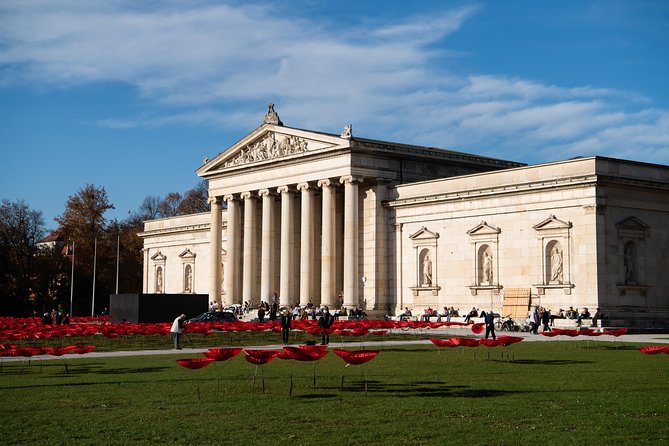
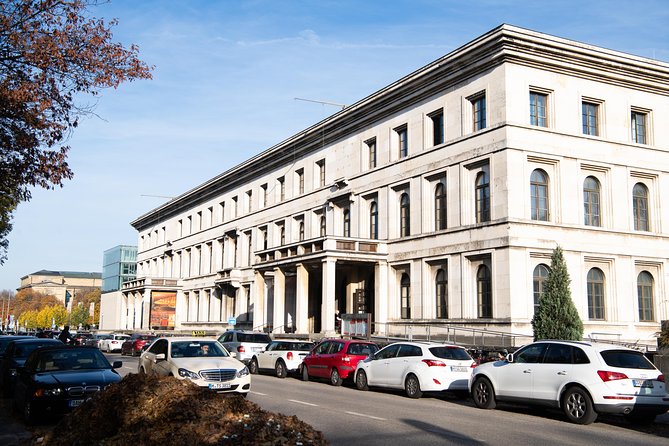
Königsplatz is the first major stop, with about 15 minutes set aside for explanation. The square became an important Nazi location, and its broad layout helped the party stage large public events and ceremonies.
This is where the tour begins to show how physical space can serve political theater. A large square can make a movement appear organized, disciplined, and powerful. Your guide explains what happened here and how the setting fit the Nazi propaganda machine.
The stop is not a museum visit. You will be standing outside, listening while the guide points out the significance of the surrounding area. That makes the guide especially important. Without context, the square may look like another formal Munich space. With context, it becomes part of the story of how the party presented itself to the public.
A useful feature is the use of historic photographs. One guide, Aileen, was praised for showing images of the places as they looked during the period. That kind of visual comparison can help you connect the current streetscape with events that are otherwise difficult to picture.
Odeonsplatz and the failed path to power
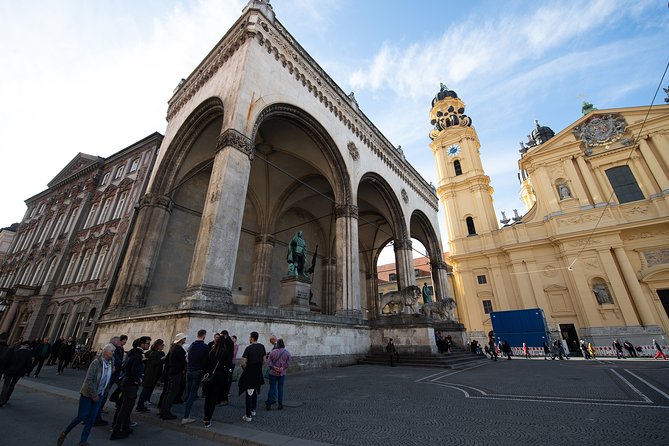
The tour spends roughly 30 minutes at Odeonsplatz, the longest scheduled stop. That time gives the guide room to discuss Nazi marches, memorial events, and the party’s attempt to force its way into power.
Odeonsplatz is especially valuable because it helps explain the movement’s early political struggle. You are not just hearing that Munich was important. You are learning how the party used public demonstrations, symbolism, and organized appearances to build support and pressure its opponents.
This stop can also make clear that the Nazi rise was not a single sudden event. The route presents a progression from party beginnings to a hateful ideology, then to dictatorship and war. If you want a simple timeline, listen closely here and take a few notes.
The group may spend a fair amount of time standing while the guide speaks. On a sunny day that may be pleasant. On a cold gray day, it can be uncomfortable. One participant specifically advised dressing warmly, and another described the weather as bitterly cold. Bring a coat even if the afternoon seems mild when you leave your hotel.
More Walking Tours in Munich
- Munich: Old Town & Viktualienmarkt City Walk in German
★ 4.7 · 2,304 reviews - Munich: Night Watchman Walking Tour
★ 4.7 · 2,092 reviews - Munich Ghosts and Spirits Evening Walking Tour
★ 5.0 · 1,900 reviews - Munich Old Town Walking Tour
★ 4.5 · 1,287 reviews
Hofbräuhaus and the politics of a beer hall
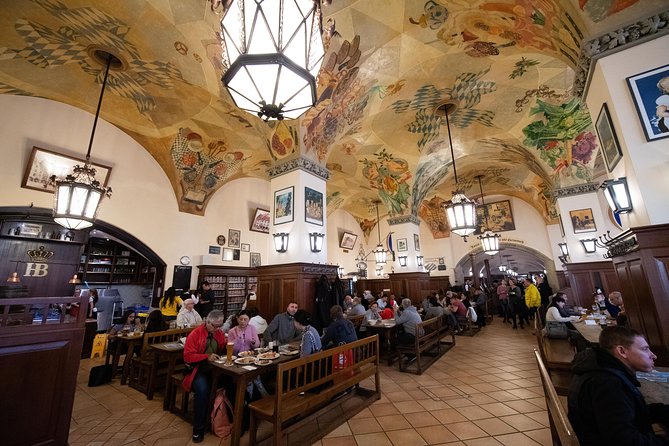
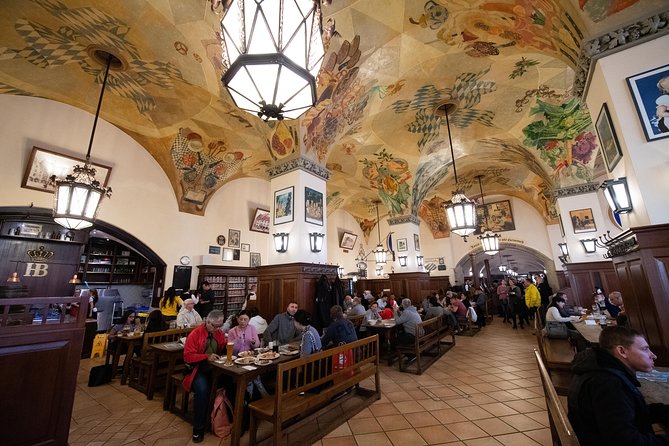
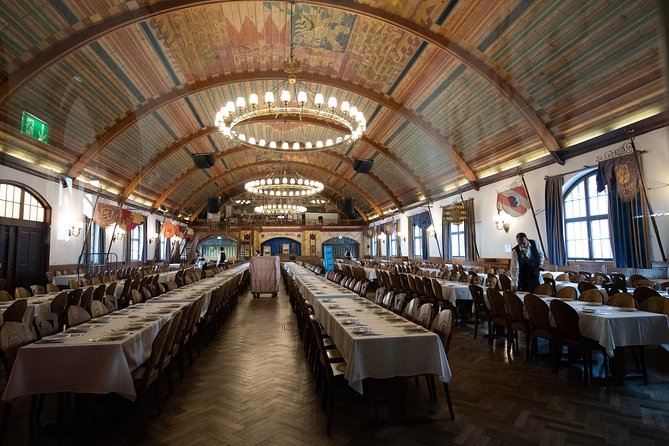
The Hofbräuhaus stop lasts about 20 minutes. Munich’s famous beer hall is usually associated with food, drink, music, and local tradition, but it also played a role as a political gathering place during the Nazi Party’s early period.
That contrast makes this one of the most memorable stops. You see how ordinary social spaces could become places where political ideas were presented, repeated, and organized. The point is not to label every beer hall as political. It is to understand how familiar public venues could help movements reach a wider audience.
The experience here is primarily an exterior history stop, not a meal or beer tasting. Do not book this tour expecting time to sit down for lunch. The guide’s explanation is the reason for the stop, and the schedule keeps the group moving.
I find this part useful because it broadens the story beyond government buildings and parade grounds. It shows how political movements operate in daily life, using places where people already gather.
The Old Town Hall and Munich’s civic center
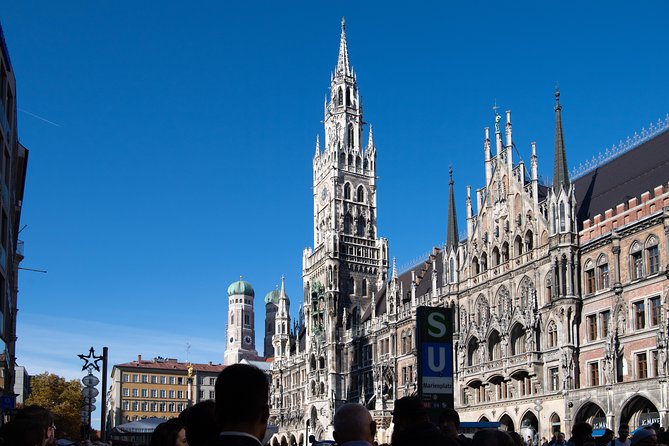
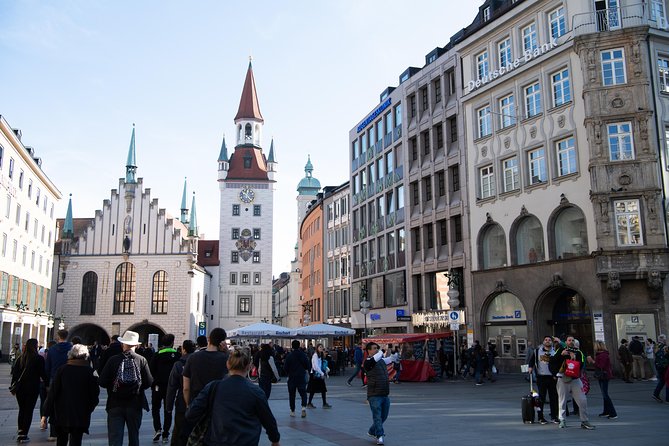
The route continues to Munich’s Old Town Hall for around 15 minutes. This stop places the Nazi story against the city’s older civic identity.
The building gives the guide another chance to explain how Munich’s established institutions and public spaces were affected by the Nazi takeover. You will likely hear how political power was presented in the center of the city and how the regime used familiar symbols and locations to make itself appear legitimate.
As with the other stops, the value comes from interpretation. The Old Town Hall is a worthwhile sight on its own, but the tour asks you to view it through a different lens. It also helps break up the route between the more obvious Nazi sites.
If you are hoping to go inside every building, this is not the right activity. The supplied route lists the Old Town Hall as a stop, but the tour is built around outdoor locations and spoken explanation.
Marienplatz, the ending point in central Munich
The tour finishes at Marienplatz, with about 20 minutes in Munich’s main city center. This is a practical ending because you can continue sightseeing immediately.
You might visit nearby churches, browse shops, find a café, or simply pause after a serious subject. The end point also makes the tour easy to combine with other central Munich plans. You do not need a taxi or a long return journey.
The final stop is not just a convenient drop-off. Marienplatz helps tie the route back to the modern city. You have spent the afternoon examining places connected to dictatorship, propaganda, and war, then finish in a busy public square used for ordinary city life today.
That contrast can be powerful, but do not expect a long final discussion unless your guide chooses to extend the conversation. The listed schedule allows about 20 minutes here, and the formal tour concludes in the city center.
Guides make the difference
The strongest praise is directed at the guides. Michael is described as generous with information and willing to answer uncomfortable questions. Jake is praised for combining facts with humor and for paying attention to the group’s comfort, including moving people toward the sun on a cold day.
Other praised guides include Nicola, Paul, Alex, Scott, Steve, Daniel, Nick, Michelle, and Aileen. The names matter less than the pattern: the quality of the tour depends heavily on who leads it. Different guides may tell the story in different ways, but the best ones appear to share several traits:
- They speak clearly in English.
- They invite questions rather than rushing through a script.
- They use photos or other visual aids when useful.
- They keep the subject serious without making the presentation grim and flat.
- They adjust to the weather and the group’s comfort.
One solo booking even resulted in a one-person tour with Keith, an Irish guide who had lived in Germany for decades. That is not something you should count on, but it shows that group size can vary, especially during slower periods.
The tour’s 4.7 rating from 4,291 reviews and 93 percent recommendation rate suggest reliable satisfaction, though no guide-led experience is identical every day. I would book this for the subject and route first, then hope for the guide whose style suits you.
How much walking and standing should you expect?
You should be prepared to walk through Munich’s urban center for two and a half hours. The route includes several stops, but the time between them is also part of the experience. One participant advised arriving ready to walk, while another felt the subject matter moved quickly and wished for several extra hours.
The tour is not designed for a specialist-level study of the Third Reich. It gives you a strong introduction, places the rise of the Nazi Party in Munich, and points out memorials and landmarks you might miss alone. If you have spent years studying the era, you may want a longer museum visit afterward.
Wear comfortable shoes. Bring water, especially in warm weather, and dress in layers when temperatures may change. A mid-tour bathroom or coffee break may happen if the group agrees, as one guide arranged by taking a quick vote. It is a thoughtful touch, but you should not treat it as a guaranteed scheduled break.
Most people can participate, and service animals are allowed. The activity requires good weather and a minimum number of bookings. If poor weather or low enrollment cancels the tour, you are offered another date or experience, or a full refund.
The price and what you receive
At $45.95 per person, the tour costs more than wandering between the locations with a guidebook or phone map. The comparison is not quite fair, though. The paid experience gives you a route, a fluent English presentation, historical photographs in some cases, and a chance to ask questions as the story unfolds.
I see the price as reasonable if you want context and do not want to spend hours researching Munich before arrival. The value is strongest for first-time visitors, history fans, and anyone who wants to understand the city’s connection to the Nazi rise.
The value is weaker if you prefer museums, dislike group walks, or already have a detailed plan for the same sites. The tour does not include meals, transportation, or admission to a museum. You are paying for the local guide and the structure of the walk.
The tour is often booked about 29 days ahead, so it makes sense to reserve early if your Munich dates are fixed. Free cancellation is available up to 24 hours before the start time. Inside that window, changes and refunds are not accepted.
Who should book this Munich walking tour?
I would recommend it to you if you want a clear introduction to Munich’s Nazi past, prefer learning outdoors, and value a guide who can connect buildings, streets, and political events. It works well near the start of a Munich visit because the ending at Marienplatz leaves you in a useful part of the city.
It is also a good fit for history fans who want to see real locations rather than read only from a page. Several people found the tour worthwhile even after studying the period, especially because the guide added political, social, and cultural background.
I would hesitate if you need indoor shelter, have difficulty walking or standing for two and a half hours, or want a highly specialized academic tour. The amount of information can feel dense, and the outdoor format leaves you exposed to Munich weather.
Should you book it?
Book this tour if you want meaningful historical context tied to real Munich streets. The route covers Königsplatz, Odeonsplatz, the Hofbräuhaus, the Old Town Hall, and Marienplatz, while the guide explains propaganda, political organizing, Nazi power, war, and resistance.
Skip it only if you already know these locations well and want a longer, museum-based study. For most visitors, the combination of a central route, strong guide feedback, manageable length, and a practical Marienplatz finish makes it a worthwhile use of $45.95.
FAQ
How long is the Third Reich Walking Tour Munich?
The tour lasts approximately two hours and 30 minutes.
What language is the tour offered in?
The tour is offered in English.
Where does the tour start?
The meeting point is Radius Tours at Dachauer Str. 4, 80335 München, Germany.
Where does the tour end?
The tour ends at Marienplatz in central Munich, at 80331 München-Altstadt-Lehel.
What locations are included?
The route includes Königsplatz, Odeonsplatz, the Staatliches Hofbräuhaus, Munich’s Old Town Hall, and Marienplatz.
How far in advance can I cancel for a full refund?
You can cancel at least 24 hours before the start time for a full refund. Cancellations or changes made within 24 hours are not accepted for a refund.
Just added around Munich
- Pub crawl incl. Oktoberfest museum guided tour with beer tasting (private)★ 5.0 · 5 reviews
- South Tyrolean specialties and wine tasting★ 5.0 · 5 reviews
- Size Matters Beer Tour Munich★ 4.6 · 105 reviews
- Short & sweet: Tasting the Viktualienmarkt★ 4.8 · 37 reviews
- Secret Food Tours Munich★ 4.8 · 5 reviews
- Munich: Romantic Wine Experience for Two at Viktualienmarkt★ 4.2 · 14 reviews
- Residence of Munich private tour with skip the line ticket★ 5.0 · 4 reviews
- Munich: Resistance against Hitler – Historical Walking Tour★ 5.0 · 5 reviews