
Reviewed · NIGHT WATCHMAN TOURS
Munich: Middle Ages Tour with Night Watchman
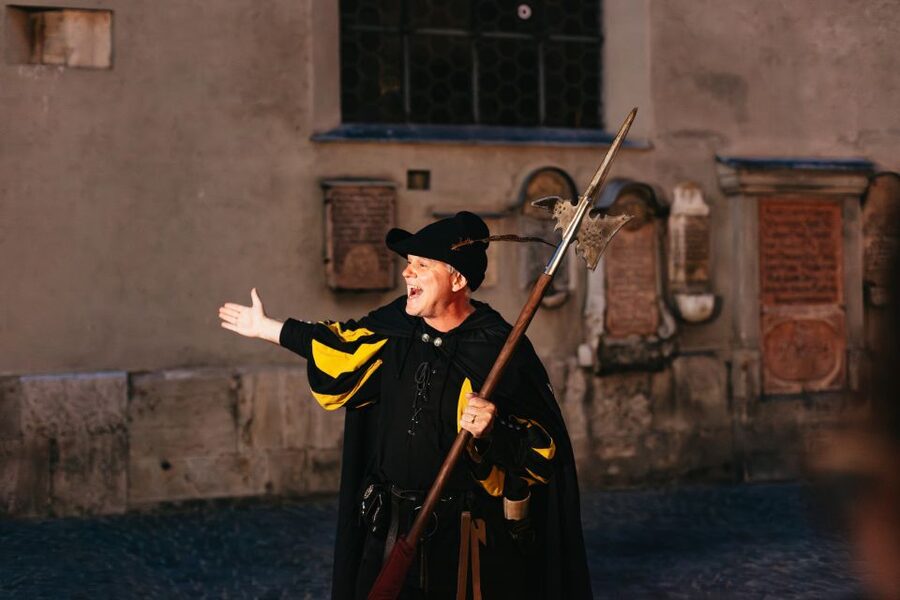
Medieval Munich gets wonderfully dark after sunset. This 90-minute walking tour brings the old town to life with Wolfram, a costumed night watchman carrying a lantern, halberd, and horn. I like the strong theatrical touch, and I like that the stories focus on real places rather than a stage set.
The tales of executions, prison torture, bad bakers, silver pennies, and locked city gates give the walk an edge. The main consideration is language: the live guiding is in German, and the grim subject matter is not suitable for children under 12.
In This Review
- Key points to know before you book
- Why this short walk works so well
- Meeting Wolfram at Marienplatz
- St. Peter’s Church and the smell of incense
- Viktualienmarkt and the rules of the market
- The Old Town Hall and public authority
- Alter Hof and the medieval castle
- Marienhof, city walls, and the darker side of justice
- Frauenkirche and the closing of the gates
- Returning to Rathaus Apotheke
- Is $21 a fair price?
- Who will enjoy this medieval Munich walk?
- Practical tips for a better experience
- Should you book Wolfram’s night watchman tour?
- FAQ
- Where does the tour meet?
- How long does the tour last?
- What language is the tour in?
- Who leads the experience?
- How can I identify the guide?
- Is the tour wheelchair accessible?
- Is the tour suitable for children?
- Does the tour run in bad weather?
- Are food and drinks included?
- Can I cancel for a refund?
Key points to know before you book
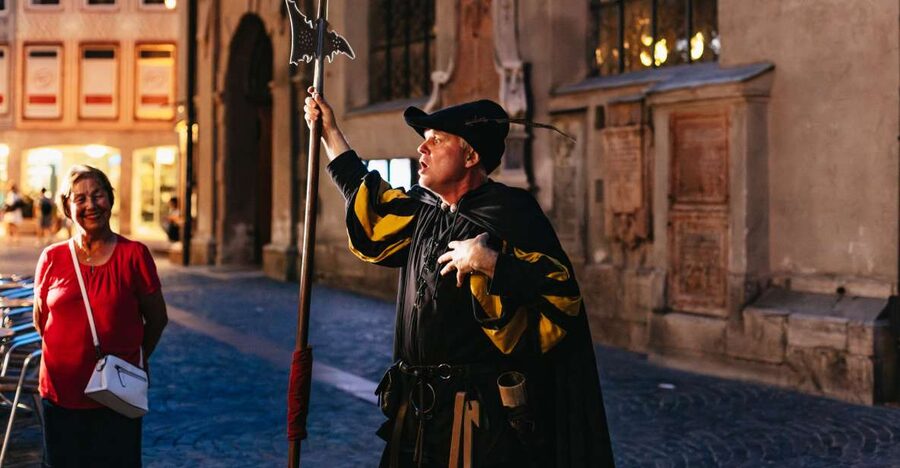
- Wolfram leads in full medieval dress: His lantern, halberd, horn, and character-based presentation make the history easy to picture.
- The stories get grim: Expect executions, beheadings, punishments, interrogations, and torture methods, not just pretty old buildings.
- The route stays in central Munich: You visit St. Peter’s, Viktualienmarkt, the Old Town Hall, Alter Hof, Marienhof, and Frauenkirche.
- The walk costs $21 per person: For 1.5 hours with a live guide, that is a fair price if you enjoy storytelling and historic atmosphere.
- The meeting point is precise: Find Rathaus Apotheke at Marienplatz, about 25 meters left of number 8. The guide wears medieval clothing.
- It runs rain or shine: Wear shoes suited to city streets and bring weather protection.
Why this short walk works so well
Munich is often presented through grand churches, royal buildings, beer halls, and broad squares. This tour takes another path. It asks you to picture the city when gates were shut at night, punishments were public, and a watchman was part of daily life.
The route is compact, which matters. In 90 minutes, you move through several central landmarks without spending the whole evening on your feet. You also return to Marienplatz, so you finish where you began rather than trying to find your way across an unfamiliar part of town.
I especially like the contrast between the familiar sights and the less polished stories attached to them. St. Peter’s is not treated only as a beautiful church. The old market area is not just a place to buy food. Each stop becomes a doorway into medieval rules, fears, and routines.
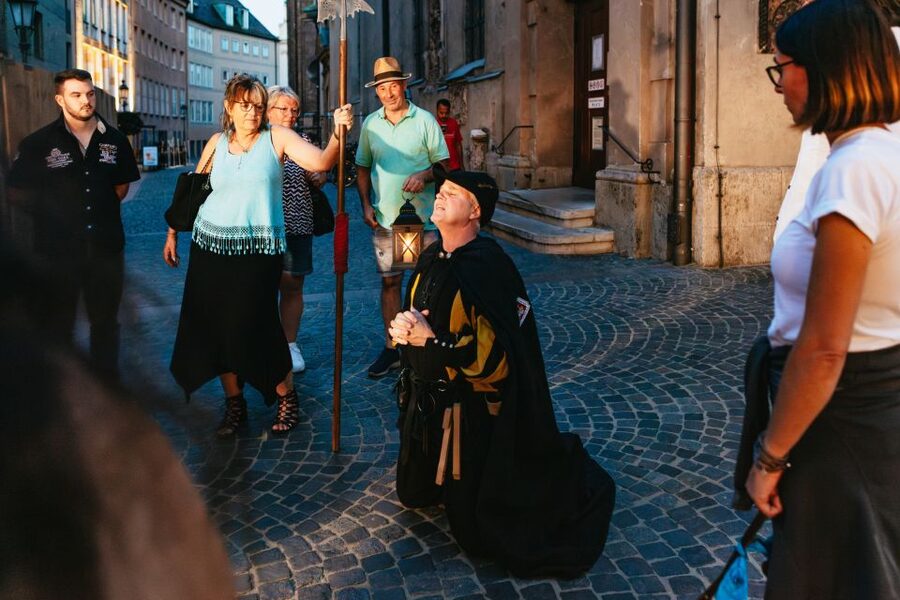
The presentation is a major part of the value. Wolfram’s costume and props make the walk feel like a night watch round, while the information keeps it from becoming simple street theater. The strongest praise from the supplied feedback centers on this balance: the guide is described as lively, entertaining, and very informative, with solid answers to questions.
The German language is the clearest limit. If you understand German, the tour should be easy to follow and enjoyable. If you do not, the costume and locations may still be fun, but much of the experience depends on spoken stories and humor.
More Night Watchman Tours in Munich
- Munich: Night Watchman Walking Tour
★ 4.7 · 2,092 reviews - Munich: Night Watchman Torch Tour in German
★ 4.8 · 1,280 reviews - On the road with the night watchman
★ 5.0 · 142 reviews
Meeting Wolfram at Marienplatz
The tour begins in front of Rathaus Apotheke at Marienplatz. The exact directions are useful: look about 25 meters to the left of number 8, and use the GPS position 48.13737, 11.57588 if needed.
You are not looking for a plain guide with a clipboard. Wolfram wears typical medieval clothing and carries a lantern, halberd, and horn. Those details establish the mood right away. They also make the meeting point easier to identify in a busy central square.
Marienplatz is a practical starting place because it is one of Munich’s main historic centers. Still, you should allow time to find the pharmacy and guide before the start. A costumed guide is distinctive, but the square itself can be lively and visually crowded.
The group walks together from stop to stop. The experience is listed as wheelchair accessible, though the route is a walking tour through the old city. If you need specific route details for mobility, it is sensible to confirm them before booking.
St. Peter’s Church and the smell of incense
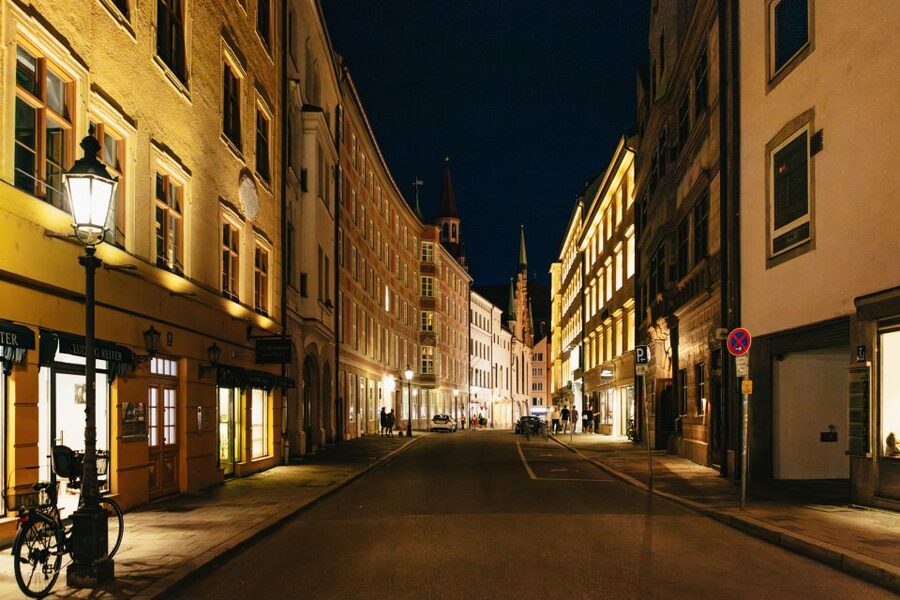
The first major stop is St. Peter’s Church, where the guided visit lasts about 10 minutes. The church gives Wolfram a strong setting for stories about medieval belief, death, and daily life.
The memorable detail here is the smell of incense in the ancient remains of St. Peter’s. That sensory touch helps the past feel less like a list of dates. You are not simply told that religion shaped medieval Munich. You are placed in a space where religious practice was part of the air people breathed.
The church stop also sets the tone for the rest of the walk. This is not a gentle architectural tour. Spiritual life sits beside punishment, fear, and public authority. The setting may appeal to you if you like history with atmosphere, but the darker stories can feel intense if you prefer a light introduction to Munich.
St. Peter’s appears twice in the route details, with a 10-minute guided visit attached to each entry. In practical terms, expect the church to be part of the opening section rather than two entirely separate attractions. The supplied timing gives you about 20 minutes connected with this location.
Viktualienmarkt and the rules of the market
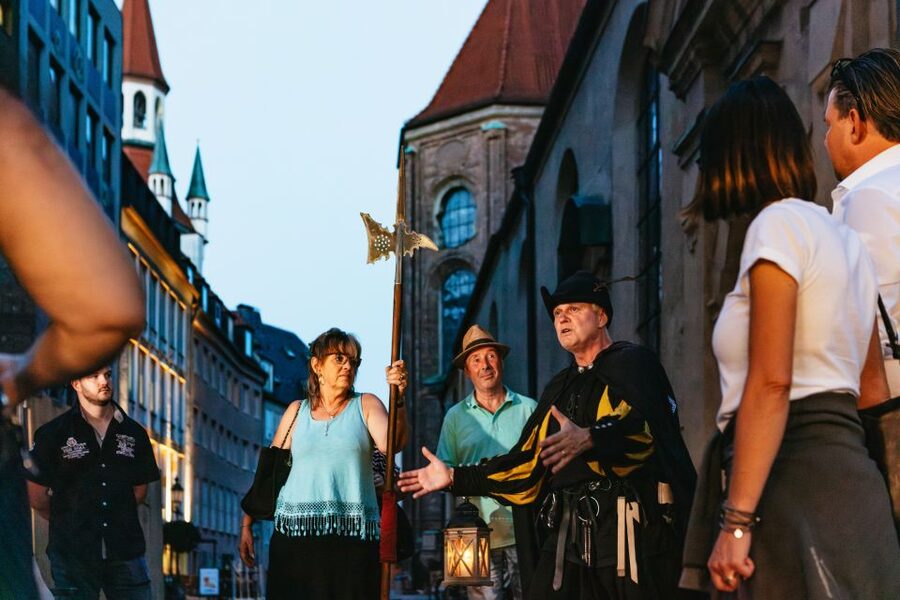
From the church, the route continues to Viktualienmarkt. Today, this area is associated with food stalls and local shopping. On this walk, you hear about the rules and punishments that controlled medieval trade.
The striking example concerns bad bakers at Metzgerzeile. The story shows how quality control could be severe. A modern market complaint might lead to a refund or a poor rating. In medieval Munich, dishonest or careless work could bring public punishment.
That difference helps explain why the tour is more than a march between old buildings. You learn how the city tried to control food, trade, and public behavior. The stories also make the market easier to remember because they connect a present-day place with a very different social order.
Food and drinks are not included, so do not count on the tour as a tasting walk. You are paying for the guide and the storytelling, not for samples or a meal. If you want to eat at the market, plan that separately before or after the 90-minute walk.
Still Munich, at a slower pace:
- From Munich: Neuschwanstein & Linderhof Castle Full-Day Trip
★ 4.5 · 12,494 reviews - Neuschwanstein & Linderhof Castle-Fairytale Day Tour from Munich
★ 4.5 · 7,275 reviews - Munich: Third Reich & WWII Walking Tour
★ 4.6 · 6,181 reviews - Dachau Concentration Camp Memorial Site Tour from Munich by Train
★ 4.5 · 5,637 reviews
The Old Town Hall and public authority
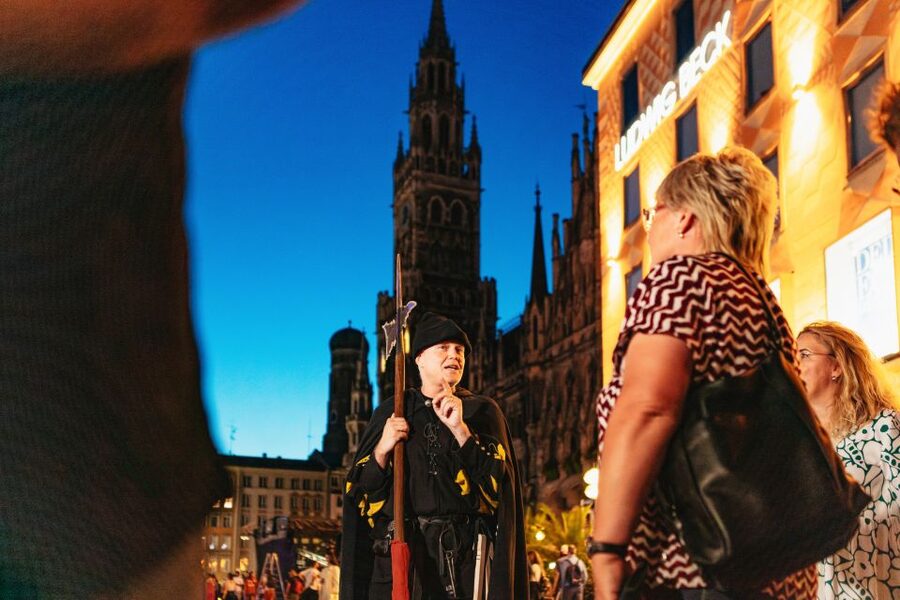
The Old Town Hall is another 10-minute guided stop. Here, the focus turns toward civic power and the way authorities managed the city.
A medieval town was not an open, casual place after dark. Rules governed movement, trade, punishment, and security. The presence of a night watchman becomes more meaningful when you consider that the city needed people to monitor streets and protect its gates.
The Old Town Hall also gives the tour a useful civic counterpoint to St. Peter’s. The church represents spiritual authority, while the town hall points to municipal power. Together, they show two forces that shaped daily life.
You may find the stop most rewarding if you enjoy social history. The tour is less concerned with listing construction dates and more interested in what rules meant for ordinary people. That makes it accessible, provided you can follow German narration.
Alter Hof and the medieval castle
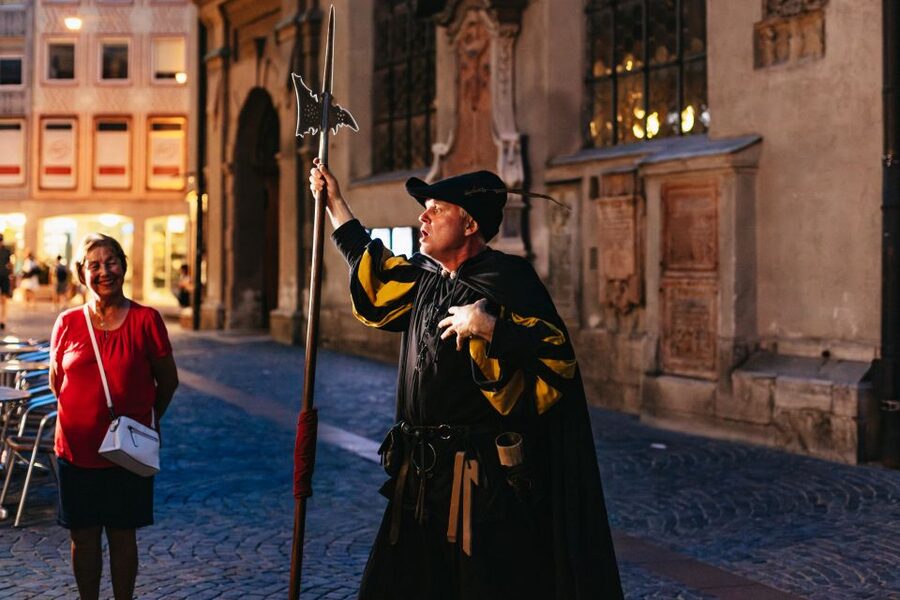
At Alter Hof, the route reaches Munich’s castle area. The stop lasts about 10 minutes and shifts attention to defense, residence, and status.
The castle setting helps you picture a city with a clear division between rulers, officials, workers, and people under suspicion. The tour uses the site to discuss Munich’s medieval structure, including the places where power was concentrated and protected.
The supplied description also refers to the city walls, castle, and Schwabinger Gate. These features matter because they show how compact and controlled Munich once was. A wall was not simply a picturesque remnant. It defined who could enter, who could leave, and when movement stopped.
I like this part of the route because it connects architecture with fear. Walls offered protection, but they also marked limits. Gates could be closed, watched, and defended. That makes the later Talburg Gate scene feel like a natural part of the story rather than an unrelated performance.
Marienhof, city walls, and the darker side of justice
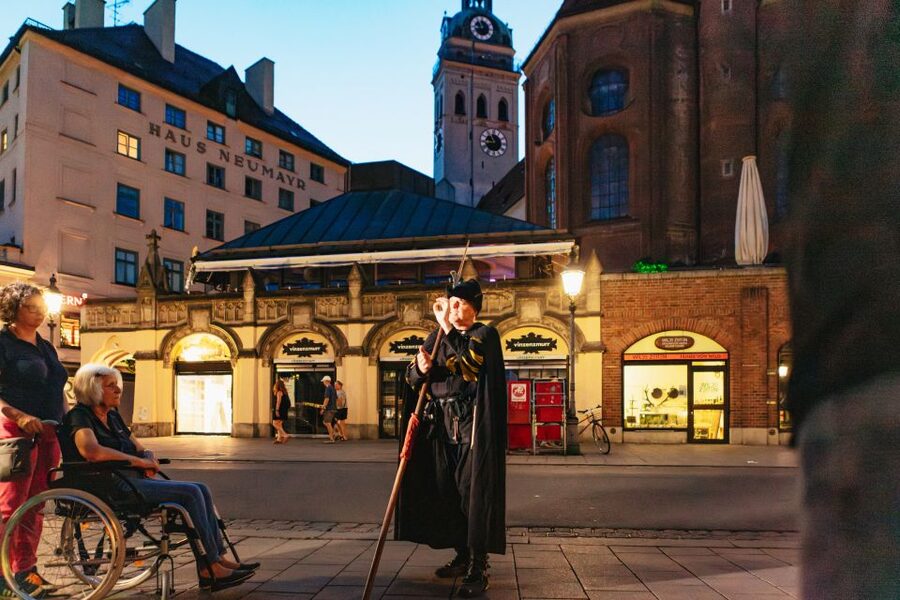
The walk continues to Marienhof, another 10-minute guided stop. From here, Wolfram leads you into stories about the 12th-century city wall, executions, and beheadings.
This is where the tone becomes most serious. Medieval justice was often public, physical, and meant to frighten the crowd. Executions were not hidden away from society. They communicated the power of the authorities and warned everyone watching.
The tour also covers interrogations and terrifying torture techniques used in medieval prisons. You should know this before booking. The descriptions are part of the central appeal for people who enjoy grim history, but they may be uncomfortable for anyone sensitive to violence.
The subject has value beyond shock. These stories help you understand how punishment worked before modern courts, policing, and prison standards. They also reveal how uncertain justice could feel when confession, status, and public authority carried such weight.
At this point, the guide’s style matters a great deal. The strongest comments about the experience praise Wolfram for telling the material in a lively, entertaining way while still answering questions with well-grounded information. That balance can keep difficult topics from becoming either dry or needlessly theatrical.
Frauenkirche and the closing of the gates
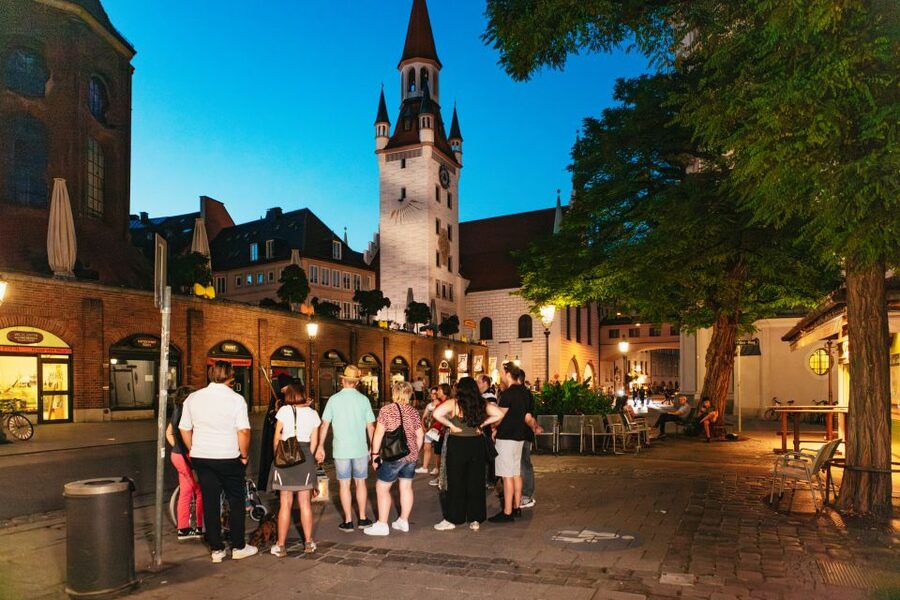
The route includes Munich Frauenkirche, with about 10 minutes of guided commentary. The church is one of the city’s most recognizable landmarks, but the tour approaches it through medieval Munich rather than a standard church visit.
You hear about the Schwabinger Gate and the closing of the Talburg Gate. The idea of a gate shutting for the night gives the entire walk its central image. Once the gate closed, the city’s rhythm changed. A watchman’s horn, lantern, and weapon were not decorative objects. They belonged to a system of control and protection.
The promised halberd fight adds a physical moment to the storytelling. It shows how the guide uses movement and props to make weapons and guard duty easier to understand. This is likely to appeal to you if you enjoy historical reenactment in small doses.
The church and gate stories also bring the tour back to the practical question of nighttime safety. Medieval Munich was a place where darkness, walls, and authority shaped movement. By the end, the figure of the night watchman feels less like a costume and more like a job with real responsibility.
Returning to Rathaus Apotheke
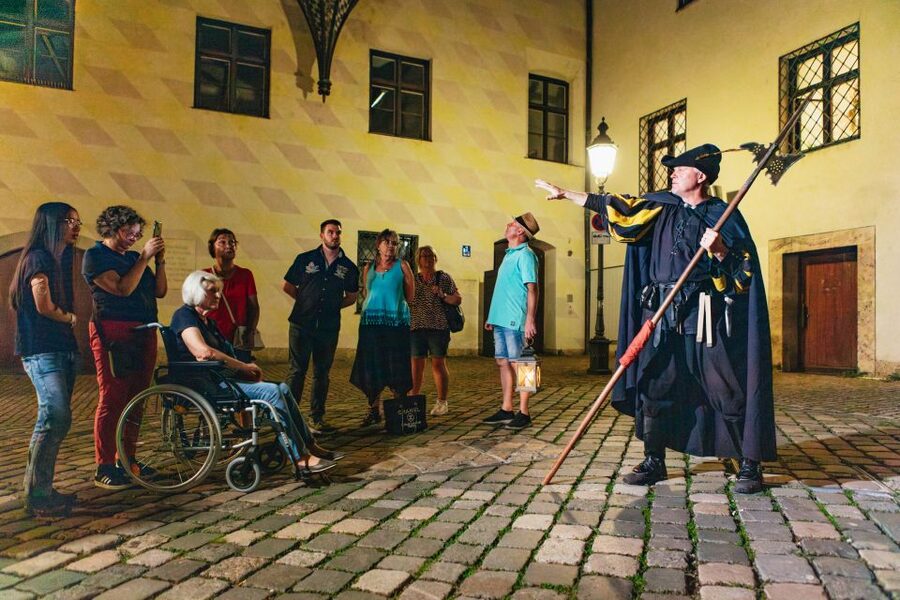
The walk finishes back at Rathaus Apotheke in Marienplatz. That return is convenient, especially if you have evening plans nearby or want to continue exploring the central old town.
Because the route ends where it starts, you do not need to arrange a taxi or learn a second location. You can also use the tour as a first-night orientation to central Munich, though the emphasis is on medieval stories rather than modern practical sightseeing.
The walk lasts 1.5 hours. That is long enough to build a strong theme, but short enough to fit before dinner or another evening activity. You will want comfortable shoes, especially because the experience takes place outdoors and continues in wet weather.
Flash photography and video recording are not allowed. This keeps the focus on the live presentation and prevents the experience from turning into a phone-first event. You can still take in the buildings and atmosphere, but follow the restrictions during the guided portion.
Is $21 a fair price?
At $21 per person, the tour offers fair value for a focused 90-minute experience. You are paying for a live German-speaking guide, character presentation, props, and access to a carefully connected set of historic locations. Food, drinks, and any separate admission are not included.
The value is strongest if you enjoy guided storytelling. You get more than a self-guided walk because Wolfram supplies a voice, character, and sequence for the places you see. The price is less attractive if you mainly want a factual architectural tour in English or prefer to explore at your own pace.
A private group is available, which may suit families with older children, friends, or visitors who want a more personal format. The standard experience is not suitable for children under 12, and the serious topics make that age rule sensible.
You can cancel up to 24 hours in advance for a full refund, and you can reserve now while paying later. Those options help if your Munich schedule is still shifting.
Who will enjoy this medieval Munich walk?
I would choose this tour if you like:
- Medieval crime, punishment, and city life
- Costumed interpretation with real locations
- Short evening walks with a strong theme
- Historic churches, walls, gates, and castle sites
- German-language guiding
- Stories that are entertaining but not sanitized
I would think twice if you want a relaxed food tour, a modern overview of Munich, or a detailed English-language lecture. The tour’s appeal depends on its German narration, its dark subject matter, and Wolfram’s performance.
It suits adults and older teenagers who enjoy history with a rough edge. The costume and props add fun, but the executions and torture stories are not softened into a family fairy tale.
Practical tips for a better experience
Arrive at Marienplatz with the meeting point already saved in your phone. Look for Rathaus Apotheke, about 25 meters left of number 8, and identify the guide by medieval clothing.
Wear shoes you can walk in for 90 minutes. The tour runs rain or shine, so take a coat or umbrella when the forecast looks uncertain. You may find a lantern-led story walk most atmospheric in poor weather, but you will enjoy it more if you are warm and dry enough to listen.
Do not expect refreshments. Food and drinks are not included, so plan a meal before or after the walk.
Finally, treat the experience as a live performance as well as a history lesson. Flash photography and video recording are prohibited. Put the phone away, listen for the details, and let the old streets do some of the work.
Should you book Wolfram’s night watchman tour?
Book it if you want Munich’s old center explained through city walls, gates, punishment, religion, and nighttime rules. The $21 price is reasonable, and the short length makes it easy to fit into a busy visit.
The best reason to choose it is Wolfram’s presentation. His costume, lantern, halberd, and horn give the walk a clear identity, while the feedback about his lively and well-informed storytelling suggests that the experience offers substance as well as theater.
Skip it if you need English guiding, dislike stories about executions and torture, or want a food-focused look at Viktualienmarkt. For the right audience, though, this is a memorable way to see central Munich after the standard postcard view has worn thin.
FAQ
Where does the tour meet?
Meet in front of Rathaus Apotheke at Marienplatz, about 25 meters left of number 8. The GPS coordinates are 48.13737, 11.57588.
How long does the tour last?
The walking tour lasts 1.5 hours.
What language is the tour in?
The live tour guide speaks German.
Who leads the experience?
The guide is Wolfram, presented as a medieval night watchman.
How can I identify the guide?
Wolfram wears typical medieval clothing and carries a lantern, halberd, and horn.
Is the tour wheelchair accessible?
Yes, the activity is listed as wheelchair accessible.
Is the tour suitable for children?
No. It is not suitable for children under 12.
Does the tour run in bad weather?
Yes. The tour takes place rain or shine.
Are food and drinks included?
No. Food and drinks are not included.
Can I cancel for a refund?
Yes. You can cancel up to 24 hours in advance for a full refund.
Just added around Munich
- Pub crawl incl. Oktoberfest museum guided tour with beer tasting (private)★ 5.0 · 5 reviews
- South Tyrolean specialties and wine tasting★ 5.0 · 5 reviews
- Size Matters Beer Tour Munich★ 4.6 · 105 reviews
- Short & sweet: Tasting the Viktualienmarkt★ 4.8 · 37 reviews
- Secret Food Tours Munich★ 4.8 · 5 reviews
- Munich: Romantic Wine Experience for Two at Viktualienmarkt★ 4.2 · 14 reviews
- Residence of Munich private tour with skip the line ticket★ 5.0 · 4 reviews
- Munich: Resistance against Hitler – Historical Walking Tour★ 5.0 · 5 reviews
Night Watchman Tours, compared.
The Original Night Watchman Tour in Lantern Light
Read our review →
1.5-Hour Public Tour with Night Watchman Bremme
Read our review →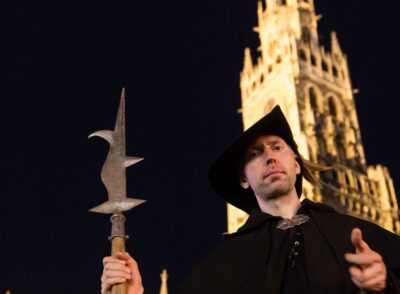

The Night Watchman Old Town Walking Tour in German
Read our review →

Browse the lists this tour appears in